How to Move a Heavy Elliptical Down Steep Cellar Stairs in Gainesville
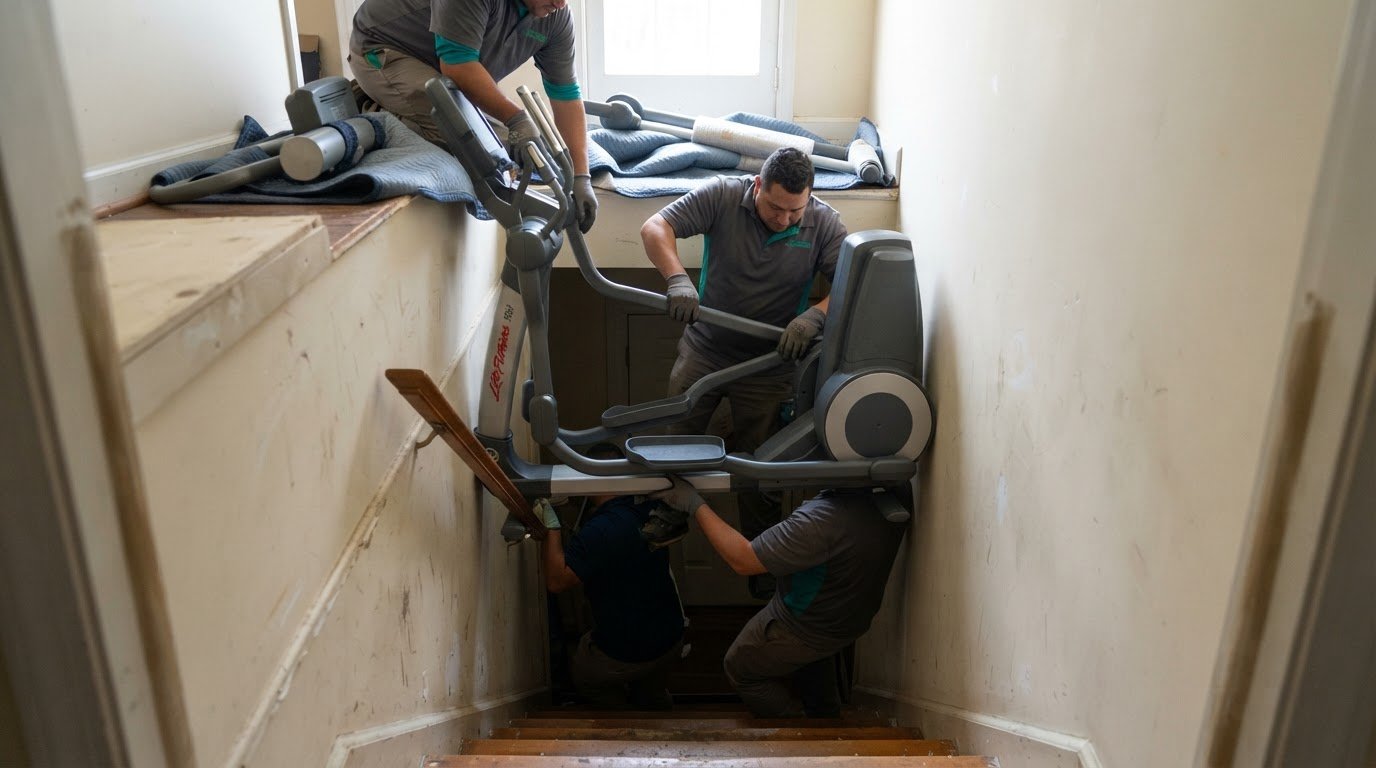
Moving a heavy elliptical trainer down steep cellar stairs in Gainesville should be treated as a three-person job, not a solo lift. The machine may need partial disassembly to clear tight turns, but the right approach depends on its design and the stairway.
It’s understandable to worry about losing control on a steep descent or damaging the elliptical, walls, or stairs. A safe plan starts with the machine’s manual, measurements of the route, and clear coordination for each step.
This guide explains when disassembly may help, what movers consider when planning a route, and why steep cellar stairs call for more than basic lifting help. You’ll also see which details affect the work, from access and equipment to the complexity of the carry, so you can decide whether professional help is right for your move.
Key Takeaways
- Use the elliptical’s manual to guide any disassembly, and document its setup so reassembly is easier.
- Plan the full path through the cellar, including doorways, landings, tight turns, and places where clearance may be limited.
- Choose moving equipment for controlled carrying and protection; a dolly is not a safe choice for use on the stairs themselves.
- Compare DIY and professional options by considering the equipment, labor, and access challenges the move requires.
- For a difficult stair descent, Exercise Equipment Moving from Heavy Furniture Moving can help take the heavy lifting off your hands.
Can professional movers disassemble an elliptical?
Yes. Movers can disassemble an elliptical when its size or shape makes a narrow stairway difficult to navigate. For a rental in Gainesville, access requirements depend on the lease and property. Share any building rules with the moving team so they can plan the route and protect shared spaces.
-
Decide Whether to Disassemble the Machine with a Professional
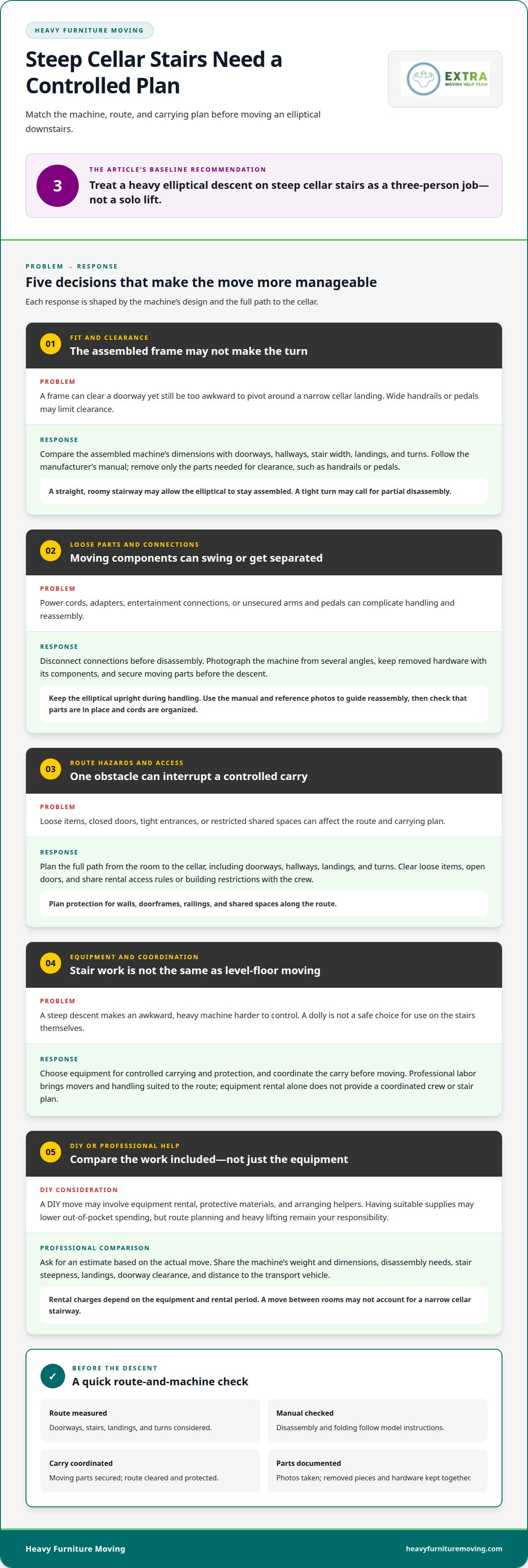
Share the elliptical’s make and model, manual, and route details with the moving team. Movers compare the assembled dimensions with doorways, landings, stair width, and turns. If the frame can pass upright with clearance, disassembly may not be necessary. If the handrails or pedals make it too wide, removing those parts may make the carry more manageable.
Ask the crew to follow the manufacturer’s manual. It identifies parts designed to come off and may explain whether disassembly affects the warranty. Some ellipticals fold, but folding should follow the model’s instructions. A tight cellar turn may call for partial disassembly, while a straight, roomy stairway may allow the machine to stay assembled.
-
Professional Disassembly and Reassembly of the Machine
Have movers disconnect power cords, adapters, and entertainment connections before they begin. They can photograph the elliptical from several angles, then remove only the parts needed for clearance. Handrails and pedals may come off if they prevent the frame from passing through a doorway or turning around a landing.
Keep removed components and their hardware together so the crew can identify them during reassembly. Movers can protect the separate pieces and main frame for the trip downstairs. Keep the elliptical upright during handling, since careless tilting can stress pedal cranks or plastic housing. At the destination, the manual and reference photos can guide reassembly.
- Plan around the route, not just the machine’s weight. Movers consider every doorway, landing, and turn before deciding which parts to remove. A frame may clear a doorway but still be too awkward to pivot around a narrow cellar landing. Removing selected components can make that turn easier without taking apart the entire elliptical.
Before the descent, the crew secures moving parts so arms and pedals don’t swing into a wall or helper. They protect exposed surfaces and coordinate the carry, keeping the machine upright as it moves. Clear the route of loose items, open doors, and other obstacles that could interrupt a controlled descent.
- Tell the crew about rental access arrangements and shared areas before moving day. This helps them plan how to carry the machine while limiting contact with walls, doorframes, and railings. If the route passes through a common hallway or restricted entrance, those details can affect the carrying plan.
After reassembly, movers can check that removed parts are back in place and cords are organized before the elliptical is used. Don’t use a folded model until it is secured according to the manual. This final check helps leave the equipment ready for its intended setup, without loose parts or unsecured moving components.
Costs of DIY and professional elliptical moves
Moving an elliptical downstairs without professional help can mean losing control, injuring a helper, or damaging the machine, walls, or stairs. Its weight and awkward shape make a steep descent more difficult than moving the same equipment across a clear, level floor.
- Separate equipment costs from labor when comparing options. A DIY move may involve renting lifting equipment, buying protective materials, and arranging help from people you know. If you already have suitable supplies, your out-of-pocket spending may be lower, but you are still responsible for the heavy lifting and route planning. Rental charges depend on the equipment and rental period.
- Consider the elliptical’s shape as well as its weight. A heavy frame with wide arms may need more careful handling than a compact design. Stair access, tight turns, and the need to protect walls also affect the work involved.
- Compare DIY equipment rental with professional labor by looking at what each option includes. Renting equipment doesn’t provide a coordinated crew, carrying help, or a plan for cellar stairs. Professional moving labor includes movers and handling suited to the route. A full-service move may be structured differently if the elliptical travels with other household belongings.
- Ask for a quote based on the actual move. The elliptical’s weight and dimensions, need for disassembly, stair steepness, landings, doorway clearance, and distance to the transport vehicle can all affect the work. Share these details together. An estimate for moving a machine between rooms may not account for a narrow cellar stairway.
- Weigh the likely savings against the risks of carrying the machine without a coordinated team. A helper losing grip can send the elliptical forward, putting people and property in danger. The machine can also strike a wall or suffer damage to its frame or plastic housing. For a difficult descent, professional exercise-equipment moving can handle the heavy lifting and stair route as part of the move.
How professional movers plan a route around stairs, hallways, doorways, and sharp turns
Professional movers plan the full route before carrying an elliptical into a cellar. Doorway clearance, stair shape, and tight turns determine how the crew handles the machine.
-
Plan the Route Through Tight Spaces with Professional Movers
Give the moving crew access details for every part of the route, from the room to the cellar. Movers measure the assembled elliptical and compare its width and height with doorways, hallways, stair openings, and landings. They also look for sharp turns where the frame could hit a wall or be difficult to pivot safely.
Before moving, the crew considers whether a door or jamb needs to be removed for clearance. An elliptical may fit through a doorway but still need more room to turn onto a narrow stair landing. Measurements help movers decide whether to reposition the machine, change the carrying angle, or remove selected parts.
- Have the crew check the stairway from both ends. The cellar entrance can restrict movement at the top, while a low ceiling or tight landing can limit the descent below. Movers account for handrails, wall corners, and doors that swing into the path. A clear route helps the crew maintain control without stopping mid-carry.
The crew also considers how the elliptical’s shape affects each turn. Wide handlebars or pedals can catch on a doorframe even when the main frame clears it. Securing moving parts or removing components can reduce protrusions. The plan should identify where the machine needs to rotate and where helpers can safely stand.
-
What Equipment Do Professional Movers Use for Steep Stairs?
Ask the moving team to match its equipment to the stair route, not just the machine’s weight. Movers may use shoulder straps to help carry the elliptical and moving blankets to protect the machine and walls. Tie-down straps or zip ties can secure arms and pedals to limit movement during handling.
A furniture dolly can help move equipment across a level floor, but it should not be used on a flight of stairs. Steep steps call for controlled carrying and clear communication. A dolly that rolls out of position can let the elliptical slip, so the stair plan should focus on carrying, not rolling.
- Confirm where the crew can pause and reset its grip without blocking the route. A broad landing may allow a controlled adjustment, while a narrow stairwell may not. Movers plan helper positions around the elliptical’s heavier sections, keeping everyone clear of the next step and the machine’s moving parts.
As the crew descends, it moves slowly and communicates before each change in direction. The person guiding the lower end needs room to control the machine, while helpers above keep it steady. This planned sequence reduces sudden shifts at stair edges and helps protect the cellar walls, railing, and equipment.
Getting help to move a heavy elliptical
A steep cellar stairway calls for coordinated lifting, not improvised help. If you’re planning how to move a heavy elliptical trainer down steep cellar stairs in Gainesville, give the moving team the machine details and access information needed to plan the carry.
-
Arrange Help for the Move
Choose a moving crew experienced in exercise equipment and stair carries. Treat an elliptical carry on stairs as a three-person task, not a job for one person or an uncoordinated pair. The crew can assign positions before lifting so each helper knows when to support, guide, and pause.
Share details about the cellar entrance, stairway layout, and destination room before the move. Tell the team, for example, if the stairway has a landing or a narrow turn. This helps movers plan their positions and carry sequence rather than make decisions while balancing the machine.
-
How Movers Check the Elliptical’s Weight and Dimensions
Provide the model name and available manual so movers can identify the machine’s stated weight and design. The weight helps the crew plan, but the frame’s width, shape, and balance also affect how it can be carried.
Movers compare the assembled machine’s dimensions with the doorways, stair opening, and landing. Wide handlebars or pedals may prevent it from turning even when its overall length fits. Those measurements help the crew decide whether to remove selected parts or carry it intact.
- Tell the crew whether the elliptical is assembled, folded, or partly disassembled. A folding design may need different handling from a fixed-frame machine. Movers use the model instructions to guide any disassembly and avoid removing parts that won’t help with clearance.
Before removing a part, the team can consult the manual and consider whether disassembly affects the warranty. Keep removed pieces and hardware together during the move. This makes it easier to identify components and restore the machine correctly at the destination.
- Ask the moving team to agree on clear communication before the carry begins. The person leading the move can call each pause and change of direction, especially near a stair edge or tight turn. Helpers should keep pace and avoid changing their grip without warning.
Two people might move an elliptical between rooms on the same floor, but cellar stairs add a separate challenge. A third mover can help control the lighter portion while others support the heavier section. The crew should move slowly and communicate throughout the descent.
- Keep the entire route clear, including the areas at the top and bottom of the stairs. Movers need room to position the elliptical, adjust their hold, and complete the final turn. A blocked landing can force the crew to stop with the machine in an awkward position.
When planning how to move a heavy elliptical trainer down steep cellar stairs in Gainesville, consider the destination setup as well as the route. Identify where the elliptical should stand and leave room to set it down without twisting around furniture. This helps the team complete the carry in a controlled sequence.
What Equipment Do Professional Movers Use for Moving Heavy Appliances Down Steep Stairs?
Professional movers choose equipment to suit the elliptical’s shape, the stairway, and the surfaces along the route. Each item has a purpose, from securing loose parts to protecting walls during a controlled carry.
- Use moving or shoulder straps to support the carry. On steep stairs, straps help movers manage the load while keeping their hands free to guide the machine. The crew positions them around stable parts of the frame, not plastic covers or moving components. Placement depends on the elliptical’s shape and the helpers’ positions.
For a cellar descent, the team plans how to keep straps clear of stair edges and handrails. Helpers coordinate before lifting and communicate through each step. Straps assist the carry, but they don’t replace a stable grip or controlled pace.
- Secure the elliptical’s moving arms and pedals with tie-down straps, ratchet ties, or zip ties. Loose parts can swing during handling and strike a wall, helper, or stair rail. Movers choose a secure point that holds each part without pressing against fragile covers.
For example, securing the pedals keeps them from swinging outward while the frame turns at a landing. The crew checks the restraints before lifting and again if the machine’s position changes. Secured components make the load more predictable on a tight route.
- Cover the machine and nearby surfaces with moving blankets. Padding helps limit scratches if the elliptical brushes a wall or doorframe. Movers can wrap exposed sections while keeping handholds accessible. They can also protect corners or narrow passage points where contact is more likely.
Keep blankets in place throughout the carry. A loose edge can obstruct a grip or catch on a stair rail. The crew adjusts the covering before passing through a doorway or making a turn.
- Use a furniture dolly for suitable level-floor transport, not for rolling down steep stairs. A dolly can help move an elliptical across a flat stretch, while the stair section calls for controlled carrying. A heavy-duty furniture dolly should be rated for at least 250-300 pounds when used for heavy equipment.
Movers consider a dolly’s capacity and the machine’s weight before loading it. They also keep the wheels off the stair treads during the descent. On stairs, a rolling dolly can get out of control and allow the elliptical to fall.
- Have the crew match equipment to each part of the route. Movers might use a dolly across a clear floor, then secure the arms and pedals before carrying the elliptical downstairs with straps. Moving blankets protect contact points along the way.
Tell the team about the cellar stairs and machine model so it can plan the right handling approach. For a steep stair move, arrange professional elliptical moving help rather than relying on a dolly alone.
Heavy Furniture Moving
Heavy Furniture Moving helps with the planning and physical work involved in carrying an elliptical through a challenging home layout. Its Exercise Equipment Moving service is a practical option when steep cellar stairs, tight turns, or a bulky frame make the descent difficult to manage alone.
Share the machine’s model, current location, and stairway layout when discussing the move. These details help the team understand the route and whether parts may need to come off for clearance. Heavy Furniture Moving also handles broader furniture-moving needs, so you can discuss the elliptical alongside other household items.
If steep stairs make you unsure about a DIY carry, contact Heavy Furniture Moving to discuss moving your elliptical.
Make the Next Move with Confidence
If you’re still deciding how to move a heavy elliptical trainer down steep cellar stairs in Gainesville, start by sharing the key details. Provide the machine’s make and model, whether it is assembled, and the route from its current location to the destination. Cellar access and tight-turn details help shape the plan before lifting begins.
Heavy Furniture Moving offers Movers Near Me, Exercise Equipment Moving, and Sofa Hoisting. For this task, Exercise Equipment Moving addresses the challenge of relocating a bulky machine through a difficult home layout. Decide where the elliptical should go and note the access details the crew needs to plan the route.
You don’t need to solve every part of the move alone. A focused conversation about the machine and your cellar stairs can help set the next step. Contact Heavy Furniture Moving to discuss your elliptical move, and move forward with a capable team.
Frequently Asked Questions
Are ellipticals easy to move?
Ellipticals can be awkward to move because their long frames, moving arms, and pedals may shift during handling. Their size can also make it hard to turn through a doorway or cellar stairwell. A short move across an open room is different from a steep descent with tight landings. Treat stairs as a coordinated heavy-item move, not an ordinary repositioning of fitness equipment.
How do professional movers carry an elliptical downstairs?
Professional movers secure loose components, choose stable contact points on the frame, and carry the machine at a controlled pace. They coordinate each pause and change of direction before entering a stairwell. A hand truck or dolly should not roll down the steps, where it can become difficult to control. At a landing, movers reposition only when everyone has a stable hold and a clear path.
Can an elliptical trainer be disassembled for moving down stairs?
Yes, some ellipticals can be partially disassembled to clear narrow spaces. Follow the model’s manual to identify which components can come off, and review it before work begins. Removing handlebars or pedals may help with a tight doorway, while taking apart more than necessary adds reassembly work. Movers can keep hardware with its matching parts and use reference photos to restore the setup.
How many movers are needed to move an elliptical down cellar stairs?
Plan for at least three people to carry an elliptical on stairs. The heavier flywheel section and lighter components may need separate support, so helpers must coordinate their positions. A two-person crew may suit some same-floor transfers, but that does not make a cellar descent a two-person task. Stair steepness, landings, and the model’s shape all affect how the crew divides the carry.
What safety precautions do professional movers take when moving heavy equipment down steep stairs?
Movers secure parts that could swing, protect surfaces along the route, and agree on commands before lifting. They keep the stair path clear and avoid using a dolly on the steps. The crew also plans where it can pause without blocking a landing. If a grip needs adjusting, helpers communicate and reset together rather than shifting the machine unexpectedly mid-descent.
How much do local movers charge to move heavy exercise equipment in Gainesville?
Heavy Furniture Moving provides an upfront quote before work begins, with stairs and wrap priced in beforehand. Its pricing model uses hourly labor with a two-hour minimum, or flat-rate pricing for most single heavy items. The route, stair access, equipment handling, and whether the job is part of a larger move affect the quote. Share the item and cellar details to get pricing for your move.
Which Gainesville moving companies handle heavy gym equipment and cellar stairs?
Heavy Furniture Moving serves Gainesville and offers Exercise Equipment Moving for bulky fitness machines. Its team handles residential moves involving heavy items, making it a relevant option when an elliptical needs to travel down cellar stairs. Provide the model and stairway details when discussing the move so the team can understand the equipment and access involved.
How do movers assess stair width, headroom, turns, and handrails before moving an elliptical?
Movers measure the narrowest stair opening and compare it with the machine’s width and height. They check overhead clearance, handrail projections, door swings, and landing space where the frame must turn. The machine’s profile at an angle matters too: it may fit straight ahead but not pivot around a tight corner. These measurements guide the carrying position and any disassembly.
Frequently Asked Questions
Ask the moving team to match its equipment to the stair route, not just the machine’s weight. Movers may use shoulder straps to help carry the elliptical and moving blankets to protect the machine and walls. Tie-down straps or zip ties can secure arms and pedals to limit movement during handling. A furniture dolly can help move equipment across a level floor, but it should not be used on a flight of stairs. Steep steps call for controlled carrying and clear communication. A dolly that rolls out of position can let the elliptical slip, so the stair plan should focus on carrying, not rolling. Confirm where the crew can pause and reset its grip without blocking the route. A broad landing may allow a controlled adjustment, while a narrow stairwell may not. Movers plan helper positions around the elliptical’s heavier sections, keeping everyone clear of the next step and the machine’s moving parts. As the crew descends, it moves slowly and communicates before each change in direction. The person guiding the lower end needs room to control the machine, while helpers above keep it steady. This planned sequence reduces sudden shifts at stair edges and helps protect the cellar walls, railing, and equipment. A steep cellar stairway calls for coordinated lifting, not improvised help. If you’re planning how to move a heavy elliptical trainer down steep cellar stairs in Gainesville, give the moving team the machine details and access information needed to plan the carry.
Ellipticals can be awkward to move because their long frames, moving arms, and pedals may shift during handling. Their size can also make it hard to turn through a doorway or cellar stairwell. A short move across an open room is different from a steep descent with tight landings. Treat stairs as a coordinated heavy-item move, not an ordinary repositioning of fitness equipment.
Professional movers secure loose components, choose stable contact points on the frame, and carry the machine at a controlled pace. They coordinate each pause and change of direction before entering a stairwell. A hand truck or dolly should not roll down the steps, where it can become difficult to control. At a landing, movers reposition only when everyone has a stable hold and a clear path.
Yes, some ellipticals can be partially disassembled to clear narrow spaces. Follow the model’s manual to identify which components can come off, and review it before work begins. Removing handlebars or pedals may help with a tight doorway, while taking apart more than necessary adds reassembly work. Movers can keep hardware with its matching parts and use reference photos to restore the setup.
Plan for at least three people to carry an elliptical on stairs. The heavier flywheel section and lighter components may need separate support, so helpers must coordinate their positions. A two-person crew may suit some same-floor transfers, but that does not make a cellar descent a two-person task. Stair steepness, landings, and the model’s shape all affect how the crew divides the carry.
Movers secure parts that could swing, protect surfaces along the route, and agree on commands before lifting. They keep the stair path clear and avoid using a dolly on the steps. The crew also plans where it can pause without blocking a landing. If a grip needs adjusting, helpers communicate and reset together rather than shifting the machine unexpectedly mid-descent.
Heavy Furniture Moving provides an upfront quote before work begins, with stairs and wrap priced in beforehand. Its pricing model uses hourly labor with a two-hour minimum, or flat-rate pricing for most single heavy items. The route, stair access, equipment handling, and whether the job is part of a larger move affect the quote. Share the item and cellar details to get pricing for your move.
Heavy Furniture Moving serves Gainesville and offers Exercise Equipment Moving for bulky fitness machines. Its team handles residential moves involving heavy items, making it a relevant option when an elliptical needs to travel down cellar stairs. Provide the model and stairway details when discussing the move so the team can understand the equipment and access involved.
Movers measure the narrowest stair opening and compare it with the machine’s width and height. They check overhead clearance, handrail projections, door swings, and landing space where the frame must turn. The machine’s profile at an angle matters too: it may fit straight ahead but not pivot around a tight corner. These measurements guide the carrying position and any disassembly.