How to Move a Heavy China Hutch Without Removing Crown Molding
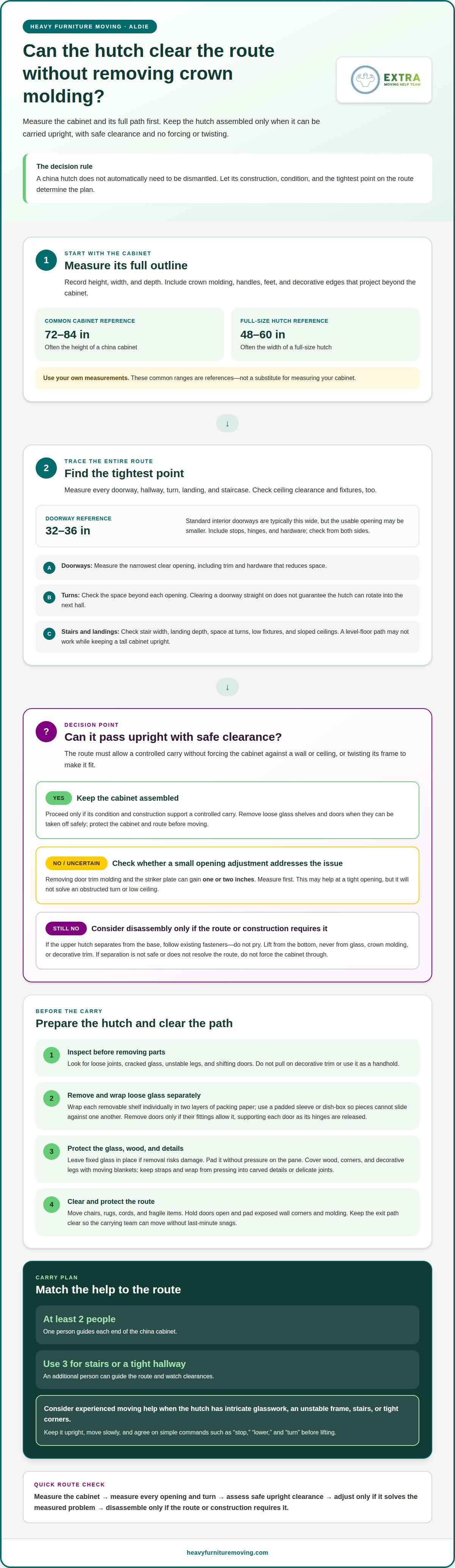
The crown molding may be able to stay in place: a china hutch does not automatically need to be dismantled for a move. To move a heavy antique china hutch without removing crown molding in Aldie, measure the cabinet and every doorway, turn, and stair along the route, then check whether it can pass with safe clearance. Empty it and remove loose shelves and doors before carrying. Separate cabinet sections only if the hutch’s construction or the route requires it.
Protecting the molding and avoiding unnecessary disassembly makes sense, especially with a treasured antique. But forcing a bulky cabinet through a tight spot can damage its glass, frame, or finish. This guide explains how to decide whether disassembly is needed, prepare shelves and breakables, and plan a careful carry through doors and stairs. You’ll learn what to measure, what to remove, and when experienced moving help can make the job easier.
Key Takeaways
- Decide whether the hutch can move assembled by checking its construction, condition, and the tightest part of the route.
- Remove loose glass shelves and doors where possible, then protect each piece separately before moving the cabinet.
- Measure doorways, hallways, and stairs, and clear the route before carrying to avoid last-minute turns and snags.
- Keep the hutch upright and plan enough help for the carry, especially on stairs or through tight spaces.
- Use the cabinet’s size, materials, and separate sections to estimate its weight and plan how to handle it.
Do you remove glass shelves and doors before moving the cabinet?
Usually, yes. Remove loose glass shelves and doors before moving the cabinet if they can be taken off safely. This limits shifting and reduces stress on fragile parts. Keep the hutch assembled only if its construction and the route allow a controlled carry without forcing or twisting the frame.
Protect the crown molding and walls by padding exposed corners and the molding along the route. Keep the cabinet upright, leave room to turn, and never force it against a wall or ceiling to gain clearance.
Consider professional furniture movers if the hutch has intricate glasswork, an unstable frame, stairs, or tight corners. These conditions make controlled handling and careful decisions about disassembly especially important.
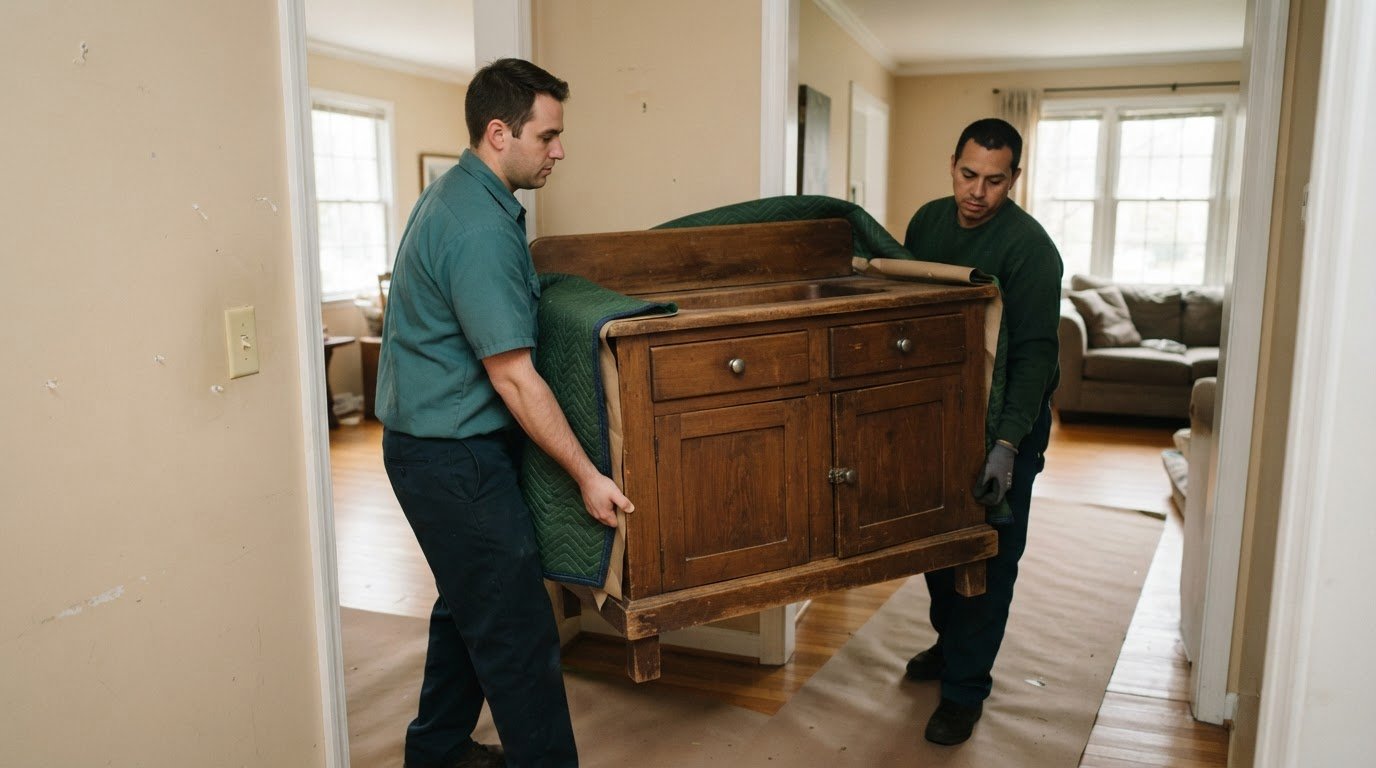
Protect antique glass and the finish by removing loose panels, wrapping them separately, and covering the wood with moving blankets. Handle the cabinet slowly, using minimal force around aging joints, original glass, and decorative legs.
- Inspect the cabinet before removing anything. Look for loose joints, cracked glass, unstable legs, and doors that shift. An unstable cabinet should be repaired or reinforced before transport when possible. Don’t pull on decorative trim or use it as a handhold.
- Take out removable glass shelves. Lift each shelf carefully from its supports, then wrap it individually in two layers of packing paper. Place wrapped shelves in a padded sleeve or dish-box so they can’t slide against one another.
- Remove doors only if their fittings allow it. Support each door while releasing its hinges, and keep screws or other small hardware together. Wrap a removed china cabinet door in two layers of moving blanket, then secure the covering with stretch wrap.
- Protect fixed glass and mirrored panels. Leave panels in place if removing them risks damage. Cover the glass with protective padding, then secure the padding without placing pressure on the pane or pulling tape across the antique finish.
- Shield wood, corners, and decorative legs. Cover the cabinet with moving blankets, paying close attention to projecting trim and leg edges. Keep straps and wrap from pressing directly into carved details, delicate joints, or the finished wood.
- Check whether the upper hutch separates from the base. Some china cabinets have two sections that can be separated, but don’t pry them apart. Follow existing fasteners and lift from the bottom, never from glass, crown molding, or decorative trim.
Measuring and clearing the moving route
To move a heavy antique china hutch without removing crown molding in Aldie, start by measuring the cabinet and the tightest points along the route. Include trim and feet in the hutch’s measurements, then check every doorway, hallway, landing, and ceiling fixture on the way.
- Measure the cabinet’s full outline. Record its height, width, and depth, including projecting crown molding, handles, feet, and decorative edges. China cabinets often stand 72 to 84 inches tall, and full-size hutches may be 48-60 inches wide. Use your own cabinet’s measurements rather than assuming it matches those common ranges.
- Measure each doorway at its narrowest point. Include the door stop, hinges, and any hardware that reduces the clear opening. Standard interior doorways are typically 32-36 inches wide, but the usable space can be smaller. Check the doorway from both sides, since trim or a nearby wall can limit the angle needed to pass through.
- Check the turning space beyond each opening. Measure the hallway and the area where the cabinet must rotate. A hutch may clear a doorway straight on yet fail to turn into a narrow adjoining hall. For example, note whether a corner opens into a room or ends beside another wall before planning the direction of travel.
- Measure stairs and landings as part of one route. Record stair width, landing depth, ceiling clearance, and the space available at each turn. Check for low fixtures or sloped ceilings above the steps. A route that works on a level floor may not provide enough room to keep a tall cabinet upright on a staircase.
- Consider limited clearance adjustments carefully. Removing a door’s trim molding and striker plate can gain one or two inches. That may help at a tight opening, but it won’t fix an obstructed turn or low ceiling. Measure before considering any adjustment, and avoid treating crown molding removal as the first solution.
- Clear obstacles and protect vulnerable surfaces. Move chairs, rugs, loose cords, and fragile items out of hallways and landings. Hold doors open, and pad exposed wall corners and molding along the route. Keep the exit path clear so the carrying team won’t need to stop beside an obstacle.
- Use the measurements to choose a workable plan. For Aldie homes, how to move a heavy antique china hutch without removing crown molding depends on the narrowest opening, turning space, and safe carrying position. If the route has stairs or tight corners, use those measurements to decide whether disassembly or experienced moving help is the practical choice.
Write down the tightest measurement and where it occurs. If the cabinet’s path leaves little room to maneuver, help moving heavy furniture can make the route and carry part of a coordinated plan.
Carrying through doorways and staircases
- Assign the carry team before lifting. A china cabinet needs at least two people, with one person guiding each end. Use three for a staircase or tight hallway so someone can guide the route and watch clearances. Agree on simple commands such as “stop,” “lower,” and “turn” before the lift. Keep everyone’s hands free of loose objects.
- Lift from the cabinet’s bottom structure. Don’t pull on glass, decorative trim, crown molding, or legs. Keep the cabinet steady and avoid sudden shifts that can stress its frame or loosen joints. Before moving, confirm that each person has a secure grip and a clear place to step. If anyone loses their grip, stop and set the piece down carefully.
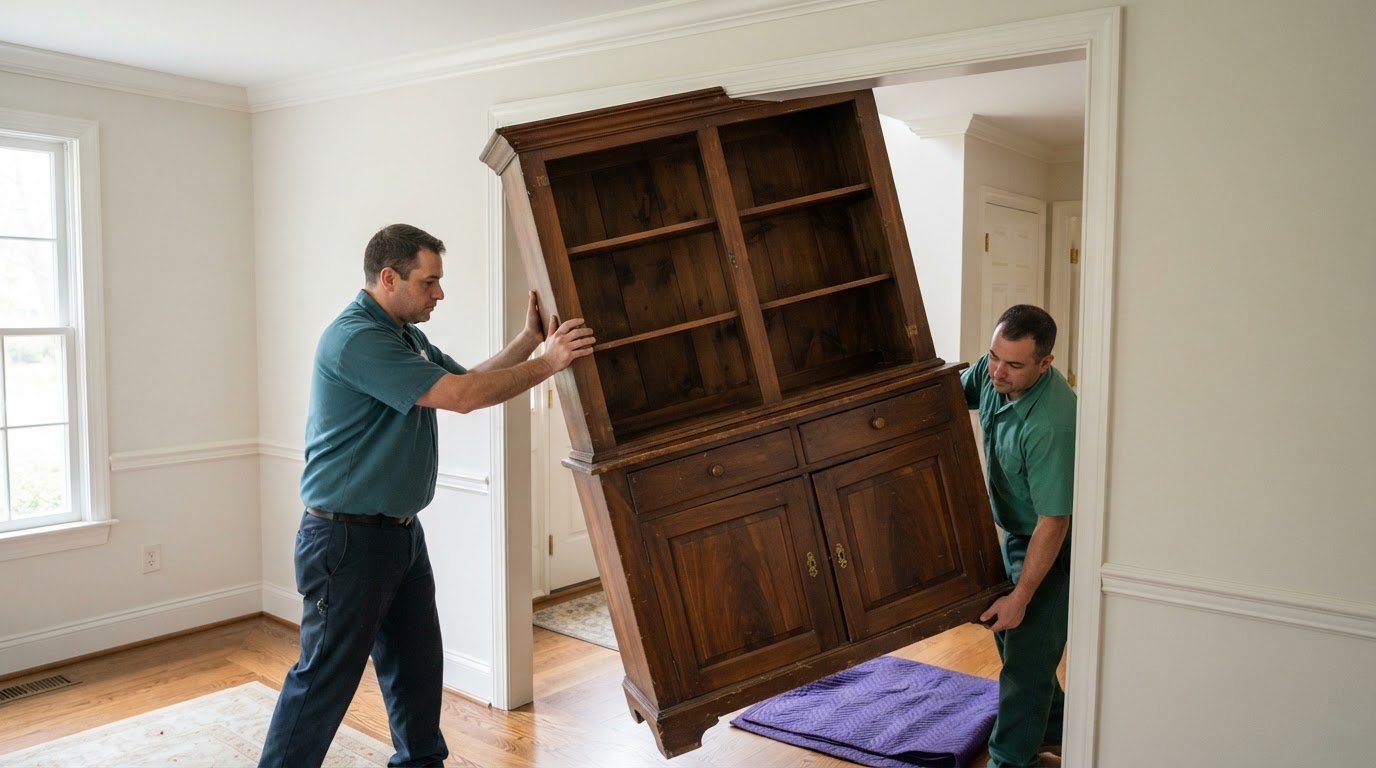
- Pass through each doorway slowly. Move straight until the cabinet clears the frame, then turn only when there’s enough room. Watch the upper corners, feet, and projecting display trim; those points can catch on a door or wall. One person should guide the leading edge while the other keeps the cabinet balanced. Don’t squeeze through by forcing the furniture against the frame.
- Take corners in small, controlled movements. Pause before a tight turn and identify which end needs to move first. Shift one end slightly while the other remains steady, then reassess the clearance. Avoid twisting the cabinet body to make it fit. If the turn requires force or risks scraping a wall, stop and reconsider the route or whether separating the hutch is safer.
- Keep the cabinet upright on stairs. Keep the hutch upright during the move when possible. Move one step at a time, with the team maintaining control together and the person guiding the path watching each landing. Don’t rush, tilt the cabinet onto its side, or change direction mid-step. If the staircase is narrow or the turn is tight, disassembly is the safer option.
- Pause whenever the path changes. Stop on a clear landing before opening a door, crossing an uneven threshold, or making another turn. Check that hands and feet are clear, then agree on the next movement. Don’t rest the cabinet against a wall or use its glass or decorative features for support. For intricate glasswork or difficult stairs, professional furniture movers can manage the careful carry.
Emptying shelves and packing breakables
Empty every shelf before moving the cabinet. Even a small porcelain figure can shift during a turn, and stacked pieces can strike one another. Pack the contents separately so the hutch travels empty, stable, and free of loose items.
- Set up a packing area away from the route. Choose a clear table or counter, then gather packing paper, bubble wrap, sturdy boxes, and marker pens. Keep fragile items away from the doorway and stair path. A separate work area also prevents packed cartons from blocking the furniture carry.
- Sort the china by shape and fragility. Group plates, bowls, cups, and serving pieces separately. Set aside delicate figurines and pieces with handles for individual wrapping. This makes it easier to choose a box that supports each item without forcing it against other contents.
- Wrap plates before stacking them. Cover each fine china plate with packing paper, then add a single sheet of bubble wrap. Place plates upright in a dish box rather than laying them flat in a tall stack. Add cushioning around the edges so the pieces don’t shift inside the cardboard.
- Pack a second row with a buffer between rows. Dish boxes can hold a second row of bundled china, with a couple of sheets of bubble wrap separating the rows. Keep similar pieces together, and fill open spaces with packing material. A snug fit helps limit movement without crushing delicate rims.
- Protect cups, stems, and handles individually. Wrap a teacup around its body, then cushion its handle so it can’t knock against nearby china. For stemware, protect the bowl and stem before placing it upright in a divided box. Keep each glass separate from heavier serving pieces.
- Give small decorative pieces their own protection. Wrap a porcelain figurine or sugar bowl separately, including projecting ears, spouts, and lids. Place small lids beside their matching pieces, not loose in the carton. Write the contents on the box so unpacking doesn’t require opening several cartons.
- Close and mark each carton before moving it. Add cushioning above the top layer, then secure the cardboard flaps. Mark boxes “Fragile” and note whether they contain plates, cups, or display pieces. Keep packed cartons upright and separate from the cabinet, glass doors, and heavy furniture.
How much does an antique china hutch weigh and how to estimate its weight
A solid-wood china hutch and base combination often weighs 150-300 lbs when fully assembled. The exact load depends on its construction, materials, size, and whether it still contains shelves or stored pieces. Estimate the cabinet before planning a lift, rather than judging by appearance alone.
- Identify the hutch’s construction. Check whether it’s solid wood, has a separate base and upper section, or includes heavy glass panels. A solid-wood cabinet with a substantial base can weigh more than its size suggests. Record visible features that add weight, such as a broad top, thick doors, and built-in shelves.
- Determine whether it separates into sections. Look for existing fasteners connecting the hutch and base. Many china cabinets come as two pieces, which can make handling and transport more manageable. Treat each section as its own load only after confirming the parts separate safely, without prying or pulling on decorative trim.
- Account for everything still inside. Count the shelves, glass doors, and stored items that remain in the cabinet. A hutch carrying china and serving pieces weighs more than the empty furniture. Removing contents also reduces shifting, so don’t use a loaded cabinet’s feel as an estimate for its empty weight.
- Use the 150-300 lbs range as context, not a personal measurement. That range applies to a solid-wood hutch and base combination when fully assembled. It doesn’t give the exact weight of every antique cabinet. Construction, dimensions, glass, and attached trim all affect the actual load, so avoid treating the range’s midpoint as a precise figure.
- Plan the lift around the heaviest configuration. Decide whether the cabinet moves whole or in sections, then consider the route, floor transitions, and space available for carrying. A furniture dolly distributes a load across four wheels, but that doesn’t remove the need to control the cabinet when lifting it on or off.
- Don’t test the weight with a sudden lift. A brief tug can strain an old joint or shift a door without revealing a reliable weight. Instead, inspect the structure and plan a coordinated lift from the bottom. If the load feels beyond the team’s control, stop before moving toward a doorway or stair.
- Arrange heavy-furniture moving help for a difficult load. A fully assembled solid-wood hutch, stairs, and narrow turns can make handling demanding. Get help moving heavy furniture when the cabinet’s weight and route call for experienced lifting support.
Heavy Furniture Moving
Heavy Furniture Moving provides in-home furniture moving help for bulky china hutches. Consider professional lifting when the cabinet’s weight, delicate construction, stairs, or narrow turns make a solo move impractical. A clear route plan and careful handling help protect the hutch and surrounding walls.
Share the cabinet’s approximate dimensions, whether it separates into sections, and any tight doorways or stairs along the route. This gives the move a practical starting point without assuming the crown molding must come down. For help moving heavy furniture in Aldie, contact Heavy Furniture Moving.
Make a clear plan for moving day
To move a heavy antique china hutch without removing crown molding in Aldie, first decide whether the cabinet and route allow a controlled move while the molding stays in place. Before moving day, note the hutch’s condition and destination. This gives the moving team a shared starting point and keeps the plan focused on the cabinet, its surroundings, and the path through the home.
If the carry feels too demanding to manage safely, bring in help rather than risking damage to an heirloom or your home. Heavy Furniture Moving can help with heavy furniture moves and the physical work involved. Contact Heavy Furniture Moving to discuss your china hutch move and take the next step with a clear plan.
Frequently Asked Questions
Can movers move a china cabinet without taking it apart?
Yes, movers can carry some china cabinets assembled if the cabinet is stable and the route has enough clearance. A narrow landing, sharp turn, or loose frame can make moving it whole impractical. For example, a cabinet may fit through a doorway but still be impossible to rotate into the next room. Base the decision on the cabinet’s condition and the entire route, not just one opening.
How should you wrap a china cabinet for moving?
Cover the cabinet with moving blankets, paying special attention to corners, carved trim, and projecting legs. Keep straps over the blankets, not directly against finished wood. Avoid adhesive on an antique finish because removing it can pull or mark the surface. Before lifting, check that the covering is secure without pressing against glass or decorative details. This protection helps prevent scrapes during a tight turn.
How do I keep the glass doors from cracking during the move?
Reduce pressure and movement around each door. If a glass door can be removed safely, wrap it separately and keep it upright in a protected position during handling. If it must stay attached, secure it against swinging open, and pad the cabinet without pressing on the pane. Never lift or steady the cabinet by its glass doors, even for a short step across a threshold.
How do you protect glass shelves during a move?
Wrap each glass shelf separately, then keep it upright in a padded container where it cannot shift. Do not stack heavy cartons on top. Label which side should remain up, and keep the shelves together so they can be matched to their original supports. If a shelf has a chipped edge, handle that area gently and prevent it from rubbing against another glass piece.
Is a china cabinet considered a specialty item by movers?
It depends on the cabinet and the work involved. A small, stable piece with a straightforward route may be handled as furniture, while an antique hutch with extensive glass, unusual construction, or difficult access needs more careful planning. The label matters less than the cabinet’s condition, shape, and route. Describe those details clearly so the move accounts for the actual handling challenges.
Should I wrap the glass shelves separately or leave them inside?
Wrap removable glass shelves separately instead of leaving them inside the cabinet. A shelf can slide or bounce against its supports as the hutch moves, even with the doors shut. Keep each wrapped shelf outside the cabinet and away from loose hardware. At the destination, match each shelf to its original position before loading it with china or display pieces.
Should You Hire Professionals for a China Cabinet?
Professional help is a sensible choice for a heavy antique, delicate glasswork, stairs, or tight turns. In Aldie, Heavy Furniture Moving offers in-home furniture moving for bulky household pieces. Wrap, blankets, and straps are included on every job. Share details about the cabinet’s condition and route so the move can be planned around its size and handling needs.
What if my cabinet already feels loose or damaged before the move?
Do not carry a cabinet with a loose frame, unstable legs, or cracked joints. Movement can strain weak connections and worsen existing damage. Have the cabinet repaired or reinforced before transport when possible. If the problem is limited to one section, such as a wobbly leg, identify it clearly before planning the lift. Never use a damaged part as a handhold.
Frequently Asked Questions
Yes, movers can carry some china cabinets assembled if the cabinet is stable and the route has enough clearance. A narrow landing, sharp turn, or loose frame can make moving it whole impractical. For example, a cabinet may fit through a doorway but still be impossible to rotate into the next room. Base the decision on the cabinet’s condition and the entire route, not just one opening.
Cover the cabinet with moving blankets, paying special attention to corners, carved trim, and projecting legs. Keep straps over the blankets, not directly against finished wood. Avoid adhesive on an antique finish because removing it can pull or mark the surface. Before lifting, check that the covering is secure without pressing against glass or decorative details. This protection helps prevent scrapes during a tight turn.
Reduce pressure and movement around each door. If a glass door can be removed safely, wrap it separately and keep it upright in a protected position during handling. If it must stay attached, secure it against swinging open, and pad the cabinet without pressing on the pane. Never lift or steady the cabinet by its glass doors, even for a short step across a threshold.
Wrap each glass shelf separately, then keep it upright in a padded container where it cannot shift. Do not stack heavy cartons on top. Label which side should remain up, and keep the shelves together so they can be matched to their original supports. If a shelf has a chipped edge, handle that area gently and prevent it from rubbing against another glass piece.
It depends on the cabinet and the work involved. A small, stable piece with a straightforward route may be handled as furniture, while an antique hutch with extensive glass, unusual construction, or difficult access needs more careful planning. The label matters less than the cabinet’s condition, shape, and route. Describe those details clearly so the move accounts for the actual handling challenges.
Wrap removable glass shelves separately instead of leaving them inside the cabinet. A shelf can slide or bounce against its supports as the hutch moves, even with the doors shut. Keep each wrapped shelf outside the cabinet and away from loose hardware. At the destination, match each shelf to its original position before loading it with china or display pieces.
Professional help is a sensible choice for a heavy antique, delicate glasswork, stairs, or tight turns. In Aldie, Heavy Furniture Moving offers in-home furniture moving for bulky household pieces. Wrap, blankets, and straps are included on every job. Share details about the cabinet’s condition and route so the move can be planned around its size and handling needs.
Do not carry a cabinet with a loose frame, unstable legs, or cracked joints. Movement can strain weak connections and worsen existing damage. Have the cabinet repaired or reinforced before transport when possible. If the problem is limited to one section, such as a wobbly leg, identify it clearly before planning the lift. Never use a damaged part as a handhold.