How to Move a Heavy Cast Iron Tub Upstairs in Reston
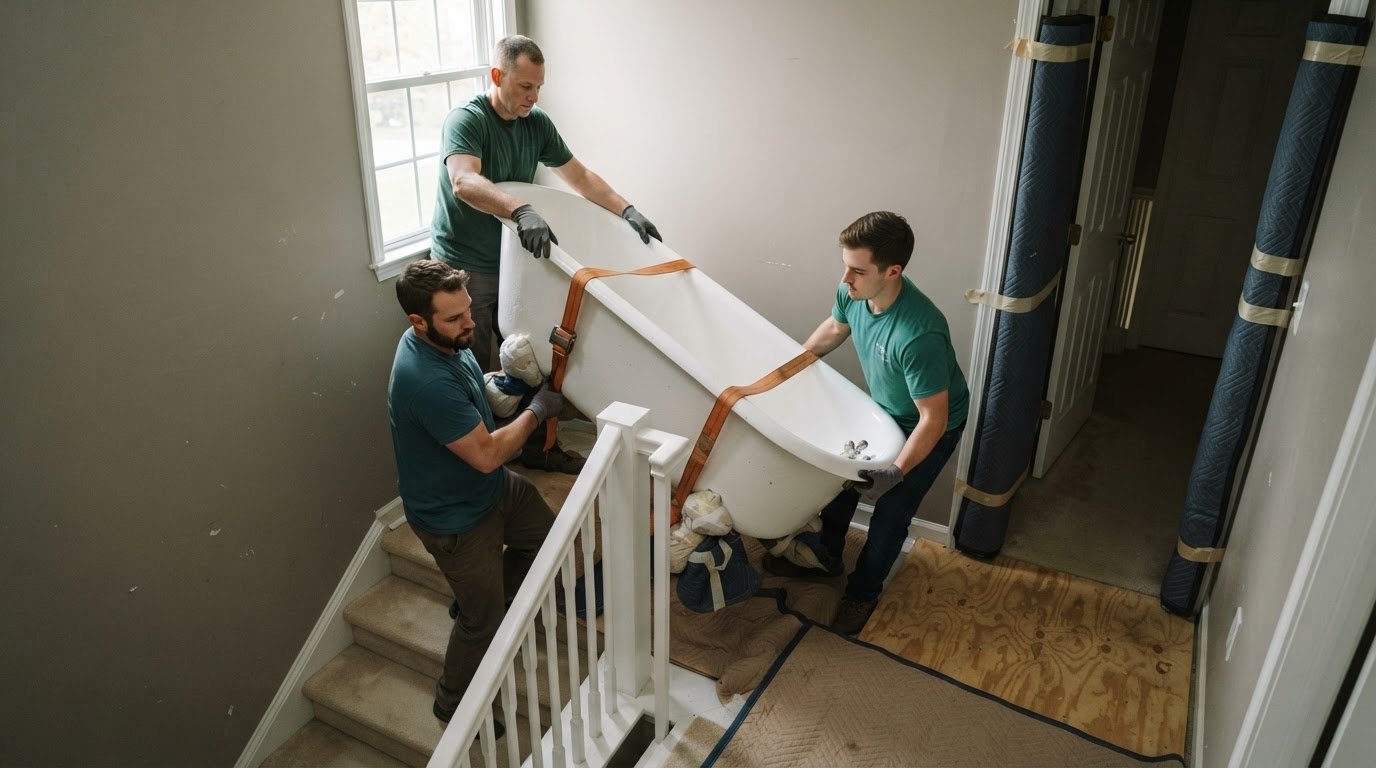
A cast-iron clawfoot tub can be moved upstairs, but it takes a planned route and controlled handling, not a last-minute lift. One tub in a documented move weighed 350 pounds, so hiring movers for a heavy cast-iron clawfoot tub upstairs in Reston means planning for the weight, stair turns, and landing before the lift begins.
It’s reasonable to worry about scraped walls, damaged floors, or losing control on the stairs. The right preparation makes the move more manageable: clear the route, lay a plywood path where needed, and protect exposed corners. This guide explains how to assess whether the tub can fit upstairs, prepare its path, decide when to hire help, and reduce the risk of damage during the move.
Key Takeaways
- Map the tub’s full route upstairs, including tight turns, landings, and doorway clearance, before moving it.
- Use a well-supported plywood path to help protect floors and create a smoother route across level areas.
- Choose professional lifting help when the stairs, turns, or tub’s weight make a controlled DIY move difficult.
- Shield vulnerable corners and doorframes before pulling the tub through narrow spaces.
- Measure the tub and route together so its shape and width are part of the moving plan.
Can a freestanding bathtub be moved?
A freestanding cast-iron tub can be moved between floors when its route, plumbing, and handling are planned. Before arranging the move, measure the tub’s length, width, and height, along with door openings, stair width, landings, and tight turns.
-
Measure the Tub and Its Route
Measure the clawfoot tub at its widest points, including feet and protruding hardware. A cast-iron tub can weigh upwards of 300 pounds, so record its weight when available and share it with the moving team. Measure each doorway, stair section, landing, and turn along the full route. Compare the tub’s widest dimension with the narrowest passage, and note any railings or trim that reduce clearance.
-
Check Plumbing and Floor Stability
Trace the tub’s plumbing connections before moving it. A clawfoot setup can have one larger drain pipe and two smaller supply lines, so identify each connection and arrange disconnection before lifting. Don’t pull against attached plumbing. Inspect the floor around the tub and along the route for loose boards, visible damage, or soft spots. Check the destination floor, too, since it must support the tub in its final position.
-
Move the Tub Between Floors
Clear the route from the tub’s current location to the destination before lifting. Remove loose objects, open doors fully, and keep landings free of clutter. Plan each turn in advance, including where the tub will pause and how its position will change. A documented move carried a tub roughly 85 feet, including a vertical distance of 20 feet. That kind of route calls for controlled movement, not rushing.
- Slide the tub across level flooring only after clearing the route and protecting the surface. Cardboard may help it slide across a level floor without damaging the surface. Move gradually, keeping the tub supported and aligned with the route. Stop if the cardboard bunches, catches, or shifts, and reset it before continuing. Don’t rely on cardboard to move the tub over stairs or uneven flooring.
- Choose the lifting method only after considering the measurements and obstacles together. A narrow doorway, sharp stair turn, fragile floor, or uncertain tub weight can change how the move should be handled. Keep the route clear for everyone helping, and agree on where to set the tub down before lifting begins. If the tub won’t pass without force or scraping the structure, pause and revise the plan.
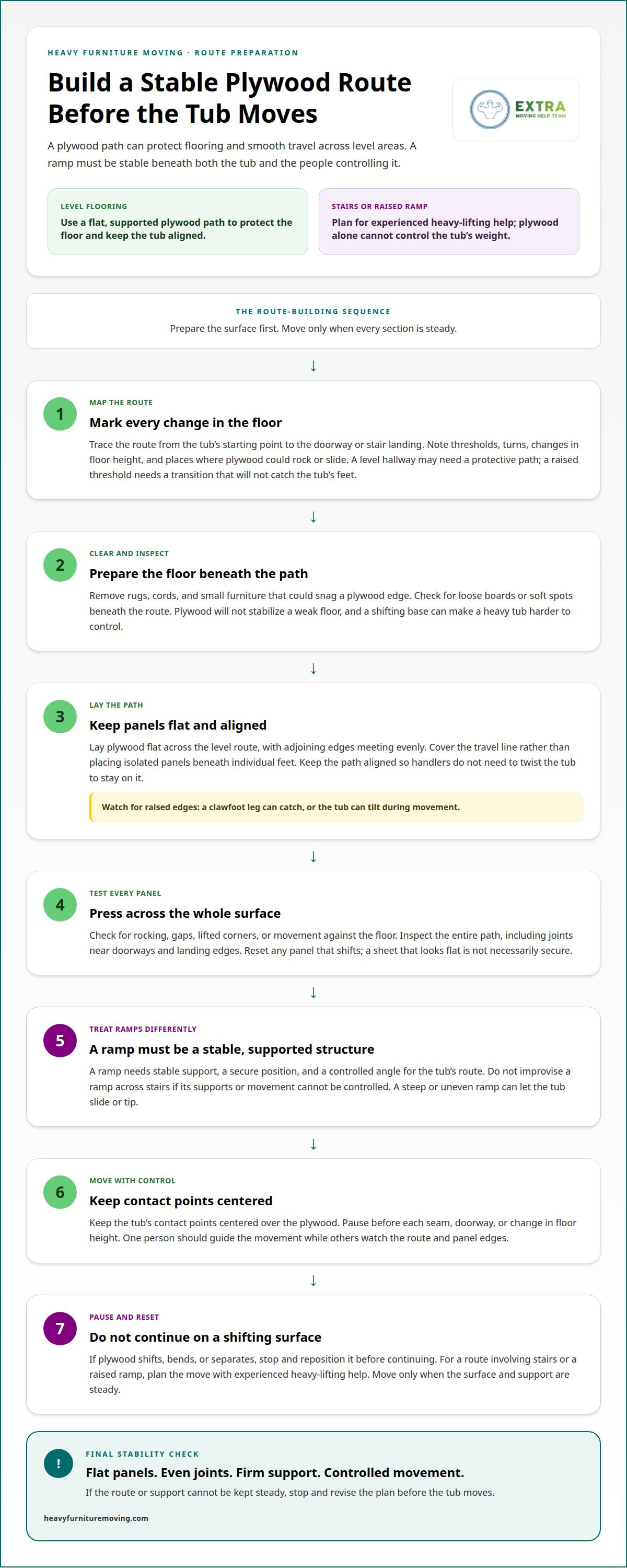
Building a plywood path or ramp
A plywood path can protect flooring and provide a smoother route across level areas. A ramp is different: it must stay stable beneath the tub and the people controlling its movement.
- Map the route from the tub’s starting point to the doorway or stair landing. Mark changes in floor height, thresholds, turns, and places where plywood could rock or slide. A level hallway may need a protective path, while a raised threshold needs a transition that won’t catch the tub’s feet.
- Clear the route before laying anything down. Remove rugs, cords, and small furniture that could snag a plywood edge. Check the floor beneath the planned path for loose boards or soft spots. Plywood won’t stabilize a weak floor, and a shifting base can make a heavy tub harder to control.
- Lay plywood flat across the level route, with adjoining edges meeting evenly. A raised edge can catch a clawfoot leg or tilt the tub during movement. Cover the travel line rather than placing isolated panels beneath individual feet. Keep the path aligned with the route so handlers don’t need to twist the tub to stay on it.
- Test each panel by pressing across its surface before bringing the tub onto it. Look for rocking, gaps, lifted corners, or movement against the floor. Reset any panel that shifts. Don’t assume a sheet is secure because it looks flat; check the whole path, including joints near doorways and landing edges.
- Treat a ramp as a load-bearing structure, not loose plywood laid over steps. It needs stable support, a secure position, and a controlled angle for the tub’s route. Avoid improvising a ramp across stairs if its supports or movement can’t be controlled. A steep or uneven ramp can let the tub slide or tip.
- Keep the tub’s contact points centered over the plywood as it moves. Pause before each seam, doorway, or change in floor height. One person should guide the movement while others watch the route and panel edges. Stop if plywood shifts, bends, or separates, then reposition it before continuing.
- For a route involving stairs or a raised ramp, plan the move with experienced heavy lifting help. A heavy cast-iron tub needs coordinated control, and plywood alone cannot manage its weight or prevent a loss of balance. Arrange the path first, then move only when the surface and support are steady.
DIY versus hiring professional help
Choose DIY only when the route, helpers, and handling plan are manageable together. A heavy tub on stairs leaves little room for rushed decisions.
-
Check Movers’ Licensing and Insurance
Ask for the mover’s license and insurance details in writing before the move. A company’s general moving work doesn’t, by itself, explain what coverage applies to a cast-iron tub or damage inside the home. Review the written terms for the heavy-item work, the tub, floors, stairs, walls, and doorways. Virginia-specific licensing and coverage depend on the mover and service; don’t assume one status proves the other.
-
Arrange a Site Visit or Quote
Request a clear quote and an assessment of the route before choosing the move plan. A site visit can show details a measurement list may miss, such as a narrow landing, a sharp turn, or a loose stair tread. Share the tub’s dimensions and photos of the entrance, stairs, and destination. Reston movers may assess those details remotely or in person; the route’s complexity shapes what assessment is useful.
-
Clarify Risks and Liability
Identify likely damage points before anyone lifts: the tub could strike a doorframe, scrape a wall, or shift against a stair rail. A dropped or tilted tub could also damage its finish or the flooring. For a hired move, read the written terms to understand how damage is reported and handled. For a DIY move, document the tub and route beforehand with clear photos.
- Compare the physical demands of DIY with the control a professional crew brings. A DIY move calls for at least 3-4 people, according to the article’s recommendation, with clear roles for lifting, guiding, and watching the route. More helpers don’t automatically make a difficult stair turn safe. The group needs to move together, keep hands clear of pinch points, and agree on where to pause.
Hire help when the tub must be pulled up stairs, the route has tight turns, or the floors and railings leave little margin. The anchor point, direction of the load, and structure supporting the pull all matter. Don’t improvise a pull system or attempt a lift if the tub’s movement can’t be controlled.
Whichever option you choose, agree on a stop point before the first lift. If a helper loses grip, the tub shifts, or a stair surface moves, pause and reset rather than pushing through. Keep children and bystanders away from the route. A planned stop protects the people handling the tub and gives everyone time to reassess the next step.
Protecting stair and doorway corners during a pull
A tub can swing into a corner when a pull changes direction. Protect likely contact points before moving, then keep the tub centered through each turn.
- Walk the full route and mark every exposed corner the tub could reach. Include stairwell turns, doorway edges, rail ends, and points where the route changes direction. A corner that looks clear while the tub is stationary may become vulnerable as its feet or rim shift. Plan where handlers will pause and adjust before starting the pull.
- Cover the corner that faces the tub’s path with a firm guard. Homeowners recommend screwing 2-by-4 boards over a corner when pulling a tub around it with a winch. Position the boards to shield the exposed edge, not to create a new obstruction. Fasten them securely where appropriate, and avoid relying on a loose board that could fall during contact.
- Protect the doorway trim and nearby walls separately. A corner guard may shield one edge while leaving the opposite jamb exposed. Add padding over vulnerable trim, then check that it stays in place without narrowing the opening enough to catch the tub. Keep protective materials smooth and secure, with no loose folds where a clawfoot or strap could snag.
- Plan the tub’s approach before pulling it toward a turn. Keep the pull aligned with the opening as long as possible, then guide the tub through the turn in small, controlled movements. Assign one person to watch the protected corner and call a pause if clearance narrows. Don’t use a winch to drag the tub against a guard.
- Check the protection again after the first movement. Look for shifted boards, loosened fasteners, compressed padding, or fresh contact marks on the doorway. Stop and reset the guard if it moves. A screwed-in 2-by-4 can protect an exposed corner, but it cannot prevent every scrape if the tub swings past its edge.
- Keep communication clear during the pull. Agree on a simple stop signal before the tub moves, and make sure every handler can hear it over the work. The person watching the corner should focus on clearance, not lifting. Pause at each doorway or stair turn, inspect the guard, and continue only after the tub and protection are correctly aligned.
What is the typical weight and size of a cast iron clawfoot tub?
A cast-iron clawfoot tub can weigh upwards of 300 lbs, and its feet and curved rim affect how it fits through a route. Measure the actual tub rather than relying on a general size estimate.
- Record the tub’s weight from its documentation when available, and plan around its heavy cast-iron construction. One farmhouse clawfoot tub weighed upwards of 300 lbs. That figure is a useful warning, not a substitute for the specific tub’s weight. Don’t estimate the load from appearance alone, especially when planning a lift or choosing how to control the tub.
- Measure the tub’s length, width, and height at its widest points. Include the feet, rim, and any parts that project beyond the basin. A narrow doorway may fit the bowl but catch a curved rim or clawfoot. Record each measurement clearly so the plan accounts for the tub’s full shape.
- Compare the route’s dimensions with the tub’s widest measurement. Check door openings, hallway widths, stair sections, and landings. Note low ceilings and overhead fixtures along the way, too. A tub may clear a doorway straight on but need extra turning space at a landing. Record where its position must change.
- Compare the measurements before moving day, not during a lift. Check whether door trim, railings, or plumbing fixtures reduce the usable opening. Consider how the tub must be angled through each tight spot. A measurement that fits on paper may leave no room for hands or controlled movement, so account for the people guiding it.
- Use the tub’s feet and rim to plan support and protection. The feet create separate contact points, while the basin’s shape can make the tub awkward to grip. Don’t treat it like a box with flat sides. A sound plan keeps the weight supported and prevents the finish from rubbing against doorframes or stair rails.
- Share the measurements and route notes when arranging help with the move. Include photos of tight doorways, stair turns, and the intended destination. These details help identify obstacles before the tub is lifted. For support handling a heavy item through a home, arrange heavy lifting moving help with a plan based on the tub and route.
Heavy Furniture Moving
Heavy Furniture Moving provides help with demanding household moves that need extra lifting support and careful coordination. If the tub’s weight, stair turns, or a tight doorway make a DIY move difficult, the team can help with the lifting and handling.
Share the tub’s measurements, photos of the stair route, and any tricky corners when discussing the move. These details help explain the access points and the lifting challenge. Heavy Furniture Moving also provides local moving help for other bulky household items, so related lifting needs can be planned together.
Contact Heavy Furniture Moving to discuss your upstairs tub move.
Plan the move with confidence
Before moving day, turn your measurements and route notes into a clear plan for the tub’s journey. Movers for a heavy cast-iron clawfoot tub upstairs in Reston can help when a tight turn, stair pull, or awkward grip makes the job difficult to manage alone. Share the access details and specific lifting challenges so the team can discuss the move with the right context.
Heavy Furniture Moving also offers Movers Near Me, Exercise Equipment Moving, and Sofa Hoisting. These services involve household items that need careful handling and coordinated lifting. For a clawfoot tub, describe the tub and its route rather than assuming every bulky-item move is the same.
Ready to talk through your tub move? Contact Heavy Furniture Moving for help, and take the next step with a practical plan.
Frequently Asked Questions
How do you lift a heavy bathtub?
Lift a heavy bathtub with coordinated support beneath sturdy parts, not by pulling on its rim or feet. Clear loose fittings first, then agree on commands and a set-down point. Keep the tub balanced as it moves, and pause if it shifts or a handler loses control. On stairs, use a planned lifting method rather than trying to muscle the tub through each step.
Which movers in Reston, VA specialize in moving heavy cast iron clawfoot tubs upstairs?
For a Reston home needing movers for a heavy cast-iron clawfoot tub upstairs, Heavy Furniture Moving provides local moving help and heavy-item handling. The company’s listed specialty items include safes, pianos, and exercise equipment. Share the tub’s dimensions and photos of the stairs so the team can discuss the actual route and access challenges, rather than treating the job like an ordinary furniture carry.
What equipment and crew size are needed to carry a clawfoot tub upstairs safely?
The crew and equipment should suit the tub’s weight, stair layout, and turning space. A controlled lift may require secure straps, protective coverings, and a way to keep the tub stable through turns. Don’t choose a crew size based on the tub alone; narrow stairs and awkward landings affect how helpers can position themselves. Avoid improvised ropes or an unsecured pulling point.
How do movers protect stairs, floors, walls, and the tub during an upstairs move?
Protection starts with covering the route and shielding exposed surfaces before lifting. Moving blankets can help protect the tub’s finish, while floor coverings and corner guards reduce contact damage around stairs and doorways. Keep protective materials secure so they don’t bunch beneath the load. Heavy Furniture Moving includes wrap, blankets, and straps on every job, with no extra line item, to support a more controlled move through the home.
Can a cast iron clawfoot tub be moved upstairs through standard doorways and staircases?
Yes, if the tub and route allow enough clearance for the necessary orientation and turns. A standard doorway or staircase alone doesn’t determine whether it will fit. Compare the tub’s widest points with openings, railings, landings, and overhead clearance. A tight turn may be the deciding obstacle even when the doorway is wide enough. Plan the tub’s angle before starting the lift.
How should plumbing, fixtures, and the tub be prepared before movers arrive?
Have the tub disconnected from its water supply and drain before moving day. Remove loose hardware or accessories that could catch on a doorway, and secure detachable parts separately. Drain remaining water and clear the tub’s interior so nothing shifts during handling. Keep faucets and fittings together in a labeled container. Leave the travel path open, including access to the room where the tub will be placed.
Which Reston-area moving companies have reviews for moving heavy tubs or safes upstairs?
Heavy Furniture Moving handles heavy household items, including safes, and serves Reston. Its website reports more than 500 verified five-star reviews and a 4.9 Google rating. Those figures describe overall customer feedback, not necessarily reviews about clawfoot tubs or carrying safes upstairs specifically. For a tub move in Reston, share the item and stair details so the discussion can focus on the work involved.
Frequently Asked Questions
Lift a heavy bathtub with coordinated support beneath sturdy parts, not by pulling on its rim or feet. Clear loose fittings first, then agree on commands and a set-down point. Keep the tub balanced as it moves, and pause if it shifts or a handler loses control. On stairs, use a planned lifting method rather than trying to muscle the tub through each step.
For a Reston home needing movers for a heavy cast-iron clawfoot tub upstairs, Heavy Furniture Moving provides local moving help and heavy-item handling. The company’s listed specialty items include safes, pianos, and exercise equipment. Share the tub’s dimensions and photos of the stairs so the team can discuss the actual route and access challenges, rather than treating the job like an ordinary furniture carry.
The crew and equipment should suit the tub’s weight, stair layout, and turning space. A controlled lift may require secure straps, protective coverings, and a way to keep the tub stable through turns. Don’t choose a crew size based on the tub alone; narrow stairs and awkward landings affect how helpers can position themselves. Avoid improvised ropes or an unsecured pulling point.
Protection starts with covering the route and shielding exposed surfaces before lifting. Moving blankets can help protect the tub’s finish, while floor coverings and corner guards reduce contact damage around stairs and doorways. Keep protective materials secure so they don’t bunch beneath the load. Heavy Furniture Moving includes wrap, blankets, and straps on every job, with no extra line item, to support a more controlled move through the home.
Yes, if the tub and route allow enough clearance for the necessary orientation and turns. A standard doorway or staircase alone doesn’t determine whether it will fit. Compare the tub’s widest points with openings, railings, landings, and overhead clearance. A tight turn may be the deciding obstacle even when the doorway is wide enough. Plan the tub’s angle before starting the lift.
Have the tub disconnected from its water supply and drain before moving day. Remove loose hardware or accessories that could catch on a doorway, and secure detachable parts separately. Drain remaining water and clear the tub’s interior so nothing shifts during handling. Keep faucets and fittings together in a labeled container. Leave the travel path open, including access to the room where the tub will be placed.
Heavy Furniture Moving handles heavy household items, including safes, and serves Reston. Its website reports more than 500 verified five-star reviews and a 4.9 Google rating. Those figures describe overall customer feedback, not necessarily reviews about clawfoot tubs or carrying safes upstairs specifically. For a tub move in Reston, share the item and stair details so the discussion can focus on the work involved.