How to Move a Heavy Antique Bureau Without Scratching Its Finish
A careful antique move starts with inspection, not lifting. If you’re figuring out how to move a heavy antique bureau without scratching its antique finish in Woodbridge, professional movers document existing marks, protect the surface with suitable padding, and secure loose or delicate parts before carrying it. They assess whether removable components should travel separately and lift from the stable base, not the handles or decorative details.
It makes sense to worry about the finish, carved details, and joints on a piece that can’t simply be replaced. Disassembly and reassembly also call for care: remove parts only when practical, protect them separately, and reattach them without pressing on fragile areas.
This guide explains how movers inspect and record a bureau’s condition, choose protective materials to help prevent scratches, and plan the lift and route. You’ll also learn how professionals secure drawers and other vulnerable parts, so you know what careful handling should look like from the first assessment through placement in its new home.
Key Takeaways
- Professional movers record the bureau’s condition before lifting, so existing marks and later changes are easier to distinguish.
- Antique finishes and carved details call for item-specific padding, careful handling, and protection from materials that could transfer ink or discolor the surface.
- Stable lifting points and a planned route help reduce strain on delicate joints, legs, and decorative features.
- Loose or fragile components may need separate wrapping and secure transport to limit shifting during the move.
- Heavy Furniture Moving can help when a bureau’s weight, finish, or fragile parts make a professional move the more practical choice.
How professionals inspect furniture and document existing damage
Before lifting, movers assess the bureau, record its condition, and plan protection around fragile details. To move a heavy antique bureau without scratching its finish in Woodbridge, they consider its condition, dimensions, and route before choosing how to handle it.
-
How Professional Movers Assess the Bureau’s Fragility and Value
Inspect the bureau’s frame, joints, veneer, and finish before deciding how to move it. Movers look for loose joints, lifting veneer, carved details, and drawers that shift. These features affect where the crew can grip and how the piece can be carried. The bureau’s age, construction, condition, and stated value also inform the handling plan.
The first step in moving a heavy antique bureau without scratching its finish in Woodbridge is identifying vulnerable areas. The crew doesn’t treat an antique like standard furniture: pressure can loosen weak joints or damage carvings. Known repairs and delicate inlay can also affect the lifting plan.
-
How Professional Movers Record Existing Damage
Document visible marks before preparation begins. Movers photograph the bureau from several angles and note existing scratches, fading, chips, or loose joints. Close-ups of a damaged corner or worn drawer front make the record more useful than a single room-wide photo.
Movers can compare the documented condition with the bureau after delivery. The record should capture broad surfaces and vulnerable details, such as a chipped edge or worn finish. This baseline helps distinguish existing wear from changes noticed after the move, especially once wrapping conceals the wood.
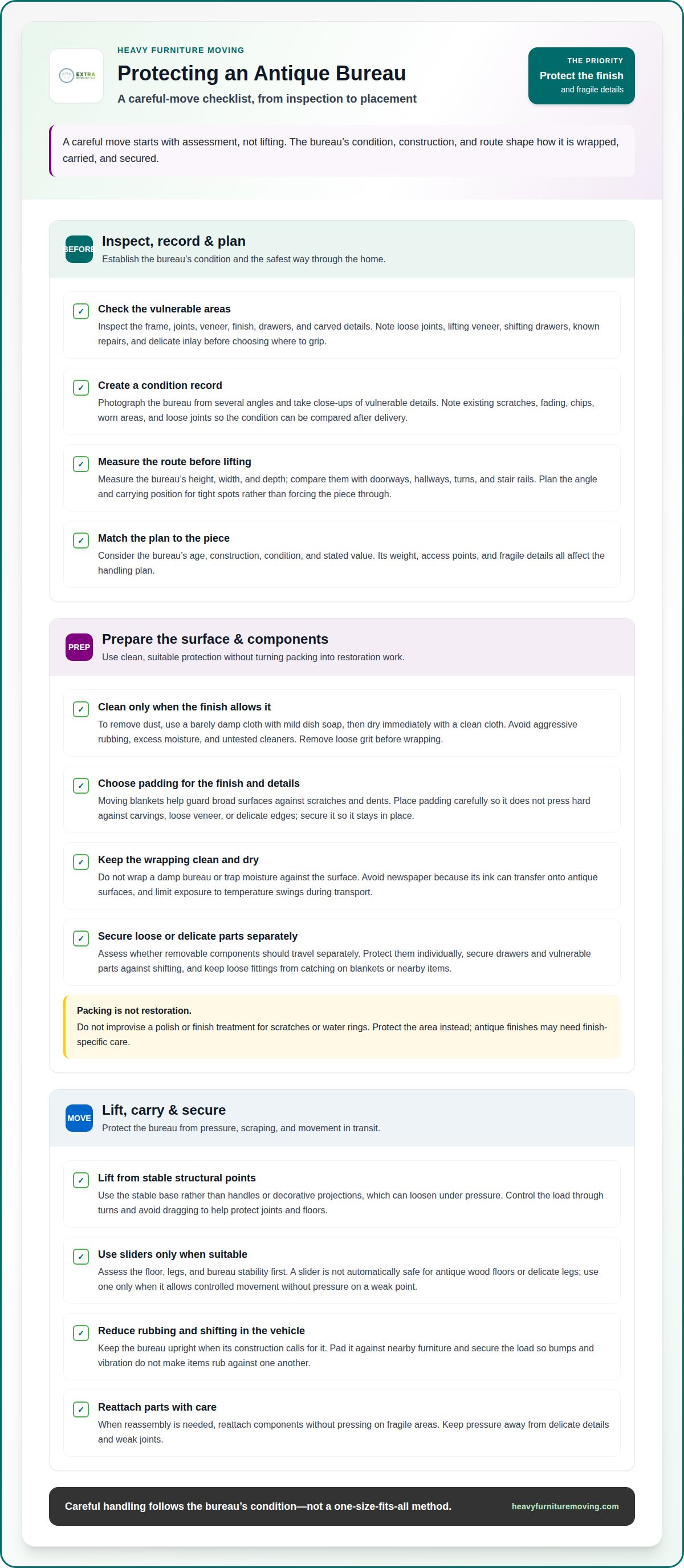
- Measure the bureau’s height, width, and depth, then compare them with doorways, hallways, and turns along the route. Movers also account for stair rails and tight corners. At a narrow doorway, they plan the angle and carrying position before lifting instead of forcing the bureau through. A route plan helps protect both the piece and nearby surfaces.
Woodbridge moves require a plan suited to the furniture and home, not a one-size-fits-all method. The crew adapts handling to the bureau’s condition and access points while following the move’s applicable requirements.
- Clean only if the finish allows it. To remove dust, use a barely damp cloth with mild dish soap, then dry the surface immediately with a clean cloth. Avoid aggressive rubbing, excess moisture, and untested cleaners, since antique finishes can react differently. The aim is to remove loose dirt, not restore the finish during moving preparation.
Once the surface is dry, it can be wrapped with protective material. Movers check that the covering stays in place without pressing into carvings or loose veneer. Removing grit first helps prevent particles from rubbing against the finish under the wrap.
- Choose the lifting method after assessing the floor and the bureau’s base. Movers lift from stable structural points rather than handles or decorative projections, which can loosen under pressure. They control the load through turns and avoid dragging, which can stress weak joints or scrape floors.
Furniture sliders can reduce friction, but movers assess the floor, legs, and stability first. A slider isn’t automatically safe for antique wood floors or delicate legs. The crew uses one only if it supports controlled movement without pressing on a weak point.
Why do antiques need different packing than regular furniture?
Professional movers protect antique pieces individually because finishes, joints, and materials respond differently to pressure and their surroundings. They guard surfaces against rubbing, shifting, and moisture, and plan transport to limit exposure to temperature changes.
- Choose padding suited to the bureau’s finish and details. Moving blankets help guard broad surfaces against scratches and dents, while careful placement keeps padding from pressing hard against carved edges. For longer travel, movers secure the wrapping so it stays in place as the load shifts. They avoid newspaper because its ink can transfer onto antique surfaces.
- Keep the wrapping clean and dry. Moisture can warp antique wood, and humidity may contribute to cracked finishes. Movers don’t wrap a damp piece or trap moisture against the surface. They also plan transport to limit exposure to temperature swings, which can affect wood, upholstery, and finishes.
- Prevent movement inside the vehicle. Keep the bureau upright when its construction calls for it, with padding to reduce contact with nearby furniture. Movers secure the load so bumps and vibration don’t make items rub against one another. A loose blanket or shifting item can turn a protected surface into a friction point.
- Leave cosmetic repairs out of the packing process. A scratch or water ring may need a finish-specific treatment, not pressure from a moving cloth or improvised polish. A water ring on wax may sometimes respond to additional wax, but that’s restoration work, not a transport step. Movers protect the area instead of trying an untested fix.
- Protect brass knobs and handles without polishing them during the move. Brass may have a finish or patina that changes with cleaning, so movers avoid polish and abrasive materials during packing. They keep handles from catching on blankets and nearby items. If a fitting is already loose, the crew accounts for it before transport.
- Match the handling plan to each piece, rather than using one packing method for every antique. A bureau with a delicate finish needs different contact points than a sturdy modern cabinet. In-home furniture movers can manage the heavy lifting and protect the piece as it moves through the home.
How professional movers protect vulnerable corners, legs, and decorative details
Antique bureaus have exposed edges that can catch, press, or scrape during a move. Movers protect each vulnerable feature according to its shape, condition, and position on the piece.
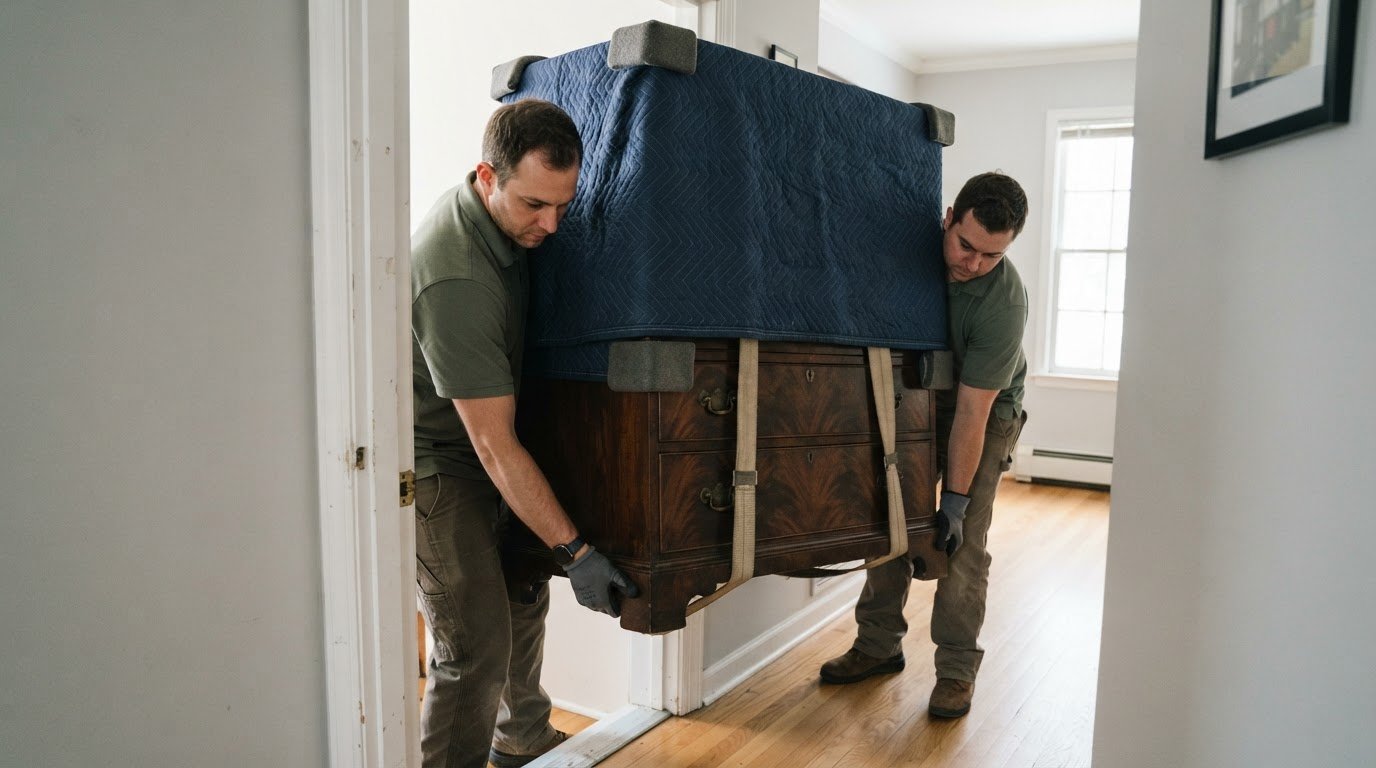
- Cover corners individually before wrapping the broad surfaces. A projecting corner can take the first impact when a bureau passes through a doorway or turns in a hall. Movers pad each edge and secure the padding so it can’t slip and expose the finish. They avoid tight pressure over fragile veneer or carved trim, where contact may loosen or mark delicate details.
- Keep legs clear of floors, walls, and other furniture. Carved feet and narrow legs can catch on a threshold or strike a wall during a turn. Movers pad each leg and keep the bureau’s base controlled as the piece changes direction. They don’t lift by a leg, since pressure there can stress a weak joint.
- Shield carvings and applied ornaments from direct contact. Movers place padding to follow the bureau’s outline without crushing raised details, such as a carved border or decorative molding. They check that straps and wrapping don’t press down on those features. A strap crossing an ornament can transfer pressure as the load moves, even if the surrounding blanket stays in place.
- Keep handles and knobs from snagging the protective covering. Movers can pad a protruding fitting or remove a loose component for separate wrapping when appropriate. They don’t pull or carry the bureau by a handle. That grip puts force on a small fitting instead of the stable structure, risking damage to both hardware and finish.
- Use controlled support when moving the wrapped bureau. Movers may use a dolly, straps, or padding suited to the piece, positioning support to stabilize it without pressing against delicate edges. They keep the bureau steady across thresholds and during turns instead of letting it tip onto a corner. Padding between the bureau and nearby items also helps prevent contact during transport.
- Inspect the protective setup before the bureau leaves the room. Movers look for exposed corners, shifted padding, and pressure points near legs or decorative details. If a blanket has slipped away from a carved edge, they reposition it before lifting. This final check catches gaps that could rub against a wall, doorway, or nearby piece during the move.
How professional movers avoid products that can damage antique finishes
Movers protect an antique finish by keeping restoration products out of the packing process. Before handling the bureau, they identify surfaces that need dry, gentle protection and avoid cleaners or polishes that may change their appearance.
- Don’t apply silicone-based polish to the bureau. It can build up on antique furniture and make later restoration difficult. Movers don’t use it to add shine before wrapping, since it doesn’t protect the wood from bumps or rubbing. Instead, they leave the finish as found and use clean protective materials between the bureau and its surroundings.
- Avoid lemon oil on an unknown finish. It can darken or cloud some antique furniture, changing the surface during move preparation. Movers shouldn’t use oil as a quick way to improve the appearance or cover a mark. The safer choice is to leave the finish untreated and prevent contact with abrasive surfaces.
- Keep moisture away from antique wood. Dampness can contribute to warping, while humidity can cause finishes to crack. Movers avoid wet cloths, damp blankets, and cleaning products that leave moisture behind during preparation. If the surface was cleaned earlier, let it dry thoroughly before wrapping.
- Don’t turn moving day into a restoration session. A scratch, fading, or water ring needs a finish-appropriate response, not a rushed application of polish before transport. Movers protect the affected area without rubbing, buffing, or testing products on visible wood. For example, an existing water ring on wax may sometimes respond to extra wax, but that treatment is separate from packing.
- Keep cleaning simple and controlled. If dust needs to be removed, use a soft cloth and avoid pressing grit across the surface. For antique wood, follow a barely damp cloth with mild dish soap immediately with a dry cloth. Movers avoid repeated wiping, excess soap, and moisture near joints, veneer edges, or worn finish.
- Check every material that will touch the bureau. Wrapping should be clean and dry, without residue, loose grit, or product transfer. Movers keep adhesive and cleaning products away from exposed finish and carved details. This limits the risk of a new mark while the bureau is carried, positioned, and secured for transport.
How professional movers disassemble and secure fragile components
Movers decide which components should travel separately and which should stay attached. The goal is to limit shifting without stressing old joints, hardware, or the finish.
- Inspect each removable part before taking anything apart. Movers look for glass panels, mirrors, loose fittings, and components that could shift during lifting. They consider how each part attaches and whether removing it could strain a weak joint. They don’t force antique parts loose just to make the bureau easier to carry.
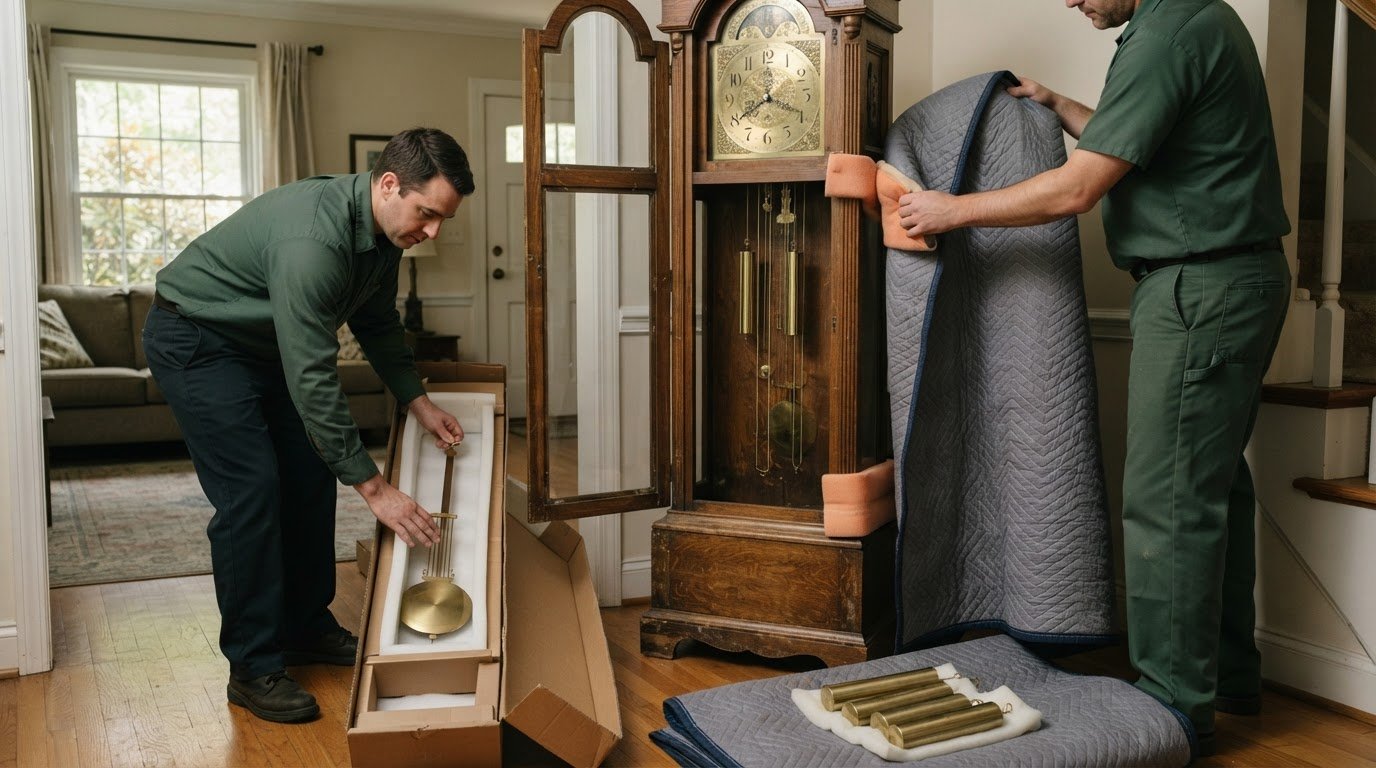
- Remove a fragile component only when it can be detached safely. Glass panels or mirrors that come out are wrapped separately, with an X pattern used to help secure the glass. The crew keeps tape and adhesive away from the bureau’s finish. Each piece is handled and carried so it won’t rub against the cabinet or another object.
- Keep small hardware together and protected. If a knob, handle, or fitting is removed, movers put it in a secure container instead of leaving it loose on the bureau. They group related hardware with its component to prevent loss or confusion during reassembly. A loose screw rolling against a finished surface can leave a fresh scratch.
- Secure drawers and other moving parts before carrying the bureau. Movers assess whether drawers should stay in place or travel separately, based on their fit and the cabinet’s construction. They prevent loose parts from sliding open or striking the frame. They don’t rely on pressure across carved fronts or delicate trim to hold a drawer shut.
- Wrap detached pieces separately and protect their edges. A glass panel needs support across its surface, while a small fitting needs containment so it can’t shift. Movers keep these parts apart from heavy furniture and mark fragile items for careful handling. This reduces the chance that a component will knock against the bureau in transit.
- Plan reassembly before loading. Movers organize each detached component with its hardware, then return the parts to their original positions at the destination. They align fittings carefully instead of forcing a knob or panel into place. If a part resists, they reassess its position rather than applying pressure to the antique wood.
- For a bureau with removable glass, loose hardware, or delicate fittings, arrange professional furniture moving so its parts can be handled and secured as part of the move.
Heavy Furniture Moving
Heavy Furniture Moving helps plan the handling and transport of bulky household furniture, including antique bureaus that need careful protection. Turn to the team when the bureau’s weight, delicate finish, tight access, or removable parts make the move difficult to manage alone. A clear description of its condition and the route helps shape the moving plan. The crew coordinates lifting and in-home movement around vulnerable details instead of treating the piece like ordinary furniture. For a heavy antique bureau in Woodbridge, choose professional help when protecting the finish and controlling the lift matter as much as getting it through the door. Contact Heavy Furniture Moving to discuss your bureau move.
Plan the bureau’s next move with care
For a treasured bureau, make its needs clear before moving day. Note its condition, delicate features, removable parts, and any tight turns or narrow access points. These details help the moving team plan around the piece and keep protection in focus throughout the move.
If you’re deciding how to move a heavy antique bureau without scratching its antique finish in Woodbridge, choose a team experienced in handling heavy household furniture with care. Heavy Furniture Moving also provides Movers Near Me, Exercise Equipment Moving, and Sofa Hoisting for a range of demanding household moves.
Share the bureau’s details and discuss the move with Contact Heavy Furniture Moving. A clear plan can make the next step feel more manageable, so you can focus on settling your antique into its new place.
Frequently Asked Questions
How do professional movers disassemble and reassemble antiques?
Movers remove only components that can be detached without stressing the piece. They keep fasteners grouped with the matching part and record where each component belongs. For example, a labeled bag can stay with a detached mirror frame during transport. At the destination, movers align parts before securing them. If a fitting resists, they stop and reassess rather than forcing it into old wood.
What materials do professional movers use to protect antique wood finishes during a move?
Moving blankets and acid-free paper can protect antique surfaces. Movers select materials based on the finish and shape of the piece, then prevent loose edges from rubbing during transit. They avoid newspaper because its ink can transfer. A carved bureau front, for example, needs padding that shields raised details without crushing them or leaving grit against the finish.
Do professional movers ever wrap antique furniture in plastic?
Yes, shrink film can help hold protective padding in place, but it shouldn’t be the only layer against a delicate finish. Movers place suitable padding between the wood and film, then secure the wrap without pressing hard on carvings or loose veneer. They also avoid trapping moisture against the surface. The film stabilizes the covering; it doesn’t replace finish protection.
What supplies do professional movers use to protect an antique bureau during a move?
Movers may use moving blankets, shrink film, straps, and padding suited to the bureau’s shape. They can also protect the route with floor and door-jamb coverings, reducing contact with the home as the piece passes through. Each material has a distinct purpose: blankets cushion, straps help secure, and doorway protection limits scrapes to the frame and nearby surfaces.
How many professional movers are needed to move a heavy antique bureau?
At least two people should carry particularly fragile furniture to help distribute its weight evenly. The crew size for a bureau depends on its actual weight, dimensions, balance, and route through the home. A tight stair turn or uneven load can call for a different plan than a clear, level path. Movers assess those conditions together instead of relying on weight alone.
How do professional movers lift and carry an antique bureau safely?
Movers coordinate the lift and carry the bureau from stable structural points, not decorative hardware. Before moving, they agree on the route, turning points, and where to pause if needed. During a turn, the crew keeps the load controlled and avoids twisting one side against the other. Clear verbal cues help everyone move together through narrow passages and across thresholds.
Do professional movers remove drawers before moving an antique bureau?
Sometimes. Movers assess whether drawers slide freely, shift during movement, or add unstable weight. Removing a drawer can make the cabinet easier to control, but the drawer needs separate protection and secure placement. If drawers stay inside, movers ensure they won’t slide open along the route. Address loose contents before transport so they don’t shift or press against the drawer front.
How do professional movers wrap and pad an antique bureau without damaging its finish?
Movers use clean, dry padding and check that no grit sits between the material and the finish. They protect projecting edges and decorative details without tightening straps across them. For example, a raised carving needs space beneath the blanket rather than pressure directly on its highest point. Before transport, they check for gaps where the covering could slip and expose the wood to contact.
Frequently Asked Questions
Movers remove only components that can be detached without stressing the piece. They keep fasteners grouped with the matching part and record where each component belongs. For example, a labeled bag can stay with a detached mirror frame during transport. At the destination, movers align parts before securing them. If a fitting resists, they stop and reassess rather than forcing it into old wood.
Moving blankets and acid-free paper can protect antique surfaces. Movers select materials based on the finish and shape of the piece, then prevent loose edges from rubbing during transit. They avoid newspaper because its ink can transfer. A carved bureau front, for example, needs padding that shields raised details without crushing them or leaving grit against the finish.
Yes, shrink film can help hold protective padding in place, but it shouldn’t be the only layer against a delicate finish. Movers place suitable padding between the wood and film, then secure the wrap without pressing hard on carvings or loose veneer. They also avoid trapping moisture against the surface. The film stabilizes the covering; it doesn’t replace finish protection.
Movers may use moving blankets, shrink film, straps, and padding suited to the bureau’s shape. They can also protect the route with floor and door-jamb coverings, reducing contact with the home as the piece passes through. Each material has a distinct purpose: blankets cushion, straps help secure, and doorway protection limits scrapes to the frame and nearby surfaces.
At least two people should carry particularly fragile furniture to help distribute its weight evenly. The crew size for a bureau depends on its actual weight, dimensions, balance, and route through the home. A tight stair turn or uneven load can call for a different plan than a clear, level path. Movers assess those conditions together instead of relying on weight alone.
Movers coordinate the lift and carry the bureau from stable structural points, not decorative hardware. Before moving, they agree on the route, turning points, and where to pause if needed. During a turn, the crew keeps the load controlled and avoids twisting one side against the other. Clear verbal cues help everyone move together through narrow passages and across thresholds.
Sometimes. Movers assess whether drawers slide freely, shift during movement, or add unstable weight. Removing a drawer can make the cabinet easier to control, but the drawer needs separate protection and secure placement. If drawers stay inside, movers ensure they won’t slide open along the route. Address loose contents before transport so they don’t shift or press against the drawer front.
Movers use clean, dry padding and check that no grit sits between the material and the finish. They protect projecting edges and decorative details without tightening straps across them. For example, a raised carving needs space beneath the blanket rather than pressure directly on its highest point. Before transport, they check for gaps where the covering could slip and expose the wood to contact.