How to Move a Glass Curio Cabinet in Clifton Without Breaking Shelves
The most fragile part of a glass curio cabinet can be put at risk before the truck even moves: loose shelves can shift during loading. For moving a heavy glass-front curio cabinet without breaking shelves in Clifton, empty the cabinet, remove its glass shelves, and pack them upright; have at least two people handle each section. Most china cabinets weigh between 150 and 350 pounds, so plan the lift instead of rushing it.
It makes sense to worry about more than carrying the cabinet through a doorway. A jolt or shifting load in the vehicle can also damage the glass. Professional removal teams like Let's Move London emphasize keeping the cabinet upright, protecting its frame and glass, and securing it so it cannot slide or take pressure from other cargo.
This guide covers the move from preparation to loading: how to empty the cabinet, identify its parts, protect and carry the shelves, navigate tight routes, and position the cabinet in the vehicle. Following the steps in order helps reduce the risk of breakage and makes the heavy lift more controlled.
Key Takeaways
- Plan the lift around the cabinet’s weight and shape, and use enough help to keep each section steady.
- Empty the cabinet completely and keep small parts organized so nothing shifts or gets lost during the move.
- Protect glass shelves separately and carry them upright to reduce pressure and impact damage.
- Identify whether the cabinet separates into sections before moving it through doorways or loading it.
- Load the cabinet upright, protect its frame, and secure it against sliding or contact with other cargo.
China cabinet weight and lifting risks
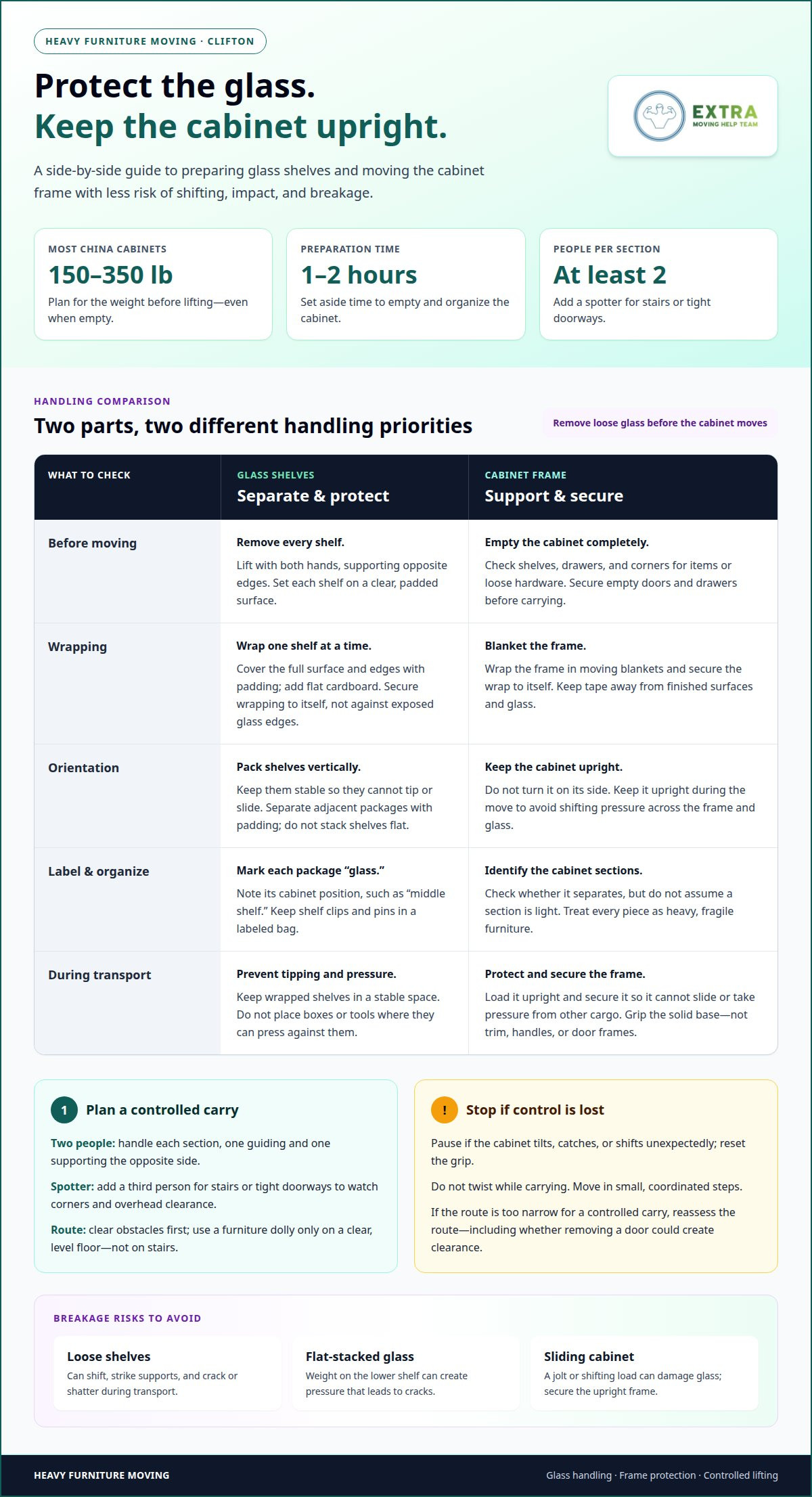
- Estimate the load before planning the lift. Most china cabinets weigh between 150 and 350 pounds, even before adding contents. Glass doors, shelves, and a broad upper section can make the cabinet awkward to control. Check whether the cabinet separates into sections, but don’t assume each piece is light. Treat every part as heavy, fragile furniture, and plan a clear route from its current position to the vehicle.
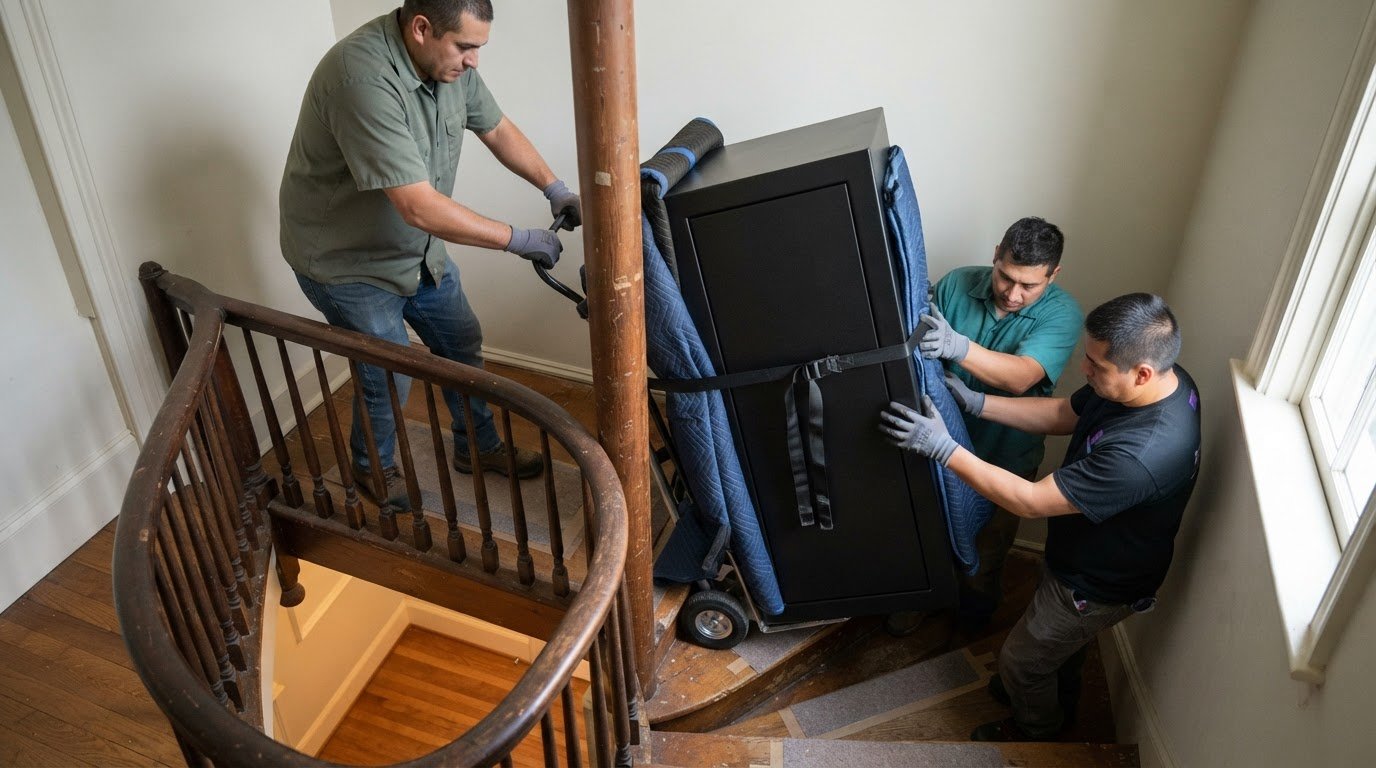
- Have at least two people handle each section. One guides the movement while the other supports the opposite side. Add a third person to spot when the route includes stairs or tight doorways. The spotter watches corners, overhead clearance, and the cabinet’s path rather than trying to carry a section alone. Agree on simple commands such as “stop” and “lower” before lifting.
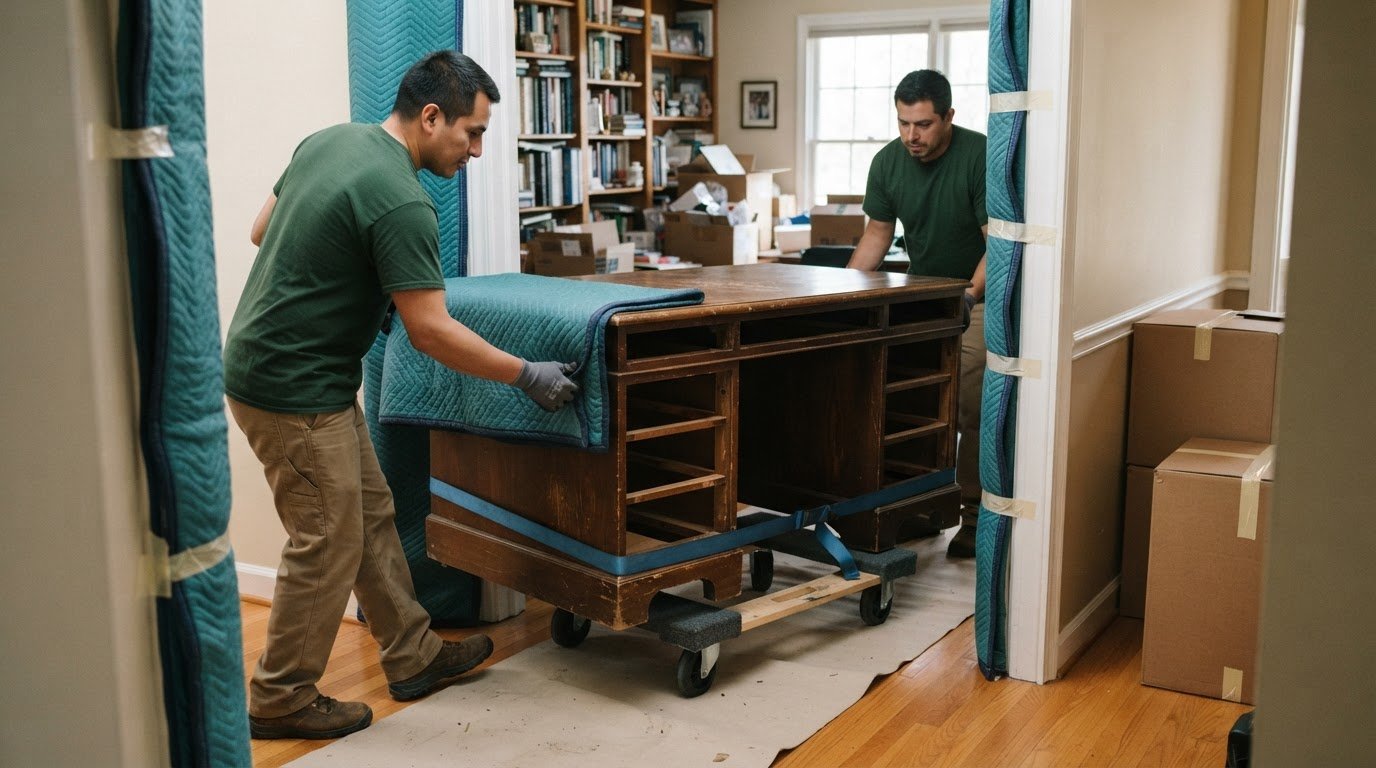
- Gather supplies before anyone takes hold of the cabinet. Set out moving blankets, packing tape, lifting straps, a furniture dolly for a flat route, and floor protection. Clear rugs, cords, small tables, and loose objects from the path. Wrap the cabinet’s frame in blankets, then secure the wrap to itself. Keep tape away from finished surfaces and glass.
- Grip the cabinet at its solid base. Don’t lift by the crown, door frame, handles, or decorative trim, which can loosen under pressure. Keep the load close to your body and move in small, coordinated steps. If the cabinet tilts, catches, or shifts unexpectedly, stop and reset your grip. Don’t twist while carrying, especially at a doorway or turn.
- Match the moving method to the route. Use a furniture dolly only on a clear, level floor, and keep the cabinet balanced as you guide it. Don’t roll it over a threshold without controlling the base and checking the wheels’ path. Avoid using a standard dolly on stairs. Keep the spotter in view and pause at landings to reset before continuing.
- Reduce the load before the move begins. Empty the cabinet and remove loose glass shelves so they cannot rattle inside. Before lifting, make sure everyone has a firm stance and a clear handhold. If the route is too narrow for a controlled carry, stop and reassess, including whether removing a door could create enough clearance.
Emptying the cabinet
- Set aside 1-2 hours to prepare the cabinet and its contents. Clear a nearby table or counter for sorting, and place packing materials within reach. Photograph the shelves before removing anything. The pictures help you restore the display later, including the position of keepsakes, dishes, and decorative pieces. Keep the cabinet doors open only while you work, then secure them before moving the empty frame.
- Remove every loose item, starting at the top and working downward. Lift each piece straight off its shelf instead of sliding it across the glass. Wrap china, figurines, and framed photos separately, then pack them in sturdy containers. Put heavier dishes at the bottom and lighter ornaments above them. This helps prevent fragile items from bearing the weight of heavier pieces during handling.
- Sort contents by shelf and cabinet area. Label each box with its room or shelf location, such as “upper left” or “lower display.” Use small containers for loose pieces like display stands, ceramic lids, and decorative hardware. Keep related items together, but avoid overpacking boxes, which can make them difficult to carry and put pressure on delicate contents.
- Check behind larger displays and inside drawers. Open each drawer carefully and remove its contents, including utensils, linens, or paperwork. A drawer that looks empty may still hold small objects that can slide when the cabinet tilts. Pack the contents separately, then close and secure the empty drawer so it won’t swing open during the carry.
- After removing the contents, inspect the cabinet interior from top to bottom. Look for removable shelf supports, loose clips, and small decorative pieces that could fall during handling. Put shelf pins and other removable hardware in a labeled bag. Keep the bag with the cabinet’s moving materials, not in a box of fragile display pieces where it could cause scratches.
- Make a final check before anyone lifts the cabinet. Look through every shelf, drawer, and corner for forgotten items, then compare the empty interior with your earlier photographs. Move packed boxes away from the carrying route to prevent trip hazards. Keep contents grouped by location to make unpacking and rebuilding the display easier at the destination.
Handling glass elements
- Keep the glass-front cabinet upright during the move, never on its side. Turning it sideways can shift pressure across the frame and glass, especially if the cabinet flexes while being carried. Remove shelves and doors if they are designed to come off, then protect each piece separately. If a glass part feels stuck, don’t force it.
- Remove every glass shelf before moving the cabinet. A shelf left inside can slide, strike its supports, and crack or shatter during transport. Lift each shelf with both hands, supporting opposite edges rather than gripping one corner. Set it down on a clear, padded surface before preparing the next shelf. Keep shelf clips and pins in a labeled bag.
- Wrap shelves one at a time, using padding that covers the full surface and edges. Add flat cardboard around each padded shelf to shield it from bumps—industrial protective materials like those from packagingforindustry.com can provide sturdy structural support. Secure the wrapping to itself, not directly against an exposed glass edge. Mark the package “glass” and note its cabinet position, such as “middle shelf,” so it can be handled carefully.
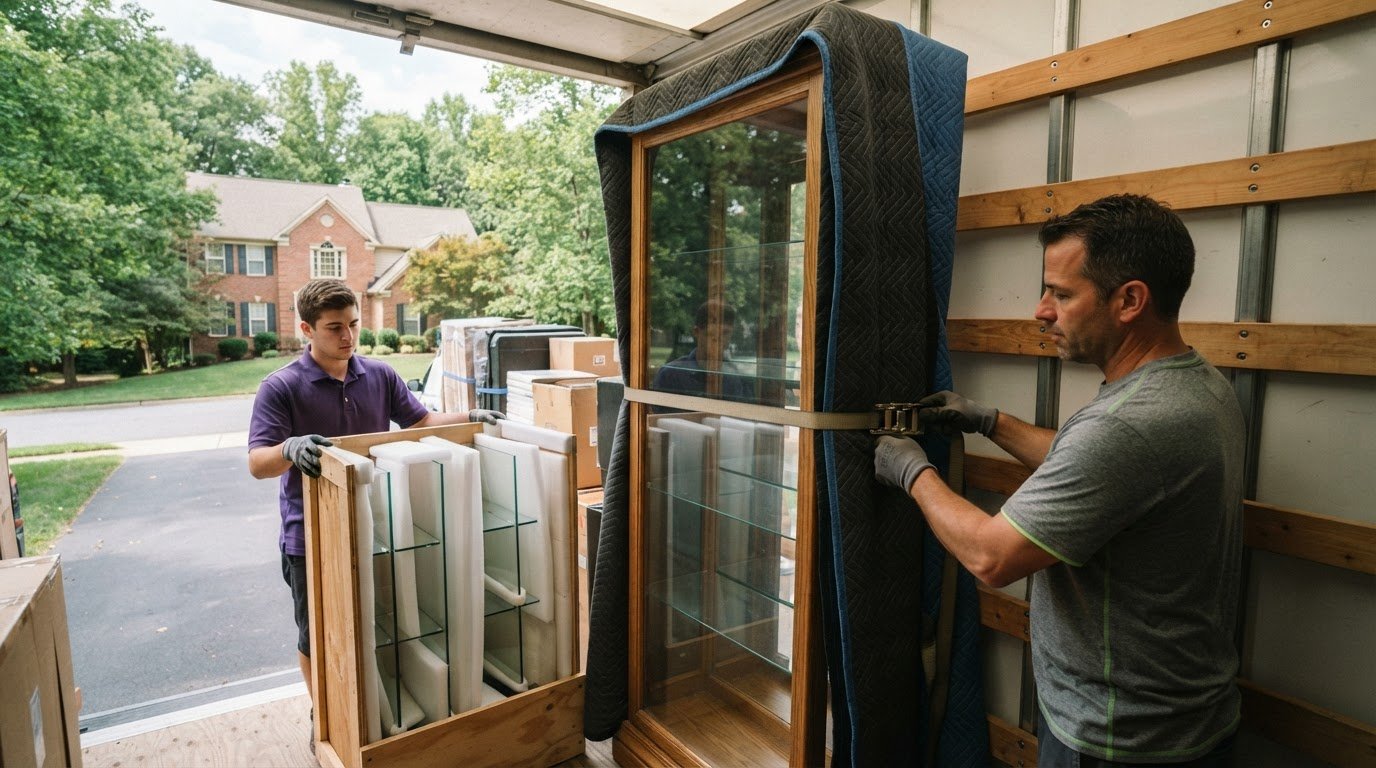
- Pack wrapped glass shelves vertically, not flat in a stack. Stacking puts weight on the lower shelf and can create pressure that leads to cracks. Keep each shelf upright in a stable space where it cannot tip or slide. Separate adjacent packages with padding, and don’t put boxes, tools, or cabinet parts on top.
- Protect removable glass doors and fixed panels separately. Cover both faces of a removable piece with padding, then protect its corners with folded cardboard. Label the piece and note which side faces outward. If a panel is fixed in the cabinet, leave it in place and shield it with a padded cover that does not press hard against the glass.
- Keep glass packages away from the carrying path until the cabinet frame is ready to move. Choose a stable, level spot away from doorways, stairs, and foot traffic. Before loading, check each wrapped shelf for movement and reinforce loose padding. Load shelves upright and secure them against tipping, keeping heavier furniture and boxes from pressing against them.
Pack glass shelves vertically to avoid pressure from stacking. Keep them in that position as you carry and load them, and avoid shifting them while arranging the rest of the load. Make space for the shelves before lifting them so they don’t have to be held while other items are moved. A steady support beside each package can help keep it in place without pressing on the glass.
During the trip, keep items that could shift away from the glass packages. Check that each restraint holds a package in place without squeezing it, and adjust the support if a shelf begins to lean. When unloading, set the packages down carefully and keep them upright until they can be placed on a clear surface. Unwrap one shelf at a time, leaving the remaining packages protected and stable. Handle each piece gently and inspect it before returning it to the cabinet.
Identifying one-piece or two-piece cabinets
- Inspect the cabinet’s outline before planning the carry. Look for a horizontal seam between an upper display hutch and a lower base. A visible joint can indicate separate sections, though trim may hide the connection. Check the back and sides with a flashlight. Note where the top meets the base, and look for fasteners, brackets, or a fitted edge.
- Check the rear panel for screws or brackets joining the sections. Look for matching hardware on both sides, then take a quick photo of its position. Don’t remove fasteners yet. Some screws hold the cabinet together, while others secure a backing panel. Identify the connections between the upper and lower sections before loosening anything.
- Test the joint gently without lifting either section. With the cabinet empty, place a hand near each side of the seam and check for movement. A clear gap or slight independent movement may indicate separate pieces. Don’t rock the cabinet or pull upward to test it. If the joint stays firm, treat the cabinet as one unit until its construction is clearer.
- Separate a two-piece cabinet only after confirming how its sections connect. Have helpers steady the base and upper section while removing fasteners. Keep hands clear of the seam as the upper part is lifted straight up. Set it on a padded, level surface away from the carrying route. Keep screws and brackets in a labeled bag for reassembly.
- Plan to carry a one-piece cabinet as a single tall load. Measure its height and width, then compare those dimensions with doorways, hallway turns, and the vehicle opening. Include protruding trim and handles in your measurements. If the frame cannot pass through a turn upright, reassess the route before lifting. Don’t tilt the cabinet sharply to force it through.
- Record how a separated cabinet fits together before moving either section. Photograph the seam, fastener locations, and brackets, then label the upper and lower pieces. Keep each section upright and support its base during handling. At the destination, align the sections carefully before replacing screws. Stop if the joint doesn’t sit flush; forcing it can damage the frame.
Loading the cabinet into a moving vehicle
- Protect the cabinet during loading and transport by padding its frame, keeping it upright, and securing it against movement. Don’t let straps press directly on glass or decorative trim. Before lifting, check the route from the doorway to the vehicle, including the ramp, threshold, and cargo space.
- Prepare the vehicle before bringing the cabinet outside. Clear loose items from the cargo area, then lay moving blankets where the cabinet will rest. Make sure the floor is dry and the loading path is clear. Keep straps and padding within reach so nobody has to leave a heavy piece unsupported while searching for supplies.
- Plan the loading approach around the cabinet’s base and the vehicle opening. Keep the cabinet upright as it moves up a ramp or into the cargo area. Use coordinated steps, with one person guiding the route and another controlling the opposite side. Pause at the threshold to adjust hand positions before continuing.
- Place the cabinet upright against a stable, padded surface in the vehicle. Don’t lean it against loose cargo, sharp edges, or objects that could shift. Leave space around glass panels where possible. Avoid stacking boxes or other furniture against the cabinet, since pressure can damage the frame or stress the glass.
- Secure the cabinet so it cannot slide, tip, or rock during the drive. Attach straps to sturdy parts of the frame, tightening them enough to hold the cabinet in place without crushing the padding. Keep straps clear of glass doors and trim. Gently test for movement before closing the vehicle, then adjust the support if the cabinet shifts.
- Load wrapped shelves separately from the cabinet frame. Keep them upright in a stable, padded space, and prevent them from tipping or being struck by other cargo. Place shelf packages where they won’t be trapped under heavier items. Before departure, check that each package is supported and no strap or box presses against the glass.
- Make a final cargo check before driving. Confirm the cabinet remains upright, straps stay secure, and the path to the shelves remains clear. After arrival, unload slowly and keep the same controlled pace used during loading. For hands-on help with the heavy lift and vehicle loading, get help moving and loading heavy furniture.
Heavy Furniture Moving
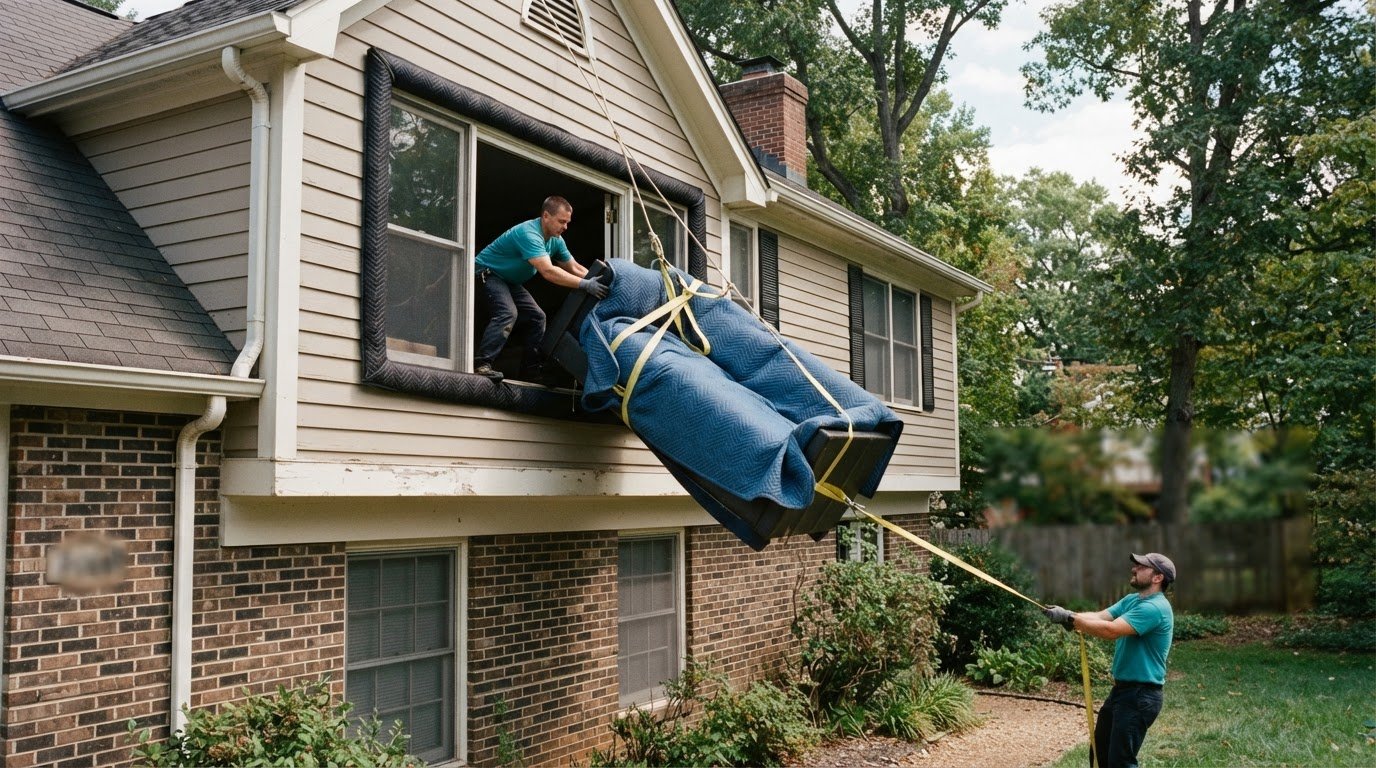
Heavy Furniture Moving can help when a curio cabinet is too heavy or awkward to move safely on your own. Its heavy lifting moving service and local moving helpers can support the demanding carry, from moving bulky furniture through the home to preparing for transport. This is especially useful when the route includes narrow turns, stairs, or a difficult vehicle load. Preparation still matters: empty the cabinet, remove and protect loose glass shelves, and check whether its sections separate. Share the cabinet’s size, construction, and route details when arranging the move so the handling can be planned around the actual obstacles. Contact Heavy Furniture Moving for help with the heavy lifting.
Plan the Move With Confidence
If you’re planning to move a heavy glass-front curio cabinet in Clifton without breaking its shelves, assess the lift, route, and vehicle loading before deciding how to proceed. A cabinet that feels manageable in an open room can become difficult at a narrow turn or doorway. Get moving help when its weight or access makes the carry hard to control.
Heavy Furniture Moving offers Movers Near Me, Exercise Equipment Moving, and Sofa Hoisting. These services reflect a focus on bulky or challenging items. For your cabinet, share its route and handling needs to plan the move around the task.
Contact Heavy Furniture Moving to discuss your cabinet move. With a clear plan and the right support, you can take the next step with confidence.
Frequently Asked Questions
How do you safely move a heavy glass-front curio cabinet without breaking shelves?
To move a heavy glass-front curio cabinet in Clifton without breaking its shelves, empty it, remove loose glass shelves, and keep the cabinet upright. Before lifting, check the route for tight turns and uneven thresholds. Use steady, coordinated movements instead of twisting or rushing. During loading, secure the cabinet so it cannot slide, and keep other cargo from pressing against its glass panels.
How do you remove and pack glass shelves from a curio cabinet?
Lift each shelf carefully from its supports, keeping your hands beneath opposite edges. If a shelf catches, check for clips or pins instead of pulling harder. Wrap shelves individually, label their original positions, and pack them upright in a stable space. For example, mark a package “upper shelf” so it can be matched to the right supports during setup.
What supplies and equipment are needed to move a heavy curio cabinet?
Gather moving blankets, padding, packing tape, labels, and a stable dolly for a clear, level route. Keep a flashlight handy to inspect the cabinet’s back and locate connecting hardware. Use straps to secure the frame during transport, not across glass or decorative trim. Set supplies near the loading area first so the team can reach them without leaving the cabinet unsupported.
How many people are needed to lift and move a heavy glass cabinet?
Have at least two people handle each cabinet section, with a third person spotting on stairs or at tight doorways. The spotter watches corners, overhead clearance, and the next step while the carriers focus on steady support. Agree on simple commands before lifting, and pause if anyone loses a clear grip or the cabinet shifts unexpectedly.
What risks come with moving a curio cabinet with glass doors or shelves?
Loose shelves can slide and strike their supports, while a sudden tilt may put uneven pressure on glass panels. Doors can swing open, catch on a doorway, or shift the cabinet’s balance. A strap across a glass panel can also concentrate pressure in one spot. Remove loose components, secure doors appropriately, and keep cargo from contacting exposed glass.
How much do professional furniture movers charge in Clifton?
Heavy Furniture Moving provides a quote based on the job. Pricing uses hourly labor with a two-hour minimum or flat rates for most single heavy items. The work involved depends on the item, access conditions, and whether you need labor or transport. Share the cabinet’s route and handling requirements so the quote reflects the job.
Which moving companies in Clifton handle glass cabinets and fragile furniture?
Heavy Furniture Moving handles single-item and in-home furniture moves, including china cabinets. For a glass cabinet, share details such as its construction, whether it separates into sections, and any stairs or tight turns along the route. These specifics help plan the handling and route around the cabinet and its access points before moving day.
Frequently Asked Questions
To move a heavy glass-front curio cabinet in Clifton without breaking its shelves, empty it, remove loose glass shelves, and keep the cabinet upright. Before lifting, check the route for tight turns and uneven thresholds. Use steady, coordinated movements instead of twisting or rushing. During loading, secure the cabinet so it cannot slide, and keep other cargo from pressing against its glass panels.
Lift each shelf carefully from its supports, keeping your hands beneath opposite edges. If a shelf catches, check for clips or pins instead of pulling harder. Wrap shelves individually, label their original positions, and pack them upright in a stable space. For example, mark a package “upper shelf” so it can be matched to the right supports during setup.
Gather moving blankets, padding, packing tape, labels, and a stable dolly for a clear, level route. Keep a flashlight handy to inspect the cabinet’s back and locate connecting hardware. Use straps to secure the frame during transport, not across glass or decorative trim. Set supplies near the loading area first so the team can reach them without leaving the cabinet unsupported.
Have at least two people handle each cabinet section, with a third person spotting on stairs or at tight doorways. The spotter watches corners, overhead clearance, and the next step while the carriers focus on steady support. Agree on simple commands before lifting, and pause if anyone loses a clear grip or the cabinet shifts unexpectedly.
Loose shelves can slide and strike their supports, while a sudden tilt may put uneven pressure on glass panels. Doors can swing open, catch on a doorway, or shift the cabinet’s balance. A strap across a glass panel can also concentrate pressure in one spot. Remove loose components, secure doors appropriately, and keep cargo from contacting exposed glass.
Heavy Furniture Moving provides a quote based on the job. Pricing uses hourly labor with a two-hour minimum or flat rates for most single heavy items. The work involved depends on the item, access conditions, and whether you need labor or transport. Share the cabinet’s route and handling requirements so the quote reflects the job.
Heavy Furniture Moving handles single-item and in-home furniture moves, including china cabinets. For a glass cabinet, share details such as its construction, whether it separates into sections, and any stairs or tight turns along the route. These specifics help plan the handling and route around the cabinet and its access points before moving day.