How to Move a Clawfoot Tub Through Stairs and Tight Hallways
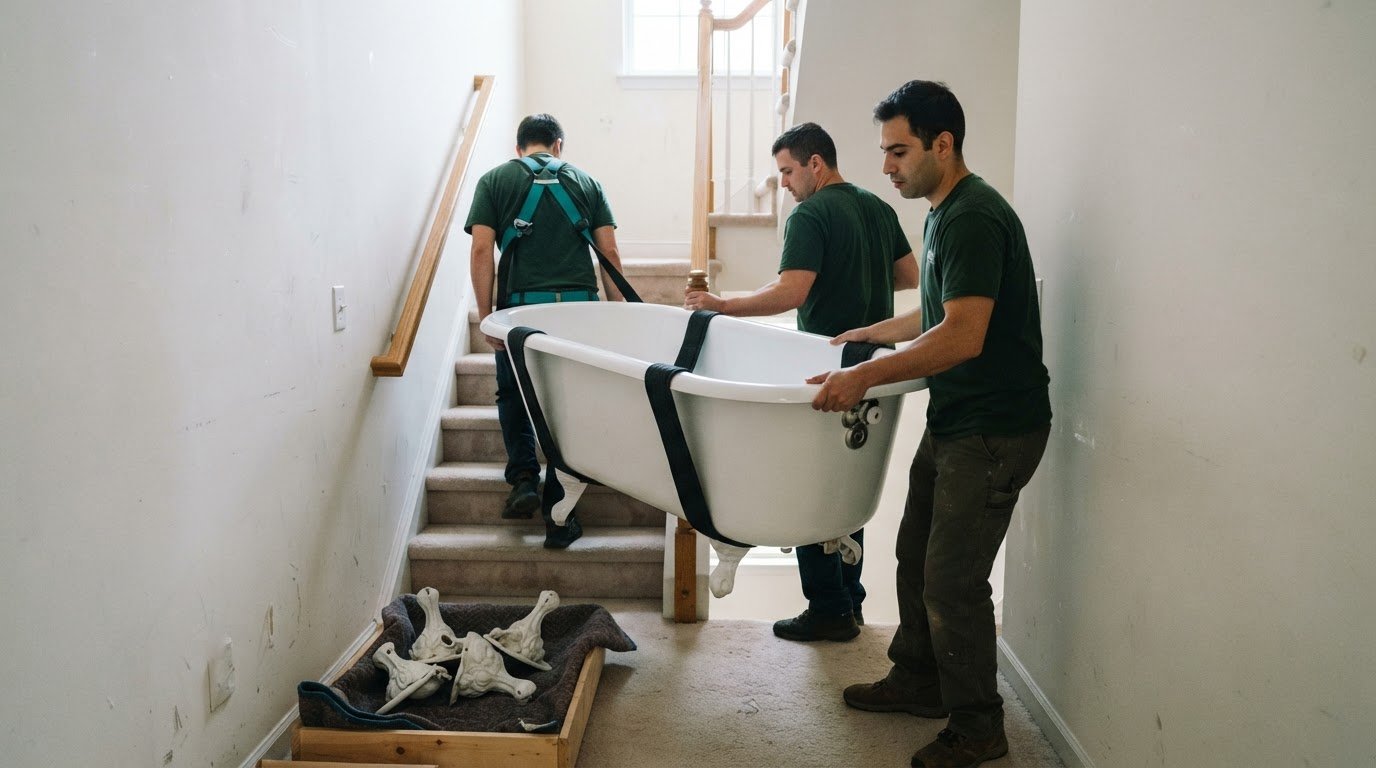
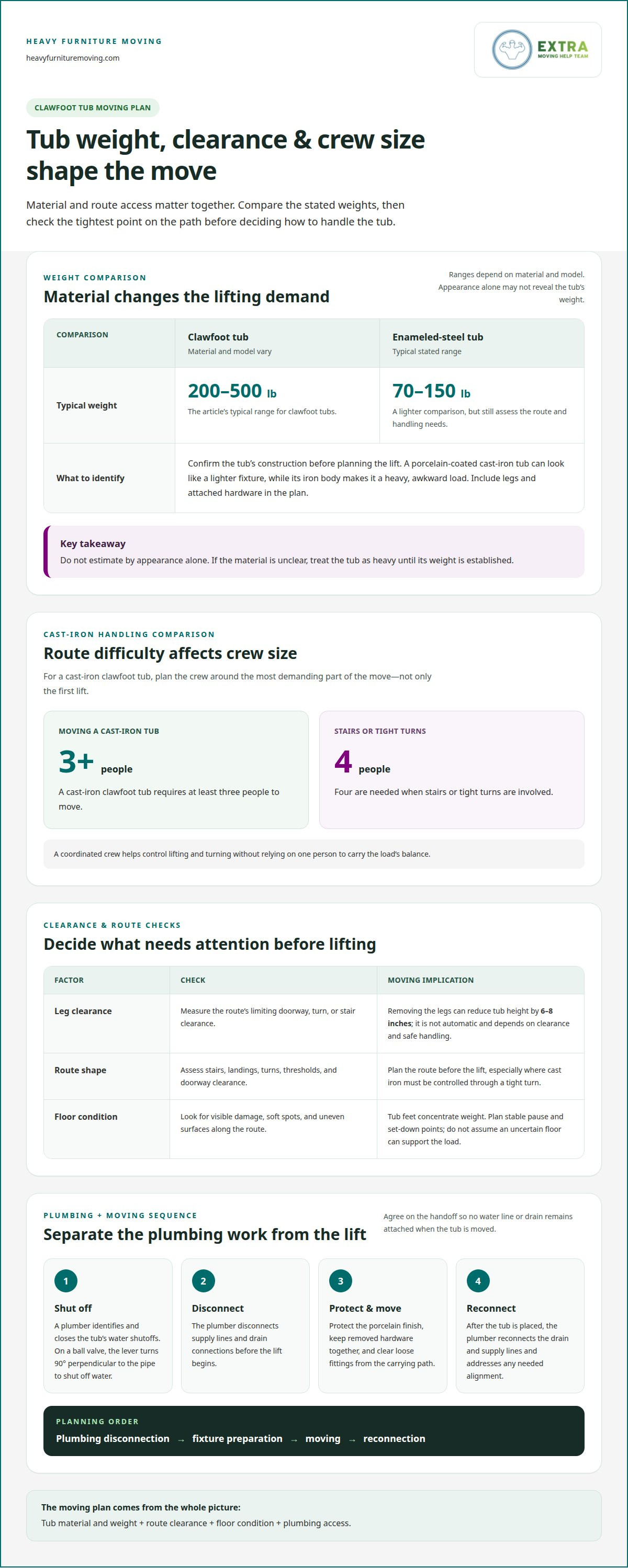
Taking the legs off a clawfoot tub isn’t automatic; it depends on the clearance needed to get it through the route. Removing them can reduce the tub’s height by 6-8 inches, while clawfoot tubs typically weigh 200-500 pounds depending on material and model. Professional movers for a heavy porcelain clawfoot soaking tub in South Riding can assess the stairs, turns, doorway clearance, and plumbing before choosing how to handle it.
It makes sense to worry about the porcelain finish, the tub’s weight, and whether it can make a tight turn without damage. A safe move depends on more than lifting strength: the route, the tub’s shape and balance, and whether a plumber needs to disconnect the fixtures all matter.
Here, you’ll learn when removing the legs may help, what movers consider when planning stairs and narrow hallways, and how plumbing affects the job. You’ll also see what to weigh when comparing professional help with handling the lift yourself, so you can make a practical plan for your tub and home.
Key Takeaways
- Have the tub’s material and route assessed together; weight, turns, and stair access shape the moving plan.
- Leg removal depends on clearance and how the tub can be handled safely, not on a one-size-fits-all rule.
- Plan plumbing disconnection and fixture removal alongside the move to avoid surprises during transport.
- Compare the effort and equipment involved in a DIY move with the challenges of stairs and tight hallways.
- Review the coverage terms for chips or cracks before the tub is transported, especially for an interstate move.
How much does a clawfoot tub weigh - and why does it matter so much?
Virginia household moves require separating in-state rules from interstate rules; the federal rule cited here applies to interstate moves. For those moves, the Federal Motor Carrier Safety Administration says 49 CFR 375 governs. Virginia-specific licensing and insurance requirements cannot be stated from that federal rule alone.
- Identify the tub’s material and estimate its weight. A clawfoot tub typically weighs 200-500 pounds, depending on its material and model. Enameled-steel tubs typically weigh 70-150 pounds. These ranges show why appearance alone can mislead: a porcelain-coated cast-iron tub may look like a lighter fixture, but its iron body makes it a heavy, awkward load. Identify the tub’s construction before planning the lift. If its material is unclear, treat it as heavy until its weight is established. Include the legs and any attached hardware in the move plan, since they affect how the tub sits and is carried.
- Assess the floor and the route before lifting. A heavy cast-iron tub concentrates substantial weight where its feet meet the floor. The moving team should inspect the floor along the route, including landings, thresholds, and turns, and account for the tub’s resting position at both ends. Check for visible damage, soft spots, or uneven surfaces that could affect a controlled move. Floor condition matters as much as total weight: a sound, level area supports a stable set-down, while a weak or damaged spot can complicate it. Plan where the tub will pause, and avoid placing it on an uncertain section of flooring. Do not assume a floor can support the load simply because it currently holds the empty tub. The tub’s feet concentrate its weight; padding and a stable carrying position help protect both the finish and the floor.
- Match the handling plan to the heaviest part of the move. Cast iron is difficult to control through stairs and tight turns, so plan the route before the lift begins. A cast-iron clawfoot tub requires at least three people to move, and four if stairs or tight turns are involved. That crew size helps coordinate lifting and turning without relying on one person to carry the load’s balance. For an interstate move, the Federal Motor Carrier Safety Administration states that a customer with a non-binding estimate owes 110% of the estimate at delivery, with any remaining balance billed within 30 days. Keep the move’s interstate status and estimate type clear in the paperwork. That rule applies to interstate moves; it does not set Virginia’s separate in-state licensing requirements.
How professional movers coordinate plumbing disconnection and fixture removal
- Separate plumbing work from the physical move. A clawfoot tub’s supply lines, shutoffs, and drain connect it to the bathroom, so the plumbing must be handled before the tub can travel. A moving team can plan the lifting sequence around that work rather than pulling on connected pipes or fixtures. A plumber can disconnect the water and drain connections while movers prepare the route and handling plan. This keeps the tub, exposed plumbing, and surrounding finishes from becoming obstacles during the lift. The sequence is clear: plumbing disconnection, fixture preparation, then moving.
- Coordinate the shutoff and disconnection sequence. Before removing a fixture, the plumber identifies the shutoffs serving the tub and closes them. On a ball valve, the lever turns 90 degrees from parallel to perpendicular with the pipe to shut off the water. The plumber then disconnects the supply lines and drain connections, accounting for the fittings and available access around the tub. Movers can use that time to protect the tub’s finish and clear the planned path. Agreeing on the sequence prevents a lift from starting while a line or drain remains attached.
- Protect and keep track of removed parts. Once the connections are free, the plumber can remove exposed fixtures or fittings that could catch during movement. Movers can protect the porcelain surface and keep loose hardware together so small components don’t get separated from the tub. This matters because a clawfoot tub’s supply lines, faucet, and drain can extend beyond its body. A fitting left in the route may snag on a doorway or wall. Treat every removed part as belonging to the tub and keep it clear of the carrying path.
- Plan reconnection around the tub’s final position. Moving the tub and reconnecting it are separate tasks. Once the tub is placed, a plumber can reconnect the drain and supply lines and address any alignment needed for the exposed plumbing. The final position matters: even a small change can affect whether existing connections reach cleanly. Adjusting the drain route is plumbing work, not a moving task. Arrange a clear handoff so the tub is positioned and fittings are accessible before reconnection begins.
After the plumbing is disconnected, in-home furniture moving help can address the heavy lifting and transport portion of the job.
DIY versus professional bathtub-moving costs
- Compare the full DIY expense, not just the lifting labor. Those amounts cover only specific supplies, not the physical demands of carrying a heavy tub or maneuvering it through a home. Include the rental period and required padding when estimating out-of-pocket expenses. A short, unobstructed route and a stair-filled route also call for different plans.
- Account for access and handling needs. The same tub can require more planning when stairs or tight hallways limit movement. A cast-iron clawfoot tub requires at least three people to move, and four if stairs or tight turns are involved. A DIY plan therefore depends on having enough capable helpers, not just access to a dolly. Include the actual route, turns, and landing space in your comparison. Equipment rental alone doesn’t provide the coordination needed to control a heavy load.
- Weigh possible repair costs against the apparent savings. A move does not necessarily result in damage, but this illustrates why protecting the finish matters when comparing options. A tight turn, poor grip, or collision with a doorway can change the overall cost. Factor in your time and the risk of damage, even though neither appears on a rental receipt. The tub’s finish and your home’s walls, floors, and doorframes all deserve consideration.
- Use a quote to compare professional labor fairly. Moving costs depend on the tub, route, stairs, distance, and work included. Compare the quoted scope with DIY expenses such as labor, equipment, protective materials, and access complications. Keep plumbing work separate from moving labor, since disconnecting or reconnecting fixtures is a distinct task. A narrow hallway or stair turn can change the labor plan even when the destination is nearby. Compare the total effort and exposure to risk, not just the rental charge.
How professional movers navigate stairs, doorways, and tight hallways
Plan each turn before lifting. Tub dimensions, stair geometry, and clearance shape the route. Professional movers for a heavy porcelain clawfoot soaking tub in South Riding can use those details to plan how the tub passes through each space.
-
How Professional Movers Navigate Stairs with the Tub
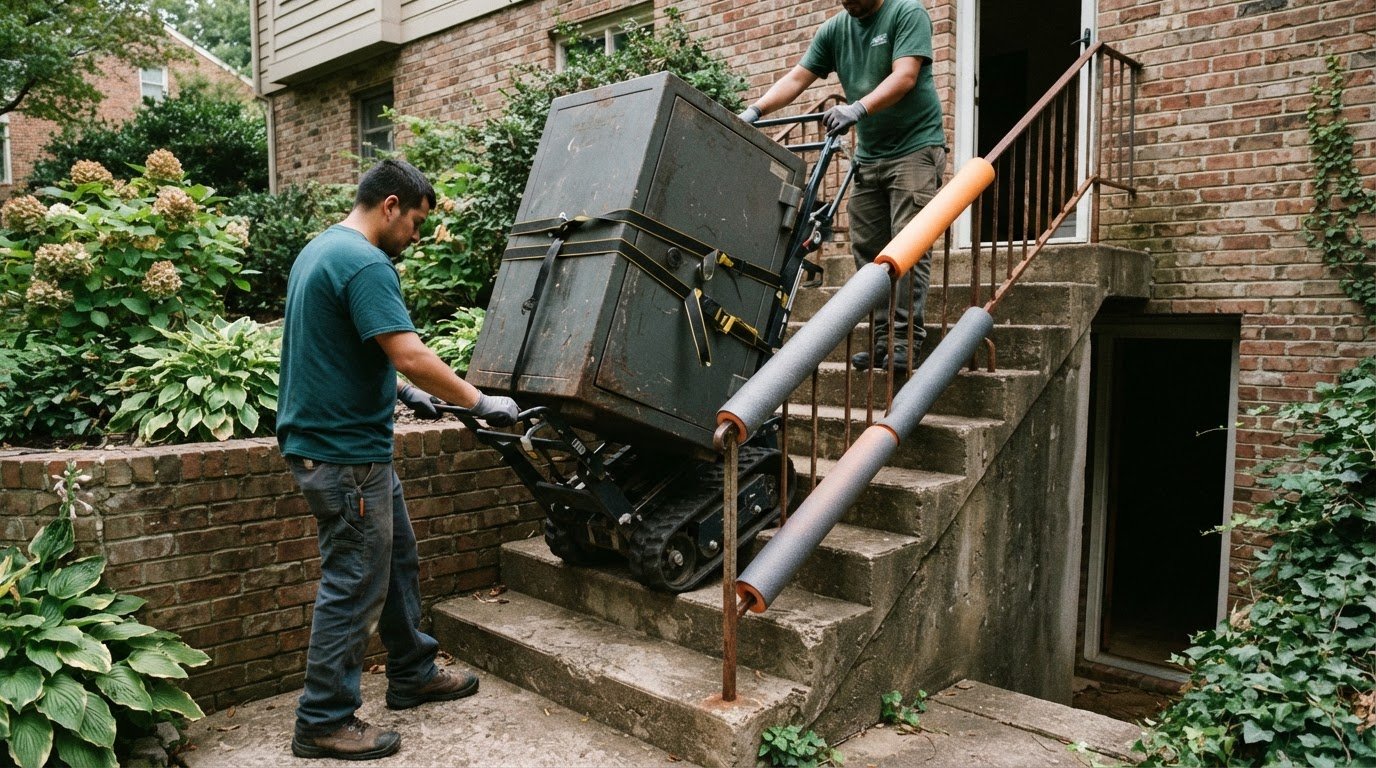
Have the moving team assess the staircase, landings, and turning space before the tub leaves the bathroom. A cast-iron clawfoot tub requires at least three people to move, and four if stairs or tight turns are involved. For heavy tubs on stairs, a powered stair-climbing dolly can reduce the risk of injury and damage. The team should coordinate each movement and pause rather than force the tub around a landing. Check for low ceilings, narrow railings, and obstacles that could interfere with a controlled carry.
-
How Professional Movers Clear Doorways for the Tub
Measure the doorway and the tub’s widest points before choosing its angle of approach. Clawfoot tubs are typically 54-72 inches long and 27-32 inches wide, so the opening alone doesn’t show whether the tub can pass. Account for the door itself, trim, handles, and nearby walls. The team can compare the tub’s dimensions with the usable opening and plan a controlled rotation where space allows. Removing the legs can reduce the tub’s height by 6-8 inches, which may help with vertical clearance, but it doesn’t make every doorway passable.
-
How Professional Movers Move Through Tight Hallways
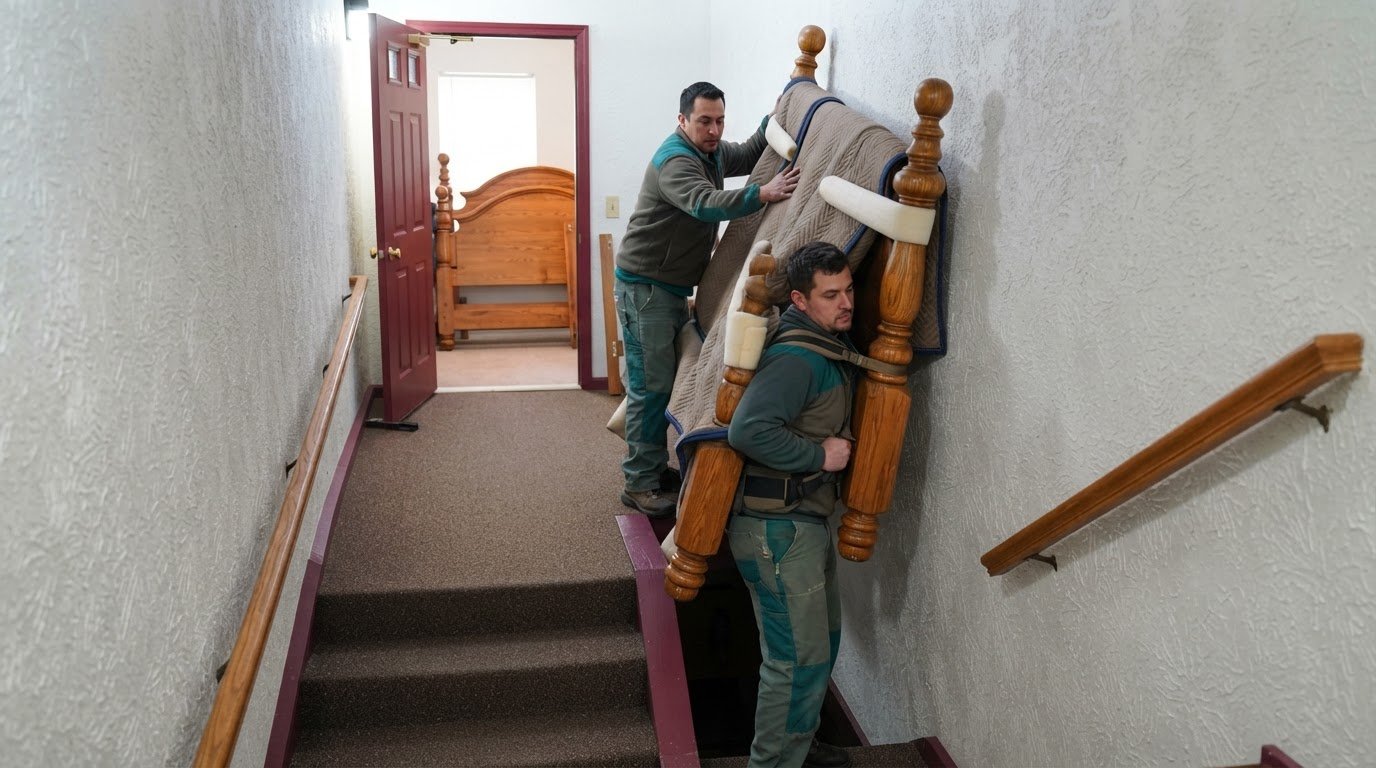
Map the hallway from end to end, including corners, door swings, and places where the team can safely reposition the tub. A long tub may clear a straight passage but be difficult to turn where two walls meet. Plan each corner before carrying, and keep the porcelain surface from scraping against trim or walls. Avoid rushing a pivot or twisting the tub without coordinated movement. For professional movers for a heavy porcelain clawfoot soaking tub in South Riding, a tight hallway needs its own clearance plan, especially near a doorway or stair entrance.
What insurance covers chips or cracks when movers transport a porcelain bathtub?
- Identify the move type and coverage terms. Coverage depends on the move and the valuation option selected. For interstate moving damage, Released Value coverage pays 60 cents per pound per article, according to the Federal Motor Carrier Safety Administration. This is a weight-based amount, not a repair estimate for porcelain or enamel. A tub’s condition and replacement or repair needs may not match that calculation. Keep the interstate rule separate from an in-state move, since this figure applies to interstate transportation. Ask for the coverage option and its limits in writing before the tub is loaded.
- Record the tub’s condition before transport. Photograph the porcelain surface, rim, feet, and exposed edges before wrapping begins. Capture existing chips, hairline cracks, worn enamel, and repaired areas clearly. Make a written record describing each visible mark and its location. These details give both sides a reference if damage is noticed after delivery. Photograph the tub again after it is placed at the destination, before unpacking or moving it further. Keep the images and moving documents together.
- Understand what a damage report needs to show. If you find a new chip or crack, photograph it in place and note its location on the tub. Compare that area with the pre-move record, then preserve any relevant paperwork and communications. Describe the damage plainly, such as a fresh chip on the outer rim, rather than guessing how it happened. A porcelain finish can show small impacts clearly, so close-up images help document the affected area. Follow the claim instructions in the move documents and retain copies of every submission.
- Compare the coverage amount with the tub’s repair needs. Released Value coverage uses the tub’s weight and the per-pound rate, while repair work depends on the actual damage. Those are different measures. A surface chip may need a different repair approach from a crack that affects the tub’s body. Review the coverage paperwork before transport and note how it describes damage, valuation, and claim steps. If the tub is moving across state lines, the Federal Motor Carrier Safety Administration’s stated Released Value calculation provides the relevant baseline. Clear documentation helps you discuss a specific chip or crack using evidence, not assumptions.
For help planning the heavy lift and transport, request moving help for your clawfoot tub.
Heavy Furniture Moving
Heavy Furniture Moving can help when a clawfoot tub’s weight, stairs, or narrow turns make the move difficult to manage alone. Its residential moving and heavy-lifting services support the physical handling and transport, while a plumber manages disconnection and reconnection. Share the tub’s material, approximate dimensions, stair access, tight turns, and destination details so the plan reflects the actual route. This help is especially relevant when the tub must pass through challenging access points or be coordinated with other household items.
Contact Heavy Furniture Moving to discuss the move.
Set Up the Next Step for Your Tub Move
Before arranging the move, put the practical details in one clear note: the tub’s material, approximate dimensions, pickup and delivery addresses, and any stairs, narrow turns, or plumbing work involved. Photos of the tub and access points can make those details easier to understand. This gives the moving team a useful starting point for planning the route and coordinating with a plumber where needed.
If you need professional movers for a heavy porcelain clawfoot soaking tub in South Riding, choose help suited to the physical demands of your move. Heavy Furniture Moving also handles demanding household moves, including Movers Near Me, Exercise Equipment Moving, and Sofa Hoisting.
Share the details, discuss the lift, and take the next step when you’re ready. Contact Heavy Furniture Moving to talk through your tub move and make a clear plan.
Frequently Asked Questions
Do movers need to remove the legs before moving a clawfoot tub?
No, removing the legs isn’t required for every move. The decision depends on whether the tub clears the route with its legs attached and whether removing them allows safer handling. A narrow doorway, low ceiling, or stair turn may make removal useful. Movers should consider how the legs attach and protect the tub’s finish during removal and transport. A plumber must disconnect the plumbing before the tub is moved.
Should you hire a specialty mover or a general mover?
Choose movers prepared to handle heavy, bulky household items and difficult access. What matters is the tub’s weight, fragile finish, and route, not the label “specialty” alone. Heavy Furniture Moving handles residential moves involving heavy items such as pianos, safes, and exercise equipment. For a clawfoot tub, share its material and access details so the physical lift and transport can be planned around the job.
What equipment do movers use to move a clawfoot tub?
Movers may use an appliance dolly, straps, and protective materials suited to the tub and route. Blankets and straps help protect and secure the load, while floor and doorway protection can reduce contact damage. Stairs and tight turns affect which equipment and carrying approach the team uses.
Will a clawfoot tub fit through a standard doorframe?
Not necessarily. Fit depends on the tub’s dimensions, the usable opening, and whether it can be safely angled through the doorway. Door trim, handles, nearby walls, and the tub’s length can affect clearance. For example, a tub may pass through a doorway straight on but lack room to turn immediately afterward. The full route, including the space beyond the frame, matters.
How much does it cost to move a heavy clawfoot soaking tub in Northern Virginia?
The cost depends on the move’s scope, including distance, stairs, tight turns, and the handling required. Heavy Furniture Moving provides an upfront quote before work begins. Share the pickup and delivery details, tub information, and access challenges so the quote reflects the job. A narrow hallway or difficult stair route can change the labor plan compared with straightforward access.
What factors affect the weight and moving cost of a porcelain clawfoot tub?
Material and model determine much of a tub’s weight; porcelain typically describes the surface finish, not necessarily the underlying construction. Moving cost depends on the handling plan and route, including stairs, doorway clearance, distance, and whether plumbing work must be coordinated separately. Attached fixtures and the tub’s condition can also affect preparation. Clear details help the moving team understand the job’s demands.
Do movers need to disconnect plumbing or remove claw feet before moving a bathtub?
A plumber must disconnect the plumbing before the tub can be moved and should handle the supply and drain connections. The claw feet don’t always need removal; that depends on clearance and the tub’s safe handling plan. Coordinating these tasks avoids starting the lift while pipes or fittings remain attached. Once the tub is in place, plumbing reconnection remains separate from the moving work.
Frequently Asked Questions
No, removing the legs isn’t required for every move. The decision depends on whether the tub clears the route with its legs attached and whether removing them allows safer handling. A narrow doorway, low ceiling, or stair turn may make removal useful. Movers should consider how the legs attach and protect the tub’s finish during removal and transport. A plumber must disconnect the plumbing before the tub is moved.
Choose movers prepared to handle heavy, bulky household items and difficult access. What matters is the tub’s weight, fragile finish, and route, not the label “specialty” alone. Heavy Furniture Moving handles residential moves involving heavy items such as pianos, safes, and exercise equipment. For a clawfoot tub, share its material and access details so the physical lift and transport can be planned around the job.
Movers may use an appliance dolly, straps, and protective materials suited to the tub and route. Blankets and straps help protect and secure the load, while floor and doorway protection can reduce contact damage. Stairs and tight turns affect which equipment and carrying approach the team uses.
Not necessarily. Fit depends on the tub’s dimensions, the usable opening, and whether it can be safely angled through the doorway. Door trim, handles, nearby walls, and the tub’s length can affect clearance. For example, a tub may pass through a doorway straight on but lack room to turn immediately afterward. The full route, including the space beyond the frame, matters.
The cost depends on the move’s scope, including distance, stairs, tight turns, and the handling required. Heavy Furniture Moving provides an upfront quote before work begins. Share the pickup and delivery details, tub information, and access challenges so the quote reflects the job. A narrow hallway or difficult stair route can change the labor plan compared with straightforward access.
Material and model determine much of a tub’s weight; porcelain typically describes the surface finish, not necessarily the underlying construction. Moving cost depends on the handling plan and route, including stairs, doorway clearance, distance, and whether plumbing work must be coordinated separately. Attached fixtures and the tub’s condition can also affect preparation. Clear details help the moving team understand the job’s demands.
A plumber must disconnect the plumbing before the tub can be moved and should handle the supply and drain connections. The claw feet don’t always need removal; that depends on clearance and the tub’s safe handling plan. Coordinating these tasks avoids starting the lift while pipes or fittings remain attached. Once the tub is in place, plumbing reconnection remains separate from the moving work.