How to Move a 400 lb Executive Desk Safely in Aldie
A 400 lb executive desk isn’t a solo move. To learn how to safely move a 400 lb executive desk without a back injury in Aldie, arrange help before moving day; get assistance for any desk over 200 pounds. If you have back, knee, or shoulder problems, don’t risk moving it yourself, and plan professional help if it must go up or down stairs.
A desk this heavy can strain your body, damage its finish, or get stuck in a doorway if you rush. The safer approach is to plan the route first, lighten and secure the desk, protect your home, and move slowly with coordinated help.
This guide explains how to safely move a 400 lb executive desk without a back injury in Aldie by walking you through the assessment, preparation, tight spaces, and exit. You’ll also learn when to stop and adjust rather than forcing a heavy piece through a difficult spot.
Key Takeaways
- Plan the desk’s route from its current spot to the exit, and measure narrow openings before you begin.
- Remove heavy or fragile drawer contents, then secure drawers and doors so they stay closed during the move.
- Protect floors, walls, and the desk’s finish with suitable coverings before shifting the furniture.
- Use coordinated help and move slowly through tight turns; stop and adjust if the desk doesn’t fit.
- For a difficult heavy-furniture move, Heavy Furniture Moving offers local moving help for residential furniture.
Assessing whether to move a heavy desk
Before moving a 400 lb desk, decide whether the route, available help, and your physical condition make the move manageable. Planning how to safely move a 400 lb executive desk without back injury in Aldie starts with assessing the desk and its path, then choosing a safe plan.
-
Estimate the Desk’s Weight
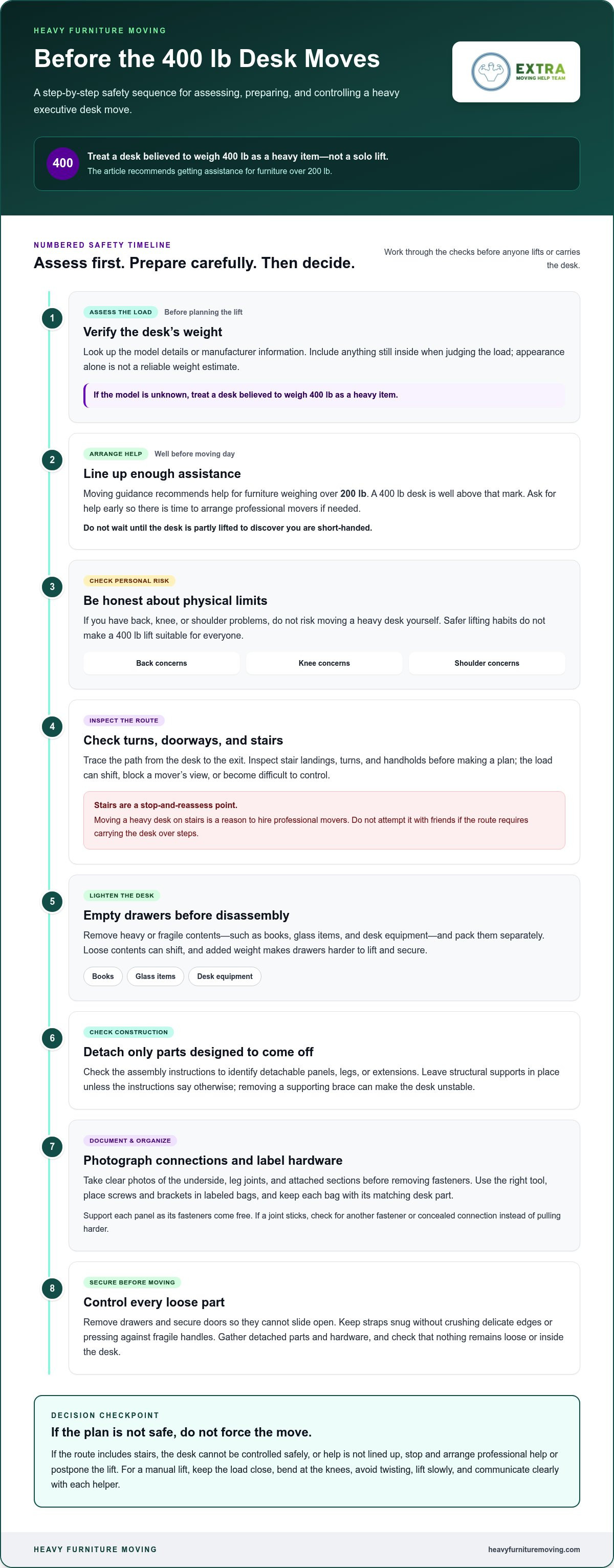
Find the desk’s model details or manufacturer information, then check its listed weight. Executive desks vary with their materials, size, drawers, and built-in components, so appearance alone won’t give a reliable estimate. Include anything still inside when judging the load. If you can’t identify the model, treat a desk believed to weigh 400 lb as a heavy item, not a solo lift.
- Ask for help early. Moving guidance recommends getting assistance for furniture weighing over 200 lbs. A 400 lb desk is well above that mark, even before you account for an awkward grip or a narrow route. Contact friends well before moving day, so there’s time to arrange professional movers if nobody can help. Don’t wait until the desk is partly lifted to discover you’re short-handed.
-
Assess Stair Risks and Professional Help
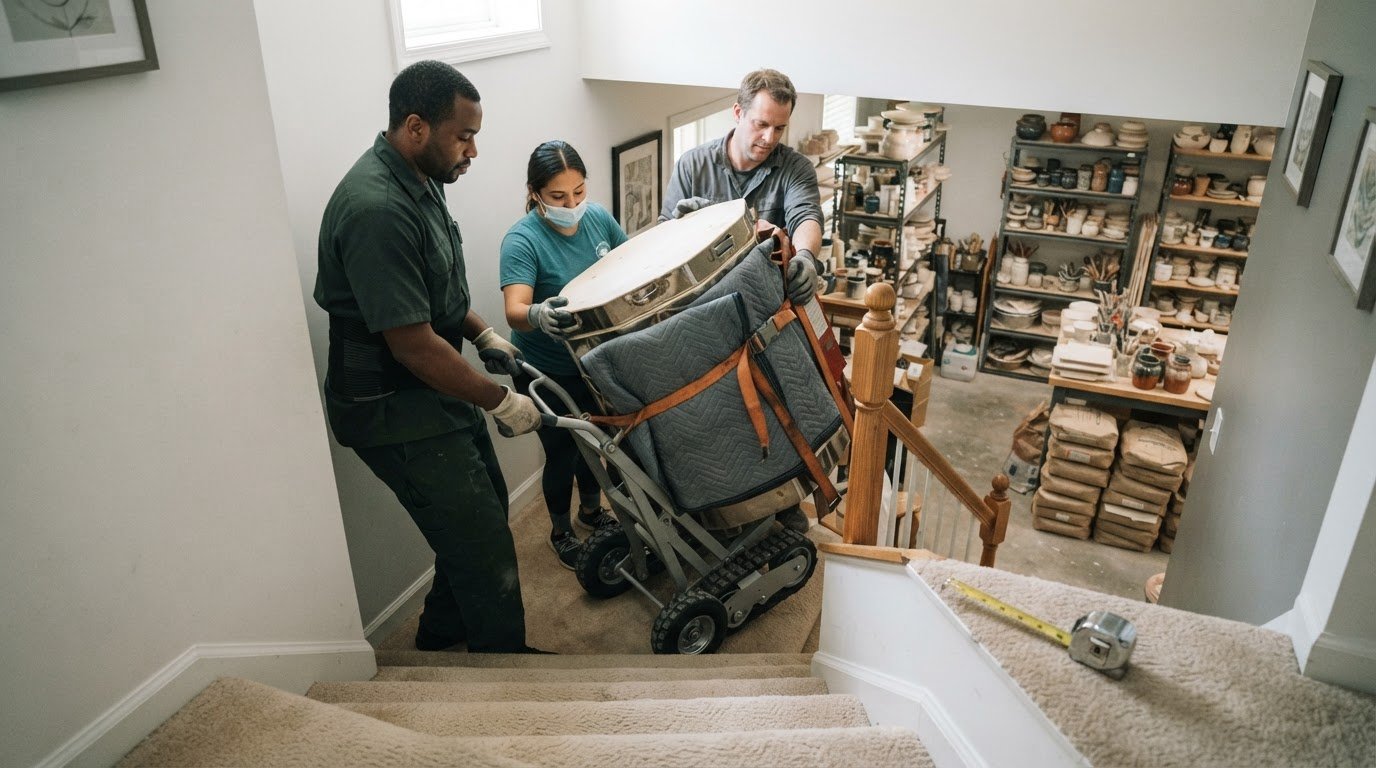
Inspect every stair landing, turn, and handhold before planning to move a 400 lb desk up or down stairs. The load can shift, block a mover’s view, or become difficult to control on a turn. Moving a heavy desk on stairs is a reason to hire professional movers. Don’t attempt it with friends if the route demands carrying the desk over steps.
- Consider your own physical condition before offering to lift. If you have existing back, knee, or shoulder problems, don’t risk moving a heavy desk yourself. For any manual lift, keep the load close to your body, bend at your knees, and avoid twisting. Lift slowly, and communicate clearly with each helper. These steps reduce risky movement, but they don’t make a 400 lb lift suitable for everyone.
- Check the route and available help before you proceed. Identify tight turns, doorways, and stairs between the desk and its destination. If the route includes stairs or the desk cannot be controlled safely, stop and arrange professional help. For a level route with helpers, agree on who leads and who watches the path before anyone handles the desk.
- Make the decision before moving day. A 400 lb desk, a stair route, or a health concern each calls for a more cautious plan. If help isn’t lined up, postpone the lift rather than rushing. A careful plan for how to safely move a 400 lb executive desk without back injury in Aldie gives you time to prepare the route and avoid an uncontrolled carry.
Disassembling the desk and securing loose parts
Disassemble the desk only as its design allows. Removing drawers, doors, or detachable sections can reduce bulk and make it easier to pass through openings.
- Empty the drawers before disassembly. Remove heavy or fragile contents, such as books, glass items, and desk equipment, and pack them separately. Loose objects can shift, and added weight makes drawers harder to lift and secure.
- Check the desk’s assembly instructions before loosening fasteners. Identify which panels, legs, or extensions are designed to detach, and leave structural supports in place unless the instructions say otherwise. Removing a supporting brace can make the desk unstable during handling.
- Photograph each connection before removing it. Take clear pictures of the underside, leg joints, and any attached return or modesty panel. Reference photos make reassembly easier, especially when several similar screws or brackets are removed.
- Use the right tool for each fastener and keep the hardware organized. Put screws, bolts, and brackets from each section in a labeled bag, then keep it with the matching desk panel. This prevents parts from scattering or getting mixed up.
- Remove detachable pieces in a controlled order, supporting each panel as its fasteners come free. Have a helper steady a side panel while you loosen its screws. If a joint sticks, check for another fastener or concealed connection instead of pulling harder.
- Remove drawers and secure any doors before moving the desk. Use straps to keep doors and drawers from sliding open. Keep the straps snug, without crushing delicate edges or pressing against fragile handles.
- Bundle detached components for transport. Keep long panels together and hardware bags with their matching pieces, and pack fragile drawer contents separately. Before moving, compare the desk with your photos and instructions to make sure nothing is loose or left inside.
If disassembly or handling the remaining heavy sections feels unsafe, in-home furniture moving help can assist with the difficult lift.
Disassembly serves a handling purpose as well as reducing the desk’s bulk. A desk should be disassembled for moving so it is easier to transport and can pass through openings in the home. Treat the work as a way to make the item manageable, not as a reason to take apart every fixed joint. Keep track of what has been removed and what remains attached, and make sure the parts are controlled before the desk is carried.
Moving parts on industrial equipment should be secured before transportation. The same precaution is useful when preparing a desk: secure parts that could shift, open, or come loose, and keep detached pieces associated with the desk. A final check can focus on whether doors and drawers are held in place and whether separate pieces are gathered rather than left loose. This keeps preparation centered on safe transport and clear access through the home.
Moving a desk through doorways and corners
Measure the route from the desk’s current position to the exit, including doorways and turns. Use suitable moving equipment, clear communication, and spotters to guide the desk through tight spaces.
- Clear the route before moving the desk. Remove rugs, boxes, and other obstacles, then check each doorway and the destination. Measure the desk after disassembly and compare its widest remaining section with the openings. Account for the space needed to turn corners, not just the doorway width.
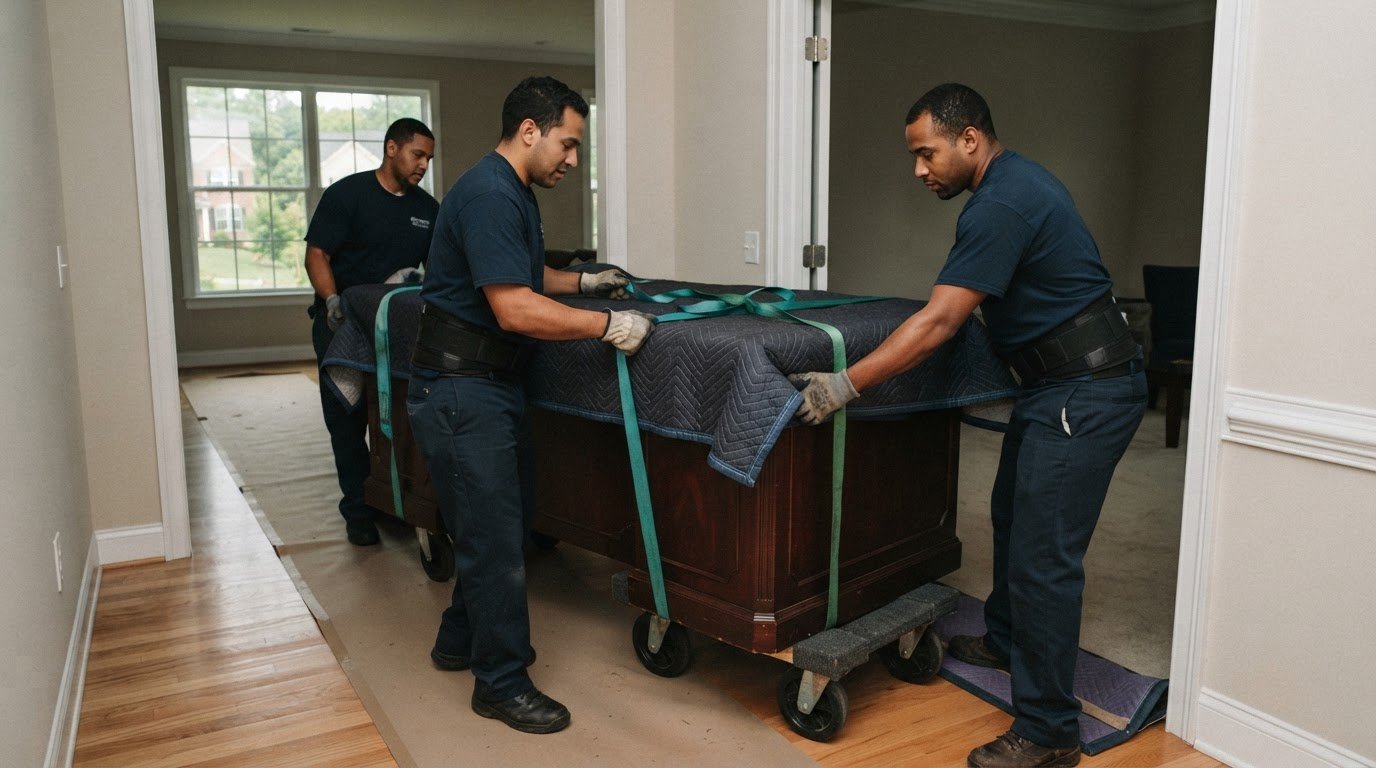
- Choose equipment for the planned movement. Furniture sliders work for moving a desk across a suitable floor: place four sliders beneath its legs or side edges. A helper can pull backward while another person pushes forward. For a dolly, secure bulky furniture with two straps. Lifting straps are generally designed for two people, so don’t treat them as a one-person aid.
- Assign a spotter to each tight space. The spotter watches the desk’s edges and calls out clearance while the movers guide it. Agree on simple commands such as “stop” and “turn” before starting. Move slowly through corners, and pause if the spotter cannot see the desk or the person handling the far end.
- Guide the desk through each opening without forcing it. If it will not fit, stop, measure the gap, and adjust the angle or route. Check whether a detachable piece is still attached before trying again. Forcing a heavy desk can damage the furniture or surroundings and make the load harder to control.
- Plan the transition from the home to the moving vehicle before reaching the exit. Keep the path clear and coordinate each movement with the spotter and helpers. Secure the desk on the dolly with its two straps rather than leaving it loose. Decide where the desk will go before loading.
- If you feel discomfort while moving furniture, pause and reassess before continuing. Tell the helpers, pause the move, and arrange medical assessment rather than lifting through pain. Have the team stabilize the desk and change the plan before anyone handles it again.
- Keep the desk close to your body, bend at the knees, and avoid twisting during a lift. Lift slowly and communicate with helpers throughout. These steps support safer handling, but they do not make a rushed lift or uncontrolled turn safe.
Protecting floors, walls, and desk corners
Protect the route and the desk before moving the heavy piece. Use blankets, cardboard, or sliders to shield vulnerable surfaces as the desk moves.
- Walk the route and identify surfaces that need protection. Check the floor beneath the desk, hallway edges, door frames, and corners where it may turn. Place suitable protection before moving begins. For example, lay cardboard along a hallway where the desk will pass close to a wall.
- Choose floor protection that lies flat and stays in place. Use furniture sliders beneath the desk’s legs or side edges when moving it across a suitable floor, rather than dragging it directly. Check that each slider remains positioned beneath the furniture as it shifts.
- Cover door frames and exposed wall corners with moving blankets or cardboard. Secure the covering so it cannot fall into the route or bunch beneath the desk. Pay particular attention to door edges, where a desk corner can scrape as helpers guide it through.
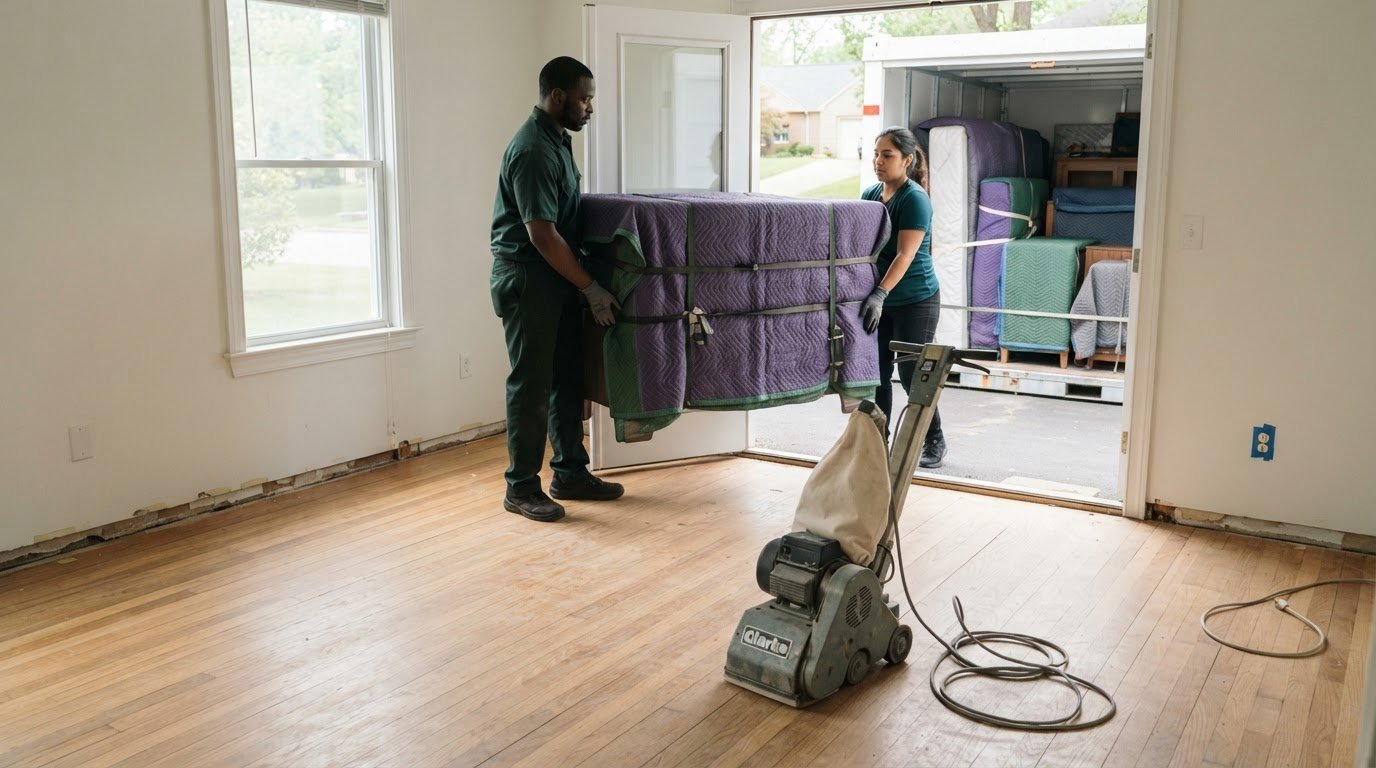
- Wrap delicate finishes in moving blankets before handling the desk. Cover the top, edges, and exposed sides that could contact a wall or another surface. Keep the blanket smooth so loose folds do not catch on handles, brackets, or other parts.
- Pad sharp desk corners with folded blanket material. Cover each exposed corner and secure the padding without putting adhesive on the finish. Padding can help prevent scrapes if a corner brushes a doorway, but it does not make forcing the desk through a narrow gap safe.
- Use soft packing paper to cover small delicate areas before adding a moving blanket. For example, place paper over a polished section that could rub against another surface. Tuck it under the blanket so it stays in place while the desk is handled.
- Check the protection before each change in direction. At a hallway corner or doorway, pause to make sure floor coverings remain flat and wall padding still covers exposed edges. If a slider shifts or cardboard folds, stop and reset it before continuing.
- Inspect the route after the desk passes. Look for displaced cardboard, shifted sliders, or blankets pulled away from corners. Reset the protection before moving another section or making another pass through the same doorway. Keep the route protected throughout the move.
Removing a desk from the home
Plan the final route from the desk to the exterior door. Move deliberately, coordinate helpers, and stop if the load becomes difficult to control.
- Clear the path to the exit before moving the desk. Remove rugs, cords, and loose items, including anything just outside the door. Make sure the door can stay open without someone holding it during the move. A clear exit prevents last-minute stops while the desk is in motion.
- Choose sliders or a coordinated team lift based on the floor and route. With sliders beneath the desk, guide it gently toward the exit. Keep the movement steady and have helpers watch the edges. Do not jerk or shove the desk to overcome resistance.
- Plan for any point where the desk must be lifted. Lift oversized furniture as a team, with each person knowing where to grip and who will call the movement. Keep the desk close to the body, bend at the knees, and avoid twisting.
- Wear sturdy, closed-toe shoes with good grip before handling the desk. Covered toes help protect your feet if the desk shifts, and firm footing supports steady steps. Avoid loose footwear and slippery surfaces.
- Move slowly and communicate at each threshold. Agree on clear commands such as “lift,” “step,” and “stop” before starting. One person should lead the calls while helpers keep pace. If the desk catches at a doorway, stop and reposition instead of pulling harder.
- Keep the desk balanced as it crosses the exit. Helpers should move together, maintain a secure hold, and watch their footing. To turn, reposition your feet instead of twisting your torso, then move in small, coordinated steps. Pause if anyone loses grip or the desk tilts unexpectedly.
- Stop the move if pain, fatigue, or loss of control develops. Set the desk down carefully in a clear area, then reassess the route and handling plan. A 400 lb piece is not worth rushing through the final doorway. For hands-on help with the heavy lift, arrange help moving a heavy desk.
Before each manual lift, pause long enough for everyone to understand the next movement. Communicate clearly with helpers, keep the pace slow, and make sure the group is ready before the desk leaves the floor. If people are not moving together, set the desk down and agree on the movement again rather than trying to compensate with a sudden pull. A steady pace gives helpers time to coordinate their actions and maintain a shared plan.
During the lift, treat posture and control as ongoing checks. Bend at the knees rather than at the waist, and keep the item close to the body throughout the movement. Lift slowly and avoid twisting; to change direction, adjust your position before continuing. These habits apply each time the desk is raised, including when it needs to be repositioned after a pause. If the group cannot keep the movement slow and controlled, stop and reassess before lifting again.
Heavy Furniture Moving: Movers Near Me
Heavy Furniture Moving offers local moving help for heavy and bulky furniture, including a 400 lb executive desk. Turn to its Movers Near Me service when the desk’s weight, tight route, or stairway makes a do-it-yourself move difficult to manage. Getting help with the heavy lift can keep you from handling a challenging move alone.
If the desk needs to be moved inside your home, in-home furniture movers can help. Share the desk’s location and route so the move can be planned around the actual space.
Contact Heavy Furniture Moving to discuss help with moving your desk.
Make the Next Move a Careful One
Knowing how to safely move a 400 lb executive desk in Aldie without risking a back injury starts with choosing a plan that fits the desk and your home. If the lift or route feels beyond your capacity, don’t turn a difficult move into a personal test of strength. Bring in help and keep your attention on a controlled, steady move.
Heavy Furniture Moving also handles Exercise Equipment Moving and Sofa Hoisting. Those services reflect its focus on moving bulky household items that need careful handling. For help with your desk move, contact Heavy Furniture Moving to discuss your move. Take the next step with a clear plan and protect yourself as well as your home.
Frequently Asked Questions
How many people are needed to move a 400 lb desk safely?
Don’t move a 400 lb desk alone; use a coordinated team, and hire professional movers for stairs. Lifting straps are generally designed for two people, but that doesn’t establish the full crew size for every desk. The desk’s shape, grip points, and route affect how helpers can control it. If the group can’t keep the load stable and communicate clearly, don’t start the lift.
How do I measure doorways, hallways, stairs, and the desk before moving it?
After removing detachable parts, measure the desk’s widest and tallest points. Then measure each doorway’s clear opening, hallway width, stair landing, and tight turn. Note obstacles such as railings, door handles, and narrow corners. Compare measurements at every change in direction, not just at the entrance. A simple route sketch can help helpers understand where the desk must turn.
How can I disassemble an executive desk safely, and what parts should not be removed?
Use the assembly instructions to identify removable pieces, and photograph connections before loosening them. Remove drawers, legs, or extensions only when the design allows it. Leave structural supports, fixed braces, and frame panels in place unless the instructions show they are removable. Group fasteners with their matching parts, and stop if a joint resists instead of forcing it.
Frequently Asked Questions
Don’t move a 400 lb desk alone; use a coordinated team, and hire professional movers for stairs. Lifting straps are generally designed for two people, but that doesn’t establish the full crew size for every desk. The desk’s shape, grip points, and route affect how helpers can control it. If the group can’t keep the load stable and communicate clearly, don’t start the lift.
After removing detachable parts, measure the desk’s widest and tallest points. Then measure each doorway’s clear opening, hallway width, stair landing, and tight turn. Note obstacles such as railings, door handles, and narrow corners. Compare measurements at every change in direction, not just at the entrance. A simple route sketch can help helpers understand where the desk must turn.
Use the assembly instructions to identify removable pieces, and photograph connections before loosening them. Remove drawers, legs, or extensions only when the design allows it. Leave structural supports, fixed braces, and frame panels in place unless the instructions show they are removable. Group fasteners with their matching parts, and stop if a joint resists instead of forcing it.