How to Hoist an Oversized Mattress to a South Riding Balcony
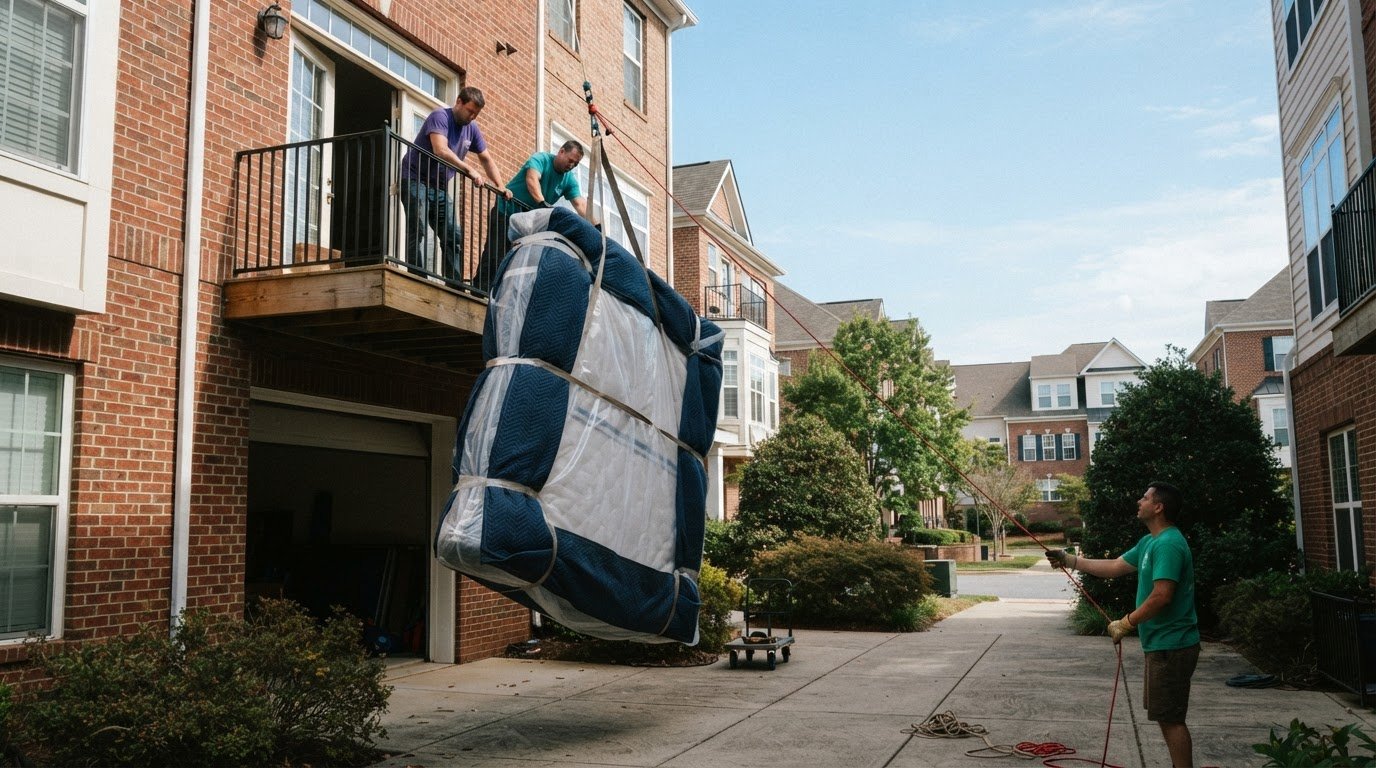
A mattress that will not fit through the stairs may still be brought in through a balcony, but only if the opening, exterior route, and lifting setup all work together. To plan how to hoist an oversized mattress through a third-floor balcony in South Riding, compare the mattress dimensions with the balcony opening and check for obstacles above and below. If the route is tight or the lift cannot be controlled safely, do not force it.
It is frustrating to have a new mattress ready and no clear way to get it upstairs. Assess the route, prepare the mattress, and decide whether a professional hoist is the sensible option. A practical plan starts with checking the full lift path and the details that determine whether the balcony can work as an entry point.
Key Takeaways
- Compare the mattress dimensions with the balcony opening and identify tight turns or other possible pinch points along the route.
- Look at the outside path, including overhead and ground-level obstacles, before deciding whether a balcony lift is practical.
- Plan how the mattress will be kept steady and guided throughout the lift, rather than relying on strength alone.
- Know when a difficult or exposed lift calls for experienced help instead of a do-it-yourself attempt.
- Heavy Furniture Moving’s Sofa Hoisting offers a related option for bulky items that need to reach a home through an exterior opening.
How to hoist oversized mattress through third floor balcony South Riding
A balcony lift can solve a tight stairwell, but hoisting a mattress to a third floor requires a clear route and controlled handling. First, check whether the mattress can pass through the home’s doors and stairs. If not, assess the balcony as an alternate entry point before taking anything outside. A narrow opening, nearby windows, balcony rails, trees, and overhead features can all affect the plan.
Measure the mattress and the usable balcony opening, not just the balcony’s overall width. Check the narrowest point, including the space between railings, walls, and any door frame. Then consider how the mattress must turn to enter the room. Clearing the balcony does not guarantee that it will fit through the doorway or hallway. Map the entire route from the exterior lift point to the final room.
Look down from the balcony and identify where a lift could operate. Check for sloped ground, landscaping, parked vehicles, fences, overhead wires, and branches. These obstacles can restrict access or interfere with moving the mattress. Keep people, pets, and loose belongings clear of the planned work area. If a vehicle must be moved or shared space cleared, arrange that before the lift begins.
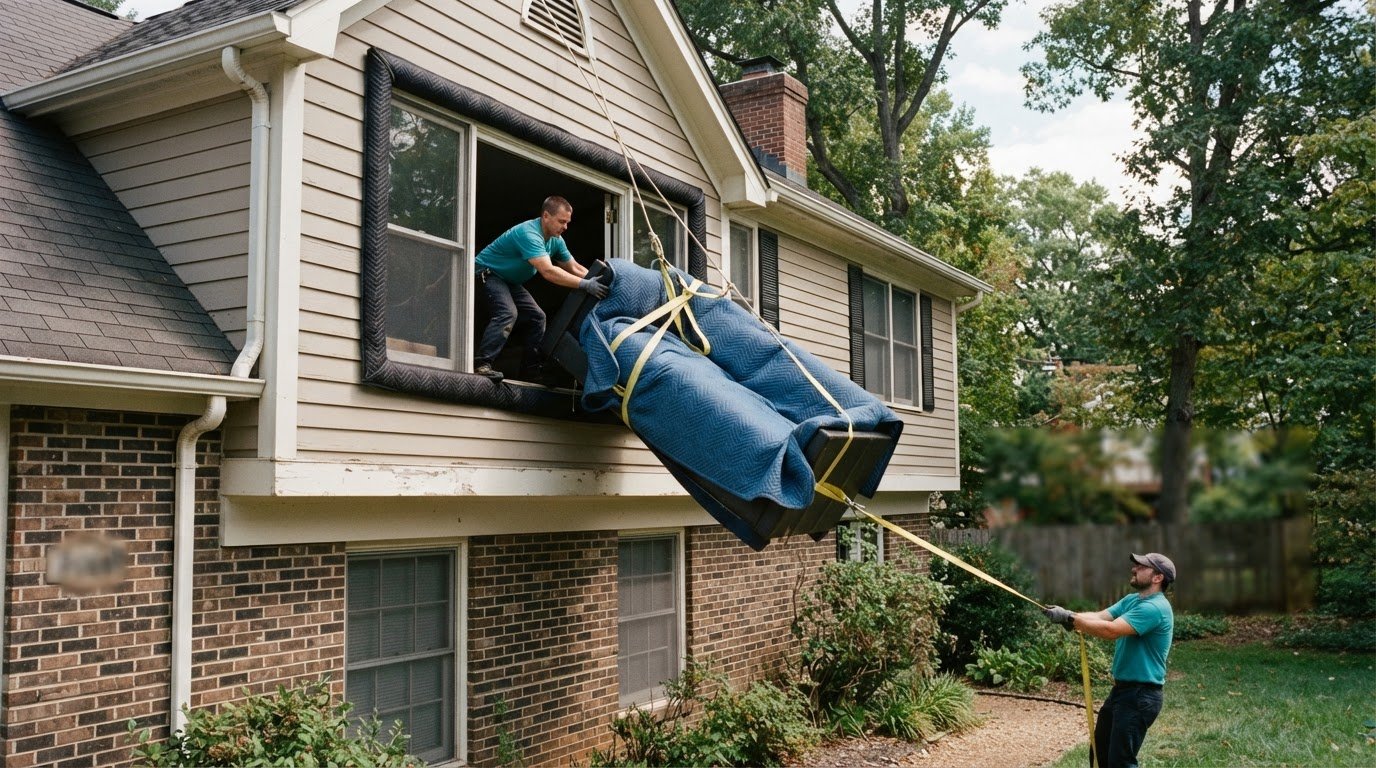
Choose a lifting method only after assessing the full route. A homeowner has described movers using a cherry-picker-type lift to access furniture, sometimes with windows removed and replaced. This illustrates why a balcony is not automatically the easiest entry point. Removing a window changes the plan and is not a casual do-it-yourself task. A professional can assess whether the opening and equipment suit the property.
Use this planning sequence before a third-floor lift:
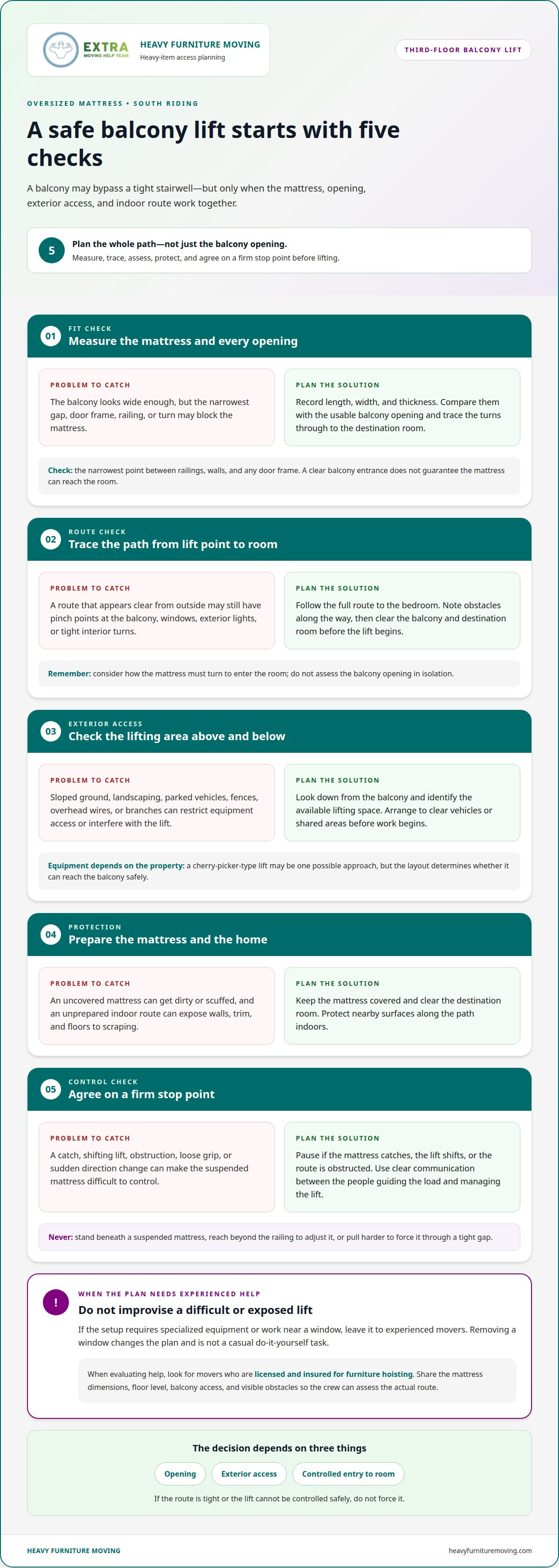
- Record the mattress dimensions. Include its length, width, and thickness, then compare those measurements with the balcony opening and interior path. Consider whether the mattress bends or compresses, but don’t assume it can be forced through a tight gap without damage.
- Trace the route. Follow the path from the lifting area to the bedroom. Mark obstacles such as railings, windows, exterior lights, and tight interior turns. A clear balcony entrance is not enough if the mattress cannot reach the room.
- Assess the exterior access. Identify the space available for lifting equipment and any objects overhead or below. A cherry-picker-type lift may be one possible approach, but the property layout determines whether it can reach the balcony safely.
- Protect the mattress and home. Keep the mattress covered against dirt and scuffs, and clear the destination room. Protect nearby surfaces along the indoor route so the mattress doesn’t scrape walls, trim, or floors as it enters.
- Set a firm stop point. If the mattress catches, the lift shifts, or the path is obstructed, pause instead of pulling harder. A third-floor load needs coordinated control, not improvised force or people leaning over the railing.
For a suspended lift, prioritize control over speed. A loose grip or sudden change of direction can send the mattress into a railing, siding, or window frame. Keep communication clear between the people guiding the load and managing the lift. Never stand beneath a suspended mattress or reach beyond the railing to adjust it. If the setup requires specialized equipment or work near a window, leave it to experienced movers.
When choosing help, look for movers who are licensed and insured for furniture hoisting, as commenters recommend. Share the mattress dimensions, floor level, balcony access, and visible obstacles so the crew can assess the actual route. The right decision depends on the opening, the exterior access, and whether the mattress can be guided into the room without forcing it. A careful assessment can show whether the balcony is workable or another entry route makes more sense.
Heavy Furniture Moving: Sofa Hoisting
Heavy Furniture Moving provides sofa hoisting for bulky furniture that cannot fit through a home’s stairs or doorway. If your mattress also needs to be lifted from outside, that access challenge calls for careful, experienced handling. The opening, outdoor approach, and path into the room all shape the plan.
Share the item’s dimensions and describe the balcony, stairwell, and visible obstacles. These details help the team understand the access challenge and assess whether hoisting is suitable. Heavy Furniture Moving also handles exercise equipment and in-home furniture moves.
Contact Heavy Furniture Moving to discuss your furniture-hoisting needs.
Make a Clear Plan for Your Next Move
Planning how to hoist an oversized mattress through a third-floor balcony in South Riding starts with choosing a safe, deliberate route. If the lift looks difficult to manage alone, contact Heavy Furniture Moving for sofa hoisting and other heavy-item moving help. The team also moves exercise equipment and furniture within the home.
Share the item and the access challenge when you reach out. A clear description of the stairs, balcony, and destination helps focus the conversation on the work involved. You can contact Heavy Furniture Moving for help and discuss the next step. With a practical plan, you can move forward with confidence.