How to Hoist a Heavy Dining Table Over a Deck in Chantilly
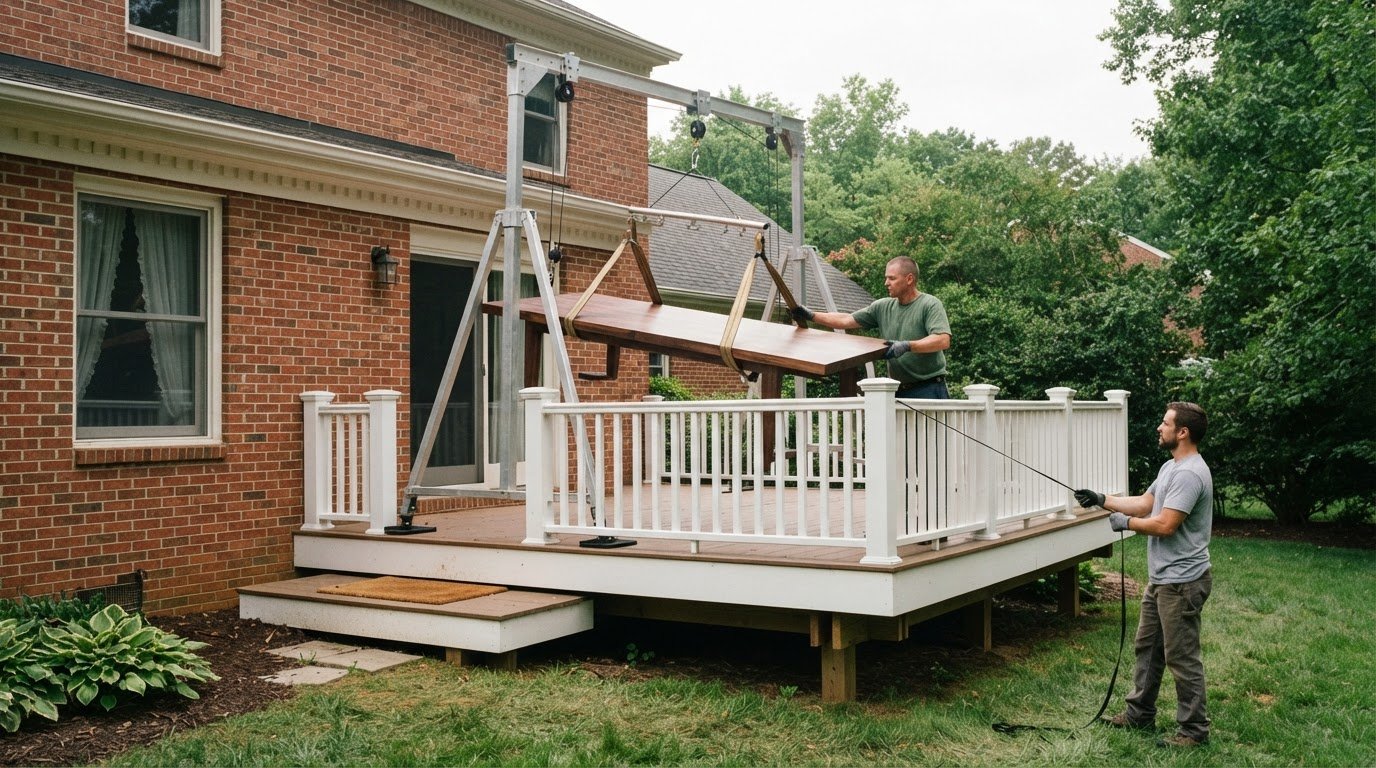
A deck railing is not a lifting point simply because a table can fit over it. How to hoist a heavy dining table over a deck railing in Chantilly depends on whether a professional can assess the access, lifting setup, landing area, and weather and determine that a window or balcony hoist is suitable. If the site is not safe for hoisting, another moving method may be a better choice.
A heavy dining table can be difficult to maneuver through a doorway or staircase, so bringing it in over the deck may seem like the easiest route. The lift still requires careful planning to protect the table, the building, and everyone nearby.
This guide explains when a window or balcony hoist may make sense, what professionals assess on site, and how they test a lifting setup in stages. You’ll also learn which details about the table and access help the crew plan the move, and what can affect the timing and approach.
Key Takeaways
- Learn what makes a window or balcony hoist a suitable choice, and when another moving method may fit the site better.
- Understand how professionals weigh the table’s size and handling needs when deciding between manual lifting and mechanical help.
- See why the building, weather, and clear landing space all matter before a lift begins.
- Follow the main stages of a professional hoist, including how the team tests lifting capacity gradually.
- Find out when Heavy Furniture Moving’s Sofa Hoisting service can help with a bulky table that can’t be carried through the usual route.
How professionals assess window and balcony hoists versus alternatives
A professional compares the table’s size and route with the building’s access before choosing a lifting method. For a Chantilly home, the key question is whether the setup provides a controlled path from the ground to the deck.
Securing a Hoist to a Balcony Rail: A Professional Approach
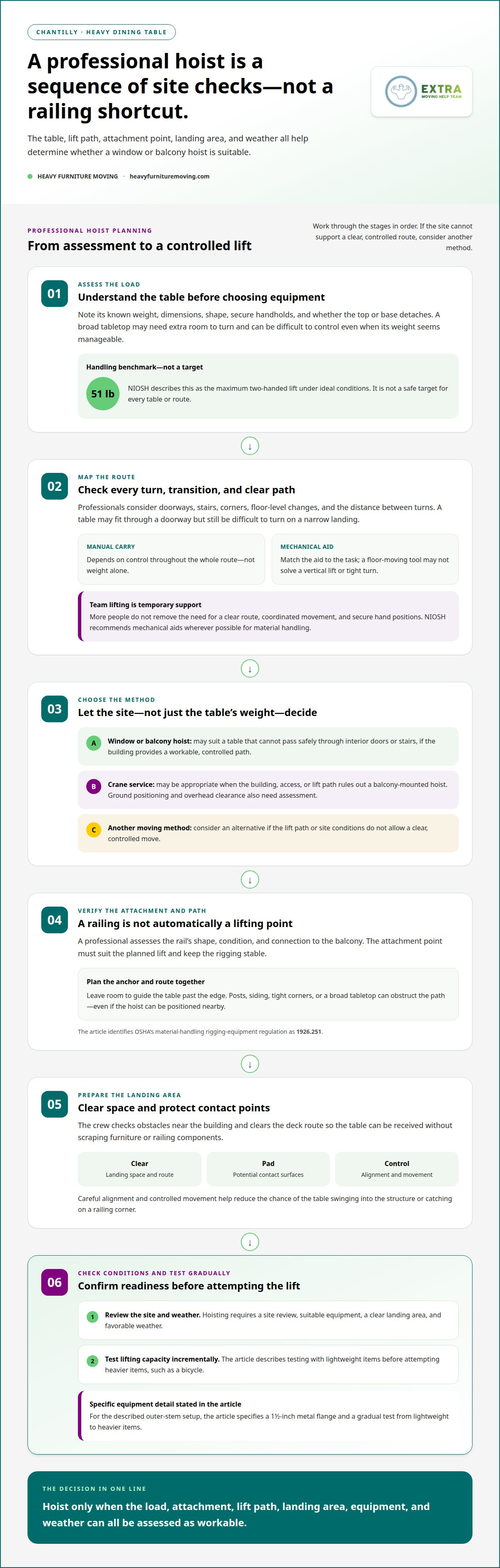
Securing a hoist means choosing a mounting point that can support the planned lift and keeping the rigging stable. The rail’s shape, condition, and connection to the balcony all matter. A professional assesses those features rather than treating the railing as a ready-made anchor. OSHA identifies its rigging-equipment regulation for material handling as 1926.251.
The mounting location should leave enough room to guide the table past the edge without forcing it against posts or siding. A tight corner, for example, may block the table’s path even when the hoist can be positioned nearby. The mover plans the attachment point and route together, then considers whether another access point or lifting method would work better.
When to Use a Mover or Crane Service
A professional furniture mover can help when a table cannot pass safely through interior doors or stairs and a window or balcony offers a workable route. A crane service may be appropriate when the building, access, or lift path rules out a balcony-mounted hoist. The choice depends on the site, not just the table’s weight.
Professionals assess the landing area, obstacles near the building, and the table’s shape. A wide tabletop may need more clearance to turn than a narrow base. For crane work, they also assess ground positioning and overhead clearance. If those conditions prevent a clear lift path, the team can consider another route rather than forcing the hoist plan.
Protecting the Railing and Table During a Professional Hoist
Protecting the table and building starts with controlling contact between the load, rigging, and surrounding surfaces. The mover plans how the table will clear the railing and checks where its edges might meet a post, wall, or deck. A table can shift during a lift, and repeated contact may damage its finish or the railing.
Before the lift, the crew considers the table’s shape and the railing layout together. A broad top, for example, may need careful alignment to avoid catching on a corner. Protective padding can limit surface contact, while controlled movement helps prevent the load from swinging into the structure. The team also clears the landing route so the table can be received without scraping deck furniture or rail components.
Hoisting furniture to a window or balcony requires a site review, suitable equipment, a clear landing area, and favorable weather. These checks help determine whether the route is workable and whether the landing space is ready to receive the table.
The outer stem uses a 1½-inch metal flange. It should first be tested by lowering lightweight items before attempting heavier items such as a bicycle.
How professionals assess manual-lifting limits and choose mechanical aids
Professionals first assess whether people can control the table throughout the route or need mechanical support. NIOSH describes 51 pounds as the maximum two-handed lift under ideal conditions. That figure isn’t a target for every table. A broad top, awkward grip, narrow stair turn, or long carry can make handling harder. The mover considers the entire path, not just the table’s weight.
The assessment starts with the table. The crew considers its known weight, dimensions, shape, and secure handholds. A large tabletop can be difficult to control even when its weight seems manageable. If the table has a detachable top or base, that may affect how the load is handled and moved through the home.
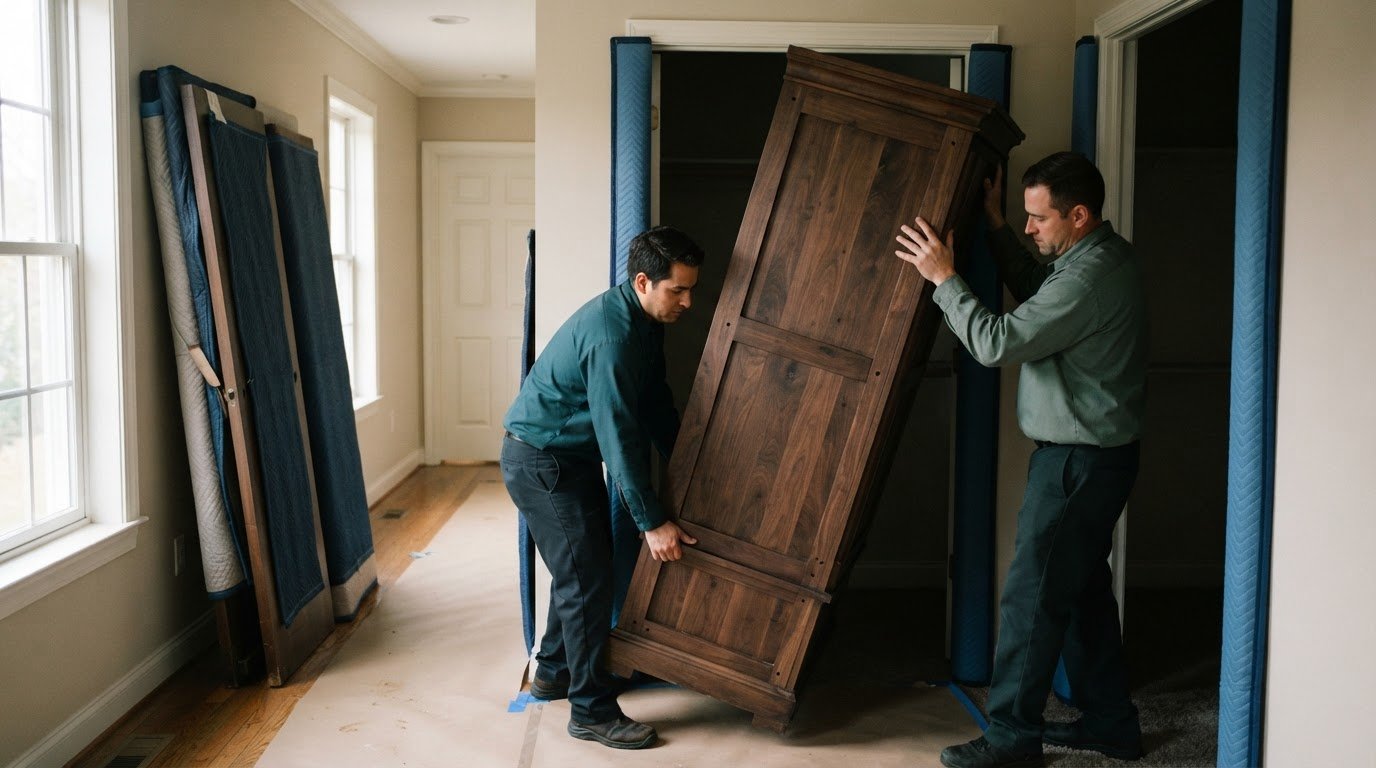
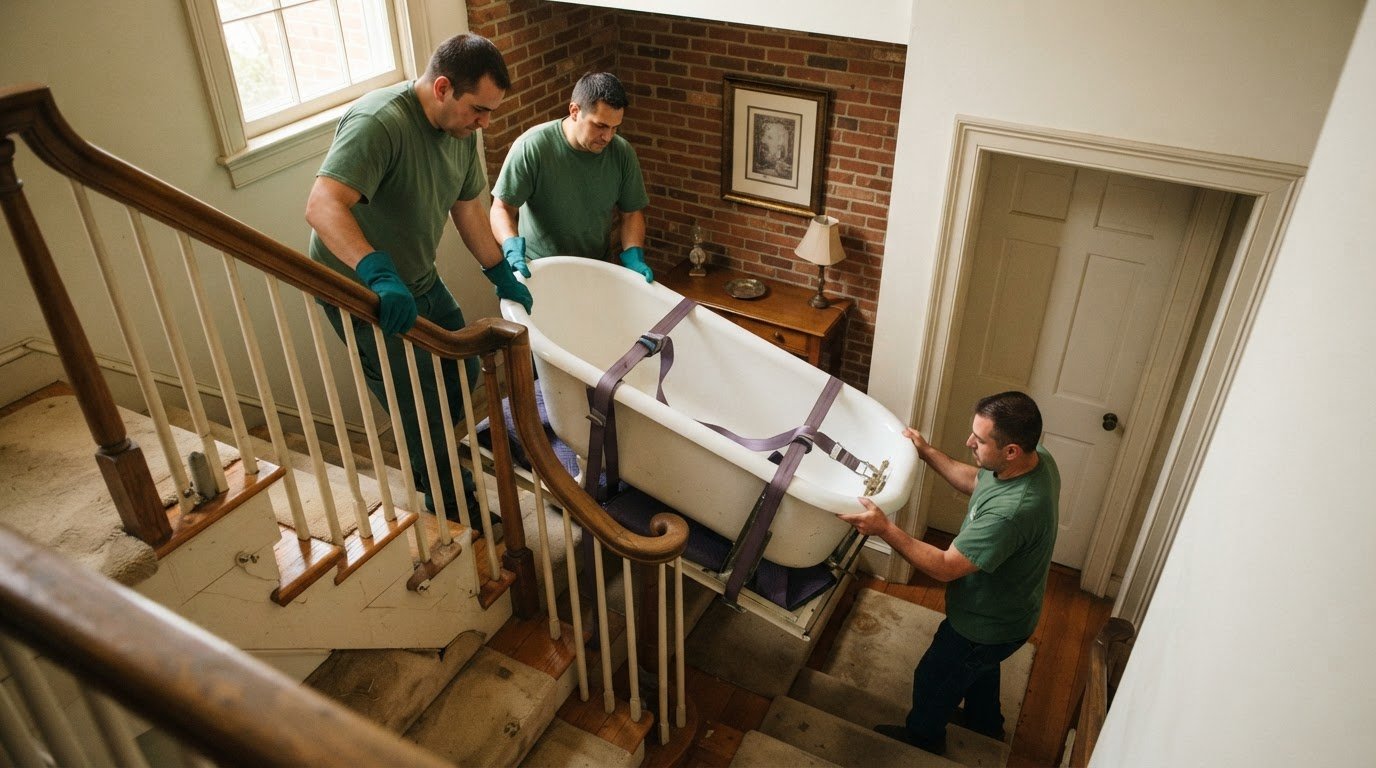
Next, professionals map the carrying route from the room to the exit or deck. Doorways, stairs, corners, changes in floor level, and the distance between turns all affect how the crew can position itself. A table that fits through a doorway, for example, may still be difficult to turn on a narrow landing. The route may rule out a manual carry before lifting begins.
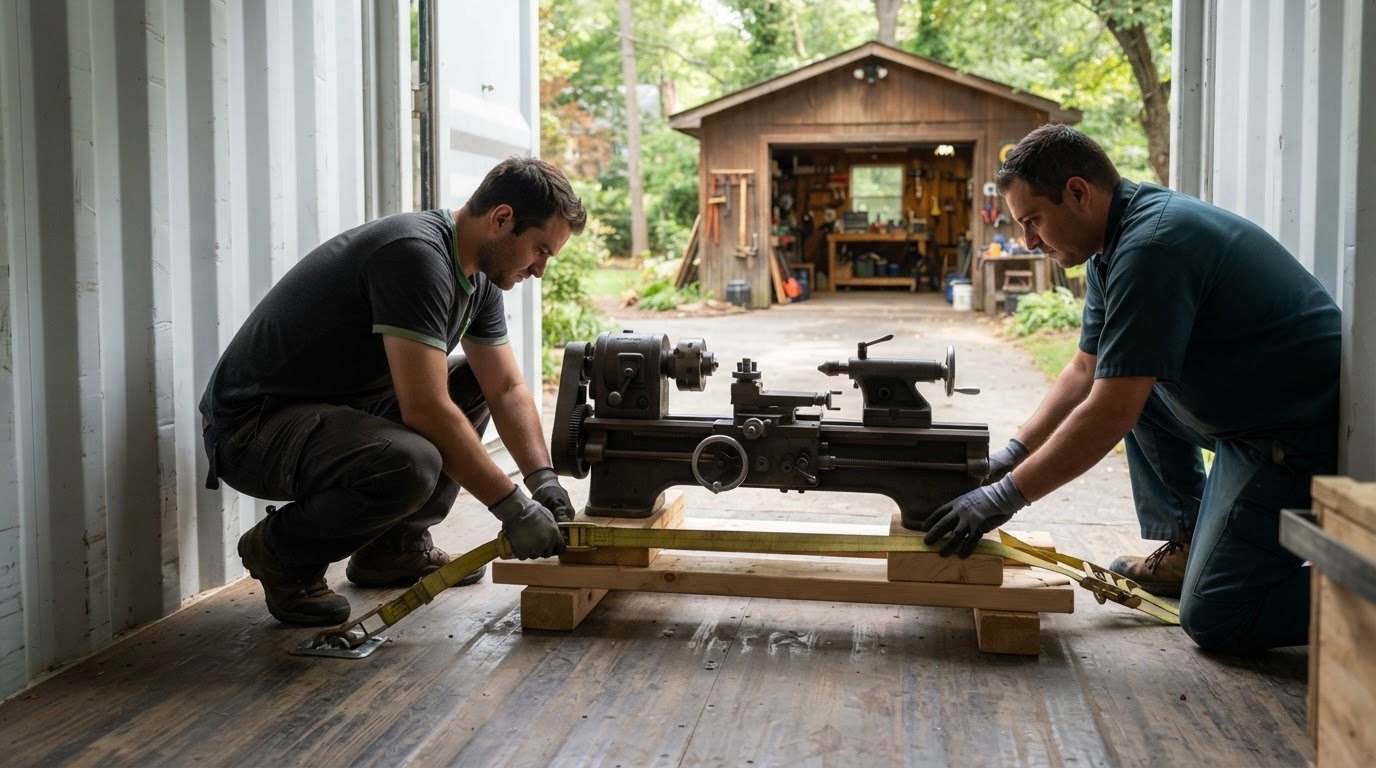
NIOSH recommends using mechanical aids wherever possible for material handling. The professional matches the aid to the task: moving a table across a level floor is different from raising it to a deck. The method must suit both the load and the available space. A tool that helps on a hallway floor will not necessarily solve a vertical lift or tight turn.
Team lifting can help with a heavy or bulky item, but NIOSH treats it as a temporary measure. Adding people does not eliminate the need for a clear route, coordinated movement, and secure hand positions. The crew considers whether everyone can move together without twisting around a stair rail or changing grip mid-carry. If the path makes that difficult, mechanical assistance is the stronger option.
The decision depends on these factors, not a single weight threshold. A compact table with clear handholds and an open path presents different handling demands from a wide table that must turn on stairs. The crew also considers where the load could be set down safely if the route changes. These details help determine whether a manual move, mechanical aid, or hoist suits the job.
Share the table’s known dimensions and weight, plus the route’s tight turns, to help the professional assess the move. For a challenging carry, heavy lifting moving service can provide professional support.
Site review, weather, and landing-area requirements
A professional site review connects the table’s dimensions with the building, lifting route, and landing space. For a Chantilly deck, the crew assesses the full path before selecting a hoist or another method.
For crane or lift work in Chantilly, Virginia, requirements depend on the equipment and where it will operate. The professional assesses the planned setup, including whether it uses public space or affects access around the property, and accounts for applicable local requirements before scheduling the lift.
Measurement starts with the dining table. The mover records its length, width, height, and any parts that can be removed for transport. These dimensions show how much clearance the load needs to pass through an opening and turn toward the deck. A broad tabletop may call for a different approach from a narrow table with a compact base.
Next, the crew measures the opening and railing in relation to the table’s path. They consider the railing height, clear width between posts, and whether the table can pass without striking the structure. They also assess the proposed hoist position and the space needed to guide the load past the deck edge. A tight corner or fixed post can change the route.
The landing area needs room for both the table and the people receiving it. Professionals identify obstacles such as deck furniture, planters, doors, or stored items, then plan where the table can be lowered and moved away from the edge. A clear landing reduces the chance of the suspended load hitting an obstacle and gives the crew room to guide it.
Weather matters because furniture hoisting requires suitable conditions. Wind can affect a suspended table’s movement, while rain can make surfaces slippery. The crew considers current conditions as part of the site plan and adjusts the timing if the lift cannot be handled safely. A balcony may offer shelter, but the exposed route from the ground to the deck still matters.
Risks include losing control of the load, which could lead to a fall, damage to the table, or damage to the railing and nearby structure. Professionals reduce these risks by assessing the attachment point, lift path, weather, and landing area together. For a crane lift, they also check ground and overhead conditions, since obstacles above or unstable placement below can affect the operation.
Each measurement informs a decision. If the table clears the opening but the landing space is blocked, the crew must resolve the landing plan before lifting. If the railing or access route does not support the planned movement, the professional considers another method instead of forcing the load through a poor fit.
Steps in a professional hoist
A professional hoist follows a planned sequence, from matching equipment to the balcony to receiving the table on the deck. At each stage, the crew keeps the load, people, and building aligned before moving the table upward.
- Confirm the measurements. The crew uses the balcony height and planned hoist position to prepare the equipment. For a swiveling balcony hoist, the outer stem is trimmed to about half an inch less than the balcony’s height. That fit helps the equipment sit in the intended position without extending too far above the balcony.
- Inspect the equipment and attachment points. Before setting up, professionals examine the hoist parts, rigging, and planned mounting point for visible wear or damage. They check that the pieces fit together and that the attachment matches the lift plan. A damaged or mismatched part can interrupt the sequence before the table leaves the ground.
- Position and secure the hoist. The crew places the hoist where the table can travel toward the deck without catching on the railing or building. The U-bolt is tightened approximately 2 inches from the end of the hoist arm. Professionals then review the setup and its movement path before attaching the load.
- Prepare the table for lifting. The crew identifies stable contact points and positions the rigging to support the table through its center of balance. A dining table with a wide top needs careful alignment so one edge doesn’t dip or turn toward the railing. Any removable parts are handled according to the planned route and load arrangement.
- Coordinate the lift. Before raising the table, the team agrees on clear signals and identifies who guides the load and who receives it. One person’s instruction controls each movement, preventing conflicting directions near the deck edge. The crew keeps the table aligned with the opening and pauses if its position changes unexpectedly.
- Land and release the load. At deck level, the receiving crew guides the table into the prepared landing space. They lower it onto a stable surface before releasing the rigging. The team then removes the lifting gear without dragging it across the tabletop or railing, and checks the route is clear for moving the furniture onward.
This sequence helps the crew address problems before they affect the suspended table. The exact setup depends on the hoist design, balcony geometry, and table shape. A narrow deck opening, for example, may require different positioning from a broad, unobstructed route. Professionals control the move from attachment through landing instead of treating it as a single pull.
How professionals test hoist capacity incrementally
A professional does not begin a dining-table lift with the full load suspended. The team first evaluates the installed hoist and its support, then tests it with lightweight items. Each stage can reveal movement or instability before heavier furniture enters the lifting plan.
The first test uses a light object raised and lowered along the planned path. Professionals watch the hoist, mount, and rigging for unexpected movement. They also check whether the load travels smoothly and stays controlled near the deck edge. If the setup shifts or behaves unexpectedly, the team stops and reassesses before proceeding.
Only after the initial test might the team consider a heavier test item, such as a bicycle. This is a gradual assessment, not a reason to move straight to the dining table. A bicycle and a table differ in shape, balance, and rigging contact. The result helps the crew understand how the setup behaves, but does not replace a separate assessment of the table and lift plan.
The team increases test loads carefully and incrementally. At each stage, professionals assess the mounting point, hoist arm, and rigging while controlling the load’s movement. They compare the lift with the lowering process. A setup that appears steady while raising an item still needs controlled handling as the item is lowered.
- Watch the mount. The crew looks for shifting or movement where the hoist attaches to its support.
- Observe the load. A swing, tilt, or change in balance can affect how the next test proceeds.
- Check the route. The team confirms that the test item clears the railing and follows the intended path.
- Pause when behavior changes. A new sound, movement, or loss of control calls for reassessment before adding load.
Testing capacity does not mean stretching a hoist to its limit. It is a controlled way to assess the installed system and decide whether it suits the planned work. Professionals consider the table’s actual weight and shape, how it will be attached, and site conditions together. A small test object alone cannot establish that every larger or differently shaped load is suitable.
Before the dining table is attached, the crew uses the test observations to finalize its handling plan. If the table’s shape changes how it hangs, the rigging arrangement must account for that difference. Incremental testing gives the team a chance to identify concerns early, while the load remains manageable. For a heavy table lift, arrange professional furniture-moving help rather than attempting a capacity test yourself.
Heavy Furniture Moving: Sofa Hoisting
Heavy Furniture Moving offers Sofa Hoisting for bulky furniture that cannot pass through a home’s usual entrances. If your dining table also needs a carefully planned route, the site assessment and capacity checks can help clarify what the move involves. The right approach depends on the table’s shape, access, and landing space. For in-home furniture moving, professional help can coordinate handling from the pickup point to the destination without relying on a risky manual lift.
Contact Heavy Furniture Moving to discuss your furniture move and the access challenges involved.
Plan the Next Move with Confidence
The next step is to share the table’s dimensions, access route, and deck layout with a moving professional. Those details help shape a plan around your home instead of forcing the furniture through an unsuitable entrance. If you’re deciding how to hoist a heavy dining table over a deck railing in Chantilly, focus on a controlled move suited to the table and property.
Heavy Furniture Moving offers Movers Near Me, Exercise Equipment Moving, and Sofa Hoisting for challenging furniture and bulky-item moves. Share your table and access details to discuss a practical way forward.
Contact Heavy Furniture Moving to talk through your move. A clear plan can make the next step feel manageable.
Frequently Asked Questions
What lifting equipment do professionals use to hoist furniture over a deck railing safely?
Professionals choose a hoist and compatible rigging based on the table and mounting setup. The rigging supports the furniture at stable contact points and helps control its position during the transfer. For a finished dining table, the crew also considers how to keep hardware from pressing against delicate surfaces. The equipment depends on the lift path, attachment point, and table construction, not just its size.
What steps do professionals take to hoist a heavy table over a deck railing safely?
Professionals plan the move around the table’s construction and the home’s access. They identify parts that can be removed, such as detachable legs, if that makes the table easier to handle. The crew then secures the furniture for the chosen route, coordinates the transfer to the deck, and sets it down before removing the rigging. For help planning how to hoist a heavy dining table over a deck railing in Chantilly, share details about the table and access.
How much do furniture hoisting and crane rental services near Chantilly, VA, cost?
The cost of a furniture-hoisting move depends on the item, access route, and equipment required. Heavy Furniture Moving provides an upfront quote before work begins. The company offers Sofa Hoisting, but this is not a crane-rental price list. A crane lift is a separate method, and its requirements depend on the property and planned setup.
What alternatives are there to hoisting a table over a deck railing, such as disassembly or stair removal?
Alternatives include carrying the table through a wider doorway, using another ground-level entrance, or removing detachable parts to make the furniture easier to maneuver. A professional can assess whether disassembly suits the table and whether it can be reassembled for use. Removing stairs would alter the building and is not the same as removing table parts. The best route depends on the table’s construction and available access.
Frequently Asked Questions
Professionals choose a hoist and compatible rigging based on the table and mounting setup. The rigging supports the furniture at stable contact points and helps control its position during the transfer. For a finished dining table, the crew also considers how to keep hardware from pressing against delicate surfaces. The equipment depends on the lift path, attachment point, and table construction, not just its size.
Professionals plan the move around the table’s construction and the home’s access. They identify parts that can be removed, such as detachable legs, if that makes the table easier to handle. The crew then secures the furniture for the chosen route, coordinates the transfer to the deck, and sets it down before removing the rigging. For help planning how to hoist a heavy dining table over a deck railing in Chantilly, share details about the table and access.
The cost of a furniture-hoisting move depends on the item, access route, and equipment required. Heavy Furniture Moving provides an upfront quote before work begins. The company offers Sofa Hoisting, but this is not a crane-rental price list. A crane lift is a separate method, and its requirements depend on the property and planned setup.
Alternatives include carrying the table through a wider doorway, using another ground-level entrance, or removing detachable parts to make the furniture easier to maneuver. A professional can assess whether disassembly suits the table and whether it can be reassembled for use. Removing stairs would alter the building and is not the same as removing table parts. The best route depends on the table’s construction and available access.