How to Hoist a Custom Dining Table Through Double Patio Doors
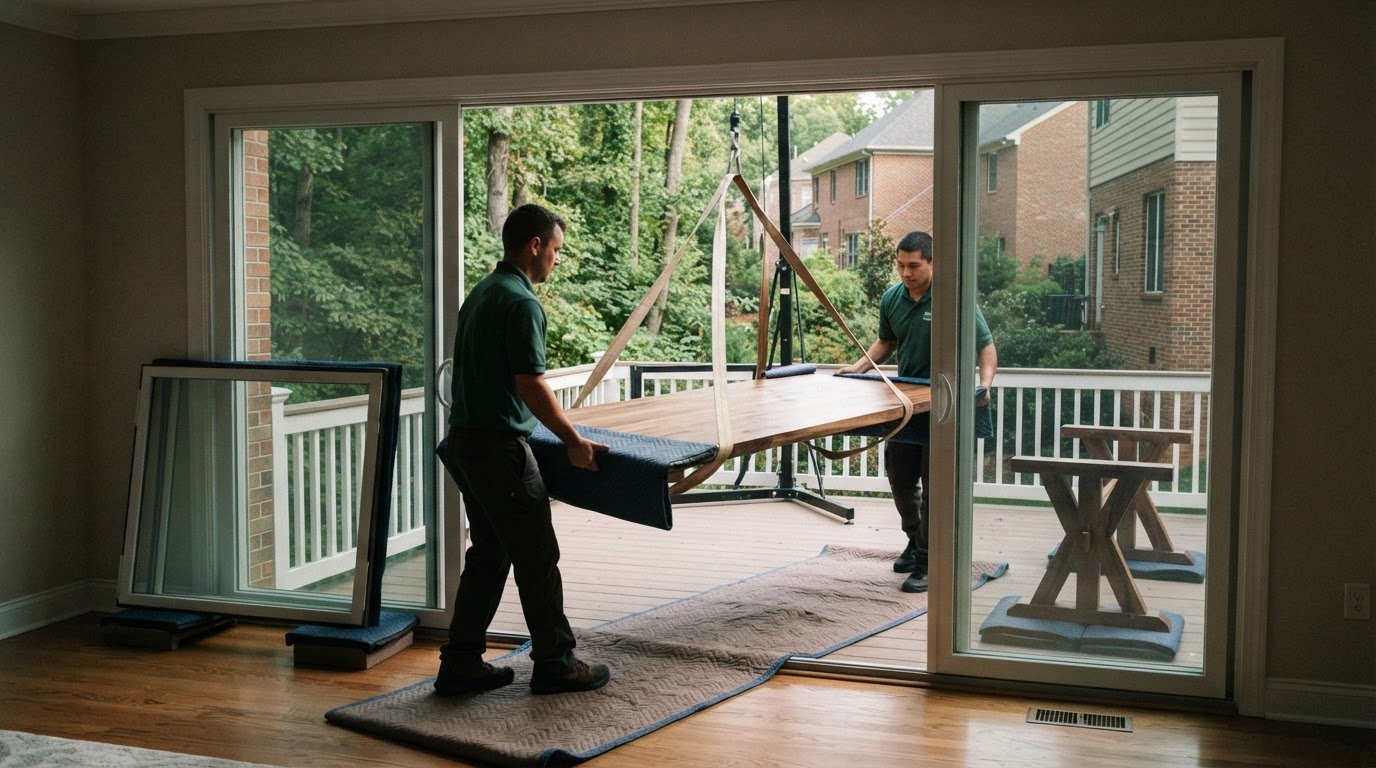
The tabletop needs protection before it reaches the doorway, not just during the lift. For how to hoist a custom dining table through double patio doors in Fairfax Station, professional movers first protect the surface, then measure the doors’ clear width and height and assess the table’s dimensions and route. Door openings vary, so measure the patio doors’ clear width and height before moving the table.
It’s natural to worry about scratches, tight corners, and a table that won’t clear the opening. The right plan addresses those risks before hoisting begins: movers protect the finish, account for the table’s shape and removable parts, and check the route on both sides of the doors. This guide explains what to assess and how careful preparation helps professional movers handle a custom table with control.
Key Takeaways
- Movers assess the full route, including the approach to the patio doors and the space needed to turn the table.
- Comparing interior and exterior openings helps reveal where the table could catch before the lift begins.
- Removing a patio door panel may create more clearance, but the panel and door system need careful handling.
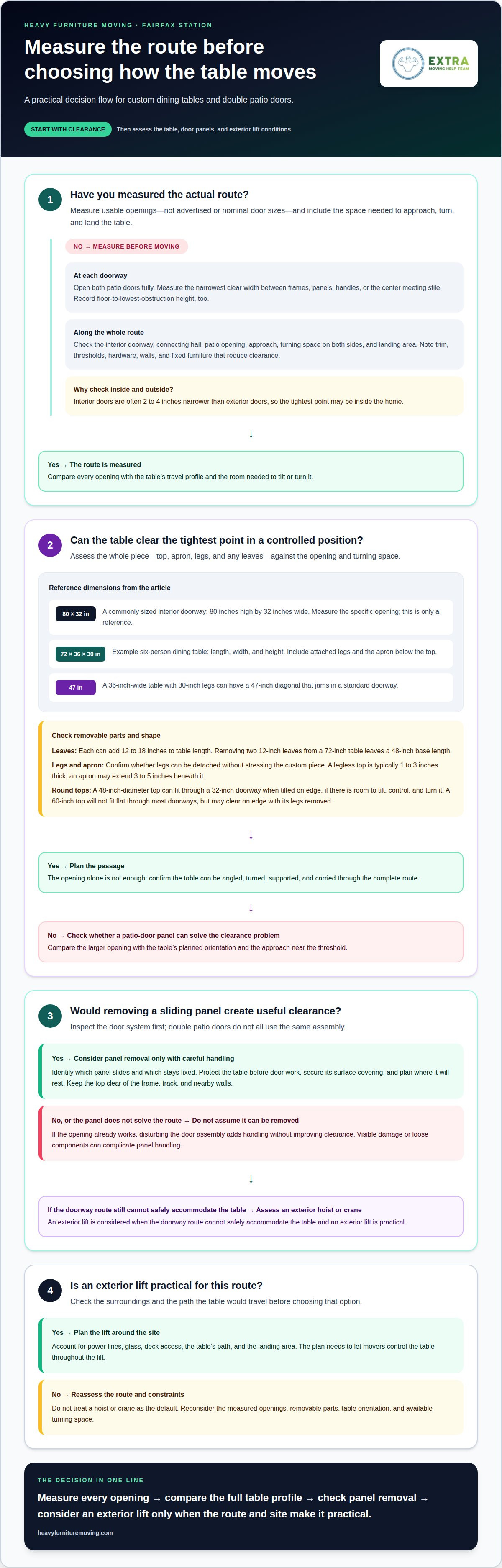
- A hoist or crane is considered when the doorway route cannot safely accommodate the table and an exterior lift is practical.
- Power lines, glass, and deck access all affect the safest lifting plan and how movers control the table’s path.
How professional movers measure a doorway's clear opening
- Measure the usable opening, not the door’s advertised or nominal width. Open both patio doors fully, then measure between the narrowest points of the frame, panels, handles, or center meeting stile. Record the vertical clearance from the floor to the lowest obstruction as well. These measurements show the actual passage available to the table, rather than the overall frame size. Both panels must stay open in the position planned for the move.
- Record width and height separately, then compare them with the table’s travel position. An interior doorway commonly measures 80 inches high by 32 inches wide, but patio doors vary. Movers measure the specific opening and note any trim, threshold, or hardware that could reduce clearance. These details matter if the table needs to tilt. For homeowners planning how to hoist a custom dining table through double patio doors in Fairfax Station, the actual opening matters more than a general doorway estimate.
- Measure the table at its widest and deepest points, including attached legs and the apron beneath the top. A typical six-person dining table measures 72 inches long, 36 inches wide, and 30 inches high. Its proportions affect how it can be angled through an opening. A 36-inch-wide table with 30-inch legs can have a 47-inch diagonal that jams in a standard doorway. Movers assess that geometry before attempting the passage.
- Identify removable parts before calculating the moving profile. Each dining-table leaf can add 12 to 18 inches to its length, so movers account for leaves that can be removed. They also assess whether the legs can be detached without stressing the custom piece. A legless tabletop is typically 1 to 3 inches thick, while an apron may extend 3 to 5 inches beneath it. Both features affect clearance and hand placement.
- Match the measurements to the planned angle and turning space. A round top measuring 48 to 60 inches across needs a different approach from a rectangular table. Movers assess edge-on clearance and whether the route allows a controlled turn on both sides. For a move involving how to hoist a custom dining table through double patio doors in Fairfax Station, they also account for the approach and landing area. Clearing the opening alone doesn’t prove the table can complete the route.
How professional movers check interior and exterior door widths
- Measure each opening along the table’s full route, not only the patio doors. Movers compare the interior doorway, any connecting hall, and the exterior opening. Interior doors are often 2 to 4 inches narrower than exterior doors, so the tightest point may be inside the home. They record each usable width with doors fully open and account for handles, trim, and other fixed projections that reduce clearance.
- Check the table’s travel dimensions against every doorway. A dining table measuring 72 inches with two 12-inch leaves becomes 48 inches long at its base after the leaves are removed. Movers consider whether removing leaves changes the handling profile enough to clear the narrowest passage. They also assess the tabletop, apron, and legs as a whole, since a clear width alone doesn’t show whether the piece can pass at a safe angle.
- Compare the opening with the tabletop’s shape and intended orientation. A round tabletop with a 48-inch diameter can fit through a 32-inch doorway when tilted on edge. That does not mean the move is automatic: movers still need room to tilt, control, and turn the top on both sides. A nearby wall, hall corner, or fixed furniture can limit that movement, even when the doorway measurement seems suitable.
- Assess larger round tops separately. A 60-inch round tabletop won’t fit flat through most doorways, but it can clear when tilted on edge with its legs removed. Movers check whether the opening allows that edge-first position and whether the route provides enough turning space. For a custom table, the material, shape, attached components, and available grip points all affect how the crew can orient and support it.
- Use the measurements to choose a route before moving the table. Movers compare the narrowest interior opening with the exterior doorway, then consider where the table must rotate between them. If the patio doors offer more room, they plan the approach around that opening and the table’s orientation. If the interior route remains tight, professional furniture-moving help can assess the passage and table together, rather than relying on one doorway measurement.
How movers safely remove patio door panels for furniture
- Inspect the patio door before considering panel removal. Identify which panel slides, which stays fixed, and how the frame and track are built. Double patio doors don’t all use the same assembly, so don’t assume a panel can be lifted out. Look for visible damage or loose components that could complicate handling. This inspection helps determine whether opening the doorway further is practical for the table’s route.
- Remove a panel only if it solves a real clearance problem. Compare the available opening with the table’s shape and planned orientation. For example, a broad tabletop may need more side clearance than its edge-first position suggests, especially if the approach turns near the threshold. If the opening already provides a workable path, disturbing the door assembly adds handling without improving clearance.
- Protect the custom table before any door work begins. Cover the finished surface and secure the protection so it won’t shift during positioning. Plan where the table will rest while the opening is prepared, keeping its top clear of the door frame, track, and nearby walls. A delicate edge or projecting apron can catch even when the main tabletop clears, so account for the entire piece.
- Support the panel throughout removal and movement. If the door design permits removal, control the panel as it is released and keep it steady while carrying it to a protected location. Glazed sections need particular care because a sudden tilt or contact with a hard surface can cause damage. Keep the panel clear of the furniture route, and don’t lean it where it could shift or obstruct access.
- Keep the doorway, track, and threshold clear during the move. Check the route for panel hardware or loose parts, then guide the table without dragging it across the sill. Have one person monitor the opening while others control the table’s position. This coordination helps prevent contact between the protected tabletop and the frame, glass, or exposed track as the piece passes through.
- Restore the doorway only after the table and moving path are clear. Return the panel using the door’s intended assembly, then check that it sits properly and moves as expected. Don’t force a panel that binds or appears misaligned. If it cannot be removed or replaced cleanly, change the furniture route or choose another professional moving method rather than risk the patio door or custom table.
When should movers use a furniture hoist or crane for a dining table?
- Consider an exterior lift when the indoor route can’t safely accommodate the table. This may be an option if tight halls, stair turns, or fixed interior features block a controlled passage. A patio doorway may still work, but its opening and approach must suit the table’s size and orientation. Compare the full indoor route with a possible exterior path; the table’s weight alone doesn’t determine the choice.
- Assess whether a furniture hoist suits the building and lift path. Examine the outside wall, destination opening, and ground area where equipment would be positioned. Consider whether the table can be carried securely and guided without striking the building. A hoist may work when a suitable opening is above an accessible setup area, while a narrow or obstructed approach may rule it out.
- Consider a crane only when the planned lift requires its reach and positioning. Evaluate the table’s route over ground obstacles and the available space around the home. A deck, roof edge, or landscaping, for example, may affect where lifting equipment can operate. The key question is whether the table can be raised and guided along a clear path, with enough room to control it at the receiving opening.
- Protect the custom finish before choosing a lifting method. Identify vulnerable edges, the underside, attached legs, and delicate details that could contact lifting supports. Plan how to keep the tabletop stable and prevent straps or padding from shifting across its surface. A broad tabletop may need a different support arrangement from a compact base, so let the table’s construction guide the method.
- Compare an exterior lift with a doorway solution before committing to outdoor equipment. Removing a patio panel or table component may create a safer ground-level route. Weigh that option against the added handling of an exterior lift, including available landing space and the need to guide the table through the opening. If the panel can be removed cleanly and the table passes without force, an outdoor lift may offer no advantage.
- Choose the method only after reviewing access, obstacles, and landing conditions together. Coordinate who controls the table, who watches the opening, and how the team will communicate during the lift. Power lines, glass, decks, and nearby structures can change the route or make an exterior setup unsuitable. A professional assessment should favor a clear, controlled path that protects the table and the home.
What are the risks of hoisting furniture near power lines, decks, or glass doors?
- Map overhead power lines before planning an exterior lift. A raised table, lifting equipment, or a long support can enter the line area as the crew guides the load. Movers assess the route from the setup point to the receiving opening, including changes in height and direction. If power lines interfere with a clear path, the crew must choose another route or method rather than move the table through that conflict.
- Keep the table’s path clear of deck edges and railings. A custom tabletop can swing or shift while being guided, and a deck post may restrict the space needed to turn it. Consider where the table will approach, pause, and enter the doorway. Assess whether the deck provides a suitable landing area instead of assuming its surface and layout can support the planned handoff.
- Prevent contact with glass doors throughout the lift. The tabletop’s edge, legs, or moving supports can strike glass if the load drifts toward the opening. Plan an approach that keeps the table under control before it reaches the doorway. Account for the door frame and nearby glass panels, too, since protecting only the tabletop won’t prevent damage to the home.
- Set a clear communication plan before the table leaves the ground. The person guiding the load needs to communicate with the crew at the receiving opening. A railing, wall, or blocked view can hide movement from another team member. Agree on signals and pause the lift if the table’s position becomes unclear. This helps prevent sudden corrections near power lines, glass, or deck structures.
- Check the landing area for people, furniture, and other obstacles. A clear space near the patio doors gives movers room to receive and steady the table. A chair, planter, or loose item can obstruct the handoff or force an abrupt change of direction. Clear the intended path and keep bystanders away from the active lifting area while the table is moving.
- Choose another route if the hazards can’t be managed together. Power lines, a narrow deck, and glass beside the doorway can leave no controlled path. Compare the exterior lift with an interior route or another access point. The table’s finish, shape, and support points matter, too. The method must protect the home and crew as well as the furniture.
- Arrange professional furniture-moving help for a table route involving overhead lines, deck obstacles, or nearby glass. A coordinated assessment helps determine whether a patio-door passage or another moving method better fits the home. Share details about the table and the access points so the crew can plan around the specific hazards before handling the piece.
Heavy Furniture Moving: Sofa Hoisting
Heavy Furniture Moving can help when a custom table needs careful handling through a tight patio-door route. Its Sofa Hoisting service reflects the specialized lifting used when bulky furniture can’t move easily through standard access points. The plan should account for the table’s surface and shape, doorway clearance, and nearby obstacles before the lift begins.
Turn to professional moving help when the table is too large or delicate for a straightforward doorway move, or when the route includes a deck, glass, or overhead hazards. Share the table’s dimensions and describe the patio-door setup so the moving plan can address the specific access challenges.
Contact Heavy Furniture Moving to discuss your table move.
Set Up the Next Move With Confidence
Planning how to hoist a custom dining table through double patio doors in Fairfax Station starts with a clear picture of the piece and its route. Before arranging professional help, gather the table’s dimensions and note its removable parts, finish, and any access challenges. These details help shape a plan around your home instead of relying on guesswork.
Heavy Furniture Moving offers Movers Near Me, Exercise Equipment Moving, and Sofa Hoisting. If the table’s size or delicate surface makes the patio-door passage a concern, professional moving help can ease the planning and handling. The next step is to discuss your table and the access route.
Contact Heavy Furniture Moving for help, and move forward with a plan that puts your custom table and home first.
Frequently Asked Questions
How do professional movers protect the table surface during the move?
Choose surface protection to suit the table’s finish and shape. Cover the top and vulnerable edges, then secure the covering so it stays in place during handling. For a custom wood table, don’t place straps, hardware, or other hard objects directly against the finish. Keep the protected surface clear of door frames and nearby furniture while positioning the table.
How do professional movers determine whether to remove the table legs before moving?
Consider how the legs attach, whether removal suits the table’s construction, and how much clearance it would create. A pedestal base, unusual joinery, or delicate finish may call for a different plan than detachable legs. Weigh the benefit of a smaller moving profile against the added handling. The decision should preserve the table’s stability and avoid stressing its joints.
Will a Dining Table Fit Through a Door?
The answer depends on the table’s shape, the opening, and the room available to turn it. A narrow doorway may still accommodate a tabletop carried edge-first, while a wider opening may not solve a tight corner just beyond it. Assess the table’s widest points and the full route, including the landing area. A custom edge, projecting base, or attached hardware can affect the fit.
How do professional movers measure a custom dining table and double patio doors for clearance?
Record the table’s overall length, width, and height, along with its base and any projections. Compare that profile with the usable door opening and approach. For an irregular live-edge top, measure its widest natural point. Account for screens, handles, and fixed center hardware that may intrude on the passage. Consider the turning space beyond the doors, not just the opening itself.
How much wider are standard double patio doors in Fairfax Station homes?
There isn’t one width that applies to every double patio door in Fairfax Station. The usable opening varies with the door design, frame, center meeting point, and how far each panel opens. The advertised or combined panel width doesn’t necessarily equal the clear passage available for furniture. Base the plan on the specific doorway and its obstructions rather than assuming a standard local measurement.
How do professional movers protect a custom wood table and patio doors during a move?
Protect both surfaces by planning contact points before handling begins. Cover exposed table edges and prevent the finish from rubbing against the door frame, track, or threshold. Protect vulnerable areas around the patio opening and control the table’s orientation as it passes. With glass doors, keep the table and its supports from striking the panels during entry or repositioning.
How to find insured furniture movers or riggers near Fairfax Station, VA?
For a move in Fairfax Station, look for written documentation that identifies coverage, the named insured, and any limits or exclusions relevant to household furniture. Check that the paperwork applies to the moving work being arranged instead of relying on a verbal assurance. Keep the documents with the move details, including the table description and route, so the scope is clear before handling begins.
Frequently Asked Questions
Choose surface protection to suit the table’s finish and shape. Cover the top and vulnerable edges, then secure the covering so it stays in place during handling. For a custom wood table, don’t place straps, hardware, or other hard objects directly against the finish. Keep the protected surface clear of door frames and nearby furniture while positioning the table.
Consider how the legs attach, whether removal suits the table’s construction, and how much clearance it would create. A pedestal base, unusual joinery, or delicate finish may call for a different plan than detachable legs. Weigh the benefit of a smaller moving profile against the added handling. The decision should preserve the table’s stability and avoid stressing its joints.
The answer depends on the table’s shape, the opening, and the room available to turn it. A narrow doorway may still accommodate a tabletop carried edge-first, while a wider opening may not solve a tight corner just beyond it. Assess the table’s widest points and the full route, including the landing area. A custom edge, projecting base, or attached hardware can affect the fit.
Record the table’s overall length, width, and height, along with its base and any projections. Compare that profile with the usable door opening and approach. For an irregular live-edge top, measure its widest natural point. Account for screens, handles, and fixed center hardware that may intrude on the passage. Consider the turning space beyond the doors, not just the opening itself.
There isn’t one width that applies to every double patio door in Fairfax Station. The usable opening varies with the door design, frame, center meeting point, and how far each panel opens. The advertised or combined panel width doesn’t necessarily equal the clear passage available for furniture. Base the plan on the specific doorway and its obstructions rather than assuming a standard local measurement.
Protect both surfaces by planning contact points before handling begins. Cover exposed table edges and prevent the finish from rubbing against the door frame, track, or threshold. Protect vulnerable areas around the patio opening and control the table’s orientation as it passes. With glass doors, keep the table and its supports from striking the panels during entry or repositioning.
For a move in Fairfax Station, look for written documentation that identifies coverage, the named insured, and any limits or exclusions relevant to household furniture. Check that the paperwork applies to the moving work being arranged instead of relying on a verbal assurance. Keep the documents with the move details, including the table description and route, so the scope is clear before handling begins.