How to Hire a Professional Rigging Crew for Your Heavy Marble Dining Table
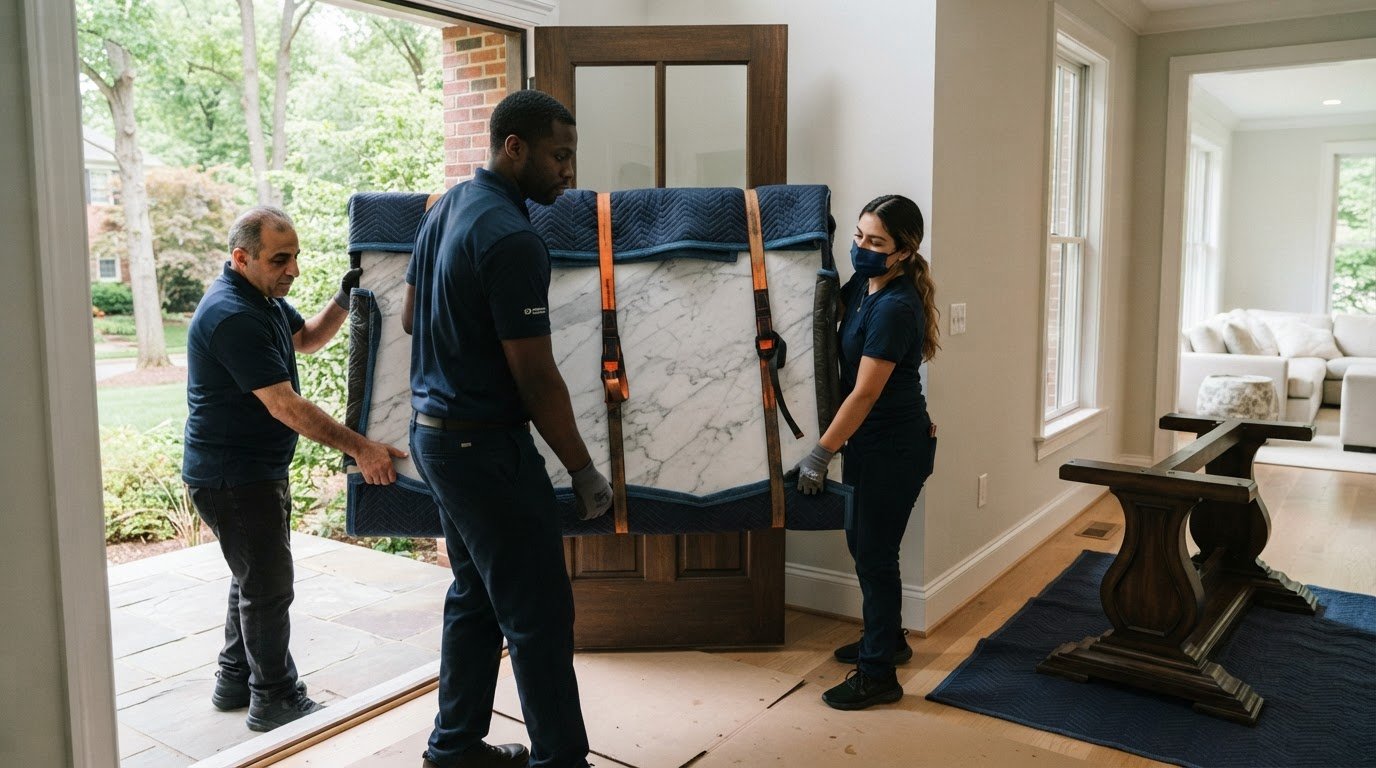
A heavy marble dining table needs controlled handling, not just extra muscle. For a professional rigging crew for a heavy marble dining table in Haymarket, plan on a trained team of 2-4 movers experienced with premium furniture and professional lifting straps to distribute the table’s weight.
If you’re worried about a narrow doorway, stairs, or a costly crack, that caution is justified. Marble can be damaged if mishandled, so the route, the table’s weight and dimensions, and how the top is supported all matter.
This guide covers planning the move, protecting the marble, navigating tight spaces, arranging transport, and placing the table. You’ll also learn which details affect the cost, so you can prepare without guesswork.
Key Takeaways
- If possible, separate the tabletop from its base to reduce moving risk.
- Protect the marble with foam padding, moving blankets, and edge guards.
- Plan for secure transport with tie-downs to keep the table stable.
- Choose the table’s final location before delivery so placement is clear.
Safe movement through stairs, doorways, and tight spaces
Map the full route before moving the marble tabletop. A table’s weight alone doesn’t determine whether a permit is required. Access requirements depend on whether the route uses private, shared, or public space.
-
Plan Space and Structural Access
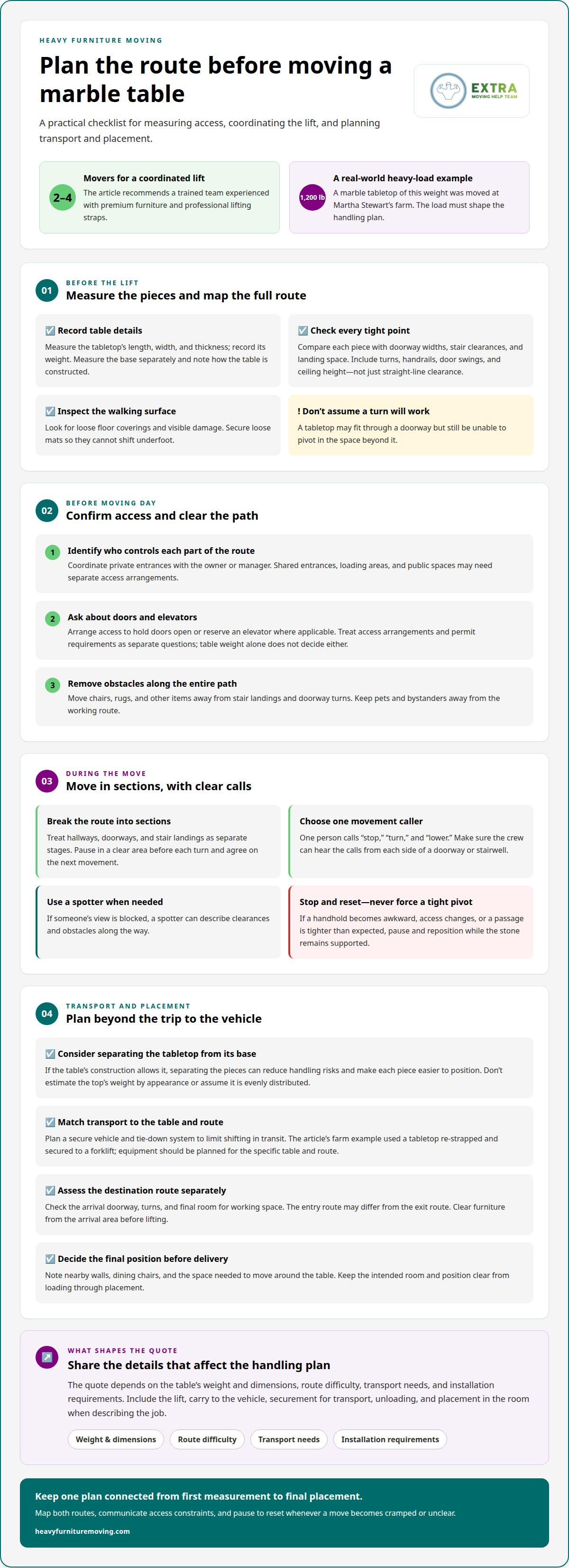
Measure the tabletop and base separately, then compare each with doorway widths, stair clearances, and landing space. Account for turns, handrails, door swings, and ceiling height. Check for loose floor coverings and visible damage. For a professional rigging crew for a heavy marble dining table in Haymarket, these measurements help identify tight spots before lifting begins. Don’t assume the tabletop can turn just because it fits through a doorway.
-
Check Permit and Special Access Needs
Identify who controls each part of the route before moving day. Coordinate access to private entrances with the property owner or manager. Shared entrances, loading areas, and public spaces may need separate access arrangements. Ask about holding doors open or reserving an elevator where applicable. When arranging a professional rigging crew for a heavy marble dining table in Haymarket, treat access arrangements and permit requirements as separate questions. The table’s weight alone doesn’t decide either.
- Clear the path from the table’s current position to the vehicle. Move chairs, rugs, and other obstacles away from stair landings and doorway turns. A chair beside a landing, for example, can leave too little room to pivot a wide tabletop. Secure loose mats so they won’t shift underfoot, and keep pets and bystanders away from the working route.
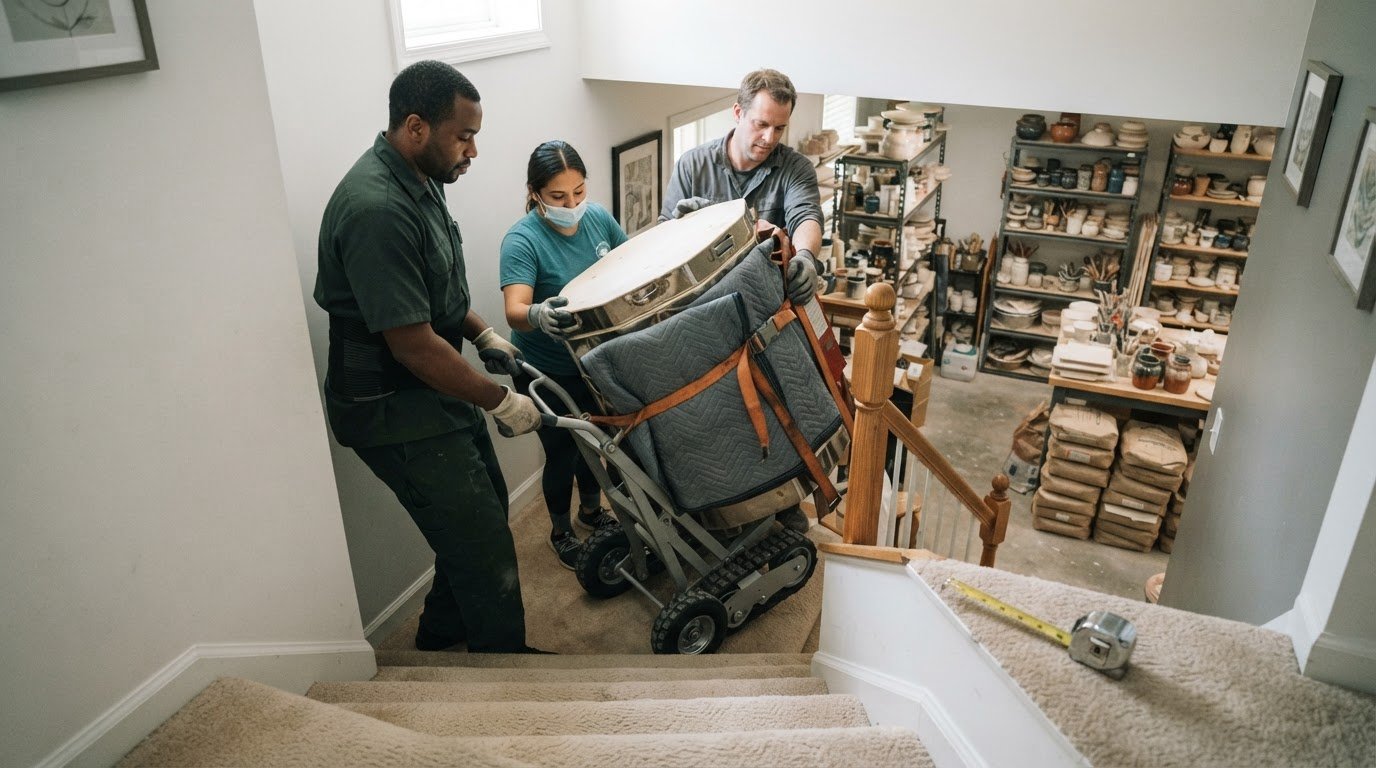
- Break the route into manageable sections, such as a hallway, doorway, and stair landing. Pause in a clear area before each turn, then agree on the next movement. A trained team of 2-4 movers can coordinate their positions around the tabletop. Don’t rush a tight pivot; stop and reset the approach while the stone remains supported.
- Choose one person to call movements such as “stop,” “turn,” and “lower.” Ensure the crew can hear that person from each side of a doorway or stairwell. If someone’s view is blocked, use a spotter to describe clearances and obstacles. If a handhold becomes awkward, stop and reposition before moving again.
- Assess the destination route separately from the exit route. Check its doorway, turns, and final room for enough working space. The entry path may differ from the route out, so don’t assume one plan covers both. Clear furniture from the arrival area before lifting to give the crew room to guide the tabletop into place.
- Keep the planned path open throughout the move. If access changes or a passage proves tighter than expected, pause and choose a controlled adjustment instead of forcing the tabletop through. A clear route and agreed movement calls help the crew avoid rushed lifts, cramped pivots, and contact with walls or railings.
Table cost, weight, transportation, and installation
Build the move plan around the table’s measurements, weight, route, and destination. These details shape the handling plan, transport setup, and placement.
-
Assess Table Dimensions, Weight, and Route
Record the tabletop’s length, width, thickness, and weight, then measure the base separately. Map the route from its current position to the vehicle and onward to the room. Include turns, stairs, and door openings, not just straight-line clearance. A 1,200-pound marble tabletop was moved at Martha Stewart’s farm, showing why the load itself must shape the plan.
- Separate the top from the base if the table’s construction allows it. This can reduce handling risks and make each piece easier to position. Don’t assume the tabletop’s weight is evenly distributed or estimate it by appearance. Share the table’s dimensions, construction details, and route constraints before the move so the crew can plan how to handle it.
-
Plan Transportation and Installation Costs
List every part of the job: lifting the table, carrying it to the vehicle, securing it for transport, unloading it, and placing it in the room. The quote depends on the table’s weight and dimensions, route difficulty, transport needs, and installation requirements.
- Arrange secure transport with tie-down systems to limit shifting in transit. At Martha Stewart’s farm, the tabletop was re-strapped and secured to a forklift for transport. That example involved a specific setup, so plan equipment around the table and route rather than assuming one vehicle or method suits every move. Identify the final room before loading, too.
- Decide where the table will sit before delivery. Note nearby walls, dining chairs, and the space needed to move around it. Consider the marble’s color and veining alongside the room’s finishes. A pale surface can look different from dark stone, even when the table dimensions match. Use a room photo or existing furniture as a reference when choosing placement.
- Keep the table’s appearance and handling needs together in the plan. Marble’s natural veining makes each surface distinctive, while wood and engineered alternatives don’t share that natural pattern. For help coordinating the heavy lift and move, moving help for heavy furniture can be a practical next step.
Treat the assessment as the first decision, not a final check. Establish the table’s dimensions and weight, then trace the route out of the property before settling on a handling or transport plan. Share these details together: a path that seems clear may still pose challenges at turns, stairs, or doorways. Keep the destination in view, too, so the plan covers both removal and placement, not just the trip to the vehicle.
Choose a secure vehicle equipped with tie-down systems, and plan how the table will be secured before moving day. Match the loading and unloading approach to the table and the route already assessed. Before the crew arrives, clarify the intended room and position, and keep the handling plan consistent from departure through placement.
Delivery and final placement
Choose the table’s destination before delivery day, then prepare the room and access route. A clear placement plan helps the crew move from arrival to the requested location without avoidable stops.
- Mark the exact spot where the table should sit. Use a room feature, such as the center of a dining area or alignment with a window, to describe the location clearly. Check that chairs can pull out and people can walk around the table. Remove nearby furniture so the placement area stays open during unloading.
- Prepare the floor and nearby surfaces before the table enters the room. Move rugs that could bunch beneath a table leg, and clear objects from side tables or shelves along the route. Keep the intended spot free of boxes and chairs. This gives the crew room to guide the tabletop and base into position without clearing obstacles mid-move.
- Confirm whether the tabletop and base will arrive as separate pieces. Keep them together in the room where the table will be assembled, rather than placing the top in one area and the base elsewhere. This reduces repositioning and makes it easier to match the pieces. Align the components according to the table’s construction.
- Direct the final approach with one clear instruction at a time. For example, say whether the table needs to move toward a wall, rotate, or shift away from a doorway. Pause before the last adjustment and compare the table’s position with your chosen reference point. Avoid giving competing directions while the crew is supporting the marble.
- Review the placement before the crew leaves the room. Check the table’s alignment with nearby furniture, the clearance around chairs, and whether the base sits as intended. If it looks off-center, describe the adjustment plainly while it can still be repositioned. Don’t pull or push the marble tabletop yourself to correct its position.
- Keep the room clear until the table is in its final position. Leave the route open so the crew can remove moving materials without brushing against the table or surrounding furniture. Once the table is in place, check its appearance from the doorway and each dining seat. Those views can reveal a shift that’s hard to notice up close.
- Plan any later room changes around the table’s final position. Moving a rug, adding a chair, or shifting a sideboard can reduce walking clearance and make the dining area feel crowded. Decide on nearby items before delivery where possible. A settled layout helps avoid another difficult adjustment.
Protecting marble edges and surfaces
Clear the tabletop and protect the marble with padding, blankets, and edge protectors before moving it. Marble can crack, chip, or develop stress fractures if mishandled.
- Remove dishes, centerpieces, and loose items before wrapping begins. Check the surface for existing marks and note where they are, so you can distinguish them from any changes after the move. Clear drawers or shelves built into the base, if present. A bare table is easier to pad evenly and keeps objects from shifting against the stone.
- Cover the tabletop with clean protective blankets before lifting it. Keep the blanket between the marble and any hard frame or support that could rub against its polished surface. For a large slab, make sure the covering stays in place across the entire face. At Martha Stewart’s farm, blankets were placed around the tabletop inside its custom frame.
- Protect the perimeter with edge guards before moving the tabletop through a doorway or around a corner. Marble edges can chip if they strike a wall, railing, or doorframe. Sharper edge profiles are more vulnerable to concentrated stress. Don’t rely on a blanket alone at exposed corners. Add edge protection where contact is most likely.
- Keep padding secure without pressing on a small area of stone. Check that straps or ties hold the protective layers in place without digging into an edge. This helps prevent the wrapping from slipping during a turn or lift. Don’t drag the covered tabletop across floors, frames, or vehicle surfaces.
- If the tabletop travels inside a custom frame, pad it with blankets before securing the frame. In the Martha Stewart example, another piece of plywood covered the padded frame and was secured with screws. That was a specific protective setup, not a reason to screw coverings into the marble. Keep fasteners away from the stone.
- Separate the tabletop from its base when the table’s design allows it. Protect both pieces independently, paying attention to corners, joints, and exposed contact points. Keep small hardware together so it won’t scratch the finish or go missing. Don’t stack loose parts against the marble during loading or transport.
- Inspect the wrapping before the tabletop leaves the room and again after unloading. Look for shifted blankets, exposed corners, or straps pressing directly against the stone. If protection has moved, pause and reset it before continuing. At delivery, remove coverings carefully and check the marble surface and edges before arranging the table for use.
Marble dining tables can crack, chip, or develop stress fractures because marble is brittle. Treat the stone as vulnerable throughout handling, even when fully covered. Keep movements controlled, avoid jolts, and prevent the tabletop from knocking against nearby objects. If the wrapping shifts or a corner is exposed, stop and adjust the protection before moving farther. Careful handling at every stage helps keep the marble supported and reduces the risk of impact or concentrated pressure damaging the surface.
Trained movers and professional lifting equipment
Pair trained movers with lifting equipment that supports the marble evenly. For a heavy marble table move in Haymarket, a professional rigging crew for a heavy marble dining table in Haymarket should plan the lift around the tabletop, access route, and destination.
- Choose a crew experienced with premium furniture and marble handling. A trained team of 2-4 movers is recommended for relocating a marble dining table safely. Ask how they coordinate turns and changes in grip. A shared plan helps prevent sudden shifts when the tabletop changes direction or passes through a confined space.
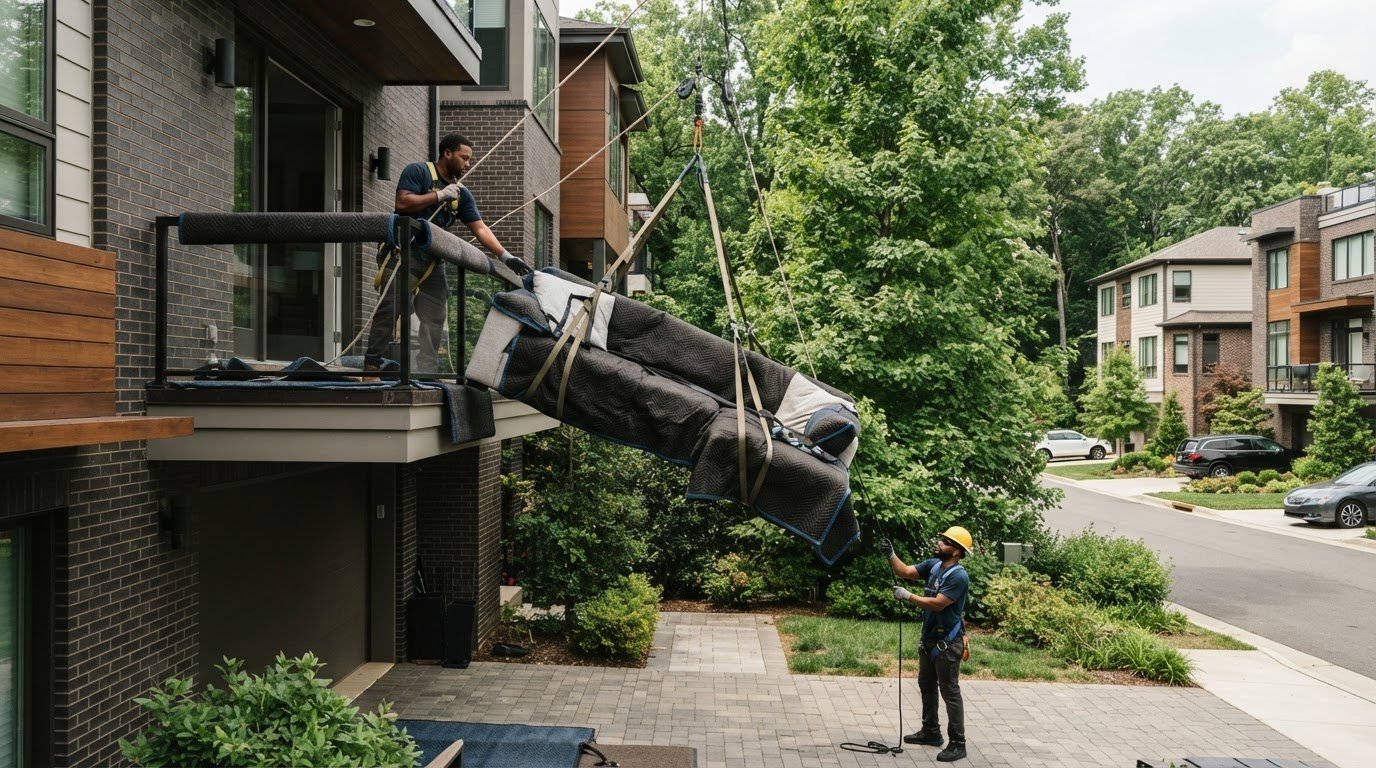
- Use professional lifting straps to distribute the tabletop’s weight evenly. Straps should support the load without pressing sharply against an edge or corner. Industrial straps and ropes can support the underside and provide handholds. Position them to suit the tabletop’s shape so the crew can carry it steadily, rather than relying on a single grip point.
- Agree on movement calls before lifting begins. Choose one person to direct commands such as “lift,” “hold,” and “lower,” and make sure every mover can hear. If a mover needs to adjust their grip, stop and reset together. For a professional rigging crew for a heavy marble dining table in Haymarket, clear calls help coordinate the lift with the route.
- Ask what insurance and liability coverage applies to the move, including potential damage to the table, home, or shared property. Request an explanation of the coverage and applicable limits in writing before work begins. Record the tabletop’s visible condition beforehand, including any existing chips or cracks. This provides a clear reference for its condition before handling.
- Ask how the team will support the tabletop, which lifting equipment it will use, and how it will navigate the planned route. Clarify who directs the lift and what happens if a strap shifts. Look for practical steps, not just general assurances. Share any known narrow passage or awkward turn so the crew can plan for it.
- Keep the working path clear after the crew takes position. Don’t add furniture or loose items to the route during the lift. If a doorway or turn proves tighter than expected, pause and reset the approach while the tabletop remains supported. Never leave one mover carrying the load alone while others reposition.
- Prepare the destination before the crew lifts. Confirm where the table should be lowered and leave room for movers to work around it. If you need help with a heavy furniture lift, arrange help with heavy furniture lifting.
Heavy Furniture Moving: Movers Near Me
Heavy Furniture Moving offers Movers Near Me for households planning a difficult furniture move. If your marble table’s weight, narrow route, or placement makes the job hard to manage, in-home furniture movers can help with moving heavy pieces through the home. Share the table’s dimensions, its route, and the intended destination when describing the move. That gives the team practical details to plan around, including whether the job involves stairs, tight turns, or separate tabletop and base handling. For a larger household move, Movers Near Me may also fit your needs. Contact Heavy Furniture Moving to discuss your move.
Set Up Your Marble Table Move with Confidence
Before setting a date, gather details that will help plan the move: the table’s measurements, its current and destination locations, and any tight turns along the route. A professional rigging crew for a heavy marble dining table in Haymarket can use this information to understand the job and plan the next steps with you.
Heavy Furniture Moving offers Movers Near Me, Exercise Equipment Moving, and Sofa Hoisting. These services support different heavy-item and access needs, while your marble table move calls for a plan tailored to its size, route, and placement.
Ready to talk through your move? Contact Heavy Furniture Moving and take the next step toward getting your table where it belongs. A clear plan starts with a conversation.
Frequently Asked Questions
Professional piano or furniture rigging companies serving Haymarket, Virginia
The article recommends a trained team of 2-4 movers experienced with premium furniture, using professional lifting straps to distribute the table’s weight.
Cost to hire a professional rigging crew to move a marble dining table in Haymarket
The cost is provided after a quote request. It depends on the table’s weight and dimensions, route difficulty, transport needs, and installation requirements.