How to Disassemble and Reassemble a Heavy Glass Top Executive Desk
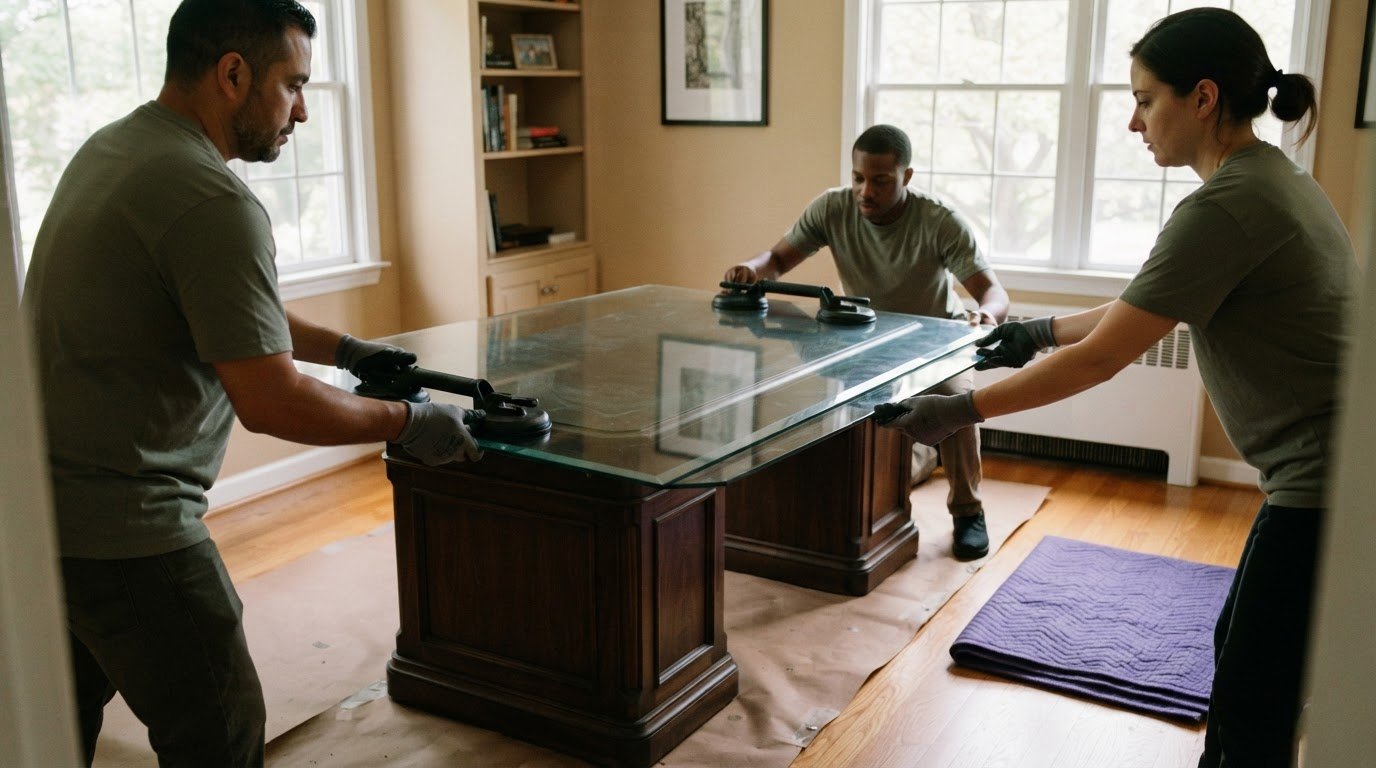
A heavy glass top changes the move: the surface and desk base need separate protection and careful handling. Professional movers for a heavy glass-top executive conference desk in Aldie typically remove the glass from its base when possible, protect it on both sides, and transport it upright. Executive desks often need three movers to lift and guide the pieces safely.
It makes sense to worry about chipped edges, scratched finishes, or missing hardware. A careful move follows a clear sequence: protect the glass, keep fittings together, plan the route, and lift without twisting or rushing through tight spaces. If the top can’t be detached, movers can shield it with cut cardboard before wrapping the desk. After reassembly, they check that the desk sits steady and its parts are secure.
This guide explains how movers prepare the desk, protect its glass and hardware, manage lifting and loading, and check stability at the new location. You’ll see what makes this job different from moving an ordinary desk, and when professional help can make a heavy, delicate move easier.
Key Takeaways
- Keep desk hardware together in a labeled bag secured to the desk so fittings stay with the right piece.
- Plan the carrying route around doorway widths, stairwells, and hallway turns before moving day.
- Use enough movers for the desk’s size and shape, and keep the load close while carrying without twisting.
- Once clear of tight turns, secure the desk to a dolly and move it slowly over thresholds and uneven floors.
- After reassembly, check that the desk sits evenly and its connections feel secure before putting it back to use.
How Professional Movers Disassemble Executive Desks Before a Move
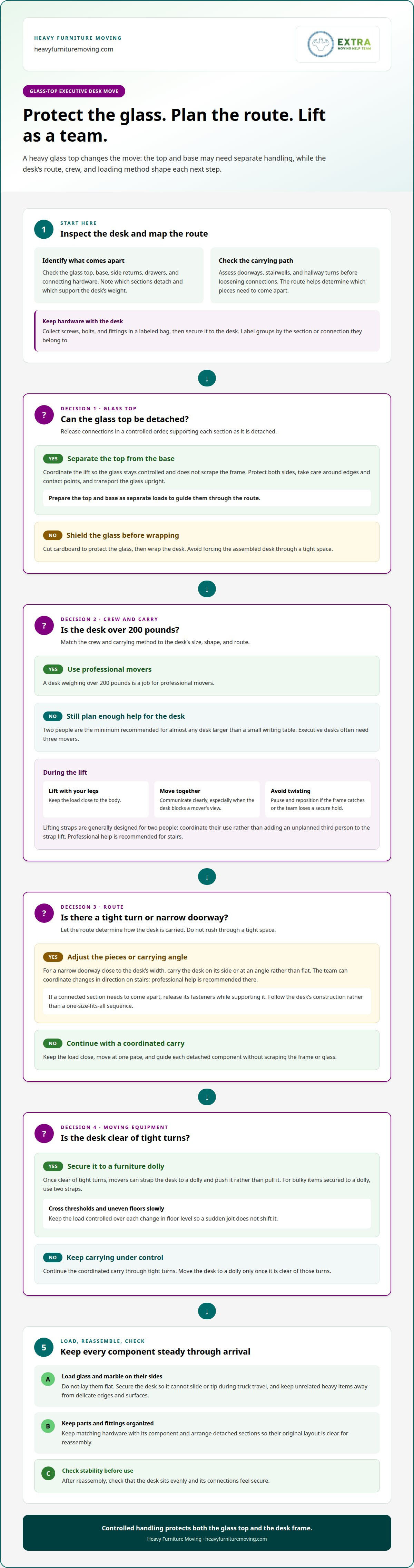
- Inspect the desk and plan the sequence. Movers first identify how the executive desk is assembled, including its glass top, base, side returns, drawers, and connecting hardware. They note which parts detach and which sections support the desk’s weight. This matters because a broad conference desk may have a different structure from a single-piece writing desk. Before loosening anything, movers assess access through doorways, stairwells, and hallway turns. That route shapes which pieces need to come apart and how they’ll be carried.
- Clear the work area and control loose components. Movers remove items from the desktop and drawers so nothing shifts during disassembly. They keep screws, bolts, and other desk hardware together in a labeled bag, secured to the desk rather than left loose in a moving box. Labels can identify the connection or section each group belongs to, such as a side return or support. Keeping the fittings with the furniture helps prevent mix-ups when the desk is reassembled at its destination.
- Remove detachable sections in a controlled order. Movers release the connections between components while supporting the section being detached. Depending on the desk’s construction, that may include a side return, modesty panel, or separate base section. They avoid pulling a connected piece free before its fasteners are released, which can strain joints or shift the remaining frame. Each detached component is set aside in a stable position, with its hardware kept together. The exact sequence follows the desk’s construction, not a one-size-fits-all diagram.
- Separate the glass top from the supporting base. When the desktop is detachable, movers lift it away from the base as a separate piece instead of carrying the complete desk assembled. They coordinate the lift so the top stays controlled and does not scrape against the frame. Glass edges and contact points need particular care during handling. The base and top are then prepared as separate loads, which makes the desk easier to guide through a narrow route and avoids putting unnecessary strain on its connections.
- Keep the parts organized for reassembly. Movers place detached sections and their labeled hardware in a clear order, so the desk’s original layout remains easy to follow. They keep matching fittings with the relevant component and avoid stacking parts in a way that could obscure connections or put pressure on the glass. Before moving the pieces onward, they account for the desktop, base, and any removed sections. That organized handoff gives the reassembly process a clear starting point at the new location.
How Professional Movers Lift and Load Heavy Desks Safely
Safe handling starts with a coordinated lift and continues through loading. Movers match the crew and carrying method to the desk, route, and load.
-
How Professionals Lift the Heavy Desk Safely
Set the crew and carrying plan before lifting the desk. Two people are the minimum recommended for almost any desk larger than a small writing table; executive desks often need three movers. Lifting straps are generally designed for two people, so the team coordinates their use rather than adding an unplanned third person to the strap lift. A desk weighing over 200 pounds is a job for professional movers.
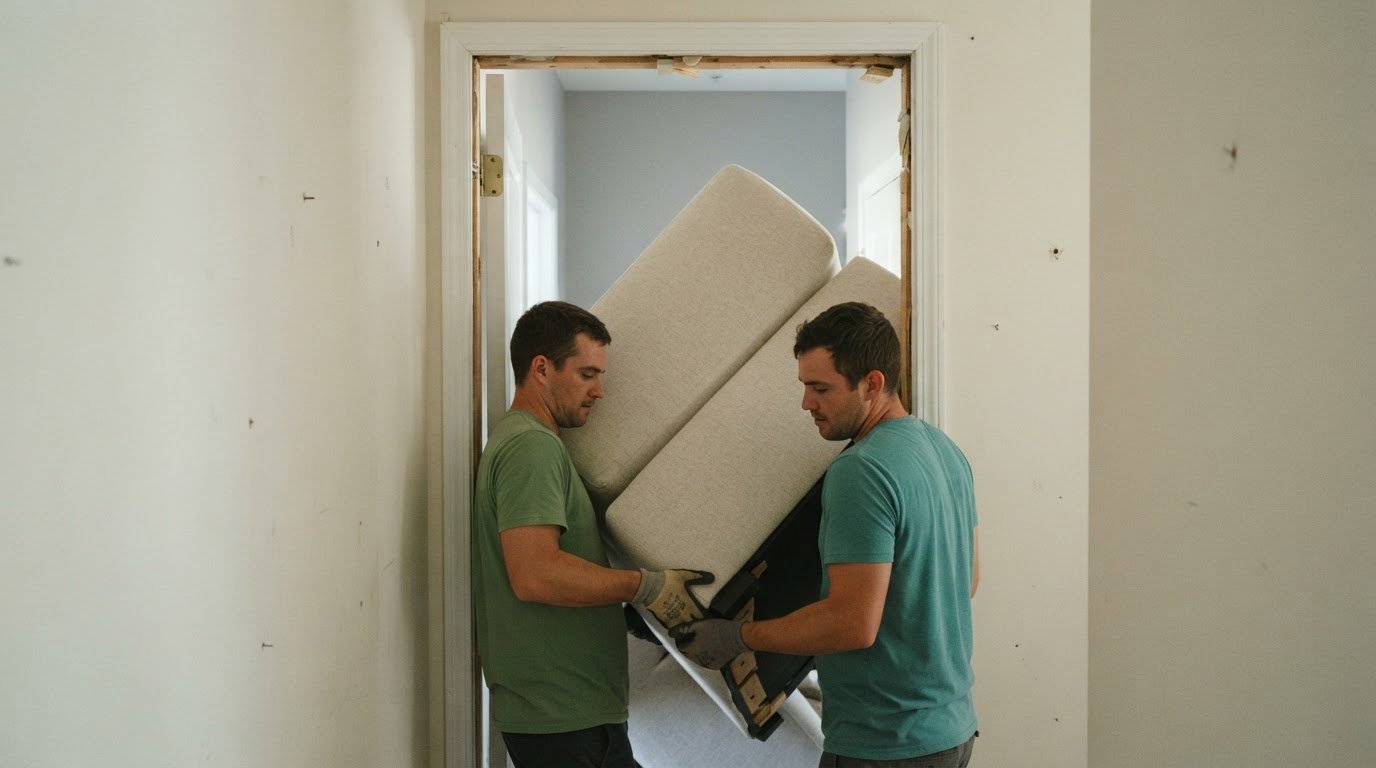
Have each mover lift with their legs, keep the load close to the body, and avoid twisting while carrying. Clear communication helps the team move at one pace, especially when a large desk blocks a mover’s view. For stairs, professional help is recommended; the team can coordinate each change in direction instead of trying to turn while carrying. Through a narrow doorway that’s close to the desk’s width, carry the desk on its side or at an angle rather than flat. Pause and reposition if the frame catches or the team loses a secure hold. For heavy or awkward pieces, a heavy lifting moving service can handle the demanding carry.
-
How Professionals Load the Heavy Desk Safely
Choose the loading method based on the route. Once the desk is clear of tight turns, movers can use a furniture dolly. They strap the desk down, then push it rather than pull it. Move slowly across thresholds and uneven flooring, where a sudden jolt could shift the load. For bulky items secured to a dolly, use two straps to hold the piece in place. Keep the load controlled as the dolly crosses each change in floor level.
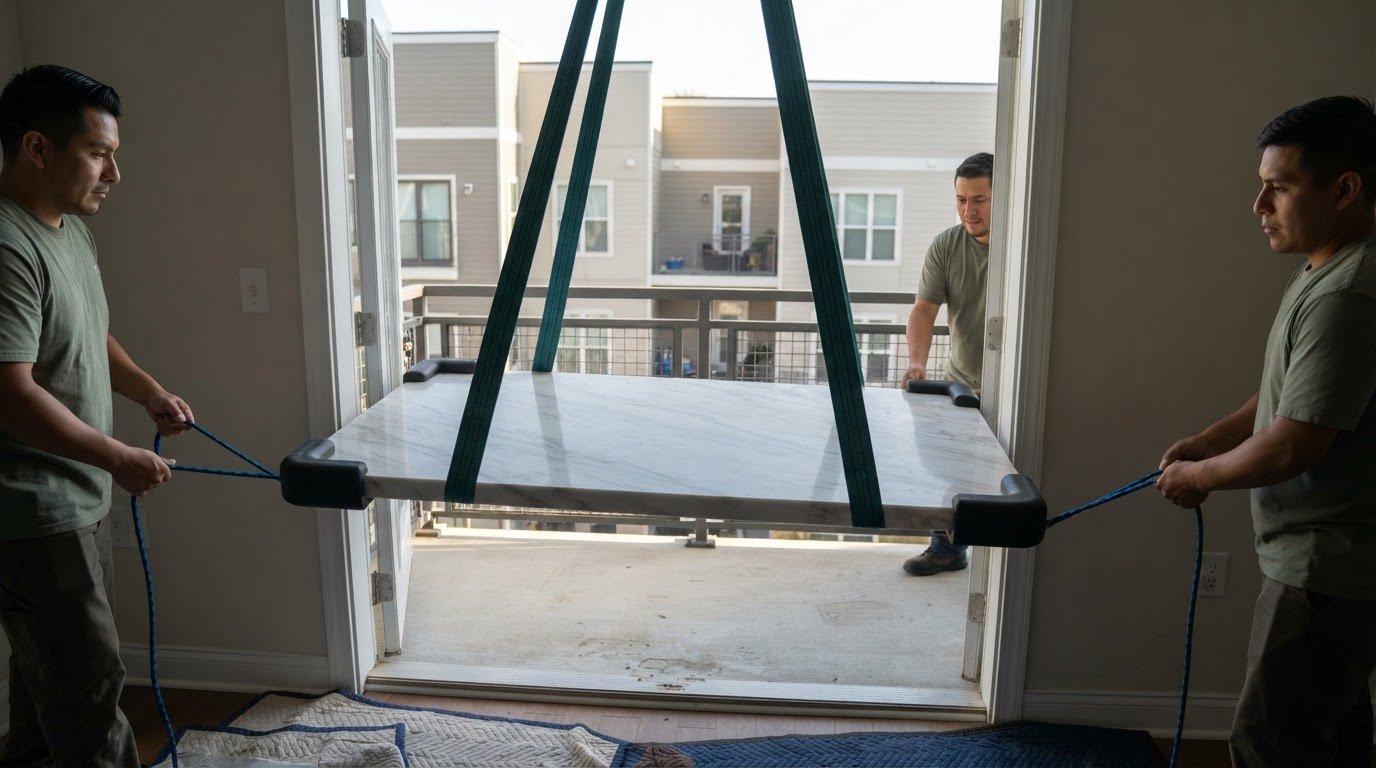
At the truck, position each desk component so it stays steady during loading and travel. Glass and marble should be loaded on their sides, not laid flat. Keep the desk secured so it can’t slide or tip as the truck moves. Avoid placing unrelated heavy items against delicate edges or surfaces. The team should plan the order of loading so the desk can be set in position without forcing it past other cargo. A deliberate push, stable straps, and a clear path help reduce sudden movement at each stage.
How Professional Movers Protect Floors, Walls, and Desk Corners
Movers plan protection around the desk’s route, from the office doorway to the truck. They focus on floor contact, tight turns, and exposed corners.
-
How Professionals Protect the Floors
Cover the carrying path before moving the desk. Movers use floor protection where the desk or moving equipment could mark flooring, especially along narrow hallways and near thresholds. They keep protective material flat and secure, since a loose edge can catch a shoe or dolly wheel. On hardwood, avoid dragging a desk leg or dolly across the surface.
During the move, watch for gaps in the covered path at doorways and turns. A furniture dolly crossing an uncovered threshold can shift or leave a mark. Movers adjust floor protection as the desk travels, rather than assuming one entry mat covers the full route.
-
How Professionals Protect the Walls
Protect wall edges and corners along the planned route before carrying a wide desk through. Movers pay special attention to hallway turns, where a side return or desktop can swing toward drywall. Keep the desk controlled and aligned with the opening. Don’t use a wall to stop or brace a shifting load.
At a tight doorway, movers slow down and guide the desk through without scraping its sides along the frame. They maintain enough clearance for the desk’s widest section, including protruding corners or attached panels. If the route changes, reposition the team before continuing instead of forcing the desk around a wall corner.
-
How Professionals Protect the Desk Corners
Cover exposed desk corners before carrying or placing the furniture. Movers use protective padding at vulnerable edges, including the corners of a broad executive desk and any projecting side return. Secure the padding so it stays in place during movement. Loose wrapping can expose an edge just as the desk passes a doorway.
Keep corner protection on while loading and unloading. A desk can brush a doorframe or another item during either transition. Movers hold the piece clear of nearby surfaces and avoid setting a corner down first. That protects the finish from direct contact and helps keep pressure off one small point.
- Recheck the route at each transition. Before moving from an office into a hallway, movers look for uncovered floor sections, narrow turns, and doorframes near the desk’s path. A route that clears a straight hallway may still require a different angle at a doorway. The team pauses before the turn, adjusts its position, and proceeds only when the path is clear. This prevents rushed corrections beside walls or floor edges.
- Control the dolly over floor changes. Once the desk is on a dolly, movers keep it secured and move slowly over thresholds or uneven flooring. They push rather than pull, maintaining control as the wheels cross each change in level. A sudden jolt can shift the desk toward a wall or make its corners contact the frame. Movers keep the path clear and adjust protection if the route changes.
How Professional Movers Reassemble the Desk and Check Its Stability
At the destination, movers rebuild the desk in sequence and test its support before use. They work from the saved hardware and the desk’s original arrangement.
- Position the base on a stable surface. Movers place the main desk base where it will be used, leaving room to reach its connections. They check that it rests evenly before attaching other sections. A base that rocks on the floor can make later parts harder to align. They avoid using a side return or desktop to force an uneven frame into position.
- Reconnect the frame and supporting sections. Movers fit the saved fasteners into their matching connection points, following the desk’s existing layout. If the desk has a modesty panel or side return, they align it with the base before securing it. They keep the sections supported as connections are restored. This helps prevent one loose joint from carrying the weight of a larger attached piece.
- Secure each connection without forcing it. Movers check that screws and bolts meet their intended openings and sit properly. A fastener that resists may be misaligned or paired with the wrong connection. They correct the fit instead of forcing it, which can damage the fitting or desk material. They also confirm that no hardware remains loose after the frame and attached sections are assembled.
- Return the glass top to its supports. Movers coordinate the placement so the glass desktop meets the base evenly. They guide it into position without dragging an edge across the frame or dropping it onto a support. Once seated, they check that the top rests securely and does not shift under gentle contact. They keep hands clear of pinch points while making small alignment adjustments.
- Test the assembled desk before putting it back into use. Movers check the base, side return, and desktop for movement. They apply gentle pressure to different areas and watch for rocking, shifting, or a loose connection. If the desk moves, they inspect the relevant support and fasteners, then correct the assembly before testing again. They also confirm that the desktop sits evenly on its base and that drawers or attached sections move without disturbing the frame.
How Professional Movers Wrap and Pack Glass Table Tops
- Separate the glass top from its base when it detaches. Movers handle the desktop and desk frame as separate pieces, rather than carrying the assembled desk. This reduces strain on the desk’s connections and makes the glass easier to protect independently. They keep the glass controlled during removal and avoid scraping its edge against the base. Once detached, the top can be prepared for upright transport while the frame is handled separately.
Separating the pieces also gives movers a clear view of the glass edges and contact points. They can protect the desktop without wrapping it tightly against the desk’s hardware or frame. The base can then be moved without placing pressure on the glass. This approach suits an executive desk with a removable glass top and a substantial supporting structure.
- Pack a detachable top upright with padding on both sides. Movers place the glass desktop in a sturdy box or crate, with padding on each side. The support should keep the top upright during handling and transport. A loose fit can let the glass shift inside its container, so movers arrange the packing to hold it in place. They avoid treating the desktop like an ordinary flat furniture panel.
Keep the glass protected through each transition from the room to the truck. Movers carry the packed top upright and load the glass on its side in the truck. The crate or box helps shield the surface, while padding on both sides cushions it from contact. The goal is to keep the top supported, protected, and separate from heavier desk components.
- Protect a top that cannot be detached before wrapping the desk. When the glass remains attached, movers place two sheets of cut cardboard over it first. The cardboard forms a protective layer between the glass and the outer wrap. Movers then wrap the desk, keeping the attached top covered rather than leaving its surface exposed during handling.
The order matters: cardboard goes over the glass before the desk is wrapped. It helps shield the surface from contact with the wrapping material and nearby objects. Movers keep the protection in place while guiding the desk through the route and into the truck. They avoid shifting the cardboard aside during handling, which could leave part of the glass uncovered.
- Keep glass and desk components secure as separate loads. Movers load the glass upright on its side and keep it apart from the desk base. They prevent the packed top from shifting against other cargo, while the base remains supported as its own piece. At the destination, they keep the top protected until it is ready to be returned to the desk.
If you need help handling a heavy desk with a glass top, arrange professional moving help for the lifting and transport.
Heavy Furniture Moving
Heavy Furniture Moving helps take the strain out of moving bulky household furniture, including desks with delicate glass components. Turn to the team when the desk is too heavy to carry safely, its glass top needs careful handling, or the route includes tight turns or stairs. Its local moving helpers and in-home furniture movers support moves that call for coordinated lifting and careful transport. Share the desk’s size, the glass top’s condition, and any access challenges so the move can be planned around the piece and its route.
For a heavy glass desk move in Aldie, contact Heavy Furniture Moving to discuss the help you need.
Plan the Desk Move From Pickup Through Setup
Plan for the full transition, not just getting the desk out of the room. A successful move accounts for the route, the glass top, and the space where the desk will be used again. If you need professional movers for a heavy glass-top executive conference desk in Aldie, consider what support would make the move easier, from handling the bulky pieces to placing them at the destination.
Before arranging help, gather the practical details that shape the job: the desk’s approximate dimensions, whether its glass top detaches, and any narrow access points. Clear information helps keep the plan focused on your desk and its surroundings. You can also identify whether you need help with the move itself or with lifting and placement.
Contact Heavy Furniture Moving to discuss help with your desk move. Take the next step with a clear plan and let the heavy handling be one less thing on your mind.
Frequently Asked Questions
How Do Professional Movers Protect a Desk's Surface and Hardware During the Move?
Professional movers protect the finish by keeping desk parts and fasteners organized throughout handling. Before work begins, point out delicate veneer, existing scratches, or loose fittings so the crew can take them into account. A glass top needs protection separate from the wooden frame. For hardware, a labeled bag kept with the desk helps prevent small pieces from being misplaced before setup.
Is it worth hiring movers for just one desk?
Yes, hiring movers for one desk can make sense when its glass top, weight, or route makes handling difficult. For a heavy glass-top executive conference desk in Aldie, professional movers can plan around the desk’s dimensions and the home’s access points. A desk that must pass through a narrow stair landing is different from one that rolls easily through a wide doorway. Professional help is useful when you can’t control the furniture safely.
Should Professional Movers Disassemble a Desk Before Moving It?
Movers should disassemble the desk when removing parts makes the move safer or helps the pieces fit through the route. A detachable glass top, for example, can travel separately from its base. A compact desk with a stable frame may need less disassembly. The desk’s construction and access path determine the right approach, not a rule that every desk must come apart.
How Do Professional Movers Carry and Load a Desk Through Tight Spaces Safely?
Professional movers plan each tight turn before carrying the desk into it. They consider the desk’s widest point, door hardware, and the space available to reposition at a landing. If a straight approach won’t work, they can adjust the carrying angle or use another clear route. They avoid forcing a desk past a frame, which can damage both furniture and surrounding surfaces.
When Should You Call Professional Movers Instead of DIY-ing It?
Call professional movers for a desk weighing over 200 pounds, a desk with glass components, or one that needs stair access. These situations combine awkward weight with fragile surfaces or limited room to maneuver. Professional help is also sensible when the desk can’t be lifted and guided under control. The desk’s weight, shape, and route all affect whether a solo or untrained lift is practical.
Are there professional movers in Aldie, VA for heavy glass-top conference tables?
Heavy Furniture Moving serves Aldie and offers local moving help for heavy furniture. If you need professional movers for a heavy glass-top executive conference desk in Aldie, share its approximate dimensions, whether the top detaches, and any stairs or narrow access points. Those details help describe the job clearly. A desk moved within a home is a different project from relocating an entire workplace, so be clear about the scope.
Are there Aldie, VA commercial movers specializing in executive office furniture?
Heavy Furniture Moving focuses on residential moving, so its relevant fit here is help with an individual heavy desk rather than a full commercial office relocation. For a desk in a home office, describe the piece, glass top, and access route. That lets the moving plan focus on the furniture itself. A multi-room workplace move has a different scope from moving one executive desk.
How can professionals safely move a heavy glass-top conference desk?
Professionals assess the desk, its route, and the glass top before choosing how to handle it. They separate detachable components, protect the glass appropriately, and coordinate the lift to keep the load controlled. If the job involves stairs, a heavy desk, or tight turns, professional help is recommended. The right plan depends on the desk’s design and the route through the home.
Frequently Asked Questions
Professional movers protect the finish by keeping desk parts and fasteners organized throughout handling. Before work begins, point out delicate veneer, existing scratches, or loose fittings so the crew can take them into account. A glass top needs protection separate from the wooden frame. For hardware, a labeled bag kept with the desk helps prevent small pieces from being misplaced before setup.
Yes, hiring movers for one desk can make sense when its glass top, weight, or route makes handling difficult. For a heavy glass-top executive conference desk in Aldie, professional movers can plan around the desk’s dimensions and the home’s access points. A desk that must pass through a narrow stair landing is different from one that rolls easily through a wide doorway. Professional help is useful when you can’t control the furniture safely.
Movers should disassemble the desk when removing parts makes the move safer or helps the pieces fit through the route. A detachable glass top, for example, can travel separately from its base. A compact desk with a stable frame may need less disassembly. The desk’s construction and access path determine the right approach, not a rule that every desk must come apart.
Professional movers plan each tight turn before carrying the desk into it. They consider the desk’s widest point, door hardware, and the space available to reposition at a landing. If a straight approach won’t work, they can adjust the carrying angle or use another clear route. They avoid forcing a desk past a frame, which can damage both furniture and surrounding surfaces.
Call professional movers for a desk weighing over 200 pounds, a desk with glass components, or one that needs stair access. These situations combine awkward weight with fragile surfaces or limited room to maneuver. Professional help is also sensible when the desk can’t be lifted and guided under control. The desk’s weight, shape, and route all affect whether a solo or untrained lift is practical.
Heavy Furniture Moving serves Aldie and offers local moving help for heavy furniture. If you need professional movers for a heavy glass-top executive conference desk in Aldie, share its approximate dimensions, whether the top detaches, and any stairs or narrow access points. Those details help describe the job clearly. A desk moved within a home is a different project from relocating an entire workplace, so be clear about the scope.
Heavy Furniture Moving focuses on residential moving, so its relevant fit here is help with an individual heavy desk rather than a full commercial office relocation. For a desk in a home office, describe the piece, glass top, and access route. That lets the moving plan focus on the furniture itself. A multi-room workplace move has a different scope from moving one executive desk.
Professionals assess the desk, its route, and the glass top before choosing how to handle it. They separate detachable components, protect the glass appropriately, and coordinate the lift to keep the load controlled. If the job involves stairs, a heavy desk, or tight turns, professional help is recommended. The right plan depends on the desk’s design and the route through the home.