Hire Movers to Move Things to a Storage Unit in Clifton, VA
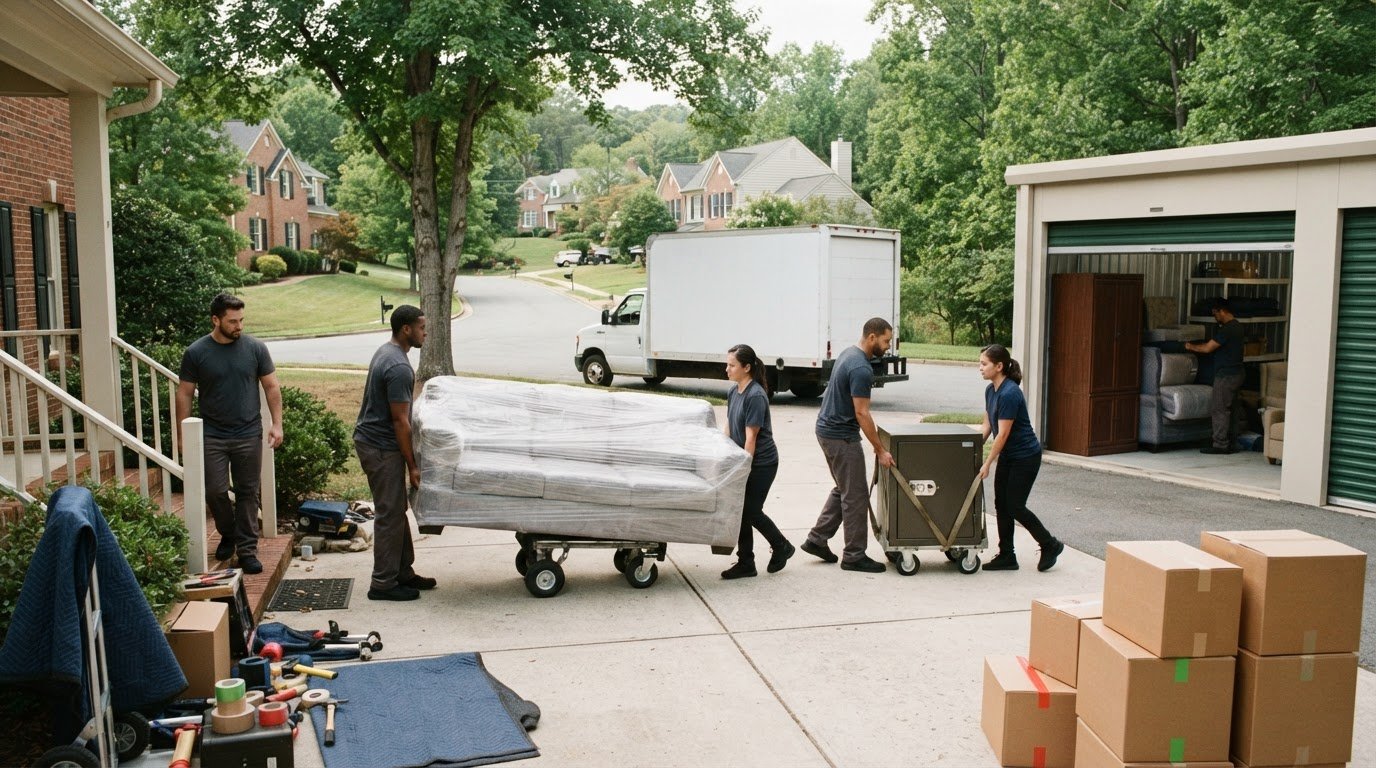
Can a moving crew take your belongings straight from home to a storage unit? Yes. With a clear plan, a back-straining, schedule-heavy job becomes easier to manage. If you’re searching “hire movers to move things to a storage unit Clifton,” decide what help you need: labor, transportation, or support unloading at the unit.
Heavy sofas, appliances, and exercise equipment need careful handling, and a crowded or poorly arranged unit can leave furniture exposed and essentials buried. Clifton movers can help with lifting, loading, transport, and unloading, with a plan shaped around your belongings and the work involved.
This guide covers what to decide before moving day, how to protect bulky items, and how to organize a storage unit for safer stacking and easier access. You’ll also learn how to coordinate pickup, travel, and unit access so each part of the move is clear before the first item leaves your home.
Key Takeaways
- Decide whether your storage move needs loading help, transportation, unloading, or a combination.
- When you hire movers to move things to a storage unit in Clifton, match the crew and vehicle plan to the size and type of your belongings.
- Sort fragile, bulky, awkward, and frequently used items ahead of time to guide packing and placement.
- Use a moving-day checklist to organize your inventory and prepare for the facility’s access instructions and move-in requirements.
- Clifton residential movers can tailor packing, loading, transport, and unloading support to your storage move.
Need Movers for a Storage Unit in Clifton, VA? Start With the Move You Have
Clearing space at home, managing a renovation, or storing belongings between moves can leave you with a practical problem: how will everything get to the unit? You don’t have to handle every lift yourself. If you want to hire movers to move things to a storage unit in Clifton, start by listing what needs to move and what kind of help will make the job manageable.
A storage-unit move is a coordinated trip from pickup to delivery: belongings are gathered at your home, loaded, transported, and placed inside the unit. Your plan may include all those steps or only some of them. The right scope depends on what you’re moving, where it starts and ends, and whether you need help with lifting, packing, transportation, or unloading. Self-storage facilities provide units for keeping belongings outside the home until you need them again.
Labor-only help covers lifting and handling at the locations you specify. A move with transportation also includes getting your belongings from pickup to the storage destination. Knowing the difference helps you describe the job clearly and avoid arranging lifting support without a way to move the items.
When hiring movers makes sense for a storage move
Professional help can be useful when the load is heavy, the route is awkward, or you can’t safely manage the lifting alone. A sofa, dresser, exercise equipment, and stacks of packed boxes can be difficult to maneuver across stairs or through tight hallways. A moving team can take on demanding lifting and loading tasks, reducing physical strain while careful handling helps manage the risk of damage. The job might involve one bulky item or belongings from several rooms.
What to decide before booking in Clifton
Write down the pickup location, storage destination, approximate inventory, and access details that could affect carrying or loading. Be specific about obstacles and limits. A short item list is more useful than a vague estimate, especially when the move includes oversized furniture or equipment.
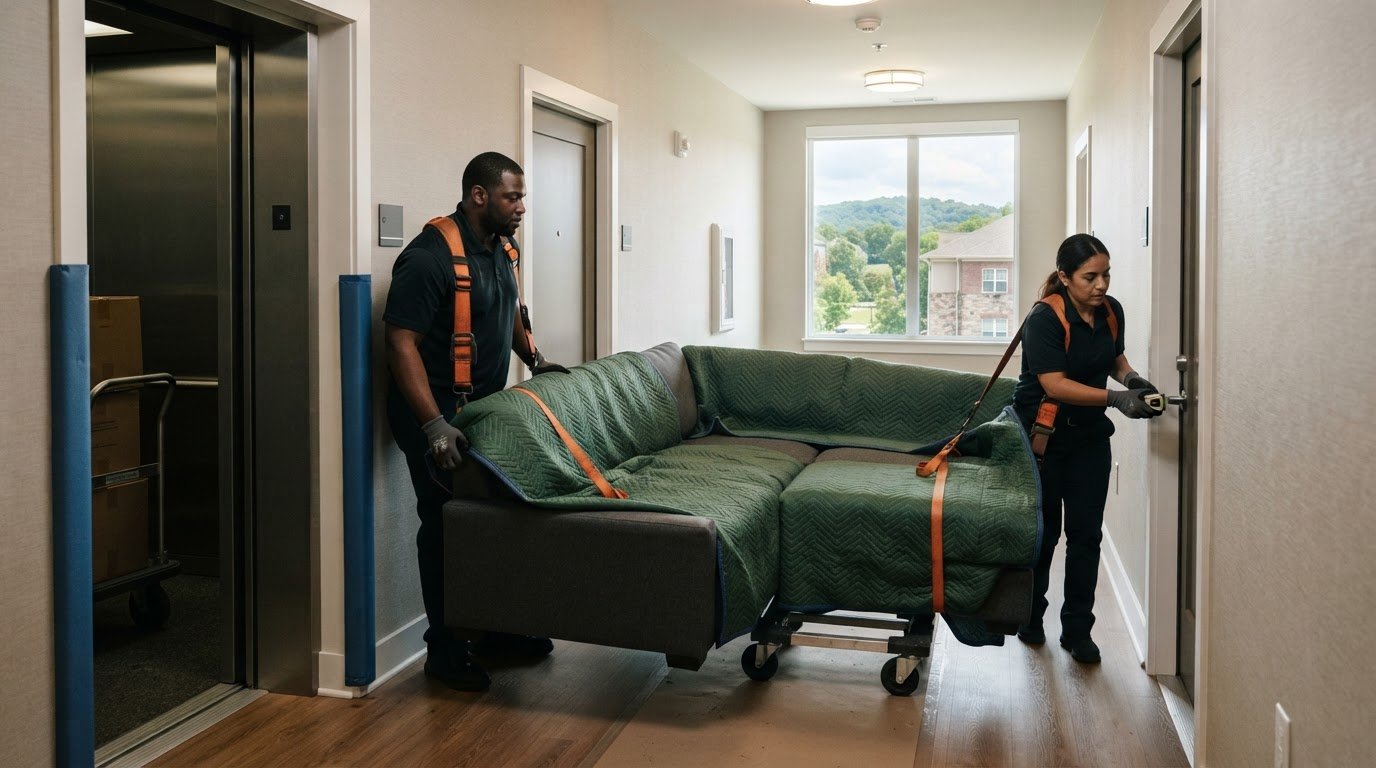
- Note stairs, elevators, narrow paths, and long carries between the home and vehicle.
- Describe where a vehicle can load and whether the loading area has restrictions.
- List the main items and indicate whether you need packing, lifting, transport, unloading, or a combination.
- Record the storage facility’s entry instructions and any move-in requirements that affect access.
Keep the job’s purpose clear, too. Moving a few rooms of belongings into storage is different from relocating an entire household. A focused storage move can be planned around the items leaving the home and the work needed at the unit. Share that distinction when arranging help so the tasks fit the move you actually have.
Choose the Right Moving Help: Labor, Transport, or Both
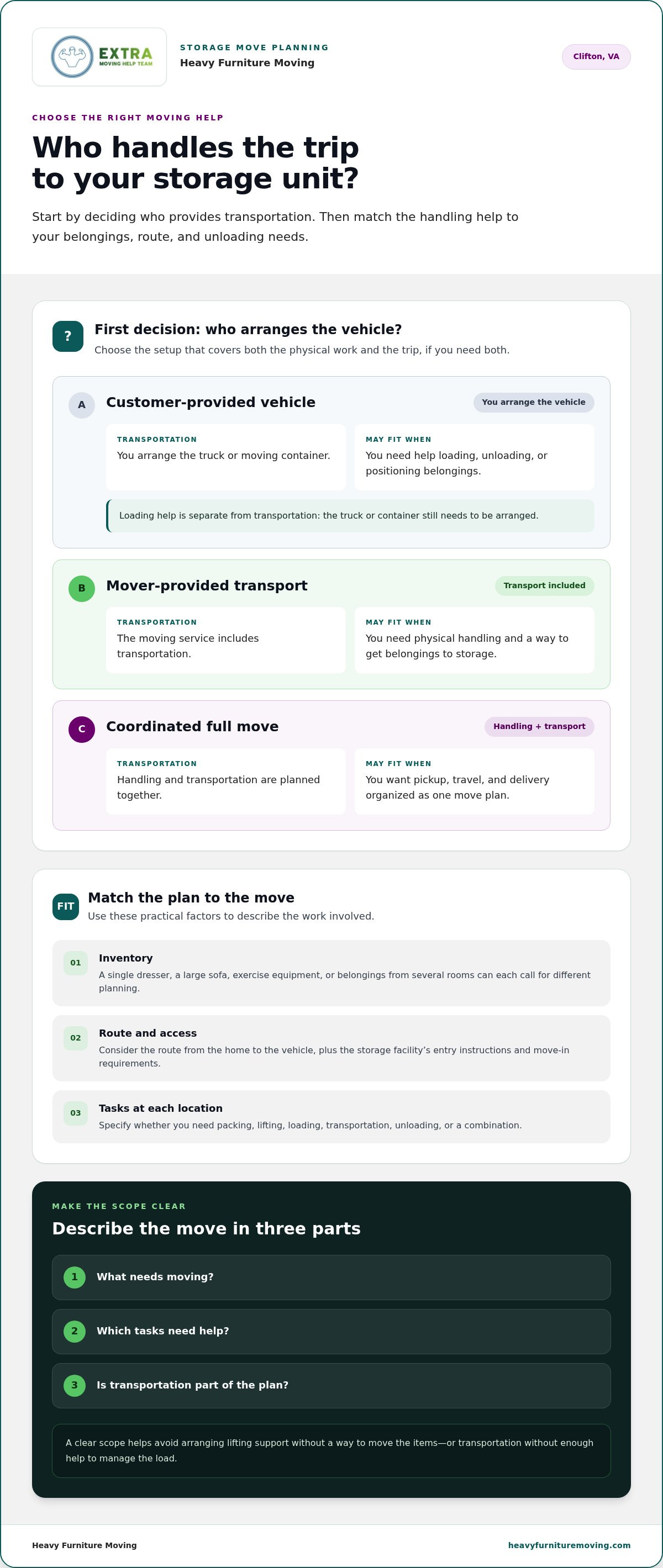
Start with one question: who’s handling the trip between your home and the storage unit? Labor-only help covers physical tasks such as loading a truck or unloading a container. A move that includes transportation combines handling with getting belongings to their destination. Choosing the right scope helps you avoid arranging lifting support without transportation, or transportation without enough help to manage the load.
Match your move plan to your inventory and transportation needs. A single dresser, a large sofa, exercise equipment, and belongings from several rooms can each require different planning. Consider item size, the route from the home to the vehicle, and how much needs to fit in one trip. For broader moving preparation, USAGov moving resources offer general guidance on planning and carrying out a move.
| Moving arrangement | Who provides transportation? | May fit when |
|---|---|---|
| Customer-provided vehicle | You arrange the truck or moving container. | You need help loading, unloading, or positioning belongings. |
| Mover-provided transport | The moving service includes transportation. | You need both physical handling and a way to get items to storage. |
| Coordinated full move | Handling and transportation are planned together. | You want pickup, travel, and delivery organized as one move plan. |
When labor-only help may fit a storage unit move
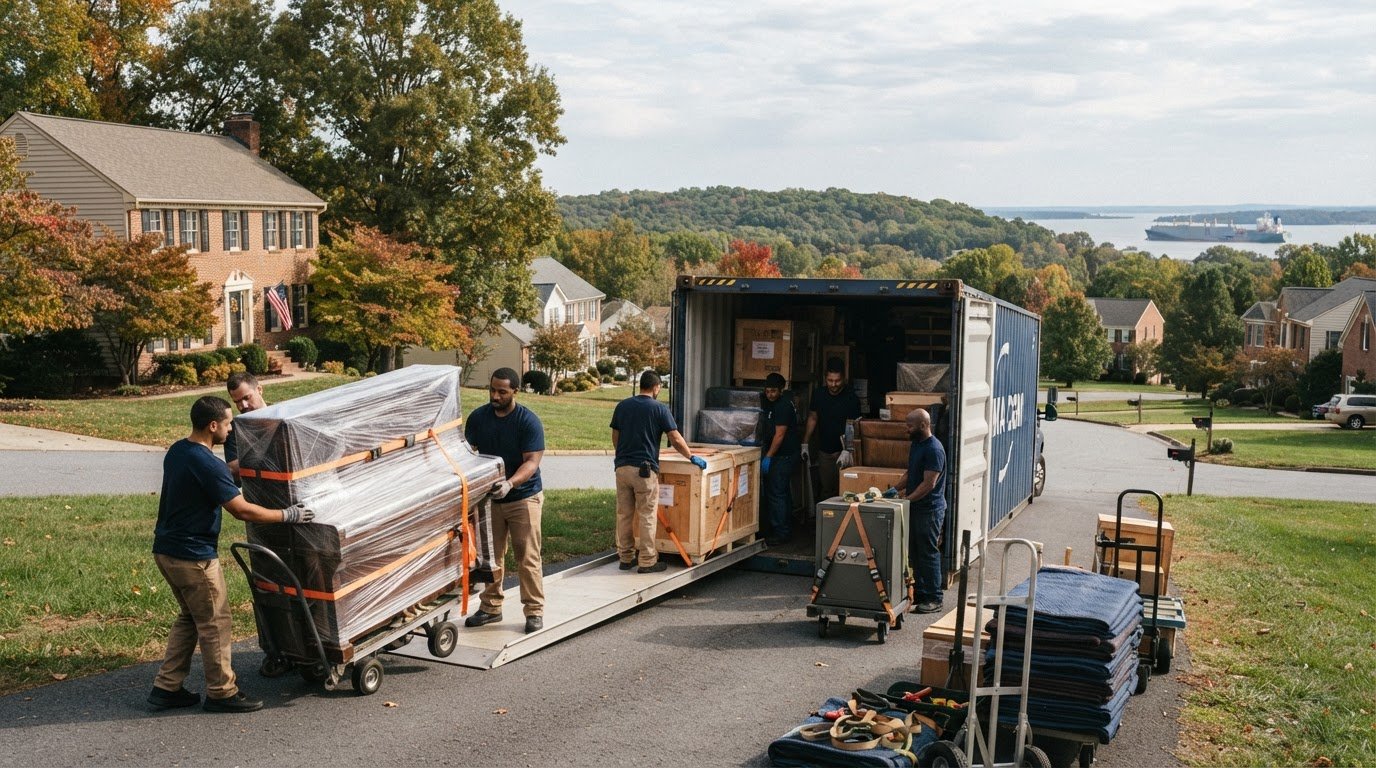
Labor-only help can suit a move if you’ve arranged a truck or container and need support with the physical work. A crew can help lift belongings, load them for travel, unload them at the facility, and position them inside. Loading assistance is separate from transportation, so the truck or container still needs to be arranged. Clarify which tasks you need at each location.
When combined moving and transport help may be simpler
Combining handling and transportation can reduce the number of separate arrangements you need to coordinate. It may be a practical fit for bulky furniture, several pickup points, or an inventory that’s difficult to load and move on your own. Share what’s going, where it’s being picked up, and where it’s headed so the moving plan reflects the work involved.
To hire movers to move things to a storage unit in Clifton, describe the job plainly: what needs moving, which tasks you want help with, and whether transportation is part of the plan. Heavy Furniture Moving provides labor and transport solutions for residential belongings in Clifton, with support shaped around the move. Explore storage moving help to see how lifting, loading, transportation, and unloading can fit together.
Protect Furniture and Use Storage Space Wisely
A little preparation can make bulky belongings easier to handle and the storage unit easier to use later. Before moving day, sort items by size, fragility, shape, and how soon you may need them again. This review helps you identify what needs careful handling, what may be difficult to maneuver, and what should stay easy to reach.
Prepare bulky furniture and household items
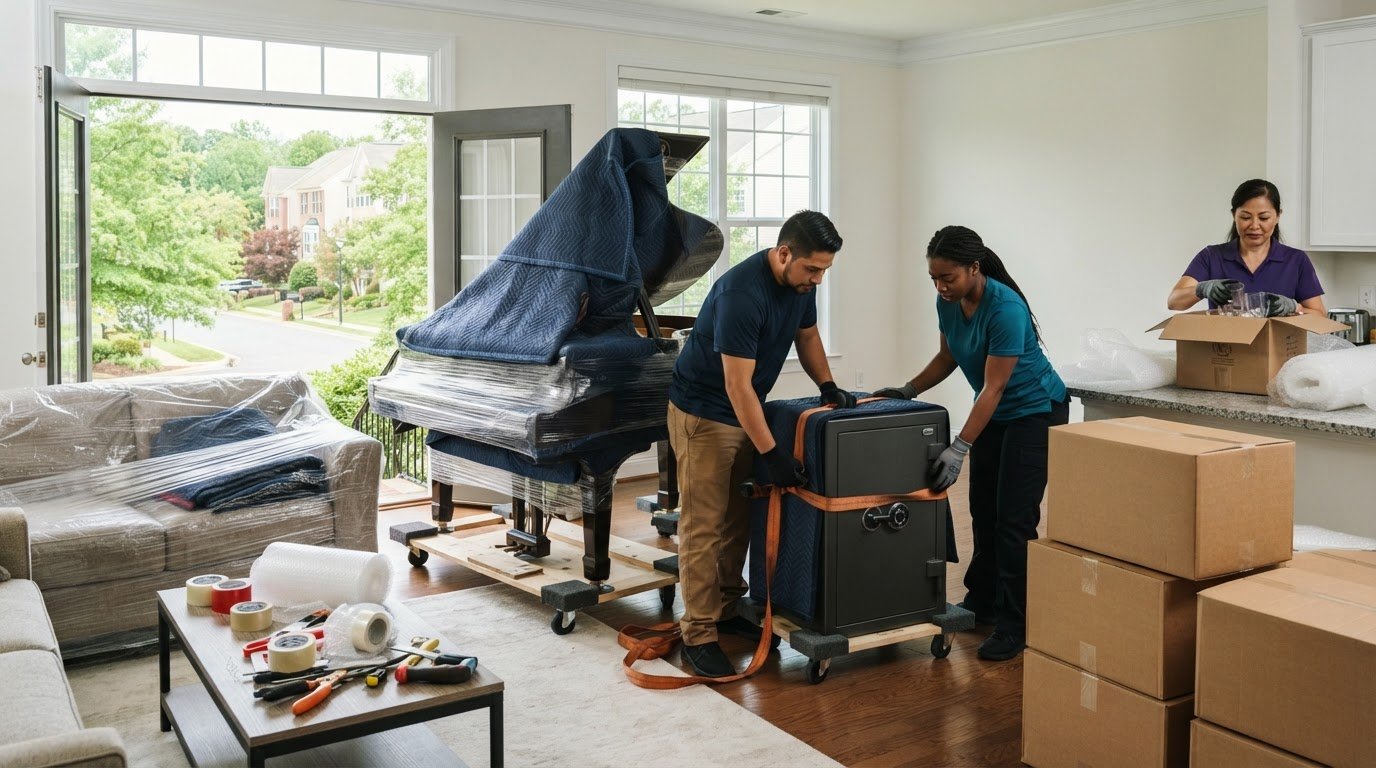
Measure large pieces and compare their dimensions with doorways, hallways, elevators, and the storage-unit entrance. Empty drawers, remove loose shelves or legs when appropriate, and keep detached parts together in a labeled bag. Flag unusually heavy or awkward belongings, such as safes, pianos, and exercise equipment, during planning so their handling can be considered in advance.
Protective wrapping is another planning choice. Blankets, padding, or other suitable materials can help shield surfaces during handling and transport, but no wrapping method can guarantee an item won’t be damaged. Identify delicate finishes, glass parts, and loose components before packing. Clear the route from each room to the exit, moving small obstacles and checking tight turns before carrying a large item through.
- Fragile: Mark boxes or pieces containing glass, mirrors, or delicate surfaces so they’re easy to recognize.
- Oversized or awkward: Note items that may need extra room to turn or pass through a doorway.
- Frequently needed: Set aside seasonal gear, documents, or household essentials you may retrieve soon.
Plan a storage-unit layout before loading
Group boxes by room or category, then label visible sides with simple descriptions such as “kitchen” or “winter clothing.” Keep fragile items identifiable and plan to place belongings you’ll need again near the entrance. Where the unit layout allows, leave a clear route inside instead of filling every open space. A usable path makes it easier to find items without shifting an entire stack.
Think through placement before the first load goes in. Large furniture and boxes can take up valuable space or block access if they’re positioned without a plan. Tell the moving team which belongings need careful handling and which should remain reachable. That guidance helps direct placement as items come off the vehicle, rather than requiring a full rearrangement after the unit is packed.
If you plan to hire movers to move things to a storage unit in Clifton, prepare a short placement guide alongside your inventory. Note what should be protected, what belongs together, and what you’ll want near the entrance. A team experienced with heavy household items and exercise equipment can use that information to support an organized loading and unloading process. Keep the layout practical: protect what needs care, make room to reach what matters, and avoid burying essentials behind less-used belongings.
Prepare for Moving Day: A Clifton Storage-Move Checklist
A clear plan keeps a storage move from turning into a scramble for keys, directions, or one last box. Before moving day, organize the pickup details, the storage facility’s instructions, and the people who’ll guide the work. If you plan to hire movers to move things to a storage unit in Clifton, use this checklist to make each handoff straightforward.
Before movers arrive at your Clifton home
Start with a concise inventory. List the main furniture, boxes, and bulky or fragile belongings, then note what should travel together and what you may need soon after delivery. Clear the route through rooms and exits, and check the path to the loading area. In Clifton, include practical details such as driveway access, available parking, and clear directions to the home.
- Confirm the inventory: Update the item list and flag anything especially heavy, fragile, or awkward to carry.
- Prepare the route: Move everyday obstacles away from hallways, stairs, doorways, and the path to the loading area.
- Group belongings: Keep related items near one another and separate essentials you want to retrieve soon.
- Share arrival details: Provide clear directions, useful parking or driveway notes, and a contact number for the person meeting the crew.
- Keep essentials handy: Put keys, entry codes, contact details, and important moving or storage documents somewhere easy to reach.
Coordinate arrival and storage-unit access
Before the trip, review the facility’s access hours, entry instructions, and move-in requirements. Save the details where you can find them quickly, and make sure the person meeting the movers can enter and direct the crew. Give the driver clear directions from the pickup address to the storage destination, including useful location notes.
- Check facility instructions: Review access hours, gate or door entry steps, and the facility’s move-in process.
- Choose a point person: Decide who will meet the crew and explain where belongings should go inside the unit.
- Plan for arrival: Keep your phone accessible and allow time to handle entry instructions or questions at the facility.
- Guide placement: Share priorities for items that should stay accessible so they aren’t buried behind less-used belongings.
Use the same inventory and access notes from pickup through delivery. A well-prepared move lets the crew focus on handling, loading, and placing your belongings rather than sorting out missing information on the spot. For help coordinating a Clifton storage move, plan your move with Heavy Furniture Moving.
Hire Heavy Furniture Moving Help for Your Clifton Storage Move
A storage move can involve more than a few boxes. A sofa, dresser, exercise machine, or other heavy household item may need careful handling at both ends of the trip. Heavy Furniture Moving serves Clifton with residential moving support for household belongings and bulky items, helping you shape the work around what you’re moving and the assistance you need.
Plan for packing, loading, transportation, and unloading as parts of one move, or focus on the tasks that are most difficult to manage yourself. Share your inventory, pickup and storage locations, and access conditions so the plan accounts for bulky pieces as well as smaller household goods.
What Heavy Furniture Moving can handle
Residential moving support can cover household goods alongside heavy furniture. Specialized heavy-item handling is useful for pieces such as pianos, safes, and exercise equipment, which can be challenging to move through a home and into a storage unit. Packing and unpacking support can help keep belongings organized as they leave your home and are placed in storage.
Think about where you need the most help. Some customers mainly need lifting and loading; others need transportation and unloading as well. Packing support can help when you’re preparing a room’s worth of belongings, while a focused loading plan may suit items already boxed and ready. A tailored scope keeps the moving work aligned with your priorities without adding steps you don’t need.
- Household belongings: Organize furniture and boxes for the move to storage.
- Bulky items: Identify heavy or awkward pieces early so their handling is part of the plan.
- Packing and unpacking: Add support to prepare belongings and manage their transition into the unit.
- Transport and unloading: Include the travel and delivery tasks needed to complete the move.
Make the next step straightforward
Prepare a concise inventory, the pickup address, your storage destination, and details about stairs, narrow routes, or other access challenges. Point out large or unusually heavy items and describe which tasks you want handled. These details help shape a practical plan for your Clifton storage move.
If you’re ready to hire movers to move things to a storage unit in Clifton, gather the key details and take the next step. Plan your Clifton storage move with a team that handles residential belongings and heavy items. Get help with the physical work and make the trip to storage easier to manage.
Make Your Storage Move the Next Easy Step
Give your storage move a clear starting point: decide what should be stored now and what you’ll want to retrieve first. A short note about priorities and placement can make the unit more useful later, especially if your plans change or you need something sooner than expected.
If you’re looking to hire movers to move things to a storage unit in Clifton, Heavy Furniture Moving provides residential moving support in Clifton for household belongings, with specialized handling for heavy and bulky items. Bring your inventory and storage destination together so the moving plan reflects the job you need done.
Take the strain out of the next step. Plan your Clifton storage move and get your belongings moving toward a more organized home and storage setup. You can make room at home without carrying the whole job alone.
Frequently Asked Questions
Can I hire movers just to move my belongings into a storage unit in Clifton?
Yes. You can arrange moving help for a storage trip without treating it as a whole-house relocation. If you’re searching “hire movers to move things to a storage unit in Clifton,” prepare the pickup address, destination, and a short item list, then describe the tasks you need handled. Heavy Furniture Moving serves Clifton and nearby communities, including Fairfax, Woodbridge, Manassas, Manassas Park, Aldie, Ashburn, McLean, Vienna, Reston, Centreville, Chantilly, Clifton, Dumfries, South Riding, Fairfax Station, Haymarket, and Gainesville.
Do movers take items to a storage unit, or do I need to provide a truck?
It depends on the moving arrangement: some moves use a vehicle or container you’ve arranged, while others include transportation with the moving help. If you already have a truck, explain whether you need loading, unloading, or both. If you need transportation too, share the pickup and storage locations when planning. This helps define the work around your trip instead of assuming every move has the same setup.
How should I prepare furniture before movers take it to storage?
Remove loose contents and keep small parts together. Empty drawers and cabinets if practical, and place screws or detached hardware in a labeled bag with a note identifying the item. For furniture that needs reassembly, take a quick photo before removing parts. Measure large pieces and note tight turns or low clearances along the route so the team can plan how to move them through the home.
Can movers handle heavy items going into a storage unit?
Yes. Moving help can include specialized handling for heavy and bulky household items. Tell the team about pianos, safes, exercise equipment, or oversized furniture before moving day. If you know an item’s approximate dimensions, share them along with details such as stairs, narrow doorways, or elevator access. That information helps the moving plan account for the item and its route, rather than leaving a challenging lift as a surprise.
What should I check with a storage facility before moving day?
Review the facility’s access hours, entry process, unit location, and move-in instructions. Find out how to reach the unit and where a moving vehicle may stop, then keep any required keys, codes, and contact details accessible. Follow the facility’s process for moving belongings in, as entry and move-in instructions can vary by location.
How can I keep a storage unit organized after movers load it?
Make retrieval easier by creating a simple unit map or written note showing where major categories and large pieces are placed. Keep labels facing outward where possible, and write a short description of box contents rather than relying on a room name alone. Leave frequently used belongings where you can reach them without moving other items. Update your note whenever you add or remove boxes so it remains useful on your next visit.
Frequently Asked Questions
Yes. You can arrange moving help for a storage trip without treating it as a whole-house relocation. If you’re searching “hire movers to move things to a storage unit in Clifton,” prepare the pickup address, destination, and a short item list, then describe the tasks you need handled. Heavy Furniture Moving serves Clifton and nearby communities, including Fairfax, Woodbridge, Manassas, Manassas Park, Aldie, Ashburn, McLean, Vienna, Reston, Centreville, Chantilly, Clifton, Dumfries, South Riding, Fairfax Station, Haymarket, and Gainesville.
It depends on the moving arrangement: some moves use a vehicle or container you’ve arranged, while others include transportation with the moving help. If you already have a truck, explain whether you need loading, unloading, or both. If you need transportation too, share the pickup and storage locations when planning. This helps define the work around your trip instead of assuming every move has the same setup.
Remove loose contents and keep small parts together. Empty drawers and cabinets if practical, and place screws or detached hardware in a labeled bag with a note identifying the item. For furniture that needs reassembly, take a quick photo before removing parts. Measure large pieces and note tight turns or low clearances along the route so the team can plan how to move them through the home.
Yes. Moving help can include specialized handling for heavy and bulky household items. Tell the team about pianos, safes, exercise equipment, or oversized furniture before moving day. If you know an item’s approximate dimensions, share them along with details such as stairs, narrow doorways, or elevator access. That information helps the moving plan account for the item and its route, rather than leaving a challenging lift as a surprise.
Review the facility’s access hours, entry process, unit location, and move-in instructions. Find out how to reach the unit and where a moving vehicle may stop, then keep any required keys, codes, and contact details accessible. Follow the facility’s process for moving belongings in, as entry and move-in instructions can vary by location.
Make retrieval easier by creating a simple unit map or written note showing where major categories and large pieces are placed. Keep labels facing outward where possible, and write a short description of box contents rather than relying on a room name alone. Leave frequently used belongings where you can reach them without moving other items. Update your note whenever you add or remove boxes so it remains useful on your next visit.