Heavy Commercial Freezer Moving to a Fairfax Garage
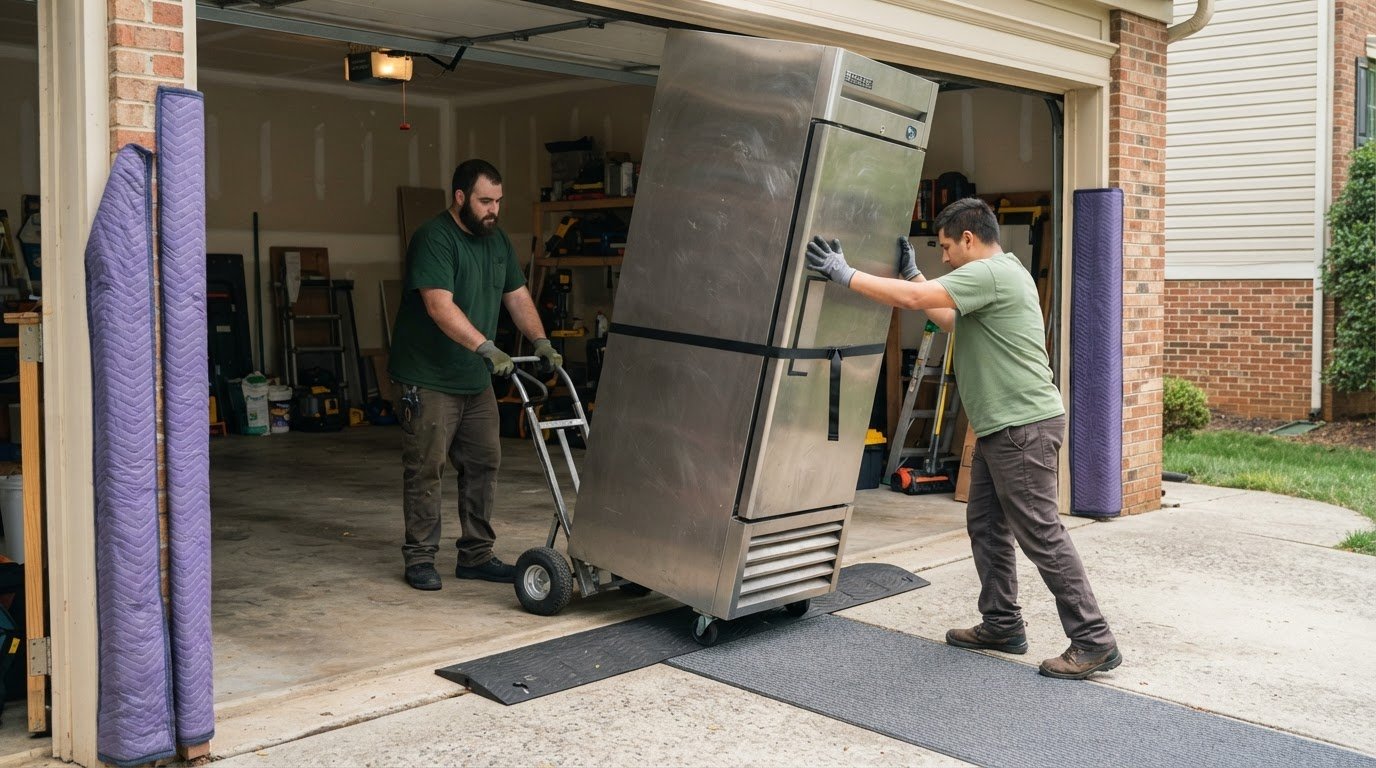
Moving a heavy commercial freezer to a residential garage in Fairfax takes more planning than measuring the distance. The route, freezer dimensions, doorway clearance, floor protection, and secure handling all affect how the move should be planned, from pickup through placement.
A heavy freezer can be difficult to maneuver, particularly along tight turns, steps, or a narrow garage entrance. Planning the route in advance helps protect the home and keep the appliance controlled throughout the move.
This guide covers what to prepare before moving day, how to protect floors and doorways, and what affects transport and placement around Fairfax and Northern Virginia. You’ll also learn how experience with bulky household items can make an appliance move more manageable.
Key Takeaways
- Share the freezer’s size and the intended garage location so movers can plan the route and placement.
- Doorway width, turns, steps, and garage access all affect how an oversized freezer can be moved into the home.
- Floor, wall, and door-jamb protection should be part of the move plan, especially along tight passageways.
- Secure transport and suitable lifting equipment help keep a heavy appliance controlled from pickup through placement.
- Specialty-item moving experience can help when the freezer is only one part of a move involving other bulky items.
Service areas in Fairfax and Northern Virginia
When moving a heavy commercial freezer to a residential garage in Fairfax, choose a moving team experienced with heavy items and in-home placement. Ask how the crew will handle loading, protect the route, and navigate stairs or narrow doorways. These details matter whether the pickup and delivery are both in Fairfax or elsewhere in Northern Virginia.
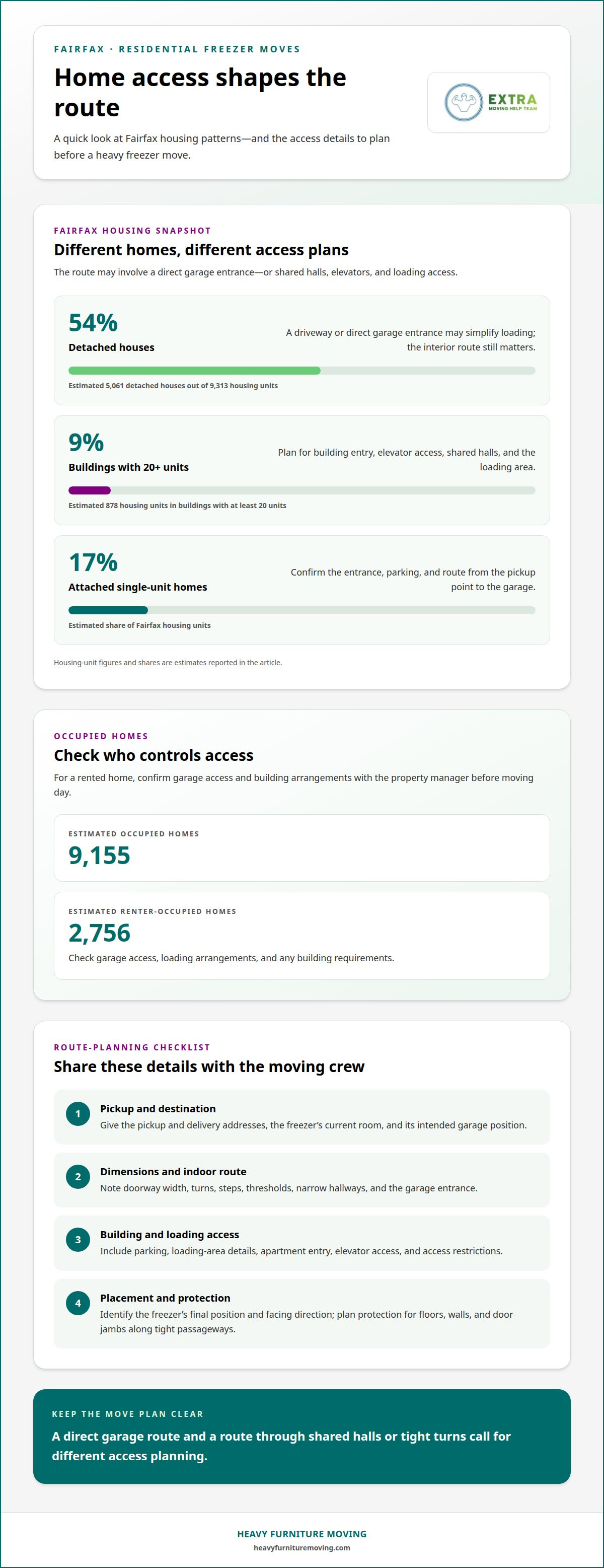
Fairfax includes different home layouts, from detached houses to multi-unit buildings. Detached houses make up 54% of housing units, while buildings with at least 20 units make up 9%. A move from a detached home may involve driveway access and a direct garage entrance. A multi-unit building can call for additional planning around shared halls, elevators, and loading access.
In Mantua and Oakton Hills, many colonials date to the 1960s and 1970s and sit on half-acre lots. A driveway may provide room for loading, but the interior route still determines how the appliance reaches the garage. The crew needs to account for turns, the entrance, and the planned freezer position before moving day.
- Detached home: Plan the route from the freezer’s current room to the garage, including stairs and tight turns.
- Apartment building: Coordinate building entry, elevator access, and the loading area before the move.
- Garage placement: Identify the intended position so the crew can plan around the entrance and available floor space.
What moving companies in Fairfax, Virginia, can move heavy commercial freezers to residential garages? Look for a residential moving team prepared for heavy lifting and in-home placement, not just packed boxes. The plan should account for the freezer’s dimensions, pickup and delivery locations, stairs, and loading access. These details help determine the handling approach and equipment.
The quote depends on the item and the work involved. Heavy Furniture Moving provides an upfront quote before work begins. Share the freezer’s details, pickup and delivery addresses, stairs, and access conditions so the quote reflects the move. A direct garage route differs from one with tight interior turns or shared building access.
What electrical circuit and outlet does a commercial freezer need in a residential garage? The model determines its electrical requirements, so follow the manufacturer’s specifications for the circuit and outlet. Have the correct connection ready at the planned location. Moving crews handle transport and placement, not electrical installation.
Fairfax, Virginia, has an estimated 9,313 housing units, including an estimated 5,061 detached houses and an estimated 878 housing units in buildings with at least 20 units. Attached single-unit homes make up an estimated 17% of housing units in Fairfax, Virginia. Before arranging delivery, confirm whether the route starts at a private entrance or requires coordination through a shared building, and identify who can provide access.
Fairfax, Virginia, had an estimated 9,155 occupied homes. An estimated 2,756 occupied homes in Fairfax, Virginia, are renter-occupied. If the home is rented, check with the property manager about garage access, loading arrangements, and any building requirements before the move. Sharing those details with the moving crew can help them plan the route and placement.
In-home appliance moving and rearranging
In-home appliance moves depend on the route between the current location and the new one. For example, moving a full-size French-door refrigerator from a Fairfax Station garage to a basement involves stairs and a destination below the pickup point. The crew plans around the appliance’s shape and route, not just the distance.
Planning starts with the item, pickup location, destination, and access between them. Step count, doorway width, and tight turns can all affect the work. A garage-to-basement move in Fairfax Station needs a different route plan from moving a freezer directly from a driveway into a garage. Sharing these details helps the crew plan loading and placement.
Home and apartment layouts require different planning. A detached Fairfax home may have a direct garage entrance, while an apartment move can involve shared halls, elevators, and building access. Provide the pickup and destination addresses, parking and loading details, and any access restrictions. For an appliance moved within one home, the starting room and final position still shape the route.
- Pickup: Identify the freezer’s current room and the clearest path to the exit.
- Walkthrough: Note doorways, turns, stairs, thresholds, and narrow hallways.
- Placement: Point out the garage location and the direction the appliance should face.
- Access: Include apartment entry, elevator, loading area, and parking details.
A route review helps the crew understand the home layout and identify obstacles before moving the appliance. In Ashburn, a refrigerator move from a garage to a basement involved about five steps, a different route from carrying an appliance across a level garage. Clear details help the crew plan how to enter, move through the property, and place the appliance without unnecessary rearranging.
Are permits or code requirements applicable to installing a commercial freezer in a Fairfax home garage? Moving the freezer and installing its electrical connection are separate tasks. Permit and code considerations relate to installation and the requirements for the property, not physical transport alone.
For a commercial freezer, share its dimensions, pickup point, destination, and route details during the estimate process. That gives the crew practical information for planning a heavy appliance move, whether it involves stairs, a tight interior turn, or a garage entrance. For help with a demanding in-home move, explore in-home appliance moving.
Protecting floors, walls, and door jambs
Before moving a commercial freezer, the crew should plan its route from the room to the garage. Doorways, turns, thresholds, and floor transitions each need consideration. Furniture, tables, and stored boxes can narrow the path, so clear the route before the appliance moves. The crew can then position protective materials and plan how to maneuver the freezer.
Floor protection matters during both the loaded move and the final placement. The crew can lay suitable protective covering along the travel path, then move the freezer carefully across each transition. At a doorway, padding on the jamb and nearby wall helps protect exposed edges. Protection should stay in place until the appliance is through and the crew has finished unloading it.
What garage floor, doorway, and access requirements apply to installing a commercial freezer? The floor should be level and able to support the appliance as specified by its manufacturer. The doorway and route must allow the freezer to pass, and the garage needs the clearances and electrical connection required by the model.
Furniture padding and edge protection serve different purposes. Padding cushions the freezer’s exterior, while corner and jamb protection shield surfaces along the route. On a tight hallway turn, for example, the appliance may come close to both a wall and a door frame. Plan the turn and secure the padding before maneuvering.
- Floors: Cover the route where rolling or shifting could mark the surface.
- Doorways: Protect jamb edges before guiding the freezer through an opening.
- Walls: Add padding near turns where the appliance has limited clearance.
- Placement: Keep protection under or around the appliance until it reaches its garage position.
Protective packing can help shield the freezer’s exterior during handling and transport. The crew selects coverage around the appliance’s shape, exposed edges, and route. Custom crating may suit a freezer with vulnerable projections or a form that standard packing cannot cover securely. Packing must also allow the crew to grip and control the load during movement.
What risks can moving a commercial freezer pose to the appliance, home, and movers? Poorly controlled movement can damage the appliance, scrape floors, dent walls, or strike a door jamb. An unstable or awkward load can also create a handling hazard for the crew.
Protection works best as part of a planned sequence: clear the route, protect floors and vulnerable edges, guide the freezer through openings, then remove protective materials after placement. A narrow turn at the garage entrance needs a different plan from a direct route. Clear access lets the crew focus on controlled movement rather than shifting furniture mid-move.
Specialized lifting equipment and secure transport
Moving a heavy freezer calls for controlled handling, secure loading, and a suitable transport plan. The freezer’s weight, dimensions, and route all shape the approach.
Heavy Lifting, Loading, and Transport
Movers assess the freezer’s position, the exit route, and the truck’s loading point before lifting. A Virginia commercial refrigerator move was described as a two-to-three-person job requiring a truck with a lift gate and straps. The lift gate supports loading, while secured straps help keep the appliance stable during transport. The reader should look for a plan that addresses the full route, not only the truck ride.
Mover Lifting Capacity
Lifting capacity is about the planned crew and equipment handling the freezer’s actual weight and shape. A commercial unit can be difficult to control through a narrow doorway, even when the route is short. Share the model information and access details so the moving plan accounts for both the load and the route. For coverage, distinguish the mover’s liability terms from any separate policy you carry; review the written terms before loading.
Freezer Weight and Moving Equipment
Commercial freezers vary, so the model’s nameplate or manufacturer specifications are the starting point for determining weight. Movers use that information alongside the freezer’s dimensions, pickup location, and garage access to plan lifting and loading. A lift gate and straps were used for a Virginia commercial refrigerator move; other equipment depends on the unit and route. Give the crew accurate model details so the transport plan matches the appliance.
Side Transport and Upright Standing
Don’t assume a commercial freezer can travel on its side. The manufacturer’s instructions for that model determine whether side transport is allowed. The required upright standing time before plugging it in also depends on the model and how it was transported. Share the instructions with the moving crew and follow them when positioning the appliance.
Treat the stated crew and equipment as a practical planning detail to confirm before the move, rather than as a promise that every freezer needs the same arrangement. The Virginia commercial refrigerator move was described as a 2-3-man job requiring a truck with a lift gate and straps to secure the refrigerator. For your own unit, discuss its weight, dimensions, and access route with the mover, then ask how the proposed crew and equipment address those specifics. This helps keep the lifting plan connected to the actual appliance and the path it must follow.
Before loading, clarify who will operate the lift gate and how the straps will be used to secure the refrigerator. Confirm that the truck and loading approach are included in the written plan, and raise any tight turns, steps, or limited clearance along the route. If the equipment or crew changes, ask whether the revised arrangement still accounts for the freezer’s size, weight, and orientation requirements. Keep the manufacturer’s transport instructions available so the team can use them when positioning and securing the appliance. Clear communication before lifting can help prevent assumptions about the route, equipment, or handling from becoming problems during the move.
Moving oversized and specialty items in Fairfax
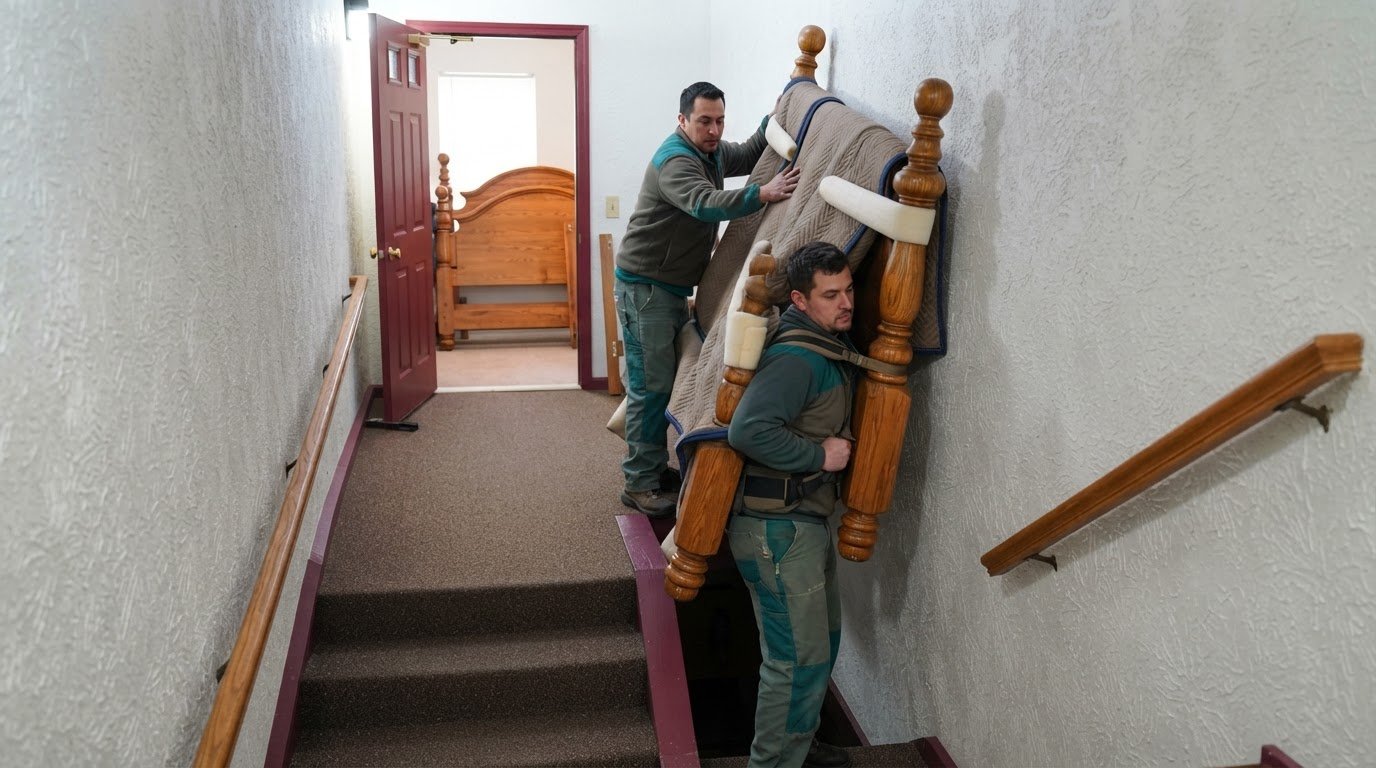
A heavy freezer is one of many bulky items that can challenge a Fairfax home’s layout. Plan around the appliance, its route, and its destination together. A clear path from the kitchen or storage area to the garage helps the crew plan handling and placement. Treat every doorway and turn as part of the move, not an afterthought.
For a Fairfax move, start by reviewing the freezer and its route. Share the freezer’s dimensions, pickup room, and intended garage position. Then assess the route for stairs, turns, narrow openings, and access between the home and the vehicle. This helps identify obstacles before the freezer is in motion.
Oversized equipment needs a destination plan, too. A garage may have plenty of open floor space but still present a tight entrance or an awkward final turn. Decide where the freezer will sit and which way it should face. A clear endpoint helps reduce repeated repositioning inside the home.
- Item: Provide the freezer’s make and model, dimensions, and weight information.
- Pickup: Identify its current location, such as a kitchen, basement, or storage room.
- Route: Describe stairs, tight turns, doorways, and the path to the vehicle.
- Destination: Mark the garage placement area and the direction the unit should face.
In Fairfax homes, an appliance move may involve more than the appliance itself. Furniture or stored belongings can block the route, and narrow passages can limit turning space. Account for these conditions before loading begins. Keep transport planning separate from electrical or installation work at the destination.
Insurance is another point to address before a specialty-item move. Review the written coverage terms for the specific freezer and the handling involved. Make sure you understand what the paperwork says about damage during loading, transport, and placement. Clear terms matter most when an oversized item passes close to finished floors, walls, or door frames.
For a commercial freezer in Fairfax, don’t treat the move like a routine box delivery. Its size, route, and final position all affect how the work should be planned. A professional heavy-item move can help coordinate pickup through placement, especially when the path crosses a kitchen or occupied living area. Plan your heavy-item move around the freezer, route, and garage destination.
Heavy Furniture Moving
Heavy Furniture Moving can help plan a heavy freezer move from pickup through garage placement. Turn to the team when the appliance’s weight, tight access, or interior route makes the move difficult to manage alone. Share the freezer’s dimensions, pickup location, garage destination, and any stairs or narrow turns. Those details help shape a practical moving plan. Heavy Furniture Moving also handles other bulky household items, including exercise equipment and sofas, so the move can account for more than one challenging piece. Keep electrical installation separate from appliance transport, and use the freezer manufacturer’s instructions for placement and startup. Ready to discuss your move? Contact Heavy Furniture Moving.
Make the Next Move With Confidence
Plan for what happens after the freezer reaches the garage. Choose an accessible final position and leave room for regular household traffic. If other bulky household items also need moving, include them in the same plan.
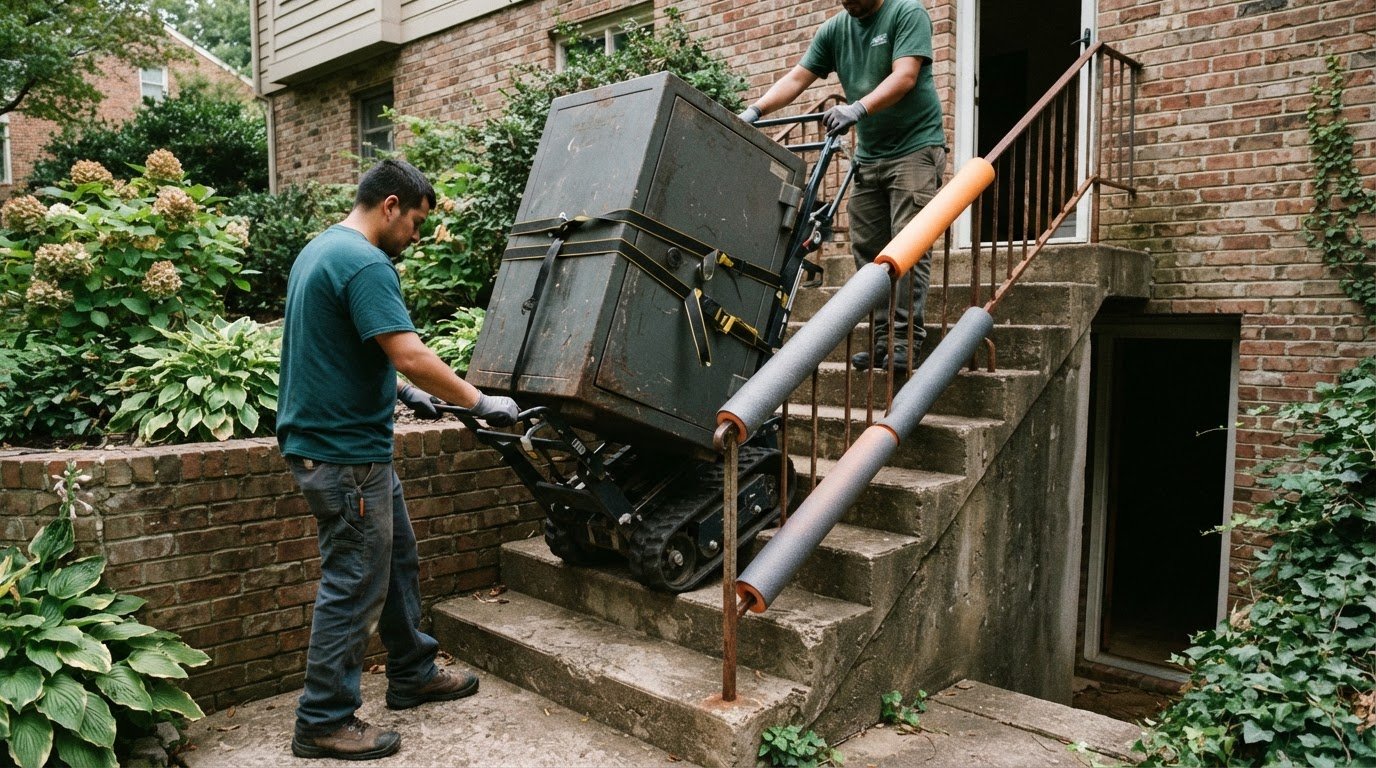
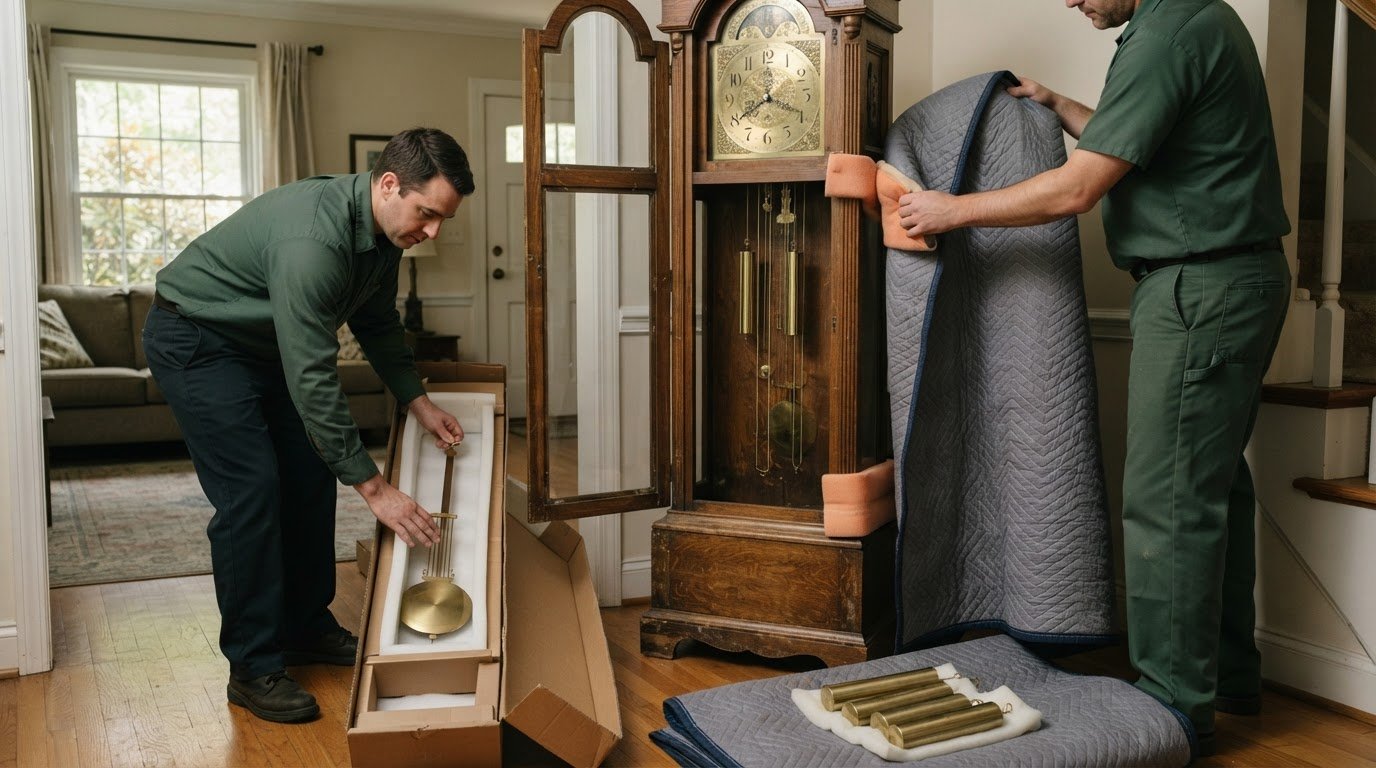
Moving a heavy commercial freezer to a residential garage in Fairfax is a specialized household move, not simply a delivery. Heavy Furniture Moving handles heavy and bulky household items, including pianos, safes, and exercise equipment, as well as in-home furniture moves and sofa hoisting. Share the freezer’s model details, destination, and access conditions to discuss your move.
Clear planning gives the crew a practical starting point and helps you move forward without guesswork. Contact Heavy Furniture Moving to talk through your freezer move and take the next step.
Frequently Asked Questions
How much does it cost to move a commercial freezer locally in Fairfax, VA?
The quote depends on the freezer, the route, and the work needed at pickup and delivery. Stairs, tight access, loading conditions, and distance between locations can affect the plan. For a Fairfax move, share the freezer’s model details and both addresses. Heavy Furniture Moving provides an upfront quote before work begins, based on the specific move.
How do professional movers prepare and secure a commercial freezer before moving it?
Before pickup, unplug and empty the freezer. Heavy Furniture Moving crews use moving blankets and shrink-film to protect items, with ratchet straps to secure them for transport. For a move from a Fairfax kitchen to a garage, prepare for both the route out of the home and vehicle loading. Share the model information and manufacturer handling instructions so the crew can account for the freezer’s specific needs.
Frequently Asked Questions
The quote depends on the freezer, the route, and the work needed at pickup and delivery. Stairs, tight access, loading conditions, and distance between locations can affect the plan. For a Fairfax move, share the freezer’s model details and both addresses. Heavy Furniture Moving provides an upfront quote before work begins, based on the specific move.
Before pickup, unplug and empty the freezer. Heavy Furniture Moving crews use moving blankets and shrink-film to protect items, with ratchet straps to secure them for transport. For a move from a Fairfax kitchen to a garage, prepare for both the route out of the home and vehicle loading. Share the model information and manufacturer handling instructions so the crew can account for the freezer’s specific needs.