Furniture Protection for Moving in Rain in Vienna, VA
A sudden Vienna shower can soak a sofa, mark wood, or leave a mattress damp before it reaches the truck. A clear plan makes furniture protection for moving in rain Vienna far less stressful. Covers need to keep rain out without trapping moisture against furniture, so it helps to plan what goes on each item and when to remove it.
The best approach is a sequence: prepare, cover, move, then dry. This guide covers practical steps for protecting upholstery, wood, and mattresses, choosing and using covers, and keeping loading and unloading safer when paths are wet. You’ll also learn what to do once furniture arrives so damp coverings come off and items can dry properly.
Whether you’re moving across Vienna or nearby Northern Virginia, rain doesn’t have to mean preventable damage or rushed decisions. With a simple rain-day plan, you can protect furniture from the doorway to its new room. Heavy Furniture Moving provides residential moving and packing help for bulky pieces that need careful handling.
Key Takeaways
- Build a Vienna rain-day plan by checking the forecast, gathering covers, clearing a route, and setting up a dry staging area.
- Choose covers based on the furniture and the weather. Moving blankets cushion surfaces but aren’t waterproof, so don’t rely on them alone in rain.
- Use a one-item-at-a-time loading sequence to limit exposure and avoid leaving covered furniture waiting outdoors.
- After unloading, inspect furniture and remove damp coverings so moisture doesn’t stay trapped against surfaces.
- Use these practical steps for furniture protection for moving in rain Vienna, and consider moving help for bulky items, narrow routes, or a tight schedule.
Furniture Protection for Moving in Rain: What Can Get Wet and Why It Matters
Rain can reach furniture at several points in a move: as a piece leaves the house, crosses an uncovered path, waits near the vehicle, or enters the new home. Even a short trip outside can leave water on a surface or transfer dampness from hands and clothing. The goal of furniture protection for moving in rain Vienna is to limit direct exposure while preventing moisture from getting trapped under a cover.
Coverings reduce rain exposure, but they don’t guarantee waterproofing. A cover that sheds water can still let it in at an open edge or seam. If a damp item is sealed up, moisture may linger against the surface. Match the covering to the furniture, keep exposure brief, and check each item once it’s indoors.
Which furniture materials need extra attention in wet weather?
Upholstered cushions and mattresses can absorb water rather than simply let it run off. Damp fabric and padding may take longer to dry, especially if a cover stays in place. Keep water away from seams and openings, and don’t leave a damp cover pressed against upholstery after arrival.
Finished wood and veneer also need care. Prolonged dampness can affect the finish, while water that reaches veneer edges or joints may be harder to wipe away. Metal handles, brackets, and other exposed hardware can hold moisture, so dry them promptly with a clean cloth. After moving, check corners, undersides, and connection points, not just broad visible surfaces.
Why rain can reach furniture even during a short move
Think through the full path from room to room, out the doorway, across the walk, and into the vehicle. An uncovered stretch or a brief pause during loading gives rain a chance to reach an exposed surface. At the destination, unloading adds another outdoor crossing. Keep each item covered while it’s exposed, and avoid leaving it outside as other pieces are carried.
Wind can push rain beneath a loose cover or through an open vehicle door, so secure the cover as the item moves. Moisture also travels indoors: wet shoes can track it along the route, and damp hands can leave marks on clean upholstery or wood. Keep the carrying path as dry as practical and handle covered furniture with dry hands.
Moving large pieces through a doorway or around a tight corner takes planning, especially when the route is wet. The abstract moving sofa problem explores the challenge of maneuvering a shape through a constrained space. In a real move, check turns and clear obstacles before carrying so furniture doesn’t need to pause in the rain while you work out the path.
Prepare a Vienna, VA Rain-Day Furniture Moving Plan Before Moving Day
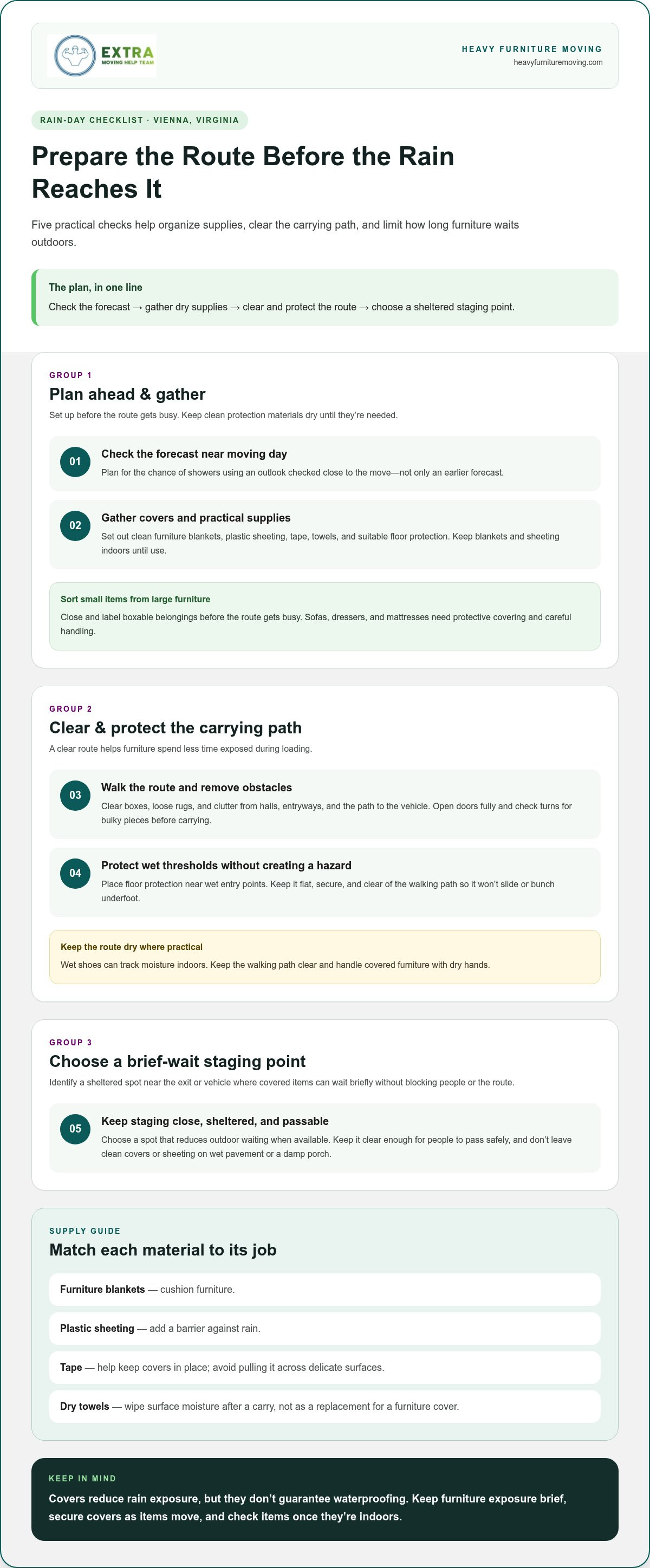
A little preparation can keep rain from turning moving day into a scramble. Check the forecast for Vienna, Virginia, close to your move, then decide where supplies will stay dry, which route furniture will take, and where items can wait out of the weather. Sort smaller belongings from large furniture: boxable items can be sealed and carried separately, while sofas, dressers, and mattresses need protective covering and careful handling.
A dry, clear carrying route means less time furniture is exposed during loading. Use this checklist to set up the move in order:
- Check the forecast. Review it near moving day and plan for the chance of showers rather than relying on an earlier outlook.
- Gather covers and supplies. Set out clean furniture blankets, plastic sheeting, tape, towels, and suitable floor protection.
- Clear the route. Remove boxes, loose rugs, and other obstacles from hallways, entryways, and the path to the vehicle.
- Protect floors. Cover areas near wet thresholds, but keep the covering secure, flat, and out of the way.
- Choose a staging point. Identify a sheltered spot near the exit or vehicle where covered items can wait briefly without blocking the route.
What should you gather before rain reaches the moving route?
Keep clean blankets and plastic sheeting indoors until they’re needed. Blankets cushion furniture, while sheeting can add a barrier against rain. Use tape to keep covers in place without pulling it across delicate surfaces. Don’t set clean materials on wet pavement or a damp porch. Set aside dry towels for wiping surface moisture after a carry, not as a replacement for a furniture cover.
Separate small, boxable belongings from pieces that need full-size covers. Close and label boxes before the route gets busy, then keep them away from wet shoes and dripping outer layers. This lets you focus on carefully covering large items instead of stopping to pack loose belongings during loading.
How can you make the home-to-vehicle route safer?
Walk the route before carrying anything. Move clutter, open doors fully, and check that turns are wide enough for bulky furniture. At wet thresholds, use floor protection that lies flat and won’t slide or bunch beneath someone’s feet. Keep the walking path clear, even if supplies need to be staged nearby.
Choose a staging point that reduces outdoor waiting, such as a sheltered area close to the exit when available. Keep it clear enough for people to pass safely. If rain complicates lifting bulky pieces or organizing carry trips, residential furniture moving and packing help can ease the handling pressure while you focus on the rest of your plan.
Compare Furniture Covers for Moving in Rain: Blankets, Plastic, and Stretch Wrap
No single covering does every job. A moving blanket cushions furniture from bumps and scuffs, while plastic sheeting helps block direct splashes. Stretch wrap can hold a cover in place, but it shouldn’t be treated as a waterproof layer on its own. For furniture protection for moving in rain Vienna, choose materials by their role and check that they’re dry before they touch furniture.
| Material | Best use | Limitation | Rain-related caution |
|---|---|---|---|
| Moving blanket | Cushioning surfaces during handling | Absorbs water; not waterproof | Keep it dry and add an outer barrier if rain exposure is expected. |
| Plastic sheeting | Temporary barrier against direct splashes | Can hold moisture against furniture if wrapped too tightly or left in place | Check for dampness and remove it once the furniture is indoors. |
| Stretch wrap | Holding a covering in place | Not a dependable rain barrier by itself | Use it to secure another cover, not as the only protection for delicate pieces. |
When are furniture blankets or moving pads useful?
Blankets provide a soft buffer between furniture and the hands, doorways, or other surfaces it passes during a move. They’re useful for reducing bumps and scuffs, especially on corners and broad finished surfaces. Start with a clean, dry blanket. If rain may reach the carrying route, place a suitable outer barrier over it rather than expecting the fabric to repel water.
Keep spare blankets out of the rain and off wet ground. If a blanket gets soaked, take it off and replace it with a dry one. Don’t enclose furniture in damp fabric: the blanket can hold moisture against the surface instead of protecting it. At arrival, check the cover and the furniture beneath it before deciding whether to reuse it.
How should plastic sheeting and stretch wrap be used?
Plastic sheeting works as a temporary outer shield while furniture crosses an exposed path or is loaded. Fit it over the protective layer without leaving large openings where rain can blow in. Avoid tightly sealing damp furniture for an extended period. Once the piece is inside, check for moisture under the sheeting and remove or loosen the cover so trapped dampness doesn’t linger.
Use stretch wrap to hold a blanket or sheet in position, not to replace that barrier. For example, wrap it around the covering to keep loose edges from slipping as a dresser is carried. Avoid relying on stretch wrap alone for upholstery, mattresses, or delicate finishes. A dry inner layer, a temporary outer barrier, and a prompt moisture check are more useful than simply adding more layers.
Move Furniture Through Rain in Vienna: A Safer Loading and Unloading Sequence
A steady sequence helps limit how long each piece is exposed to rain. Before carrying begins, make sure the route is clear and the vehicle is ready to receive the next item. Keep covers on furniture anywhere it’s exposed, and avoid staging uncovered pieces outdoors while other tasks take priority. These checks make furniture protection for moving in rain Vienna more manageable from the first carry to the final inspection.
How do you limit exposure while loading and unloading?
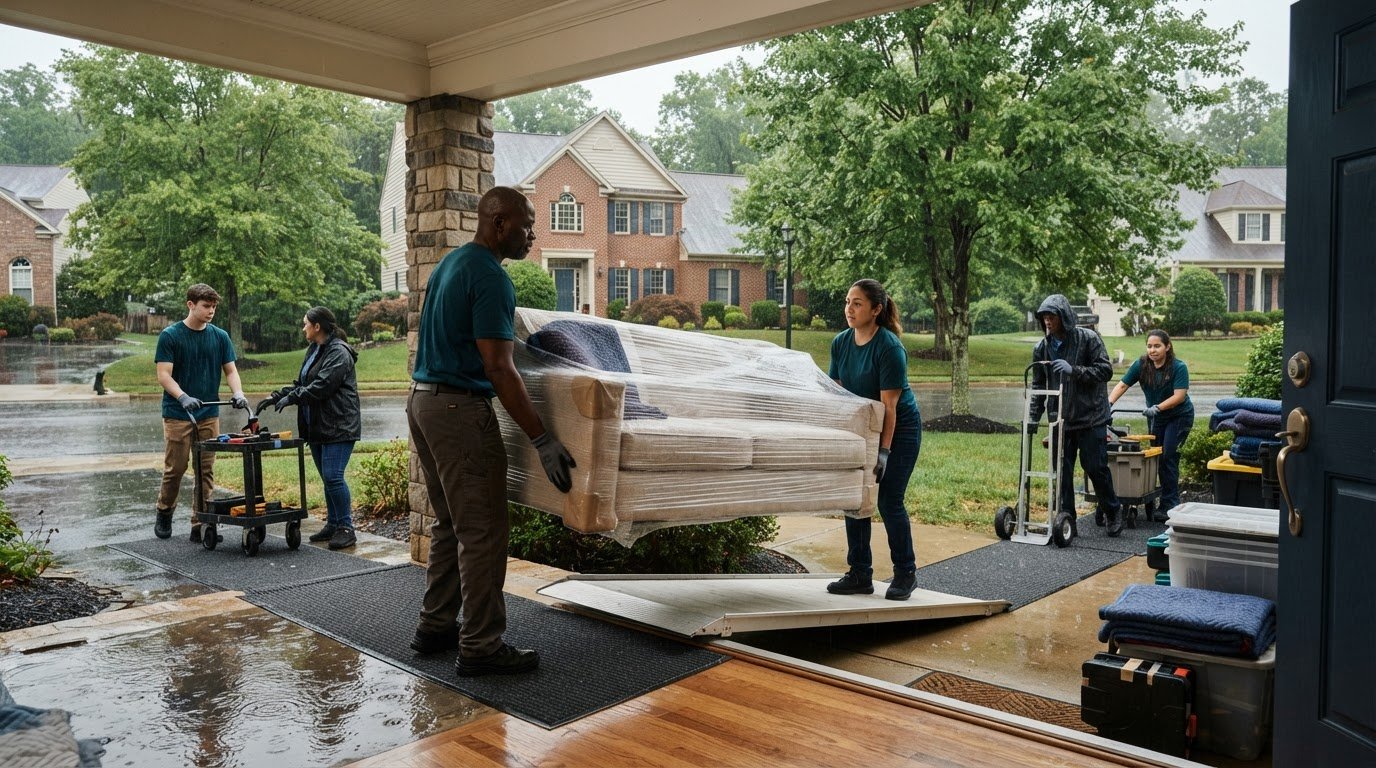
Coordinate the carrying route and vehicle access before furniture leaves the home. Decide who will guide each bulky item and where it will go once it reaches the vehicle. Cover one piece at a time, then carry it promptly rather than lining up uncovered furniture outside. At transitions, check for loose edges or wet sections. Reposition or replace a damp cover before it touches a clean surface.
Repeat the same controlled approach at the destination. Bring each covered item directly indoors instead of leaving it by the entrance. Remove wet outer coverings carefully so water on the outside doesn’t brush against upholstery or finished wood. Set damp covers aside, then inspect the furniture before placing it in its new room.
- Before the first carry: Clear the route and coordinate access to the vehicle.
- During loading: Cover each item, check the covering, and carry it without an outdoor wait.
- At arrival: Bring furniture inside, remove wet outer layers carefully, and inspect the surfaces.
What should you do if furniture gets damp?
Act calmly. Use a clean, absorbent towel to blot surface water, not rub it across upholstery or a finished wood surface. Remove damp coverings so they don’t hold moisture against the item, then allow airflow around the furniture in a dry indoor space. Don’t apply heat or cleaning products without checking care guidance for that material, since the wrong treatment may cause more trouble than the rain.
Look beyond the most visible area. Check upholstery seams, mattress edges, wood joints, and hardware for lingering dampness. If a cover feels wet on the inside, keep it away from other clean furniture and replace it with a dry one before moving another item. A quick inspection at arrival can catch moisture while it’s still easy to address.
Rain can add coordination to carrying bulky furniture, especially when the route is tight or several trips are needed. Heavy Furniture Moving provides residential moving, furniture moving, and packing support in Vienna, Virginia. For help managing the carry and loading sequence, get help with furniture moving in Vienna.
Get Rain-Ready Furniture Moving Help in Vienna, Virginia
Rain adds pressure to the parts of a move that already take strength and coordination. Bulky furniture, narrow routes, several trips between the home and vehicle, or a limited schedule can make it harder to keep items covered and moving steadily. Professional help can reduce the lifting and handling pressure, so you can focus on access, packing, and the rest of your move.
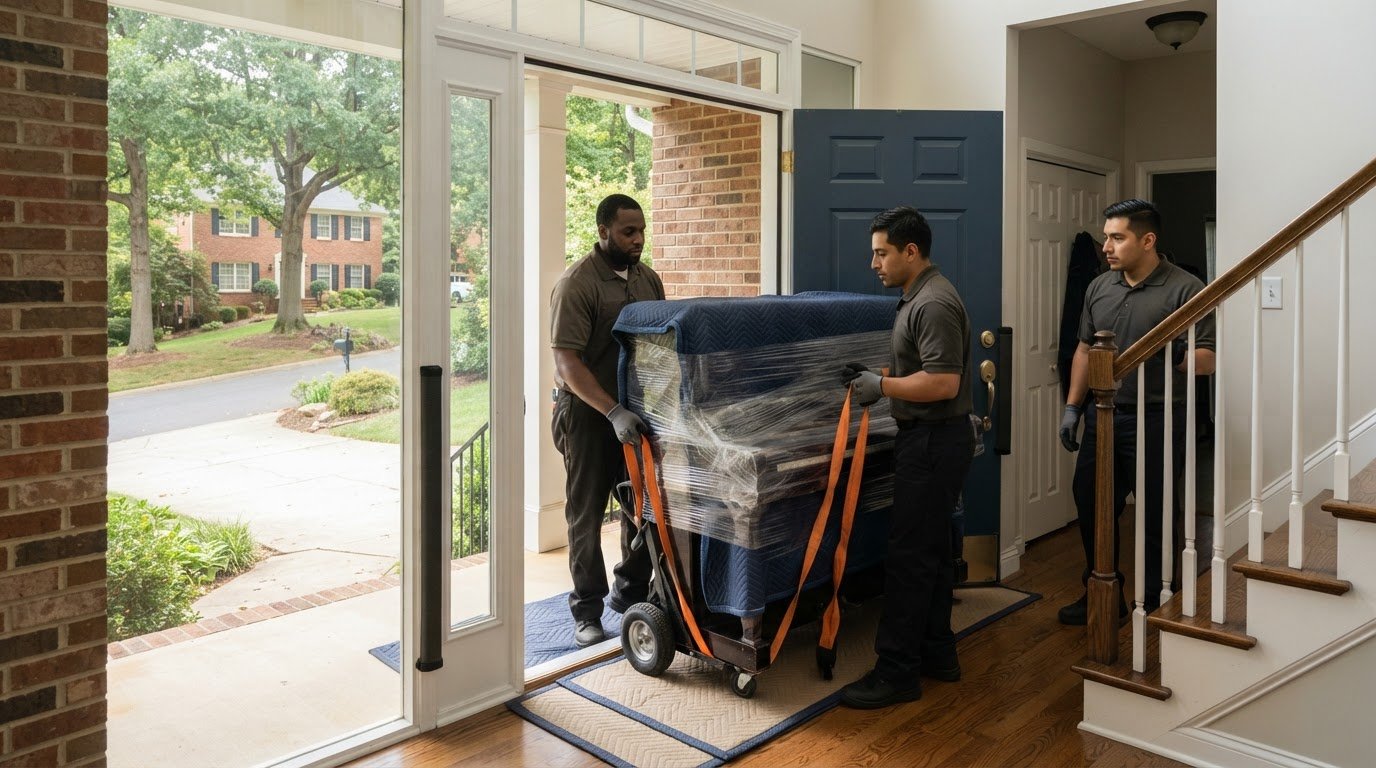
Heavy Furniture Moving provides residential moving, furniture moving, and packing and unpacking support in Vienna, Virginia. The company also handles heavy household items, including pianos, safes, and exercise equipment, and offers sofa hoisting for pieces that cannot fit through standard entryways or elevators. For local moves, Heavy Furniture Moving serves Vienna and nearby communities including Fairfax, Woodbridge, Manassas, Manassas Park, Aldie, Ashburn, McLean, Reston, Centreville, Chantilly, Clifton, Dumfries, South Riding, Fairfax Station, Haymarket, and Gainesville. A practical plan and suitable coverings still matter when the weather turns wet.
When can professional furniture movers make a rainy move easier?
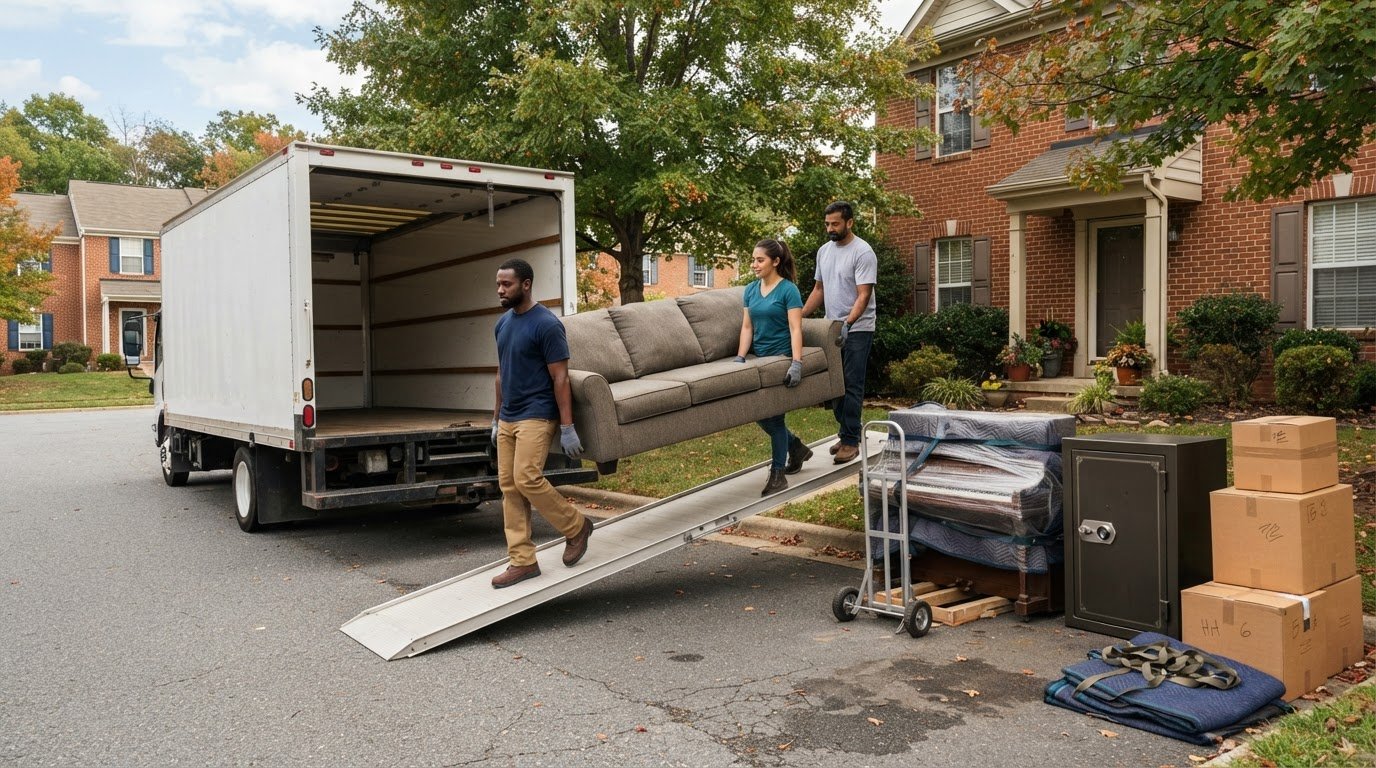
Consider help if a sofa, dresser, mattress, or other heavy piece needs to pass through a tight doorway or make several turns. Narrow routes can slow a carry, and each pause outdoors adds exposure. Coordinated lifting and clear direction help keep the move organized and reduce strain on the people handling the furniture.
Support is also useful when you’re short on time or juggling packing with moving-day tasks. Share which pieces need the most attention and keep your rain plan ready. Skilled help supports careful handling, but it doesn’t replace protective covers or control the weather. For furniture protection for moving in rain Vienna, think of moving assistance as one part of a broader plan.
What should you have ready for your Vienna move?
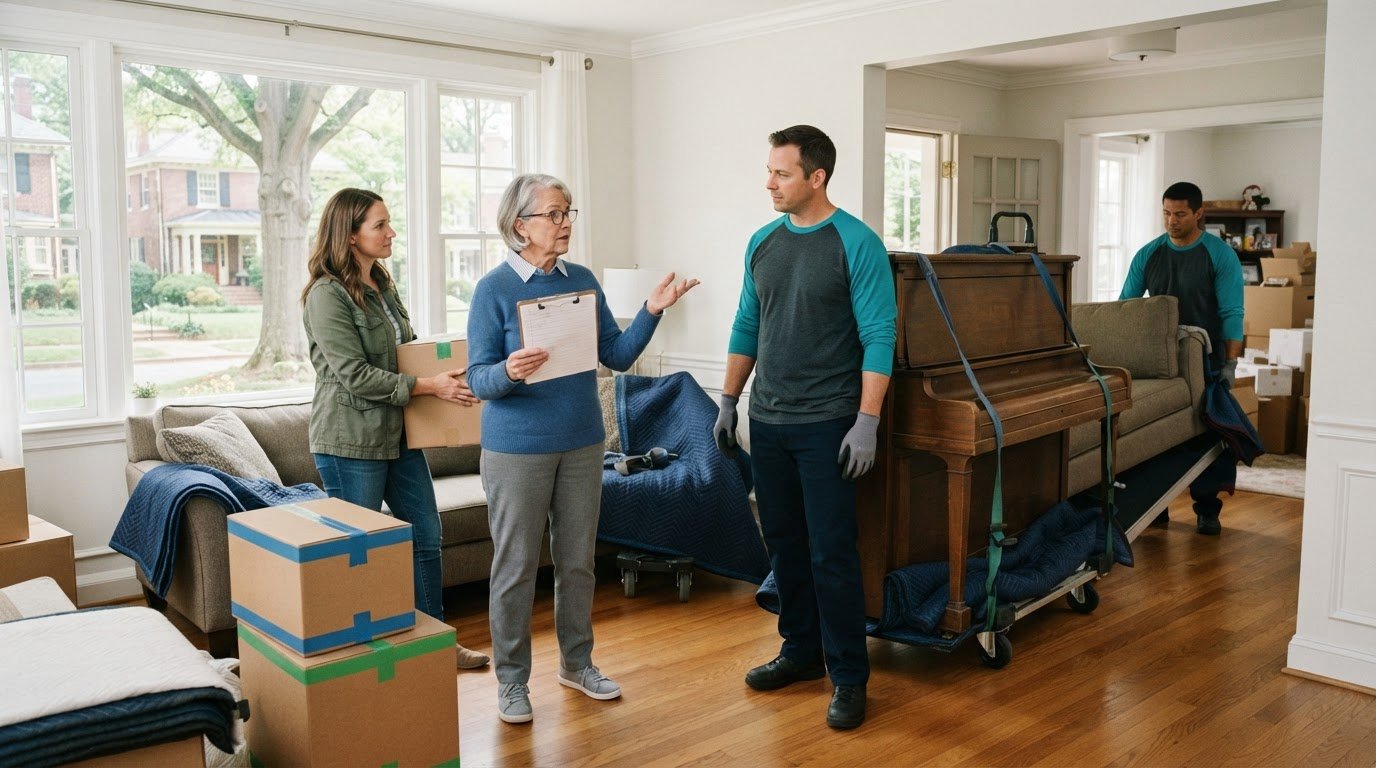
Make the arrangements easier by gathering a few details before setting up the move. A clear picture of the home, access points, and largest items helps the moving work fit the actual route instead of relying on assumptions.
- Moving date: Have your planned date ready and check the forecast as moving day approaches.
- Pickup and destination access: Note where people can enter and where furniture needs to go at each location.
- Bulky items: Prepare a short list of heavy pieces, such as sofas, mattresses, or large dressers.
- Route constraints: Mention stairs, narrow doorways, tight turns, or other access challenges that may affect carrying.
If a large piece needs to go upstairs, plan the route and protect the floor before moving begins. The article Moving Heavy Furniture Upstairs Without Scratching Floors offers related guidance for that part of the job.
Ready to reduce the lifting and coordination on moving day? Get help with furniture moving in Vienna and take the next step toward a more manageable move.
Set Your Rain-Day Move Up for a Confident Start
Before moving day, turn your rain plan into a few clear decisions: who keeps the route clear, where covered furniture will pause, and who checks each piece once it’s indoors. That coordination helps everyone move with purpose instead of making choices in the rain. Keep the plan flexible. If conditions change, pause long enough to adjust rather than rushing a bulky item through a slippery or exposed route.
Good furniture protection for moving in rain Vienna comes from preparation and careful handling, not from expecting the weather to cooperate. If the move includes heavy pieces or several tricky carries, experienced help can make the physical work easier to manage. You can focus on the details that matter in your home while your moving plan stays organized.
Take the next step with help for your furniture move in Vienna. Make a plan for the route and coverings, then get support with the furniture moving and heavy lifting.
Frequently Asked Questions
How do you protect furniture from rain when moving?
Use a layered plan that suits each item, and keep the time outdoors as short as possible. For a cabinet, protect its finished surfaces with a dry cushion layer and a temporary rain barrier, taking care not to leave moisture trapped underneath. Check the forecast close to moving day in Vienna, Virginia, and assign someone to watch covers and clear the way as each piece moves.
Can plastic wrap protect furniture from rain?
Plastic sheeting can help block direct splashes, but it isn’t a foolproof seal against wind-driven rain. Stretch wrap is better used to hold another covering in place than as the only barrier. If a piece or its inner cover is damp, don’t leave it tightly wrapped for an extended period. Check underneath after the carry, then loosen or remove the plastic once the furniture is indoors.
Should I use moving blankets in the rain?
Yes, if they’re dry and used for cushioning, but don’t count on a blanket to repel rain. A wet blanket can transfer moisture to a surface and keep it there. For a piece with a delicate finish, keep the blanket between the furniture and an outer rain barrier, and use a clean, dry replacement if the blanket gets wet. Keep spare blankets inside until needed.
What happens if upholstered furniture gets wet during a move?
Water may soak beyond the visible fabric, especially around seams and cushion edges, so a surface that looks nearly dry can still feel damp underneath. Blot visible moisture gently with a clean towel, then give the piece room to air indoors. Don’t rub the fabric or apply a hair dryer, heater, or cleaner without checking its care instructions. For persistent dampness or a stain, follow the upholstery maker’s guidance.
Is it safe to move furniture in heavy rain?
It depends on whether people can carry items securely and see the route clearly. If rain makes steps, paths, or hands too slippery for a controlled carry, pause and reassess rather than forcing a heavy piece outside. Wind-driven rain can also make a covered item harder to handle. In Vienna and nearby Northern Virginia, build flexibility into the plan so safety takes priority over keeping to a rushed loading sequence.
How do I protect a mattress when moving in the rain?
Use a clean mattress cover or bag made for moving, and check that it fits without tearing as the mattress is carried. Pay attention to openings and seams, where splashes may get through. Keep the mattress off wet ground at both homes, and inspect the cover before bringing it into the bedroom. If the mattress feels damp, remove the cover indoors and allow it to air before making the bed.
How can I protect furniture floors and entryways on a rainy moving day?
Keep a clear path from the room to the exit, and place floor protection only where it lies flat and stays put. A loose edge at a doorway can catch a shoe or furniture leg, so secure it or remove it. Keep wet footwear away from rugs and finished floors, and set a towel near the entrance for small drips. Check the threshold between trips and replace any saturated protection.
Frequently Asked Questions
Upholstered cushions and mattresses can absorb water rather than simply let it run off. Damp fabric and padding may take longer to dry, especially if a cover stays in place. Keep water away from seams and openings, and don’t leave a damp cover pressed against upholstery after arrival. Finished wood and veneer also need care. Prolonged dampness can affect the finish, while water that reaches veneer edges or joints may be harder to wipe away. Metal handles, brackets, and other exposed hardware can hold moisture, so dry them promptly with a clean cloth. After moving, check corners, undersides, and connection points, not just broad visible surfaces.
Keep clean blankets and plastic sheeting indoors until they’re needed. Blankets cushion furniture, while sheeting can add a barrier against rain. Use tape to keep covers in place without pulling it across delicate surfaces. Don’t set clean materials on wet pavement or a damp porch. Set aside dry towels for wiping surface moisture after a carry, not as a replacement for a furniture cover. Separate small, boxable belongings from pieces that need full-size covers. Close and label boxes before the route gets busy, then keep them away from wet shoes and dripping outer layers. This lets you focus on carefully covering large items instead of stopping to pack loose belongings during loading.
Walk the route before carrying anything. Move clutter, open doors fully, and check that turns are wide enough for bulky furniture. At wet thresholds, use floor protection that lies flat and won’t slide or bunch beneath someone’s feet. Keep the walking path clear, even if supplies need to be staged nearby. Choose a staging point that reduces outdoor waiting, such as a sheltered area close to the exit when available. Keep it clear enough for people to pass safely. If rain complicates lifting bulky pieces or organizing carry trips, residential furniture moving and packing help can ease the handling pressure while you focus on the rest of your plan. No single covering does every job. A moving blanket cushions furniture from bumps and scuffs, while plastic sheeting helps block direct splashes. Stretch wrap can hold a cover in place, but it shouldn’t be treated as a waterproof layer on its own. For furniture protection for moving in rain Vienna, choose materials by their role and check that they’re dry before they touch furniture.
Blankets provide a soft buffer between furniture and the hands, doorways, or other surfaces it passes during a move. They’re useful for reducing bumps and scuffs, especially on corners and broad finished surfaces. Start with a clean, dry blanket. If rain may reach the carrying route, place a suitable outer barrier over it rather than expecting the fabric to repel water. Keep spare blankets out of the rain and off wet ground. If a blanket gets soaked, take it off and replace it with a dry one. Don’t enclose furniture in damp fabric: the blanket can hold moisture against the surface instead of protecting it. At arrival, check the cover and the furniture beneath it before deciding whether to reuse it.
Plastic sheeting works as a temporary outer shield while furniture crosses an exposed path or is loaded. Fit it over the protective layer without leaving large openings where rain can blow in. Avoid tightly sealing damp furniture for an extended period. Once the piece is inside, check for moisture under the sheeting and remove or loosen the cover so trapped dampness doesn’t linger. Use stretch wrap to hold a blanket or sheet in position, not to replace that barrier. For example, wrap it around the covering to keep loose edges from slipping as a dresser is carried. Avoid relying on stretch wrap alone for upholstery, mattresses, or delicate finishes. A dry inner layer, a temporary outer barrier, and a prompt moisture check are more useful than simply adding more layers. A steady sequence helps limit how long each piece is exposed to rain. Before carrying begins, make sure the route is clear and the vehicle is ready to receive the next item. Keep covers on furniture anywhere it’s exposed, and avoid staging uncovered pieces outdoors while other tasks take priority. These checks make furniture protection for moving in rain Vienna more manageable from the first carry to the final inspection.
Coordinate the carrying route and vehicle access before furniture leaves the home. Decide who will guide each bulky item and where it will go once it reaches the vehicle. Cover one piece at a time, then carry it promptly rather than lining up uncovered furniture outside. At transitions, check for loose edges or wet sections. Reposition or replace a damp cover before it touches a clean surface. Repeat the same controlled approach at the destination. Bring each covered item directly indoors instead of leaving it by the entrance. Remove wet outer coverings carefully so water on the outside doesn’t brush against upholstery or finished wood. Set damp covers aside, then inspect the furniture before placing it in its new room.
Act calmly. Use a clean, absorbent towel to blot surface water, not rub it across upholstery or a finished wood surface. Remove damp coverings so they don’t hold moisture against the item, then allow airflow around the furniture in a dry indoor space. Don’t apply heat or cleaning products without checking care guidance for that material, since the wrong treatment may cause more trouble than the rain. Look beyond the most visible area. Check upholstery seams, mattress edges, wood joints, and hardware for lingering dampness. If a cover feels wet on the inside, keep it away from other clean furniture and replace it with a dry one before moving another item. A quick inspection at arrival can catch moisture while it’s still easy to address. Rain can add coordination to carrying bulky furniture, especially when the route is tight or several trips are needed. Heavy Furniture Moving provides residential moving, furniture moving, and packing support in Vienna, Virginia. For help managing the carry and loading sequence, get help with furniture moving in Vienna. Rain adds pressure to the parts of a move that already take strength and coordination. Bulky furniture, narrow routes, several trips between the home and vehicle, or a limited schedule can make it harder to keep items covered and moving steadily. Professional help can reduce the lifting and handling pressure, so you can focus on access, packing, and the rest of your move. Heavy Furniture Moving provides residential moving, furniture moving, and packing and unpacking support in Vienna, Virginia. The company also handles heavy household items, including pianos, safes, and exercise equipment, and offers sofa hoisting for pieces that cannot fit through standard entryways or elevators. For local moves, Heavy Furniture Moving serves Vienna and nearby communities including Fairfax, Woodbridge, Manassas, Manassas Park, Aldie, Ashburn, McLean, Reston, Centreville, Chantilly, Clifton, Dumfries, South Riding, Fairfax Station, Haymarket, and Gainesville. A practical plan and suitable coverings still matter when the weather turns wet.
Consider help if a sofa, dresser, mattress, or other heavy piece needs to pass through a tight doorway or make several turns. Narrow routes can slow a carry, and each pause outdoors adds exposure. Coordinated lifting and clear direction help keep the move organized and reduce strain on the people handling the furniture. Support is also useful when you’re short on time or juggling packing with moving-day tasks. Share which pieces need the most attention and keep your rain plan ready. Skilled help supports careful handling, but it doesn’t replace protective covers or control the weather. For furniture protection for moving in rain Vienna, think of moving assistance as one part of a broader plan.
Make the arrangements easier by gathering a few details before setting up the move. A clear picture of the home, access points, and largest items helps the moving work fit the actual route instead of relying on assumptions. If a large piece needs to go upstairs, plan the route and protect the floor before moving begins. The article Moving Heavy Furniture Upstairs Without Scratching Floors offers related guidance for that part of the job. Ready to reduce the lifting and coordination on moving day? Get help with furniture moving in Vienna and take the next step toward a more manageable move. Before moving day, turn your rain plan into a few clear decisions: who keeps the route clear, where covered furniture will pause, and who checks each piece once it’s indoors. That coordination helps everyone move with purpose instead of making choices in the rain. Keep the plan flexible. If conditions change, pause long enough to adjust rather than rushing a bulky item through a slippery or exposed route. Good furniture protection for moving in rain Vienna comes from preparation and careful handling, not from expecting the weather to cooperate. If the move includes heavy pieces or several tricky carries, experienced help can make the physical work easier to manage. You can focus on the details that matter in your home while your moving plan stays organized. Take the next step with help for your furniture move in Vienna. Make a plan for the route and coverings, then get support with the furniture moving and heavy lifting.
Use a layered plan that suits each item, and keep the time outdoors as short as possible. For a cabinet, protect its finished surfaces with a dry cushion layer and a temporary rain barrier, taking care not to leave moisture trapped underneath. Check the forecast close to moving day in Vienna, Virginia, and assign someone to watch covers and clear the way as each piece moves.
Plastic sheeting can help block direct splashes, but it isn’t a foolproof seal against wind-driven rain. Stretch wrap is better used to hold another covering in place than as the only barrier. If a piece or its inner cover is damp, don’t leave it tightly wrapped for an extended period. Check underneath after the carry, then loosen or remove the plastic once the furniture is indoors.
Yes, if they’re dry and used for cushioning, but don’t count on a blanket to repel rain. A wet blanket can transfer moisture to a surface and keep it there. For a piece with a delicate finish, keep the blanket between the furniture and an outer rain barrier, and use a clean, dry replacement if the blanket gets wet. Keep spare blankets inside until needed.
Water may soak beyond the visible fabric, especially around seams and cushion edges, so a surface that looks nearly dry can still feel damp underneath. Blot visible moisture gently with a clean towel, then give the piece room to air indoors. Don’t rub the fabric or apply a hair dryer, heater, or cleaner without checking its care instructions. For persistent dampness or a stain, follow the upholstery maker’s guidance.
It depends on whether people can carry items securely and see the route clearly. If rain makes steps, paths, or hands too slippery for a controlled carry, pause and reassess rather than forcing a heavy piece outside. Wind-driven rain can also make a covered item harder to handle. In Vienna and nearby Northern Virginia, build flexibility into the plan so safety takes priority over keeping to a rushed loading sequence.
Use a clean mattress cover or bag made for moving, and check that it fits without tearing as the mattress is carried. Pay attention to openings and seams, where splashes may get through. Keep the mattress off wet ground at both homes, and inspect the cover before bringing it into the bedroom. If the mattress feels damp, remove the cover indoors and allow it to air before making the bed.
Keep a clear path from the room to the exit, and place floor protection only where it lies flat and stays put. A loose edge at a doorway can catch a shoe or furniture leg, so secure it or remove it. Keep wet footwear away from rugs and finished floors, and set a towel near the entrance for small drips. Check the threshold between trips and replace any saturated protection.