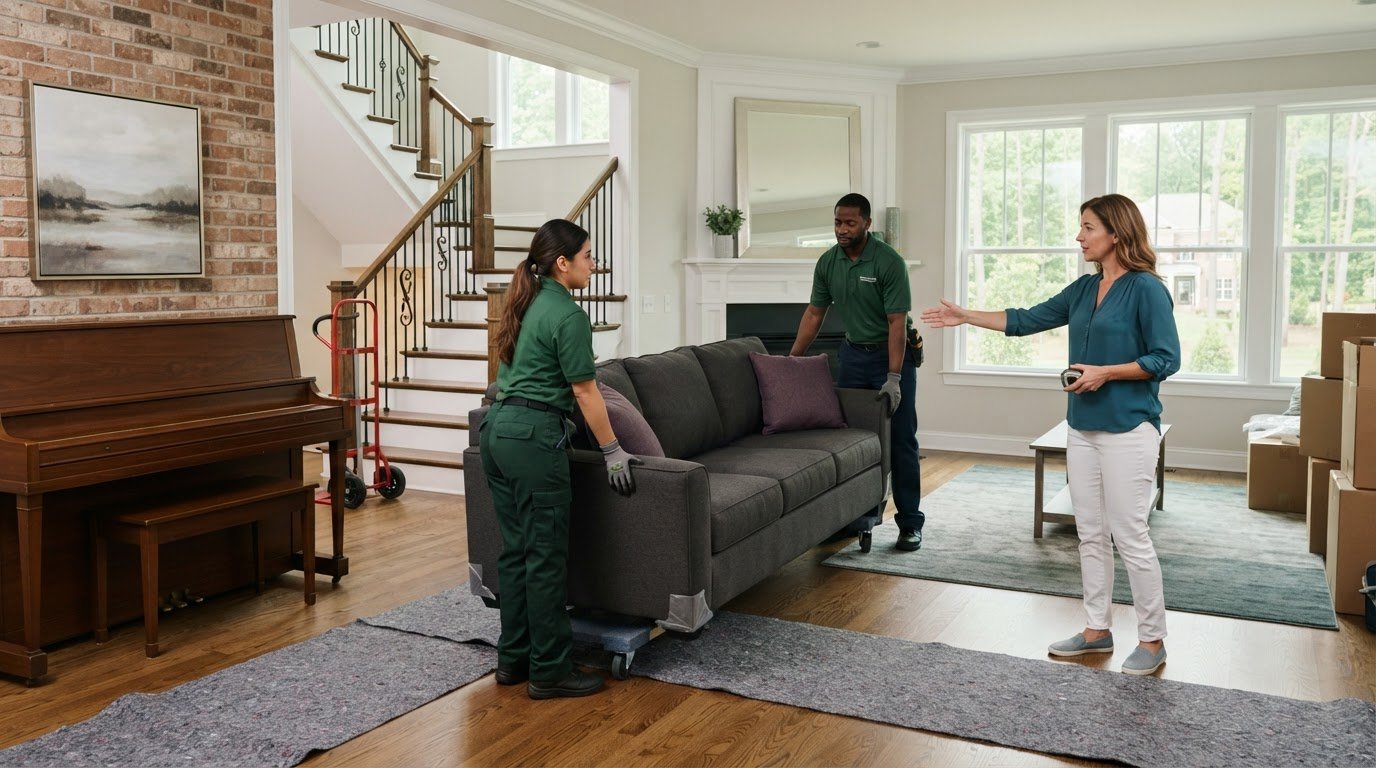
Fairfax Station Movers Pricing Per Hour: What Shapes Your Moving Bill?

What if the lowest hourly quote for a Fairfax Station move doesn’t lead to the lowest bill? Fairfax Station movers pricing per hour can refer to a crew with a truck or labor-only help, and those options don’t include the same work. The hourly figure is only one part of the comparison.
It’s reasonable to want a clear total before moving day, especially when travel time, minimums, stairs, or heavy items could affect the bill. A quote is easier to assess when you know how many movers it covers, what time is billable, and which services are included.
This guide explains how hourly estimates translate into a moving total and what details can change it. You’ll see how labor-only help differs from broader moving support, which questions make quotes easier to compare, and why access, furniture, and specialty items matter. If your move includes a sofa that won’t fit through a doorway, exercise equipment, or another bulky piece, share those details so the estimate reflects the actual work. Define the scope, then compare the numbers on equal terms.
Key Takeaways
- Fairfax Station movers pricing per hour makes sense only when you know whether the rate covers a crew or individual movers.
- Stairs, long carries, tight entrances, parking, and bulky items can affect the work and the final total.
- Compare quotes by crew size, estimated hours, included services, time rules, and special-item handling.
- Labor-only help and full-service moving suit different needs. Match the option to who’s providing the truck and which tasks need doing.
- List rooms, heavy items, access challenges, and destination details to help shape a clearer estimate for your move.
Fairfax Station Movers Pricing Per Hour: What an Hourly Quote Means
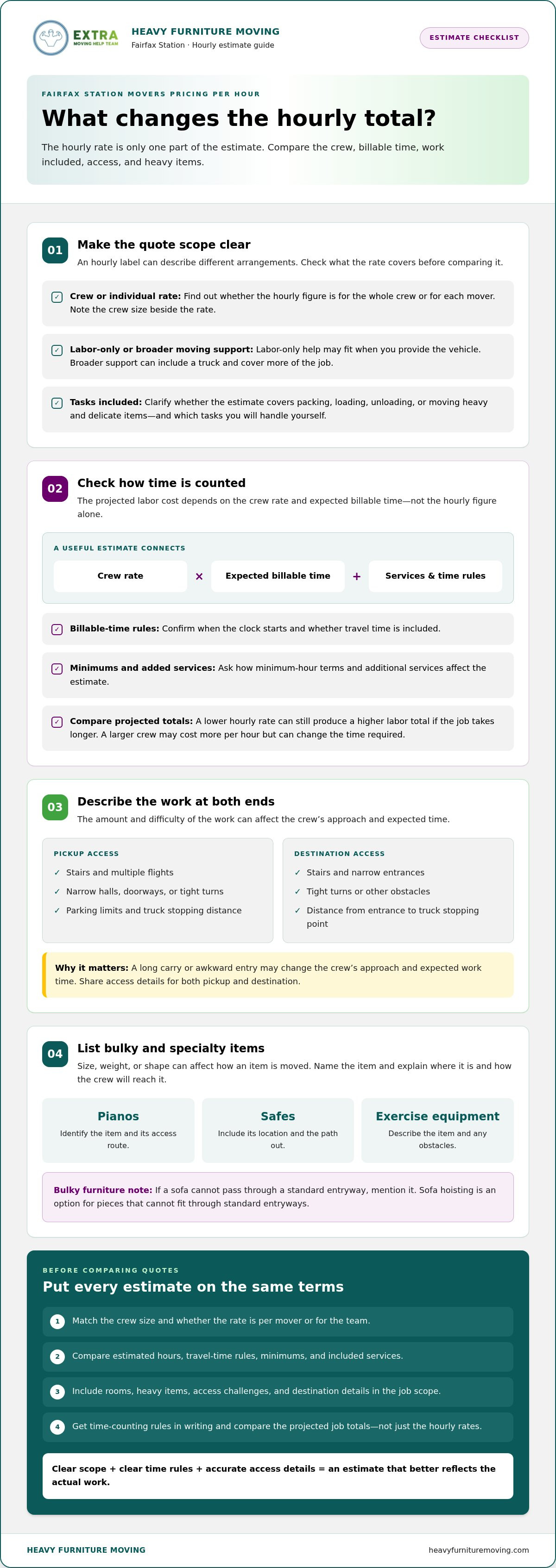
An hourly quote is useful only when its scope is clear. The rate may apply to a whole crew or to each mover, and it may describe labor alone or a broader service that includes a truck. Those are different arrangements, even if both are labeled “hourly.” Before comparing Fairfax Station movers pricing per hour, identify what the rate covers and how the provider counts time.
Moving costs can also reflect factors beyond labor. For a general overview of how moving costs are determined, consider how the move’s distance, timing, and service needs shape the work. For an hourly estimate, connect the crew and included tasks to the expected time on the job.
Does the hourly rate apply to each mover or the whole crew?
Look for the crew size beside the hourly figure. A rate for a two-person crew means both movers work under that quoted team rate; a per-mover rate is counted for each person. For example, one quote might cover a two-person team, while another lists a lower rate per mover. To compare them, calculate the cost for the full crew and the estimated hours, rather than judging by the hourly label alone.
Also note whether the quote includes a truck or only labor. Labor-only help may suit a move where you provide the vehicle, while broader moving support can cover more of the job. The right comparison depends on the tasks you need done and which parts you’re arranging yourself.
What does an hourly moving estimate tell you?
An hourly moving estimate projects the job’s labor cost from the crew rate and expected billable time, while the final total depends on the time rules and services included. In simple terms, a lower hourly rate can still lead to a higher projected labor total if the job takes longer. A larger crew may cost more per hour but could change how much time the work requires.
Separate the hourly labor component from the full projected amount. Find out how the estimate treats travel time, minimums, and additional services. Then compare the expected duration as carefully as the rate. A useful estimate connects the planned crew, the tasks, and the time allowance.
Compare estimates built on the same assumptions. An online figure may reflect a different publication date, crew size, service scope, or time policy than a current project-specific quote. Check what the figure includes before using it as a direct comparison. That context turns an hourly number into a more useful planning tool.
What Changes Fairfax Station Movers' Hourly Total?
The hourly rate is only one part of the estimate. The amount of work matters just as much. A home with a short item list and easy access needs a different plan from one with packed rooms, multiple flights of stairs, and heavy pieces to maneuver. Estimates are project-specific, so describe the actual job rather than relying on home size alone.
Be clear about the services you need. Packing, loading, unloading, and moving heavy or delicate items are distinct tasks, and each can affect the crew’s work and the time planned. If you’re handling some tasks yourself, specify which ones. A clear scope helps prevent assumptions from shaping the estimate.
How crew size and billable time affect the total
A larger crew may complete some tasks in less elapsed time, but the hourly rate and total depend on the crew arrangement and how long the work takes. The estimate should explain how working time is counted, including the start point and whether travel time is included. Compare any minimum-hour terms, too. These details can make two quotes with similar hourly rates project very different totals.
Share your preferred start time and the move’s key steps. Loading, travel, and unloading may be counted differently under different estimate terms. Get the time rules in writing so you can compare the same scope across quotes.
Why Fairfax Station access and heavy items matter
Access can add steps to a move before a single item reaches the truck. Mention stairs, narrow hallways or doorways, parking limits, and the distance from the entrance to where the truck can stop. At both the pickup and destination, note tight turns or other obstacles. A long carry or awkward entry may change the crew’s approach and expected work time.
Pianos, safes, and exercise equipment can call for specialized handling because their size, weight, or shape affects how they’re moved. Identify each item and describe its location and access route. Heavy Furniture Moving handles these types of household items and offers sofa hoisting for pieces that can’t pass through standard entryways.
Accurate access details help turn an hourly figure into an estimate that reflects the real work at both ends of the move. For moves across state lines, the Federal Motor Carrier Safety Administration explains consumer rights when moving. Its guide addresses interstate moves, so keep the move’s route in mind when reviewing it.
For a Fairfax Station move with bulky furniture or demanding access, explore residential heavy-item moving support as you define the work your estimate should cover.
How to Compare Fairfax Station Moving Quotes Fairly
A low hourly figure can look attractive, but it doesn’t tell you how many movers are included, how many hours the job may take, or what work is covered. To compare Fairfax Station movers pricing per hour fairly, put each estimate into the same format and consider the projected job total as well as the hourly rate.
Full-service movers or labor-only help: which scope fits?
Full-service moving covers a broader relocation scope, which may include more of the move than loading or unloading alone. Labor-only help focuses on the physical tasks you need, such as loading a truck or container, unloading it at the destination, or lifting furniture inside your home. Neither option suits every move. Choose based on what you’re arranging yourself and which tasks you want the crew to complete.
Use this table to line up the details before comparing totals:
| Quote detail | What to record |
|---|---|
| Crew | Number of movers, and whether the rate covers the team or each person |
| Hours | Estimated working time and the tasks included in that estimate |
| Service scope | Loading, unloading, packing, transportation, or in-home lifting |
| Time rules | When billing starts, how travel time is handled, and any minimum-hour terms |
| Special handling | Bulky or heavy items, access challenges, and any separately described services |
Which quote details belong side by side?
Compare crew count, estimated time, included tasks, and billing terms first. Then list extra services and specialty-item handling separately from the hourly figure. A quote with a lower rate may produce a higher projected total if it assumes more hours or leaves out tasks included elsewhere. Make sure both estimates describe the same pickup and destination work, not just similar hourly labels.
Online benchmarks can help you understand the general pricing context, but check their publication date and assumptions. A dated figure may describe another crew size or service scope, while a current estimate can reflect your inventory, access, and requested work. Treat them as different kinds of information, not equivalent offers.
For more guidance on evaluating local moving support, see the guide Reliable Movers Near Me in Fairfax and Northern VA. A careful side-by-side comparison helps you choose a scope that fits the move, whether you need help with a specific task or broader residential moving support.
Prepare for a Fairfax Station Move and Keep the Estimate Clear
A useful estimate starts with a clear picture of the job. Before comparing Fairfax Station movers pricing per hour, gather details about what’s moving, the route out of each home, and the work you want the crew to handle. This helps shape a project-specific estimate, though changes to the job can affect the final total.
Build a clear inventory and access checklist
Walk through each room and note the main items. List large furniture and appliances separately, along with pianos, safes, and exercise equipment. Then describe how movers will reach those items and get them to the truck.
- Record the rooms and floors involved, including stairs, elevators, and narrow turns.
- Note tight doorways, entry constraints, and the distance from the home to the likely truck parking spot.
- Describe parking conditions at both addresses and any access differences between pickup and destination.
- Share photos or measurements when they help show a difficult item, doorway, or route.
Specifics matter. A heavy item on an upper floor or a sofa that may not clear a doorway calls for a different plan than furniture near a wide, ground-level entrance.
Plan the requested work before comparing estimates
Separate the move into tasks so the estimate reflects what you need, not what someone assumes. Use this sequence to describe the job:
- List the rooms and items. Identify what’s moving and flag bulky or delicate pieces.
- Map access at both locations. Include floor levels, stairs, narrow passages, parking, and carrying distance.
- Choose the work you need. Group tasks as packing, loading, transport, unloading, or in-home heavy lifting.
- Describe special handling. Point out items such as pianos, safes, and exercise equipment that may need specialized care or moving techniques.
- Define the destination and timing. Provide the destination details and a realistic schedule, then state which tasks the crew should complete.
This breakdown makes it easier to compare estimates with the same scope. For example, labor to load a customer-provided truck is different from a plan that also includes transportation and unloading. Heavy Furniture Moving provides residential moving and moving-labor support, including packing, unpacking, junk removal, and handling for heavy household items and exercise equipment. Share your inventory, access notes, and task list to shape the estimate around the actual job.
For details on residential moving help for a Fairfax Station move, visit Heavy Furniture Moving.
Get Fairfax Station Moving Help Matched to Your Job
The clearest way to assess Fairfax Station movers pricing per hour is to match the planned crew and service scope to the work your move actually involves. A few pieces that need lifting inside your home call for a different plan than a full household move. Share what needs moving, where it’s going, and which tasks you want handled so the estimate reflects the job rather than a guess.
When specialized heavy-item moving is part of the job
Heavy or awkward items can need more planning than standard household boxes and furniture. Their size, weight, shape, and route through the home all affect how they can be handled. Heavy Furniture Moving provides residential moving help and specialized handling for pianos, safes, and exercise equipment. Include these items in your inventory so they’re part of the moving plan from the start.
A sofa that can’t pass through a standard doorway may need a different approach. Sofa hoisting can help move furniture that won’t fit through the usual entry route. Note the sofa’s location, the access challenge, and any narrow turns or obstacles. Clear details help align the service plan with the item and the space.
Take the next step with a clear moving scope
Before arranging help, pull together a short job summary. Include:
- The rooms and items involved, with bulky or heavy pieces called out.
- Stairs, narrow entrances, tight turns, parking conditions, and the carrying distance to the truck.
- The pickup and destination details, plus your preferred timing.
- The tasks you need, such as loading, unloading, in-home lifting, or help with heavy items.
Then compare the service scope and crew plan alongside the hourly terms. Heavy Furniture Moving supports residential moves and moving-labor needs in Fairfax Station and nearby communities, including Fairfax, Woodbridge, Manassas, Manassas Park, Aldie, Ashburn, Mclean, Vienna, Reston, Centreville, Chantilly, Clifton, Dumfries, South Riding, Fairfax Station, Haymarket, and Gainesville. For broader local moving guidance, see Reliable Movers Near Me in Fairfax and Northern VA.
Have your item list and access notes ready? Request moving help for your Fairfax Station job and share the details so the moving plan can be shaped around what needs doing.
Make Your Moving Plan Clear and Confident
The best way to compare Fairfax Station movers pricing per hour is to look beyond the rate. Check what the crew will handle, how billable time is counted, and whether the estimate reflects your home’s access and moving needs. A clear inventory and service scope make it easier to understand what the projected total covers.
Heavy Furniture Moving is a veteran-family owned and operated business providing residential moving and moving-labor support. The team handles heavy items such as pianos, safes, and exercise equipment, and offers sofa hoisting for furniture that can’t pass through standard entryways. Match the help to your actual job, whether you need support with specific lifting tasks or broader moving work.
Have your item list, access details, destination, timing, and requested tasks ready. Then take the next step with a team prepared for demanding household moves.
Request moving help for your Fairfax Station job. With a clear plan and the right support, you can move forward with greater peace of mind.
Frequently Asked Questions
How much do movers charge per hour in Fairfax Station?
There isn’t one hourly rate that applies to every Fairfax Station move. The estimate depends on the crew arrangement, expected working time, and services included. A figure in an online guide may use different assumptions or reflect a different date than a job-specific estimate. Compare what the rate covers, how time is counted, and what work is planned before using it to estimate your moving bill.
Do movers charge per hour for the whole crew or each mover?
It depends on how the quote is structured. Some hourly rates apply to the crew as a team, while others are stated per mover. Check the listed crew size and whether the rate covers the whole group or each person. For example, a two-mover crew rate and a per-mover rate shouldn’t be compared as if they describe the same service. Also note whether the quote includes a truck or labor only.
What affects the total cost of hourly movers in Fairfax Station?
The total depends on crew size, billable time, inventory, and the work included. Stairs, long carries, narrow entryways, parking conditions, or a distant truck location can add steps to the job. Packing, loading, unloading, transportation, and heavy-item handling are also distinct parts of the scope. For Fairfax Station movers pricing per hour, compare these details alongside the hourly rate to understand what the estimate accounts for.
Is labor-only moving help cheaper than full-service movers?
Labor-only help may cost less when you already have transportation arranged and need assistance with tasks such as loading, unloading, or in-home lifting. Full-service moving covers a broader relocation scope, so the total reflects more than labor alone. Neither option is automatically cheaper for every move. Compare the work included and any transportation you must arrange yourself, then choose the scope that fits the job.
How many hours should I book for a local move in Fairfax Station?
The number of hours depends on how much you’re moving, crew size, access at both locations, and which tasks the crew will handle. A short loading job differs from a move that includes packing, transportation, unloading, or heavy lifting. Make an inventory by room and describe stairs, carrying distance, and entry constraints. Use those details to build a realistic time estimate rather than choosing hours based only on home size.
Do movers charge extra to move pianos, safes, or exercise equipment?
Specialty items can affect the planned work and estimate, but charges depend on the job and the quote’s terms. Pianos, safes, and exercise equipment may require specialized handling because of their size, weight, or shape. Heavy Furniture Moving handles these items as part of its residential moving support. Describe each item, its location, and the route out of the home so the estimate reflects the handling involved.
What details should I provide for an accurate moving estimate?
Share your inventory by room, including large furniture, appliances, and heavy or delicate items. Describe floor levels, stairs, narrow turns, elevators, parking, and the distance to the truck at both addresses. Then outline the tasks you need, such as packing, loading, transport, unloading, or in-home lifting. Include the destination and preferred timing. Clear details help shape a project-specific estimate, though changes to the job can affect the final total.
Frequently Asked Questions
Look for the crew size beside the hourly figure. A rate for a two-person crew means both movers work under that quoted team rate; a per-mover rate is counted for each person. For example, one quote might cover a two-person team, while another lists a lower rate per mover. To compare them, calculate the cost for the full crew and the estimated hours, rather than judging by the hourly label alone. Also note whether the quote includes a truck or only labor. Labor-only help may suit a move where you provide the vehicle, while broader moving support can cover more of the job. The right comparison depends on the tasks you need done and which parts you’re arranging yourself.
An hourly moving estimate projects the job’s labor cost from the crew rate and expected billable time, while the final total depends on the time rules and services included. In simple terms, a lower hourly rate can still lead to a higher projected labor total if the job takes longer. A larger crew may cost more per hour but could change how much time the work requires. Separate the hourly labor component from the full projected amount. Find out how the estimate treats travel time, minimums, and additional services. Then compare the expected duration as carefully as the rate. A useful estimate connects the planned crew, the tasks, and the time allowance. Compare estimates built on the same assumptions. An online figure may reflect a different publication date, crew size, service scope, or time policy than a current project-specific quote. Check what the figure includes before using it as a direct comparison. That context turns an hourly number into a more useful planning tool. The hourly rate is only one part of the estimate. The amount of work matters just as much. A home with a short item list and easy access needs a different plan from one with packed rooms, multiple flights of stairs, and heavy pieces to maneuver. Estimates are project-specific, so describe the actual job rather than relying on home size alone. Be clear about the services you need. Packing, loading, unloading, and moving heavy or delicate items are distinct tasks, and each can affect the crew’s work and the time planned. If you’re handling some tasks yourself, specify which ones. A clear scope helps prevent assumptions from shaping the estimate.
Full-service moving covers a broader relocation scope, which may include more of the move than loading or unloading alone. Labor-only help focuses on the physical tasks you need, such as loading a truck or container, unloading it at the destination, or lifting furniture inside your home. Neither option suits every move. Choose based on what you’re arranging yourself and which tasks you want the crew to complete. Use this table to line up the details before comparing totals:
Compare crew count, estimated time, included tasks, and billing terms first. Then list extra services and specialty-item handling separately from the hourly figure. A quote with a lower rate may produce a higher projected total if it assumes more hours or leaves out tasks included elsewhere. Make sure both estimates describe the same pickup and destination work, not just similar hourly labels. Online benchmarks can help you understand the general pricing context, but check their publication date and assumptions. A dated figure may describe another crew size or service scope, while a current estimate can reflect your inventory, access, and requested work. Treat them as different kinds of information, not equivalent offers. For more guidance on evaluating local moving support, see the guide Reliable Movers Near Me in Fairfax and Northern VA. A careful side-by-side comparison helps you choose a scope that fits the move, whether you need help with a specific task or broader residential moving support. A useful estimate starts with a clear picture of the job. Before comparing Fairfax Station movers pricing per hour, gather details about what’s moving, the route out of each home, and the work you want the crew to handle. This helps shape a project-specific estimate, though changes to the job can affect the final total.
There isn’t one hourly rate that applies to every Fairfax Station move. The estimate depends on the crew arrangement, expected working time, and services included. A figure in an online guide may use different assumptions or reflect a different date than a job-specific estimate. Compare what the rate covers, how time is counted, and what work is planned before using it to estimate your moving bill.
It depends on how the quote is structured. Some hourly rates apply to the crew as a team, while others are stated per mover. Check the listed crew size and whether the rate covers the whole group or each person. For example, a two-mover crew rate and a per-mover rate shouldn’t be compared as if they describe the same service. Also note whether the quote includes a truck or labor only.
The total depends on crew size, billable time, inventory, and the work included. Stairs, long carries, narrow entryways, parking conditions, or a distant truck location can add steps to the job. Packing, loading, unloading, transportation, and heavy-item handling are also distinct parts of the scope. For Fairfax Station movers pricing per hour, compare these details alongside the hourly rate to understand what the estimate accounts for.
Labor-only help may cost less when you already have transportation arranged and need assistance with tasks such as loading, unloading, or in-home lifting. Full-service moving covers a broader relocation scope, so the total reflects more than labor alone. Neither option is automatically cheaper for every move. Compare the work included and any transportation you must arrange yourself, then choose the scope that fits the job.
The number of hours depends on how much you’re moving, crew size, access at both locations, and which tasks the crew will handle. A short loading job differs from a move that includes packing, transportation, unloading, or heavy lifting. Make an inventory by room and describe stairs, carrying distance, and entry constraints. Use those details to build a realistic time estimate rather than choosing hours based only on home size.
Specialty items can affect the planned work and estimate, but charges depend on the job and the quote’s terms. Pianos, safes, and exercise equipment may require specialized handling because of their size, weight, or shape. Heavy Furniture Moving handles these items as part of its residential moving support. Describe each item, its location, and the route out of the home so the estimate reflects the handling involved.
Share your inventory by room, including large furniture, appliances, and heavy or delicate items. Describe floor levels, stairs, narrow turns, elevators, parking, and the distance to the truck at both addresses. Then outline the tasks you need, such as packing, loading, transport, unloading, or in-home lifting. Include the destination and preferred timing. Clear details help shape a project-specific estimate, though changes to the job can affect the final total.