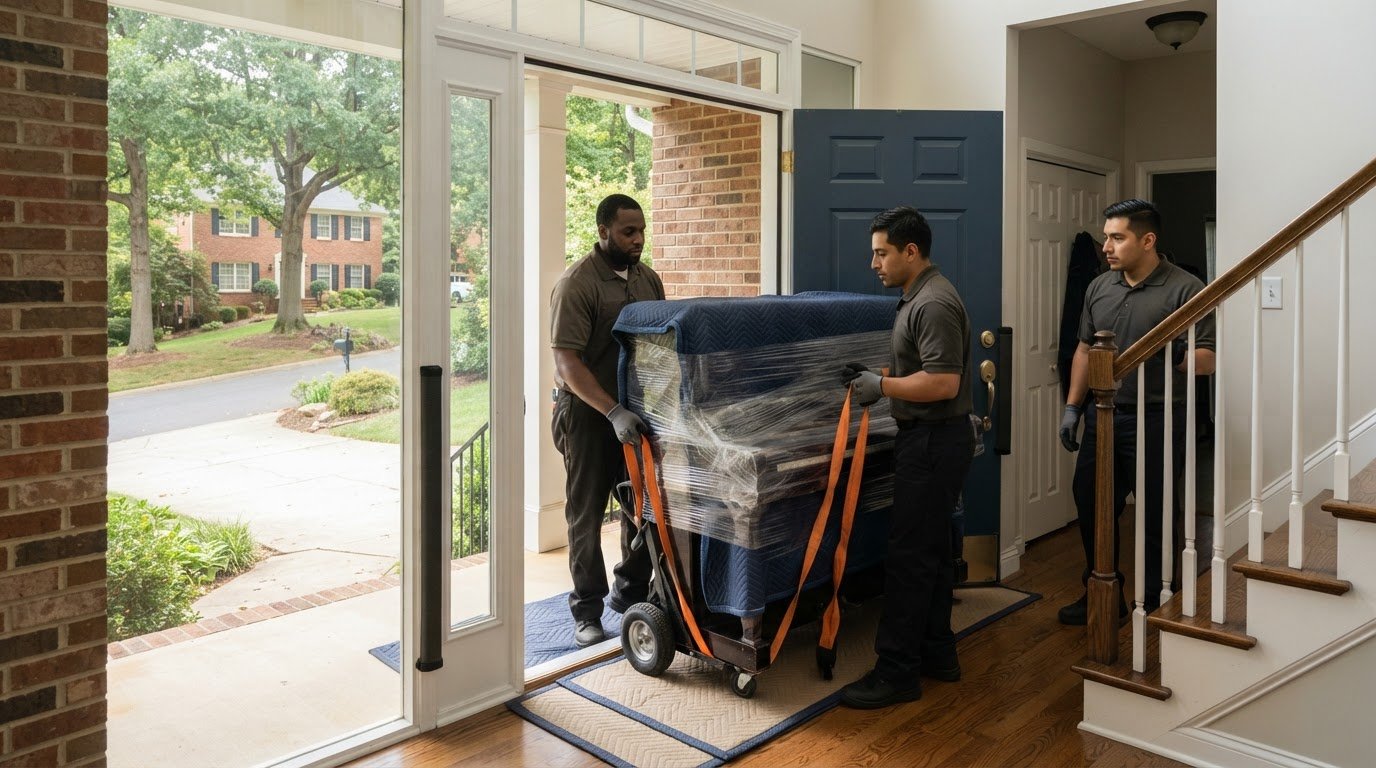
Fairfax Station Junk Removal: Estate Cleanout Guide
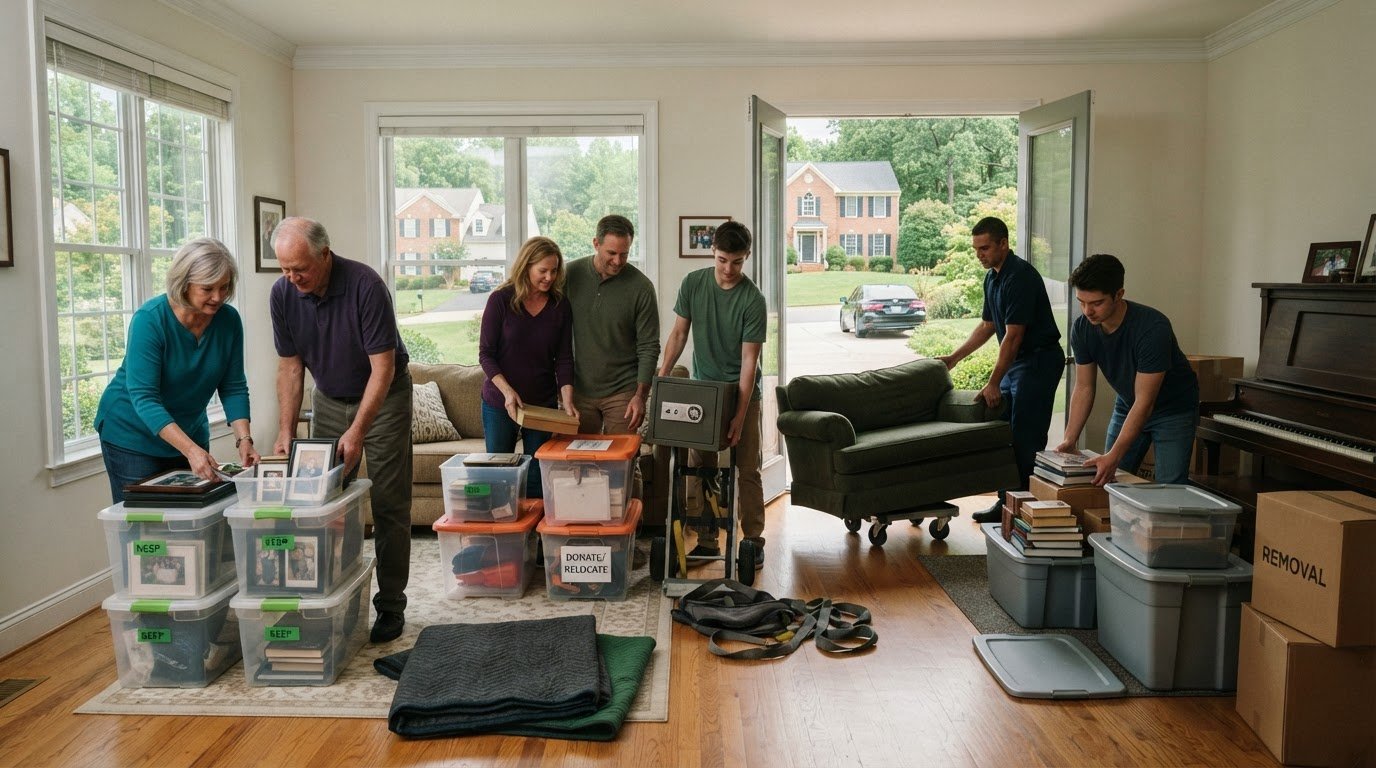
What if the hardest part of an estate cleanout isn’t moving heavy furniture, but deciding where each item should go? Sorting a home can involve difficult family decisions, coordination, and bulky belongings that are hard to handle alone. Fairfax Station junk removal for estate cleanouts is easier to plan when you separate what to keep, what to relocate, and what to remove.
A clear plan helps reduce last-minute decisions and makes it easier to coordinate the work. Keep belongings your family wants, set aside items that need to move to another home, and identify unwanted items for removal. Mark anything that still needs a decision so it doesn’t end up in the wrong group.
This guide explains how to sort belongings, prepare for help, and coordinate removal with moving support. Heavy Furniture Moving provides junk removal and residential moving support in Fairfax Station, including help with heavy and bulky belongings that need to be relocated. Use these steps to make a practical plan with less physical work and fewer moving-day logistics.
Key Takeaways
- Set the cleanout scope first so everyone understands which rooms and belongings are part of the work.
- Sort items by destination: remove, retain at the property, or relocate.
- Prepare access details, parking arrangements, stairs, and item groups before coordinating help in Fairfax Station.
- Fairfax Station junk removal for estate cleanouts addresses unwanted belongings, while moving support helps relocate selected items.
- Choose someone who can answer questions and confirm decisions during the cleanout.
Fairfax Station Estate Cleanouts: Start with a Clear Plan
Clearing a home after a death, move, or other major life change can put emotional decisions alongside demanding physical work. Family members may be sorting through years of belongings while coordinating access, deadlines, and where large furniture should go. A clear plan gives everyone a practical place to start.
An estate cleanout involves sorting belongings and arranging for selected items to be removed or relocated. Before tackling a room, write down four basics:
- Decision-maker: Who can settle questions about belongings?
- Rooms: Which spaces are included in the cleanout?
- Deadline: Is there a move-out or property handoff date?
- Priority items: What needs careful review before anything is moved?
Sorting decides where belongings go; hauling handles the physical removal of items marked to leave. Keeping those tasks distinct helps families avoid rushed choices and describe the work clearly when arranging Fairfax Station junk removal for estate cleanouts.
What should families decide before clearing the property?
Choose one person to coordinate decisions and share the agreed scope with everyone involved. That doesn’t mean one person has to make every personal choice. Set a process for questions: identify who has the final say, which items need family review, and which belongings are ready to move or remove.
Set aside documents, photographs, valuables, and sentimental belongings for careful review. Keep them separate from general household items so they don’t get mixed into a removal group during a busy cleanout. Estate planning offers broader context on organizing decisions about affairs and assets. For the cleanout itself, agree on how the family will handle the property’s contents.
How can you make an overwhelming cleanout manageable?
Work in manageable areas instead of trying to clear the entire property at once. Start with one room or divide a larger space into sections. Label boxes or mark separate areas for four categories: keep, relocate, donate, and remove. Treat “donate” as an option to explore, not a guarantee that an item will be accepted. Keep items awaiting a decision out of the remove group.
Set the sequence around the people and practical limits involved. Allow time for family review first, then organize belongings for relocation or removal. Factor in property access and any move-out deadline when choosing which rooms to address first. If a deadline is close, prioritize items that need review and belongings that must leave the home. Organize the remaining work around the agreed scope rather than treating it as one large task.
Clear categories also distinguish unwanted belongings from heavy items the family wants moved elsewhere. That separation turns a vague cleanout into decisions and physical tasks the family can plan one step at a time.
What Happens During a Fairfax Station Junk Removal Cleanout?
A cleanout works best when the family and removal team share an understanding of what’s included. Define the project by listing the rooms involved, the belongings that need attention, and any items that must be relocated rather than removed. A room-by-room list makes the scope easier to communicate.
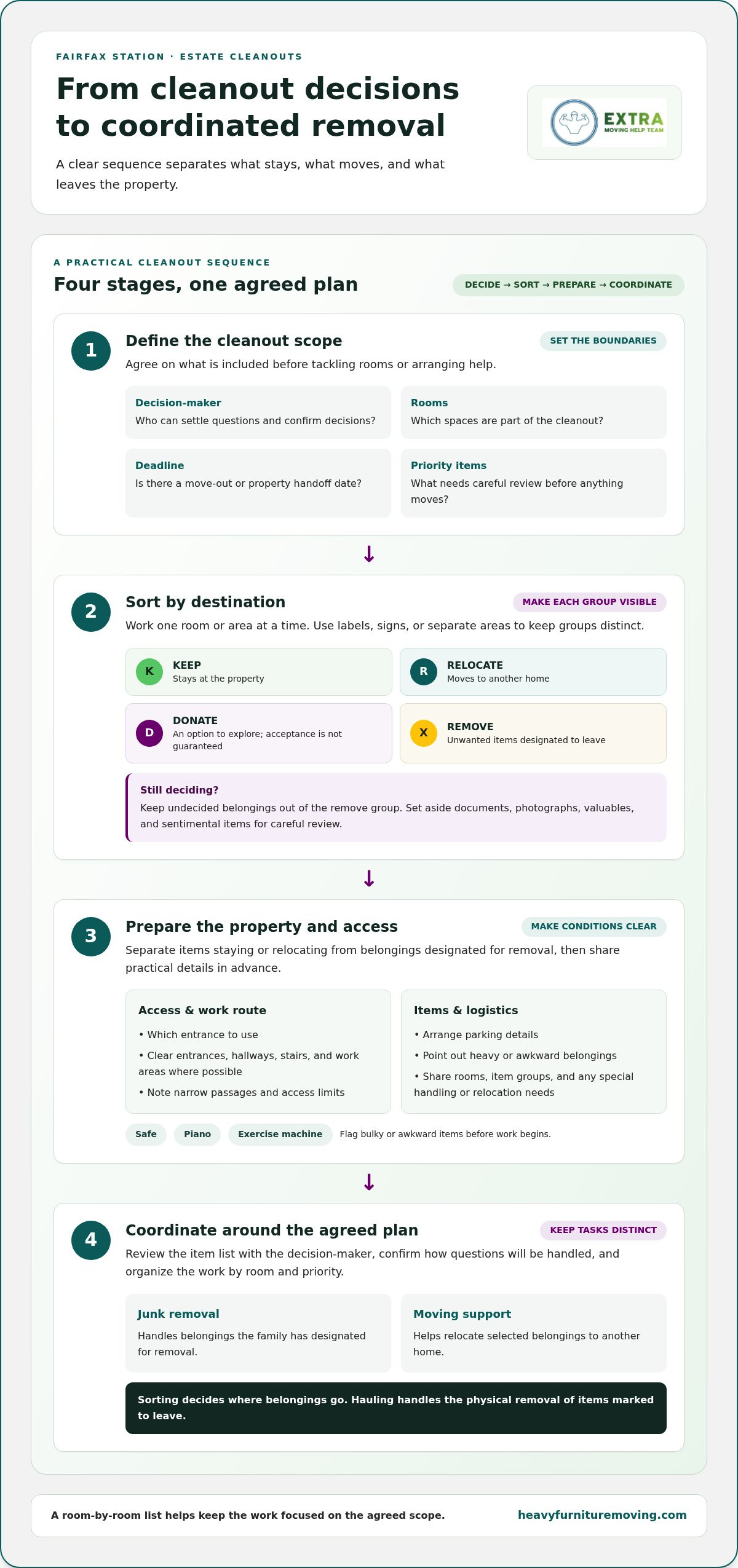
Use a simple sequence: define the scope, sort belongings, prepare access, then coordinate removal. For example, note that a bedroom includes unwanted furniture, a hallway cabinet is staying, and a heavy exercise machine needs to move elsewhere. Mark items that still need a family decision so they aren’t confused with belongings ready to go.
Define what’s included, separate belongings by destination, clear the work route, and coordinate removal around the agreed plan.
How should the property be prepared for removal?
Keep belongings selected to stay or relocate apart from items designated for removal. Use signs, labels, or separate areas to make the distinction visible. Where possible, clear entrances, hallways, stairs, and work areas so bulky items can be handled without navigating around boxes or loose belongings. Share access details in advance, including which entrance to use and where stairs or narrow passages may affect moving an item.
Point out heavy or awkward belongings before work begins. A safe, piano, or exercise machine may need different handling than smaller household items. The U.S. Bureau of Labor Statistics on Waste Management provides industry information about the physical nature of this work. Clear routes and advance details help everyone prepare for the property’s specific conditions.
Which details help clarify the project scope?
Describe the rooms and general item groups involved, such as bedroom furniture, boxes in a basement, or appliances in a kitchen. Note anything requiring special handling or relocation to another address. Outline the preferred order of work and any access limits, such as rooms that must remain clear or times when the property can’t be entered. These details help shape a plan around the home rather than a one-size-fits-all checklist.
Review the list with the person responsible for decisions. Identify items that still need approval and decide how questions will be handled during the work. Keep the list easy to update if the family changes its mind or finds belongings that weren’t included at first. This helps reduce confusion and keeps the work focused on the agreed scope.
For a property with both unwanted items and heavy belongings headed to another home, junk removal and residential moving support can address those separate needs as part of the same transition. Share the item list and access details so the work can be planned around the property and the decisions already made.
Junk Removal or Moving Help: Choose the Right Estate Cleanout Path
During an estate cleanout, some belongings need to leave the property, while others are still wanted by family. Those needs call for different plans: removal clears items designated to go, and moving help relocates selected belongings to another address. Neither is automatically the better choice. Decide item by item, based on the family’s intentions.
Use this comparison to sort belongings before arranging Fairfax Station junk removal for estate cleanouts:
| Decision | Best fit | Examples and next step |
|---|---|---|
| Remove | Items the responsible decision-makers have agreed should leave the property. | Group unwanted household items by room. Note bulky, fragile, or awkward pieces, and keep items that still need review separate. |
| Retain at the property | Belongings staying in the home for now. | Mark them clearly and keep them out of removal work areas. This can include items awaiting a family decision. |
| Relocate elsewhere | Items the family intends to keep at another address. | List the destination and flag large or heavy belongings that need a moving plan, such as a safe, piano, or exercise equipment. |
When is junk removal the practical choice?
Removal is appropriate for belongings the decision-makers have designated to clear from the home. Organize items by room, then note anything that may need extra attention because it’s fragile, bulky, or awkward to handle. Keep the list focused on what’s leaving. Don’t assume an item will be donated or recycled; those outcomes depend on the item and where it goes.
When should selected belongings be moved instead?
Choose a relocation plan when family members want to keep belongings at another address. Heavy Furniture Moving provides residential moving support and specialized handling for heavy items, including pianos, safes, and exercise equipment. A large sofa or piece of fitness equipment may be worth keeping, but its size, weight, and route out of the home still need consideration. Mark these items for moving rather than removal.
Packing and unpacking support can help with a broader household transition, especially when the cleanout and a family move are happening together. Heavy Furniture Moving serves Fairfax Station and nearby Northern Virginia communities, including Fairfax, Woodbridge, Manassas, Manassas Park, Aldie, Ashburn, McLean, Vienna, Reston, Centreville, Chantilly, Clifton, Dumfries, South Riding, Fairfax Station, Haymarket, and Gainesville. Keep removal and relocation separate in your item list so each belonging has a clear destination.
For a relocation, share the destination and identify heavy or awkward belongings early. If you’re arranging both removal and moving help, separate lists make it easier to explain which items leave the property and which travel with the family. That keeps the plan tied to the choices already made, without treating every household item as something to remove.
Fairfax Station Estate Cleanout Checklist: Access, Items, and Local Details
Preparation can make cleanout work easier to coordinate, especially when a property has narrow routes, several floors, or a mix of belongings to remove and relocate. Use this checklist to capture the details that matter before work begins. Property layouts and access vary in Fairfax Station, so focus on the specific home rather than relying on a generic plan.
What should you prepare before the cleanout appointment?
Gather practical details in one place and share them with the people involved in the work. Confirm who can answer questions and approve the agreed scope. Mark belongings that are staying so they remain distinct from removal groups. A room list or simple floor plan can show where each group of items is located.
- Access: Note the entrance to use and any instructions for reaching the property.
- Parking: Identify available parking arrangements and any limits that could affect carrying items to and from the home.
- Stairs and passageways: Flag stairs, tight turns, narrow halls, or other access points that may affect moving large belongings.
- Item groups: List what is set for removal, what stays, and what needs relocation. Call out bulky or awkward pieces.
- Decision-maker: Identify who will be available to answer questions about belongings and confirm choices during the work.
For example, if a bedroom dresser is staying but a heavy item in the basement is leaving, label both clearly and note their locations. Keep pathways to work areas as clear as possible. Clear access and clearly separated items help keep the cleanout organized and reduce uncertainty about what should move.
Which Fairfax County details need checking?
Before making plans for restricted materials or naming a disposal facility, verify current guidance from Fairfax County. Requirements and accepted items can depend on the material and the facility, so avoid relying on old information or assumptions. Check the guidance that applies to the belongings in the home, then keep those notes with the item list.
Apply the same care to donation and recycling decisions. Don’t promise that a specific item will be accepted or handled a certain way without current, item-level information. This keeps the family’s plan realistic and prevents an intended destination from being mistaken for a confirmed outcome.
Good preparation supports Fairfax Station junk removal for estate cleanouts by giving everyone a shared picture of the property, access, and item groups. If bulky belongings need to be moved rather than removed, include that as a separate task. Arrange junk removal and moving support for the property’s cleanout and relocation needs.
Arrange Fairfax Station Estate Cleanout Help with Heavy Furniture Moving
An estate cleanout can involve two different jobs: clearing belongings the family no longer wants and moving selected items to another home. Heavy Furniture Moving provides junk removal and residential moving support in Fairfax Station and nearby Northern Virginia communities. Treating removal and relocation as separate needs keeps the plan clear, especially when the home contains bulky furniture or heavy belongings the family intends to keep.
What can Heavy Furniture Moving help coordinate?
Junk removal helps clear belongings designated to leave the property. Residential moving support is for selected items going to another address. If the move involves a piano, safe, or exercise equipment, specialized heavy-item moving can help with those demanding pieces. Packing and unpacking support can also fit a broader household transition when belongings need preparation for the move and help settling in at the destination.
Keep the two item groups separate in your plan. For instance, list unwanted household contents under removal, then record a family member’s furniture and exercise equipment under relocation. This makes each intended destination clear and helps describe the work without treating every item in the home as something to remove. The same approach helps coordinate rooms with different needs.
What information makes the next step easier?
Share a practical overview of the property and the work you have in mind. Include the Fairfax Station location, rooms involved, general categories of belongings, and relevant access details. Mention stairs, narrow passages, parking arrangements, and large or awkward items that could affect how belongings are handled. If the family is still reviewing some items, identify them separately from belongings already approved for removal or relocation.
A simple list is enough to begin the conversation. Note which items should leave the property, which are staying, and which need to travel to another address. For heavy belongings, name the item and where it is located so the moving need is clear. You don’t need every detail settled before describing the project; share what you know and identify decisions that are still open.
Fairfax Station junk removal for estate cleanouts can be part of a larger household transition, while moving support addresses belongings the family chooses to keep. Heavy Furniture Moving is veteran-family owned and operated, with support for removal, residential moves, and heavy-item handling. Describe the property and cleanout needs to get started.
Request help planning your Fairfax Station cleanout
Take the Next Step Toward a More Manageable Cleanout
You don’t have to settle every family question before making progress. Start with the decisions that are clear, and keep uncertain belongings separate until the right people can review them. A short note about the property, work areas, and next steps can turn a stressful undertaking into a more manageable plan.
With Fairfax Station junk removal for estate cleanouts, the goal is to make the next step easier to see, not to rush important decisions. Share the broad scope and explain which belongings are meant to leave and which need to go with family. That gives the conversation a practical starting point, even if some details are still taking shape.
Heavy Furniture Moving can help with junk removal and residential moving needs during this transition. Request help planning your Fairfax Station cleanout and take the first step toward a clearer plan. One decision at a time is enough to get started.
Frequently Asked Questions
Do I need to be present during an estate cleanout?
Not necessarily, but someone authorized to answer questions should be reachable while the work is coordinated. Beforehand, clarify which items are approved to leave and which should stay, and make sure access instructions are clear. If family members are still deciding about particular belongings, mark them for review rather than leaving the decision to the cleanout team. This helps prevent uncertainty if questions come up during the project.
Can an estate cleanout include items the family wants to keep?
Yes. A cleanout can involve both belongings being removed and selected items being kept or moved to another home. Make the destination clear for each group. For instance, identify a dining table that should go to a relative separately from household items designated to leave. Heavy Furniture Moving provides residential moving support alongside junk removal to help address both parts of a Fairfax Station household transition.
How much does junk removal for an estate cleanout cost in Fairfax Station?
The cost depends on the project scope, including how many rooms and belongings are involved, the size and weight of items, and the property’s access. A partial clearout differs from removing contents throughout a home, and relocation needs may involve separate moving work. For Fairfax Station junk removal for estate cleanouts, describe the property and broad item categories so the project can be understood clearly.
What should I do with important papers before the cleanout?
Gather important papers before belongings are moved or removed, and keep them together in a clearly marked folder or container that stays with the family. Look through desk drawers, filing cabinets, bedside tables, and storage boxes for records, financial papers, insurance documents, and personal correspondence. If a document’s importance is unclear, set it aside for review rather than placing it with items approved to leave.
Can I arrange removal after an estate sale?
Yes. Removal can be planned for belongings that remain after an estate sale, once the family or responsible decision-makers have identified what should leave the property. Walk through the home afterward and check less visible spaces, such as closets, basement corners, and garage shelves. Keep items reserved for relatives separate from sale leftovers so each group has a clear destination.
What items should be set aside for special handling?
Set aside belongings that are unusually heavy, bulky, fragile, or awkward to move, and point them out before work is coordinated. Pianos, safes, and exercise equipment are examples of heavy items that may need specialized moving support if the family wants to keep them. Also separate valuables, photographs, and documents for careful family review. Don’t mix these with general items marked for removal.
How can I prepare a Fairfax Station home for a cleanout team?
Keep pathways to work areas as clear as possible and make approved item groups easy to identify. Write down the property address, rooms involved, and access details such as stairs or narrow hallways. Note large items and identify who can answer questions. These steps help the team understand the Fairfax Station property and the work planned.
Frequently Asked Questions
Choose one person to coordinate decisions and share the agreed scope with everyone involved. That doesn’t mean one person has to make every personal choice. Set a process for questions: identify who has the final say, which items need family review, and which belongings are ready to move or remove. Set aside documents, photographs, valuables, and sentimental belongings for careful review. Keep them separate from general household items so they don’t get mixed into a removal group during a busy cleanout. Estate planning offers broader context on organizing decisions about affairs and assets. For the cleanout itself, agree on how the family will handle the property’s contents.
Work in manageable areas instead of trying to clear the entire property at once. Start with one room or divide a larger space into sections. Label boxes or mark separate areas for four categories: keep, relocate, donate, and remove. Treat “donate” as an option to explore, not a guarantee that an item will be accepted. Keep items awaiting a decision out of the remove group. Set the sequence around the people and practical limits involved. Allow time for family review first, then organize belongings for relocation or removal. Factor in property access and any move-out deadline when choosing which rooms to address first. If a deadline is close, prioritize items that need review and belongings that must leave the home. Organize the remaining work around the agreed scope rather than treating it as one large task. Clear categories also distinguish unwanted belongings from heavy items the family wants moved elsewhere. That separation turns a vague cleanout into decisions and physical tasks the family can plan one step at a time. A cleanout works best when the family and removal team share an understanding of what’s included. Define the project by listing the rooms involved, the belongings that need attention, and any items that must be relocated rather than removed. A room-by-room list makes the scope easier to communicate. Use a simple sequence: define the scope, sort belongings, prepare access, then coordinate removal. For example, note that a bedroom includes unwanted furniture, a hallway cabinet is staying, and a heavy exercise machine needs to move elsewhere. Mark items that still need a family decision so they aren’t confused with belongings ready to go. Define what’s included, separate belongings by destination, clear the work route, and coordinate removal around the agreed plan.
Keep belongings selected to stay or relocate apart from items designated for removal. Use signs, labels, or separate areas to make the distinction visible. Where possible, clear entrances, hallways, stairs, and work areas so bulky items can be handled without navigating around boxes or loose belongings. Share access details in advance, including which entrance to use and where stairs or narrow passages may affect moving an item. Point out heavy or awkward belongings before work begins. A safe, piano, or exercise machine may need different handling than smaller household items. The U.S. Bureau of Labor Statistics on Waste Management provides industry information about the physical nature of this work. Clear routes and advance details help everyone prepare for the property’s specific conditions.
Describe the rooms and general item groups involved, such as bedroom furniture, boxes in a basement, or appliances in a kitchen. Note anything requiring special handling or relocation to another address. Outline the preferred order of work and any access limits, such as rooms that must remain clear or times when the property can’t be entered. These details help shape a plan around the home rather than a one-size-fits-all checklist. Review the list with the person responsible for decisions. Identify items that still need approval and decide how questions will be handled during the work. Keep the list easy to update if the family changes its mind or finds belongings that weren’t included at first. This helps reduce confusion and keeps the work focused on the agreed scope. For a property with both unwanted items and heavy belongings headed to another home, junk removal and residential moving support can address those separate needs as part of the same transition. Share the item list and access details so the work can be planned around the property and the decisions already made. During an estate cleanout, some belongings need to leave the property, while others are still wanted by family. Those needs call for different plans: removal clears items designated to go, and moving help relocates selected belongings to another address. Neither is automatically the better choice. Decide item by item, based on the family’s intentions. Use this comparison to sort belongings before arranging Fairfax Station junk removal for estate cleanouts:
Removal is appropriate for belongings the decision-makers have designated to clear from the home. Organize items by room, then note anything that may need extra attention because it’s fragile, bulky, or awkward to handle. Keep the list focused on what’s leaving. Don’t assume an item will be donated or recycled; those outcomes depend on the item and where it goes.
Choose a relocation plan when family members want to keep belongings at another address. Heavy Furniture Moving provides residential moving support and specialized handling for heavy items, including pianos, safes, and exercise equipment. A large sofa or piece of fitness equipment may be worth keeping, but its size, weight, and route out of the home still need consideration. Mark these items for moving rather than removal. Packing and unpacking support can help with a broader household transition, especially when the cleanout and a family move are happening together. Heavy Furniture Moving serves Fairfax Station and nearby Northern Virginia communities, including Fairfax, Woodbridge, Manassas, Manassas Park, Aldie, Ashburn, McLean, Vienna, Reston, Centreville, Chantilly, Clifton, Dumfries, South Riding, Fairfax Station, Haymarket, and Gainesville. Keep removal and relocation separate in your item list so each belonging has a clear destination. For a relocation, share the destination and identify heavy or awkward belongings early. If you’re arranging both removal and moving help, separate lists make it easier to explain which items leave the property and which travel with the family. That keeps the plan tied to the choices already made, without treating every household item as something to remove. Preparation can make cleanout work easier to coordinate, especially when a property has narrow routes, several floors, or a mix of belongings to remove and relocate. Use this checklist to capture the details that matter before work begins. Property layouts and access vary in Fairfax Station, so focus on the specific home rather than relying on a generic plan.
Gather practical details in one place and share them with the people involved in the work. Confirm who can answer questions and approve the agreed scope. Mark belongings that are staying so they remain distinct from removal groups. A room list or simple floor plan can show where each group of items is located. For example, if a bedroom dresser is staying but a heavy item in the basement is leaving, label both clearly and note their locations. Keep pathways to work areas as clear as possible. Clear access and clearly separated items help keep the cleanout organized and reduce uncertainty about what should move.
Before making plans for restricted materials or naming a disposal facility, verify current guidance from Fairfax County. Requirements and accepted items can depend on the material and the facility, so avoid relying on old information or assumptions. Check the guidance that applies to the belongings in the home, then keep those notes with the item list. Apply the same care to donation and recycling decisions. Don’t promise that a specific item will be accepted or handled a certain way without current, item-level information. This keeps the family’s plan realistic and prevents an intended destination from being mistaken for a confirmed outcome. Good preparation supports Fairfax Station junk removal for estate cleanouts by giving everyone a shared picture of the property, access, and item groups. If bulky belongings need to be moved rather than removed, include that as a separate task. Arrange junk removal and moving support for the property’s cleanout and relocation needs. An estate cleanout can involve two different jobs: clearing belongings the family no longer wants and moving selected items to another home. Heavy Furniture Moving provides junk removal and residential moving support in Fairfax Station and nearby Northern Virginia communities. Treating removal and relocation as separate needs keeps the plan clear, especially when the home contains bulky furniture or heavy belongings the family intends to keep.
Junk removal helps clear belongings designated to leave the property. Residential moving support is for selected items going to another address. If the move involves a piano, safe, or exercise equipment, specialized heavy-item moving can help with those demanding pieces. Packing and unpacking support can also fit a broader household transition when belongings need preparation for the move and help settling in at the destination. Keep the two item groups separate in your plan. For instance, list unwanted household contents under removal, then record a family member’s furniture and exercise equipment under relocation. This makes each intended destination clear and helps describe the work without treating every item in the home as something to remove. The same approach helps coordinate rooms with different needs.
Share a practical overview of the property and the work you have in mind. Include the Fairfax Station location, rooms involved, general categories of belongings, and relevant access details. Mention stairs, narrow passages, parking arrangements, and large or awkward items that could affect how belongings are handled. If the family is still reviewing some items, identify them separately from belongings already approved for removal or relocation. A simple list is enough to begin the conversation. Note which items should leave the property, which are staying, and which need to travel to another address. For heavy belongings, name the item and where it is located so the moving need is clear. You don’t need every detail settled before describing the project; share what you know and identify decisions that are still open. Fairfax Station junk removal for estate cleanouts can be part of a larger household transition, while moving support addresses belongings the family chooses to keep. Heavy Furniture Moving is veteran-family owned and operated, with support for removal, residential moves, and heavy-item handling. Describe the property and cleanout needs to get started. Request help planning your Fairfax Station cleanout You don’t have to settle every family question before making progress. Start with the decisions that are clear, and keep uncertain belongings separate until the right people can review them. A short note about the property, work areas, and next steps can turn a stressful undertaking into a more manageable plan. With Fairfax Station junk removal for estate cleanouts, the goal is to make the next step easier to see, not to rush important decisions. Share the broad scope and explain which belongings are meant to leave and which need to go with family. That gives the conversation a practical starting point, even if some details are still taking shape. Heavy Furniture Moving can help with junk removal and residential moving needs during this transition. Request help planning your Fairfax Station cleanout and take the first step toward a clearer plan. One decision at a time is enough to get started.
Not necessarily, but someone authorized to answer questions should be reachable while the work is coordinated. Beforehand, clarify which items are approved to leave and which should stay, and make sure access instructions are clear. If family members are still deciding about particular belongings, mark them for review rather than leaving the decision to the cleanout team. This helps prevent uncertainty if questions come up during the project.
Yes. A cleanout can involve both belongings being removed and selected items being kept or moved to another home. Make the destination clear for each group. For instance, identify a dining table that should go to a relative separately from household items designated to leave. Heavy Furniture Moving provides residential moving support alongside junk removal to help address both parts of a Fairfax Station household transition.
The cost depends on the project scope, including how many rooms and belongings are involved, the size and weight of items, and the property’s access. A partial clearout differs from removing contents throughout a home, and relocation needs may involve separate moving work. For Fairfax Station junk removal for estate cleanouts, describe the property and broad item categories so the project can be understood clearly.
Gather important papers before belongings are moved or removed, and keep them together in a clearly marked folder or container that stays with the family. Look through desk drawers, filing cabinets, bedside tables, and storage boxes for records, financial papers, insurance documents, and personal correspondence. If a document’s importance is unclear, set it aside for review rather than placing it with items approved to leave.
Yes. Removal can be planned for belongings that remain after an estate sale, once the family or responsible decision-makers have identified what should leave the property. Walk through the home afterward and check less visible spaces, such as closets, basement corners, and garage shelves. Keep items reserved for relatives separate from sale leftovers so each group has a clear destination.
Set aside belongings that are unusually heavy, bulky, fragile, or awkward to move, and point them out before work is coordinated. Pianos, safes, and exercise equipment are examples of heavy items that may need specialized moving support if the family wants to keep them. Also separate valuables, photographs, and documents for careful family review. Don’t mix these with general items marked for removal.
Keep pathways to work areas as clear as possible and make approved item groups easy to identify. Write down the property address, rooms involved, and access details such as stairs or narrow hallways. Note large items and identify who can answer questions. These steps help the team understand the Fairfax Station property and the work planned.