Factors That Affect the Cost of Moving a Marble Console Table Into a Dumfries Penthouse
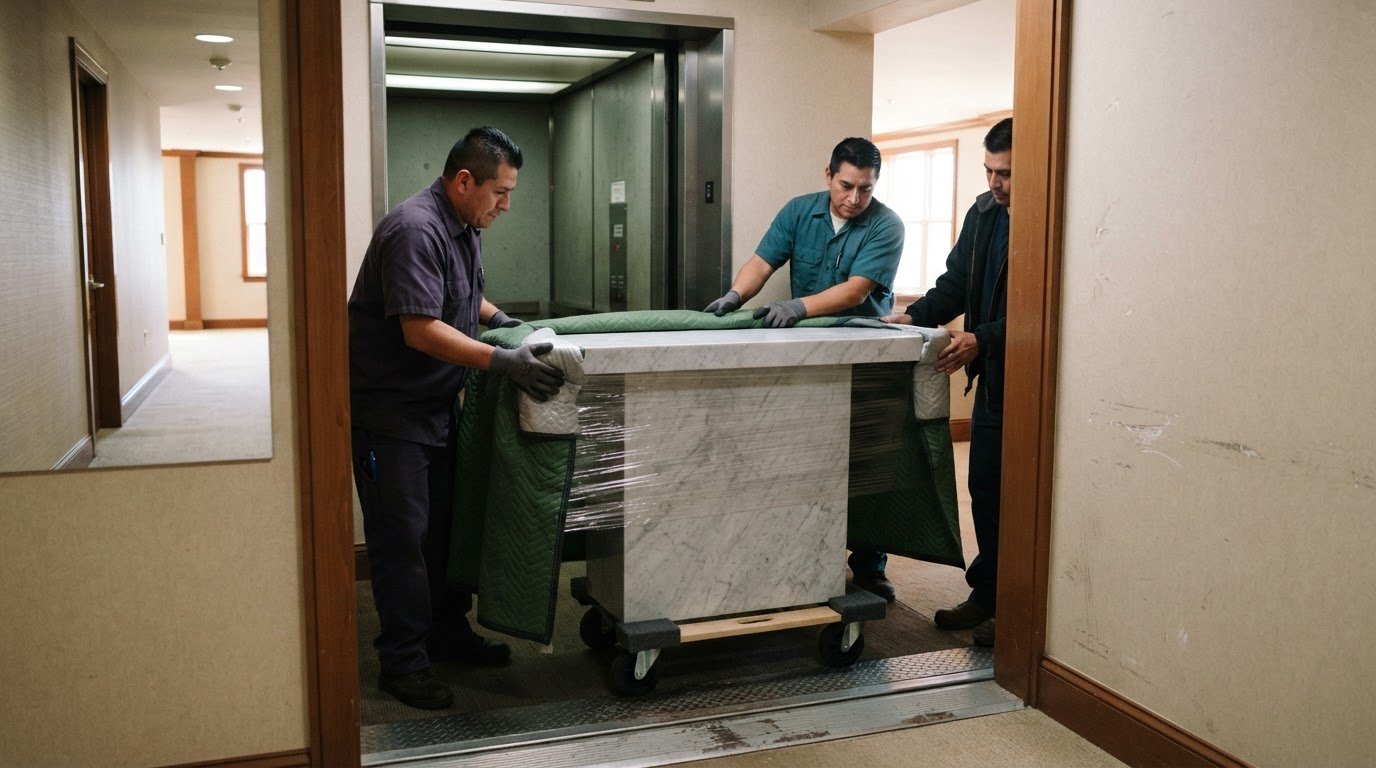
A penthouse elevator can determine the route before a marble table reaches the lobby. Moving a heavy marble console table into a Dumfries penthouse condo takes planning around its weight and dimensions, elevator access and capacity, and the path from the entrance to the room. Marble can crack if mishandled, so every turn and lift needs a clear plan.
Start by asking building management how to reserve the elevator and arrange access. Confirm the freight elevator’s weight capacity and coordinate a parking space if needed. Measure the elevator doors and interior, then map the route through hallways, corners, and landings before moving day.
This guide covers the details that shape the move, how to plan a practical route, and what to consider when arranging equipment and lifting help. Planning access points and the carrying path ahead of time helps make the trip upstairs safer and smoother.
Key Takeaways
- Estimate the move’s complexity by considering the table’s weight and size, travel distance, and any stairs or other access challenges.
- Plan a clear carrying path and landing areas, and coordinate parking with building management when needed.
- Protect the marble with suitable padding and support, and choose equipment that gives the crew secure handholds.
- Before moving day, account for tight turns and elevator limits as well as door and hallway measurements.
- For a heavy, fragile table that must be carried upstairs or downstairs, use experienced lifting help rather than attempting the move alone.
1. Factors affecting the cost of moving large furniture
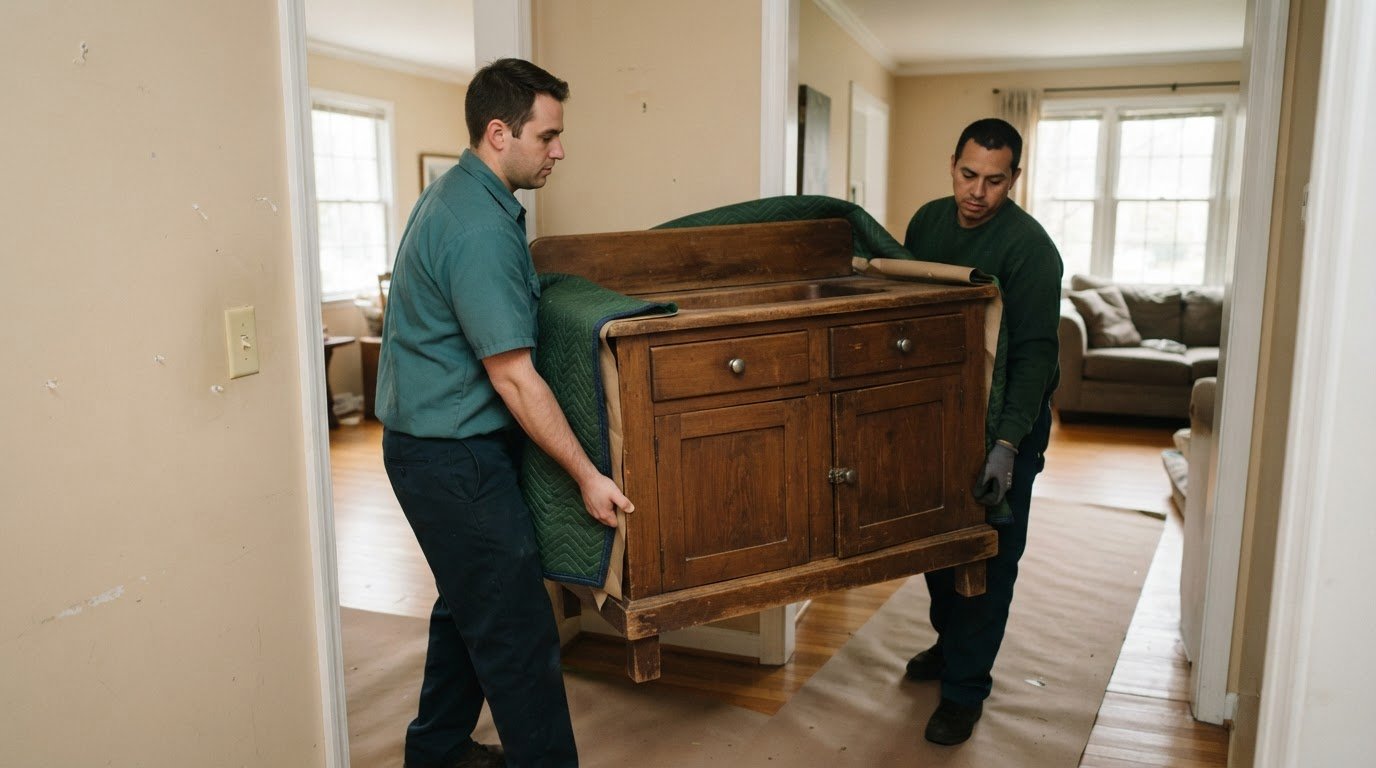
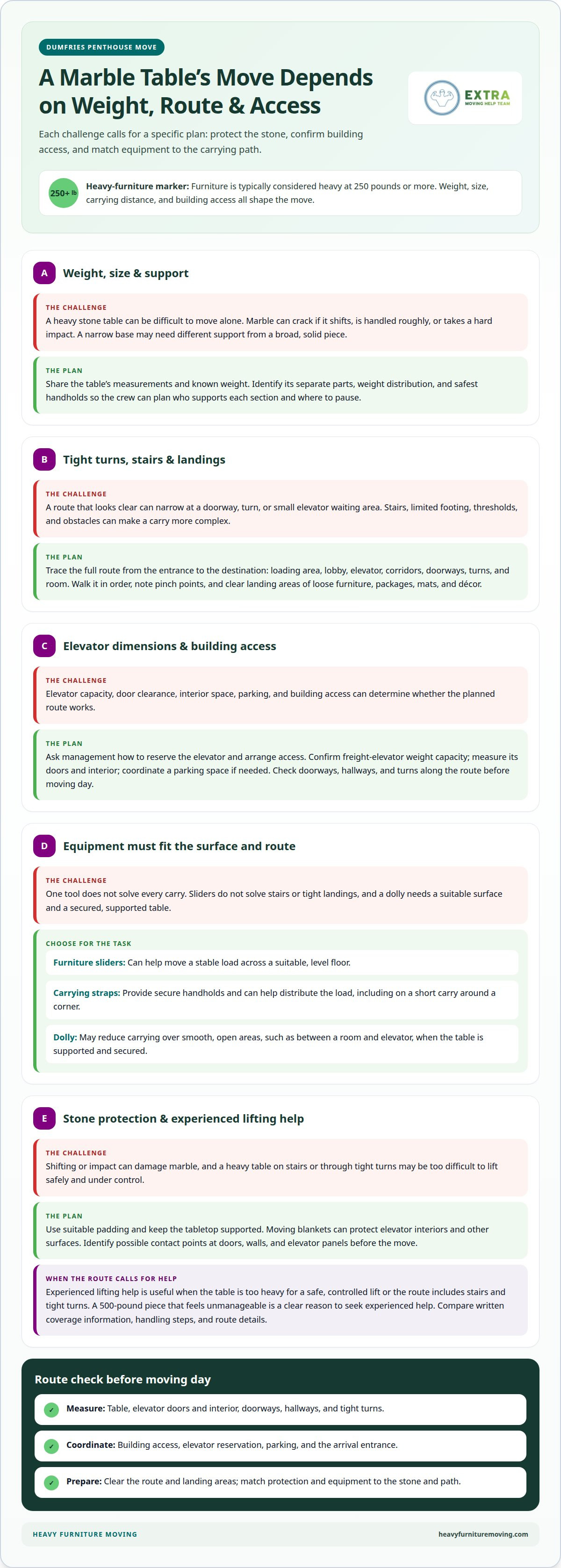
The price of moving a marble console table depends on its weight, size, travel distance, and building access. A short carry across a level floor differs from moving the same piece through tight turns and up to a penthouse. Furniture is typically considered heavy at 250 pounds or more. Marble, granite, and other stone furniture can be difficult to move alone, and marble can crack if handled roughly.
The cost depends on the move. Key factors include the table’s dimensions, carrying distance, stairs, elevator access, and handling needs. Share its measurements and known weight, along with details about the pickup and Dumfries building. That gives the movers information to plan for the actual route. A heavy table with a narrow base may need different support from a broad, solid piece.
Equipment affects how the table is moved, not just how quickly it travels. Furniture sliders can help move a stable load across a suitable, level floor, but they won’t solve a stairwell or tight landing. Carrying straps can provide secure handholds and help distribute the load. A dolly may reduce carrying over smooth, open areas, but the table must be supported and secured for the surface and route. For example, a dolly may help between a room and elevator, while straps may suit a short carry around a corner.
Protection matters, too. Wrap the marble with suitable padding and keep the tabletop supported to reduce shifting and impact during handling. Moving blankets can protect elevator interiors and other surfaces from scratches. Before moving, identify where the table could contact a doorway, wall, or elevator panel. A protected route helps reduce the risk of damage to the stone and building, especially during turns or transfers between equipment.
In Prince William County, compare insured specialty movers and general moving companies by reviewing their written coverage information, planned handling steps, and route details. Look for a plan that addresses marble protection, secure handholds, and elevator access, rather than a generic description of large-item moving. Coverage terms and limits matter because damage to stone can be costly to resolve.
Professional heavy-furniture movers are useful when the table is too heavy for a safe, controlled lift or the route includes stairs and tight turns. A 500-pound piece that feels unmanageable is a clear reason to seek experienced lifting help. Describe the table, access points, and elevator to plan the move. A careful crew can match the protection and equipment to the stone, the route, and the building.
2. Planning a route and clearing landing areas
Start at the Dumfries building entrance and trace the full route to the penthouse. Include the loading area, lobby, elevator, corridors, doorways, turns, and destination room. Mark tight corners on a simple floor plan. A route that looks clear on paper may narrow where a hallway meets a doorway. Note obstacles such as benches, planters, rugs, and wall-mounted fixtures. This gives the movers a practical path to review before carrying the table.
Next, walk the route in the same order the table will travel. Open doors fully and note which ones close automatically. Look for thresholds, uneven flooring, sharp turns, and places where someone carrying the table may have limited footing. A clear lobby, for example, may lead to a crowded corridor or a small elevator waiting area. Record these pinch points so the crew can plan where to pause, turn, or reposition safely.
Clear each landing area before the move. Move loose furniture, packages, floor mats, and decorative objects away from the route. Leave enough space at the destination for the crew to enter, turn, and set down the table without shifting nearby pieces. If it will sit beside a wall, clear the approach and the spot where it will rest. Keep boxes out of corridors and away from elevator doors so they don’t block the carrying path.
Coordinate parking with building management if the move needs a reserved space. Ask where the moving vehicle can stop and which entrance connects most directly to the elevator. If the building has a loading dock, arrange access through management and confirm the route from the dock to the lobby. A distant parking space adds carrying distance and may mean crossing pedestrian areas. Share the planned arrival point and entrance with everyone involved so access is ready when the table arrives.
Plan timing around building access, not just travel. Coordinate elevator use with management and avoid a window when residents are likely to fill the lobby or corridors. Keep the loading entrance, lobby path, and landings clear until the table reaches its destination. If another delivery is scheduled nearby, adjust the sequence to prevent carts, packages, and people from crossing the carrying route.
For a practical route plan, list the entrance, elevator, corridor turns, and final placement area in order. Note who will arrange parking and building access, and who will keep each landing clear. For help organizing a difficult furniture move, get heavy furniture moving help for the Dumfries route.
3. Using professional movers and appropriate moving equipment
Moving a marble console table requires a plan for the slab, its support, and the Dumfries building route. Before lifting, identify the table’s separate parts, weight distribution, and safest handholds. Marble can crack if it shifts or takes a hard impact. The crew can plan who supports each section, where to pause, and how to move through a doorway. Coordination matters more than simply adding people.
Choose equipment for the actual handling plan, not a generic furniture move. Useful examples include moving blankets, a wooden transport frame, plywood, screws, and industrial straps or ropes. Each has a different role: blankets cushion the tabletop, a frame helps hold it in place, and straps or ropes can support it and provide handholds. Match the equipment to the slab and route before carrying begins.
A wooden frame can be built to fit the tabletop’s measurements. For example, Pete made a frame to hold a marble slab in place during transport. The tabletop was padded with blankets inside the frame, then secured between plywood pieces with screws. These are specific methods, not a universal packing recipe. The right setup depends on the tabletop’s shape, edges, and route through the building.
Keep the equipment sequence organized. First, prepare the frame and cushioning. Next, secure the tabletop so it can’t shift during handling. Then position straps or ropes so the crew can support the load and maintain firm handholds. Before carrying, check that the padding stays in place and the plywood protection is secure. This staged setup avoids last-minute adjustments while the crew is holding the stone.
For a narrow exit, a crew may turn the marble tabletop onto its side and carry it out slowly. This shows why the plan must account for the slab’s orientation and available clearance. Movers should coordinate each turn and movement, with one person directing the pace. A sudden change in direction can shift the load or bring an edge into contact with a wall.
Use a professional crew when a marble tabletop needs custom support, controlled positioning, or careful handling through a tight route. Share the table’s dimensions, known weight, and building access details so the equipment plan fits the job. Avoid improvising with household materials or lifting alone. A secured frame, padding, and planned handholds give the crew a clear way to protect the slab from pickup through placement.
4. Checking doorway, hallway, stairwell, and elevator dimensions
Measure the marble tabletop before measuring the Dumfries route. Record its length, width, and thickness, then note its shape and any projecting edges. Measure the base separately if it travels as another piece. These measurements show how much clearance the movers need in each orientation. Include any wooden frame or protective wrapping that will remain around the tabletop during the move.
At each doorway, measure the usable opening with the door fully open. Check the narrowest point between the frame, handles, and nearby trim. Record the opening’s height as well as its width. A doorway may look wide enough, but a handle or wall edge can reduce the actual passage. Note which way the door swings and whether it can stay open as the table passes.
Measure hallway width at corners, not just along straight sections. A long tabletop may fit down a corridor but need extra room to turn. Check for wall trim, handrails, light fixtures, and other features that reduce clearance. At each junction, compare the available space with the tabletop’s length and width. Mark tight turns on the route plan so movers can decide where to change its orientation.
For stairwells, measure the narrowest passage, landing width, ceiling height, and clearance beneath overhead fixtures. Include space around railings and the turn between flights. A marble top carried on its side needs a different clearance check from one held level. Measure each landing separately: a broad stair flight can still lead to a cramped turn or low ceiling.
Measure the elevator door opening and the interior height, width, and depth. Check the usable floor space with the doors open, then note rails, control panels, and protective coverings that take up room. Compare those measurements with the table in its planned carrying position. Record the freight elevator’s stated weight capacity, too. A dimensional fit alone doesn’t establish that the elevator can carry the load.
Use one simple measurement sheet for the table, doorway, hallway, stairs, and elevator. Label each measurement by location and note whether it describes a clear opening or the space beyond it. Compare the tightest points first. If the tabletop must turn sideways, check both its edge-on clearance and the room needed to rotate it. Include the protective frame, because it changes the table’s outside dimensions.
Finally, compare the measurements in order, from the building entrance to the penthouse room. Fitting through the lobby door doesn’t resolve a narrower corridor or elevator entrance farther along. Flag any point where the tabletop’s dimensions come close to the available clearance. This measurement map gives the crew practical details for choosing an orientation and planning each turn before lifting begins.
5. Moving heavy objects upstairs and downstairs
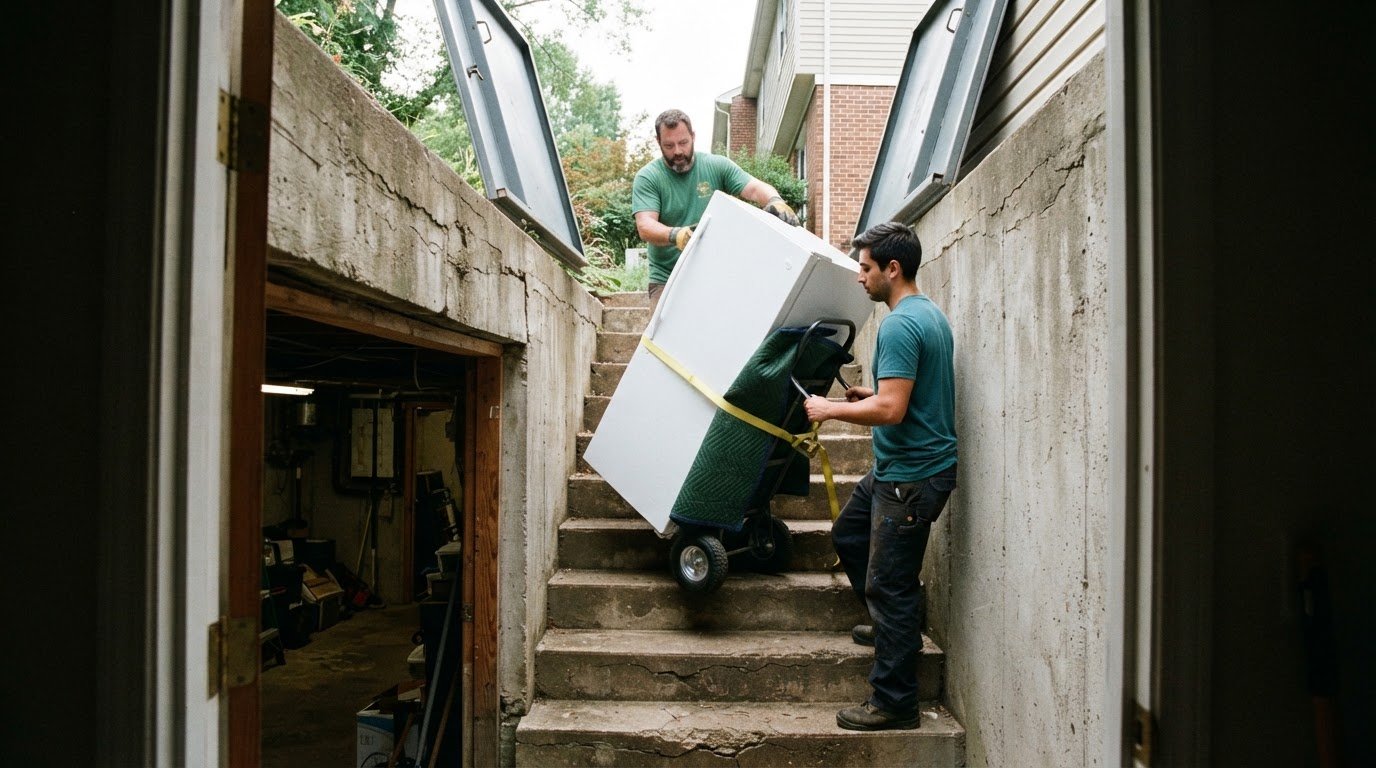
Stairs complicate a heavy furniture move because each step shifts the load and limits movement. For a marble console table, plan the direction of travel before lifting. Identify the top, base, and any parts that can safely separate. Keep the tabletop supported throughout each turn. A stair route needs coordinated movement, not merely enough people to lift the piece. Decide where the crew can pause without blocking a landing.
Before using a penthouse freight elevator, confirm its weight capacity with building management. Compare that capacity with the table’s known weight and the equipment traveling inside. The elevator also needs room for the protected table, crew, and planned carrying position. A load can fit through the doors yet exceed the elevator’s stated capacity. Treat these as separate checks, and don’t assume a passenger elevator can carry a heavy stone piece.
For stair carries, assign clear roles before the first step. One person should direct the pace and call each turn while the movers maintain steady support. Move slowly over landings, where the crew may need to change direction or reset its grip. Don’t rush to clear the stairwell. A controlled pause on a landing is safer than an unplanned shift while the table is suspended.
Keep the marble tabletop and base supported according to their shape and weight. Straps or ropes can provide handholds and help support the tabletop. Keep padding between the stone and nearby walls or railings. Before each stair flight, check that the crew has a clear path and room to place its feet. If the route requires a sharp turn, plan the table’s orientation before reaching the landing.
Downstairs carries need the same planning as upward moves. Gravity can pull a heavy item forward, so the crew must control its pace and keep the load balanced. On a narrow stairwell, stop at a landing before changing direction. Don’t let one person move ahead without coordinating with the rest of the crew. If the stairs are unsuitable, reconsider the route rather than forcing the table through.
Choose experienced lifting help when a marble table must travel up or down stairs, especially when the route includes tight landings or limited elevator access. Share the table’s weight, dimensions, and stair or elevator details before the move. That information helps shape the handling plan and equipment needs. For help with a demanding stair carry, request heavy lifting moving help.
Heavy Furniture Moving
Heavy Furniture Moving handles residential moves involving heavy and bulky furniture, including marble console tables. Turn to the team when the table’s weight, fragile stone, or penthouse access makes moving it yourself impractical. Share its dimensions, known weight, and building route so the crew can plan around the actual item and access points. Wrap, blankets, and straps are included on every job. This helps the team plan for stairs, elevator use, and tight turns before lifting begins. If you’re planning a heavy furniture move in Dumfries, contact Heavy Furniture Moving to discuss your move.
Set Up Your Next Move With Confidence
For moving a heavy marble console table into a Dumfries penthouse condo, turn your move details into a clear handling plan. Share the material, dimensions, and any known weight, along with the building’s access arrangements and expected route. These details help shape the work around your home and item, rather than a generic furniture move.
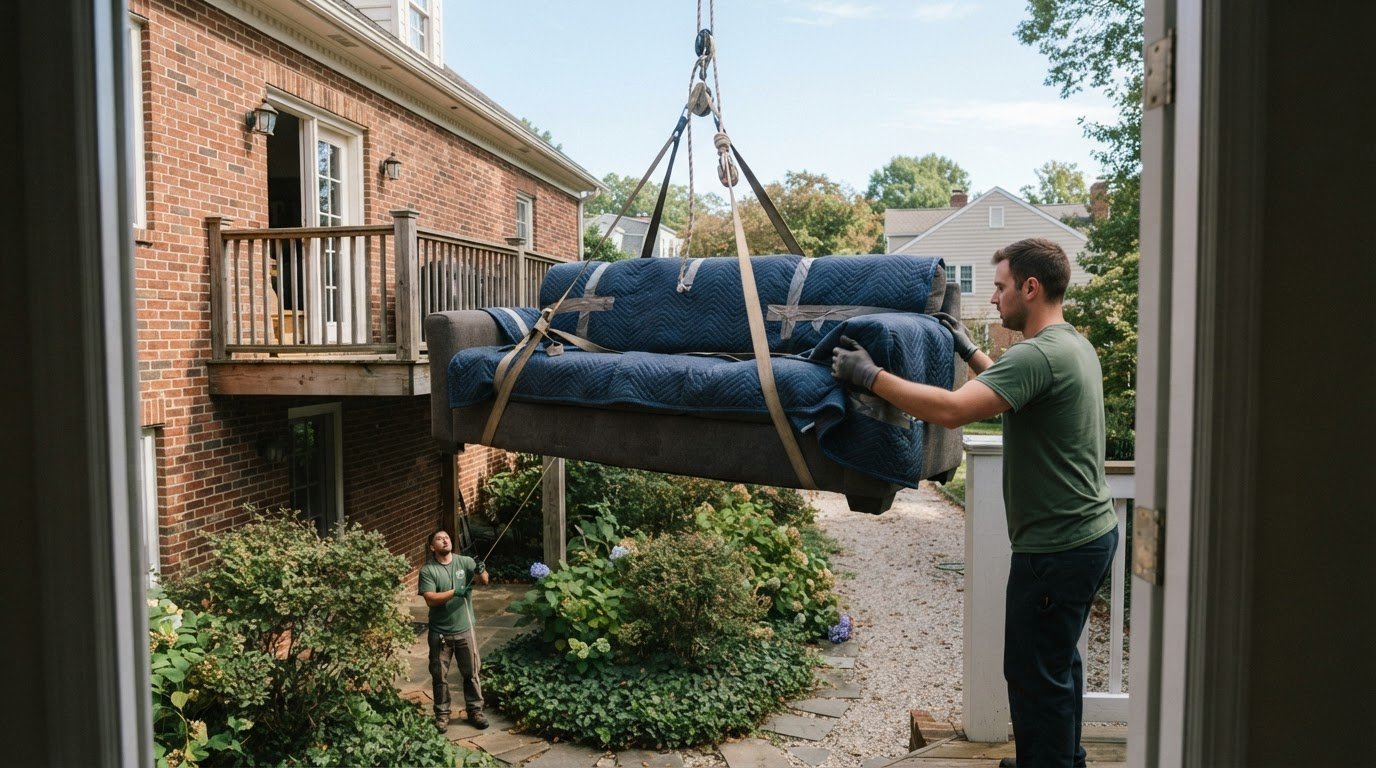
Heavy Furniture Moving handles demanding residential furniture moves, including heavy and bulky items. The team also offers Movers Near Me, Exercise Equipment Moving, and Sofa Hoisting. If your marble table needs careful handling or a challenging lift, share those details when you reach out.
Contact Heavy Furniture Moving today to discuss your move. A well-planned next step can help you move forward with greater clarity.
Frequently Asked Questions
Can You Reserve the Elevator?
If the building allows reservations, arrange an elevator time slot with management before moving day. Ask whether the reservation covers the freight elevator or another specific elevator, and clarify the access window and any key or fob arrangements. Get the reservation details in writing so the moving crew can plan arrival and loading around the building’s schedule. If access changes, update the crew before the move.
What movers in Dumfries, Virginia handle heavy marble console tables?
Heavy Furniture Moving handles residential moves in Dumfries, with a focus on heavy, bulky household items. Describe the marble console table, its known weight, and whether the base separates from the top. Share the building type and any stair or elevator access details. This helps the team plan for the specific lift and route, rather than treating the job like a standard furniture pickup.
How much does it cost to move a heavy marble console table into a penthouse condo near Dumfries?
The cost depends on the individual move and is provided after a quote request. Relevant factors include the table’s weight and dimensions, travel distance, stair carries, elevator access, and handling needs. For example, a table carried directly from a nearby entrance differs from one requiring multiple stair flights or difficult turns. Share the item and access details to get a quote for the move.
How much does a marble console table weigh, and how should it be measured for moving?
There isn’t one standard weight for a marble console table. Stone thickness, tabletop size, and base construction all affect it. Measure the tabletop’s length, width, and thickness, then measure the base separately if it comes apart. Check the maker’s specifications or purchase paperwork for the weight. If those records aren’t available, describe the table and its measurements when arranging professional moving help.
How do professional movers protect and transport a marble console table?
The crew plans the tabletop’s support and carrying position before moving it, then protects exposed surfaces and edges during handling. Note whether the table can travel as separate top and base pieces, since that changes how the load is supported. During vehicle transport, the tabletop must remain secure and protected from shifting. Keep hardware and detached components together so they’re available at delivery.
Can a marble console table be disassembled safely for moving?
The table can be disassembled if its base and tabletop are designed to separate using accessible fasteners. Don’t pry apart bonded stone or force a stuck connection, since marble edges can chip or crack. Photograph the table before removing parts, and keep screws and fittings together in a labeled bag. If the joint or attachment is unclear, leave it assembled until a mover can assess its construction.
What elevator, stairwell, doorway, and loading-dock measurements should be checked before a condo move?
Record the clear width and height at each doorway and elevator entrance, plus the elevator’s interior dimensions and posted weight capacity. For stairs, note the narrowest passage, landing space, and overhead clearance. Include loading-dock access and the path from the dock to the elevator. Measure the table with any protective frame or wrapping that will stay on during the carry, so the comparison reflects its moving size.
Does moving a heavy marble table require a certificate of insurance or building approval?
Building requirements vary, so ask the condo’s management whether it requires approval, a certificate of insurance, or specific moving procedures. Also ask about elevator reservations, loading-dock access, and required protective coverings. Share the building’s instructions with the moving crew before the move so you don’t arrive with the table but without the documentation or access arrangements the building expects.
Frequently Asked Questions
If the building allows reservations, arrange an elevator time slot with management before moving day. Ask whether the reservation covers the freight elevator or another specific elevator, and clarify the access window and any key or fob arrangements. Get the reservation details in writing so the moving crew can plan arrival and loading around the building’s schedule. If access changes, update the crew before the move.
Heavy Furniture Moving handles residential moves in Dumfries, with a focus on heavy, bulky household items. Describe the marble console table, its known weight, and whether the base separates from the top. Share the building type and any stair or elevator access details. This helps the team plan for the specific lift and route, rather than treating the job like a standard furniture pickup.
The cost depends on the individual move and is provided after a quote request. Relevant factors include the table’s weight and dimensions, travel distance, stair carries, elevator access, and handling needs. For example, a table carried directly from a nearby entrance differs from one requiring multiple stair flights or difficult turns. Share the item and access details to get a quote for the move.
There isn’t one standard weight for a marble console table. Stone thickness, tabletop size, and base construction all affect it. Measure the tabletop’s length, width, and thickness, then measure the base separately if it comes apart. Check the maker’s specifications or purchase paperwork for the weight. If those records aren’t available, describe the table and its measurements when arranging professional moving help.
The crew plans the tabletop’s support and carrying position before moving it, then protects exposed surfaces and edges during handling. Note whether the table can travel as separate top and base pieces, since that changes how the load is supported. During vehicle transport, the tabletop must remain secure and protected from shifting. Keep hardware and detached components together so they’re available at delivery.
The table can be disassembled if its base and tabletop are designed to separate using accessible fasteners. Don’t pry apart bonded stone or force a stuck connection, since marble edges can chip or crack. Photograph the table before removing parts, and keep screws and fittings together in a labeled bag. If the joint or attachment is unclear, leave it assembled until a mover can assess its construction.
Record the clear width and height at each doorway and elevator entrance, plus the elevator’s interior dimensions and posted weight capacity. For stairs, note the narrowest passage, landing space, and overhead clearance. Include loading-dock access and the path from the dock to the elevator. Measure the table with any protective frame or wrapping that will stay on during the carry, so the comparison reflects its moving size.
Building requirements vary, so ask the condo’s management whether it requires approval, a certificate of insurance, or specific moving procedures. Also ask about elevator reservations, loading-dock access, and required protective coverings. Share the building’s instructions with the moving crew before the move so you don’t arrive with the table but without the documentation or access arrangements the building expects.