Estate Cleanout and Junk Removal in South Riding: A Practical Checklist
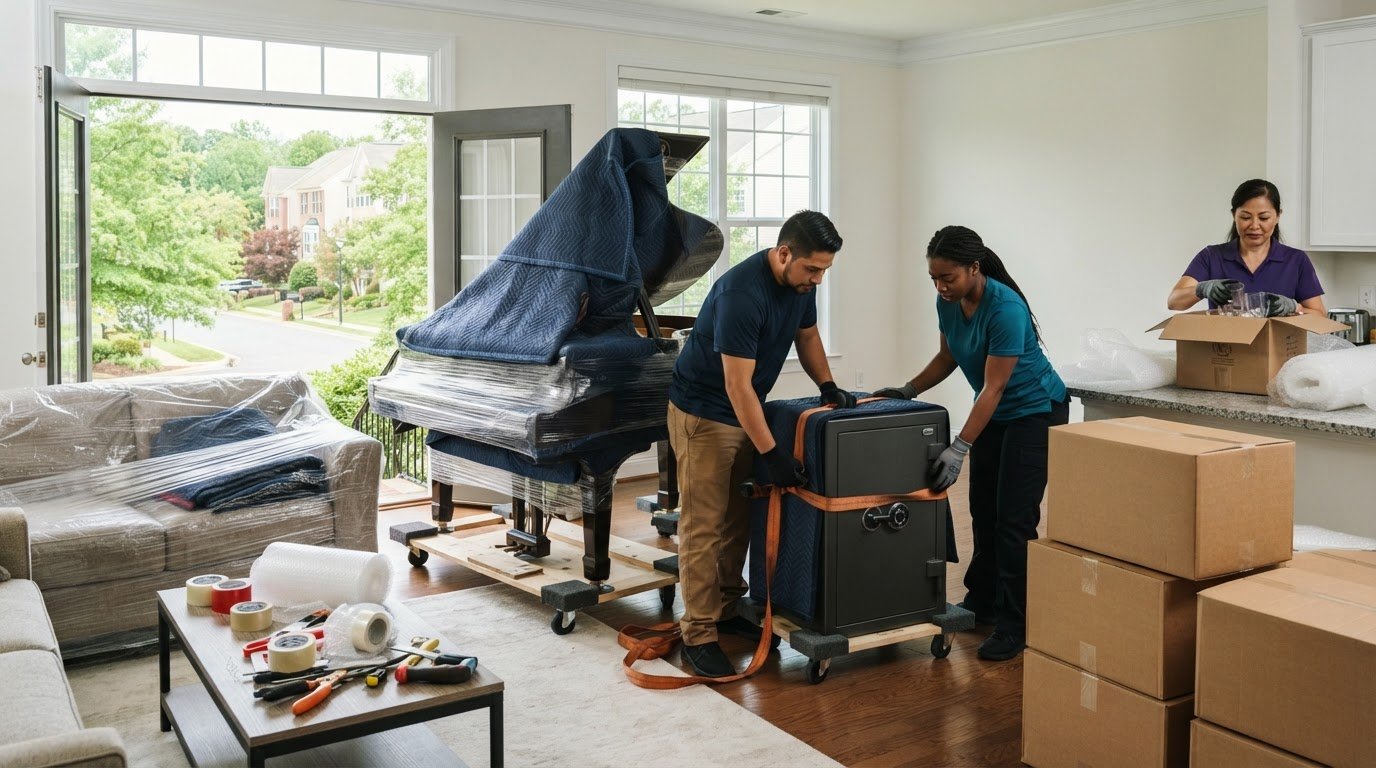
What if the hardest part of clearing a home isn’t moving the furniture, but deciding what happens to every item? An estate cleanout and junk removal South Riding families can manage starts with a clear plan, especially when rooms hold sentimental keepsakes, useful belongings, and things nobody wants to keep.
It’s easy to feel overwhelmed when a home is full and heavy pieces are difficult to move safely. Break the work into manageable steps: set aside items for family, sale, donation, moving, and removal, then plan how each group will leave the property. Before scheduling physical work, consider access routes, parking, shared spaces, and any property deadlines.
This guide walks you through organizing the cleanout, sorting belongings, and deciding what needs to leave the home. You’ll also learn where moving help and junk removal fit into the process, including support for heavy household items such as pianos, safes, and exercise equipment. Take decisions one at a time, and the work becomes easier to manage.
Key Takeaways
- Start with family decisions, then sort belongings into clear groups before planning removal.
- Keep personal records, valuables, and sentimental items separate from general household belongings.
- Match each task to the right help: junk removal for unwanted items and moving support for belongings going elsewhere.
- Prepare access details, parking arrangements, property rules, and the work area before removal day.
- Use this estate cleanout and junk removal South Riding checklist to organize the transition and plan help for bulky items.
Planning an Estate Cleanout and Junk Removal in South Riding
Family decisions, property deadlines, and a home full of belongings can make a cleanout feel like several jobs at once. Organize decisions before arranging physical removal. An estate cleanout means sorting belongings and planning what happens next across an entire property or selected rooms. It may involve family keepsakes, household goods, bulky furniture, and items no one plans to keep.
Start with a short plan. Decide what must happen first, identify who is responsible for decisions, sort belongings into clear groups, and map out how items will leave the property. Junk removal can help with unwanted belongings, while moving support can handle items headed to another home. For a broader overview of Waste management practices, consider how sorting and disposal decisions fit into the larger process of managing household waste.
A cleanout is easier when sorting happens before hauling is arranged. This order helps prevent useful or meaningful belongings from getting mixed in with items marked for removal.
What makes an estate cleanout different from routine junk removal?
Routine junk removal often focuses on taking away selected unwanted items. An estate cleanout can involve several rooms and a wider set of decisions: what family members want, what should move, and what can leave. Sorting is separate from lifting and carrying. Set aside time for decisions first, so removal focuses on belongings already identified to go.
Set priorities before starting a South Riding property cleanout
Write down the property deadline, the rooms that need attention, and who has a say in each decision. If relatives are involved, agree on how questions will be handled before sorting begins. A shared list or simple room-by-room notes can reduce duplicate work and keep uncertain items from being removed too soon.
Use these steps to get the work moving:
- Set priorities: Note deadlines and identify the rooms that need attention first.
- Name decision-makers: Agree on who can make choices and how family questions will be resolved.
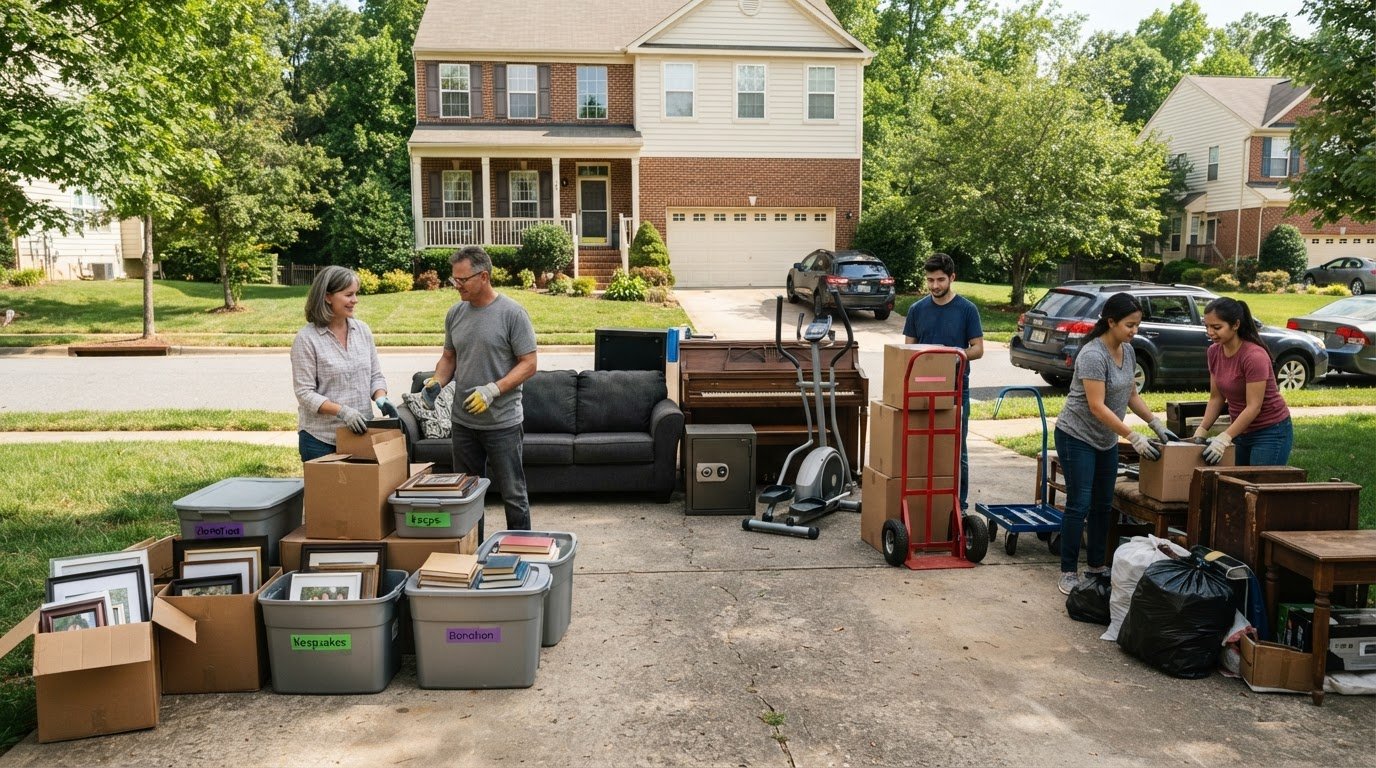
- Separate belongings: Create areas or labels for keep, family, move, donate, and removal.
- Plan removal: Identify which unwanted items need hauling and which belongings need moving help.
Before anything leaves, document valuables and sentimental belongings. Take photos, make a brief inventory, or record who will receive an item. This is especially useful for belongings with shared family significance or pieces that may be hard to identify later. Keep records, personal papers, and small valuables apart from general household sorting so they don’t get swept into a removal pile.
Keep the system visible and easy to follow. Mark each area clearly, and create a separate spot for items that still need a family decision. Once priorities are set and belongings are sorted, you’ll have a clearer picture of the physical work ahead and can plan removal around items that are ready to go.
Sort Estate Belongings Before Scheduling Junk Removal
Give belongings a clear destination before anything is carried out. A steady, room-by-room process helps protect important items, reduce family confusion, and make the removal pile easier to identify. Start with personal records and family decisions, then sort household contents. Finish by gathering items that are ready to leave in a designated area, separate from belongings that will stay or move.
Follow this order:
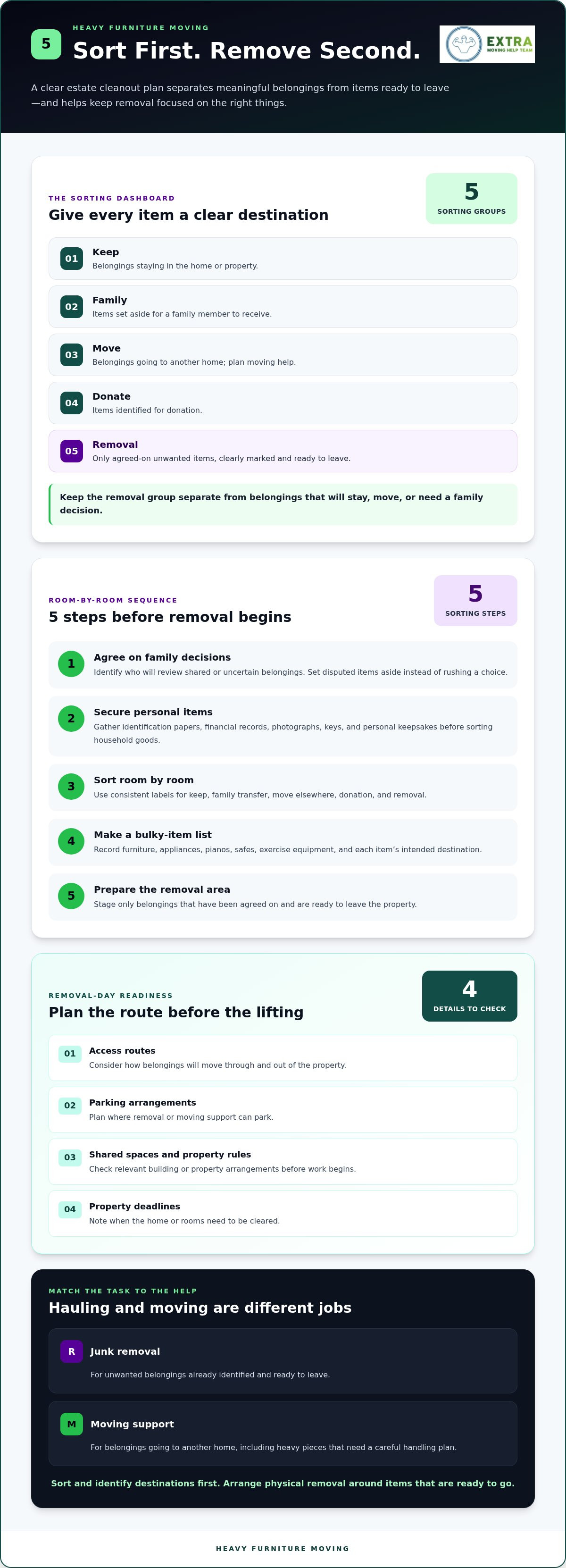
- Agree on family decisions. Identify who will review shared or uncertain belongings. Set aside disputed items rather than making a rushed choice.
- Secure personal items. Gather identification papers, financial records, photographs, keys, and personal keepsakes before sorting general household goods.
- Sort room by room. Use labels or separate areas for keep, transfer to family, move elsewhere, and remove.
- Make a bulky-item list. Record furniture, appliances, pianos, safes, exercise equipment, and other heavy belongings, noting their intended destination.
- Prepare the removal area. Bring together only items that have been agreed on and are ready to leave the property.
Items should be clearly designated before removal begins. A visible label or separate staging area helps distinguish what can go from what must remain, even when several people are working through the home.
Which belongings should be set aside first?
Protect items that are personal, valuable, or difficult to replace before tackling closets, kitchens, and storage spaces. Put documents, keys, photos, and keepsakes in clearly marked boxes or a room excluded from sorting. Have the responsible family members review shared belongings together. If a decision is uncertain, mark the item for review instead of placing it with removal-ready goods.
How should families sort furniture and unwanted household items?
Use the same labels throughout the home, and make each one specific. “Move” means the item is going elsewhere; “transfer to family” identifies who should receive it. For a sofa or appliance, add the room or destination so it doesn’t get confused with unwanted items. Record heavy pieces separately because they may need a careful handling plan.
Don’t assume every unwanted item belongs in the same disposal stream. Check current local guidance for specific recycling or disposal questions. Keep those questions separate from family decisions about whether an item should leave, so uncertainty about disposal doesn’t hold up sorting.
Once the removal group is clearly marked, a planned junk removal and moving service can help with unwanted belongings and bulky items headed to another location. Heavy Furniture Moving provides residential moving and junk removal support in South Riding, including handling for heavy household items. A clean, organized staging area makes it easier to distinguish removal from moving work as the home transition continues.
Compare Estate Cleanout Options for a South Riding Home
Not every part of a cleanout needs the same kind of help. Family members may be best placed to make decisions and pack smaller belongings, while unwanted household items and heavy pieces can call for physical support. Choose by task, rather than assuming one approach must cover the entire home. For estate cleanout and junk removal South Riding, the key distinction is straightforward: junk removal takes away belongings you’ve decided to remove, while moving help handles items going to another location.
Use this comparison to match the work with the right approach:
| Task | Suitable option | Preparation needed |
|---|---|---|
| Sort rooms, make family decisions, and pack smaller personal belongings | Family-managed work | Set aside decision time, packing supplies, and a clear place for sorted items |
| Remove unwanted household belongings | Junk removal help | Identify what’s ready to leave and note any bulky items |
| Move furniture or belongings to another home | Residential moving support | List items and their intended destinations |
| Handle heavy or bulky household items | Professional moving help | Describe the item and note access details that may affect handling |
Getting help doesn’t mean giving up control. You decide what stays, what moves, and what leaves. Keep decision-making with the family, then mark each item or area clearly before physical work begins. That way, help is focused on the tasks you’ve chosen, rather than deciding what happens to belongings.
When can a family manage parts of a cleanout themselves?
Families can often handle sorting, packing smaller belongings, and discussing what should be kept or passed along. Whether hauling is manageable depends on the amount of material, property access, deadlines, and how many people can help. Be realistic about the physical work: don’t try to lift heavy furniture or appliances without suitable help. Leave bulky pieces for a careful handling plan.
When does junk removal or moving help make more sense?
Use junk removal for household items the family has decided to let go of. Use moving support for belongings that need to reach another home. Professional handling can be useful for large or heavy pieces such as pianos, safes, and exercise equipment. Heavy Furniture Moving provides residential moving and junk removal support in South Riding, helping with these physical parts of a broader home transition.
Some cleanouts need both kinds of help. A family might pack personal belongings, arrange moving support for furniture they’re keeping, and set aside unwanted items for removal. Separate those groups before work begins. A written list with each item’s destination reduces mix-ups and helps everyone understand which task is being handled. Choose the approach that fits the work, and keep decisions about belongings firmly in the family’s hands.
South Riding Estate Cleanout Checklist for Access and Removal Day
A removal plan needs more than a list of belongings. Homes, townhomes, and shared-access properties may have different entry routes, parking arrangements, and property rules to account for. Before work begins, settle the access details and make the work area easy to reach. For estate cleanout and junk removal South Riding, preparation helps avoid confusion about which items are ready and how the crew can reach them.
Use this checklist before removal day:
- Confirm entry instructions. Gather any gate, door, or building access details needed to reach the property. Share them with the people involved in the work.
- Plan parking. Identify where a vehicle can park and whether the route from that spot to the home is clear. Note any shared driveways or limited-access areas.
- Clear a safe route. Remove loose obstacles from rooms, hallways, entryways, stairs, and shared access points. Leave enough space to move items without squeezing past boxes or furniture.
- Mark the work area. Keep removal-ready belongings together and separate from items staying or moving elsewhere. Make the boundary clear to everyone on site.
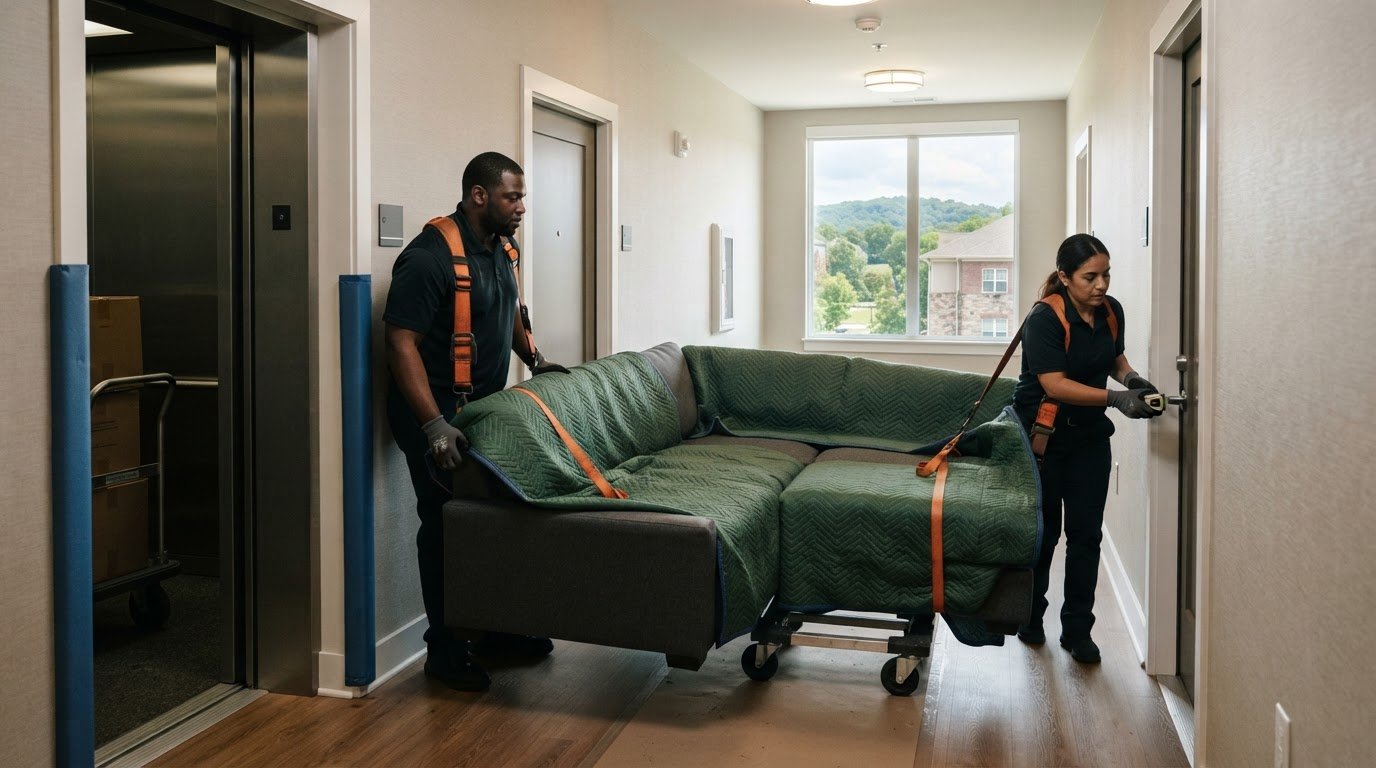
- Share handling details. Note stairs, elevators, narrow turns, parking limits, and bulky items that may need careful handling, such as a piano, safe, or exercise equipment.
What should be ready before the removal crew arrives?
Finish family decisions before the crew starts moving items. Keep belongings that must stay out of the work area, and make removal items easy to identify. Clear a route from each room to the exit, including hallways and shared entrances. If there are access instructions or movement constraints, write them down so everyone has the same information.
How can South Riding residents plan around HOA and local disposal rules?
South Riding HOA and property access rules can vary by community. Check the applicable community guidance before placing items at a curb or in a shared area, and don’t assume one collection rule applies everywhere. For item-specific disposal or recycling questions, consult current Loudoun County guidance. Accepted materials and directions may differ by item, so avoid relying on a general list that hasn’t been verified.
Keep the removal plan distinct from curbside collection arrangements. Mark items for professional removal separately, and don’t leave belongings in a shared space unless you’ve established that the location is appropriate under the rules for that property. This is especially useful in townhomes or communities where entrances, parking, and walkways are shared.
Once access, parking, routes, and item groups are clear, the physical work has a straightforward starting point. For help with unwanted household belongings or heavy items during a home transition, arrange South Riding junk removal and moving help with Heavy Furniture Moving.
Arrange Estate Cleanout and Junk Removal Help in South Riding
Once belongings are sorted and access is planned, prepare a concise overview of the work. Clear details help connect junk removal for items leaving the property with moving support for belongings headed elsewhere. Heavy Furniture Moving provides residential moving and junk removal support in South Riding, making that help a practical part of a home transition.
Before arranging the work, gather the essentials:
- Property details: Note the South Riding address, rooms involved, and relevant access information.
- Item groups: Summarize what’s designated for removal and what needs to move to another location.
- Bulky belongings: Identify heavy items and describe them clearly. Heavy Furniture Moving handles items such as pianos, safes, and exercise equipment.
- Access notes: Mention stairs, narrow entrances, elevators, shared areas, parking arrangements, or other details that may affect reaching the items.
- Timing needs: Share any property deadline or preferred timeframe so the cleanout plan can account for it.
These notes help describe the job without requiring every decision to be finalized at once. Be clear about what is ready to leave and what is moving elsewhere. If an item’s destination is still undecided, keep it out of the removal group until the family has settled the choice. A clear distinction helps preserve your decisions as the physical work gets underway.
What details help organize a cleanout request?
Start with the address and the rooms that need attention. Describe the general belongings involved, then call out heavy or awkward pieces separately. Include practical access details, such as a stairway, tight entry, or shared approach to the property. Finally, distinguish items moving to another home from those designated for removal. A short, specific summary is more useful than a broad estimate of what’s in the house.
Turn the checklist into a clear next step
You’ve made the family decisions, separated item groups, noted bulky belongings, and prepared access information. Now the cleanout has a workable outline. Heavy Furniture Moving’s residential moving and junk removal support can help with the transition, including unwanted household belongings and heavy items that need moving. For other relocation planning, see Reliable Movers Near Me in Fairfax and Northern VA.
Ready to discuss your South Riding moving and junk removal needs? Get help planning your South Riding cleanout and share the item groups, access details, and timing needs you’ve gathered.
Make the Next Step Easier
A cleared home can create room for what comes next, whether that means preparing the property for a new chapter or helping family members move forward. You don’t have to take on every demanding task alone. Heavy Furniture Moving is a veteran-family owned and operated business, ready to support South Riding households with the physical side of a home transition.
Heavy Furniture Moving serves households in South Riding and nearby communities, including Fairfax, Woodbridge, Manassas, Manassas Park, Aldie, Ashburn, Mclean, Vienna, Reston, Centreville, Chantilly, Clifton, Dumfries, Fairfax Station, Haymarket, and Gainesville. If you’re planning an estate cleanout and junk removal South Riding, share what you need moved or removed and any access details that could shape the work.
Get help planning your South Riding cleanout. Take it one step at a time, and make space for what comes next.
Frequently Asked Questions
Is estate cleanout different from junk removal?
Yes. An estate cleanout is the broader process of sorting and clearing belongings across a home or selected rooms; junk removal focuses on items already chosen to leave. A cleanout may also involve family decisions, packing belongings, and moving things to another address. Before arranging removal, make separate notes for items staying, moving, and leaving so the work reflects the family’s decisions.
How do I start an estate cleanout in South Riding?
For estate cleanout and junk removal South Riding planning, first identify who can make decisions and note the property deadline. Secure paperwork and keepsakes before opening closets or storage areas. Then sort a single room into keep, family, move, and removal groups. Note large items and entry constraints, and review applicable HOA or Loudoun County guidance for relevant placement or disposal questions. Work room by room to keep decisions manageable.
Can junk removal help with heavy furniture during an estate cleanout?
Junk removal can help with unwanted household belongings, while furniture being kept or relocated may need moving support instead. Heavy Furniture Moving provides junk removal and residential moving support, including specialized handling for bulky items such as pianos, safes, and exercise equipment. Before arranging the work, list each large item and whether it’s leaving or going elsewhere. For questions about recycling or disposal of particular materials, check current local guidance.
What should I set aside before a home cleanout crew arrives?
Set aside identification, financial and property records, photographs, keys, valuables, and sentimental belongings. Ask family members to resolve unclear ownership before removal begins. Place protected items in a marked container or a room excluded from the work area. For an extra safeguard, label the container with its contents and the person responsible for it. Then make sure belongings to keep or move are distinct from those designated to leave.
Do South Riding HOA rules affect estate cleanout and junk removal?
They can. Community rules may cover curb placement, parking, shared areas, or access, and requirements can differ by property or association. Check the guidance that applies to the specific address before placing belongings outside or planning vehicle access. Don’t treat one community’s instructions as universal across South Riding. For questions about disposal or recycling of particular items, consult current Loudoun County guidance separately.
How should I prepare bulky items for estate junk removal?
Identify each bulky item and decide whether it will stay, move elsewhere, or leave the property. Note stairs, tight turns, doorways, and shared entrances that could affect access, then clear a route to the item. Don’t attempt risky lifts alone. Keep items moving to another location separate from removal belongings. If you have disposal questions about a specific material, check current local guidance rather than assuming it belongs in a particular waste stream.
Frequently Asked Questions
Routine junk removal often focuses on taking away selected unwanted items. An estate cleanout can involve several rooms and a wider set of decisions: what family members want, what should move, and what can leave. Sorting is separate from lifting and carrying. Set aside time for decisions first, so removal focuses on belongings already identified to go.
Protect items that are personal, valuable, or difficult to replace before tackling closets, kitchens, and storage spaces. Put documents, keys, photos, and keepsakes in clearly marked boxes or a room excluded from sorting. Have the responsible family members review shared belongings together. If a decision is uncertain, mark the item for review instead of placing it with removal-ready goods.
Use the same labels throughout the home, and make each one specific. “Move” means the item is going elsewhere; “transfer to family” identifies who should receive it. For a sofa or appliance, add the room or destination so it doesn’t get confused with unwanted items. Record heavy pieces separately because they may need a careful handling plan. Don’t assume every unwanted item belongs in the same disposal stream. Check current local guidance for specific recycling or disposal questions. Keep those questions separate from family decisions about whether an item should leave, so uncertainty about disposal doesn’t hold up sorting. Once the removal group is clearly marked, a planned junk removal and moving service can help with unwanted belongings and bulky items headed to another location. Heavy Furniture Moving provides residential moving and junk removal support in South Riding, including handling for heavy household items. A clean, organized staging area makes it easier to distinguish removal from moving work as the home transition continues. Not every part of a cleanout needs the same kind of help. Family members may be best placed to make decisions and pack smaller belongings, while unwanted household items and heavy pieces can call for physical support. Choose by task, rather than assuming one approach must cover the entire home. For estate cleanout and junk removal South Riding, the key distinction is straightforward: junk removal takes away belongings you’ve decided to remove, while moving help handles items going to another location. Use this comparison to match the work with the right approach: Getting help doesn’t mean giving up control. You decide what stays, what moves, and what leaves. Keep decision-making with the family, then mark each item or area clearly before physical work begins. That way, help is focused on the tasks you’ve chosen, rather than deciding what happens to belongings.
Families can often handle sorting, packing smaller belongings, and discussing what should be kept or passed along. Whether hauling is manageable depends on the amount of material, property access, deadlines, and how many people can help. Be realistic about the physical work: don’t try to lift heavy furniture or appliances without suitable help. Leave bulky pieces for a careful handling plan.
Use junk removal for household items the family has decided to let go of. Use moving support for belongings that need to reach another home. Professional handling can be useful for large or heavy pieces such as pianos, safes, and exercise equipment. Heavy Furniture Moving provides residential moving and junk removal support in South Riding, helping with these physical parts of a broader home transition. Some cleanouts need both kinds of help. A family might pack personal belongings, arrange moving support for furniture they’re keeping, and set aside unwanted items for removal. Separate those groups before work begins. A written list with each item’s destination reduces mix-ups and helps everyone understand which task is being handled. Choose the approach that fits the work, and keep decisions about belongings firmly in the family’s hands. A removal plan needs more than a list of belongings. Homes, townhomes, and shared-access properties may have different entry routes, parking arrangements, and property rules to account for. Before work begins, settle the access details and make the work area easy to reach. For estate cleanout and junk removal South Riding, preparation helps avoid confusion about which items are ready and how the crew can reach them. Use this checklist before removal day:
Finish family decisions before the crew starts moving items. Keep belongings that must stay out of the work area, and make removal items easy to identify. Clear a route from each room to the exit, including hallways and shared entrances. If there are access instructions or movement constraints, write them down so everyone has the same information.
South Riding HOA and property access rules can vary by community. Check the applicable community guidance before placing items at a curb or in a shared area, and don’t assume one collection rule applies everywhere. For item-specific disposal or recycling questions, consult current Loudoun County guidance. Accepted materials and directions may differ by item, so avoid relying on a general list that hasn’t been verified. Keep the removal plan distinct from curbside collection arrangements. Mark items for professional removal separately, and don’t leave belongings in a shared space unless you’ve established that the location is appropriate under the rules for that property. This is especially useful in townhomes or communities where entrances, parking, and walkways are shared. Once access, parking, routes, and item groups are clear, the physical work has a straightforward starting point. For help with unwanted household belongings or heavy items during a home transition, arrange South Riding junk removal and moving help with Heavy Furniture Moving. Once belongings are sorted and access is planned, prepare a concise overview of the work. Clear details help connect junk removal for items leaving the property with moving support for belongings headed elsewhere. Heavy Furniture Moving provides residential moving and junk removal support in South Riding, making that help a practical part of a home transition. Before arranging the work, gather the essentials: These notes help describe the job without requiring every decision to be finalized at once. Be clear about what is ready to leave and what is moving elsewhere. If an item’s destination is still undecided, keep it out of the removal group until the family has settled the choice. A clear distinction helps preserve your decisions as the physical work gets underway.
Start with the address and the rooms that need attention. Describe the general belongings involved, then call out heavy or awkward pieces separately. Include practical access details, such as a stairway, tight entry, or shared approach to the property. Finally, distinguish items moving to another home from those designated for removal. A short, specific summary is more useful than a broad estimate of what’s in the house.
Yes. An estate cleanout is the broader process of sorting and clearing belongings across a home or selected rooms; junk removal focuses on items already chosen to leave. A cleanout may also involve family decisions, packing belongings, and moving things to another address. Before arranging removal, make separate notes for items staying, moving, and leaving so the work reflects the family’s decisions.
For estate cleanout and junk removal South Riding planning, first identify who can make decisions and note the property deadline. Secure paperwork and keepsakes before opening closets or storage areas. Then sort a single room into keep, family, move, and removal groups. Note large items and entry constraints, and review applicable HOA or Loudoun County guidance for relevant placement or disposal questions. Work room by room to keep decisions manageable.
Junk removal can help with unwanted household belongings, while furniture being kept or relocated may need moving support instead. Heavy Furniture Moving provides junk removal and residential moving support, including specialized handling for bulky items such as pianos, safes, and exercise equipment. Before arranging the work, list each large item and whether it’s leaving or going elsewhere. For questions about recycling or disposal of particular materials, check current local guidance.
Set aside identification, financial and property records, photographs, keys, valuables, and sentimental belongings. Ask family members to resolve unclear ownership before removal begins. Place protected items in a marked container or a room excluded from the work area. For an extra safeguard, label the container with its contents and the person responsible for it. Then make sure belongings to keep or move are distinct from those designated to leave.
They can. Community rules may cover curb placement, parking, shared areas, or access, and requirements can differ by property or association. Check the guidance that applies to the specific address before placing belongings outside or planning vehicle access. Don’t treat one community’s instructions as universal across South Riding. For questions about disposal or recycling of particular items, consult current Loudoun County guidance separately.
Identify each bulky item and decide whether it will stay, move elsewhere, or leave the property. Note stairs, tight turns, doorways, and shared entrances that could affect access, then clear a route to the item. Don’t attempt risky lifts alone. Keep items moving to another location separate from removal belongings. If you have disposal questions about a specific material, check current local guidance rather than assuming it belongs in a particular waste stream.