Couch hoisting in Chantilly: Avoid stairwell damage
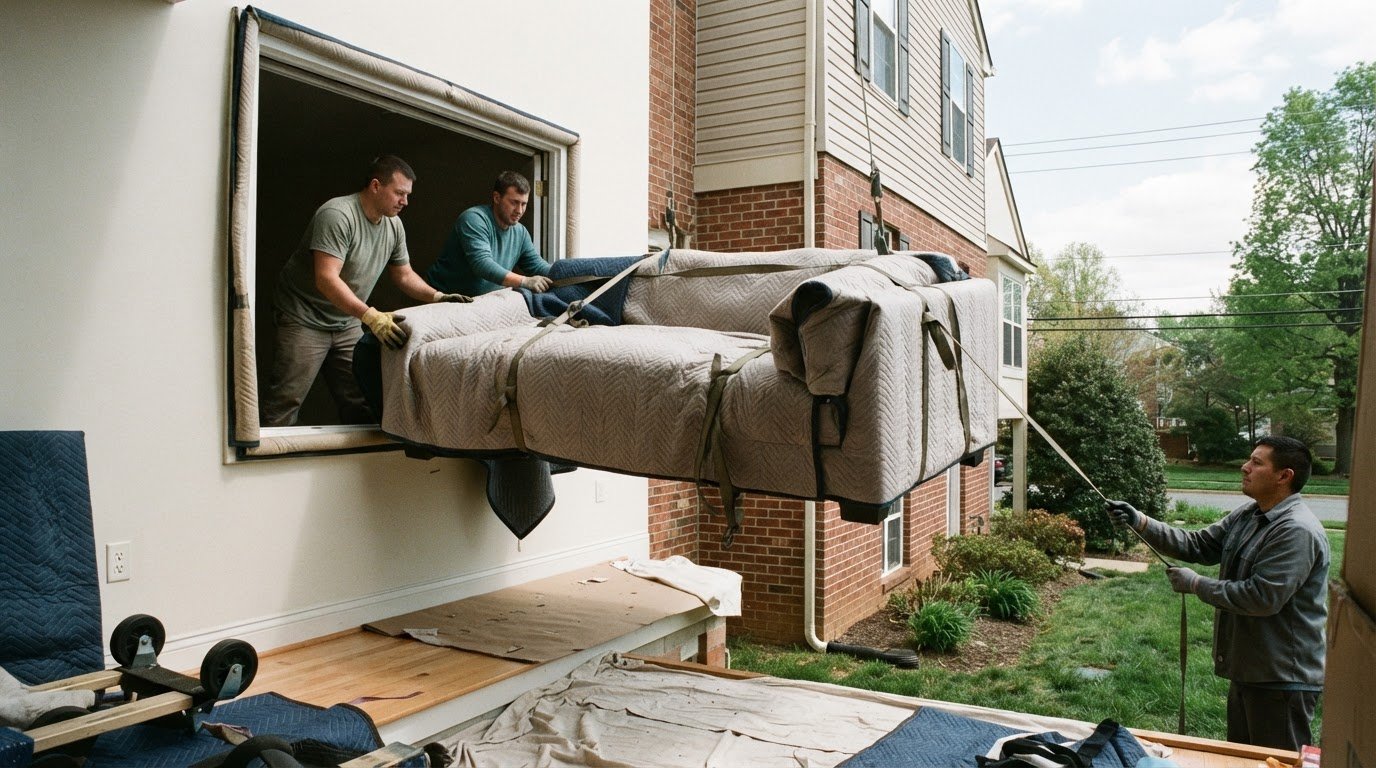
A couch hoisting service can help avoid narrow stairwell damage in Chantilly when a sofa won’t clear the stairs or turn safely at a landing. If measurements leave less than 1-2 inches of clearance, call professional movers rather than forcing the couch through. When the stairwell is too narrow or its turns won’t work, hoisting through an upper-level window or deck door may be the better route.
A narrow stairwell can put your couch, walls, and railings at risk. This guide explains how to measure the route, prepare the space, and share useful details when booking. It also covers how padding and careful handling help reduce scrapes, and when a couch hoisting service to avoid narrow stairwell damage in Chantilly may be a better option than another attempt on the stairs.
Key Takeaways
- Measure the couch and the tightest parts of the route, including stair turns and ceiling clearance, before choosing a moving path.
- Learn which protective materials can help shield walls, railings, floors, and upholstery from scrapes.
- Use controlled tilting and pivoting at landings, and reset the angle rather than forcing a couch that gets stuck.
- Share clear furniture and access measurements when booking so the moving plan fits the home and the couch.
- See when sofa hoisting can help bypass a difficult stairwell route.
How do you get a couch through a doorway that’s too small?
Permit requirements for a crane or furniture hoist in Chantilly depend on the equipment and property. Before arranging a lift, determine whether a permit is required. HOA rules may also affect window, deck, exterior access, or shared-area work, so review the community’s requirements before scheduling.
-
Measure Furniture and Stairwells
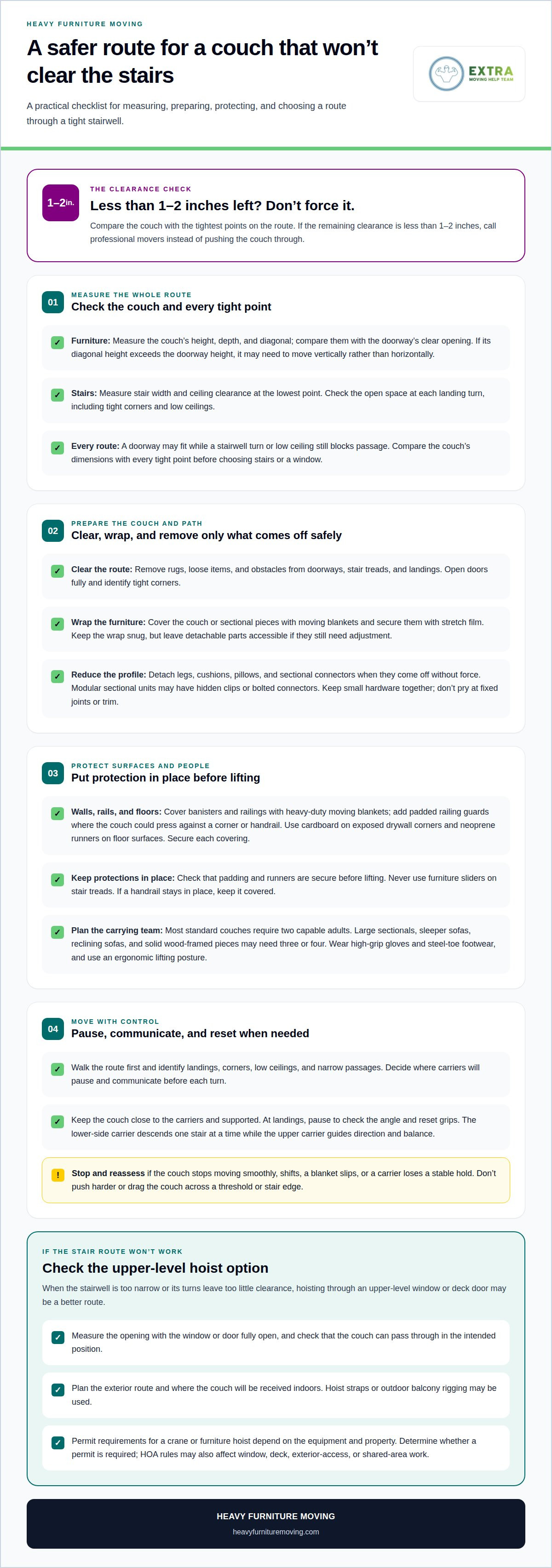
Measure the couch’s height, depth, and diagonal, then compare them with the doorway’s clear opening. If its diagonal height exceeds the doorway height, it may need to move vertically rather than horizontally. Measure stair width and ceiling clearance at the lowest point, plus the open space at each landing turn. If the remaining clearance is less than 1-2 inches, call professional movers instead of forcing the couch through.
-
Clear and Wrap the Route
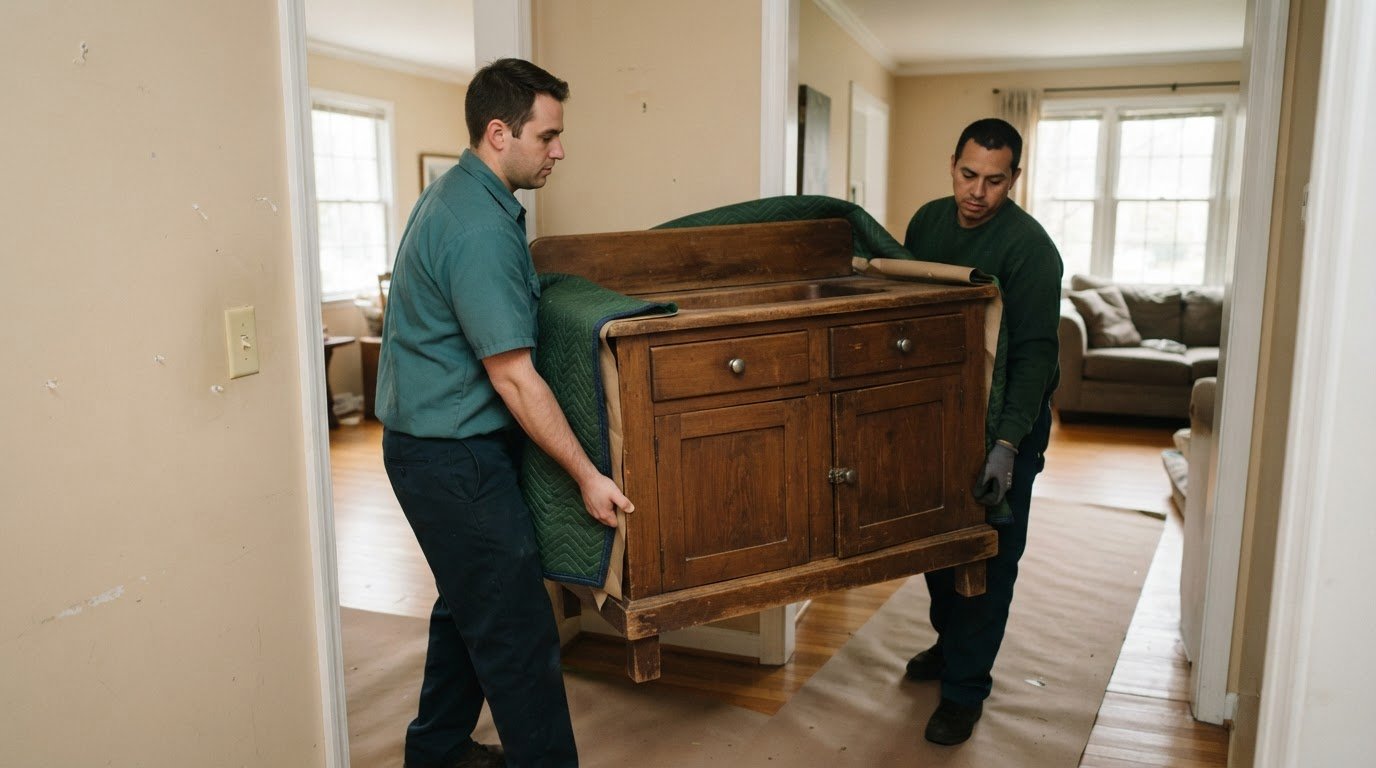
Before moving the couch, remove rugs, loose items, and other obstacles from doorways, stair treads, and landings. Open doors fully and identify tight corners where upholstery or a wooden frame could scrape. Cover the couch or sectional pieces with moving blankets and secure the blankets with stretch film. Keep the wrap snug, but leave detachable parts accessible if they still need adjustment.
-
Make the Couch Smaller
Detach sofa legs, cushions, pillows, and sectional connectors when they come off without force. For a modular sectional, look for hidden clips or bolted connectors joining the base units. Move the separated pieces individually and keep small hardware together so reassembly is straightforward. Removing loose parts can reduce the couch’s profile and weight, but don’t pry at fixed joints or trim to gain clearance.
-
Plan an Upper-Level Hoist
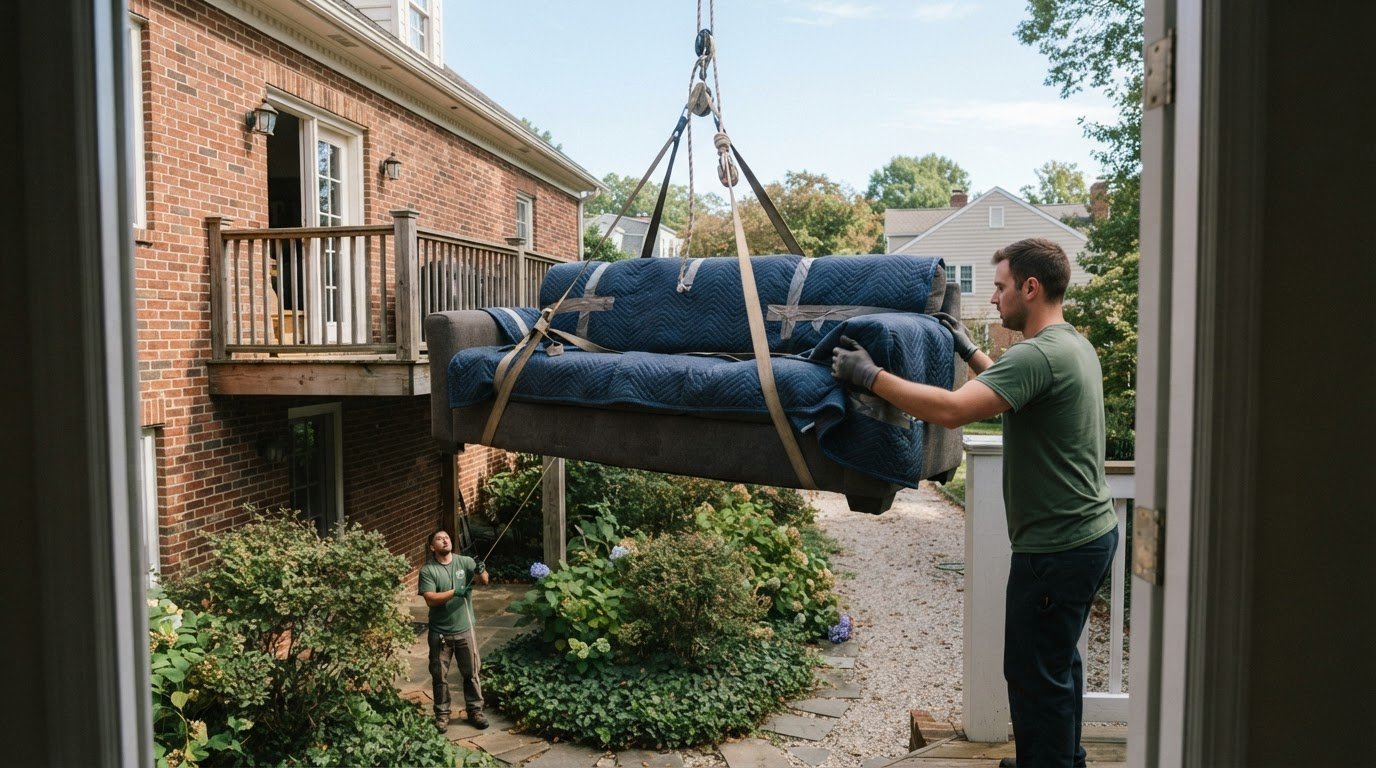
If the stairwell is too narrow or its turns leave too little clearance, consider hoisting the couch through an upper-level window or deck door. Measure the opening with the door or window fully open, and check that the couch can pass through in the intended position. Plan the exterior route and where the couch will be received indoors. Hoist straps or outdoor balcony rigging may be used.
- Before choosing the stairs or a window, compare the couch’s dimensions with every tight point on each route. A doorway may be wide enough while a stairwell turn or low ceiling still blocks passage. If the couch stops moving smoothly, stop and reassess its angle instead of pushing harder. Use the measurements to select a workable route and avoid preventable contact with the couch or walls.
Can you move furniture upstairs without damaging walls or railings?
Yes. Careful preparation and controlled carrying can help protect walls, railings, floors, and the couch. Put protection in place before lifting, then keep the load steady on every stair and landing.
-
Protect Walls, Railings, and Floors
Cover banisters and railings with heavy-duty moving blankets before the couch enters the stairwell. Add padded railing guards where a couch could press against a corner or handrail. Place cardboard over exposed drywall corners, and use neoprene runners to shield floor surfaces along the route. Secure each covering so it stays in place during the carry. Never use furniture sliders on stair treads.
- Clear the route and check that each protective layer is secure before lifting. Keep doorways, stair treads, and landings free of loose objects that could shift underfoot. A blanket slipping from a railing can expose the wood just as the couch reaches a tight turn. Don’t remove a handrail unless it’s safe and can be reinstalled correctly. If it stays in place, keep it covered.
-
Protect Furniture and Moving Backs
Cover the couch with moving blankets to shield its fabric, leather, and frame from scrapes. Secure the wrap so it stays in place as the furniture moves upstairs. Most standard couches require two capable adults; large sectionals, sleeper sofas, reclining sofas, and solid wood-framed pieces may need three or four. Wear high-grip gloves and steel-toe footwear, and use an ergonomic lifting posture.
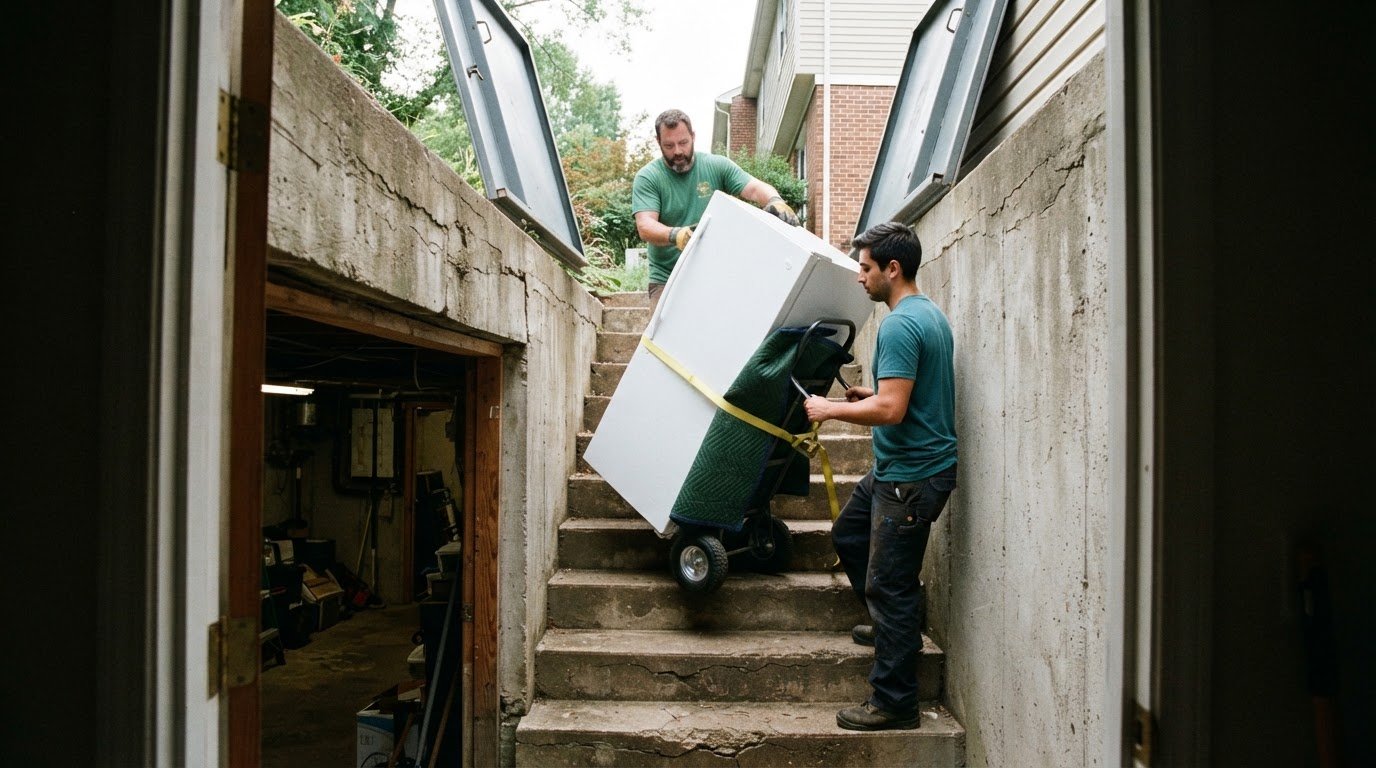
- Coordinate each stair before moving the couch. Keep it close to the carriers, communicate before changing direction, and pause at landings if anyone needs to reset their grip. The person on the lower side should descend one stair at a time while the upper carrier guides the direction and balance. Stop if the couch shifts, a blanket slips, or a carrier loses a stable hold.
- Protect floors by keeping the couch supported rather than dragging it across a threshold or stair edge. Check the path after each difficult turn for loosened padding, shifted runners, or a newly exposed wall corner. If a heavy couch or sectional makes the route hard to manage, local furniture moving help can help with the lift and careful movement through the home.
Tilting and pivoting sofas around stairwell turns
Plan each turn before lifting, then make small, coordinated adjustments. At a landing, a controlled hook turn can change the couch’s angle without forcing its frame against walls or railings.
-
Plan the Route and Spot Tight Turns
Walk the route before carrying the couch, from the room doorway to the final stair. Mark each landing, corner, low ceiling, and narrow passage that could limit movement. Pay special attention to a tight 90-degree landing, where the couch may need to change direction while suspended. Decide where carriers will pause and communicate before the turn, not halfway through it.
-
Handle Turns and Landings
Bring the couch to a landing under control, then pause with the load supported. Check which end needs to rise and which direction gives the frame room to clear the next wall. For a tight 90-degree turn, a sectional piece may need to stand vertically on its end. Move only when carriers can guide its angle without scraping the wall or railing.
- Use a controlled hook turn at the landing: raise the couch’s front toward the ceiling while keeping the back end low. This changes its angle as it passes the corner instead of pressing it flat against the wall. Adjust gradually and support both ends. If the ceiling or wall blocks the movement, stop and reset rather than levering the couch against the stairwell.
- Agree on each carrier’s role before moving the couch again. The person at the bottom should support most of the furniture’s weight, while the person at the top guides direction and balance. Move one stair at a time and pause before changing the angle. Short instructions such as “hold,” “raise,” or “turn” can help prevent a sudden shift at the landing.
- If the couch or sectional gets stuck, don’t force it through the turn. Ease it back down the stairs to a stable position, then reset the angle and hand positions. Check whether the front needs to rise higher or the back needs to stay lower on the next attempt. Resume only when the route is clear and both ends can move smoothly.
Keep the hook turn controlled at the landing, with the front raised toward the ceiling and the back held low. The carrier on the lower side should descend one stair at a time. If a sectional catches at the landing, ease it back down instead of forcing it onward, then reset its angle.
Information to provide when booking movers
In Virginia, insurance and damage coverage for a furniture hoist depend on the applicable policy and written service terms. Clarify how coverage applies to the couch, home, and hoisting process, including how to report damage.
- Describe the couch when booking. Say whether it’s a standard sofa, sleeper, recliner, or sectional, and note any detachable legs or sections. Share its approximate height, depth, and length. Mention if it’s unusually heavy or has a delicate frame. These details help shape a moving plan around the furniture’s size and handling needs.
- Give the pickup and delivery locations inside the home. For example, explain that the couch starts in a second-floor bedroom and needs to reach an upstairs living room. Include the floor at each end and note whether the route passes through a hallway, stairwell, or shared entrance. A clear description helps identify where access may become difficult.
- Report the tight points you’ve measured instead of simply saying the stairs are narrow. Share doorway openings, stair width, low ceiling clearance, and usable space at landings and turns. Note where the landing changes direction and whether a handrail narrows the path. Photos can show the opening, the turn, and the couch’s approach.
- Explain why you’re considering an exterior lift. Say whether the couch can’t clear a stairwell turn, a doorway is too tight, or a landing leaves little room to pivot. Identify the possible upper-level window or deck door and describe its access. Mention exterior obstacles, such as a narrow approach or objects below the opening.
- Discuss protection and damage coverage before the move. Review the written terms for damage to the couch, walls, railings, floors, windows, or deck access. Ask how to document existing marks and report new damage. Keep the answers with your booking details so everyone understands the process before lifting begins.
- Share access instructions that could affect setup. Note parking or loading restrictions, entry codes, elevator access, and HOA rules for exterior work or shared spaces. If a crane or furniture hoist may be used, ask what permissions or arrangements the property requires. Include the best entrance for reaching the lift area and any scheduled building access limits.
- Confirm the plan in writing before moving day. Restate the couch type, route, measured constraints, proposed access point, and protection needs. Correct details such as “deck door” versus “front window” if the plan changes. A concise summary gives the crew a practical starting point and reduces confusion at the doorway.
Measuring sectional sofa pieces and stairwell clearances
Measure each sectional piece separately and compare its shape with every tight point in the stairwell. Separate pieces may fit where the full sectional won’t, though careful positioning may still be needed at a landing.
- Separate the sectional into movable pieces before recording dimensions. Remove cushions and detachable legs, then uncouple modular bases at their clips or bolted connectors. Label each piece by position, such as corner seat, armless seat, or chaise. This prevents one overall measurement from obscuring the size of the piece that must pass through the tightest doorway.
- Measure each section’s height, depth, and diagonal length. Record its widest points, including a raised back, curved arm, or attached frame. Measure the diagonal from the lowest corner to the opposite upper corner rather than estimating from the sofa’s width. Keep each piece’s measurements together so you can compare them with the route individually.
- Measure the stairwell at its narrowest usable point. Check the clear width between walls, rails, and other fixed obstacles. Record ceiling clearance where the stairs pass under a low ceiling or beam. At a landing, measure the open floor area and corner-pivot clearance, since the sectional must change direction within that space.
- Map each turn from the sectional’s starting room to its destination. Note whether the stairwell turns left or right, where the landing is, and which side has room for the sofa’s longer end. Compare each piece’s dimensions with the doorway opening, stair width, lowest ceiling point, and pivot space. The tightest point can determine the angle and order of movement.
- Write the measurements in a simple route list. For example, label “corner seat” with its height, depth, and diagonal, then record nearby doorway, stair-width, landing, and ceiling measurements. Mark fixed rails or walls that reduce usable space. This helps movers assess the actual path instead of relying on a general description such as “narrow stairs.”
- Use the measurements to decide whether each piece has a workable stair route. A section that clears the doorway may still lack room to pivot at the landing. If the stairwell measurements don’t leave a safe path, get help planning a sectional move before attempting the carry.
Heavy Furniture Moving: Sofa Hoisting
Heavy Furniture Moving offers Sofa Hoisting for couches that can’t be moved safely through a narrow stairwell or tight landing. Hoisting through an upper-level window or deck door can provide another route when the stairs won’t work. Share the couch’s measurements, the access opening, and the stairwell constraints so the plan suits your home and furniture. This option may help avoid repeated attempts that could scrape walls, railings, or the couch. If the measured stair route is workable, careful carrying may be the better choice. For a difficult route in Chantilly, contact Heavy Furniture Moving to discuss sofa hoisting.
Make a clear plan for moving day
Use your measurements to choose a route before lifting the couch. If the stairwell leaves too little room to maneuver, a couch hoisting service to avoid narrow stairwell damage in Chantilly may be the practical next step. Also plan where the couch needs to land. A clear destination helps prevent last-minute shuffling around doorways or furniture.
Bring your route details and access notes together, then decide what help you need. There’s no need to force a difficult turn just because the couch has reached the stairs. A different access plan can keep the move focused on the furniture and home instead of repeated attempts through a tight space. Choose the route that suits your layout.
Contact Heavy Furniture Moving to discuss your couch move and possible hoisting. You’re ready to plan a steadier way forward.
Frequently Asked Questions
When should you call professional movers for large furniture?
Call professional movers when a heavy or bulky piece requires a difficult carry, such as a sleeper sofa on a third-floor walk-up. A narrow landing, steep stairs, or limited room to grip can make the route harder to control. Professional help can also make coordinated lifting of a large couch easier. Stop attempting the move if the item shifts or stops moving smoothly.
Can a couch hoisting service help with a narrow stairwell in Chantilly, VA?
Yes. A couch hoisting service to avoid narrow stairwell damage in Chantilly can provide another route when the stairs or landings won’t accommodate the sofa. Heavy Furniture Moving offers Sofa Hoisting for furniture that cannot fit through standard entryways. Share the couch’s shape, destination, and intended window or deck-door access so the plan reflects the home’s layout.
How should you measure a couch and windows for furniture hoisting?
Measure the couch’s height, depth, and diagonal, then measure the window’s clear opening with it fully open. Include usable space between the frame, sill, and any fixed hardware that narrows the passage. Also consider how the couch will turn once inside. A clear opening alone doesn’t show whether the furniture can pass the frame and reach its destination.
How do you prepare a home and furniture for exterior hoisting?
Clear the room around the receiving window or deck door, including nearby tables, lamps, and breakable objects. Remove window screens if they obstruct the opening, and move curtains or loose coverings aside. Make a clear path from the opening to the couch’s destination. Secure detachable sofa parts separately, and keep people and pets away from the lifting and receiving areas.
Which furniture hoisting companies serve the Chantilly, VA area?
Heavy Furniture Moving offers Sofa Hoisting for residential furniture moves in Chantilly. “Best-rated” is a ranking claim, so focus on whether the service fits your specific lift: a couch that cannot clear the stairwell, an accessible upper-level opening, and a workable route into the room. Share the furniture and access details when discussing the move so the plan addresses the actual obstacles.
What are the risks of hoisting a couch through a window or balcony?
Hoisting carries risks of contact with the window frame, exterior surfaces, or the couch. A load that swings or turns unexpectedly can also create hazards around the opening and receiving area. Clear obstacles, protect exposed edges, and keep the space below and inside the opening clear. Use a planned lift rather than improvised ropes or an unstable setup.
What should you do if a couch won’t fit through a stairwell in Chantilly?
Stop the attempt and don’t force the couch against the stairwell. Set it in a stable position, then reassess whether you can remove detachable parts or sectional connectors. If the route still won’t work, consider hoisting through an upper-level window or deck door. Share the couch dimensions, stairwell layout, landing details, and possible exterior access point to help plan the next step.
Frequently Asked Questions
Call professional movers when a heavy or bulky piece requires a difficult carry, such as a sleeper sofa on a third-floor walk-up. A narrow landing, steep stairs, or limited room to grip can make the route harder to control. Professional help can also make coordinated lifting of a large couch easier. Stop attempting the move if the item shifts or stops moving smoothly.
Yes. A couch hoisting service to avoid narrow stairwell damage in Chantilly can provide another route when the stairs or landings won’t accommodate the sofa. Heavy Furniture Moving offers Sofa Hoisting for furniture that cannot fit through standard entryways. Share the couch’s shape, destination, and intended window or deck-door access so the plan reflects the home’s layout.
Measure the couch’s height, depth, and diagonal, then measure the window’s clear opening with it fully open. Include usable space between the frame, sill, and any fixed hardware that narrows the passage. Also consider how the couch will turn once inside. A clear opening alone doesn’t show whether the furniture can pass the frame and reach its destination.
Clear the room around the receiving window or deck door, including nearby tables, lamps, and breakable objects. Remove window screens if they obstruct the opening, and move curtains or loose coverings aside. Make a clear path from the opening to the couch’s destination. Secure detachable sofa parts separately, and keep people and pets away from the lifting and receiving areas.
Heavy Furniture Moving offers Sofa Hoisting for residential furniture moves in Chantilly. “Best-rated” is a ranking claim, so focus on whether the service fits your specific lift: a couch that cannot clear the stairwell, an accessible upper-level opening, and a workable route into the room. Share the furniture and access details when discussing the move so the plan addresses the actual obstacles.
Hoisting carries risks of contact with the window frame, exterior surfaces, or the couch. A load that swings or turns unexpectedly can also create hazards around the opening and receiving area. Clear obstacles, protect exposed edges, and keep the space below and inside the opening clear. Use a planned lift rather than improvised ropes or an unstable setup.
Stop the attempt and don’t force the couch against the stairwell. Set it in a stable position, then reassess whether you can remove detachable parts or sectional connectors. If the route still won’t work, consider hoisting through an upper-level window or deck door. Share the couch dimensions, stairwell layout, landing details, and possible exterior access point to help plan the next step.