Couch Hoisting for Reston Homes
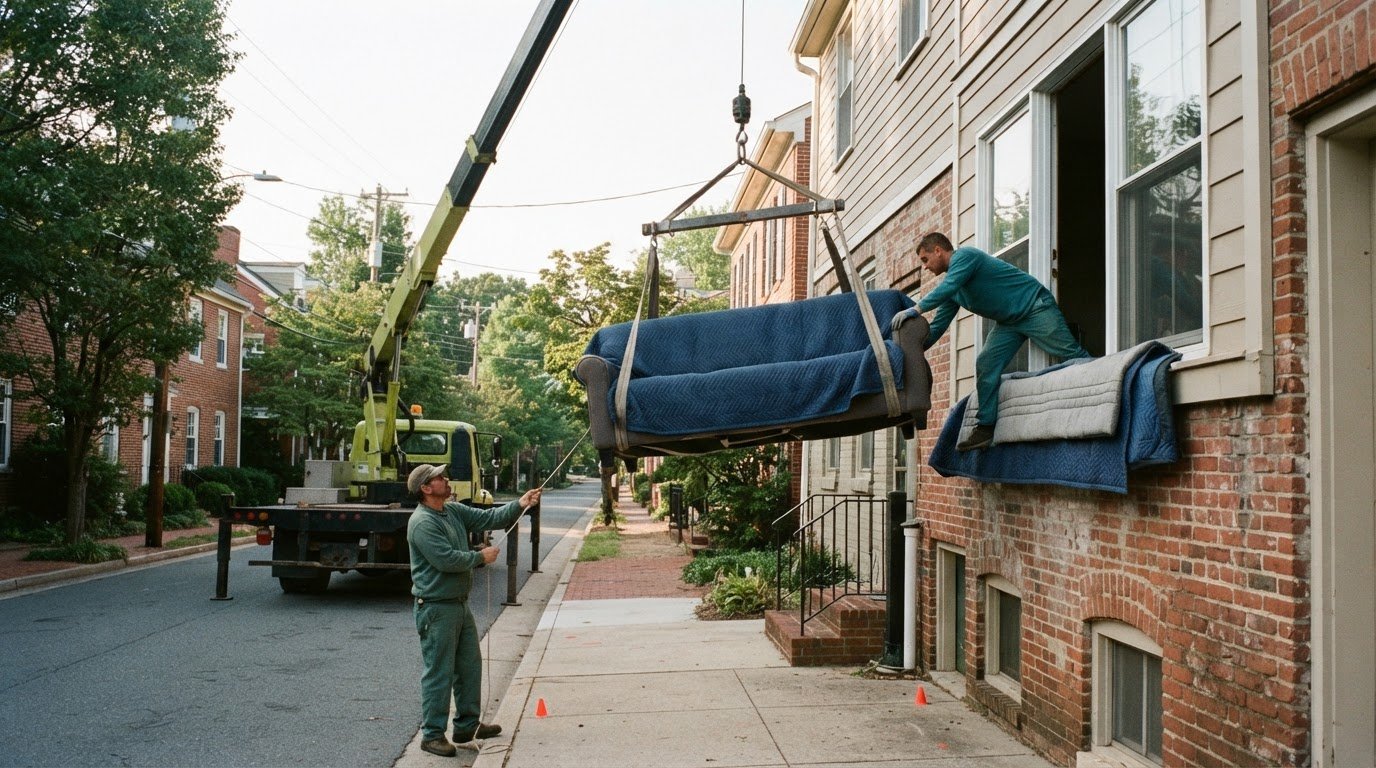
A tight doorway doesn’t have to strand your couch. A couch hoisting rigging crew for historic downtown homes in Reston can assess the access route, plan the lift, and keep the area below clear. That helps determine whether a window or balcony offers a practical way in.
It’s understandable to worry about narrow openings, delicate finishes, and a heavy couch suspended outside your home. A careful assessment of the couch, opening, and lift area is a safer starting point than trying to force a tight fit.
Learn what a crew considers before hoisting, how equipment choices depend on the access and load, and how the team protects the area below. You’ll also see what information to share about your couch and home so the job can be planned with fewer surprises.
Key Takeaways
- A window or balcony can provide an alternative route when a couch won’t fit through a doorway.
- Crews assess the couch, opening, and surrounding access before choosing a hoisting approach.
- The right rigging equipment depends on the load and the lift conditions at the home.
- Keeping the area below clear helps protect people and property during the lift.
- Sharing couch dimensions and access details helps the crew plan the job more effectively.
Hoisting oversized furniture through windows and balconies
A window or balcony can provide another route when a couch won’t pass through a doorway. A professional lift requires accurate measurements, protection for building features, and a controlled path into the room.
Furniture and Access Route Measurements
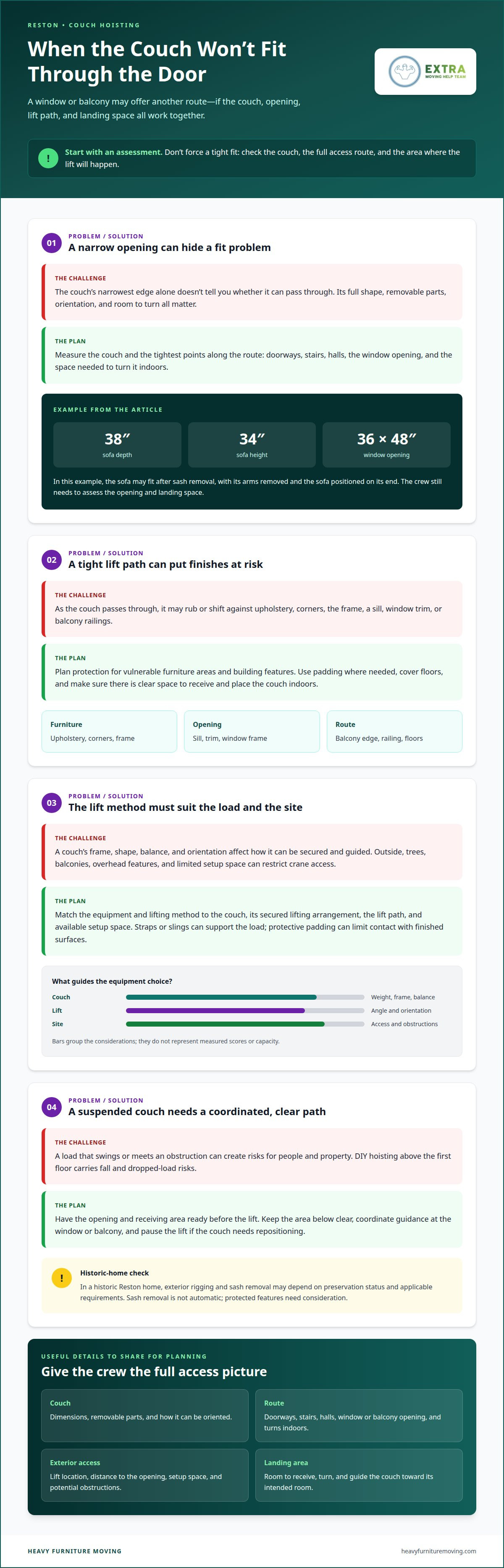
The crew measures the couch, its removable parts, and the tightest points along the route. That includes doorways, stairs, halls, the window opening, and the space needed to turn the couch indoors. In one example, a sofa 38 inches deep and 34 inches tall may fit through a 36 by 48-inch window opening after sash removal, positioned on its end with its arms removed.
Measurements show whether the opening and landing space can accommodate the couch’s full shape, not just its narrowest edge. A balcony route also needs a clear path from the lift point into the room.
Protecting Furniture and Building Features
Before the lift, the crew plans how to protect the couch’s upholstery, corners, and frame as it passes the window opening. Inside, floor coverings and clear placement space help reduce scuffs as the furniture is guided into position. Window trim, sills, and railings also need protection from rubbing or impact.
The crew considers the entire path, including the balcony edge and the point where the couch enters the home. Even a padded couch can damage a painted frame if it shifts against a hard corner.
Safe Exterior Hoisting and Home Restrictions
Professional couch hoisting starts with assessing the load and access, securing the couch for a controlled lift, and coordinating its movement through the window. The opening and interior receiving area must be ready first. DIY furniture hoisting above the first floor carries fall and dropped-load risks.
For a historic home in Reston, exterior rigging and window removal may depend on the property’s preservation status and applicable requirements. Sash removal is not automatic; the crew considers whether the opening can be used without altering protected features.
Window Access for Oversized Furniture
When doorways are too small, a window may offer an alternative if the couch can pass through and the exterior approach is workable. The crew considers the opening, the couch’s orientation, removable arms, and the route from the window to its final position.
If sash removal is planned, the crew guides the couch through the opening and into the home. The interior team needs room to receive and turn the furniture without forcing it against walls or trim. A balcony may provide another access point when its layout supports the lift.
Using cranes and specialized equipment
A crane may help move a couch when a window or balcony is beyond practical reach from the ground. The crew matches the lifting method and equipment to the couch, building access, and space around the lift.
Rigging Equipment and Lifting Methods
Rigging holds and guides the couch as it rises, so the crew considers its frame, shape, and balance when planning the setup. Lifting straps or slings can support the load, while protective padding helps limit contact with finished surfaces. The method also depends on whether the couch can travel upright, on its side, or at an angle.
At an apartment with a narrow balcony, for example, the crew needs to plan how the couch will clear the railing and reach the opening without swinging into the building. A crane may suit an exterior lift; another controlled approach may work where crane access is restricted.
Lifting Capacity
Equipment capacity must suit the couch and the full lifting arrangement. Before choosing equipment, the crew considers the item’s weight, how it will be secured, and the lift path. Capacity alone does not settle the choice: the lift angle, available setup space, and ability to guide the load matter too.
A couch with a wide frame may handle differently from a compact sofa, even if both seem manageable indoors. The crew plans for the load as it will be lifted, including its orientation and removable parts. That assessment helps match the equipment to the job rather than relying on appearance alone.
Crane access is another key factor. The crew assesses the space outside, the distance to the opening, and potential obstructions such as trees, balconies, or overhead features. Those conditions help determine whether a crane can be positioned with a clear lifting path.
Before lifting, the team coordinates the equipment setup, couch attachment, and movement at the window or balcony. One crew member can guide the load while others monitor its position and communicate changes. If the couch needs repositioning, the lift pauses rather than forcing it past an obstruction.
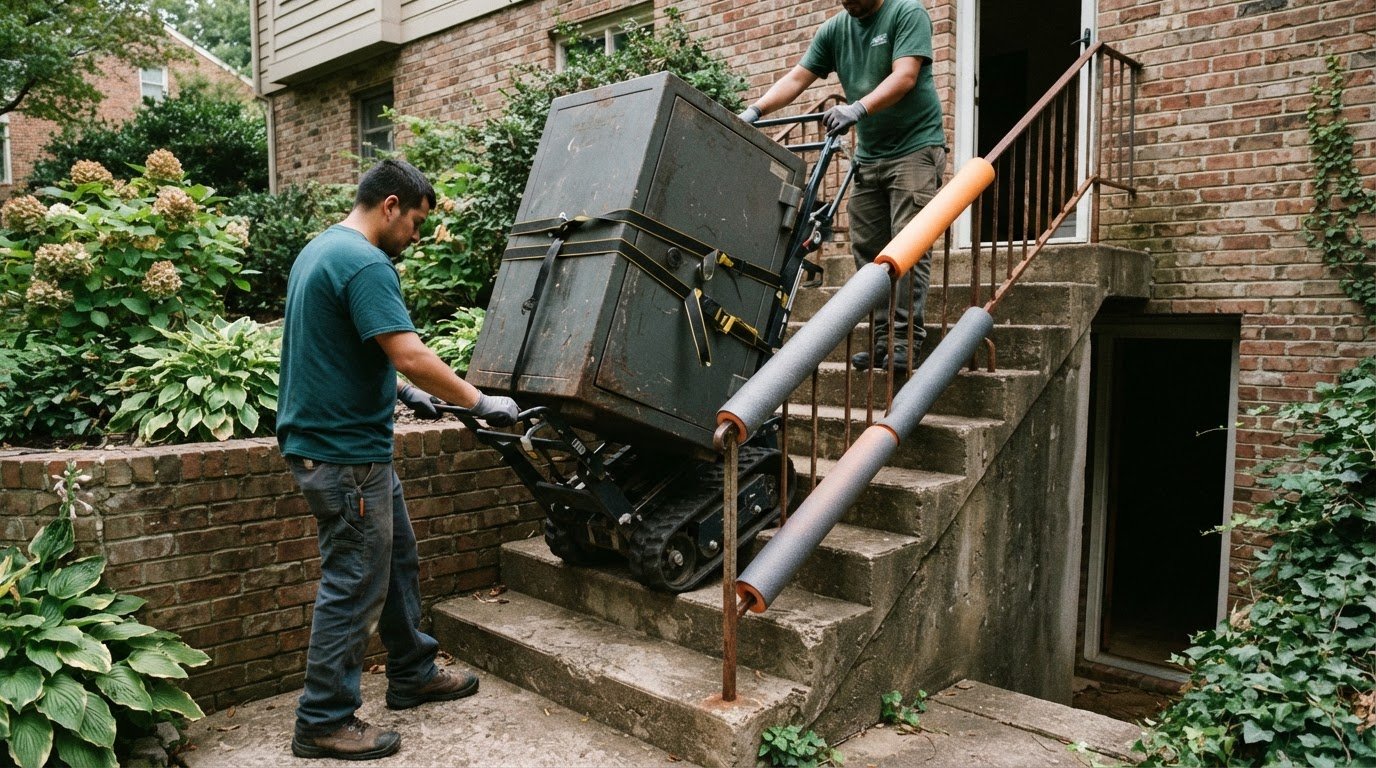
Specialized equipment is useful when the route calls for more control than carrying the couch through the home. For heavy or awkward items, a heavy lifting moving service can help plan the lift around the item and access conditions.
Furniture hoisting
Furniture hoisting can solve an access problem when a couch cannot travel through the home’s interior route. In Reston, the crew considers the lift location, the item, and the risks before choosing this approach.
Furniture Hoisting Service in Reston
A Reston furniture-hoisting job starts by identifying which pieces need an exterior route and where each one will go. The crew considers the building layout, the couch’s shape, and whether the intended opening can receive it. A sofa bound for an upper-floor room may need a different plan from furniture that can enter through a ground-level window.
The plan also accounts for the landing area inside. A clear route from the opening to the intended room helps the crew place the couch without forcing it through tight turns.
Furniture Protection During External Lifting
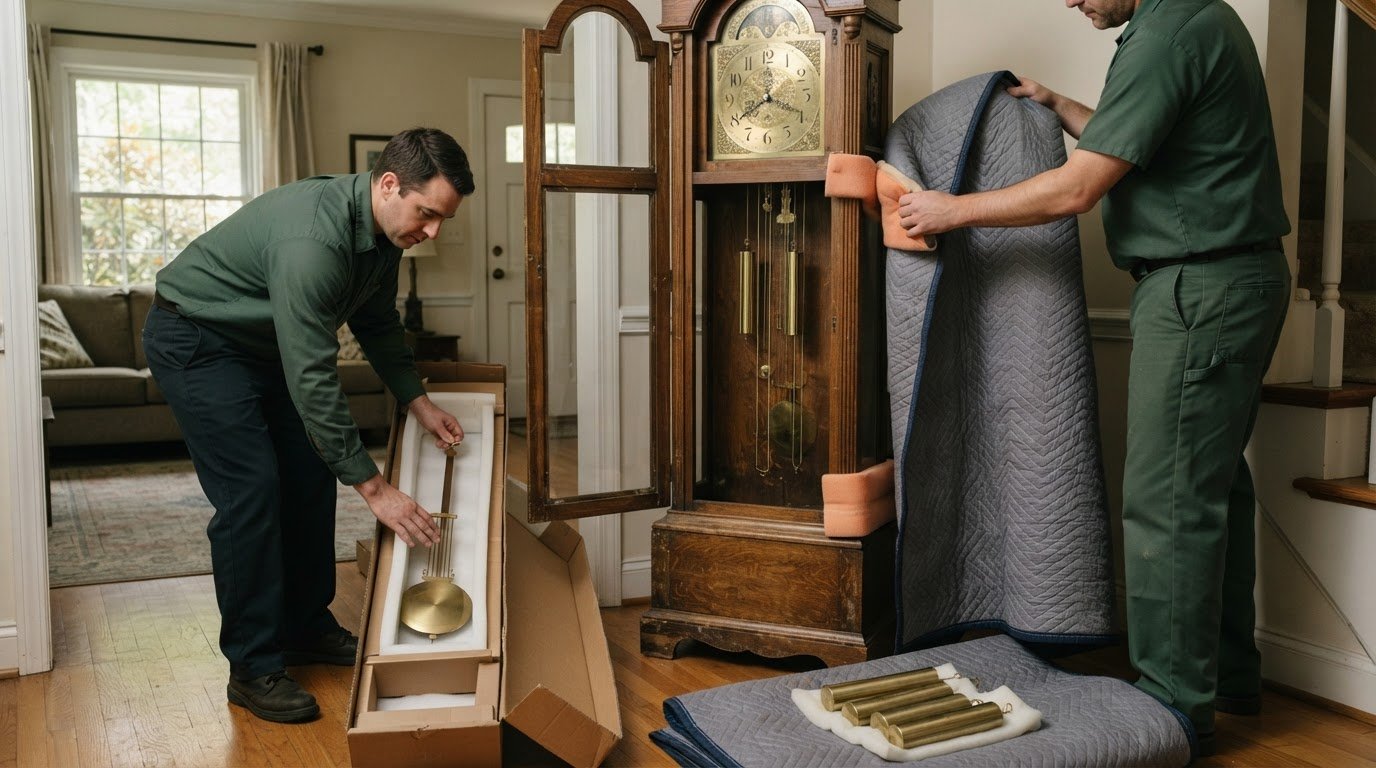
Before an exterior lift, the crew plans how to limit contact between the couch and hard surfaces. Padding can protect vulnerable upholstery and corners, while careful positioning helps keep straps from pressing on delicate areas. The window sill, nearby trim, and balcony railing also need attention because the furniture may shift as it passes.
Inside, floor coverings and a clear receiving space help reduce scuffs during placement. For example, a couch entering a narrow room needs a planned turn, not a last-second pivot against a wall.
When Hoisting Is Useful
Hoisting can help when a couch cannot fit through a doorway, stairwell, or interior hall but an exterior opening offers a workable route. It may also avoid repeated tight turns when moving several pieces. The crew compares that route with carrying the item through a wider entrance or removing couch components.
Alternatives depend on the furniture and layout. Removing legs or arms may reduce the couch’s profile, and another doorway may provide enough clearance. If neither option creates a manageable path, an exterior lift may be the practical choice.
Permits, Risks, and Insurance Coverage
For a lift near a Reston sidewalk or street, permit requirements depend on the setup and whether public space will be occupied. A lift contained within private property raises different access considerations. The site plan should account for the crane or rigging position, the route, and the space used below.
Every exterior lift carries risks, including a swinging load, contact with the building, or damage to the furniture. Insurance coverage depends on policy terms and the circumstances of a loss, so do not assume coverage simply because a crew is present. The lift plan, property access, and receiving area all shape how risks are managed.
Site assessments and access measurements
A site assessment maps the couch’s route from its current position to the destination room. In historic downtown Reston homes, narrow stairs make it important to assess turns, landings, and alternative entry points.
Site Assessment and Safe Entry
The crew reviews the home’s layout and compares possible entry routes before choosing a method. That means tracing the path through each doorway, hall, landing, and stair turn, then assessing whether a window or balcony offers clearer access. The best route accommodates the couch and lets the team guide it without forcing it against walls or trim.
Each route has different constraints. A front entrance may lead to a narrow hall, while a rear entrance may have a tighter landing. The assessment accounts for the couch’s shape and the direction it must turn, not just whether it fits through one doorway. A couch hoisting rigging crew for historic downtown homes in Reston can use these details to compare interior and exterior access.
Measurements for Narrow Stairs and Access
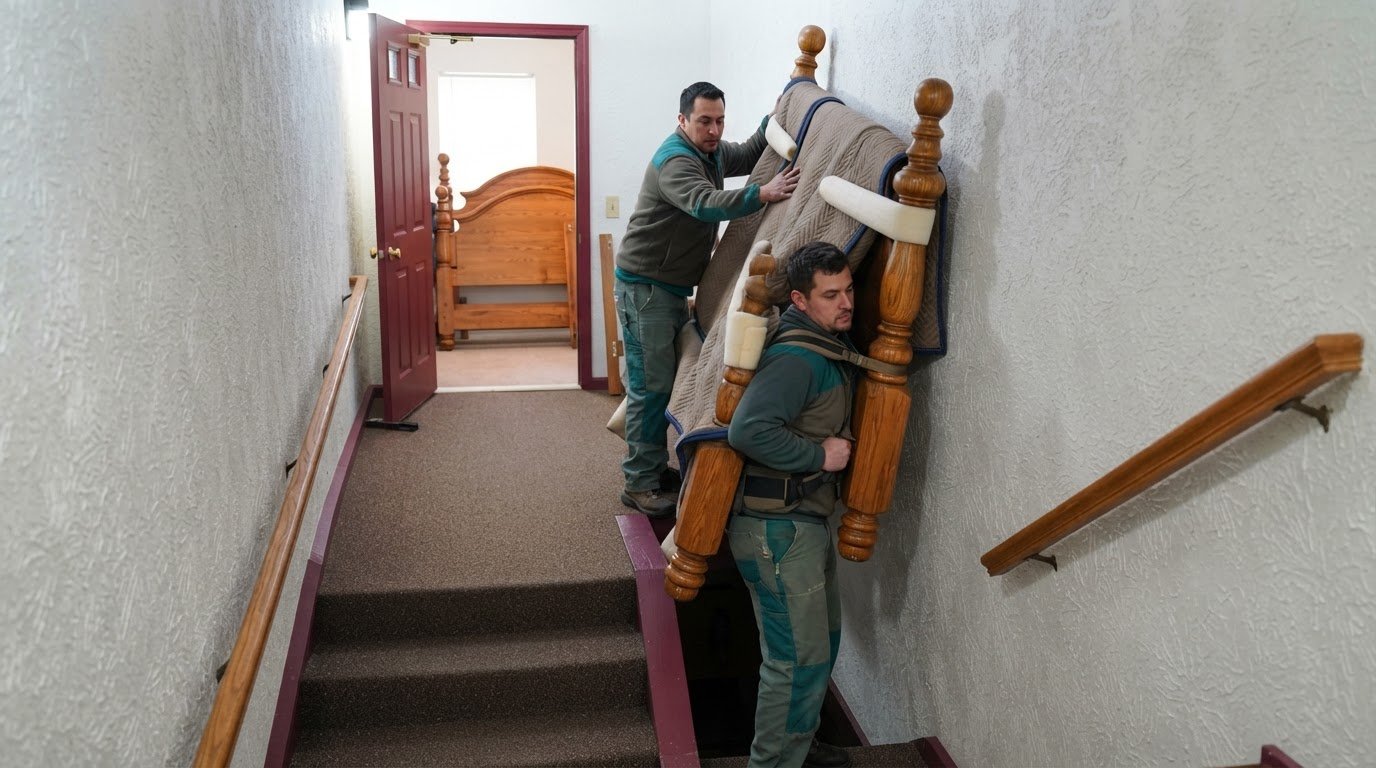
For narrow stairs, the crew measures stair width, landing depth, ceiling clearance, and the tightest turn. It compares those dimensions with the couch’s height, depth, and length in possible carrying positions. A staircase that looks wide enough at the entrance may still block the couch at a landing or where the stairs change direction.
Measurements also cover the route outside. The crew considers the distance from a potential lift position to the window or balcony, along with obstacles that could restrict access. These details help determine whether a direct carry, another entrance, or exterior hoisting is the better fit.
During the assessment, each measurement answers a practical question: can the couch pass, turn, and remain under control at that point? A tight corner may require a different orientation. If the couch cannot clear the ceiling or wall while turning, the team can assess another route instead of risking damage by pushing it through.
The receiving room matters too. The crew identifies where the couch will land and checks whether there is room to move it away from the opening. A room with furniture near the entrance may need a different placement plan from an empty room. This step connects the exterior route to the final position.
For a Reston home with a narrow staircase, the decision considers the whole route, not just the stairs. When choosing a couch hoisting rigging crew for historic downtown homes in Reston, share the access constraints so the crew can assess the entry plan. If an interior route has a blocked turn, a window or balcony may provide an alternative.
Ground crew and keeping the area below clear
A ground crew helps manage the lift from below as the couch moves outside the home. Clear communication and an unobstructed drop zone let the team monitor the load and surrounding space.
Ground Crew Responsibilities
During a Reston couch hoist, ground crew members watch the rigging, lifting path, and area around the equipment. They communicate with the team guiding the couch at the window, calling out changes in position or nearby obstacles. This role is especially useful when the person operating the lift cannot see the entire route from the setup point.
For example, a ground crew member can spot the couch swinging toward a porch post while the upper team focuses on clearing the window frame. Clear signals help the crew pause and correct the movement before continuing.
Keeping the Area Below Clear
Before the lift begins, the team identifies the space beneath the couch’s route and keeps people, pets, and loose belongings out of it. A clear area lets the ground crew monitor the load without distractions and helps keep people away from suspended furniture.
The crew considers the full travel path, not just the area directly below the window. If the couch must pass over a walkway or driveway, the team accounts for that space when organizing the lift. Furniture, planters, and other movable items can be cleared from the work zone.
Communication matters at every transition. The ground crew and the team at the opening coordinate before the couch rises, as it approaches the window, and as it enters the room. If someone spots an obstruction, the crew can stop and reassess rather than rushing the load past it.
Clear space also helps protect the home’s exterior. A garden bench or railing near the lift can restrict crew movement or complicate the couch’s path. Clearing obstacles from the planned zone gives the team room to guide the furniture and monitor its position.
At a Reston home with a shared path, the crew includes that access point in its ground-level plan. Keeping the route clear helps prevent interruptions while the couch is moving. The team also organizes its equipment so straps and other gear do not become obstacles.
For a coordinated sofa hoisting service, share details about the entrance and nearby ground space when arranging the job. Those details help the crew plan where to position people and keep the area below clear.
Heavy Furniture Moving: Sofa Hoisting
Heavy Furniture Moving provides Sofa Hoisting for couches that cannot pass through a home’s interior route. It’s a practical option when measurements show that stairs, hallways, or doorways won’t accommodate the furniture but an exterior lift offers a workable path.
The service moves the sofa through the planned opening and into the home. Share the couch’s dimensions, its destination room, and access challenges such as a narrow landing or limited outdoor space. These details help shape the lift plan and the crew’s approach to placement.
If your couch needs an exterior route into your Reston home, contact Heavy Furniture Moving to discuss Sofa Hoisting.
Plan the next move with confidence
Before scheduling a couch lift, gather the details that shape the plan: the couch’s size, its destination, and access challenges inside or outside the home. A couch hoisting rigging crew serving historic downtown homes in Reston can use this information to plan the job and discuss the next step.
Heavy Furniture Moving offers Sofa Hoisting for couches that need an exterior route. Other moving options include Movers Near Me and Exercise Equipment Moving. Choose the service that fits the item and task.
A clear description of the home’s layout helps start the conversation. Share where the couch is now, where it needs to go, and which doorway, stair, window, or balcony creates the access challenge. Then contact Heavy Furniture Moving to discuss your couch hoisting needs. A difficult entry doesn’t have to leave you stuck; take the next step toward getting your couch where it belongs.
Frequently Asked Questions
Are couch hoisting and furniture rigging services available near Reston, VA?
Yes, Heavy Furniture Moving offers Sofa Hoisting in Reston for couches that need a route through an exterior opening. To describe your job clearly, share the couch’s size, its current floor, and the room where it needs to go. Mention any tight hallway, stair turn, or balcony access. Those details help the crew understand the move and prepare a suitable plan for your home.
What reviews and service areas should I know about for Reston, VA couch hoisting?
Heavy Furniture Moving serves Reston and reports 500+ verified five-star Google reviews, with an overall rating of 4.9/5. Its Northern Virginia service area includes Fairfax, Woodbridge, Manassas, Manassas Park, Aldie, Ashburn, McLean, Vienna, Centreville, Chantilly, Clifton, Dumfries, South Riding, Fairfax Station, Haymarket, and Gainesville. For a Reston couch lift, share the address and access details when arranging service.
How much does it cost to hoist a couch through a window in Reston, VA?
The cost depends on the couch, the lift route, and access conditions at your home. A quote can account for factors such as the couch’s size, the height and position of the opening, and difficult access. Heavy Furniture Moving provides the total before work begins. Share clear details about the couch and property so the quote reflects the planned job.
How do couch hoisting quotes, minimum fees, and hourly rates work in Northern Virginia?
Heavy Furniture Moving uses hourly labor with a two-hour booking minimum and flat-rate pricing for most single heavy items. The exact quote depends on the couch and access conditions, and the total is provided before work begins. For a useful quote, describe the item, floor, entry route, and stairs, then share photos of the couch and access points.
Should I choose a crane lift, rope hoist, or furniture lift for a couch?
The right method depends on the home’s layout, exterior access, and where equipment can be positioned. A crane may suit a lift that needs reach from outside; a rope-hoist setup depends on suitable rigging and anchoring; a furniture lift uses a platform to raise the item. The crew considers these conditions alongside the couch’s shape and placement needs before selecting an approach.
What measurements and photos should I send for a couch hoisting quote?
Send the couch’s length, depth, and height, along with measurements of the tightest doorway and intended window or balcony opening. Include photos of the couch, stairway, hallway turns, exterior access, and destination room. Show obstacles such as railings or overhangs in the pictures. These details give the crew a clearer view of the route and can reveal questions that measurements alone might miss.
When is the best time to schedule furniture hoisting in Reston, VA?
Schedule once you know the couch, destination, and access route, so those details can inform the plan. Heavy Furniture Moving often has same-day availability when a slot is open; same-day scheduling is usually available if you call before 2 PM. If your building has shared access, coordinate the timing around any required entry arrangements. Having photos ready can help make the scheduling conversation more focused.
Frequently Asked Questions
Yes, Heavy Furniture Moving offers Sofa Hoisting in Reston for couches that need a route through an exterior opening. To describe your job clearly, share the couch’s size, its current floor, and the room where it needs to go. Mention any tight hallway, stair turn, or balcony access. Those details help the crew understand the move and prepare a suitable plan for your home.
Heavy Furniture Moving serves Reston and reports 500+ verified five-star Google reviews, with an overall rating of 4.9/5. Its Northern Virginia service area includes Fairfax, Woodbridge, Manassas, Manassas Park, Aldie, Ashburn, McLean, Vienna, Centreville, Chantilly, Clifton, Dumfries, South Riding, Fairfax Station, Haymarket, and Gainesville. For a Reston couch lift, share the address and access details when arranging service.
The cost depends on the couch, the lift route, and access conditions at your home. A quote can account for factors such as the couch’s size, the height and position of the opening, and difficult access. Heavy Furniture Moving provides the total before work begins. Share clear details about the couch and property so the quote reflects the planned job.
Heavy Furniture Moving uses hourly labor with a two-hour booking minimum and flat-rate pricing for most single heavy items. The exact quote depends on the couch and access conditions, and the total is provided before work begins. For a useful quote, describe the item, floor, entry route, and stairs, then share photos of the couch and access points.
The right method depends on the home’s layout, exterior access, and where equipment can be positioned. A crane may suit a lift that needs reach from outside; a rope-hoist setup depends on suitable rigging and anchoring; a furniture lift uses a platform to raise the item. The crew considers these conditions alongside the couch’s shape and placement needs before selecting an approach.
Send the couch’s length, depth, and height, along with measurements of the tightest doorway and intended window or balcony opening. Include photos of the couch, stairway, hallway turns, exterior access, and destination room. Show obstacles such as railings or overhangs in the pictures. These details give the crew a clearer view of the route and can reveal questions that measurements alone might miss.
Schedule once you know the couch, destination, and access route, so those details can inform the plan. Heavy Furniture Moving often has same-day availability when a slot is open; same-day scheduling is usually available if you call before 2 PM. If your building has shared access, coordinate the timing around any required entry arrangements. Having photos ready can help make the scheduling conversation more focused.