Couch Hoisting Cost in McLean: What Affects the Price
A safe window lift starts with rated rigging, not a homemade platform. The Occupational Safety and Health Administration says loads must be rigged by a qualified rigger. In McLean, the cost of couch hoisting through a window depends on the couch’s size and weight, window height, access, equipment, and building or street requirements.
Understanding couch hoisting through a window costs and rigging requirements in McLean helps you assess a proposed plan. The right setup depends on the lift, and a quote should explain the equipment and rigging involved. This article covers cost factors, how mechanical lifts compare with rope-and-strap rigging, and what to look for in a quote. It also explains why rated equipment and a qualified crew matter before moving day.
Key Takeaways
- Understand how window height, couch size, access, and equipment shape a hoisting quote.
- See when a mechanical lift may suit the job better than rope-and-strap rigging.
- Learn which job details and pricing terms help make a photo-based quote clearer.
- Recognize why rated rigging and a qualified crew matter for a safe lift.
- Know what to look for in a non-binding estimate before moving day.
How much does furniture hoisting cost?
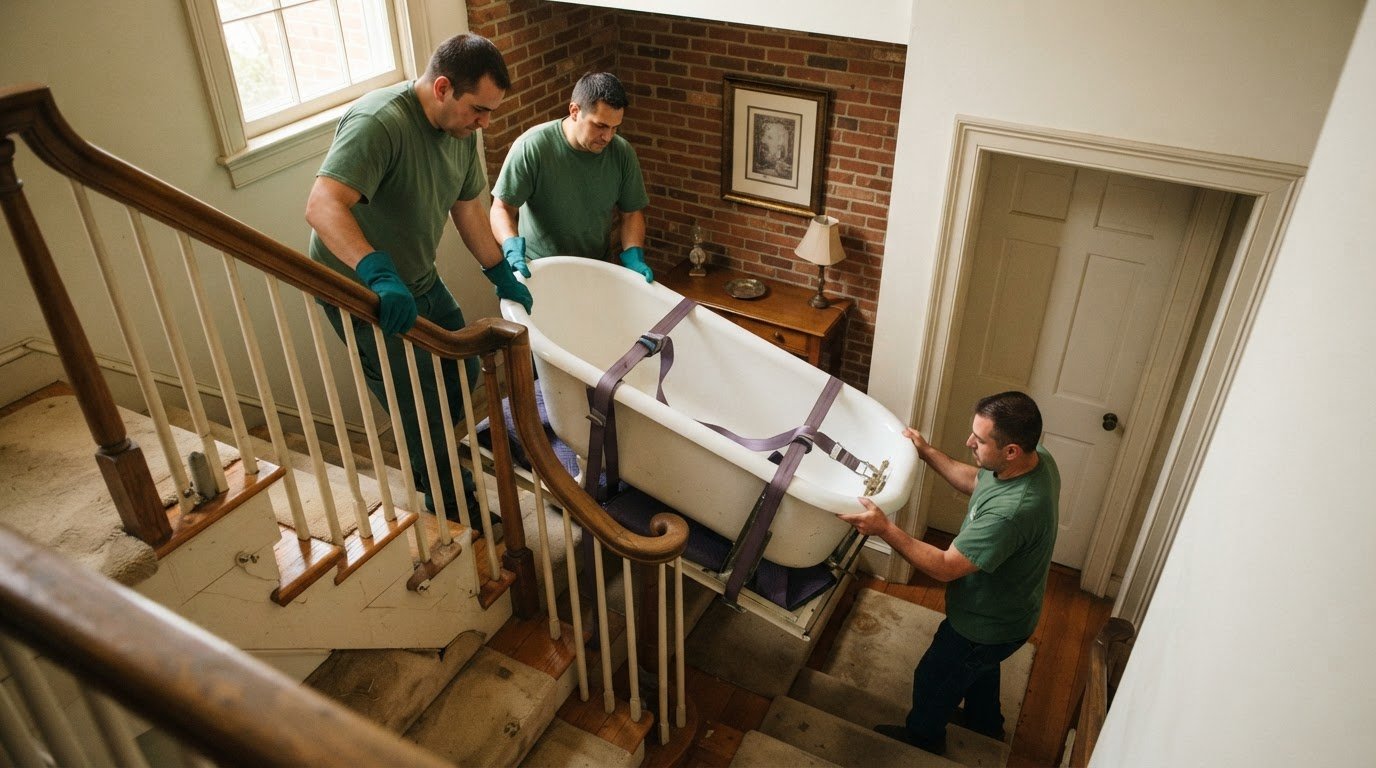
Window hoisting can work for a couch that cannot pass through an apartment doorway, hallway, or stairwell. A tight turn may block a large sectional even when the stairs are wide. An operable window, or one with a removable sash or panel, may provide another route. Professionals assess the couch’s dimensions and weight, the window opening, and exterior access before choosing a lifting method.
Compared with disassembly, stair carries, or balcony access, a window lift may avoid taking apart a couch or maneuvering it around narrow landings. Disassembly can work when the furniture comes apart safely; stairs or balcony access depend on the building layout and a clear route. The cost depends on the job and is provided in a quote. Key factors include height, item weight, access, equipment, and rigging needs.
For a useful estimate, professionals consider the floor, window size, couch shape, and distance from the staging area. A heavy sectional and a compact sofa create different handling demands. Exterior obstacles, limited access, and specialized lifting equipment can also affect pricing. Under Federal Motor Carrier Safety Administration rules for a non-binding estimate, a customer should be prepared to pay up to 110% of the quoted amount at delivery.
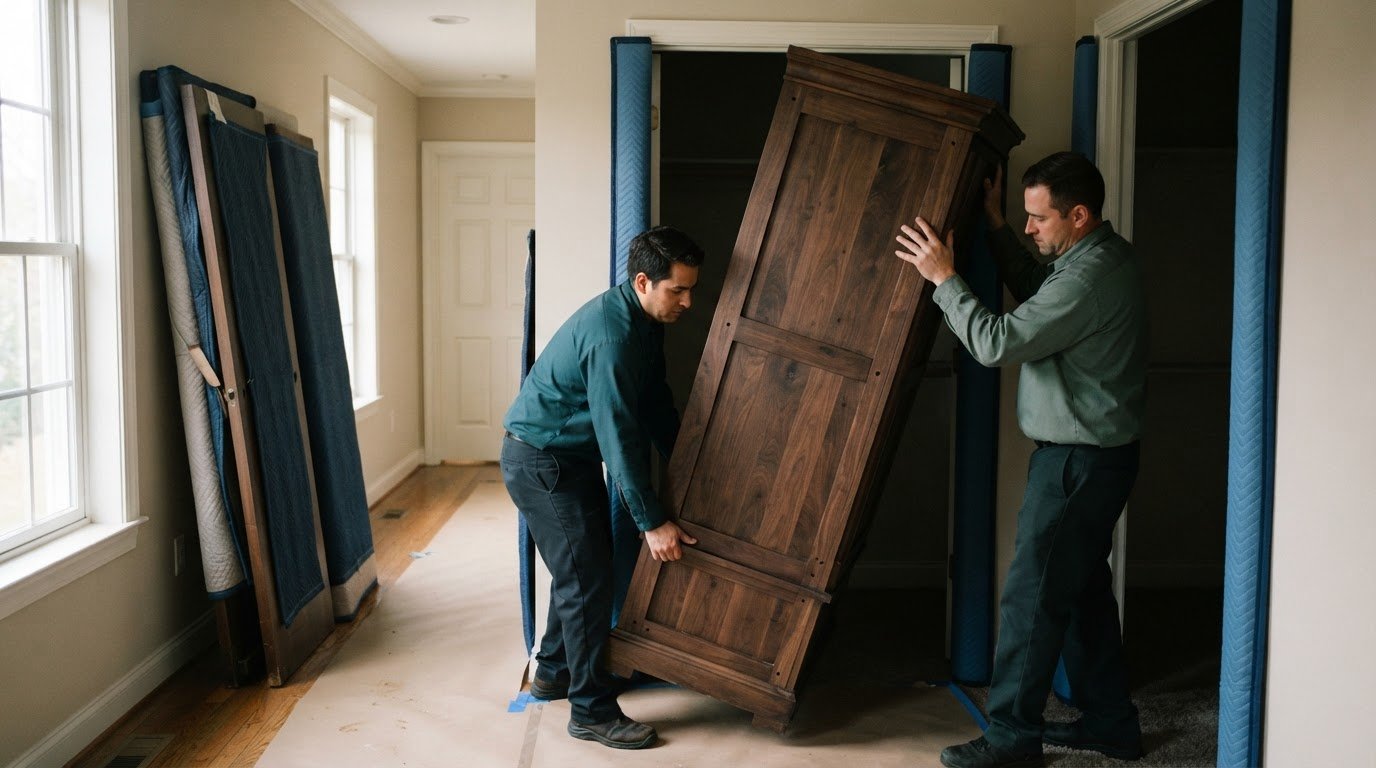
Preparation protects both the furniture and the home. The crew can wrap upholstery, pad exposed edges, secure loose cushions, and position straps to support the couch during movement. Before lifting, they assess the window frame and clear the indoor path. The room needs a landing zone with at least 6 feet of clear space from the window. The window must open or have a removable sash or panel.
Outside, the crew assesses where equipment can be positioned and where the couch can be lowered. A crane or hoist needs staging space suited to its setup and the building’s access. The required area depends on the equipment, lift path, and nearby obstacles. Cars, landscaping, overhead wires, and narrow approaches can affect placement, so crews account for them in the plan.
Sofas and sectionals can be candidates for hoisting when interior routes are too tight. The crew protects upholstery and hard surfaces, then uses suitable straps to keep the load controlled throughout the lift. These checks matter at each transition, from the room to the window and from outside to the landing area. A clear route and stable staging area help the crew manage the move.
Cost factors including height, access, equipment, and rigging
Height, access, equipment, and rigging shape both the work plan and its cost. In McLean, each factor affects setup, crew needs, or the couch’s route.
Height and Access Cost Factors
Height and access determine how far the couch travels and how easily the crew can reach the window. A second-floor opening with a clear approach differs from a higher window beside a balcony, overhang, or narrow driveway. These conditions influence the lifting method, equipment placement, and setup time. Crane or lift rental may have a two- or three-hour minimum, so difficult access can affect the total even for one couch.
Equipment and Rigging Choices
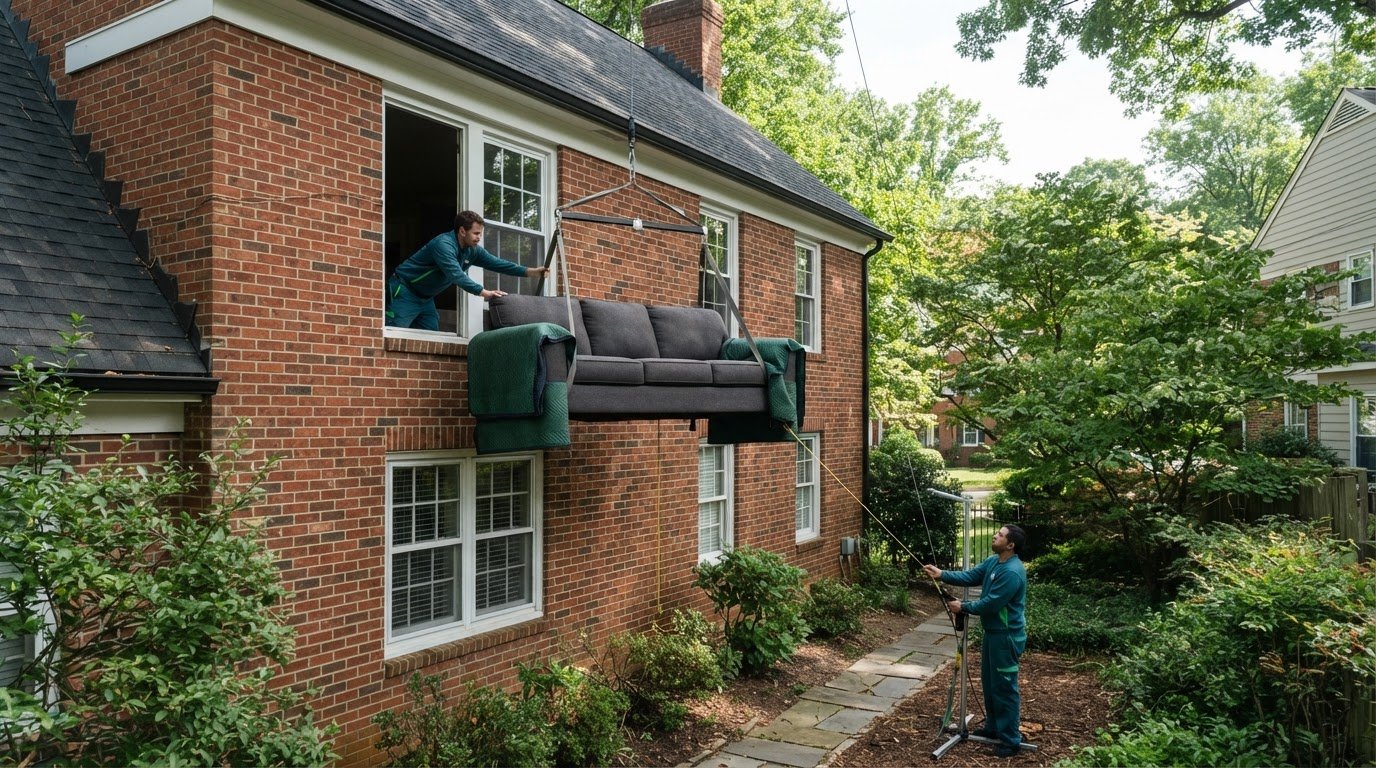
Hoisting equipment supports and controls the couch as it moves outside the building. Rope-and-pulley rigging is described for furniture deliveries on floors 2-6; a third-floor window or higher may call for a block-and-tackle, motorized hoist, or mechanical lift operated by a trained crew. The couch’s weight, shape, and lifting points help determine suitable straps and rigging. The equipment choice matters because it changes setup needs and how the load is controlled.
Crew Size and Lift Procedure
A safe rope-and-pulley operation needs 4-6 people. The crew assigns roles for controlling the load, guiding it past the window, and receiving it at the landing point. Before lifting, movers position the rigging, protect contact points, and coordinate the path. During the lift, careful, steady movement helps limit swinging and contact with the building. A larger crew or mechanical equipment may be needed when height, weight, or access makes the operation more demanding.
Building access can add another layer. High-rise buildings generally require approval for hoisting, and a building may request a moving company’s insurance certificate as part of its process. That approval affects planning because the crew must account for building procedures as well as the physical lift. A balcony can also change the approach if it limits equipment placement or interferes with the couch’s path.
Street access matters when a mobile crane is needed. A crane may require a street-closure permit, while blocked curb space or nearby obstacles can affect equipment placement. In McLean, the quote should reflect the actual approach and lift path, not just the floor number. Share clear details about the window, building access, and outdoor staging area so the plan fits the job.
For a quote, the useful details are the couch’s dimensions and weight, the window height, and any access restrictions. Photos can show tight approaches, balconies, and possible equipment locations. Ask for the proposed lift method, crew plan, and any building documentation to be listed clearly. For a couch that needs a controlled exterior lift, explore sofa hoisting support as a practical next step.
Material lift versus rope-and-strap rigging
A material lift uses mechanical equipment to raise furniture, while rope-and-strap rigging uses secured lines and controlled handling. The right option depends on the window height, couch shape, and space outside. For a delivery on an upper floor, the equipment must suit both the load and the available setup area.
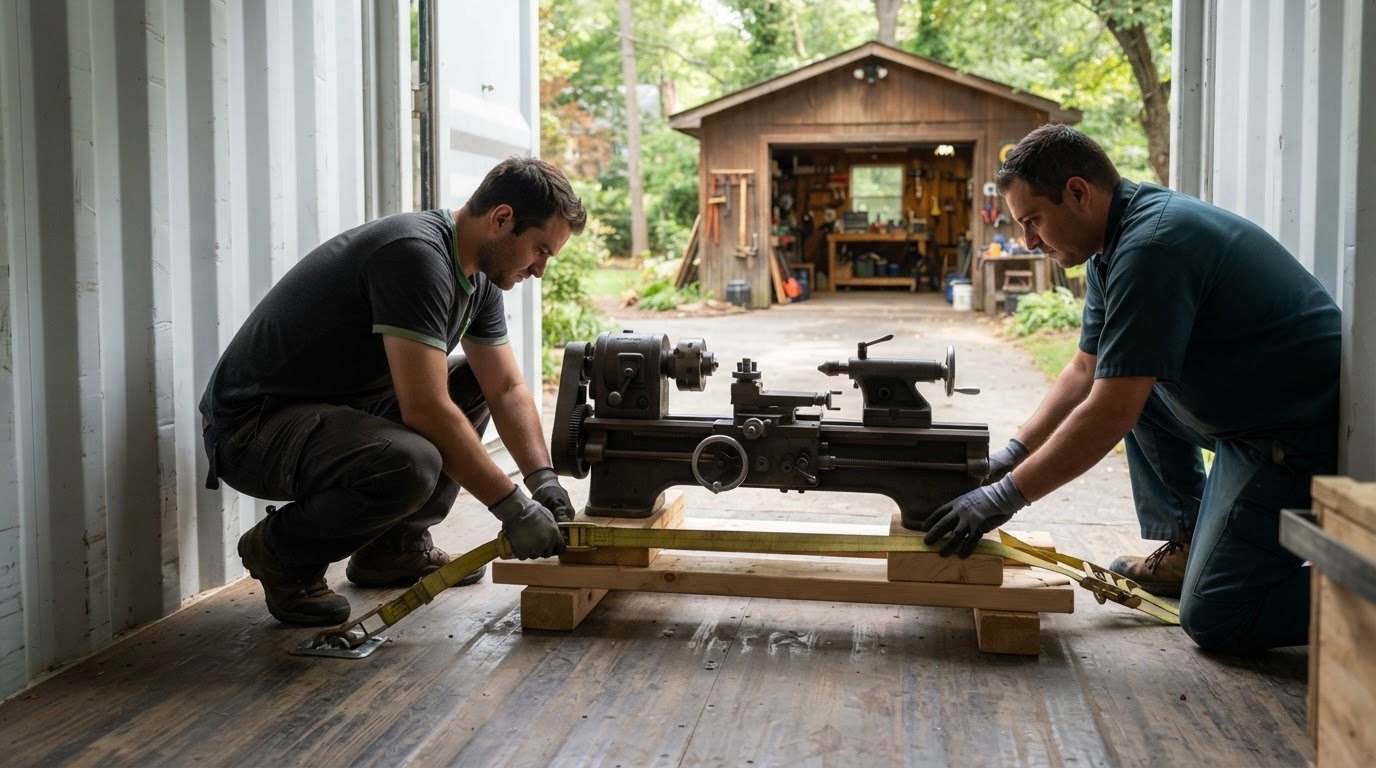
Rope-and-strap rigging may suit a lift where trained movers can control the couch along a clear path. The straps support the load while the crew guides it past the window and toward its landing point. An awkward couch may need careful positioning to keep its frame level. A material lift provides mechanical support instead, which can help when the weight or height makes manual line control less practical.
Exterior lifts and swing arms are used for deliveries on floors 6-20 or higher. Their reach can make them a better fit than rope rigging when a couch must travel many floors or the building layout limits other options. The required machine also depends on access at ground level. A narrow drive, trees, or nearby structures can restrict where equipment can stand and how the couch approaches the opening.
Each method has different setup needs. A mechanical lift requires suitable ground placement and a clear lifting path; rope-and-strap work requires rigging points and room for the crew to manage the load. If a mobile crane needs public street space, a street-closure permit may be required. Building approval can also affect high-rise hoisting. These requirements shape the plan, so the method cannot be chosen by floor number alone.
Before lifting, the crew’s safety checklist should match the couch and property. They confirm the couch’s dimensions and weight, inspect its frame and lifting points, and assess the window opening. They then plan how to protect the upholstery and contact surfaces with padding. The crew also checks the exterior path, equipment placement, and landing area. For example, a deep sectional may need a different orientation from a compact sofa.
Weather and nearby conditions matter for exterior work. High winds cancel exterior hoisting operations, so crews assess conditions before starting. The plan should also clarify who controls the load, who guides it at the window, and how the crew communicates during the lift. For an armoire or sofa, the crew selects rigging suited to its shape and coordinates each transition instead of relying on improvised platforms.
In McLean, the right method depends on the building, item, and access route. A material lift or swing arm may suit a higher delivery, while rope-and-strap rigging may fit a different layout. Clear details about the window, outdoor staging area, and furniture help professionals plan the approach. This comparison makes the quote easier to understand by connecting the proposed equipment to the actual lift.
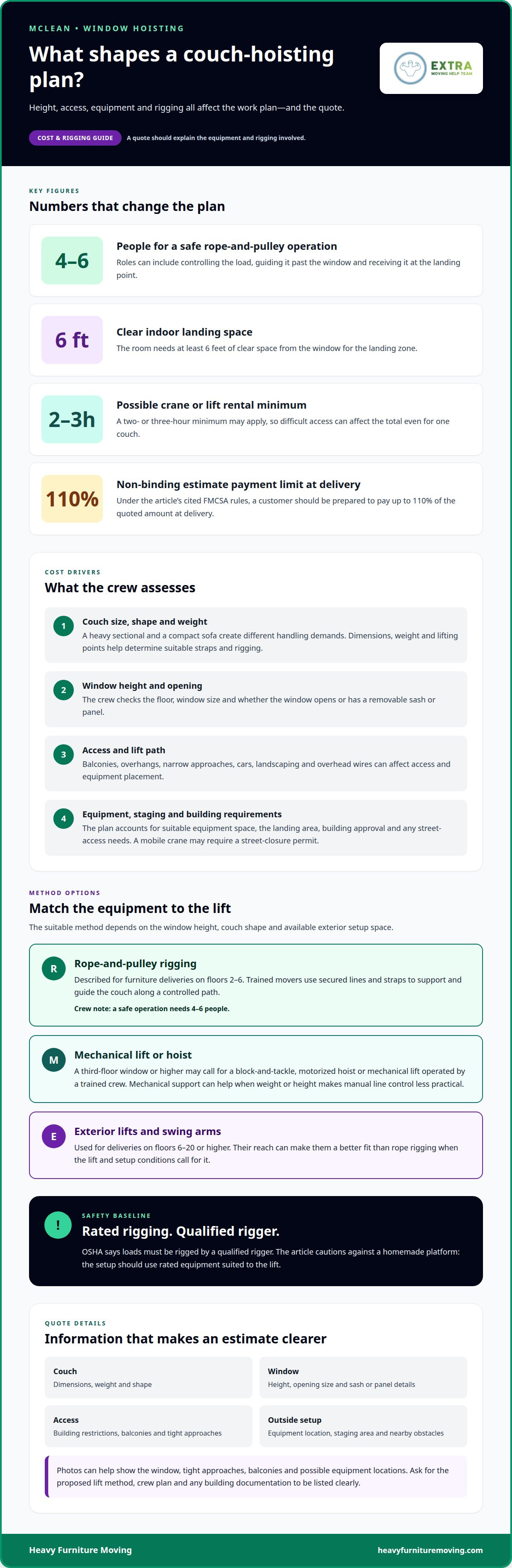
Photo-based quotes and pricing terms
Photos help a moving company understand the couch, window, and route before planning a lift. For a useful assessment, include the full couch, its label or measurements, the window opening, and the outdoor approach. A close-up of a narrow stair turn can also show why carrying the piece inside may not work. Clear images help reveal access limits that could otherwise be a surprise on moving day.
Photograph the couch from the front and side, then capture the route from the room to the window. Include the building exterior and the area where lifting equipment could be staged. If the couch has removable legs or cushions, show those details too. Use photos of the actual McLean property and delivery location, not a similar room or entrance.
The cost depends on the job and is provided in a quote; couch dimensions and weight, height, access, and equipment shape the estimate. A flat-rate quote can make the agreed scope easier to understand when the listed conditions match the job. The scope should identify the pieces being moved, the window or floor involved, and whether setup or additional handling is included. For example, adding an armoire after the estimate changes the load and may change the plan.
Moving-company pricing may distinguish a single hoist from a broader move. A quote for one sofa is different from pricing for several pieces, packing, or carrying items up stairs. Look for a clear description of the service, equipment, crew work, and any stated exclusions. The estimate should also explain how changes in access, item count, or lifting method affect the final amount. These details help you compare the written scope with the planned work.
Before preparing a quote, the crew can use the images to map the lift path and note questions about the opening or staging area. A photo showing a balcony rail, tree, or narrow driveway may prompt a closer look at equipment placement. The crew can then state which conditions the estimate assumes. If the actual window or access differs from the photos, the lifting plan may need to change.
Keep the quote and photos together. Match the written scope to the couch, window, and route shown, then note any changes before moving day. If the estimate names a lifting method, check that it fits the building access shown in the photos. A clear record helps prevent confusion about which pieces are included and what work the moving company plans to perform. Accurate details matter as much as clear images for safe handling.
Rated rigging and avoiding homemade lifting platforms
Rated rigging uses equipment selected for the load and lift, while homemade platforms lack that controlled basis. For a couch or sectional, professionals consider its dimensions, weight, shape, and suitable attachment points before choosing rigging. The Occupational Safety and Health Administration says loads must be rigged by a qualified rigger. Its construction standard cited for hoisting and rigging is 1926.753.
This distinction matters because furniture can shift as it passes a window, hallway, or exterior wall. A qualified rigger assesses how straps support the piece and how the crew will guide it. The crew also plans the load’s path and landing area. A sectional with an uneven shape, for example, may need a different rigging arrangement from a compact couch.
Homemade lifting platforms can fail to control a suspended load. OSHA’s 2021 safety bulletin reports 57 incidents involving job-made boxes, baskets, and platforms between 2002 and 2020, including 46 serious injuries and 33 deaths. For window hoisting, the practical takeaway is clear: don’t substitute a makeshift box or platform for rigging selected and managed by trained professionals.
Before lifting, the crew matches the plan to the furniture and property. They review the couch’s dimensions, identify suitable rigging points, and protect contact areas with padding. They also assess the window opening, interior landing area, and exterior path. If a sectional must pass near a railing or building edge, the crew plans its orientation and movement before raising it.
Street access is part of the plan. If a mobile crane needs street space, a street-closure permit may be required. A high-rise building may also require approval for hoisting. These requirements can affect setup and scheduling, so the crew accounts for them in planning rather than improvising on arrival.
A professional lift follows a coordinated sequence: position the equipment, secure rated rigging, control the load, guide it through the opening, and lower it into the prepared landing area. The crew’s roles and communication should be clear before movement begins. This coordination helps prevent the couch from swinging into the frame or nearby surfaces.
Choose a plan that identifies the rigging method, the qualified rigger, and how the crew will control the couch at each transition. Avoid any proposal based on a job-made platform instead of rated equipment. For a professionally planned window lift, request help with sofa hoisting.
Heavy Furniture Moving: Sofa Hoisting
Heavy Furniture Moving provides Sofa Hoisting for bulky couches that cannot fit through a doorway, hallway, or stairwell. Choose this service when the interior route is too tight and a window lift is a practical way to move the sofa. Details such as couch dimensions, window access, and building requirements help describe the job clearly.
A planned lift addresses the key concerns covered here: suitable rigging, a clear path, and protection for the furniture and home. Share the sofa and access details when arranging the move. Contact Heavy Furniture Moving to discuss Sofa Hoisting for your McLean home.
Plan the Lift Before Moving Day
Plan the window lift as part of your arrival, not as a last-minute workaround. Share the couch’s dimensions, building access details, and any timing or approval requirements early. This gives the moving team a clearer picture of the job and helps coordinate the move with your home setup.
For couch hoisting through a window, cost and rigging requirements in McLean depend on the details of the lift. Before scheduling, gather those details, including photos of the room, window, and outdoor approach. Clear information helps the crew plan for the property and furniture instead of relying on assumptions.
Heavy Furniture Moving offers Sofa Hoisting, along with Movers Near Me and Exercise Equipment Moving. If the sofa needs a professional route through a window, contact Heavy Furniture Moving to discuss the move. A little planning now can make the next step feel much more manageable.
Frequently Asked Questions
Is window hoisting safe?
Window hoisting requires a planned lift, rated rigging, and trained handling. For example, the crew considers how the sofa’s frame and shape affect its support points. Homemade platforms are not a substitute for rated equipment. The crew also coordinates how the furniture moves through the opening and into the room.
Can any window be used for furniture delivery?
No. The window must open or have a removable sash or panel, and the opening must suit the furniture’s dimensions and orientation. A narrow opening may rule out a sectional even if it can be angled through a doorway. Window height, exterior access, and room to receive the item also matter. The crew assesses these conditions together rather than relying on the window’s width alone.
Can you hoist to the second floor without closing the street?
Sometimes, depending on the equipment and whether the lift needs public street space. A second-floor window may be reachable without a mobile crane, but the property layout determines the setup. A crane may require street-closure permits. For example, a clear private approach differs from a narrow frontage where equipment would occupy the road. The lift plan accounts for the actual access route and staging area.
Do you charge extra for insurance or equipment?
Wrap and straps are included at no extra charge. The quote is provided upfront before work begins, so the agreed scope and total are clear. Equipment needs depend on the lift plan, and the quoted work should describe that scope. Insurance coverage is separate from equipment selection, so do not assume the quote describes coverage unless its written terms say so.
How do you price a sofa hoist?
The cost depends on the job and is provided in a quote. For couch hoisting through a window in McLean, the sofa’s dimensions and weight, window height, access, and equipment needs shape the price and rigging requirements. Heavy Furniture Moving uses flat-rate pricing for most single heavy items, while labor is priced hourly with a two-hour minimum. The quote states the total before work begins.
Is hoisting charged by the hour?
Not always. Heavy Furniture Moving prices labor hourly with a two-hour minimum and uses flat-rate pricing for most single heavy items. The structure depends on the work being quoted. A single sofa hoist may be priced differently from a broader job involving several pieces. The quote sets out the scope and total before the crew begins, so you can understand what the agreed work covers.
What about permits?
Permit requirements depend on the equipment and where it must be set up. A mobile crane may require a street-closure permit when the lift uses public space. A high-rise building may also require approval for hoisting. These requirements can affect planning, so the lifting arrangement should account for the property’s access and applicable approvals before the work is scheduled.
How much does couch hoisting through a window cost in McLean, VA?
The cost and rigging requirements for couch hoisting through a window in McLean depend on the sofa, window height, access, equipment, and lift plan. Pricing is provided in a quote. Share clear details about the furniture and property so the proposed scope reflects the actual job. The quote should state the agreed work and total before it begins, giving you a practical basis for planning.
Frequently Asked Questions
Window hoisting requires a planned lift, rated rigging, and trained handling. The Occupational Safety and Health Administration says loads must be rigged by a qualified rigger. For example, the crew considers how the sofa’s frame and shape affect its support points. Homemade platforms are not a substitute for rated equipment. The crew also coordinates how the furniture moves through the opening and into the room.
No. The window must open or have a removable sash or panel, and the opening must suit the furniture’s dimensions and orientation. A narrow opening may rule out a sectional even if it can be angled through a doorway. Window height, exterior access, and room to receive the item also matter. The crew assesses these conditions together rather than relying on the window’s width alone.
Sometimes, depending on the equipment and whether the lift needs public street space. A second-floor window may be reachable without a mobile crane, but the property layout determines the setup. A crane may require street-closure permits. For example, a clear private approach differs from a narrow frontage where equipment would occupy the road. The lift plan accounts for the actual access route and staging area.
Wrap and straps are included at no extra charge. The quote is provided upfront before work begins, so the agreed scope and total are clear. Equipment needs depend on the lift plan, and the quoted work should describe that scope. Insurance coverage is separate from equipment selection, so do not assume the quote describes coverage unless its written terms say so.
The cost depends on the job and is provided in a quote. For couch hoisting through a window in McLean, the sofa’s dimensions and weight, window height, access, and equipment needs shape the price and rigging requirements. Heavy Furniture Moving uses flat-rate pricing for most single heavy items, while labor is priced hourly with a two-hour minimum. The quote states the total before work begins.
Not always. Heavy Furniture Moving prices labor hourly with a two-hour minimum and uses flat-rate pricing for most single heavy items. The structure depends on the work being quoted. A single sofa hoist may be priced differently from a broader job involving several pieces. The quote sets out the scope and total before the crew begins, so you can understand what the agreed work covers.
Permit requirements depend on the equipment and where it must be set up. A mobile crane may require a street-closure permit when the lift uses public space. A high-rise building may also require approval for hoisting. These requirements can affect planning, so the lifting arrangement should account for the property’s access and applicable approvals before the work is scheduled.
The cost and rigging requirements for couch hoisting through a window in McLean depend on the sofa, window height, access, equipment, and lift plan. Pricing is provided in a quote. Share clear details about the furniture and property so the proposed scope reflects the actual job. The quote should state the agreed work and total before it begins, giving you a practical basis for planning.