Concrete Bench Movers in South Riding: Rates and Estimates
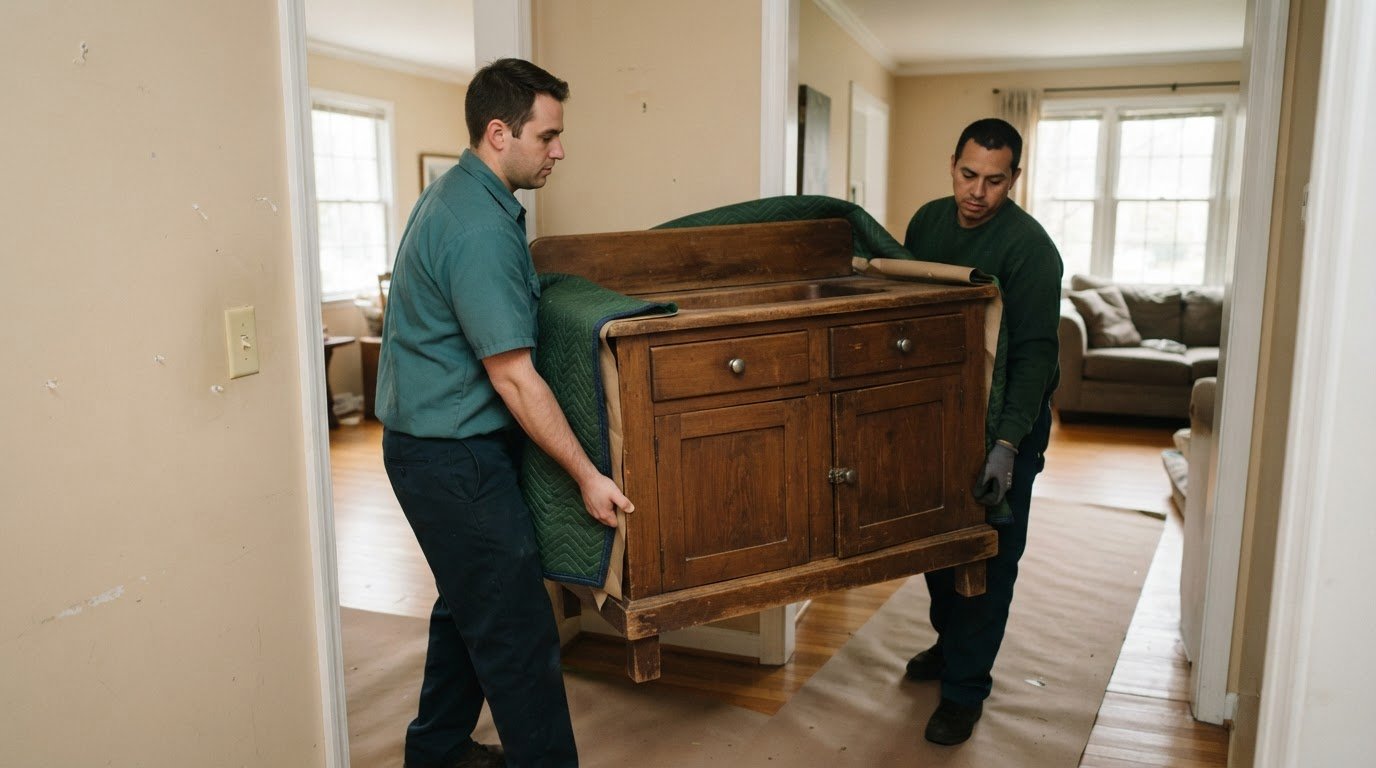
Before moving a heavy concrete bench, understand the written coverage terms and how they apply to the item and handling plan. If you need residential movers to relocate a heavy concrete statuary bench in South Riding, look beyond lifting strength: the bench’s weight, access, and final placement all shape the move. Heavy Furniture Moving plans heavy-item moves around the item and route, with wrap, blankets, and straps included on every job.
A careful plan can make a challenging relocation feel manageable. This article explains what to consider about insurance, how stairs, doorways, and other access limits affect the work, and why hourly rates and estimates depend on the job. You’ll also learn what details help shape a useful estimate and how the destination spot can affect handling. With those factors in view, you can make a clearer plan for moving your concrete bench safely and placing it where it belongs.
Key Takeaways
- Review how the written insurance terms apply to the bench and the planned handling, not just the move in general.
- Access details such as stairs, doorways, and the route to the truck can affect the equipment and labor an estimate accounts for.
- Share the bench’s size, weight, pickup conditions, and destination details to help shape a more useful relocation estimate.
- Moving a heavy statue indoors calls for a plan that accounts for both the outdoor route and the path through the home.
- Decide where the bench should sit before moving day so the crew can plan its final placement around the destination space.
Building access and certificates of insurance
A concrete garden bench may be moved without disassembly if its seat and supports are stable and the route allows it to be handled intact. Its weight has no single standard value: dimensions, solid or hollow construction, and the base all affect the load. A small bench with a narrow base presents different handling needs from a long, solid bench with thick supports.
Before planning the move, record the bench’s dimensions and note visible cracks, loose joints, or repairs. Those details help determine whether it can travel as one piece and what support it needs. A fragile edge or uneven underside may affect the handling plan. Don’t assume a bench can be safely lifted by its seat alone.
For building access, a certificate of insurance (COI) can document a mover’s insurance information for a property manager or building owner. A COI is a summary, not the full insurance policy. Its named insured, coverage dates, and listed coverage should match the move and the building’s stated requirements. The building manager can explain any required wording or submission process.
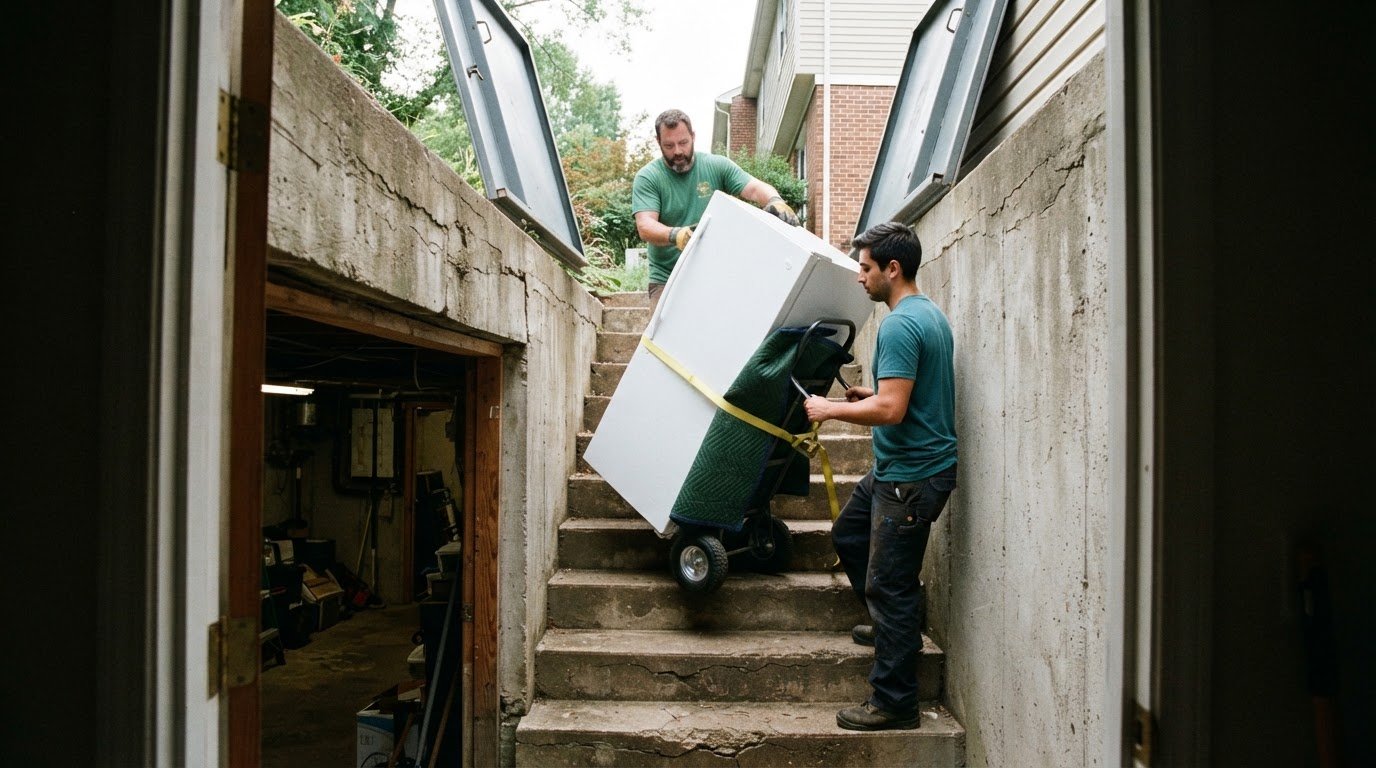
Access affects the work before lifting begins. Map the route from the bench to the vehicle, including gates, steps, turns, doorways, and elevator access. A narrow gate may prevent a wheeled cart from passing, while a sharp turn can limit how a long bench is carried. Measure tight spots and plan where equipment can be positioned safely.
Tree branches can block a truck, lifting equipment, or the route through a yard. Identify low limbs and overhanging branches along the planned path before moving day. If trimming is needed, arrange it with a qualified tree professional beforehand. Don’t assume a branch can be cut on the spot: required clearance depends on the tree and the equipment’s path.
Common risks include dropping or twisting the bench, scraping concrete against a hard edge, and concentrating equipment weight on a patio or walkway. A cart crossing soft lawn may leave ruts, especially when the ground is damp. A tight turn can also push the bench against a wall, gate, or paving stone. Planning the route and equipment positions helps reduce these hazards.
Move loose items separately if they sit on or beside the bench. Cushions, nearby planters, and decorative pieces can shift during handling or block the route. If a plaque or other feature is attached, point it out before lifting so the crew can account for it when planning protection. Keep the landing area clear of accessories and equipment.
- Record the bench’s dimensions and visible condition.
- Map access points, including gates, stairs, turns, and elevator routes.
- Share the building’s COI process and identify any tree or ground obstacles.
Obtaining a relocation cost estimate
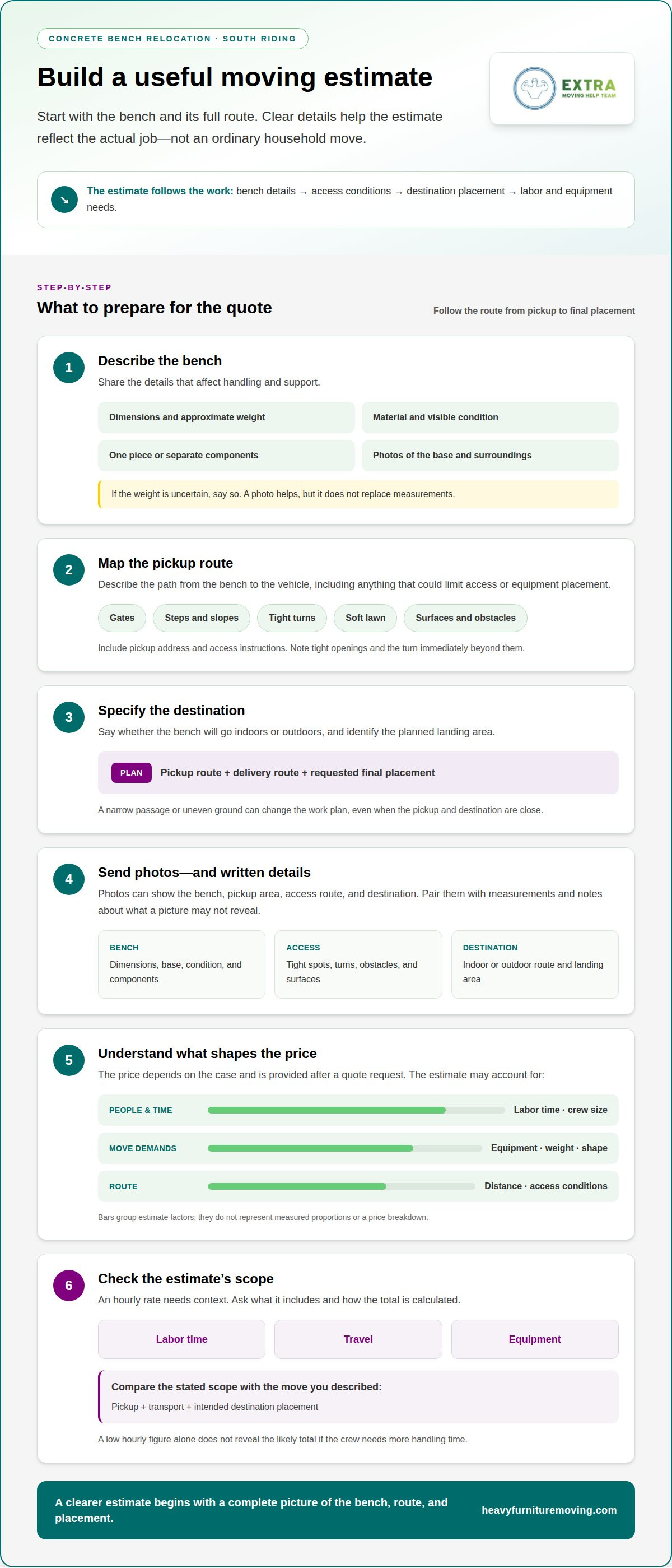
A useful estimate starts with the bench and the route, not a guess based on an ordinary household move. Share the bench’s dimensions, approximate weight, condition, pickup and destination, and any obstacles along the way. Include whether it is one piece or has separate components, plus photos of the base and surroundings. These details help residential movers plan to relocate a heavy concrete statuary bench in South Riding.
At pickup, describe the route from the bench to the vehicle. Note gates, steps, slopes, tight turns, soft lawn, and surfaces that could limit equipment placement. At the destination, say whether the bench will go indoors or outdoors and identify the planned landing area. A clear route description helps establish whether the move needs specialized handling or equipment.
In South Riding, the estimate should reflect the actual job rather than a standard furniture rate. The price depends on the case and is given after a quote request; key factors include labor time, crew size, equipment needs, distance between locations, access conditions, and the bench’s weight and shape. For residential movers relocating a heavy concrete statuary bench in South Riding, a narrow passage or uneven ground can change the work plan even when the pickup and destination are close.
An hourly rate needs context. Ask what the estimate includes, such as labor time, travel, or equipment, and how the total is calculated. A low hourly figure alone doesn’t reveal the likely total if the crew needs more handling time. Share the full route and requested placement so the estimate reflects the job’s actual scope.
Use this checklist to prepare a complete request:
- Bench dimensions, approximate weight, material, and visible condition.
- Photos of the bench, pickup area, access route, and destination.
- Pickup and delivery addresses, plus any access instructions.
- Steps, slopes, narrow openings, gates, landscaping, or surface concerns.
- Whether the bench needs to be placed at a specific spot indoors or outdoors.
Photos help, but they don’t replace measurements. A picture may show a garden gate without revealing its usable width or the turn immediately beyond it. Add written details about tight spots and anything that must be moved before the bench can pass. If the weight is uncertain, say so rather than presenting a guess as a measured value.
Before accepting an estimate, compare its stated scope with the move you described. Make sure it accounts for pickup, transport, and the intended destination placement. For a tailored estimate, share your bench relocation details and the access information for both locations.
Outdoor-to-indoor statue relocation
Moving a garden statue indoors changes the route, not just the destination. Estate-scale outdoor bronze or marble statues can weigh 2,000-8,000 lbs, so their size and mass shape every handling decision. A concrete bench may be smaller, but its solid form and broad base can still make tight turns difficult. Plan the full path from its outdoor position to the intended indoor room.
Start with the object itself. Note its material, shape, base, attached pieces, and any existing cracks or repairs. A sculpture with a narrow projecting feature needs different support from a bench with a broad seat. Photograph each side, including the underside if visible. These details help the crew identify stable support points and avoid pressure on fragile edges.
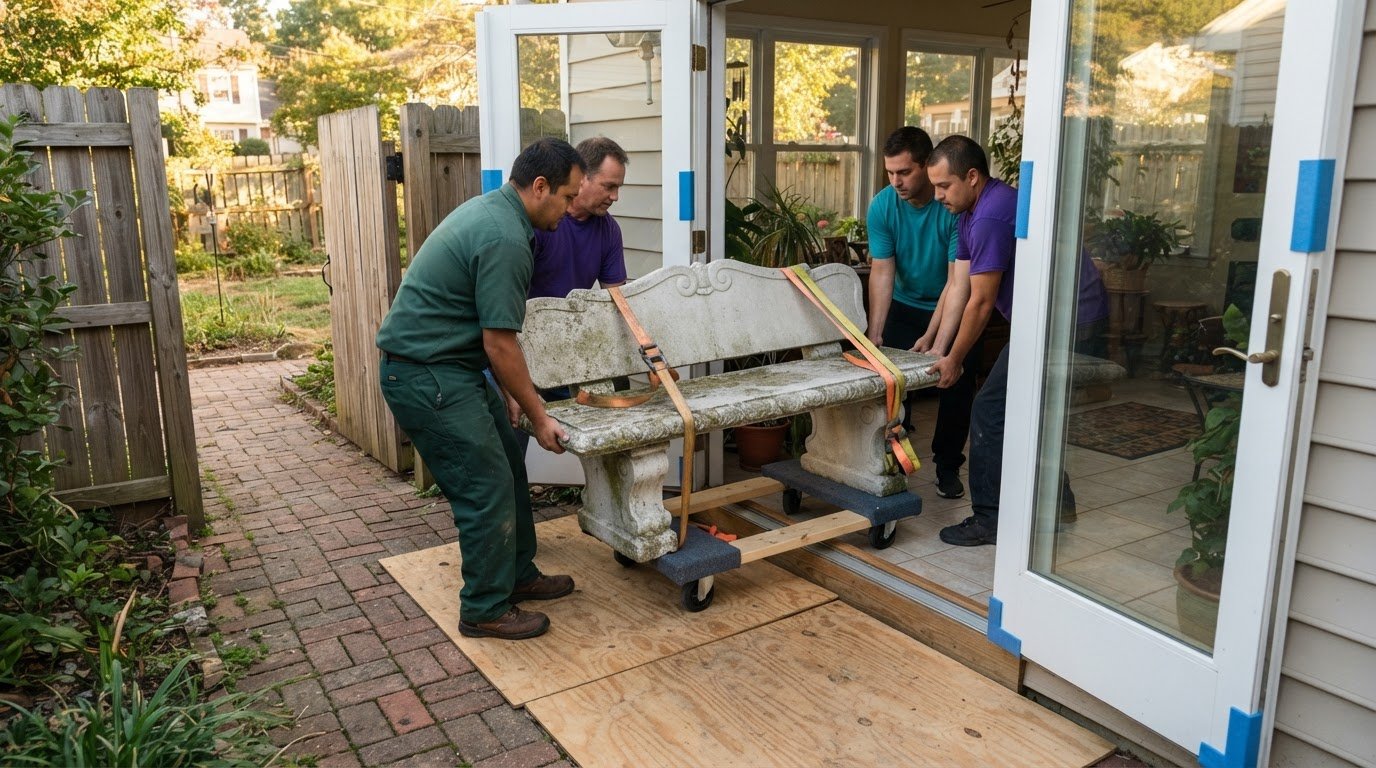
Next, map the indoor route in order: garden path, exterior door, hallway, and final room. Measure each doorway and tight turn, then compare those openings with the statue’s widest points. A bench might clear a doorway straight on but not turn into a hallway. The approach angle can matter as much as the opening itself.
Protection should suit the finish. For polished or patinated surfaces, soft slings can help avoid marks from direct strap contact. Keep protective material between straps and the object, and avoid pulling across decorative details. Concrete also needs controlled support: uneven pressure or a hard impact can chip corners or stress a repaired area.
Prepare the indoor landing area before moving the object. Clear furniture and rugs from the route, open doors fully, and choose the final position in advance. Check that the spot leaves room for the base and doesn’t require a last-minute turn. If the bench will sit near a wall, leave enough working space to lower it without scraping the wall or skirting.
For a large piece, handling equipment must fit both the outdoor approach and indoor route. A 3,500-lb garden statue relocation has involved a crane rental, skid steer, and four-person crew. That example shows why a heavy object may need a coordinated equipment plan rather than manual carrying alone. The available approach, turning room, and destination access determine which setup can work.
- Record the statue’s material, shape, condition, and stable support areas.
- Measure doorways and turns along the complete outdoor-to-indoor route.
- Clear the destination and plan the final position before handling begins.
Placement and anchoring at the destination
Choose the bench’s final position before unloading. Mark its footprint and approach path, then confirm that the base can sit flat without rocking. A bench on a sloped patio may shift under pressure, while one across uneven pavers may bear unevenly. The landing surface and route should shape the placement plan.
At an outdoor destination, check the ground where the bench will rest. Look for soft soil, loose gravel, cracked paving, and drainage paths. A broad, level surface gives the base consistent contact. Keep the bench clear of gates, walkways, and doors so it doesn’t obstruct everyday access. Indoors, protect the floor and make sure the planned space fits the bench’s footprint.
Support pads and piers are foundation approaches, not universal instructions for anchoring a concrete bench. One described precast concrete foundation pad measures 16 inches by 16 inches by 4 inches. A separate concrete-pier example uses a drilled hole with an 18-inch diameter, approximately 30 inches deep, an 8-inch concrete pad, 2 1/2-inch rebar, and an 8-inch-diameter cardboard tube. Those measurements describe that foundation example; they don’t establish a suitable design for every bench or site.
Placement and anchoring are different decisions. Placement sets the bench on a stable surface; anchoring connects it to a supporting surface or foundation. Before adding an anchor, identify the base design and the material beneath it. A method intended for soil may not suit a paved patio. Don’t drill through the bench or its support simply to stop movement. The attachment must suit both the object and landing surface.
Plan the final set-down in stages. Clear loose gravel and debris from the footprint, position any prepared support, then guide the bench into alignment. Check that the seat faces the intended direction and the base contacts the surface evenly. If the bench needs to shift, reposition it with controlled support rather than dragging its concrete edges across paving.
For a bench beside a walkway, keep the route clear and leave enough room for people to approach without squeezing past its corners. In a garden, avoid placing the base across a drain or where runoff collects. Confirm the agreed position before unloading. This helps prevent another difficult move after the bench is set down.
Residential movers in South Riding, VA that move heavy concrete benches and statuary
A heavy concrete bench needs a move plan built around its shape, route, and landing spot. In South Riding, the same bench may need different handling at a garden home than at a residence with steps or a narrow side gate. Start with the object, then plan each part of the route from pickup to placement.
Describe the bench as specifically as possible. Include its material, length, base shape, visible damage, and whether attached parts move independently. A wide bench with a low base needs different support from a tall statue with projecting details. Photos from the front, sides, and base help show where the object can be supported without pressure on fragile edges.
Next, map the route at both locations. Note stairs, slopes, doorways, gates, turns, and nearby surfaces. A straight path across a paved driveway allows a different approach from a route across lawn that turns beside a retaining wall. At the destination, identify the exact spot and clear space around it before the move begins.
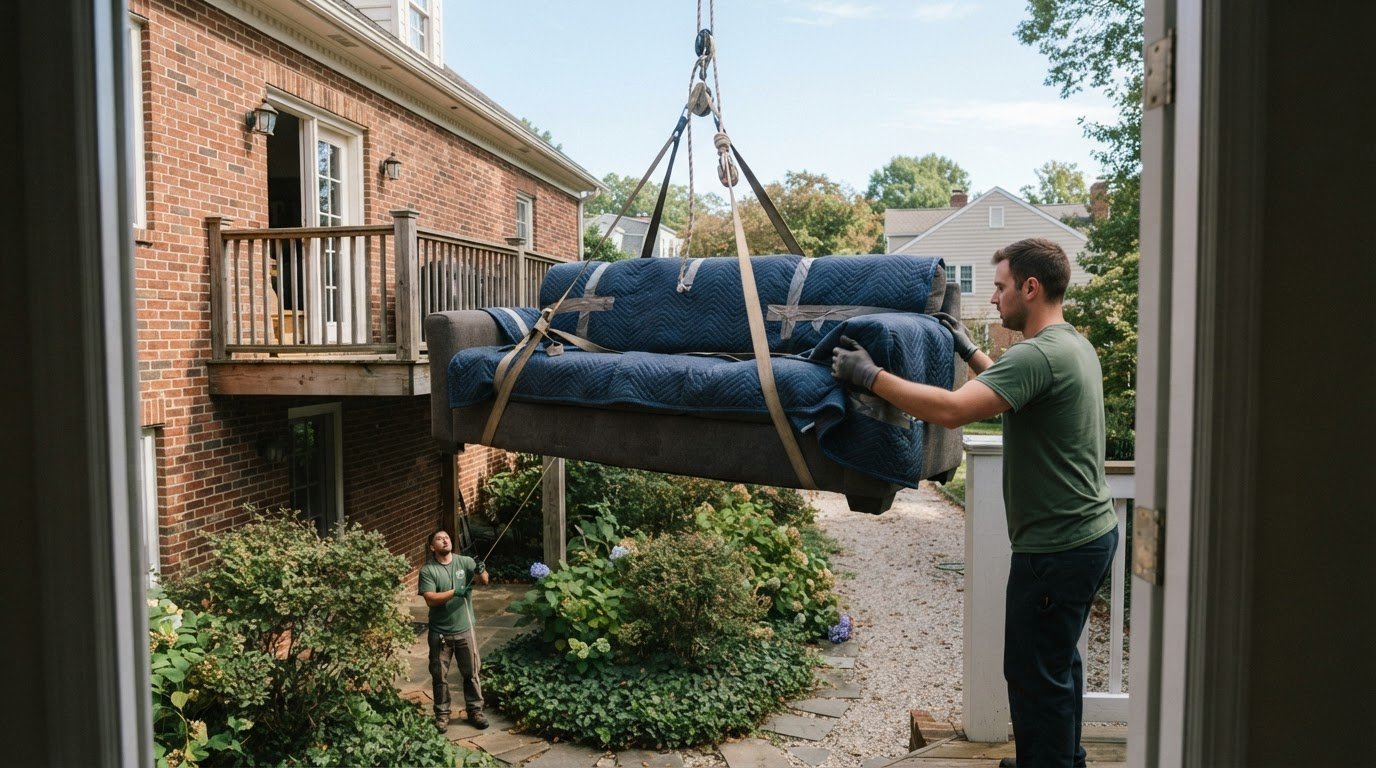
Equipment planning should match the object and access. A hand-carried move, wheeled platform, or machinery each needs room to approach, turn, and set down the load. The crew must also account for surfaces that could be marked or compressed. A narrow gate can rule out a piece of equipment even when the bench itself fits through.
Ask for a written description of the planned scope. It should clarify whether the work covers lifting, transport, and final placement, and which access details shape the plan. Confirm how the crew will handle the bench’s finish and base. If the route changes, for example because a side gate is blocked, the handling plan may need to change too.
For a South Riding household, a clear handoff keeps the move organized. Share the bench photos, route details, and intended position together, rather than sending each detail separately. Point out delicate landscaping, loose paving, or a tight turn that could affect access. Then make sure the planned landing area is ready before the crew arrives.
- Describe the bench’s material, shape, condition, and attached details.
- Show the full route, including gates, turns, steps, and surface changes.
- Specify whether the work includes delivery and final placement.
Ready to plan a heavy bench relocation in South Riding? Request residential moving help with the bench and access details.
Heavy Furniture Moving
Heavy Furniture Moving can help plan a difficult residential move in South Riding. Its residential moving services include support for heavy and bulky items when lifting, access, or careful placement make a move more demanding. Share the bench’s dimensions, condition, route, and destination so the work can be planned around the actual item and home.
Turn to a moving team when the bench is too heavy or awkward to manage safely with household help. A heavy lifting moving service can be more suitable than trying to shift it alone, especially if the route includes steps or tight turns. Plan for the bench and surrounding surfaces, and confirm the landing area before moving begins.
Contact Heavy Furniture Moving to discuss your concrete bench relocation in South Riding.
Make the Next Move With Confidence
Give the bench a destination that suits how you use the space. A shaded garden corner, a quiet patio edge, or a place beside a familiar walkway can make the piece feel at home. Choosing its role first turns relocation into a thoughtful update, not just a difficult lift.
If you need residential movers to relocate a heavy concrete statuary bench in South Riding, gather the move details in one clear request. Include what matters about the bench, its route, and where you want it placed. Heavy Furniture Moving can use that information to plan the next step around your priorities.
Contact Heavy Furniture Moving for an estimate, and take the next step toward giving your bench a well-planned place in its new setting.
Frequently Asked Questions
Are you insured for high-value statue and sculpture moves?
Coverage for a high-value statue depends on the written insurance terms for the move. A certificate of insurance summarizes information, but it doesn’t establish how a specific sculpture is valued or what situations are covered. Identify the statue and its value in writing, then review terms for loading, transport, and unloading. Keep current photos and an item description with your records.
Do you move outdoor estate statues that are bolted to concrete?
A bolted statue can be relocated if its attachment and base can be handled safely. The bolt connection affects how the piece releases, while the concrete base affects support and lifting. Share clear photos of the attachment and surrounding surface when planning the move. This lets the handling plan account for the connection and helps avoid force on fragile features.
Do local movers specialize in heavy item or statue relocation near South Riding, Virginia?
Heavy Furniture Moving provides residential moving help for heavy, bulky household items in South Riding. Services include specialized handling for pianos, safes, and exercise equipment. A concrete statue or bench also needs a plan based on its shape, condition, and access. Share the item details and route so the move can be scoped to the specific job.
How much does it cost to move a heavy concrete bench locally in South Riding, VA?
The price depends on the case and is given after a quote request. The main factors include the bench’s dimensions and weight, pickup and destination access, travel between locations, equipment needs, and the requested placement. A photo can show the bench’s shape, while written notes can explain difficult turns or surfaces. Include both locations and the full scope when requesting an estimate.
How do professional movers lift, protect, and transport a heavy concrete bench?
Support should be planned around the bench’s base, without force on thin edges or decorative details. Heavy Furniture Moving includes wrap, blankets, and straps on every job. Protection should suit the concrete surface and any finish, while the route and equipment need to allow controlled lifting and set-down. Stable support matters during loading, transport, and arrival.
What insurance coverage applies to heavy concrete statuary during a residential move?
The written policy and move agreement determine which coverage terms apply to heavy concrete statuary. Review how the documents address the item’s value, handling, transit, and damage exclusions. A certificate is not a substitute for those terms. Keep a dated description and clear photos of existing chips, repairs, or surface wear to document the bench’s condition before relocation.
Are permits or HOA approval needed to move a heavy bench in South Riding, VA?
HOA approval depends on the community’s governing documents and access rules for the property. Permit needs depend on the work and route, so don’t assume every residential bench move requires one. Moving a bench through a private garden differs from work that blocks a shared access area. Review applicable community requirements and plan around any stated restrictions.
How should I prepare a concrete bench and access route for movers?
Remove loose cushions, planters, and decorations from the bench and its path. Keep pets and household traffic away from the work area, and move parked vehicles that block access. Mark the landing spot so the crew knows where the bench should go. Point out repaired areas or existing chips before handling begins, and clear the route through the destination room or garden.
Frequently Asked Questions
Coverage for a high-value statue depends on the written insurance terms for the move. A certificate of insurance summarizes information, but it doesn’t establish how a specific sculpture is valued or what situations are covered. Identify the statue and its value in writing, then review terms for loading, transport, and unloading. Keep current photos and an item description with your records.
A bolted statue can be relocated if its attachment and base can be handled safely. The bolt connection affects how the piece releases, while the concrete base affects support and lifting. Share clear photos of the attachment and surrounding surface when planning the move. This lets the handling plan account for the connection and helps avoid force on fragile features.
Heavy Furniture Moving provides residential moving help for heavy, bulky household items in South Riding. Services include specialized handling for pianos, safes, and exercise equipment. A concrete statue or bench also needs a plan based on its shape, condition, and access. Share the item details and route so the move can be scoped to the specific job.
The price depends on the case and is given after a quote request. The main factors include the bench’s dimensions and weight, pickup and destination access, travel between locations, equipment needs, and the requested placement. A photo can show the bench’s shape, while written notes can explain difficult turns or surfaces. Include both locations and the full scope when requesting an estimate.
Support should be planned around the bench’s base, without force on thin edges or decorative details. Heavy Furniture Moving includes wrap, blankets, and straps on every job. Protection should suit the concrete surface and any finish, while the route and equipment need to allow controlled lifting and set-down. Stable support matters during loading, transport, and arrival.
The written policy and move agreement determine which coverage terms apply to heavy concrete statuary. Review how the documents address the item’s value, handling, transit, and damage exclusions. A certificate is not a substitute for those terms. Keep a dated description and clear photos of existing chips, repairs, or surface wear to document the bench’s condition before relocation.
HOA approval depends on the community’s governing documents and access rules for the property. Permit needs depend on the work and route, so don’t assume every residential bench move requires one. Moving a bench through a private garden differs from work that blocks a shared access area. Review applicable community requirements and plan around any stated restrictions.
Remove loose cushions, planters, and decorations from the bench and its path. Keep pets and household traffic away from the work area, and move parked vehicles that block access. Mark the landing spot so the crew knows where the bench should go. Point out repaired areas or existing chips before handling begins, and clear the route through the destination room or garden.