Balcony Furniture Hoisting in McLean: Quotes and Pricing
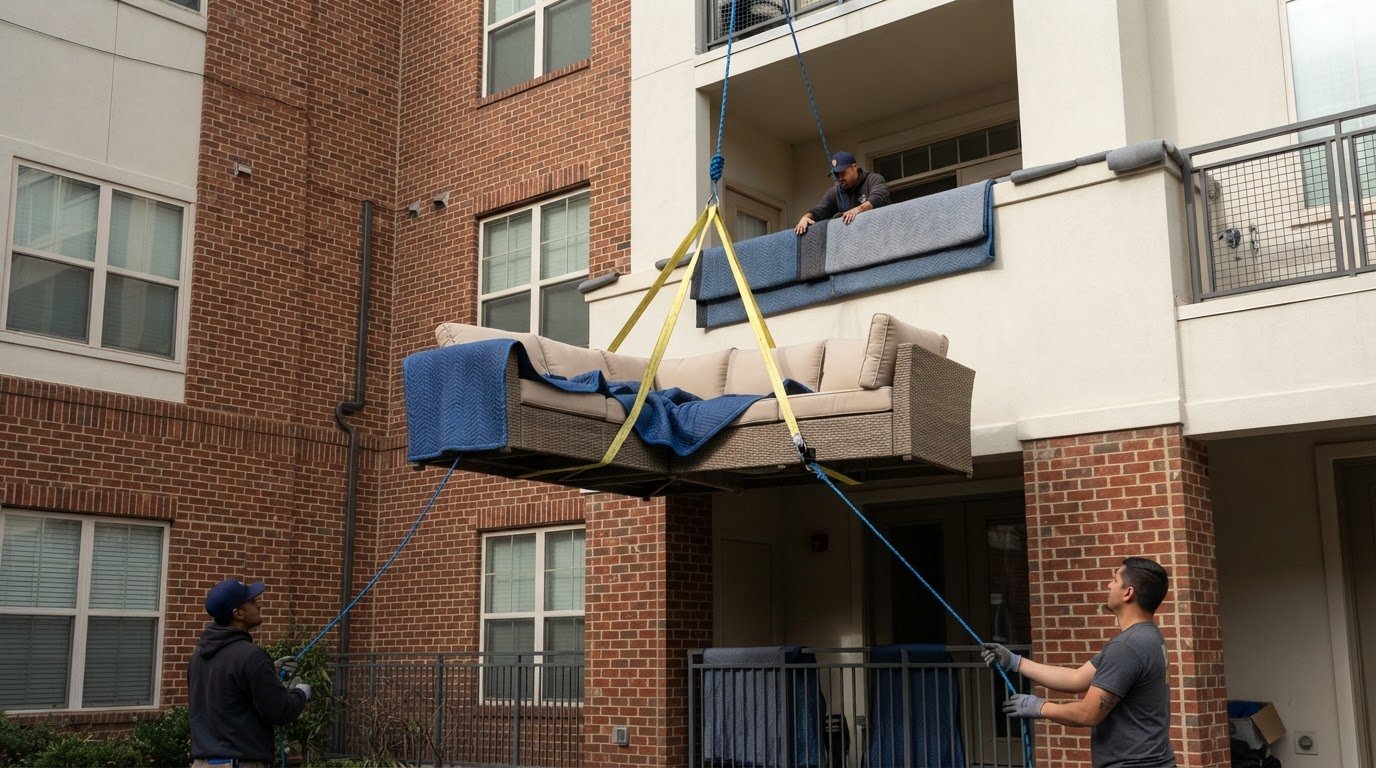
A narrow doorway doesn’t have to end the plan. If an oversized outdoor sectional won’t fit through the usual entry, hoisting it to a balcony may provide another route. Balcony furniture hoisting for an oversized outdoor sectional in McLean depends on the item, building access, and space for a safe lift.
It’s reasonable to want a clear picture of the work before arranging a move. The sectional’s size and shape are only part of the plan. The balcony, building access, and conditions around the lifting area also affect the setup and quote.
This guide explains how sofa hoisting works, what access and safety planning involves, and which details affect a quote. You’ll also learn when hoisting can help with a difficult furniture move and what information to share to get started.
Key Takeaways
- Learn when a balcony, window, or rooftop opening may provide a workable route for oversized furniture.
- See how lifting equipment and protective materials help support a careful hoist plan.
- Understand how building access, furniture dimensions, and the lifting area shape the preparation.
- Find out which project details influence a flat-rate quote without relying on a generic price estimate.
- Discover when sofa hoisting can help move a sectional that won’t fit through standard entryways.
Hoisting oversized furniture through windows, balconies, or rooftop openings
Balcony furniture hoisting for an oversized outdoor sectional in McLean can provide a route when doorways, hallways, or stairwells cannot accommodate the piece. Heavy Furniture Moving’s Sofa Hoisting service moves suitable items through an exterior opening after assessing the furniture, access route, and landing area. The opening must allow a planned path for the sectional.
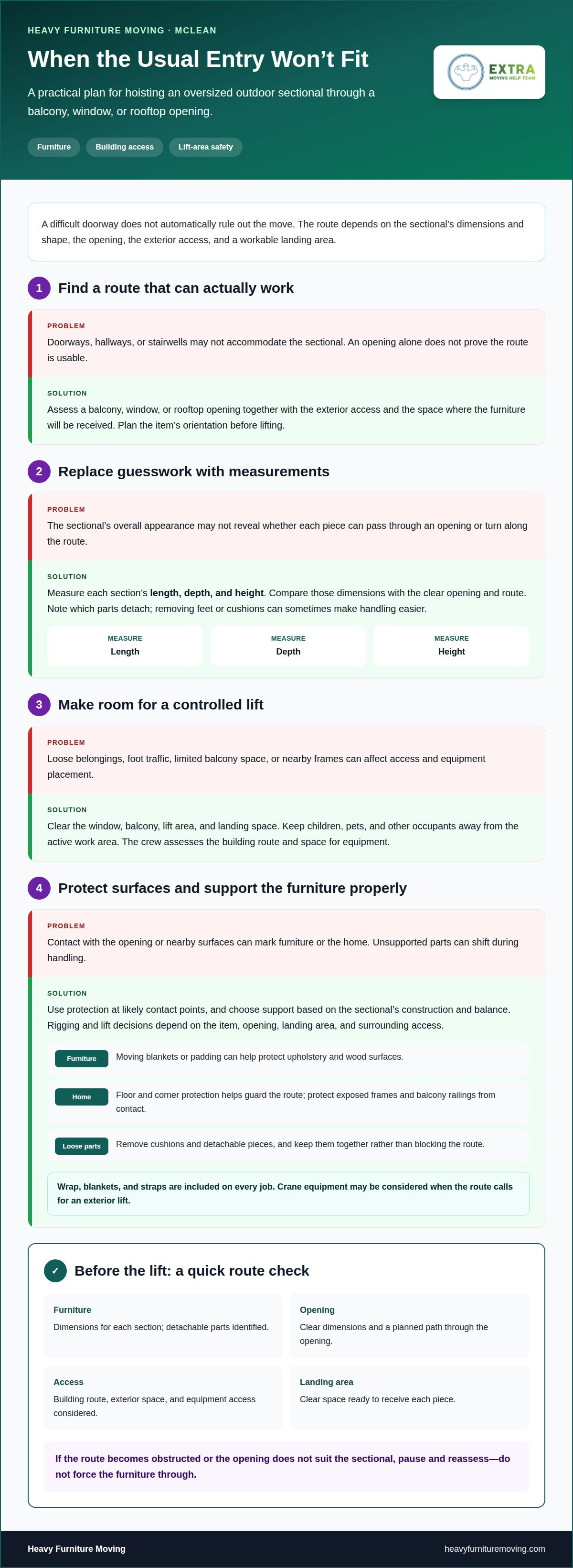
Consider the sectional as separate components, not just one overall piece. Measure each section’s length, depth, and height, then compare those dimensions with the clear window or balcony opening. For example, a sectional that cannot turn in a hallway may fit through a wider balcony opening when carefully oriented. Removing feet or cushions can sometimes make handling easier.
The opening is only one part of the route. The crew also needs to assess the space outside, the balcony edge, and where the furniture will be received. A rooftop opening may offer another route, but it still needs clear access and a workable landing area. The crew plans the item’s orientation before lifting, rather than forcing it against a frame or railing.
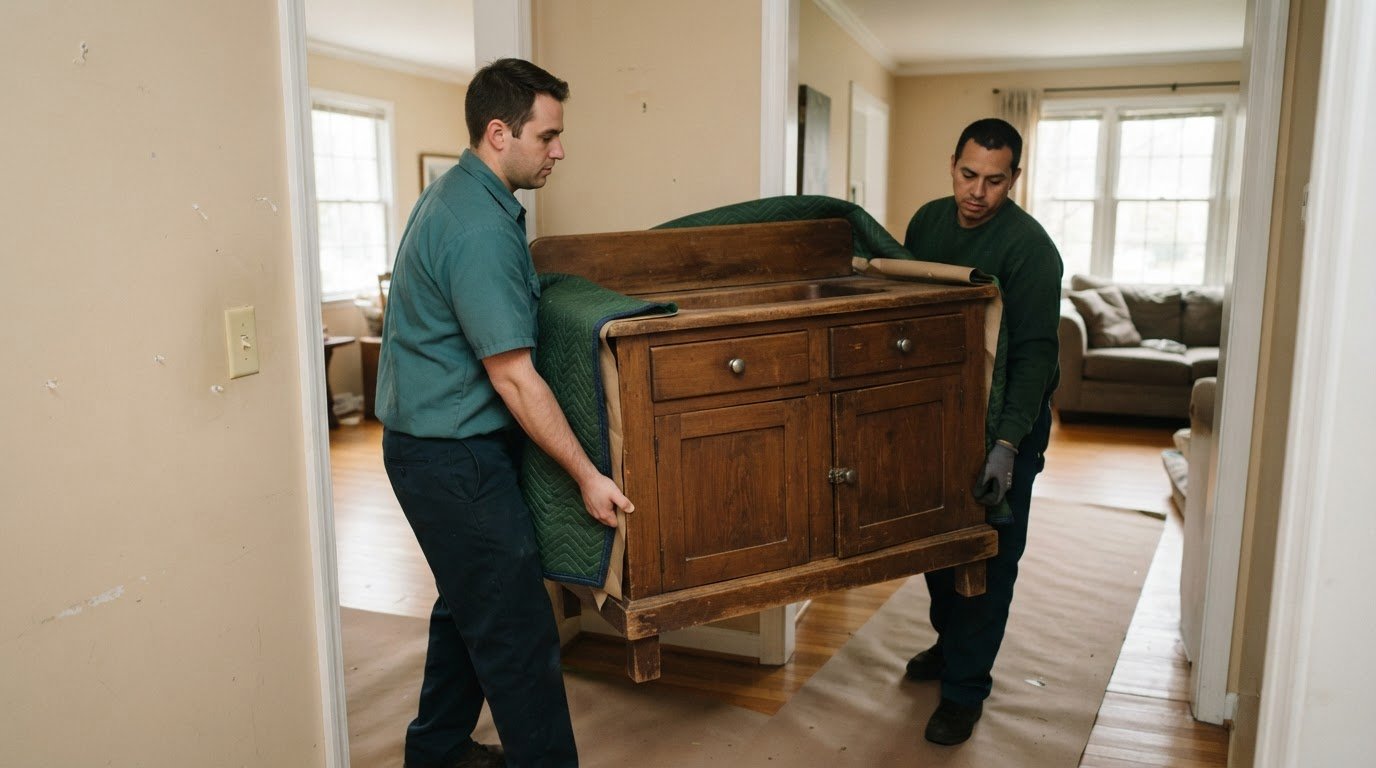
Protect the item and nearby surfaces before moving it. Furniture blankets or padding can help shield upholstery and wood finishes from contact during handling. Protect window frames, floors, and balcony railings too, especially where the sectional must pass close to an edge. Keep the path clear of loose cushions, planters, and other obstacles so the crew can guide the piece without abrupt stops.
- Check the route: Compare the sectional’s dimensions with the opening and the path to its final position.
- Prepare the furniture: Separate modular sections and remove loose pieces that could shift during the move.
- Clear the area: Move nearby objects away from the window, balcony, and landing space.
- Protect contact points: Cushion exposed furniture surfaces and nearby frames or railings.
Window and balcony moves require controlled positioning. The crew coordinates the movement, keeping the sectional aligned with the opening and clear of surfaces that could mark it. If the planned route becomes obstructed, the team pauses and reassesses rather than forcing the furniture through. The route and handling plan are based on the conditions at the home.
Not every opening suits every sectional. A narrow window, limited balcony space, or awkward furniture shape can change the route or rule out an opening. Heavy Furniture Moving measures the item and access points before lifting, so the plan reflects the actual layout rather than assumptions based on the furniture’s appearance.
Specialty lifting equipment and protective materials
Equipment choices depend on the sectional’s shape, the opening, and the space around the lift. Before a move, remove loose cushions and detachable pieces, and keep them together. The crew assesses how the main sections should be supported and whether an exterior lift is suitable.
Hoisting Assessment and Setup
The assessment covers the item, building, and route from its current position to the balcony. The crew considers whether stairs, hallways, or window frames affect access, then identifies space for equipment and a clear landing area. Share the sectional’s dimensions and note which parts detach. These details help the crew plan for the load’s actual shape.
Before equipment is positioned, clear the lift area of loose belongings and foot traffic. The crew can then arrange protective materials and prepare the working space around the opening. A tight balcony, nearby frames, or limited access may affect equipment placement. Keep children, pets, and other occupants away from the active work area.
Rigging Equipment and Lift Procedures
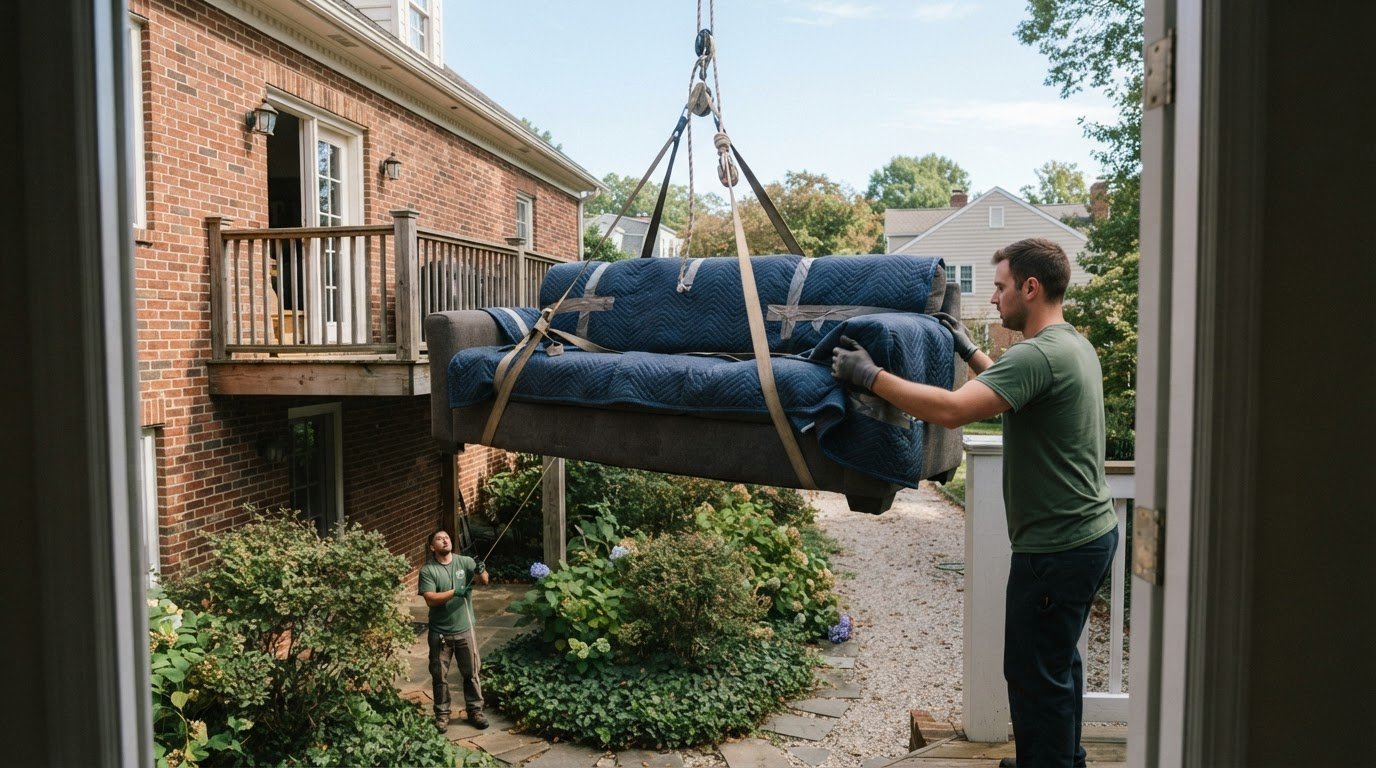
Rigging connects the furniture to the lifting system, so the setup must suit the sectional’s construction and balance. The crew determines how to support each piece and prevent unexpected shifting or turning. Crane equipment may be considered when the route calls for an exterior lift. The opening, landing space, and surrounding access all inform the decision.
During the lift, the team coordinates each movement: positioning the item, guiding it toward the opening, and directing it to the landing area. Clear communication helps the crew respond if the furniture’s angle or path needs adjustment. The sectional should not be pulled by loose cushions or unsupported trim. Its construction determines how it is handled.
Protective materials serve different purposes at different contact points. Moving blankets can help protect upholstery and wood surfaces, while floor and corner protection helps guard the home along the route. The crew chooses where to position protection based on the access path and likely contact points. Wrap, blankets, and straps are included on every job.
- Loose parts: Remove cushions and detachable pieces before the lift.
- Furniture surfaces: Cover areas that may rub against the opening or lifting materials.
- Building surfaces: Protect floors and exposed frames along the access path.
- Landing area: Clear the space where each sectional piece will be received.
Good preparation also keeps the sectional’s sections organized. Set detached pieces aside together, and avoid stacking items where they could block the route. Protect the balcony railing from contact rather than using it to support the furniture. If the sectional cannot be separated, its full shape becomes part of the handling assessment.
For a sectional that needs an exterior route, sofa hoisting support can address the lift and its protective setup.
Planning lifts around building access, item size, and safety requirements
A careful plan connects the sectional’s dimensions with the building route and landing area. For McLean apartments and homes, access details help determine whether the lift can proceed safely and efficiently.
Access and Dimension Assessments
A pre-hoist assessment maps the route from the furniture’s current room to the balcony or window. The crew measures the sectional’s length, depth, and height, then compares them with hallways, doors, and the opening. Floor level affects equipment placement and the lift path. The landing area also needs enough clear space to receive and move the item.
Building access can change the plan. A service entrance may be available, while a tight elevator or stair landing may block interior movement. Note access restrictions, nearby balconies, and obstacles such as overhangs or landscaping. These details help determine where equipment can be positioned and how the sectional can be guided into place.
Hoisting Risks and Insurance
Risks include contact with the building, damage to the sectional, and an obstructed route during the lift. A planned path, clear landing area, and clear communication between workers help address these concerns. Review the written service terms for information about coverage for the furniture, property, and lifting work.
For a McLean condo, building management may require advance approval under its own rules. Ask which access procedures apply and whether the lift needs a scheduled time or designated work area. Crane or lifting equipment placed on a public street raises separate access and permit questions. The setup location and road control determine which requirements apply.
Before the move, organize the assessment around the details that affect the route:
- Furniture: Record overall dimensions and identify sections or parts that detach.
- Building: Note floor level, elevator or stair access, and any restricted entrances.
- Opening: Measure the usable clearance, not just the frame’s outside dimensions.
- Landing: Identify a clear receiving area and the path from it to the final position.
- Work area: Establish where equipment can sit without blocking the planned route.
Use the same details to discuss permissions and coverage before the scheduled work. Building approval and public-space authorization are separate issues, so one does not settle the other. A lift on private property has a different access setup from one that requires equipment on a street. Clear notes about the location, route, and landing area help everyone understand the plan.
Good planning also sets a clear pause point. If the opening, landing zone, or equipment position differs from the assessment, stop and revise the route before moving the sectional. This check helps protect the building and keeps the lift aligned with actual site conditions.
Flat-rate hoisting quotes and pricing factors
A flat-rate quote reflects the specific sectional, access route, and lift plan. The price depends on the case and is given after a quote request; the main cost factors are the item’s size and weight, building access, and equipment and labor needs.
Start with the furniture itself. A single-piece sectional may need different handling from a modular set with detachable sections. Overall dimensions affect how the crew positions and guides each piece, while weight informs how the load is supported. Cushions and removable parts can be moved separately rather than left on the main frame.
Next, consider the route. A balcony with a clear approach may require a different setup from a high-floor apartment with restricted equipment access. Window dimensions, the distance between the equipment position and opening, and the landing area can all affect the plan. An obstructed path or limited staging space may require more preparation.
Equipment and protection are also part of the plan. The crew assesses the rigging, straps, protective materials, and labor needed to position and guide the sectional. The right arrangement depends on the furniture’s construction and the route. An exterior lift may require a different setup from a move with straightforward access.
- Item details: Provide the sectional’s dimensions, approximate weight if available, and whether it separates into sections.
- Access details: Describe the floor level, opening, equipment approach, and landing space.
- Route conditions: Note stairs, narrow passages, access limits, or obstacles near the balcony.
- Work scope: Identify whether the quote covers only the hoist or also movement to the final position.
A useful flat-rate quote makes the work scope clear. It should identify the furniture, intended access route, and handling covered by the quoted amount. Clarify whether separate sectional pieces and placement beyond the balcony are included. A clear scope ties the quote to the actual job rather than incomplete details.
Changes to the plan can affect the work. If the item’s dimensions differ from the information provided, or the planned opening is unavailable, the crew may need to reassess the route and setup. Share accurate measurements and photos of the sectional and access points with your quote request. This helps Heavy Furniture Moving plan around the actual job rather than assumptions about a typical hoist.
Compare the scope, not just the label “flat rate.” A quote tied to the sectional, route, equipment, and placement gives a clearer picture of the planned work.
Hoisting oversized furniture that cannot fit through standard entryways
A sectional that cannot fit through a doorway may still have another route. In McLean homes and apartments, the key is matching the furniture’s shape to an exterior opening and a clear path beyond it. Consider hoisting when turning through hallways, stairs, or interior doors will not work.
Start with the tightest point on the usual route. Measure the doorway and hallway clearance, then compare it with the sectional’s dimensions in its planned orientation. A long sofa may pass through a wide door only if it can turn; a deep corner section may be blocked by a narrow landing. These comparisons help show whether the obstacle is the opening or the turn.
Next, look at how the furniture is built. A modular sectional may separate into pieces, while a joined frame may need to move as one unit. Record which sections detach and note removable legs or cushions. The exterior route also needs a usable window or balcony opening, space to position the item, and a clear receiving area.
Hoisting can make sense when the interior route is impractical and an exterior path is workable. The team plans the move around the furniture’s orientation, the opening, and the destination. For example, a balcony can serve as the entry point when the sectional’s parts can be guided through its opening and carried to their final place.
Preparation helps keep the move organized:
- Document the item: Note dimensions and identify pieces that detach.
- Map the route: Identify the room, exterior opening, and final position.
- Clear access: Move objects away from the hall, opening, and landing area.
- Protect surfaces: Prepare furniture and building contact points for handling.
A plan should account for both sides of the opening. The inside approach needs room to bring the sectional into position; the receiving side needs clear space to guide and set it down. Furniture or planters on the balcony can obstruct that sequence. Clear the destination before the move so the crew can guide the item through without stopping partway.
Not every oversized piece needs a hoist. If a sectional separates and its components can turn through the available hallways, an interior move may be simpler. If no exterior opening or landing area allows a workable route, hoisting may not suit the layout. The decision depends on the actual item and route, not size alone.
If the sectional cannot fit through standard entryways, request help planning a sofa hoist around its dimensions and access route.
Heavy Furniture Moving: Sofa Hoisting
Heavy Furniture Moving provides Sofa Hoisting for oversized pieces that cannot fit through standard entryways. It’s a practical option when a sectional’s dimensions, the building layout, or a tight hallway make an interior move unsuitable.
The work centers on planning a suitable route and handling the furniture through an exterior opening. Share the sectional’s measurements, which parts detach, and details about the balcony or window access. Those specifics help define the lift plan and work involved.
If the sectional can move safely through the home in separate pieces, an interior route may be simpler. If not, sofa hoisting can help solve the access challenge. Contact Heavy Furniture Moving to discuss your sectional and its route.
Take the Next Step Toward a Clear Lift Plan
For balcony furniture hoisting for an oversized outdoor sectional in McLean, start with measurements and a plan built around your home and furniture. Gather the sectional’s dimensions, note which pieces detach, and describe the opening and destination. These details give your quote request a useful starting point.
Heavy Furniture Moving also offers Movers Near Me and Exercise Equipment Moving alongside Sofa Hoisting. Choose the service that matches the job, whether you’re planning a difficult sectional lift or moving other heavy items.
Ready to discuss your furniture and access route? Contact Heavy Furniture Moving to take the next step. A clear plan starts with the details you already have, and the team can help you move forward with confidence.
Frequently Asked Questions
What does it cost to hoist an oversized outdoor sectional onto a balcony in McLean?
The quote depends on the sectional, access route, equipment, and work involved. Heavy Furniture Moving provides upfront phone quotes for most single heavy items. Share a photo of the sectional and access area, along with its measurements and details about detachable parts. These details help shape a quote for the specific McLean job.
How should I measure a balcony and sectional for furniture hoisting?
Measure each sectional piece at its widest, tallest, and deepest points, including fixed arms or frames. Then measure the clear balcony opening at its narrowest point, accounting for doors or other features that limit usable space. Note the balcony’s depth and any obstacles between the opening and intended placement area. Photos from inside and outside add useful context.
What crane or lift is needed to hoist patio sectional furniture?
The right equipment depends on the sectional’s weight and shape, floor level, opening, and possible equipment position. A crane may suit a route that needs an exterior lift, while another setup may work for a different layout. Equipment choice follows the site assessment, not the furniture category alone. Send a clear photo of the item and access area so the route can be considered.
Which McLean, Virginia, furniture hoisting service areas are covered?
Heavy Furniture Moving serves McLean and nearby Northern Virginia communities, including Fairfax, Vienna, Reston, and Centreville. Its local service area also includes Woodbridge, Manassas, Manassas Park, Aldie, Ashburn, Chantilly, Clifton, Dumfries, South Riding, Fairfax Station, Haymarket, and Gainesville. For an oversized sectional, include the pickup and destination locations when requesting a quote so the move can be considered for the correct addresses.
Frequently Asked Questions
The quote depends on the sectional, access route, equipment, and work involved. Heavy Furniture Moving provides upfront phone quotes for most single heavy items. Share a photo of the sectional and access area, along with its measurements and details about detachable parts. These details help shape a quote for the specific McLean job.
Measure each sectional piece at its widest, tallest, and deepest points, including fixed arms or frames. Then measure the clear balcony opening at its narrowest point, accounting for doors or other features that limit usable space. Note the balcony’s depth and any obstacles between the opening and intended placement area. Photos from inside and outside add useful context.
The right equipment depends on the sectional’s weight and shape, floor level, opening, and possible equipment position. A crane may suit a route that needs an exterior lift, while another setup may work for a different layout. Equipment choice follows the site assessment, not the furniture category alone. Send a clear photo of the item and access area so the route can be considered.
Heavy Furniture Moving serves McLean and nearby Northern Virginia communities, including Fairfax, Vienna, Reston, and Centreville. Its local service area also includes Woodbridge, Manassas, Manassas Park, Aldie, Ashburn, Chantilly, Clifton, Dumfries, South Riding, Fairfax Station, Haymarket, and Gainesville. For an oversized sectional, include the pickup and destination locations when requesting a quote so the move can be considered for the correct addresses.