Avoiding Injury When Moving Heavy Furniture in Gainesville, VA
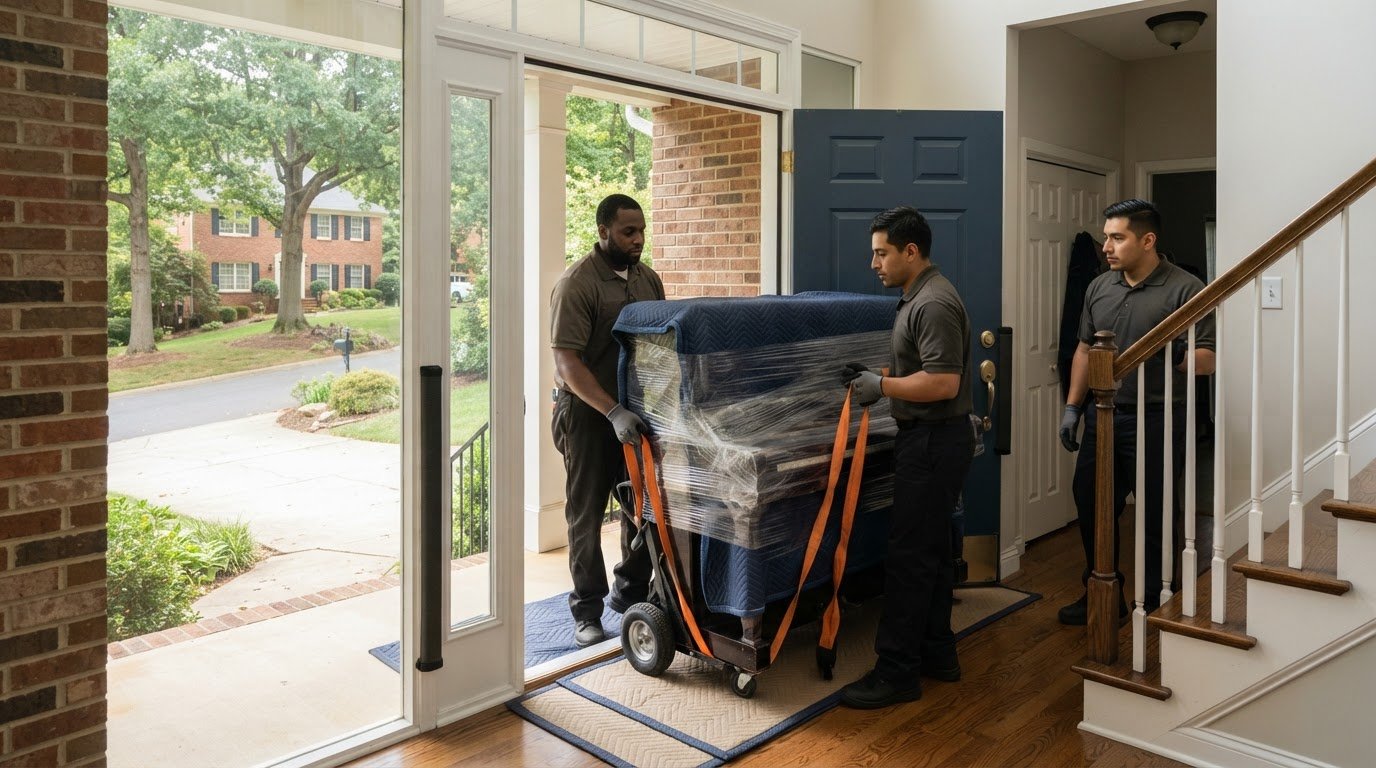
What if the safest part of moving heavy furniture is knowing when not to lift? A safer plan for avoiding injury moving heavy furniture Gainesville starts before anyone grabs the item. A bulky sofa, piano, safe, or exercise machine can strain your back, shoulders, hands, or feet. A tight hallway or staircase can make an already difficult move harder to control.
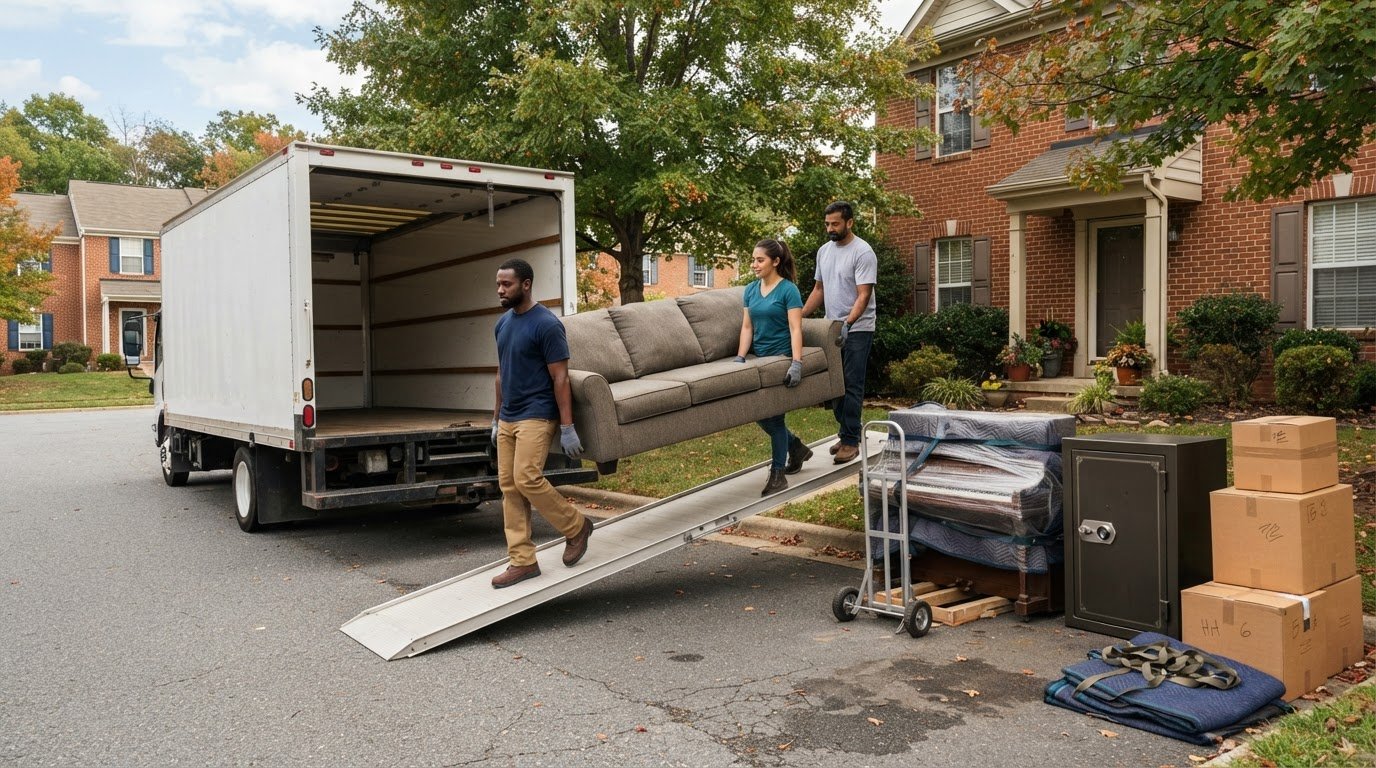
Before deciding to move an item yourself, consider its size, balance, grip, and route. This guide explains how to spot lifting risks, prepare your home and moving path, and know when to stop and reassess. For especially heavy or awkward items, specialized handling or sofa hoisting can be a safer option than forcing a piece through a doorway.
Key Takeaways
- Start avoiding injury moving heavy furniture Gainesville with a check of the item, your grip, the route, and the help available.
- Sudden pulls, awkward posture, and twisting can make a lift harder to control and increase strain.
- If an item sticks, your grip slips, or a staircase makes the move difficult, stop and reassess instead of pushing harder.
- Clear the route and landing area before moving, then agree on simple cues with anyone helping.
- Professional help with bulky items, exercise equipment, or sofa hoisting can be a practical next step.
Avoiding Injury When Moving Heavy Furniture in Gainesville Starts with a Risk Check
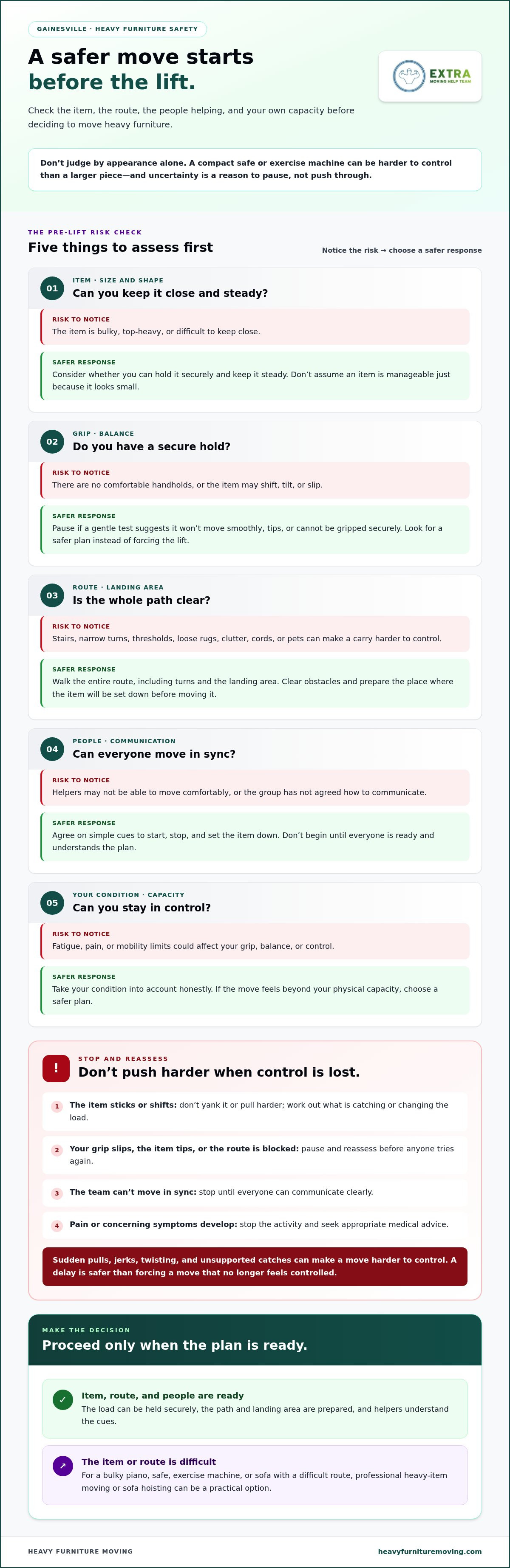
Heavy furniture can strain your back and shoulders, trap fingers, crush feet, or become a trip hazard if it shifts unexpectedly. A quick risk check helps you decide whether to move an item, change the plan, or get help before anyone takes hold. Don’t judge by appearance alone. A compact safe or exercise machine may be harder to control than a larger piece, and furniture that looks manageable can still be awkward to grip or balance.
A moving risk check means assessing the item, the route, and your capacity before lifting. Consider how the load might shift, where you’ll carry it, and whether everyone involved can manage their part. This is part of manual handling of loads, where the task and surroundings matter as much as the object itself.
Before you start, consider:
- Size and shape: Is the item bulky, top-heavy, or difficult to keep close?
- Grip and balance: Are there secure places to hold, or might the item shift or tilt?
- Route: Are there stairs, narrow turns, thresholds, loose rugs, clutter, or pets in the way?
- People: Are helpers available, able to move comfortably, and ready to communicate clearly?
- Your condition: Could fatigue, pain, or mobility limits affect your control?
For avoiding injury moving heavy furniture Gainesville residents should treat uncertainty as a reason to pause, not a challenge to push through. If the balance or grip is unclear, look for a safer plan before attempting the lift. A different route or added help may be more sensible than moving a difficult item alone.
Which furniture-moving risks should you assess first?
Start with control. Can you hold the item securely and keep it steady without reaching awkwardly? Next, walk the entire route, including each turn and the place where the furniture will land. Check for loose rugs, clutter, pets, and raised thresholds. Finally, consider fatigue, pain, or mobility limits honestly. If helpers can’t agree on a clear cue to start, stop, or set the item down, don’t begin yet.
When should you stop before lifting in Gainesville?
Pause if a gentle test suggests the item won’t move smoothly, tips, or can’t be gripped securely. Don’t start while the path is blocked or the landing area is unprepared. Don’t try to free a stuck item by pulling harder. If pain or concerning symptoms develop, stop the activity and seek appropriate medical advice. A delay is safer than forcing a move that no longer feels controlled.
Proceed only when the item, route, and people are ready. If a bulky piano, safe, or sofa presents a difficult route, professional heavy-item moving or sofa hoisting can be a practical option for Gainesville residents.
How Lifting and Carrying Heavy Furniture Can Strain Your Body
Moving furniture asks your body to do more than manage weight. You need to grip the object, keep it steady, and move through a space that may not be designed for carrying. Force, awkward posture, twisting, and repeated effort can compound the challenge. A couch that feels manageable at first may become harder to control after several trips or a long carry.
A heavy item becomes harder to control when your grip, posture, or route is compromised. Reaching far to hold a dresser, for example, can pull your body forward and make it tougher to steady. A doorway that forces a sharp turn may tempt you to twist while holding the load. Those adjustments can add strain and reduce control. The CDC NIOSH Ergonomics resource explains how work demands and body position relate to physical stress.
A controlled lift is planned and steady. You can hold the item securely, see where you’re going, and move at a pace that lets you adjust. A sudden pull, jerk, or unsupported catch is different. It creates an abrupt demand, often before you can set your footing or coordinate with a helper. Don’t yank a stuck piece or try to catch furniture that starts to tip. Pause and rethink the move instead.
Why awkward grips and twisting increase difficulty
Reaching away from your body makes an object harder to guide, especially if its weight shifts as you move. A smooth cabinet or bulky sofa may also offer no comfortable handhold. Carrying while turning your torso adds another challenge: your feet and upper body may face different directions while you support the load. If you need to change direction, pause when safe and reposition your feet before moving on. If you can’t maintain a stable grip, stop rather than compensate with a strained reach.
How stairs, obstacles, and fatigue change the risk
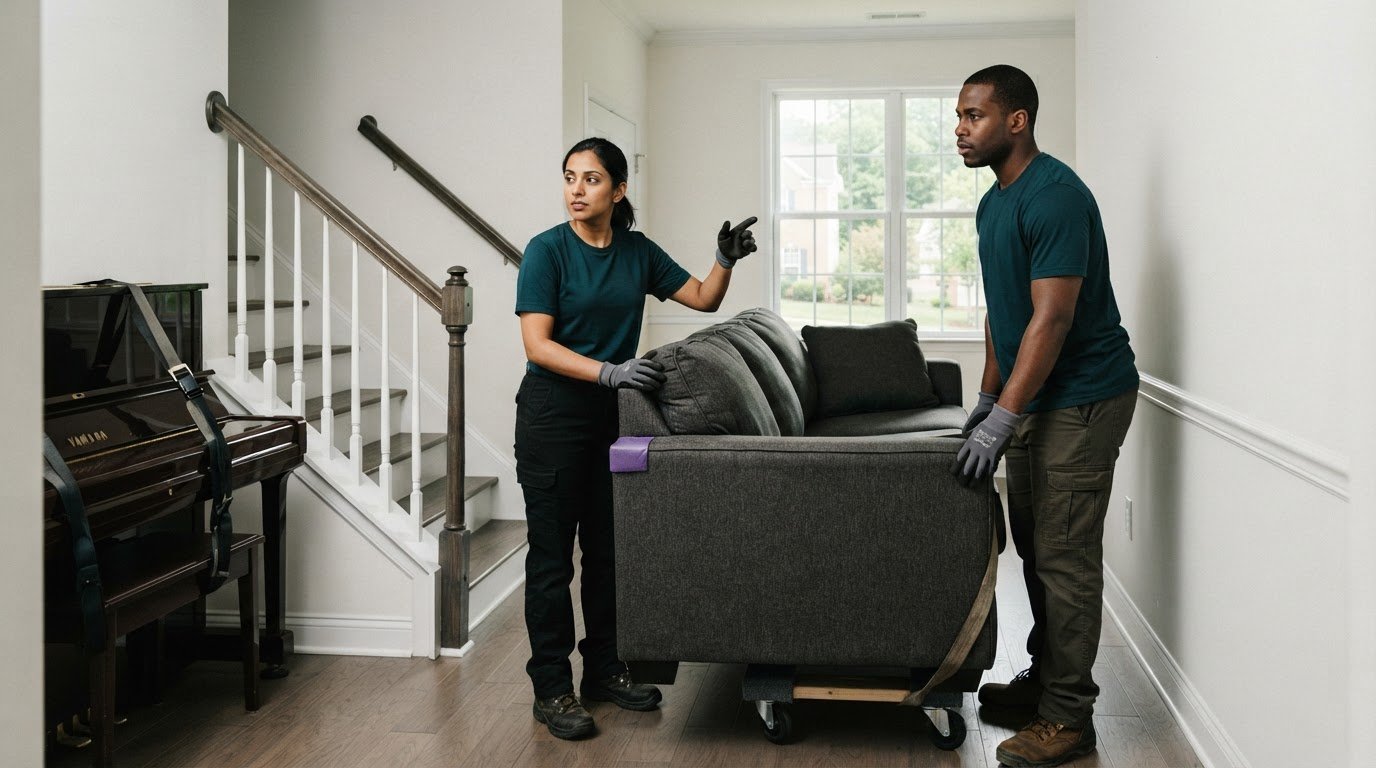
Stairs leave less room to adjust your grip or regain balance. A narrow landing or poor visibility can make it harder to see where to step and how the item is shifting. Clutter, cords, and loose objects can turn a routine carry into a trip hazard. Fatigue adds another concern: tired helpers may move less steadily or miss instructions. Keep communication simple, agree on clear cues, and pause if the team can’t move in sync.
These are general safety considerations, not a diagnosis or a substitute for medical care. If a move feels beyond your physical capacity, choose a safer plan. For Gainesville residents moving a bulky piano, safe, or exercise machine, professional heavy-item moving help can handle the difficult carry.
DIY Furniture Moving in Gainesville: Warning Signs That Mean Reassess
A piece of furniture that won’t move smoothly is giving you useful information. Adding more effort isn’t a safe fix. Pulling harder can make the item shift suddenly, strain your grip, or throw you off balance. Stop and work out what’s catching or changing the load before anyone tries again.
A manageable move usually has a clear route, a steady grip, and a load the helpers can control together. The same item can become a poor DIY choice if it blocks your view, needs to be tilted through a narrow turn, or must be carried on stairs. There’s no single weight that’s safe for everyone. Strength, fatigue, grip, mobility, item shape, and the route all affect what a person can handle safely.
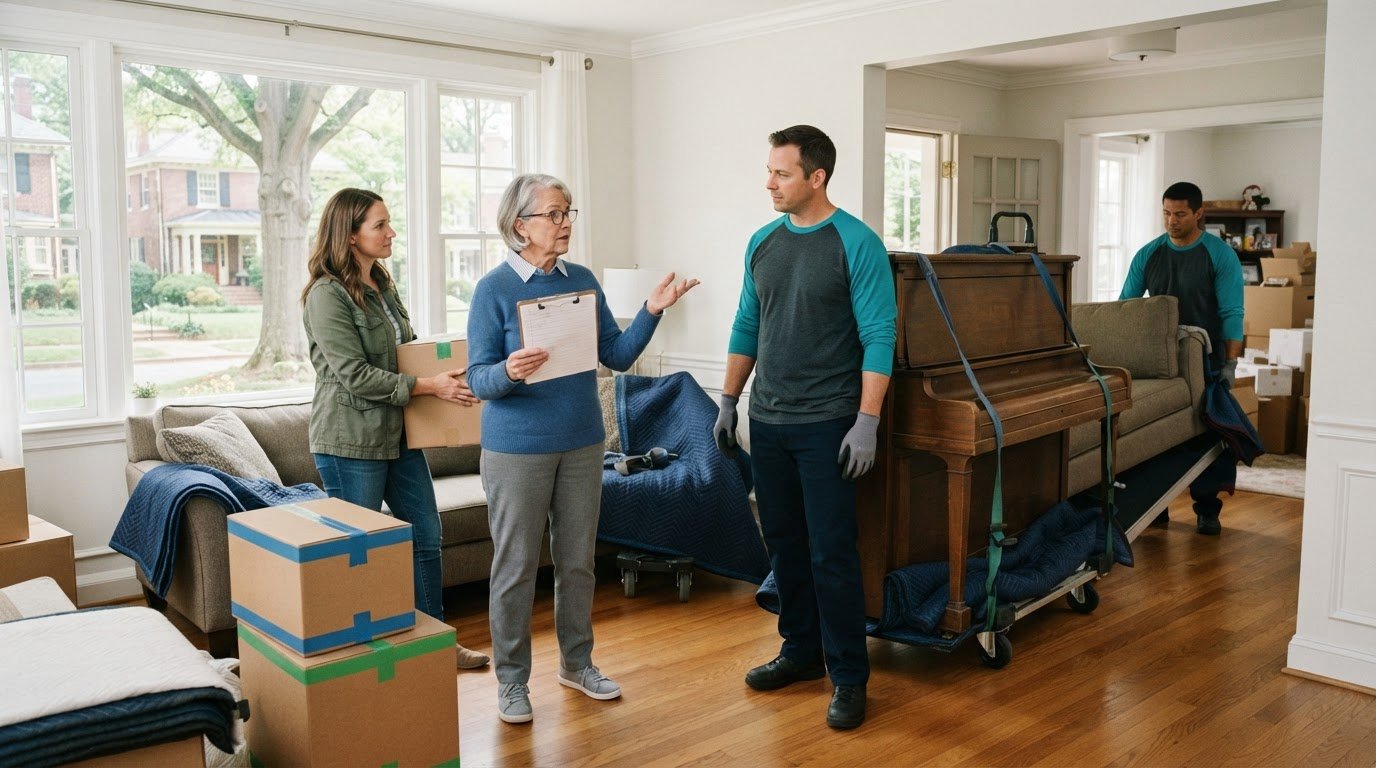
Before moving with a team, agree on the plan. Decide who will lead, who will watch the route, and what words mean “move,” “pause,” and “set it down.” Choose one shared stop signal, such as “stop,” that anyone can call at any time. Don’t start if a helper is unsure about their role or can’t communicate clearly.
Which warning signs mean the item needs more help?
Pause if the load blocks your view, slips in your hands, wobbles, or can’t be held securely. Reassess if it needs an awkward tilt or rotation, especially near a doorway or on stairs. Pain, a slipping grip, or disagreement between helpers means stop, not push through. These signs indicate that the current plan or team may not be able to control the item safely.
When is professional heavy-item help a safer choice?
Consider professional help when the item, route, or handling needs are beyond what your team can manage with control. Pianos, safes, and exercise equipment may require specialized handling. A sofa that won’t fit through a standard entryway may need hoisting rather than a forced turn. Learn more about specialized furniture transport for difficult moves.
For avoiding injury moving heavy furniture Gainesville, use this simple rule: if you can’t explain how the item will travel along the route and how everyone can stop safely, don’t begin. Change the plan or bring in experienced heavy-item movers. Getting help before a difficult lift is a practical decision, not a failure to manage a move yourself.
A Step-by-Step Injury-Prevention Plan Before Moving Furniture
Preparation can remove avoidable hazards and make a move easier to assess, but it can’t make every item or route suitable for a DIY move. Use this sequence before lifting. Stop if the plan still depends on forcing furniture through a tight spot or carrying it beyond your team’s ability.
- Plan the route. Walk from the item’s starting point to its destination. Measure doorways and tight turns, and note thresholds, stairs, and places where the item may need to change direction. Choose a route with enough room to move without rushing or blocking the carrier’s view.
- Clear the path. Remove clutter and loose rugs, and secure pets in another area. Keep bystanders out of the route. Check that the floor is clear all the way to the destination, not just around the furniture.
- Prepare the landing spot. Choose a stable destination and make space before the item leaves its current position. Move other furniture or objects that could block the way or force the team to hold the load while clearing room.
- Coordinate helpers and equipment. Agree on who leads, who supports, and which words signal “move,” “pause,” and “stop.” Use moving aids only if everyone using them understands their safe operation. Don’t improvise with equipment or attempt advanced handling methods you haven’t been trained to use.
- Reassess before starting. Check the route, landing area, team, and item again. If anything has changed or the plan feels uncertain, pause and choose another approach.
Prepare the route and destination before moving
Measure carefully, especially at narrow turns where an item may need to angle around a corner. Make sure the landing spot is clear and stable, with enough room to set the furniture down without shifting other objects mid-move. Check visibility too: move anything that could hide a step, edge, or obstacle along the route.
Coordinate people and equipment without rushing
Give everyone a clear role and agree that any helper can call a stop. Never let urgency replace communication. For items with specific handling or disassembly instructions, follow the manufacturer’s guidance rather than guessing. If you’re preparing an exercise machine, review treadmill moving and exercise equipment guidance before deciding how to proceed.
For avoiding injury moving heavy furniture Gainesville, treat preparation as a decision point, not a promise that the move is safe. If a bulky item, difficult turn, stairs, or your physical capacity makes the plan feel unsafe, don’t force a DIY attempt. Arrange professional heavy-item moving help for furniture and equipment that need experienced handling.
Getting Heavy Furniture Moving Help in Gainesville, VA
Some furniture moves are a poor fit for a do-it-yourself lift. A bulky piece, a tight turn, stairs, or limited physical capacity can make it difficult to keep the item under control. In Gainesville, Heavy Furniture Moving provides residential moving help and specialized handling for bulky items, including pianos, safes, and exercise equipment. The company also provides sofa hoisting when a sofa won’t pass through a standard entryway or elevator.
Share clear details about the move so the work can be planned around the item and its route. Explain what needs moving, where it is now, where it’s going, and any access limits that could affect the path. Heavy Furniture Moving serves customers in Gainesville, Fairfax, Woodbridge, Manassas, Manassas Park, Aldie, Ashburn, McLean, Vienna, Reston, Centreville, Chantilly, Clifton, Dumfries, South Riding, Fairfax Station, and Haymarket. For broader local moving context, explore reliable movers in Fairfax and Northern Virginia.
What details help plan a heavy furniture move?
Describe the item and the route from start to finish. Mention stairs, narrow turns, tight hallways, entryway limits, or other features that may affect access. Include where the item is located now and its destination, so the move can be considered as a complete path rather than a single lift.
For specialized items, note handling or access concerns that matter to the move. A piano, safe, or exercise machine may present different challenges from ordinary household furniture. If a sofa cannot fit through a standard entryway, mention that obstacle when describing the move. Clear details help identify where professional heavy-item handling or sofa hoisting will be useful.
Choose a safer next step for your Gainesville move
Use a simple decision rule: proceed only if the item, route, and team feel manageable together. Stop and get help if you can’t keep a secure grip, see the path clearly, coordinate with helpers, or control the item through a turn. A plan that depends on rushing, forcing a piece, or hoping it will fit is a good reason to pause.
A careful decision can make the move easier to plan, but no approach can promise an injury-free result. The goal is to recognize when the task exceeds your capacity and choose support before attempting a difficult lift. If professional help feels like the sensible next step, explore local moving help for your Gainesville move.
Make Your Next Move a Safer One
A safer furniture move doesn’t depend on proving you can manage every lift. It starts with giving yourself permission to change the plan. If a piece feels awkward, the route looks too tight, or your strength and energy aren’t there, pause and choose a more manageable next step. That judgment is part of avoiding injury moving heavy furniture Gainesville.
Heavy Furniture Moving provides Gainesville residents with residential moving help and specialized handling for pianos, safes, and exercise equipment. Sofa hoisting is available for furniture that can’t pass through a standard entryway or elevator. This support can help you plan a difficult move without forcing a risky DIY attempt.
Make a careful choice, whether that means adjusting the route, getting help, or leaving a challenging item to experienced movers. Explore heavy furniture moving help in Gainesville.
Frequently Asked Questions
How can I avoid back injury when moving heavy furniture?
Keep the item close, move steadily, and avoid twisting while carrying. Beforehand, empty drawers and remove detachable parts only if the manufacturer allows it. Don’t carry furniture while trying to hold a door open or move obstacles with your free hand. A clear path and an agreed plan help you focus on controlling the item. If you can’t keep a stable position, pause and get assistance.
Is it safe to move heavy furniture by yourself?
Repositioning a small, light piece may be manageable, but moving bulky or heavy furniture alone can leave you without help if it shifts or blocks your route. It’s also difficult to coordinate a door, landing, or tight turn while controlling the item. If it needs more than a simple, controlled move, don’t attempt it solo. Get help from capable movers.
Can moving furniture cause a serious injury?
Yes. A sudden shift can strain muscles, while dropped or tipping furniture can injure hands and feet. A stumble while carrying can also lead to a fall, especially near stairs or a doorway. The risks depend on the item and circumstances, so even a routine-looking move deserves care. Stop if the load becomes unstable, and don’t try to catch a falling piece.
What should I do if I feel pain while moving furniture?
Stop moving and don’t try to finish the lift through pain. If you can, coordinate with any helpers to put the item down in a controlled way rather than dropping it or shifting it suddenly. Don’t resume just because the discomfort eases briefly. Seek medical advice for severe, persistent, or concerning symptoms. If symptoms feel urgent, get emergency medical help.
How do I know when heavy furniture needs professional movers?
Get professional help if you can’t maintain a secure grip, see the route, or move in coordination with your helpers. A piece that must be maneuvered through a tight turn, carried on stairs, or handled despite limited strength may exceed your team’s capacity. Specialized items such as pianos, safes, and exercise equipment can also call for experienced handling. Stop if control feels uncertain.
Are there professional heavy furniture movers in Gainesville, Virginia?
Yes. Heavy Furniture Moving provides residential moving help in Gainesville, including specialized handling for pianos, safes, and exercise equipment. The company also serves Fairfax, Woodbridge, Manassas, Manassas Park, Aldie, Ashburn, McLean, Vienna, Reston, Centreville, Chantilly, Clifton, Dumfries, South Riding, Fairfax Station, and Haymarket. That local coverage gives residents a practical option for bulky household moves that are difficult to manage themselves.
What should I clear before moving furniture through my home?
Clear the full route, not just the space beside the item. Pick up cords, shoes, toys, loose rugs, and small furniture that could catch a foot or block a turn. Move fragile decorations from shelves and secure pets in another room. Make sure doors can stay open safely, and clear the destination so there’s somewhere ready to place the item. Keep children and bystanders away from the path.
Frequently Asked Questions
Start with control. Can you hold the item securely and keep it steady without reaching awkwardly? Next, walk the entire route, including each turn and the place where the furniture will land. Check for loose rugs, clutter, pets, and raised thresholds. Finally, consider fatigue, pain, or mobility limits honestly. If helpers can’t agree on a clear cue to start, stop, or set the item down, don’t begin yet.
Pause if a gentle test suggests the item won’t move smoothly, tips, or can’t be gripped securely. Don’t start while the path is blocked or the landing area is unprepared. Don’t try to free a stuck item by pulling harder. If pain or concerning symptoms develop, stop the activity and seek appropriate medical advice. A delay is safer than forcing a move that no longer feels controlled. Proceed only when the item, route, and people are ready. If a bulky piano, safe, or sofa presents a difficult route, professional heavy-item moving or sofa hoisting can be a practical option for Gainesville residents. Moving furniture asks your body to do more than manage weight. You need to grip the object, keep it steady, and move through a space that may not be designed for carrying. Force, awkward posture, twisting, and repeated effort can compound the challenge. A couch that feels manageable at first may become harder to control after several trips or a long carry. A heavy item becomes harder to control when your grip, posture, or route is compromised. Reaching far to hold a dresser, for example, can pull your body forward and make it tougher to steady. A doorway that forces a sharp turn may tempt you to twist while holding the load. Those adjustments can add strain and reduce control. The CDC NIOSH Ergonomics resource explains how work demands and body position relate to physical stress. A controlled lift is planned and steady. You can hold the item securely, see where you’re going, and move at a pace that lets you adjust. A sudden pull, jerk, or unsupported catch is different. It creates an abrupt demand, often before you can set your footing or coordinate with a helper. Don’t yank a stuck piece or try to catch furniture that starts to tip. Pause and rethink the move instead.
Pause if the load blocks your view, slips in your hands, wobbles, or can’t be held securely. Reassess if it needs an awkward tilt or rotation, especially near a doorway or on stairs. Pain, a slipping grip, or disagreement between helpers means stop, not push through. These signs indicate that the current plan or team may not be able to control the item safely.
Consider professional help when the item, route, or handling needs are beyond what your team can manage with control. Pianos, safes, and exercise equipment may require specialized handling. A sofa that won’t fit through a standard entryway may need hoisting rather than a forced turn. Learn more about specialized furniture transport for difficult moves. For avoiding injury moving heavy furniture Gainesville, use this simple rule: if you can’t explain how the item will travel along the route and how everyone can stop safely, don’t begin. Change the plan or bring in experienced heavy-item movers. Getting help before a difficult lift is a practical decision, not a failure to manage a move yourself. Preparation can remove avoidable hazards and make a move easier to assess, but it can’t make every item or route suitable for a DIY move. Use this sequence before lifting. Stop if the plan still depends on forcing furniture through a tight spot or carrying it beyond your team’s ability.
Describe the item and the route from start to finish. Mention stairs, narrow turns, tight hallways, entryway limits, or other features that may affect access. Include where the item is located now and its destination, so the move can be considered as a complete path rather than a single lift. For specialized items, note handling or access concerns that matter to the move. A piano, safe, or exercise machine may present different challenges from ordinary household furniture. If a sofa cannot fit through a standard entryway, mention that obstacle when describing the move. Clear details help identify where professional heavy-item handling or sofa hoisting will be useful.
Keep the item close, move steadily, and avoid twisting while carrying. Beforehand, empty drawers and remove detachable parts only if the manufacturer allows it. Don’t carry furniture while trying to hold a door open or move obstacles with your free hand. A clear path and an agreed plan help you focus on controlling the item. If you can’t keep a stable position, pause and get assistance.
Repositioning a small, light piece may be manageable, but moving bulky or heavy furniture alone can leave you without help if it shifts or blocks your route. It’s also difficult to coordinate a door, landing, or tight turn while controlling the item. If it needs more than a simple, controlled move, don’t attempt it solo. Get help from capable movers.
Yes. A sudden shift can strain muscles, while dropped or tipping furniture can injure hands and feet. A stumble while carrying can also lead to a fall, especially near stairs or a doorway. The risks depend on the item and circumstances, so even a routine-looking move deserves care. Stop if the load becomes unstable, and don’t try to catch a falling piece.
Stop moving and don’t try to finish the lift through pain. If you can, coordinate with any helpers to put the item down in a controlled way rather than dropping it or shifting it suddenly. Don’t resume just because the discomfort eases briefly. Seek medical advice for severe, persistent, or concerning symptoms. If symptoms feel urgent, get emergency medical help.
Get professional help if you can’t maintain a secure grip, see the route, or move in coordination with your helpers. A piece that must be maneuvered through a tight turn, carried on stairs, or handled despite limited strength may exceed your team’s capacity. Specialized items such as pianos, safes, and exercise equipment can also call for experienced handling. Stop if control feels uncertain.
Yes. Heavy Furniture Moving provides residential moving help in Gainesville, including specialized handling for pianos, safes, and exercise equipment. The company also serves Fairfax, Woodbridge, Manassas, Manassas Park, Aldie, Ashburn, McLean, Vienna, Reston, Centreville, Chantilly, Clifton, Dumfries, South Riding, Fairfax Station, and Haymarket. That local coverage gives residents a practical option for bulky household moves that are difficult to manage themselves.
Clear the full route, not just the space beside the item. Pick up cords, shoes, toys, loose rugs, and small furniture that could catch a foot or block a turn. Move fragile decorations from shelves and secure pets in another room. Make sure doors can stay open safely, and clear the destination so there’s somewhere ready to place the item. Keep children and bystanders away from the path.