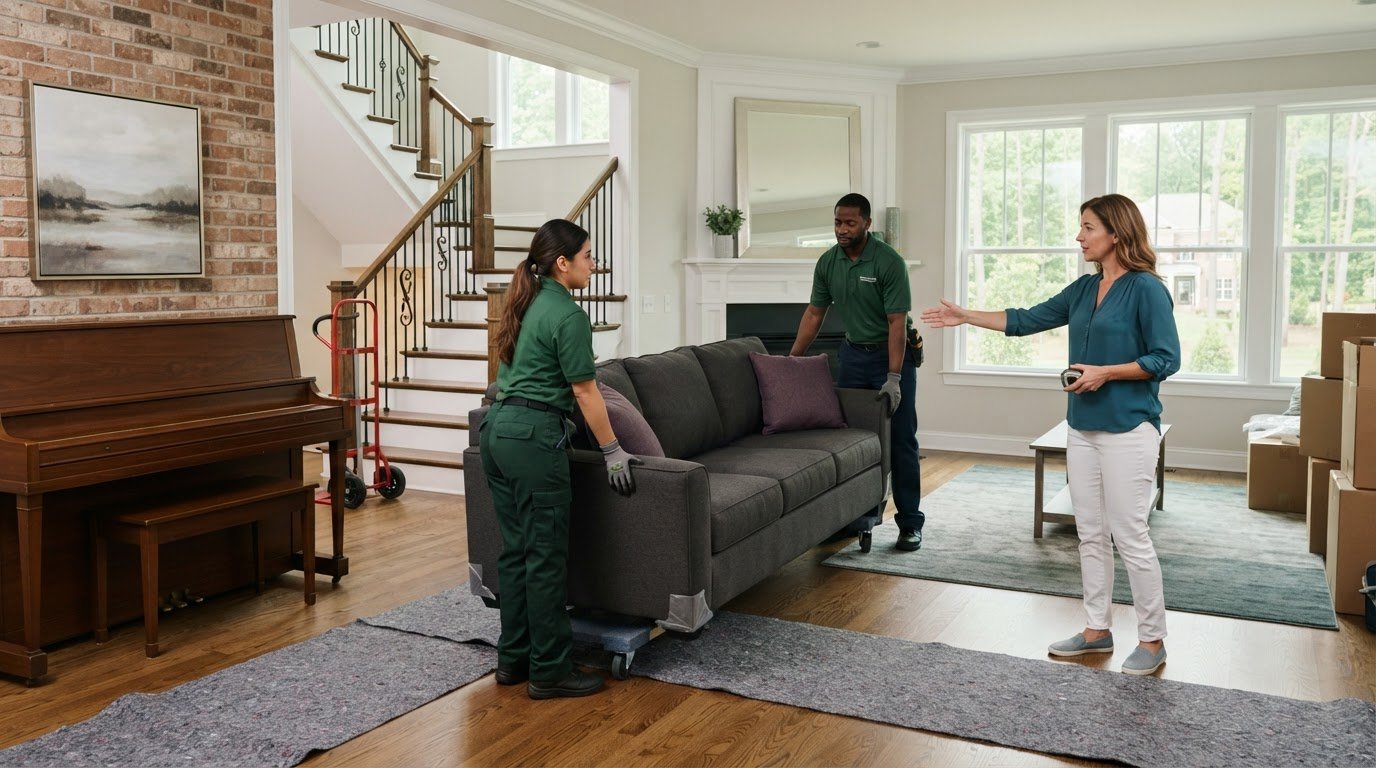
Appliance Removal and Disposal in Dumfries, VA: A Simple Step-by-Step Guide
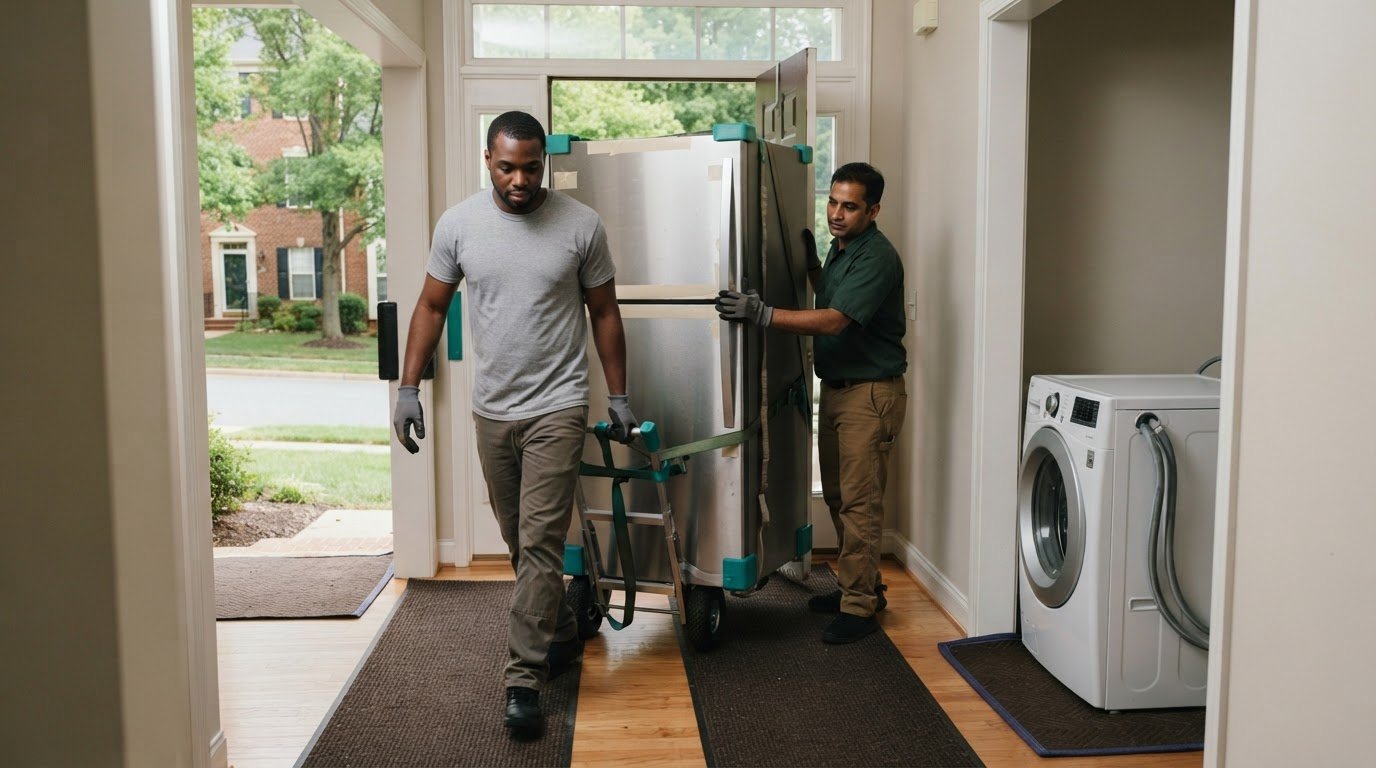
What if the hardest part of replacing an old appliance isn’t deciding where it should go, but getting it through the doorway? A refrigerator, washer, or stove can be heavy and awkward, especially when the route includes stairs, narrow doors, or tight turns. With appliance removal and disposal Dumfries residents can plan the lift, the exit route, and the appliance’s next stop before moving day.
You don’t have to handle the heavy work alone. Responsible disposal can take more thought than simply leaving an appliance at the curb. The Town of Dumfries doesn’t provide its own curbside trash and recycling collection, so it helps to understand the county’s disposal options and any requirements that apply to the item.
This guide covers how to prepare an appliance, clear a safe path, and choose a practical disposal route. You’ll also learn when a county facility or working-appliance recycling program may be an option, and how local heavy-lifting and junk-removal help can make the process easier.
Key Takeaways
- Identify the appliance and note its size, condition, and location before arranging removal.
- Measure tight doorways and plan the route out to make appliance removal and disposal Dumfries smoother and safer.
- Compare DIY disposal with removal help based on lifting effort, transport, access, and disposal planning.
- Prepare the area by clearing the path and moving nearby belongings out of the way.
- Share item and access details to help shape a practical removal plan for a heavy appliance.
Appliance Removal and Disposal in Dumfries: What to Plan Before Pickup
An unwanted appliance can be tough to lift, awkward to turn, and hard to dispose of once it’s out of the house. In Dumfries, start planning before pickup: identify the item, consider its condition, map the route out, and understand which disposal options fit. This guide covers preparation, access, removal, and responsible disposal, not appliance repair.
Moving help addresses the bulky lifting and maneuvering. The appliance’s final destination depends on what it is, its condition, and applicable local requirements. For appliance removal and disposal Dumfries residents should plan for both the physical move and the next step for the item.
Which household appliances commonly need removal?
Common examples include refrigerators, washers, dryers, and ranges. You might need help with one outdated appliance during a kitchen upgrade, or several items as part of a household cleanout. Make a clear list of what needs to go. A single appliance may call for a focused removal plan, while multiple bulky items can affect the access and coordination involved.
Why disposal planning matters before moving an appliance
Appliances combine weight with awkward shapes. A refrigerator may be difficult to tilt through a doorway, while a washer or range can be challenging to control around a landing or tight corner. Before pickup, consider the entire route from the appliance’s current spot to the exit, including turns, thresholds, and shared or narrow spaces.
Condition also shapes the disposal decision. An intact, working appliance may have different options from a damaged or incomplete one. Refrigerators and other modern appliances can contain electronic controls and components, so the right destination may depend on what the item includes and local requirements. Electronic waste recycling explains how electronic materials can be separated and recovered, offering context for why some appliance components need thoughtful handling.
Disposal planning begins before pickup because the appliance, its condition, and the route out all shape what happens next. Note visible damage or missing parts, and share the appliance type and access details when arranging help. That gives the removal plan a practical starting point and helps you avoid deciding what to do with the item only after it has been moved.
How Appliance Removal and Disposal Works in Dumfries
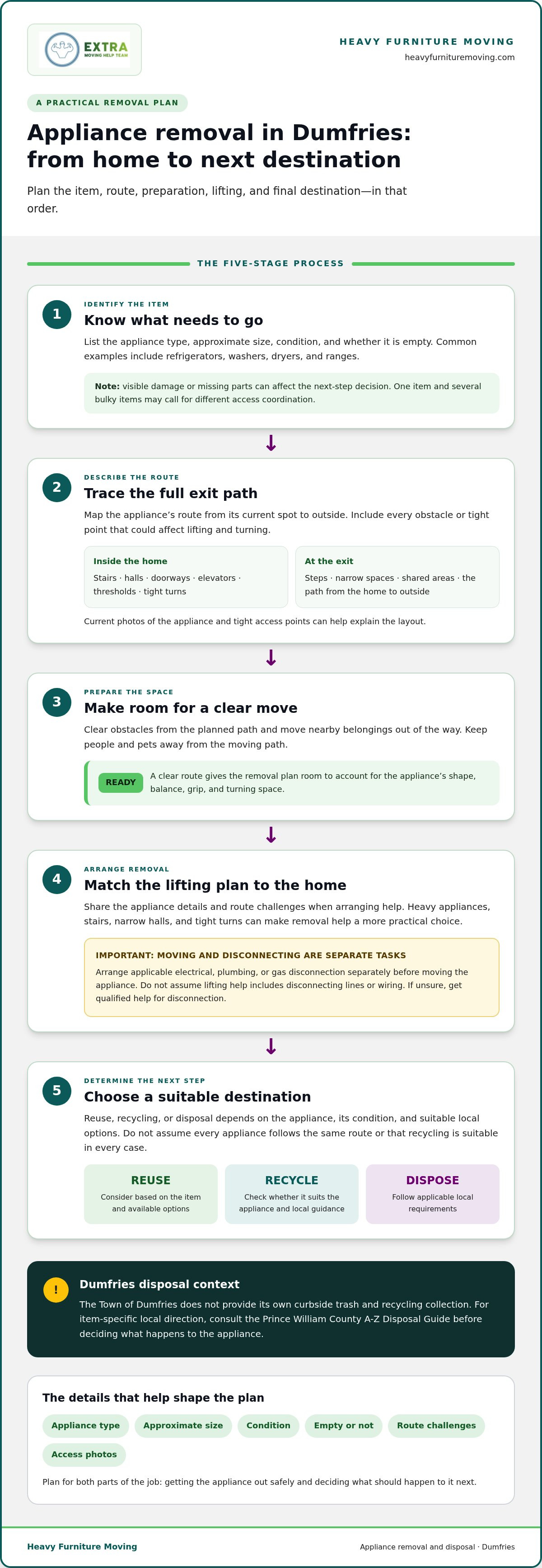
A well-planned removal follows a few clear steps: identify the appliance, describe the route out, prepare the area, arrange the lifting, then decide where the item should go. This order helps prevent surprises, especially in Dumfries homes with stairs, narrow halls, tight doorways, or limited exterior access.
- Identify the item. Note the appliance type, approximate size, condition, and whether it’s empty.
- Describe the route. Include stairs, hallways, doorways, elevators, thresholds, and the path from the home to the outside.
- Prepare the space. Clear obstacles and keep people and pets away from the moving path.
- Arrange removal. Share the item and access details so the lifting plan accounts for the home’s layout.
- Determine the next step. Reuse, recycling, or disposal depends on the appliance and suitable local options.
Moving a heavy appliance takes more than strength. Movers need to consider its balance, grip, shape, and turning room to guide it through the home without rushing. For appliance removal and disposal Dumfries residents can make the process more straightforward by describing access clearly before the move.
What information helps plan appliance removal?
Share the appliance type, approximate size, and whether it’s empty. Describe each challenge along the route, such as a turn at the bottom of stairs, a narrow hallway, an elevator, or a step at the exterior entrance. Current photos of the appliance and tight access points can make the layout easier to explain and help the removal plan reflect the home.
Moving and disconnecting are separate tasks. Arrange electrical, plumbing, or gas disconnection separately before the appliance is moved, as applicable. Don’t assume lifting help includes disconnecting lines or wiring. If you’re unsure how to disconnect an appliance safely, get qualified help for that work.
What happens after an appliance leaves the home?
The next destination depends on the item’s condition and the disposal or reuse channels available under current local guidance. Don’t assume every appliance follows the same route or that recycling is suitable in every case. For item-specific local direction, consult the Prince William County A-Z Disposal Guide before deciding what happens next.
Plan for both parts of the job: getting the appliance out safely and making an informed decision about its disposition. Heavy Furniture Moving provides junk removal support for bulky household items, helping take the strain out of appliance removal.
DIY Appliance Disposal vs. Professional Removal in Dumfries
Choosing between DIY and professional help depends on more than the appliance’s size. Consider the route out, safe lifting support, transport, and how you’ll follow local disposal requirements. A manageable item with a clear exit path may be a reasonable DIY project. Heavy appliances, stairs, or tight turns can make removal help a more practical choice.
What to consider
DIY
Professional removal
Effort
You handle the planning, lifting, loading, and transport.
Removal help takes on the physical work of moving the bulky item.
Access
You assess doorways, stairs, turns, and the route to your vehicle.
Sharing access details helps shape a plan for the home’s layout.
Lifting
You need appropriate help and a safe way to move the appliance.
Experienced heavy-item movers can help maneuver it through confined spaces.
Coordination
You organize the people, equipment, and transport.
Removal support simplifies the lifting and exit process.
Disposal planning
You arrange a suitable destination and follow local requirements.
The item’s condition and applicable rules still guide its next step.
When might DIY appliance disposal be manageable?
DIY may work if the appliance is a manageable size, the route is clear and wide enough, and you have suitable assistance and transport. Measure the appliance and narrow points along the way, including doorway openings and turns. Don’t rely on improvised transport or attempt a lift that feels unsafe. Arrange disposal separately and follow current local requirements.
When does professional appliance removal make sense?
Consider professional help if the item is especially bulky, the route includes difficult stairs or tight turns, or coordinating a safe lift and transport feels like too much. Heavy-item moving experience can help with controlled lifting and maneuvering, reducing the physical burden on you. Preparation still matters: clear the path and describe access details so the removal plan fits the home.
Lifting help moves the appliance; it doesn’t mean the appliance is disconnected or repaired. Arrange any needed electrical, plumbing, or gas disconnection separately before removal. For appliance removal and disposal Dumfries residents can weigh the lift, route, and logistics together, then choose the approach that feels safe and manageable.
How to Prepare an Appliance for Removal in Dumfries
A little preparation can make appliance removal easier on your home and everyone involved. Use this checklist to clear the route, get the appliance ready where safe, and flag access challenges in advance.
- Measure the route. Check tight doorways and note stairs, turns, thresholds, and obstacles between the appliance and the exterior.
- Clear the work area. Move loose items, rugs, and nearby belongings out of the path. Protect items that can’t be moved from foot traffic.
- Keep the area clear. Keep children and pets away from the appliance and planned route during removal.
- Empty the appliance. Remove food, laundry, or other contents as applicable. For a refrigerator or freezer, follow appropriate preparation guidance for the item.
- Secure loose parts. Remove or secure shelves and other removable pieces only if you can do so safely and without forcing anything.
- Share access details. Describe tight spaces, stairs, exterior steps, or other obstacles so the removal plan reflects your home’s layout.
Clear the route from appliance to exit
Walk the full path before removal day. Measure narrow doorways and compare them with the appliance’s dimensions, accounting for turns where a straight measurement may not be enough. Check for low ceilings, uneven thresholds, and exterior obstacles. Clear loose items and protect nearby belongings from foot traffic while keeping the route open.
Flag access details in advance. A photo of a tight landing or narrow doorway can make the layout easier to explain. Don’t wait until the appliance is moving to mention a tricky turn.
Prepare the appliance without taking unnecessary risks
Empty the appliance where applicable and keep removable parts together. Avoid forcing doors, shelves, or other components that won’t come free easily. Keep the appliance upright where appropriate, and don’t try to tilt or reposition it alone to make the route easier.
Utility connections need separate attention. Don’t disconnect water, gas, or electrical lines yourself as part of this checklist. If disconnection is needed, arrange for a qualified professional to handle it before the appliance is moved.
For appliance removal and disposal Dumfries homeowners can prepare by focusing on a clear route, an empty appliance, and accurate access details. If you’d rather leave the heavy lifting to a team, arrange heavy-item removal help with Heavy Furniture Moving.
Arrange Appliance Removal and Disposal with Heavy Furniture Moving
An old appliance can become a tough household job when it needs to pass through a doorway, down stairs, or around a tight corner. Heavy Furniture Moving provides junk removal and residential moving support in Dumfries and surrounding Northern Virginia communities, including help with bulky household items. Share the appliance and access details so the removal plan can account for the item and the home.
What to share when arranging appliance removal
Give a clear picture of the job. Include:
- The appliance type and approximate dimensions.
- Its condition and whether it’s empty.
- The Dumfries pickup address and any stairs, narrow halls, tight turns, or restricted exterior access.
- Whether you need help with one appliance or additional household items.
These details help describe the lifting and route involved. A refrigerator in an open kitchen presents a different access challenge from a washer in a basement reached by a narrow staircase. Current photos can also show the appliance and difficult points along the route.
Choose a simple next step for your Dumfries home
Heavy Furniture Moving handles the physical removal through its junk removal and heavy-item moving services. The plan can account for the item and home access, while the appliance’s appropriate destination depends on its condition and applicable local requirements. Keep utility disconnection separate: arrange any needed electrical, plumbing, or gas work with a qualified professional before moving the appliance.
If you’re also planning a household move, the guide to reliable movers in Fairfax and Northern VA may help with related planning. For appliance removal, gather the item and access details, then take the next step toward less strenuous lifting.
Arrange help with appliance removal in Dumfries and leave the heavy lifting to Heavy Furniture Moving.
Make Your Appliance Removal Plan and Move Forward
A smoother appliance pickup starts with a clear route and a realistic plan. Note the appliance’s condition, measure tight access points, and clear nearby belongings before removal. Keep utility disconnection separate, and choose a disposal option based on the item and current local requirements.
For appliance removal and disposal Dumfries residents can weigh DIY effort against the challenges of heavy lifting, stairs, and transport. Heavy Furniture Moving provides residential junk removal and specializes in moving heavy, bulky household items, with Dumfries among its local communities.
Share what needs to be removed and any access details, then arrange help with appliance removal. With a practical plan and lifting support, you can clear the space and move on to your next project with less strain.
Frequently Asked Questions
How much does appliance removal and disposal cost in Dumfries?
The cost depends on the appliance, how difficult it is to remove, and the help and transport involved. A single item with clear access may require a different plan from a bulky appliance on an upper floor or several items during a cleanout. Heavy Furniture Moving provides junk removal and heavy-item moving support in Dumfries. Share the item and access details to discuss a practical removal plan.
Can old appliances be recycled in Dumfries, Virginia?
Yes, residents of Prince William County, including Dumfries, can bring appliances to the county landfill for disposal. Proof of residency is required, and appliances must be separated and placed in the designated area. Some working refrigerators and freezers may also qualify for Dominion Energy’s Virginia recycling program, subject to its eligibility rules. Check current local instructions and program terms before transporting an appliance.
Do I need to disconnect an appliance before removal?
Any needed electrical, water, or gas disconnection should be handled separately before the appliance is moved. Don’t attempt utility work yourself if you’re unsure how to do it safely; arrange qualified help. Moving assistance covers physical lifting and maneuvering, not automatically disconnection or repair. Refrigerators and other appliances containing refrigerant require proper refrigerant recovery before disposal, so plan for that as part of the item’s final handling.
How should I prepare a refrigerator for removal?
Empty the refrigerator and freezer, then follow the manufacturer’s guidance for defrosting and managing meltwater. Remove or secure loose shelves and drawers only if they come free safely, and keep the refrigerator upright where appropriate. Clear the route and protect nearby belongings from foot traffic. Arrange any required utility disconnection separately, and tell the removal team about stairs, narrow doors, or tight turns.
Can appliance removal include carrying an item down stairs?
Heavy-item removal can help maneuver bulky appliances through challenging home access, including stairs, when the removal plan accounts for the layout. Heavy Furniture Moving serves Dumfries and Northern Virginia communities, including Fairfax, Woodbridge, Manassas, Manassas Park, Aldie, Ashburn, McLean, Vienna, Reston, Centreville, Chantilly, Clifton, South Riding, Fairfax Station, Haymarket, and Gainesville. Share stairway and landing details in advance.
What information should I provide when arranging appliance removal in Dumfries?
For appliance removal and disposal in Dumfries, share the appliance type, approximate dimensions, condition, and whether it’s empty. Give the pickup address and describe stairs, narrow halls, doorways, elevators, tight turns, or exterior obstacles. Mention whether you need help with one appliance or additional household items. Clear details help shape a practical plan around the item and the route out.
What happens to an appliance after it is removed?
Its next step depends on its condition and suitable local options. A working appliance may have reuse or recycling possibilities, while damaged or incomplete items may need another disposal route. In Dumfries, county landfill guidance provides direction for resident appliance disposal, including use of a designated area. Don’t assume every appliance follows the same path; check current requirements for the specific item and any components it contains.
Frequently Asked Questions
Common examples include refrigerators, washers, dryers, and ranges. You might need help with one outdated appliance during a kitchen upgrade, or several items as part of a household cleanout. Make a clear list of what needs to go. A single appliance may call for a focused removal plan, while multiple bulky items can affect the access and coordination involved.
Share the appliance type, approximate size, and whether it’s empty. Describe each challenge along the route, such as a turn at the bottom of stairs, a narrow hallway, an elevator, or a step at the exterior entrance. Current photos of the appliance and tight access points can make the layout easier to explain and help the removal plan reflect the home. Moving and disconnecting are separate tasks. Arrange electrical, plumbing, or gas disconnection separately before the appliance is moved, as applicable. Don’t assume lifting help includes disconnecting lines or wiring. If you’re unsure how to disconnect an appliance safely, get qualified help for that work.
The next destination depends on the item’s condition and the disposal or reuse channels available under current local guidance. Don’t assume every appliance follows the same route or that recycling is suitable in every case. For item-specific local direction, consult the Prince William County A-Z Disposal Guide before deciding what happens next. Plan for both parts of the job: getting the appliance out safely and making an informed decision about its disposition. Heavy Furniture Moving provides junk removal support for bulky household items, helping take the strain out of appliance removal. Choosing between DIY and professional help depends on more than the appliance’s size. Consider the route out, safe lifting support, transport, and how you’ll follow local disposal requirements. A manageable item with a clear exit path may be a reasonable DIY project. Heavy appliances, stairs, or tight turns can make removal help a more practical choice. What to consider DIY Professional removal Effort You handle the planning, lifting, loading, and transport. Removal help takes on the physical work of moving the bulky item. Access You assess doorways, stairs, turns, and the route to your vehicle. Sharing access details helps shape a plan for the home’s layout. Lifting You need appropriate help and a safe way to move the appliance. Experienced heavy-item movers can help maneuver it through confined spaces. Coordination You organize the people, equipment, and transport. Removal support simplifies the lifting and exit process. Disposal planning You arrange a suitable destination and follow local requirements. The item’s condition and applicable rules still guide its next step.
DIY may work if the appliance is a manageable size, the route is clear and wide enough, and you have suitable assistance and transport. Measure the appliance and narrow points along the way, including doorway openings and turns. Don’t rely on improvised transport or attempt a lift that feels unsafe. Arrange disposal separately and follow current local requirements.
Consider professional help if the item is especially bulky, the route includes difficult stairs or tight turns, or coordinating a safe lift and transport feels like too much. Heavy-item moving experience can help with controlled lifting and maneuvering, reducing the physical burden on you. Preparation still matters: clear the path and describe access details so the removal plan fits the home. Lifting help moves the appliance; it doesn’t mean the appliance is disconnected or repaired. Arrange any needed electrical, plumbing, or gas disconnection separately before removal. For appliance removal and disposal Dumfries residents can weigh the lift, route, and logistics together, then choose the approach that feels safe and manageable. A little preparation can make appliance removal easier on your home and everyone involved. Use this checklist to clear the route, get the appliance ready where safe, and flag access challenges in advance.
The cost depends on the appliance, how difficult it is to remove, and the help and transport involved. A single item with clear access may require a different plan from a bulky appliance on an upper floor or several items during a cleanout. Heavy Furniture Moving provides junk removal and heavy-item moving support in Dumfries. Share the item and access details to discuss a practical removal plan.
Yes, residents of Prince William County, including Dumfries, can bring appliances to the county landfill for disposal. Proof of residency is required, and appliances must be separated and placed in the designated area. Some working refrigerators and freezers may also qualify for Dominion Energy’s Virginia recycling program, subject to its eligibility rules. Check current local instructions and program terms before transporting an appliance.
Any needed electrical, water, or gas disconnection should be handled separately before the appliance is moved. Don’t attempt utility work yourself if you’re unsure how to do it safely; arrange qualified help. Moving assistance covers physical lifting and maneuvering, not automatically disconnection or repair. Refrigerators and other appliances containing refrigerant require proper refrigerant recovery before disposal, so plan for that as part of the item’s final handling.
Empty the refrigerator and freezer, then follow the manufacturer’s guidance for defrosting and managing meltwater. Remove or secure loose shelves and drawers only if they come free safely, and keep the refrigerator upright where appropriate. Clear the route and protect nearby belongings from foot traffic. Arrange any required utility disconnection separately, and tell the removal team about stairs, narrow doors, or tight turns.
Heavy-item removal can help maneuver bulky appliances through challenging home access, including stairs, when the removal plan accounts for the layout. Heavy Furniture Moving serves Dumfries and Northern Virginia communities, including Fairfax, Woodbridge, Manassas, Manassas Park, Aldie, Ashburn, McLean, Vienna, Reston, Centreville, Chantilly, Clifton, South Riding, Fairfax Station, Haymarket, and Gainesville. Share stairway and landing details in advance.
For appliance removal and disposal in Dumfries, share the appliance type, approximate dimensions, condition, and whether it’s empty. Give the pickup address and describe stairs, narrow halls, doorways, elevators, tight turns, or exterior obstacles. Mention whether you need help with one appliance or additional household items. Clear details help shape a practical plan around the item and the route out.
Its next step depends on its condition and suitable local options. A working appliance may have reuse or recycling possibilities, while damaged or incomplete items may need another disposal route. In Dumfries, county landfill guidance provides direction for resident appliance disposal, including use of a designated area. Don’t assume every appliance follows the same path; check current requirements for the specific item and any components it contains.