Antique Furniture Movers in Fairfax, VA: A Guide to Safe Transport
What if the biggest risk to an antique isn’t the drive, but a tight doorway or a loose joint discovered on moving day? Scratches, fragile glass, and delicate finishes make each step important. Antique furniture movers Fairfax VA can help with bulky pieces, but a well-planned move starts with clear information. Prepare to describe the furniture, its condition, and the route so the moving plan can account for the details that matter.
This guide explains how to document an antique’s condition, protect its surfaces, and flag loose parts or glass before transport. You’ll also learn which access details matter in Fairfax, from stairs and narrow halls to parking and loading areas. We’ll cover what to share when arranging local or longer-distance transport, and how packing and moving support can fit into a wider relocation. With useful details ready up front, you can make practical decisions and reduce surprises on moving day.
Key Takeaways
- Antique age alone doesn’t determine how carefully a piece should be moved. Condition, construction, materials, and access all shape the plan.
- Learn which item details, photos, and condition notes can help create a clear record before handling begins.
- Compare local transport, a full residential move, packing support, and international shipment coordination to find a practical fit.
- Use a simple preparation sequence to map access, plan the route, and get the destination ready without lifting the antique yourself.
- See how antique furniture movers Fairfax VA can fit into a broader move with residential moving, heavy-item handling, packing support, and shipment coordination.
Antique Furniture Movers in Fairfax, VA: What Makes These Moves Different?
Planning antique furniture transport means considering a piece’s condition, materials, construction, and route, not just its size and weight. That’s what sets these moves apart from routine furniture moving. A heavy modern cabinet may need careful lifting, while an antique cabinet with loose joints, glass panels, or a delicate finish calls for thoughtful handling and access planning.
Age alone doesn’t show how fragile a piece is. A well-maintained antique with sturdy construction may be in better condition than a newer item with damaged joints. A sentimental heirloom may also deserve extra care, even if its market value is unknown. Furniture preservation involves considering materials and handling, as outlined in this overview of what makes these moves different.
Which antique furniture details affect a move?
Look for features that could affect handling. Wood and veneer may respond differently to pressure or rubbing. Glass doors and mirrors add vulnerable surfaces, while carved details, projecting trim, and delicate finishes may need protection from bumps and contact with other items. Joined components, including legs, drawers, and doors, can also affect how a piece is handled.
Be candid about existing conditions. Note loose joints, earlier repairs, scratches, chips, and other visible damage, and take clear photos before handling. This creates a useful record of the furniture’s starting condition. When arranging a move, describe unusual shapes, detachable parts, and fragile elements. A piece that looks like one solid unit may include parts that need separate attention.
Why Fairfax access belongs in the plan
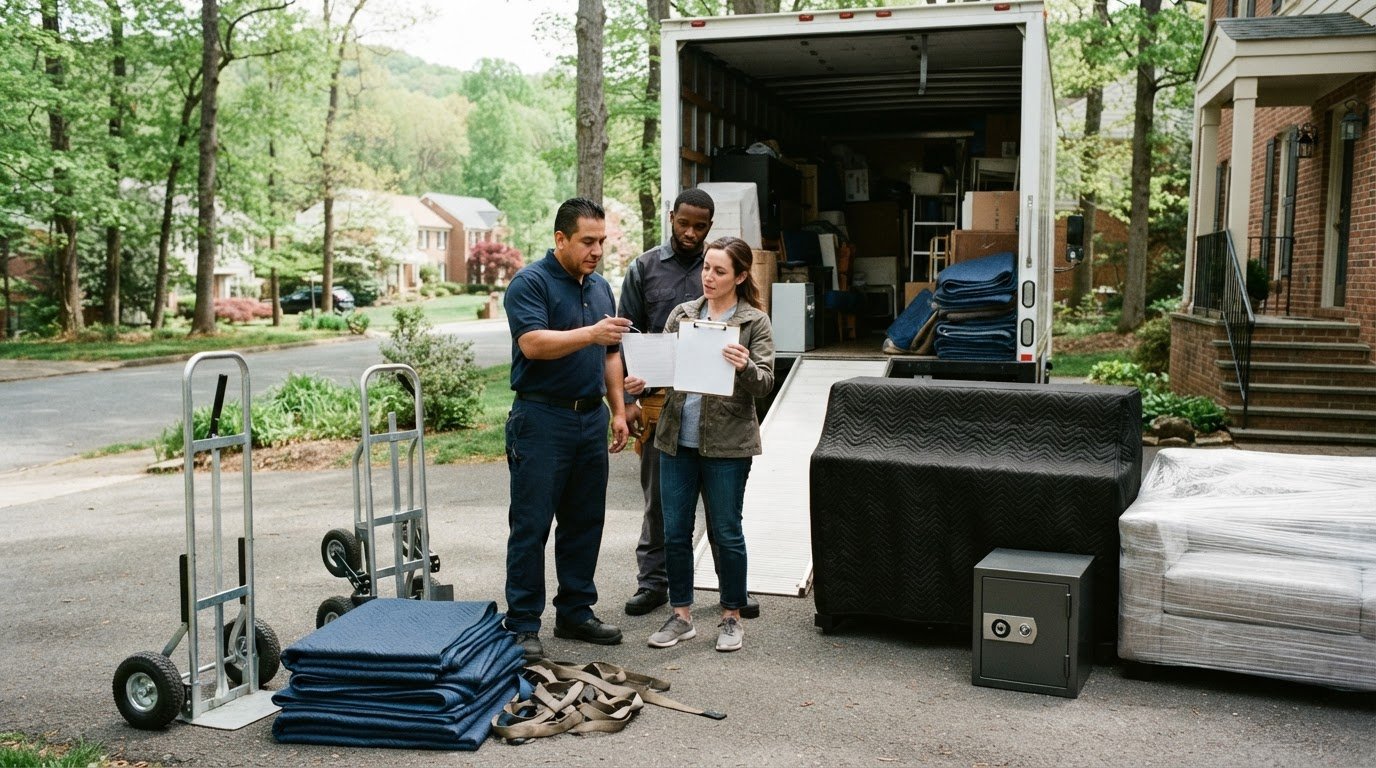
The route matters as much as the furniture. In Fairfax, note stairs, narrow hallways, doorway dimensions, elevator limits, and parking or loading access at both addresses. The layouts at the pickup and destination can determine how the piece approaches each doorway, where handling may be difficult, and how the move should be organized.
Measure tight spots when possible, and mention turns or transitions that could limit clearance. A doorway may be wide enough, but a narrow hall immediately beyond it can change the approach. Destination access matters too: an easy exit at pickup doesn’t resolve a difficult stairway at the other end.
When comparing antique furniture movers Fairfax VA, share details about both the item and its route. Clear information helps shape heavy-item moving support around the actual piece, rather than treating an antique as just another bulky object.
How Antique Furniture Movers Plan Protection Before Transport
A useful plan starts before moving day. Gather details about the piece and its condition, map access at pickup and delivery, then plan the moving help and packing support the job needs. The approach should reflect the furniture and route, rather than assume every antique needs the same materials or steps.
Photos and written notes help create a record of the item before handling. Capture visible marks, repairs, loose areas, and fragile features from several angles. These details can help distinguish existing wear from changes noticed after the move. Keep the record together so it’s easy to share with the people coordinating transport.
What information should you prepare?
Before arranging antique furniture movers Fairfax VA, put together a short summary of the item and access. Technical terms aren’t necessary. Clear descriptions and measurements make the planning conversation more practical.
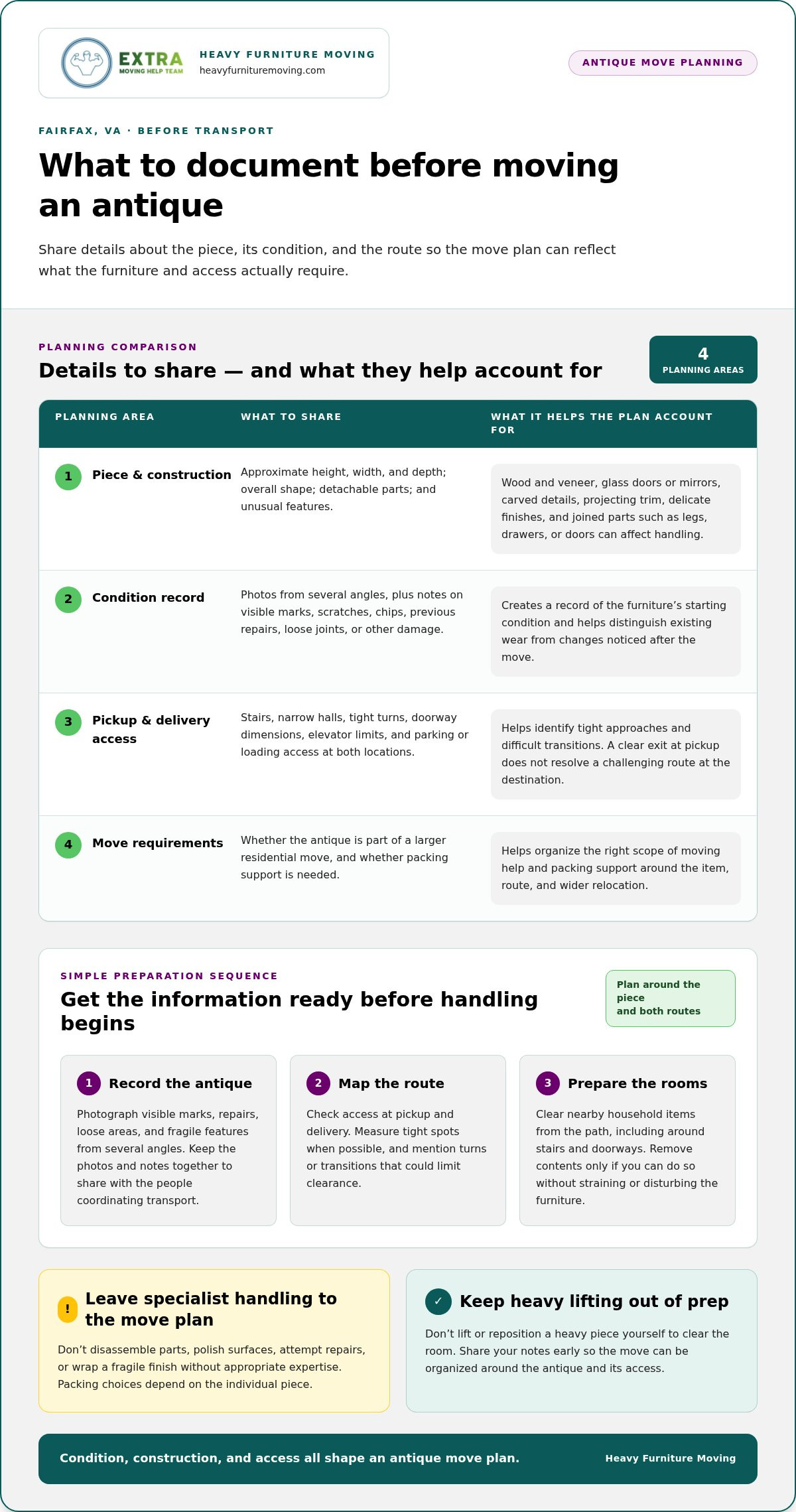
- Item: Approximate height, width, and depth; overall shape; detachable components; and known fragile areas.
- Condition: Photos from multiple angles, plus notes about visible marks, previous repairs, loose parts, or damage.
- Pickup and delivery: Stairs, narrow halls, tight turns, doorway dimensions, elevator limits, and parking or loading access at both locations.
- Move needs: Whether the antique is part of a larger residential move and whether packing support is needed.
For broader consumer guidance on evaluating moving arrangements, review the Federal Motor Carrier Safety Administration’s Compare the Move Plan resources. Use them alongside the details specific to your item and route.
How should you prepare the piece and the rooms?
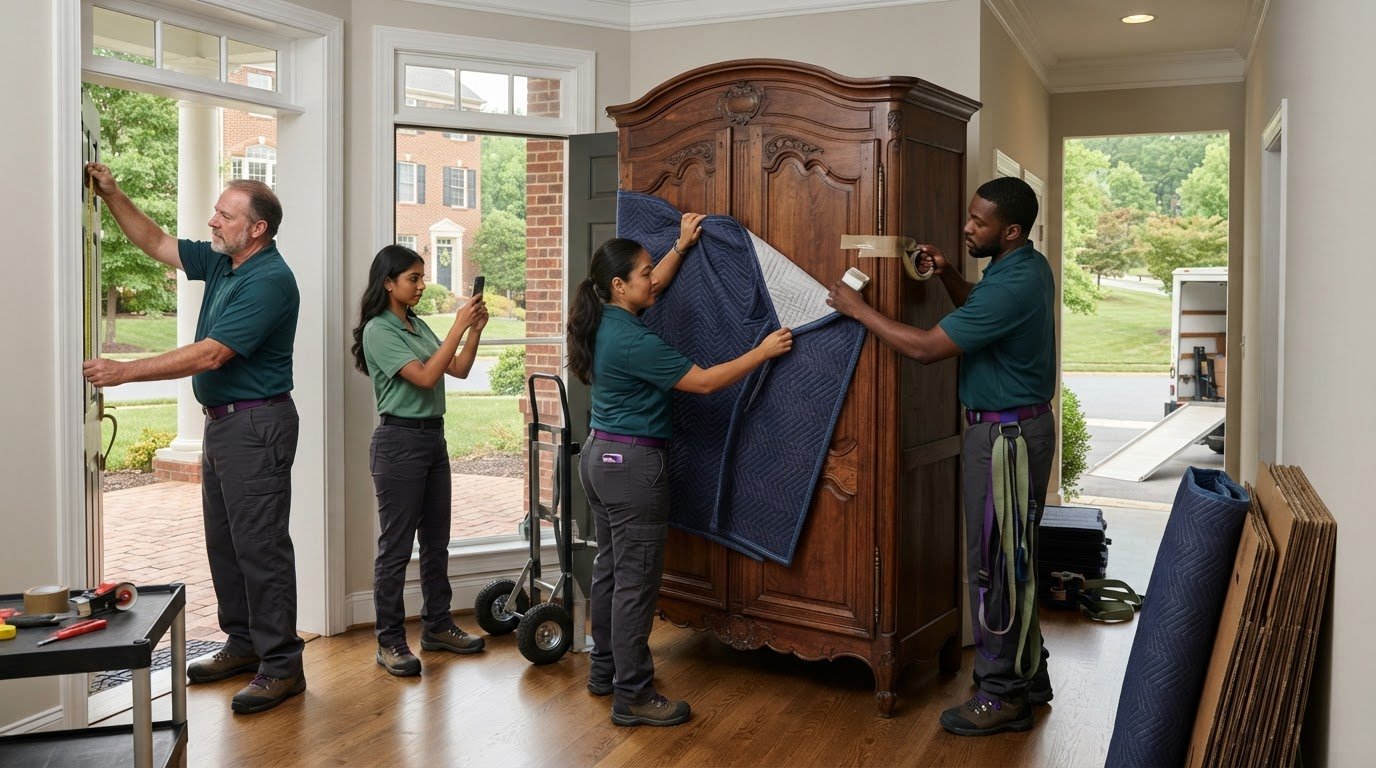
Keep preparation to simple tasks. Remove personal contents if you can do so without straining or disturbing the furniture. Secure loose objects only when it’s safe and appropriate. Don’t disassemble parts, polish surfaces, attempt repairs, or wrap a fragile finish without appropriate expertise. Packing choices depend on the piece, so don’t assume one method suits every antique.
Clear the route at both addresses. Move nearby household items out of the way and make the path easier to access, including the areas around stairs and doorways. Don’t lift or reposition a heavy piece yourself to prepare the room.
Share your notes early so the move can be organized around the item, access, and service needs. If you’re planning a larger household move, residential moving and heavy-item handling can bring practical support into the same plan.
Choosing Fairfax Antique Furniture Movers: Compare the Move Plan
“Antique furniture shipping” can mean moving a piece across Fairfax or including it in a longer-distance household shipment. Match the plan to the distance, number of items, packing needs, access at both addresses, and destination. A single cabinet with straightforward access calls for a different scope than several pieces moving as part of a household relocation.
Use this comparison to identify the kind of support that fits your move. It’s a planning guide, not a one-size-fits-all package.
| Move plan | Distance and item count | Packing needs | Access and destination |
|---|---|---|---|
| Local transport | Selected furniture moving between nearby locations | Discuss whether packing support is needed for the piece | Share stairs, tight turns, and pickup and delivery access |
| Full residential moving | Antiques moving with household belongings, locally or longer distance | Packing and unpacking support can fit into the broader move | Plan around access at both homes and the full destination setup |
| Packing support | One or more pieces that need packing as part of transport | Describe the furniture and its fragile features so the plan suits the item | Consider where packing and loading will take place |
| International shipment coordination | Furniture included in an overseas relocation | Discuss packing as part of the wider shipment plan | Account for the destination and shipment logistics |
When is a focused furniture move enough?
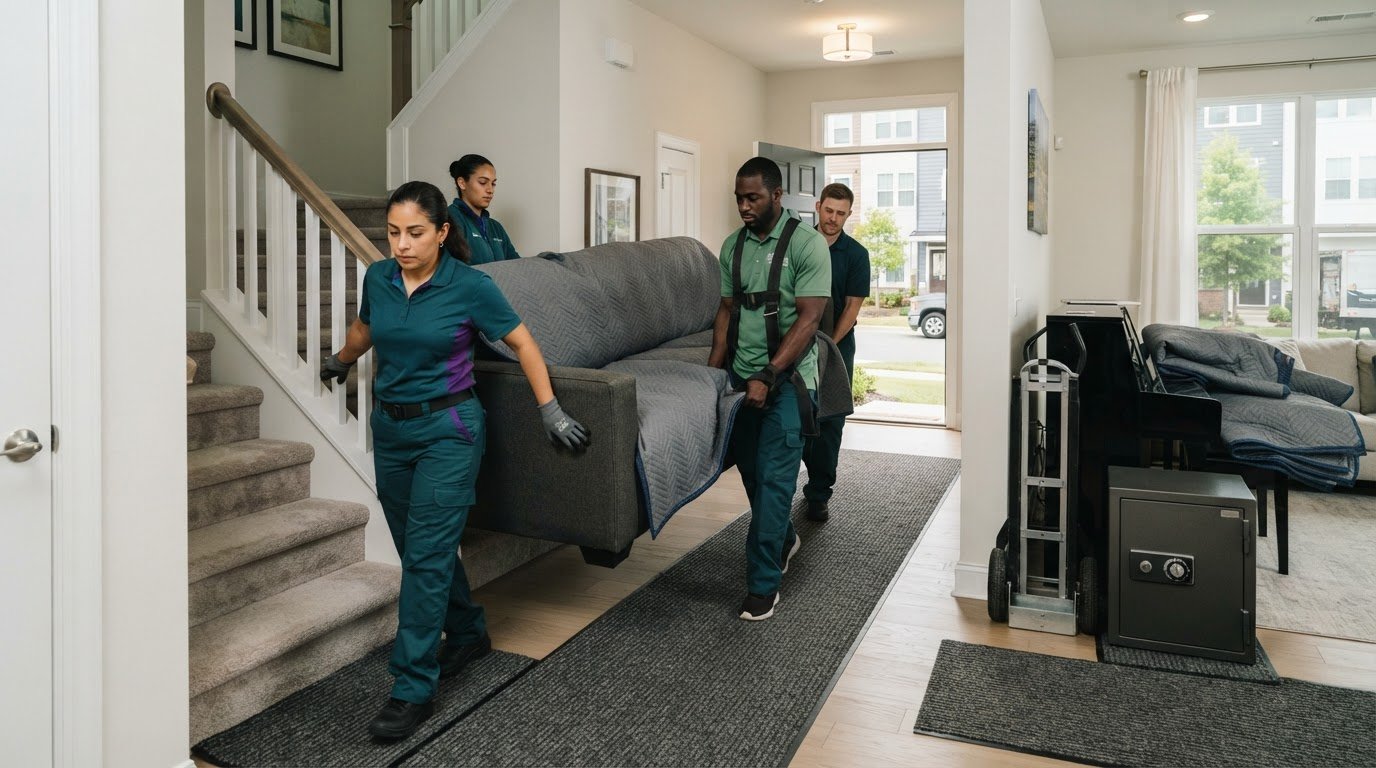
A focused move may fit when the job centers on selected furniture rather than an entire household. The number of pieces, transport distance, and route access help define its scope. A bulky item that must pass through a tight room or window opening can add handling challenges. Heavy-item moving or sofa-hoisting support can help with difficult access, depending on the piece and layout. Share route details early so the plan reflects the actual move.
When might a broader relocation plan fit better?
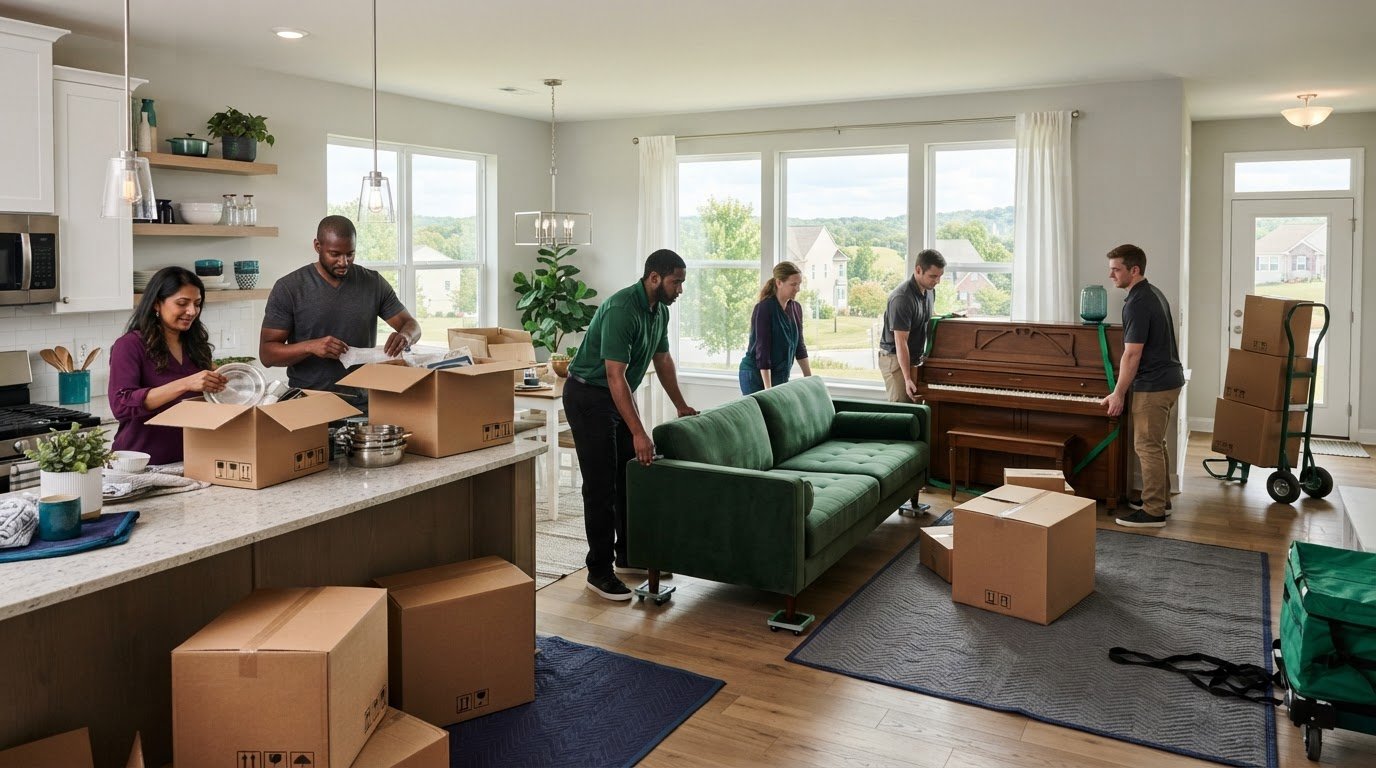
If the antique is one part of a household move, residential moving support can include its transport in the larger relocation. Packing and unpacking support can also fit into the household plan. For an overseas relocation, international shipment coordination can help organize the shipment alongside the move. Heavy Furniture Moving provides these moving services for Fairfax-area households, helping manage the physical and logistical work.
As you compare antique furniture movers Fairfax VA, focus on whether the proposed scope accounts for the item, packing needs, access, distance, and destination. The plan should make those moving details clear before transport begins.
Preparing for Antique Furniture Shipping in Fairfax
Organizing details before moving day helps the team plan around the furniture and route without asking you to handle a heavy piece yourself. Use this sequence to prepare for a Fairfax pickup and delivery.
- Document the condition. Photograph the furniture from several angles, including visible marks, fragile features, and detachable components. Add brief notes about existing damage or loose areas.
- Share item details. Record approximate dimensions, overall shape, and any parts that may come off. Describe unusual features that could affect how the piece is handled or moved.
- Map access at both addresses. Note stairs, tight turns, doorway dimensions, elevator limits, and parking or loading access. Measure narrow passages when practical.
- Prepare the route. Clear walkways and move nearby belongings out of the way. Keep children and pets away from the planned path during the move.
- Confirm the destination. Share where the furniture is going and any access details there, especially if it’s another residence or part of a longer-distance shipment.
For a Fairfax pickup and delivery, useful planning details include the furniture’s dimensions and condition, fragile or detachable features, stairs and tight turns, doorway and elevator limits, parking and loading access, and destination requirements.
Build a useful condition and access record
Keep photos and notes together so they’re easy to share. Include close views of existing marks and fragile features, along with wider views that show the furniture’s shape. Record measurements and note tight passages at both locations. If the move involves another residence or a shipment, share destination details early. This gives the moving plan a clearer picture of the full route.
Make moving day simpler
Clear the planned path and keep unrelated belongings, children, and pets away from it. If hardware or components have already been safely removed, set them aside together and label them. Don’t disassemble the antique or try to lift or reposition it yourself. Keep your access notes and condition record available so the team can refer to them as the move gets underway.
For help planning the physical work around a heavy piece and its access route, plan your antique furniture move with Heavy Furniture Moving.
Plan Your Fairfax Antique Furniture Move with Heavy Furniture Moving
A useful move plan starts with five details: the furniture’s condition, access at both addresses, distance, packing needs, and destination. Together, they help define whether you need transport for selected pieces or support as part of a larger relocation. Share those details early so the plan reflects the actual move, not just the furniture’s size.
Match moving support to your furniture and destination
Bulky furniture or a challenging route can make heavy-item handling a practical part of the plan. Stairs, narrow turns, and difficult room access may affect how a piece is moved. Sofa-hoisting support is relevant when furniture needs to pass through a window or another challenging opening. The approach depends on the item and layout.
If the antique is one part of a household relocation, Heavy Furniture Moving provides residential moving and packing and unpacking support. For an overseas relocation, the company also coordinates international shipments. These services connect the furniture move to the broader plan, while keeping transport distinct from antique restoration or conservation.
Take the next step for your Fairfax move
Before discussing the move, gather the item count, approximate dimensions, and notes about visible condition or fragile features. Include pickup and delivery access, distance, packing needs, and destination details. For Fairfax-area moves, information about stairs, tight turns, elevator access, and loading areas can help clarify the work involved.
You don’t need every detail figured out. A clear starting picture makes it easier to discuss whether you need transport for selected furniture, packing support, or a broader residential move. Keep the antique’s condition notes handy, and describe any access concern that could affect the route.
- Condition: Note visible marks, loose areas, and fragile features.
- Furniture: Share the number of pieces and approximate dimensions.
- Access: Describe stairs, tight turns, elevators, and loading access at both addresses.
- Move scope: Identify the distance, packing needs, and destination.
Ready to plan your Fairfax move? Discuss your antique furniture move with Heavy Furniture Moving and share the details that will help shape a practical plan.
Make Your Antique Furniture Move Easier to Plan
A well-organized antique move starts with a plan built around the piece, its condition, access at both homes, travel distance, packing needs, and destination. Photos and clear notes help the moving team understand what’s being moved and what the route requires. Share details early, especially if stairs, tight turns, or a longer-distance shipment are part of the plan.
Antique furniture movers Fairfax VA can be part of a focused furniture move or a broader household relocation. Heavy Furniture Moving is veteran-family owned and operated, with residential moving, heavy-item handling, and packing and unpacking support. For an overseas relocation, the team also coordinates international shipments. This support can ease the physical and logistical work of moving bulky furniture, without confusing transport with restoration or conservation.
Ready to talk through your move? Share the item count, approximate dimensions, condition notes, and pickup and delivery access when you Discuss your Fairfax furniture move with Heavy Furniture Moving. With the key details in hand, you can take the next step with a clearer plan.
Frequently Asked Questions
How do I find antique furniture movers in Fairfax, VA?
Start by choosing moving help that fits the item, route, and overall move. Heavy Furniture Moving provides residential moving and heavy-item handling in Fairfax and nearby Northern Virginia communities, including Woodbridge, Manassas, Manassas Park, Aldie, Ashburn, McLean, Vienna, Reston, Centreville, Chantilly, Clifton, Dumfries, South Riding, Fairfax Station, Haymarket, and Gainesville. Share the furniture’s condition, approximate dimensions, and access details to plan the move.
How should I prepare antique furniture for a move?
Document the furniture before moving day, then clear the path without trying to lift or disassemble the piece. Take photos from multiple angles, including visible marks, fragile features, and detachable components. Note approximate dimensions and any loose areas or previous repairs. Remove personal contents if it’s safe to do so, and move nearby belongings out of the route. Avoid polishing, repairing, or wrapping a delicate finish yourself.
Can antique furniture be shipped long distance from Fairfax?
Yes, antique furniture can be included in a longer-distance household move from Fairfax. The plan depends on the furniture, packing needs, route, and destination. Heavy Furniture Moving provides residential moving and packing support, and coordinates international shipments for overseas relocations. Share where the piece is going and whether it’s moving alone or with household belongings so transport and shipment can be planned as part of the broader move.
How do movers protect antique furniture during transport?
Protection starts with understanding the piece and planning around its condition, construction, fragile features, and route. Describe glass, mirrors, carved details, finishes, loose joints, and existing damage before the move. Packing and handling needs vary by item, so discuss the plan rather than assuming one method fits every antique. Photos and written condition notes also provide a helpful record of the furniture before handling.
Should I move antique furniture myself or hire movers?
For a heavy or awkward antique, professional moving help can reduce physical strain and make route planning easier. Carrying a piece yourself may be challenging if it has delicate features, loose joints, or must pass through stairs or tight turns. Don’t attempt a lift that feels unsafe. Heavy Furniture Moving offers residential moving and heavy-item handling to make bulky furniture transport part of a practical moving plan.
What information do antique furniture movers need for a quote?
Share the number of items, approximate dimensions, shape, and any detachable parts or fragile areas. Note visible marks, previous repairs, and loose components, and provide photos when possible. Include pickup and delivery details, such as stairs, narrow turns, doorway measurements, elevators, and loading access. Also describe the distance, packing needs, and destination. These details help clarify the scope of the move and the support you need.
Can movers take antique furniture through a narrow doorway or upstairs?
Sometimes, but the route and furniture dimensions determine what’s practical. Share doorway measurements, stair details, narrow turns, and elevator limits at both locations before moving day. A difficult room or window opening may call for professional heavy-item handling or sofa-hoisting support, depending on the item and access. Don’t try to force the piece through a tight space or lift it yourself. Clear route information helps the team plan the move.
Frequently Asked Questions
Look for features that could affect handling. Wood and veneer may respond differently to pressure or rubbing. Glass doors and mirrors add vulnerable surfaces, while carved details, projecting trim, and delicate finishes may need protection from bumps and contact with other items. Joined components, including legs, drawers, and doors, can also affect how a piece is handled. Be candid about existing conditions. Note loose joints, earlier repairs, scratches, chips, and other visible damage, and take clear photos before handling. This creates a useful record of the furniture’s starting condition. When arranging a move, describe unusual shapes, detachable parts, and fragile elements. A piece that looks like one solid unit may include parts that need separate attention.
Before arranging antique furniture movers Fairfax VA, put together a short summary of the item and access. Technical terms aren’t necessary. Clear descriptions and measurements make the planning conversation more practical. For broader consumer guidance on evaluating moving arrangements, review the Federal Motor Carrier Safety Administration’s Compare the Move Plan resources. Use them alongside the details specific to your item and route.
Keep preparation to simple tasks. Remove personal contents if you can do so without straining or disturbing the furniture. Secure loose objects only when it’s safe and appropriate. Don’t disassemble parts, polish surfaces, attempt repairs, or wrap a fragile finish without appropriate expertise. Packing choices depend on the piece, so don’t assume one method suits every antique. Clear the route at both addresses. Move nearby household items out of the way and make the path easier to access, including the areas around stairs and doorways. Don’t lift or reposition a heavy piece yourself to prepare the room. Share your notes early so the move can be organized around the item, access, and service needs. If you’re planning a larger household move, residential moving and heavy-item handling can bring practical support into the same plan. “Antique furniture shipping” can mean moving a piece across Fairfax or including it in a longer-distance household shipment. Match the plan to the distance, number of items, packing needs, access at both addresses, and destination. A single cabinet with straightforward access calls for a different scope than several pieces moving as part of a household relocation. Use this comparison to identify the kind of support that fits your move. It’s a planning guide, not a one-size-fits-all package.
A focused move may fit when the job centers on selected furniture rather than an entire household. The number of pieces, transport distance, and route access help define its scope. A bulky item that must pass through a tight room or window opening can add handling challenges. Heavy-item moving or sofa-hoisting support can help with difficult access, depending on the piece and layout. Share route details early so the plan reflects the actual move.
If the antique is one part of a household move, residential moving support can include its transport in the larger relocation. Packing and unpacking support can also fit into the household plan. For an overseas relocation, international shipment coordination can help organize the shipment alongside the move. Heavy Furniture Moving provides these moving services for Fairfax-area households, helping manage the physical and logistical work. As you compare antique furniture movers Fairfax VA, focus on whether the proposed scope accounts for the item, packing needs, access, distance, and destination. The plan should make those moving details clear before transport begins. Organizing details before moving day helps the team plan around the furniture and route without asking you to handle a heavy piece yourself. Use this sequence to prepare for a Fairfax pickup and delivery. For a Fairfax pickup and delivery, useful planning details include the furniture’s dimensions and condition, fragile or detachable features, stairs and tight turns, doorway and elevator limits, parking and loading access, and destination requirements.
Start by choosing moving help that fits the item, route, and overall move. Heavy Furniture Moving provides residential moving and heavy-item handling in Fairfax and nearby Northern Virginia communities, including Woodbridge, Manassas, Manassas Park, Aldie, Ashburn, McLean, Vienna, Reston, Centreville, Chantilly, Clifton, Dumfries, South Riding, Fairfax Station, Haymarket, and Gainesville. Share the furniture’s condition, approximate dimensions, and access details to plan the move.
Document the furniture before moving day, then clear the path without trying to lift or disassemble the piece. Take photos from multiple angles, including visible marks, fragile features, and detachable components. Note approximate dimensions and any loose areas or previous repairs. Remove personal contents if it’s safe to do so, and move nearby belongings out of the route. Avoid polishing, repairing, or wrapping a delicate finish yourself.
Yes, antique furniture can be included in a longer-distance household move from Fairfax. The plan depends on the furniture, packing needs, route, and destination. Heavy Furniture Moving provides residential moving and packing support, and coordinates international shipments for overseas relocations. Share where the piece is going and whether it’s moving alone or with household belongings so transport and shipment can be planned as part of the broader move.
Protection starts with understanding the piece and planning around its condition, construction, fragile features, and route. Describe glass, mirrors, carved details, finishes, loose joints, and existing damage before the move. Packing and handling needs vary by item, so discuss the plan rather than assuming one method fits every antique. Photos and written condition notes also provide a helpful record of the furniture before handling.
For a heavy or awkward antique, professional moving help can reduce physical strain and make route planning easier. Carrying a piece yourself may be challenging if it has delicate features, loose joints, or must pass through stairs or tight turns. Don’t attempt a lift that feels unsafe. Heavy Furniture Moving offers residential moving and heavy-item handling to make bulky furniture transport part of a practical moving plan.
Share the number of items, approximate dimensions, shape, and any detachable parts or fragile areas. Note visible marks, previous repairs, and loose components, and provide photos when possible. Include pickup and delivery details, such as stairs, narrow turns, doorway measurements, elevators, and loading access. Also describe the distance, packing needs, and destination. These details help clarify the scope of the move and the support you need.
Sometimes, but the route and furniture dimensions determine what’s practical. Share doorway measurements, stair details, narrow turns, and elevator limits at both locations before moving day. A difficult room or window opening may call for professional heavy-item handling or sofa-hoisting support, depending on the item and access. Don’t try to force the piece through a tight space or lift it yourself. Clear route information helps the team plan the move.