5 Cost Factors for Emergency Sofa Hoisting in Reston
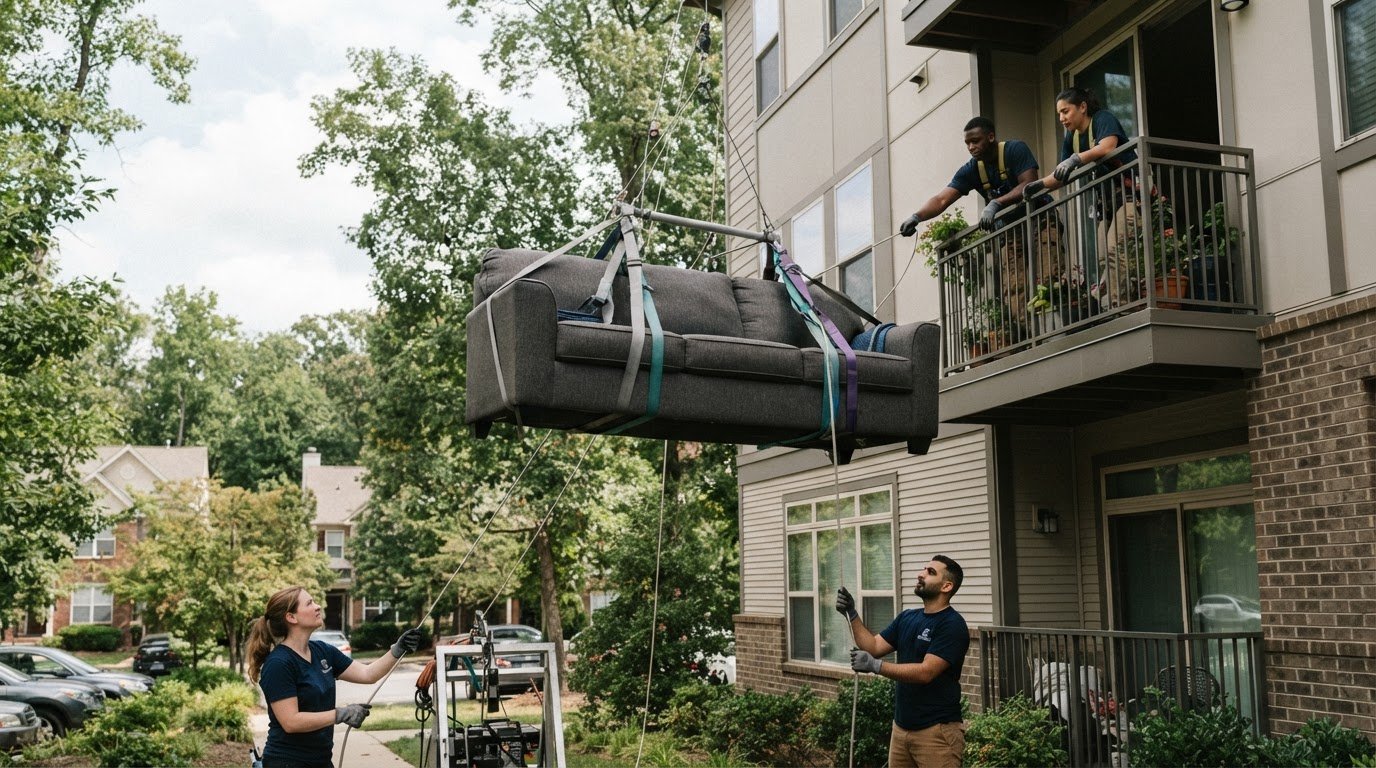
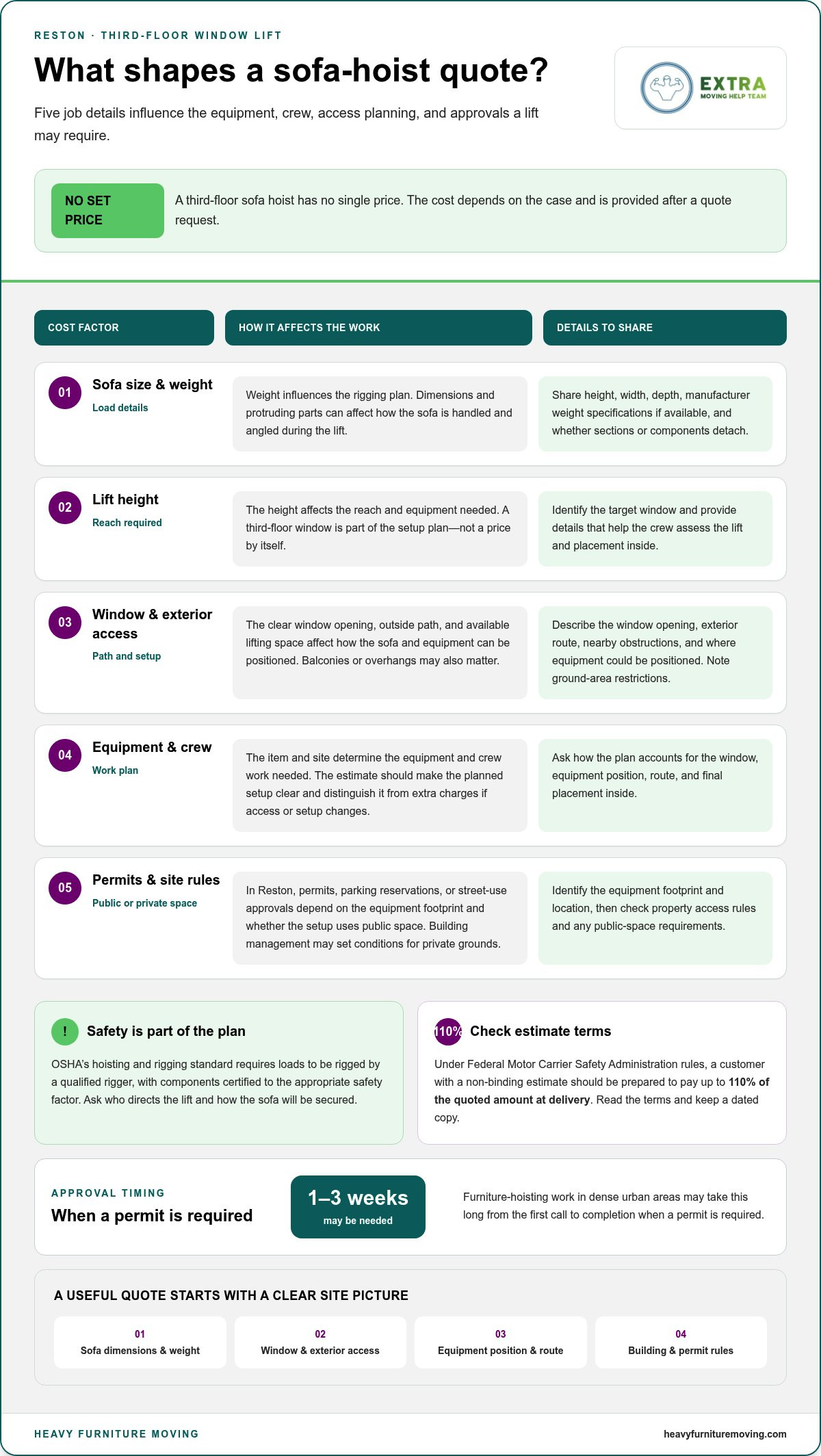
A third-floor sofa hoist in Reston has no single set price. The cost of emergency sofa hoisting through a third-floor window in Reston in 2026 depends on the sofa’s size and weight, window and outdoor access, the equipment and crew needed, and any permit requirements. The price depends on the case and is provided after a quote request.
When a sofa won’t fit through the stairs or doorway, getting it safely through a window can feel like one more urgent problem to solve. This guide explains the five main cost factors, the fees and rigging qualifications to understand, and alternatives that may reduce the work involved. You’ll also see what to consider for hoisting in Reston and Northern Virginia, so you can compare the job details and choose a practical next step.
Key Takeaways
- Compare the estimate structure and service-call terms, not just the headline quote. Under Federal Motor Carrier Safety Administration rules, a customer with a non-binding estimate should be prepared to pay up to 110% of the quoted amount at delivery.
- Rigging safety matters: OSHA’s hoisting and rigging standard requires loads to be rigged by a qualified rigger, with components certified to the appropriate safety factor.
- Share the sofa’s dimensions and weight, the window and exterior access details, and any site restrictions so the main cost drivers are clear.
- Before arranging a hoist, consider whether the sofa can fit through another route or be moved after removing parts, if that’s practical for the item.
- For a difficult stairwell or tight window approach, Heavy Furniture Moving’s Sofa Hoisting service can help handle the lift; in-home furniture movers may suit a move that doesn’t require a window hoist.
1. Furniture-hoist pricing and minimum service fees
The cost of a third-floor sofa hoist depends on the job’s details, not the floor number alone. The price depends on the case and is provided after a quote request. Key factors include sofa dimensions and weight, window access, exterior lifting space, equipment, crew labor, and permit needs. A clear estimate should distinguish the planned work from any extra charges that could apply if access or setup changes.
When comparing quotes, check that the planned work and included protections are clear. Heavy Furniture Moving includes wrap, blankets, and straps on every job, along with floor and corner protection. Its crew measures the item, doorways, and stairs before lifting. Ask how the proposed setup accounts for the window, route, equipment position, and placement inside, so the quote reflects the actual job.
Estimate type matters at delivery. Under Federal Motor Carrier Safety Administration rules, a customer with a non-binding estimate should be prepared to pay up to 110% of the quoted amount at delivery. Read the estimate’s terms before the move, and keep a dated copy. Confirm that the sofa description and the requested third-floor window route match the written scope, so the document reflects the actual job.
Oversized sofas need more than a quick measurement of the window opening. Measure the sofa’s height, width, and depth, including protruding legs or arms, then compare them with the clear opening and the path outside. A sectional may separate into pieces, while a one-piece sofa may need a different angle during the lift. Share accurate dimensions before the crew plans the equipment and handling.
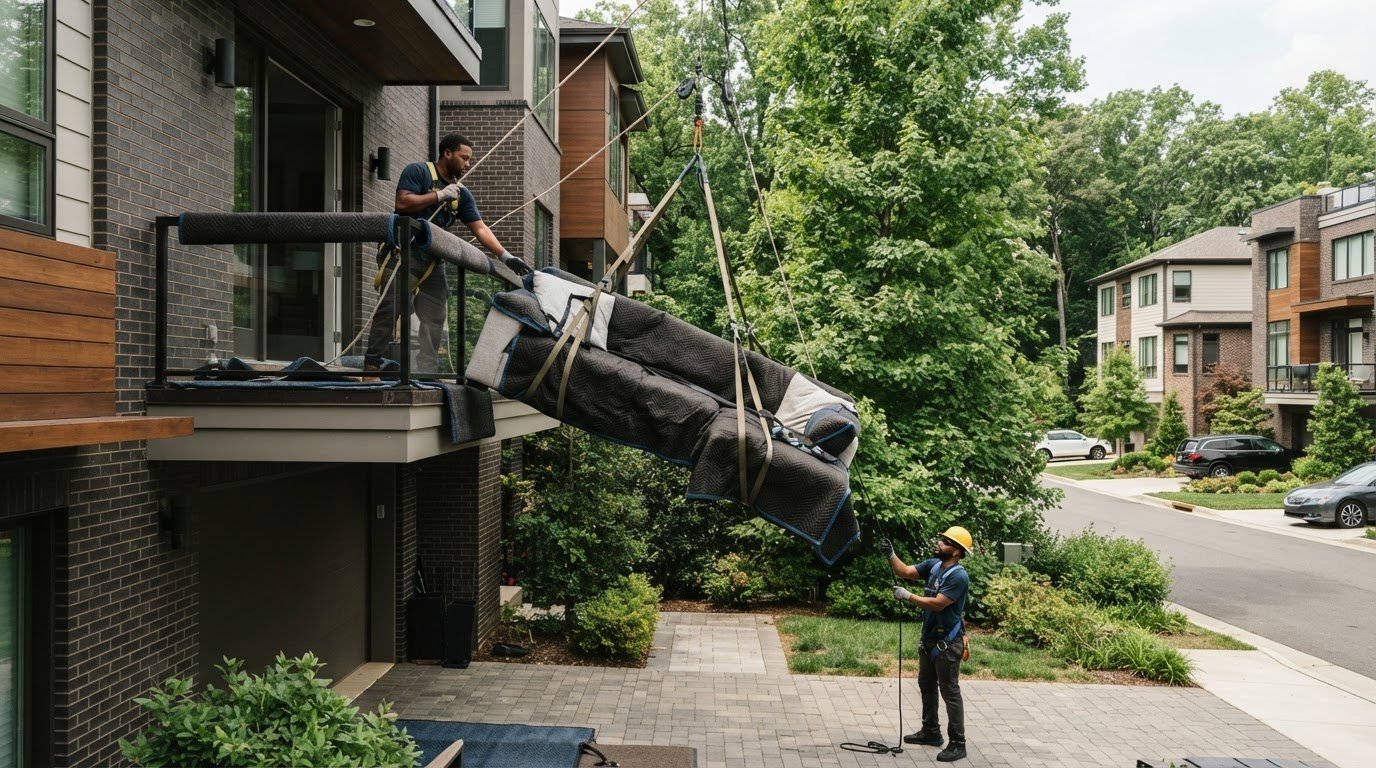
Plan external lifting around the building, not just the furniture. Identify where equipment could be positioned, note balconies or overhangs, and keep the ground area clear of people and loose items. OSHA’s hoisting and rigging standard requires a qualified rigger for loads and components certified to the appropriate safety factor. Qualified rigging and suitable components are central to safe planning.
Protect the sofa and home before the lift begins. Heavy Furniture Moving includes wrap, blankets, and straps on every job, as well as floor and corner protection. Check that the wrapping does not obscure a secure lifting point or interfere with the rigging plan. Clear the route inside and note any existing marks before moving the piece.
2. Hoist permits, insurance, and rigging qualifications
Permits and building rules can affect a Reston sofa hoist before lifting begins. First, identify where the equipment will sit and where the crew must work. A setup on private property may require different coordination from one involving a sidewalk, parking space, or street. Give the property manager a clear description of the planned route and equipment footprint.
In Reston, permits, parking reservations, or street-use approvals depend on the equipment footprint and whether the setup uses public space. Building management may also set access conditions for private grounds. Find out which property approvals apply before setting the lift date.
Rigging qualifications are a separate safety issue. OSHA’s hoisting and rigging standard requires loads to be rigged by a qualified rigger, with components certified to the appropriate safety factor. For a third-floor sofa lift, the rigging plan must suit the load and lifting method. Ask for a clear explanation of who directs the lift and how the sofa will be secured.
Review insurance documents alongside the lifting plan. Read the paperwork for the stated coverage, the work it applies to, and any limits or exclusions. A sofa moving past a window frame presents different contact points from a lift over an open yard. Note the building’s requirements, the sofa’s condition, and nearby surfaces that need protection. Keep the written details with the estimate.
Building management can help settle access questions early. Send a short plan showing the third-floor window, likely equipment position, and ground area needed for the lift. Ask about loading access, landscaping restrictions, resident notices, and protection for shared spaces. For example, a courtyard entrance may be available while a side parking area is restricted. Record the manager’s instructions and share them with the crew before arrival.
When a permit is required, furniture-hoisting work in dense urban areas may take one to three weeks from the first call to completion. That timeline makes early coordination useful, especially if a building approval and public-space arrangement both affect setup. Put the approval steps in order: confirm property access, identify any public-space needs, submit required paperwork, then schedule around the approved plan.
Keep the estimate, property instructions, approval records, and rigging details together. Match each document to the same sofa, window, and setup location. If the plan changes, such as moving the equipment position from a courtyard to a street, update the coordination before the lift. Clear records help prevent avoidable confusion on lifting day.
3. Pricing factors including weight, height, access, equipment, and permits
A quote for a third-floor sofa lift reflects how the item and site affect the work. Weight influences the rigging plan, while height affects the reach and equipment needed. A 300-pound stone cabinet takes more rigging consideration than a lightweight dresser. That example shows why the sofa’s actual weight matters more than a broad label such as “large.” Share the manufacturer’s specifications when available, and describe any detachable sections or unusually heavy components.
Height is only one part of the lift. The team also needs a workable path from the equipment position to the window, without obstacles that could interfere with the load. A third-floor opening facing a clear exterior area differs from one beneath an overhang or beside a balcony. Explain the window’s position and surroundings. Photos taken from inside and outside can show corners, ledges, trees, and other access limits.
Measure the sofa and opening before planning the route. Record the sofa’s width, height, and depth, then measure the clear window opening, not just the frame’s outside dimensions. Include protruding feet and arms, and note whether cushions or legs detach. For a sectional, identify which pieces separate and how they connect. These details help determine whether the item can pass at an angle or needs a different lifting arrangement.
Ground access can change the equipment and labor required. Describe where a lift could be positioned, whether the approach is level, and what lies between that spot and the window. A narrow side yard, sloped ground, or planted area can limit placement. Tell the estimator about gates, fences, overhead lines, and parked vehicles. Those details help map the lifting path and identify setup challenges before the crew arrives.
Equipment needs depend on the sofa’s weight, window height, and outdoor route. A straightforward setup may require a different arrangement from a lift around a balcony or roof edge. More complex access can affect setup, teardown, and the crew’s work sequence. Give a complete site description rather than relying on “easy access.” Explain where the equipment can go and what the lifting path looks like.
Permits can influence planning when equipment requires public-space access. Explain whether the proposed setup uses a private driveway, shared grounds, or a street-side area. A permit or reservation process can involve additional coordination and affect the scheduled work plan. Include any building restrictions and approval steps in the job details. The price depends on the case and is provided after a quote request, with weight, height, access, equipment, and permits shaping the scope.
4. Alternatives to hoisting and ways to reduce costs
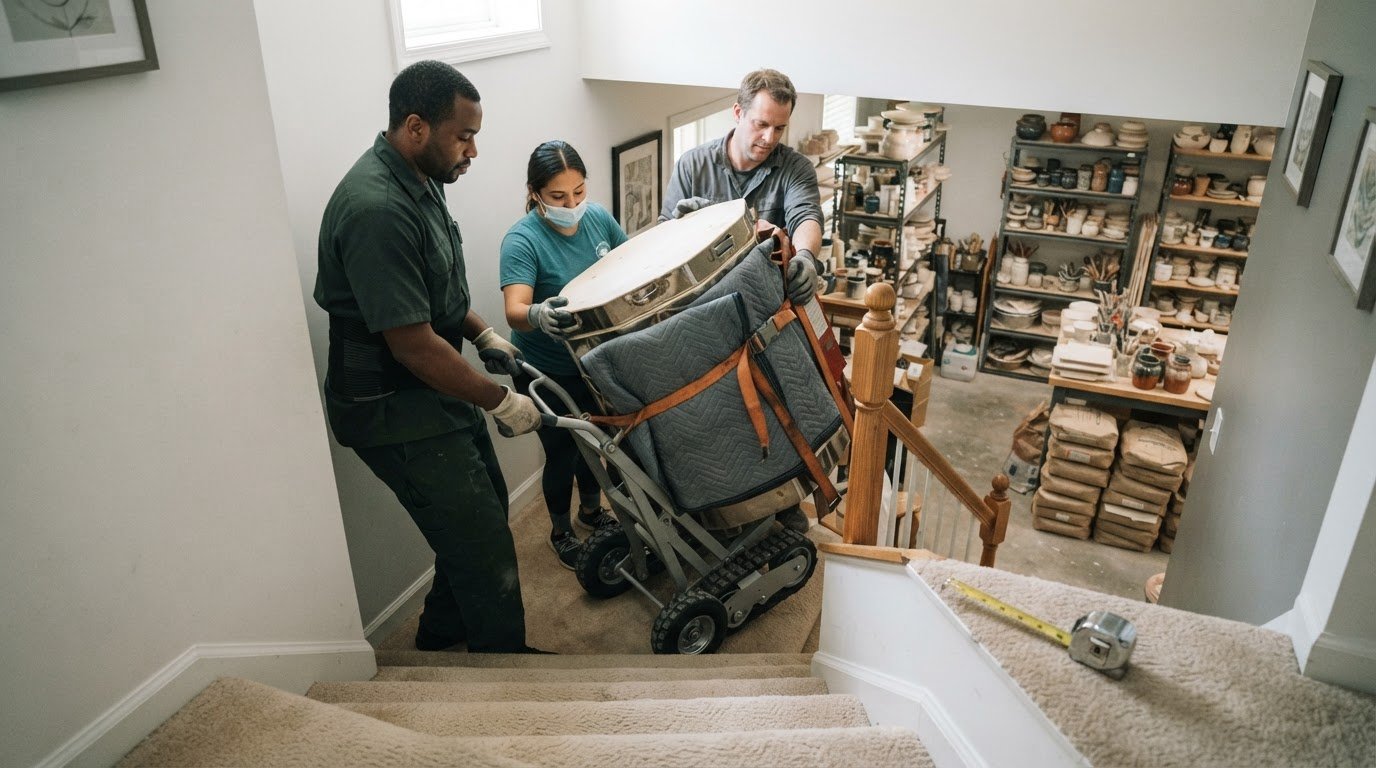
Before arranging an exterior lift, check whether the sofa has another safe route into the room. Measure the apartment entrance, hallway, stairwell, and every tight turn. Compare those clearances with the sofa’s widest points, including arms and feet. A route that looks narrow may work if the sofa can rotate without scraping walls or blocking shared access.
Check removable parts next. Take off cushions and detachable legs when the sofa’s design allows it, then measure the piece again. For a modular sofa, identify whether each section separates cleanly and can travel independently. Keep screws and fittings together, and protect exposed connection points. Don’t force a component apart or remove structural parts to make the furniture fit.
An elevator or alternate entrance can replace a window route when the building permits it. Measure the elevator doorway and interior, then compare them with the sofa’s dimensions. Check the path from the elevator to the apartment, including corners and door swings. A service entrance may offer a straighter route, while a narrow lobby turn could rule it out.
Reduce avoidable setup complications by clearing the chosen route before moving day. Remove loose rugs, move small furniture, and open doors fully. Ask building management about elevator access and shared-area protection. A clear route helps the crew focus on the sofa rather than shifting boxes or furniture. Share accurate measurements and photos so the planned approach matches the home.
Compare the work involved in each viable route, not just the distance. A short stairwell route with a tight landing can demand more careful handling than a longer, open path. Note low ceilings, railings, sharp turns, and fragile wall finishes. If the sofa fits through an alternate route without risky tilting or force, that option can avoid exterior equipment and its setup.
For a sofa that cannot pass intact, consider whether its construction supports safe separation. A sectional designed in separate pieces may move through a doorway in sections; a one-piece frame may not. Don’t cut upholstery, remove frame parts, or alter the sofa to avoid a lift. Damage can turn a difficult move into an unusable piece and a more complicated job.
A quote should reflect the sofa’s size and weight, the route, access, equipment, labor, and any permit needs. Heavy Furniture Moving provides a flat-rate quote for most single heavy-item moves. Give clear details about each alternative you’ve measured, including which route works and where obstacles remain. That helps the planned work reflect the actual conditions instead of assumptions.
5. Hoisting services in Reston and Northern Virginia
In Reston and Northern Virginia, a sofa hoist starts with the building and the route, not just the furniture. A third-floor window facing an open driveway presents a different setup from one above a courtyard or beside a balcony. Describe the property, window position, and ground-level access when planning the work. These details help shape equipment placement and the lifting sequence.
A single-item furniture hoist with good access can take under two hours, including setup and teardown. That timeframe depends on a clear path and straightforward equipment positioning. A blocked approach, restricted access, or a more involved setup changes the work required. Share the site details early so the plan reflects the actual Reston property.
Use a simple site-preparation check before the scheduled lift:
- Measure the sofa and the clear window opening, including narrow points along the route.
- Describe the ground area where lifting equipment could be positioned.
- Identify balconies, overhangs, trees, fences, and other obstacles near the window.
- Tell building management which shared areas or access points the crew may need.
- Clear loose items from the interior path and the ground-level work area.
These steps matter across Northern Virginia because each property has its own layout. A clear driveway may allow a more direct approach than a narrow side yard. A window above shared grounds may require coordination with building management. A sofa that separates into sections may need different handling from a single-piece frame.
For an emergency move, accurate details help the team understand the job. Send the sofa dimensions, photos of the window and exterior approach, and any property instructions together. That gives the team a practical view before arrival. If the building changes access plans or restricts the equipment area, share the update promptly. A change from driveway access to a street-side setup can affect coordination.
The price depends on the sofa’s weight and dimensions, the third-floor route, equipment, access conditions, and permit needs; the exact figure is given in a quote for your case. Keep the measurements and site notes together so the work can be planned around one accurate description. For a Reston sofa lift, share your sofa-hoisting details to discuss the job’s route and setup.
Heavy Furniture Moving: Movers Near Me
Heavy Furniture Moving is a practical next step when a third-floor sofa cannot safely pass through the stairs or doorway. Its Sofa Hoisting service handles the window-lift challenge, and in-home furniture movers can help with careful placement inside the home. For other heavy items, Exercise Equipment Moving may fit the job.
Before arranging help, gather the sofa’s dimensions, photos of the window, and details about ground-level access. Share any building instructions too. Heavy Furniture Moving includes wrap, blankets, and straps on every job, along with floor and corner protection. These details give the team a clearer picture of the route and setup.
Contact Heavy Furniture Moving to discuss your sofa-hoisting needs.
Take the Next Step With a Clear Plan
Turn the measurements and building details you’ve gathered into a practical plan for moving day. For the cost of emergency sofa hoisting through a third-floor window in Reston in 2026, make sure your estimate reflects the sofa and the actual access route. Then decide whether a window lift or another safe path suits your home.
Heavy Furniture Moving can help with sofa hoisting when the stairs or doorway won’t work. Its Movers Near Me and Exercise Equipment Moving services also address other residential moving needs. Share the sofa’s dimensions, photos of the window approach, and any building access instructions to discuss the right setup for your situation.
Ready to discuss the next step? Contact Heavy Furniture Moving and put your Reston sofa move on a clearer path.
Frequently Asked Questions
What is the typical cost of emergency sofa hoisting through a third-floor window in Reston, Virginia in 2026?
The cost of emergency sofa hoisting through a third-floor window in Reston in 2026 depends on the specific sofa and job setup. The quote reflects the sofa’s dimensions and weight, the window route, equipment, labor, and access conditions. A sectional that separates may need a different plan than a one-piece sofa. Share those details to get a figure for your particular move.
What factors affect the price of hoisting a sofa through a third-floor window?
The main factors are sofa size and weight, lifting height, equipment access, and the path around the window. A balcony, narrow side yard, or restricted equipment position can change the work plan. Building access rules and permit coordination can also affect the scope. A clear driveway, for example, presents a different setup from one that requires shared-space coordination.
What are the hourly, minimum, equipment, and travel fees for furniture hoisting in Reston?
Fee structures vary by job, so use the written quote to see how labor, equipment, and travel are handled. Heavy Furniture Moving uses a two-hour minimum for hourly labor, while most single heavy-item jobs use a flat-rate quote. Wrap, blankets, and straps are included on every job. Compare the quote’s stated scope with the sofa and access details you provided.
Which Reston or Northern Virginia companies offer emergency sofa hoisting, and what are their prices?
Heavy Furniture Moving offers Sofa Hoisting in Reston. The price depends on the sofa and work required, and most single heavy-item moves use a flat-rate quote shared up front by phone. Provide the sofa’s details and the window route to discuss the setup for your move.
Does sofa size, weight, or window access change the hoisting cost?
Yes. A larger or heavier sofa may need a different rigging and handling plan from a compact loveseat. Window access matters too: a broad opening above a clear work area presents different conditions from a window beside a balcony or overhang. Mention detachable legs, sectional pieces, and tight turns. Those details help match the quote to the sofa and route.
What measurements and photos should I provide to get an accurate sofa-hoisting quote?
Provide the sofa’s width, height, and depth, including protruding arms or feet, plus the clear window opening. Send a photo of the sofa and stairs, then add views of the window and ground-level approach. Include any balcony, overhang, gate, or access restriction in the images or notes. Label each photo by location so the room and exterior route are easy to understand.
Do Reston condo or apartment rules require approval or a certificate of insurance for window hoisting?
Approval and insurance-document requirements depend on the property’s rules and the proposed equipment setup. A condo may require advance notice or restrict work near shared grounds, while an apartment may have separate loading-area instructions. Ask building management which approvals and documents apply to the planned window route. Share those instructions with Heavy Furniture Moving before scheduling so the lift plan accounts for property requirements.
What are the safety risks and liability considerations when hoisting a sofa to a third floor?
A suspended sofa can swing, scrape a window frame, or strike nearby surfaces if the load shifts or the route is obstructed. Keep people, pets, and loose items away from the lift area, and don’t attempt an improvised rope lift. Review the written job scope for property protection and responsibility for damage. OSHA requires qualified rigging for loads under its hoisting and rigging standard.
Frequently Asked Questions
The cost of emergency sofa hoisting through a third-floor window in Reston in 2026 depends on the specific sofa and job setup. The quote reflects the sofa’s dimensions and weight, the window route, equipment, labor, and access conditions. A sectional that separates may need a different plan than a one-piece sofa. Share those details to get a figure for your particular move.
The main factors are sofa size and weight, lifting height, equipment access, and the path around the window. A balcony, narrow side yard, or restricted equipment position can change the work plan. Building access rules and permit coordination can also affect the scope. A clear driveway, for example, presents a different setup from one that requires shared-space coordination.
Fee structures vary by job, so use the written quote to see how labor, equipment, and travel are handled. Heavy Furniture Moving uses a two-hour minimum for hourly labor, while most single heavy-item jobs use a flat-rate quote. Wrap, blankets, and straps are included on every job. Compare the quote’s stated scope with the sofa and access details you provided.
Heavy Furniture Moving offers Sofa Hoisting in Reston. The price depends on the sofa and work required, and most single heavy-item moves use a flat-rate quote shared up front by phone. Provide the sofa’s details and the window route to discuss the setup for your move.
Yes. A larger or heavier sofa may need a different rigging and handling plan from a compact loveseat. Window access matters too: a broad opening above a clear work area presents different conditions from a window beside a balcony or overhang. Mention detachable legs, sectional pieces, and tight turns. Those details help match the quote to the sofa and route.
Provide the sofa’s width, height, and depth, including protruding arms or feet, plus the clear window opening. Send a photo of the sofa and stairs, then add views of the window and ground-level approach. Include any balcony, overhang, gate, or access restriction in the images or notes. Label each photo by location so the room and exterior route are easy to understand.
Approval and insurance-document requirements depend on the property’s rules and the proposed equipment setup. A condo may require advance notice or restrict work near shared grounds, while an apartment may have separate loading-area instructions. Ask building management which approvals and documents apply to the planned window route. Share those instructions with Heavy Furniture Moving before scheduling so the lift plan accounts for property requirements.
A suspended sofa can swing, scrape a window frame, or strike nearby surfaces if the load shifts or the route is obstructed. Keep people, pets, and loose items away from the lift area, and don’t attempt an improvised rope lift. Review the written job scope for property protection and responsibility for damage. OSHA requires qualified rigging for loads under its hoisting and rigging standard.