What Is a Bill of Lading for Specialty Moving? A Clear Guide
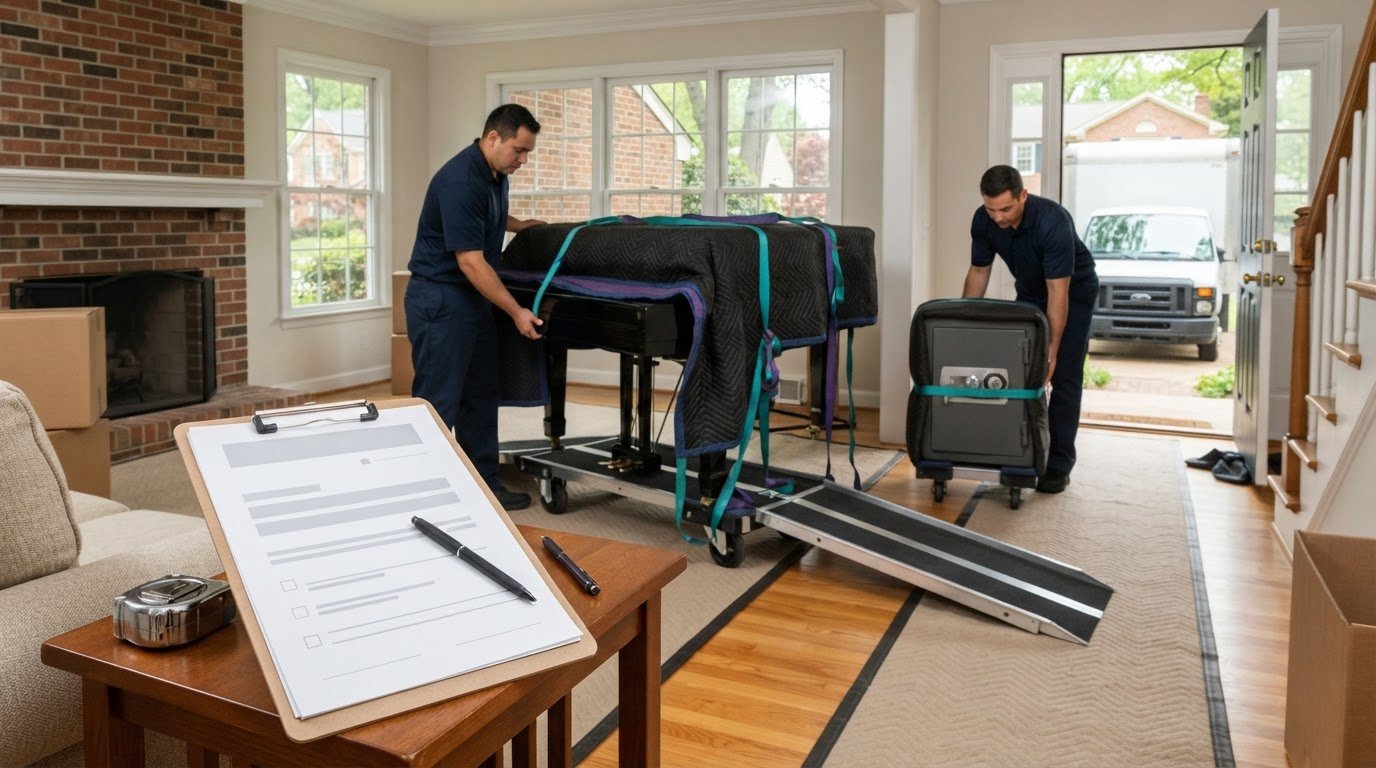
What if the most important moving document is also the easiest to sign without checking closely? If you’re asking, “what is a bill of lading for specialty moving,” think of it as a move-specific record of key shipment details and agreed arrangements, including how your belongings will be handled.
Moving paperwork can feel like a stack of unfamiliar forms. It’s easy to mix up the bill of lading, your estimate, and the inventory, or to worry that a piano, safe, or piece of exercise equipment isn’t described clearly enough. The practical question is whether the documents identify the right items and reflect the arrangements you discussed. A general note may not capture an item’s condition, access needs, or special handling plans.
This guide explains what a bill of lading may record, how it differs from an estimate and inventory, and what to review before signing. You’ll get a checklist for names, addresses, dates, item descriptions, and handling arrangements, plus questions to ask about valuation and unclear terms. A careful review can help you have a more focused conversation with your moving company before moving day.
Key Takeaways
- Learn what is a bill of lading for specialty moving and how it fits into the moving transaction.
- See how the bill of lading, estimate, inventory, and condition records serve different purposes.
- Use a simple review checklist to catch missing names, addresses, dates, shipment details, or item descriptions.
- Compare written handling arrangements with what you discussed with the mover, and clarify differences before signing.
- Prepare useful details about your specialty item and move when requesting professional moving help.
What Is a Bill of Lading for Specialty Moving?
A bill of lading is a shipment-related document that records key information and agreed details for a move. In plain terms, it helps identify who’s involved, what shipment is being handled, and which services or arrangements are recorded. The broader Bill of Lading concept has several functions in shipping, but the exact legal effect and required terms of a household move depend on the type of move and the rules that apply.
If you’re asking, “what is a bill of lading for specialty moving,” focus on whether the paperwork describes your particular shipment clearly. A piano, safe, or treadmill may need more specific discussion than a standard box. The document is not, by itself, legal advice, proof of an item’s condition, or a guarantee of a particular outcome. For a move in Fairfax or another nearby community, ask the mover to explain the document’s role and any terms you’re unsure about.
What information may a moving bill of lading record?
Depending on the move and the document, it may include the customer and mover’s information, pickup and delivery details, shipment descriptions, payment terms, and agreed services. Fields and required terms can vary, so don’t assume every form will look the same. Check whether specialty items are identified clearly enough to distinguish them from general household goods. If you have agreed on a particular handling arrangement, ask where it is recorded.
Why does the document matter for a specialty item?
A clear description gives you and the mover a shared reference for what’s being moved. “Treadmill” may not tell the whole story if the equipment is unusually large or requires a particular access route. A safe’s weight, a piano’s location, narrow stairs, or a sofa that may need hoisting are all reasons to discuss logistics in advance. Confirm that the written details reflect the conversation, and ask where any additional handling arrangements will appear.
Think of the bill of lading as one part of the move’s paperwork, not a substitute for a careful conversation. Before moving day, mention any item size, weight, access, or handling concern that could affect the work. The more specific you are, the easier it is to compare the written plan with what you discussed and to review the other documents involved.
How the Bill of Lading Fits Into a Specialty Move
Handle the paperwork in a clear order: discuss the move, review the document, resolve discrepancies, then keep a copy of the completed version. Ask the mover when the bill of lading will be prepared and when you’re expected to review and sign it. Don’t assume the timing or process is the same for every move.
Rules can depend on whether a shipment crosses state lines. The Federal Motor Carrier Safety Administration (FMCSA) explains bill-of-lading requirements for interstate household moves in its guide to Your Rights and Responsibilities When You Move. A move within Virginia may be subject to different state requirements, so confirm which rules apply rather than treating interstate guidance as universal.
What should you discuss before the paperwork is finalized?
Give the mover useful details about each specialty item before the paperwork is set. Share the item type, approximate dimensions, and known access limits, such as stairs, narrow hallways, or a tight entryway. Describe handling concerns, then ask how pickup, transport, delivery, and any agreed specialty services will be reflected in the documents.
For example, if a treadmill needs to pass through a narrow doorway, explain that early and ask how the plan will be recorded. If a verbal arrangement doesn’t match the paperwork, request written clarification from the mover before signing. That way, both sides have a record to refer to when checking the agreed details.
What should you do if the document has an error?
Pause before signing. Point out inaccurate information, ask the mover to explain it, and request a correction or written clarification. Don’t change contract terms on your own or sign while a key detail remains disputed. Once the issue is resolved, keep the corrected document and related written messages with your move records.
Resolve unclear details with the mover before you sign, and keep a copy of the final paperwork. That gives you time to ask questions without the pressure of move-day decisions. If you’re arranging help for a piano, safe, exercise equipment, or another heavy household item, bring its measurements and access details to the conversation. You can also review specialty moving help to consider what information to discuss with a mover.
Bill of Lading vs. Estimate, Inventory, and Condition Records
Moving paperwork can include several documents, and each may answer a different question. The bill of lading is shipment-related paperwork. An estimate focuses on expected charges, while an inventory or condition record may provide details about individual belongings. Forms and legal effects can vary by move and governing rules, so ask the mover which document addresses a point you’re unsure about.
| Document | Purpose and typical contents | What to review |
|---|---|---|
| Bill of lading | Records shipment and service details; fields depend on the move. | Are the parties, shipment, and agreed arrangements described clearly? |
| Estimate | Outlines expected charges and the basis for them. | What services and assumptions are included, and how may charges change? |
| Inventory | Lists items included in the shipment, if provided. | Are specialty pieces identifiable and accounted for? |
| Condition record | May note an item's visible condition before the move. | Do the notes reflect what you can see, including existing marks? |
How is a bill of lading different from a moving estimate?
An estimate describes expected charges; the bill of lading relates to the shipment and the services recorded for it. Don’t assume an estimate always has the same binding status. That can depend on the document’s terms, move type, and applicable rules. For interstate household-goods moves, see the bill-of-lading provisions in this federal regulation. For a Fairfax move, confirm which rules apply to your shipment. If the estimate and bill of lading seem to say different things, ask the mover which document addresses the specific charge or service in question.
How do inventories and condition notes fit in?
An inventory may identify a piano, safe, or treadmill more clearly than a general shipment description. A condition record may separately note visible wear or damage before loading. Neither document should be assumed to establish liability or coverage on its own. Review each record, flag missing or inaccurate descriptions, and ask how it connects to the other paperwork.
Use the documents together, but don’t treat them as interchangeable. If an item is missing from an inventory or its condition notes seem incomplete, ask the mover to explain or update the appropriate record. Clear descriptions make it easier to compare the paperwork with the actual shipment and understand what each document is meant to cover.
What to Check Before Signing a Specialty-Move Bill of Lading
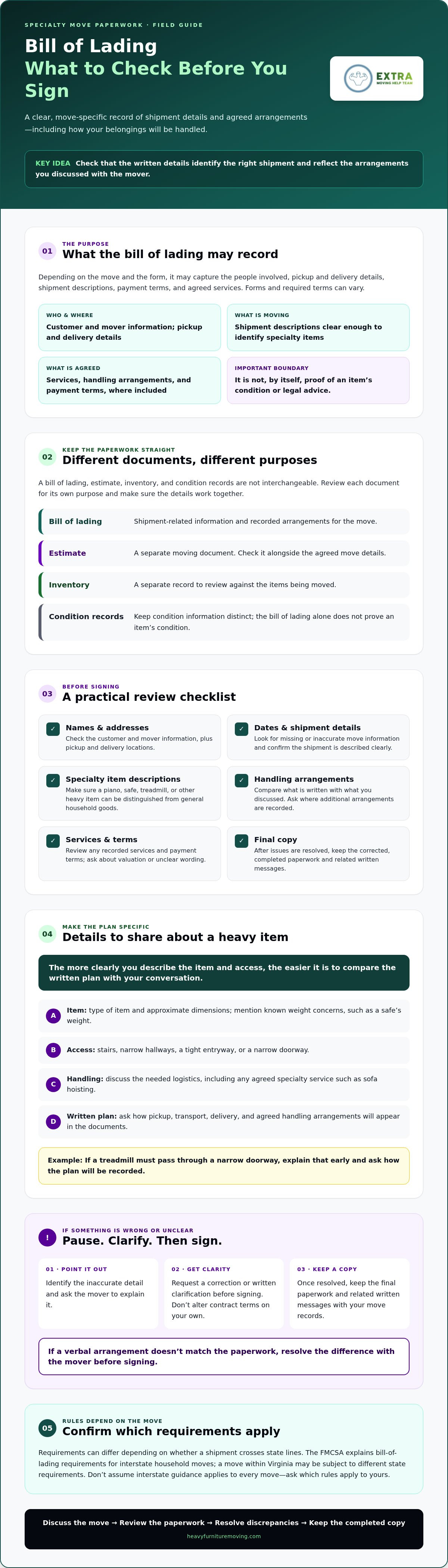
Take a careful pass through the document before you sign. If you’re asking “what is a bill of lading for specialty moving” in practical terms, this is where the details matter: check that the paperwork matches the move you discussed, especially for items with unusual size, weight, or access needs.
- Names and addresses: Confirm the customer and moving company details, plus the correct pickup and delivery addresses.
- Dates and shipment details: Check the scheduled dates and make sure the paperwork describes the shipment and services you agreed on.
- Specialty-item descriptions: Look for each piano, safe, or piece of exercise equipment by a clear description. Add a model or other identifying detail if it helps distinguish the item.
- Access and handling arrangements: Compare the written plan with your conversation. Check whether relevant access limits, disassembly, sofa hoisting, or other agreed arrangements are recorded.
- Blank or unclear fields: Ask what they mean for your move and how any changes or exceptions will be documented.
Which specialty-item details deserve a closer look?
Don’t rely on a broad label if it could describe several items. Check that the paperwork identifies the right piece and reflects any details the mover needs to plan the work. If a sofa may need hoisting because it won’t fit through a standard entryway, confirm that the access issue and agreed plan have been discussed and recorded. For an international shipment, ask the mover which shipment documents apply and how they relate to the bill of lading.
What questions should you ask before you sign?
Ask the mover to explain any clause or blank field you don’t understand. Confirm how amendments will be made, how exceptions will appear in the final paperwork, and how you’ll receive a copy. If a detail is wrong or a verbal plan is missing, point it out and request a clear written response or correction before signing. Don’t alter the document yourself or leave a disputed point unresolved.
Rules and disclosures can depend on the type of move. For an interstate shipment or a move within Virginia, check the applicable rights and requirements with an authoritative government source, and ask the mover which rules apply to your situation. Keep the final version and related written clarification with your moving records.
If you’re preparing a move with a piano, safe, exercise equipment, or another heavy item, discuss your specialty-item move and share its dimensions, location, and access constraints with the moving team.
Getting Clear Specialty-Move Paperwork and the Right Moving Help
A specialty move is easier to discuss when you arrive with clear information. Understand what the bill of lading records, check that its details match the arrangements you discussed, and resolve anything unclear before signing. The paperwork is one part of the process; an early conversation helps the mover understand the item and the work involved.
How can you prepare to speak with a specialty mover?
Gather the details that can help explain the job. Share the item’s dimensions and approximate weight if you know them. Photos can also help show the item and its surroundings. Describe pickup and delivery access, including stairs, tight turns, elevators, narrow doorways, or other constraints. If you’re unsure how an item can be moved through a space, explain what you know and ask what else the mover needs to assess.
Before wrapping up the conversation, ask how the agreed service and any item-specific arrangements will be documented. Confirm where you’ll see those details in the paperwork and how you can review a final copy. That gives you a clear point of reference if the written plan needs clarification.
When does professional specialty moving help make sense?
Heavy or bulky belongings can call for careful planning, particularly when access is limited or the item needs specific handling. Professional help may be worth discussing if you’re moving a piano, safe, or exercise equipment, or if a sofa can’t fit through a standard entryway and may need hoisting. Share the item details and access conditions so you and the mover can talk through the work without assuming a particular outcome.
If you’re still asking, “what is a bill of lading for specialty moving,” keep the practical goal in mind: understand the document, make sure the relevant move details are clear, and ask questions before signing. Preparing measurements, photos, and access notes can make that conversation more focused.
Have a piano, safe, piece of exercise equipment, or sofa that needs careful planning? Talk with Heavy Furniture Moving about your specialty move and bring along your item and access details. You can also ask how the agreed arrangements will be reflected in the paperwork.
Move Forward With Clear Paperwork
Now you know what is a bill of lading for specialty moving: shipment paperwork to review alongside the estimate, inventory, and any condition notes. Check that the names, dates, item descriptions, and agreed handling arrangements are accurate. If something is unclear or doesn’t match what you discussed, ask the mover to clarify it in writing before signing.
Good preparation starts before paperwork arrives. Share the item’s dimensions, photos, and access details so you can have a focused conversation about the work and how arrangements will be recorded. Heavy Furniture Moving provides specialized handling for pianos, safes, and exercise equipment, as well as sofa hoisting for items that can’t fit through standard entryways or elevators.
Have a heavy or bulky item to move? Discuss your specialty move with Heavy Furniture Moving, including the item’s handling needs and any paperwork questions. A clear conversation can help you feel ready for the next step.
Frequently Asked Questions
What is a bill of lading for a specialty move?
A bill of lading for a specialty move is moving-related paperwork connected to the shipment and its recorded details. It may identify the parties, shipment, and agreed services, but its exact contents and legal effect can depend on the move and applicable rules. If you’re asking what is a bill of lading for specialty moving, review the actual document with your mover and ask how it applies to your piano, safe, or other item.
Is a bill of lading the same as a moving estimate?
No. They generally serve different purposes. An estimate describes expected charges and may explain the services or assumptions behind them. A bill of lading relates to the move or shipment. The forms, terminology, and legal details can vary by move type and governing rules. If the documents appear to conflict, ask the mover which one addresses the specific issue, such as a listed service, shipment detail, or expected charge.
Do I have to sign a bill of lading before a move?
There isn’t one universal answer for every move. Signing practices and requirements can depend on the shipment and applicable rules, so ask the mover when a signature is requested and what it confirms. Read the document before signing. If a name, date, item description, or handling arrangement is inaccurate, point it out and request clarification or correction in writing rather than signing with the discrepancy unresolved.
What happens if information on my bill of lading is wrong?
Tell the mover promptly and identify the specific error, such as an incorrect delivery address or a missing specialty item. Ask for an explanation or a corrected document, and get the response in writing before signing if possible. Don’t edit contract terms on your own or assume a correction has been made. Keep the updated paperwork and related messages together so you can refer to the agreed details later.
Does a bill of lading list every item being moved?
Not necessarily. Document formats vary, and a separate inventory or condition record may provide item-by-item details. Check how a piano, safe, or exercise machine is identified across the paperwork, and ask whether a separate list applies to your shipment. Make sure descriptions help distinguish your item from similar belongings. If something is missing or unclear, ask the mover which document should be updated or clarified.
Does a bill of lading show what happens if a specialty item is damaged?
It may refer to terms or other records relevant to the move, but don’t assume the bill of lading alone establishes coverage or liability. Ask the mover to explain the valuation options, what they mean for your shipment, and which documents describe how to raise a damage claim. Review those records alongside the item description and any condition notes, and ask for clarification if the documents don’t match your understanding.
Are bill-of-lading rules different for local and interstate moves?
They can be. Requirements may depend on whether the shipment crosses state lines and which rules govern the move. For a local move around Fairfax, Woodbridge, Manassas, Manassas Park, Aldie, Ashburn, McLean, Vienna, Reston, Centreville, Chantilly, Clifton, Dumfries, South Riding, Fairfax Station, Haymarket, or Gainesville, ask which state requirements apply. Check current FMCSA guidance for interstate moves and Virginia guidance for moves within the state.
Frequently Asked Questions
Depending on the move and the document, it may include the customer and mover’s information, pickup and delivery details, shipment descriptions, payment terms, and agreed services. Fields and required terms can vary, so don’t assume every form will look the same. Check whether specialty items are identified clearly enough to distinguish them from general household goods. If you have agreed on a particular handling arrangement, ask where it is recorded.
A clear description gives you and the mover a shared reference for what’s being moved. “Treadmill” may not tell the whole story if the equipment is unusually large or requires a particular access route. A safe’s weight, a piano’s location, narrow stairs, or a sofa that may need hoisting are all reasons to discuss logistics in advance. Confirm that the written details reflect the conversation, and ask where any additional handling arrangements will appear. Think of the bill of lading as one part of the move’s paperwork, not a substitute for a careful conversation. Before moving day, mention any item size, weight, access, or handling concern that could affect the work. The more specific you are, the easier it is to compare the written plan with what you discussed and to review the other documents involved. Handle the paperwork in a clear order: discuss the move, review the document, resolve discrepancies, then keep a copy of the completed version. Ask the mover when the bill of lading will be prepared and when you’re expected to review and sign it. Don’t assume the timing or process is the same for every move. Rules can depend on whether a shipment crosses state lines. The Federal Motor Carrier Safety Administration (FMCSA) explains bill-of-lading requirements for interstate household moves in its guide to Your Rights and Responsibilities When You Move. A move within Virginia may be subject to different state requirements, so confirm which rules apply rather than treating interstate guidance as universal.
Give the mover useful details about each specialty item before the paperwork is set. Share the item type, approximate dimensions, and known access limits, such as stairs, narrow hallways, or a tight entryway. Describe handling concerns, then ask how pickup, transport, delivery, and any agreed specialty services will be reflected in the documents. For example, if a treadmill needs to pass through a narrow doorway, explain that early and ask how the plan will be recorded. If a verbal arrangement doesn’t match the paperwork, request written clarification from the mover before signing. That way, both sides have a record to refer to when checking the agreed details.
Pause before signing. Point out inaccurate information, ask the mover to explain it, and request a correction or written clarification. Don’t change contract terms on your own or sign while a key detail remains disputed. Once the issue is resolved, keep the corrected document and related written messages with your move records. Resolve unclear details with the mover before you sign, and keep a copy of the final paperwork. That gives you time to ask questions without the pressure of move-day decisions. If you’re arranging help for a piano, safe, exercise equipment, or another heavy household item, bring its measurements and access details to the conversation. You can also review specialty moving help to consider what information to discuss with a mover. Moving paperwork can include several documents, and each may answer a different question. The bill of lading is shipment-related paperwork. An estimate focuses on expected charges, while an inventory or condition record may provide details about individual belongings. Forms and legal effects can vary by move and governing rules, so ask the mover which document addresses a point you’re unsure about.
An estimate describes expected charges; the bill of lading relates to the shipment and the services recorded for it. Don’t assume an estimate always has the same binding status. That can depend on the document’s terms, move type, and applicable rules. For interstate household-goods moves, see the bill-of-lading provisions in this federal regulation. For a Fairfax move, confirm which rules apply to your shipment. If the estimate and bill of lading seem to say different things, ask the mover which document addresses the specific charge or service in question.
An inventory may identify a piano, safe, or treadmill more clearly than a general shipment description. A condition record may separately note visible wear or damage before loading. Neither document should be assumed to establish liability or coverage on its own. Review each record, flag missing or inaccurate descriptions, and ask how it connects to the other paperwork. Use the documents together, but don’t treat them as interchangeable. If an item is missing from an inventory or its condition notes seem incomplete, ask the mover to explain or update the appropriate record. Clear descriptions make it easier to compare the paperwork with the actual shipment and understand what each document is meant to cover. Take a careful pass through the document before you sign. If you’re asking “what is a bill of lading for specialty moving” in practical terms, this is where the details matter: check that the paperwork matches the move you discussed, especially for items with unusual size, weight, or access needs.
Don’t rely on a broad label if it could describe several items. Check that the paperwork identifies the right piece and reflects any details the mover needs to plan the work. If a sofa may need hoisting because it won’t fit through a standard entryway, confirm that the access issue and agreed plan have been discussed and recorded. For an international shipment, ask the mover which shipment documents apply and how they relate to the bill of lading.
Ask the mover to explain any clause or blank field you don’t understand. Confirm how amendments will be made, how exceptions will appear in the final paperwork, and how you’ll receive a copy. If a detail is wrong or a verbal plan is missing, point it out and request a clear written response or correction before signing. Don’t alter the document yourself or leave a disputed point unresolved. Rules and disclosures can depend on the type of move. For an interstate shipment or a move within Virginia, check the applicable rights and requirements with an authoritative government source, and ask the mover which rules apply to your situation. Keep the final version and related written clarification with your moving records. If you’re preparing a move with a piano, safe, exercise equipment, or another heavy item, discuss your specialty-item move and share its dimensions, location, and access constraints with the moving team. A specialty move is easier to discuss when you arrive with clear information. Understand what the bill of lading records, check that its details match the arrangements you discussed, and resolve anything unclear before signing. The paperwork is one part of the process; an early conversation helps the mover understand the item and the work involved.
Gather the details that can help explain the job. Share the item’s dimensions and approximate weight if you know them. Photos can also help show the item and its surroundings. Describe pickup and delivery access, including stairs, tight turns, elevators, narrow doorways, or other constraints. If you’re unsure how an item can be moved through a space, explain what you know and ask what else the mover needs to assess. Before wrapping up the conversation, ask how the agreed service and any item-specific arrangements will be documented. Confirm where you’ll see those details in the paperwork and how you can review a final copy. That gives you a clear point of reference if the written plan needs clarification.
Heavy or bulky belongings can call for careful planning, particularly when access is limited or the item needs specific handling. Professional help may be worth discussing if you’re moving a piano, safe, or exercise equipment, or if a sofa can’t fit through a standard entryway and may need hoisting. Share the item details and access conditions so you and the mover can talk through the work without assuming a particular outcome. If you’re still asking, “what is a bill of lading for specialty moving,” keep the practical goal in mind: understand the document, make sure the relevant move details are clear, and ask questions before signing. Preparing measurements, photos, and access notes can make that conversation more focused. Have a piano, safe, piece of exercise equipment, or sofa that needs careful planning? Talk with Heavy Furniture Moving about your specialty move and bring along your item and access details. You can also ask how the agreed arrangements will be reflected in the paperwork. Now you know what is a bill of lading for specialty moving: shipment paperwork to review alongside the estimate, inventory, and any condition notes. Check that the names, dates, item descriptions, and agreed handling arrangements are accurate. If something is unclear or doesn’t match what you discussed, ask the mover to clarify it in writing before signing. Good preparation starts before paperwork arrives. Share the item’s dimensions, photos, and access details so you can have a focused conversation about the work and how arrangements will be recorded. Heavy Furniture Moving provides specialized handling for pianos, safes, and exercise equipment, as well as sofa hoisting for items that can’t fit through standard entryways or elevators. Have a heavy or bulky item to move? Discuss your specialty move with Heavy Furniture Moving, including the item’s handling needs and any paperwork questions. A clear conversation can help you feel ready for the next step.
A bill of lading for a specialty move is moving-related paperwork connected to the shipment and its recorded details. It may identify the parties, shipment, and agreed services, but its exact contents and legal effect can depend on the move and applicable rules. If you’re asking what is a bill of lading for specialty moving, review the actual document with your mover and ask how it applies to your piano, safe, or other item.
No. They generally serve different purposes. An estimate describes expected charges and may explain the services or assumptions behind them. A bill of lading relates to the move or shipment. The forms, terminology, and legal details can vary by move type and governing rules. If the documents appear to conflict, ask the mover which one addresses the specific issue, such as a listed service, shipment detail, or expected charge.
There isn’t one universal answer for every move. Signing practices and requirements can depend on the shipment and applicable rules, so ask the mover when a signature is requested and what it confirms. Read the document before signing. If a name, date, item description, or handling arrangement is inaccurate, point it out and request clarification or correction in writing rather than signing with the discrepancy unresolved.
Tell the mover promptly and identify the specific error, such as an incorrect delivery address or a missing specialty item. Ask for an explanation or a corrected document, and get the response in writing before signing if possible. Don’t edit contract terms on your own or assume a correction has been made. Keep the updated paperwork and related messages together so you can refer to the agreed details later.
Not necessarily. Document formats vary, and a separate inventory or condition record may provide item-by-item details. Check how a piano, safe, or exercise machine is identified across the paperwork, and ask whether a separate list applies to your shipment. Make sure descriptions help distinguish your item from similar belongings. If something is missing or unclear, ask the mover which document should be updated or clarified.
It may refer to terms or other records relevant to the move, but don’t assume the bill of lading alone establishes coverage or liability. Ask the mover to explain the valuation options, what they mean for your shipment, and which documents describe how to raise a damage claim. Review those records alongside the item description and any condition notes, and ask for clarification if the documents don’t match your understanding.
They can be. Requirements may depend on whether the shipment crosses state lines and which rules govern the move. For a local move around Fairfax, Woodbridge, Manassas, Manassas Park, Aldie, Ashburn, McLean, Vienna, Reston, Centreville, Chantilly, Clifton, Dumfries, South Riding, Fairfax Station, Haymarket, or Gainesville, ask which state requirements apply. Check current FMCSA guidance for interstate moves and Virginia guidance for moves within the state.