How to Hoist an Oversized Headboard Through a Gainesville Window
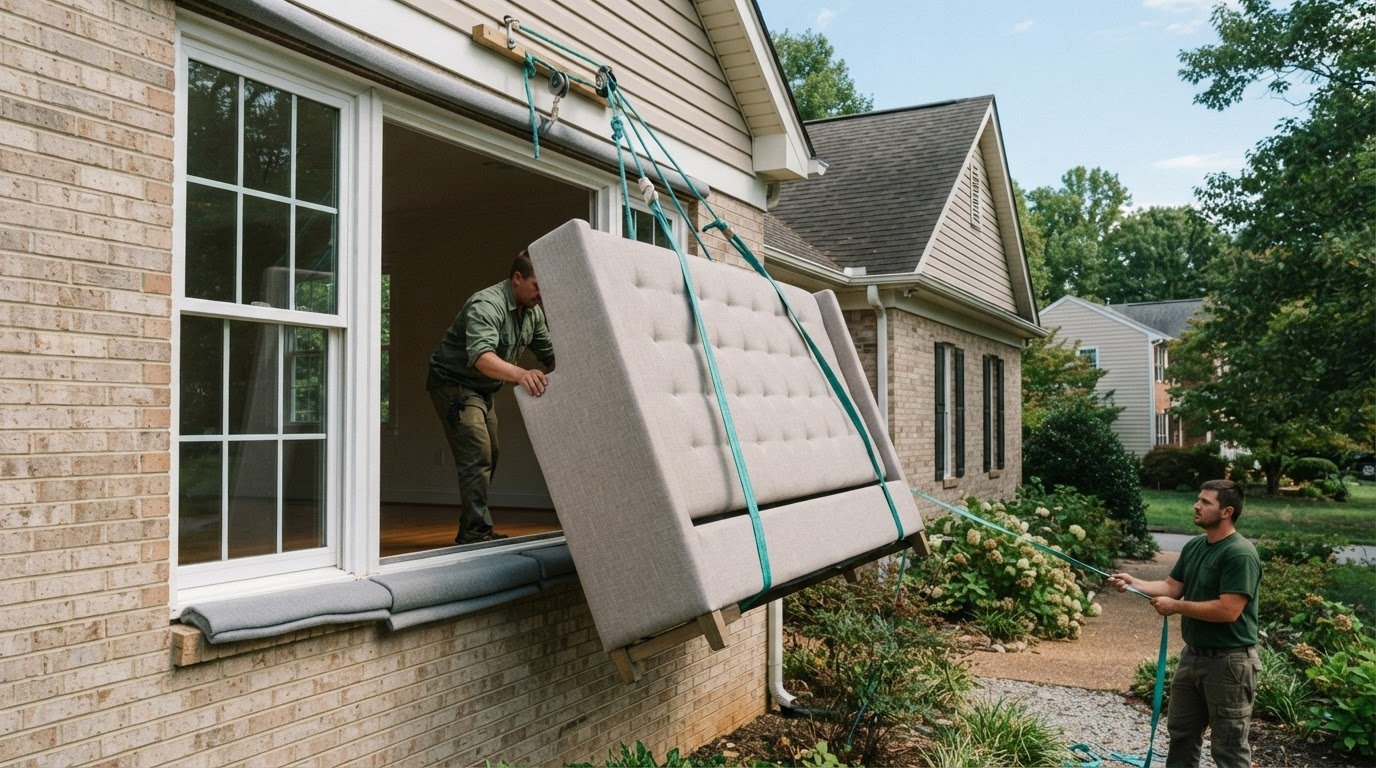
Is a second-floor window the safest route for an oversized headboard? The safest method depends on the headboard’s size and weight, the window opening, and the space around the building. For how to hoist an oversized headboard through a second-floor window in Gainesville, trained movers may use rope-and-pulley rigging with rated hardware for a light-to-moderate load, then choose another lifting method if the piece or route calls for it.
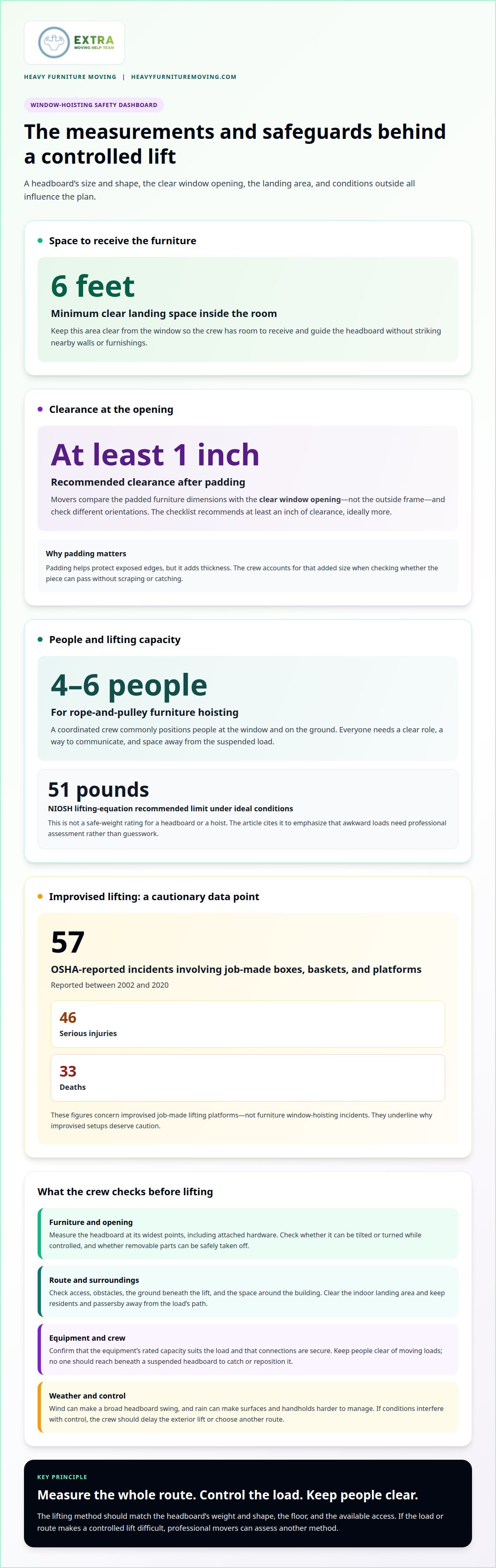
It’s reasonable to worry about a headboard swinging, scraping the frame, or getting stuck halfway through. A professional assessment helps reduce those risks before the lift begins. The landing area inside the room should have at least 6 feet of clear space from the window, and the crew also considers access, obstacles, and conditions outside.
This guide explains how movers assess the headboard and access route, choose a lifting method, and prepare to protect the furniture and home. Understanding these factors helps you decide when professional hoisting is the practical choice and what details to share when planning the move.
Key Takeaways
- Measure the headboard in different positions and compare its padded dimensions with the clear window opening.
- Plan for a controlled landing inside and a clear route outside, where obstacles and wind can affect the lift.
- Choose the lifting method based on the floor, the headboard’s weight and shape, and the available access.
- Keep people clear of suspended loads and use equipment suited to the lift rather than relying on an improvised setup.
- Bring in professional movers when the load is awkward or the route makes a controlled lift difficult.
Is it safe to hoist furniture through a window?
Window hoisting can cause injury or property damage if a load slips, swings, or strikes the opening. Professional movers reduce these risks by measuring the route, controlling the load, and keeping people clear of its path.
-
Measure the Furniture, Window Opening, and Landing Area
Have movers measure the headboard at its widest points, including trim and attached hardware. They compare several orientations to see whether it can turn through the opening without scraping or becoming stuck. Measure the clear window opening, not the outside frame. For example, a 38-inch-deep, 34-inch-tall sofa may not pass flat through a 36-by-48-inch opening after sash removal.
Movers also account for padding, which adds thickness. The pre-lift checklist recommends at least an inch of clearance after padding, and ideally more. Inside, the landing area should have at least 6 feet of clear space from the window. That space gives the crew room to receive and guide the furniture without striking nearby walls or furnishings.
-
Assess Furniture for Window Hoisting
Before choosing a window route, movers assess the item’s dimensions, shape, weight, and handling points. Large headboards, sofas, and mattresses may need hoisting when a doorway, hall, or staircase blocks the way. A flat headboard can be awkward to steer, even if it is not especially deep.
Fit depends on the headboard and opening together, not the furniture label alone. Movers consider whether the piece can be tilted or turned while remaining controlled. A sofa that will not pass flat may fit on its end with its arms removed. For a headboard, the crew checks its full outline and whether attached parts can be safely removed before lifting.
-
Prepare the Furniture, Window, and Ground for a Professional Hoist
Before lifting, have the crew protect exposed edges and secure loose parts. Padding helps limit scuffs, but adds thickness, so movers account for it when checking clearance at the window. They prepare the opening for a clear passage and take care to keep the furniture from striking the frame.
Outside, the crew checks the ground and clears the area beneath the lift. OSHA construction guidance advises workers to avoid standing under moving loads, barricade hazard areas, and post warning signs. These steps help keep residents and passersby away from the load’s path. The crew also keeps the indoor landing area clear as the headboard arrives.
-
Prevent Hoisting Injuries and Property Damage
Use trained movers rather than trying to control a suspended headboard without a coordinated crew. A DIY lift can leave people struggling to steer the item, manage ropes, and protect the window at the same time. If the headboard shifts or catches, it could strike the frame, damage the furniture, or throw someone off balance.
For rope-and-pulley furniture hoisting, a safe operation requires 4-6 people, with crew members commonly positioned at the window and on the ground. OSHA guidance also says to stay within the hoist’s lifting capacity and keep workers away from moving loads. According to the National Institute for Occupational Safety and Health, its lifting equation’s recommended limit is 51 pounds under ideal conditions. That figure underscores why awkward loads need professional assessment, not guesswork.
Safety of professional versus DIY hoisting
Professional crews coordinate the load, the window team, and the ground area before lifting. Wind can make a large headboard swing, so the crew assesses whether conditions allow it to be controlled safely.
-
Compare Professional and DIY Hoisting
Choose a trained crew for a headboard that is heavy, awkward, or hard to grip. A DIY lift can leave helpers trying to steer the load while managing ropes and avoiding the window frame. That divided attention raises the chance of a sudden shift, a dropped item, or an injury. OSHA reports 57 incidents involving job-made boxes, baskets, and platforms between 2002 and 2020, including 46 serious injuries and 33 deaths. Those incidents show why improvised lifting setups deserve caution.
A professional plan gives each person a clear role and uses equipment suited to the lift. The team can pause if the headboard starts moving unpredictably.
-
Assess Weather and Wind Conditions
Ask the crew to assess wind at the building, not just the forecast. A broad headboard can catch moving air and swing away from the intended path. The crew considers whether it can keep the load steady, guide it to the window, and pause safely if conditions change.
Rain can also make outdoor surfaces and handholds harder to manage. If wind or wet conditions interfere with control, the crew should delay the exterior lift or choose another route. A forecast alone cannot show how air moves around a particular building.
-
Secure the Hoisting Crew and Ground Area
Keep residents, visitors, and passersby out of the space beneath the lift. OSHA construction guidance advises workers to avoid standing under moving loads, barricade hazard areas, and post warning signs. A ground worker can monitor the area while the window team guides the headboard. Before lifting, everyone needs a clear position and a way to communicate.
Keep the route to the window and the landing area clear. Move nearby objects that could snag the load or block a quick response. No one should reach beneath a suspended headboard to catch or reposition it.
-
Review the Pre-Lift Safety Checks
Have the crew confirm that the lifting equipment’s capacity suits the load and that its connections are secure. OSHA guidance says to stay within the hoist’s lifting capacity. Before raising the headboard, movers should check its wrapping, attachment points, window clearance, and landing space. A snag or loose connection can turn a controlled lift into a sudden movement.
Agree on clear commands before anyone takes the load. The crew should know who directs movement, who watches the ground, and when to stop. If a signal is missed or the headboard shifts, pause the lift rather than pushing through.
For a large piece that needs an exterior route, professional sofa hoisting reflects the kind of coordinated handling that can help manage a difficult window lift.
How professional movers check exterior obstacles along the hoisting route
Before lifting, the crew traces the headboard’s path from the ground to the window, looking for anything that could snag, block, or deflect the load.
- Walk the full exterior route from the staging point to the window. Look for tree branches, roof edges, balconies, awnings, exterior lights, signs, and cables near the path. A headboard may need to travel upright and then turn toward the opening, so check the space around its entire outline. A route clear for a person may still be too tight for a broad, padded piece.
Look above and beside the window, not just straight ahead. Projecting trim or a balcony railing can catch an upper corner as the headboard rises. The crew also checks whether the piece can approach without being forced against siding, glass, or another structure.
- Assess how the headboard must move around each obstacle. A narrow gap between a wall and a branch may leave little room to correct a swing. Movers consider the headboard’s shape, padded edges, and required orientation. If the route involves a turn, confirm there is enough room to guide it without striking the building.
Check for loose or moving obstructions, too. Wind can make a large headboard swing during a hoist. If nearby branches or hanging objects move across the route, the crew considers how that could affect control. The lift should not begin while the load’s path is obstructed.
- Inspect the ground area where the lift will begin. Note sloped or uneven surfaces, landscaping, steps, parked vehicles, and walkways that could restrict equipment placement or crew movement. Keep people out of the area below the load. OSHA construction guidance advises workers to avoid standing under moving loads, barricade hazard areas, and post warning signs.
Plan a clear way to carry the headboard to the starting point. A parked car or narrow passage can interfere with staging, even if the area beneath the window looks open. The crew also considers whether residents or pedestrians could enter the lift area during the work.
- Review the route from the crew’s positions before raising the headboard. Confirm that the ground team can see or communicate with the window team, and identify where the load might catch or swing. If a branch, cable, balcony, or other obstacle blocks a controlled path, the crew should change the route or select another lifting method.
Recheck exterior conditions before lifting. Wind can change how a broad headboard behaves, so the crew assesses whether it can keep the piece under control. A clear route is not enough if conditions make the load move unpredictably. Proceed only with a workable path and a coordinated crew.
How professionals choose a lifting method based on floor and load
For anyone deciding how to hoist an oversized headboard through a second-floor window in Gainesville, the method depends on the floor, load, and route. Professional movers may use rope-and-pulley rigging with rated hardware for a light-to-moderate piece.
-
Assess the Floor and Load
Movers weigh the floor height against the headboard’s size, shape, and handling points. A second-floor lift differs from a higher-floor job because height and working space affect load control. They also consider whether the headboard can remain steady as it rises and turns toward the opening.
The crew assesses whether the piece is light to moderate or needs mechanical assistance. A broad headboard can catch wind and become harder to guide, regardless of its weight. Its balance, padded dimensions, and route all matter.
-
Choose Hoisting Equipment for the Job
For a second-floor window and a light-to-moderate item, trained movers may use rope-and-pulley rigging with rated hardware. This method may suit some buildings, depending on the circumstances. The headboard’s weight, shape, and exterior access also inform the equipment choice.
For third-floor windows and above, a block-and-tackle, motorized hoist, or mechanical lift operated by a trained crew is recommended. Exterior lifts or swing-arm hoists are presented for buildings 6-20+ floors high. Movers consider access and obstacles, not just the floor.
-
Review Professional Lifting Methods
Ask the crew to explain how its chosen method will control the headboard from the ground to the window. For a second-floor lift, trained movers coordinate movement with suitable rigging and rated hardware. The plan accounts for the headboard’s shape and its transition through the opening.
Deciding how to hoist an oversized headboard through a second-floor window in Gainesville means considering the load, height, and access together. If manual rigging will not provide controlled movement, professionals can assess a mechanical option. The method should suit the specific route and load.
Equipment for Hoisting a Headboard Through a Window
For a second-floor headboard lift, professionals select equipment to suit the load, window, and exterior route. The crew matches each part of the setup to the movement it needs to control.
- Use rated rigging suited to the selected method. Rope-and-pulley equipment with rated hardware may suit a light-to-moderate load at a second-floor window. The crew chooses equipment based on the headboard’s weight and shape and stays within its lifting capacity. OSHA construction guidance advises workers to stay within the hoist’s rated capacity.
Rated hardware matters because every connection helps carry and control the load. Professionals assess how the headboard will hang and whether it can stay balanced as it rises. Ordinary rope or improvised attachments are not substitutes for equipment suited to the lift.
- Match the lifting device to the floor and load. For a second-floor window, trained movers may use rope-and-pulley rigging or similar equipment. A block-and-tackle, motorized hoist, or mechanical lift may suit a higher window or a load that needs more controlled mechanical assistance.
The device must suit the route, too. A headboard that needs a careful turn at the window calls for a setup that allows controlled movement through that transition. The crew considers equipment access and whether exterior obstacles affect placement.
- Protect the headboard and contact points. Movers use padding to shield vulnerable edges and surfaces from scuffs during the lift. They account for the added thickness when checking clearance, since a covered headboard takes up more space than the bare piece.
Protection also matters where the furniture passes near the window. The crew aims to prevent contact with the frame, walls, and exterior surfaces. Padding can reduce direct rubbing, but it does not replace careful load control.
- Prepare the work area with barriers and clear signals. OSHA construction guidance advises barricading hazard areas and posting warning signs. Those controls help keep people away from the space below a moving headboard while the crew works.
Before lifting, the team agrees on clear commands and positions. A ground worker and a window worker need to coordinate the headboard’s movement. If communication breaks down or the equipment cannot control the load, the crew pauses rather than forcing the lift.
- Use professional sofa hoisting help when a headboard needs a controlled window lift. A trained crew can select the rigging or mechanical equipment that fits the load and route.
Heavy Furniture Moving: Sofa Hoisting
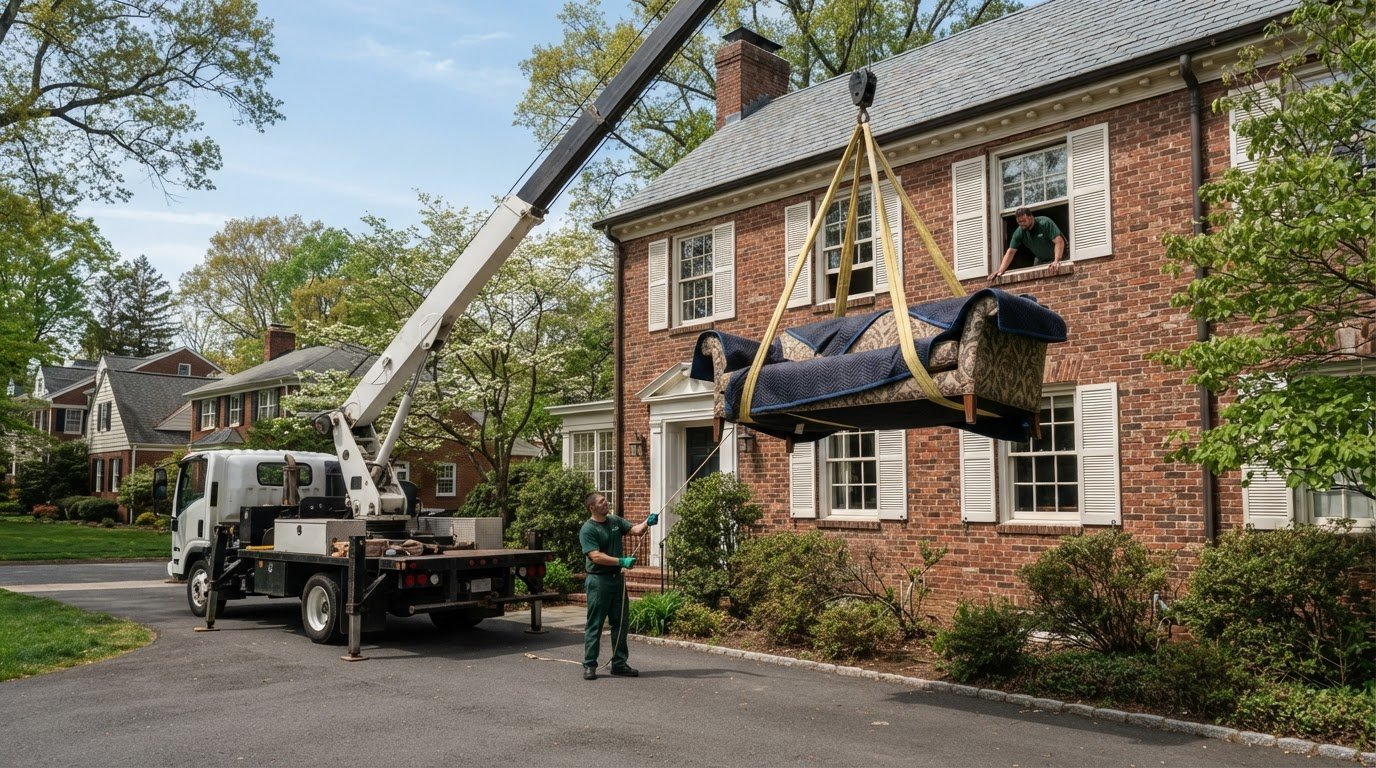
Heavy Furniture Moving offers Sofa Hoisting for bulky pieces that need a window route. If an oversized headboard will not fit through the home’s doors or stairs, professional movers can assess its dimensions, access, and lifting path to determine a suitable plan. This can help when the exterior route has obstacles or the headboard needs careful control at the window. The same planning principles apply to oversized furniture: match the method to the item and building rather than forcing a difficult route. For professional handling, contact Heavy Furniture Moving to discuss your headboard move.
Make the Next Move with a Clear Plan
Planning how to hoist an oversized headboard through a second-floor window in Gainesville starts with a clear picture of the item and its access route. Share the headboard’s dimensions, floor, and any exterior obstacles with the moving team. Those details help the crew plan for the specific lift.
Heavy Furniture Moving offers Sofa Hoisting for bulky items that need a window route, as well as Movers Near Me and Exercise Equipment Moving for other residential moving needs. If your headboard’s route looks tight or difficult to control, professional help can make the next step easier to plan.
Contact Heavy Furniture Moving today to discuss your headboard move. A thoughtful plan can help you move forward with confidence.
Frequently Asked Questions
Do I need permission from my building?
Check your building’s rules before scheduling an exterior lift. A property manager or homeowners association may have requirements for using windows, shared areas, or exterior access. Ask what approvals, scheduling rules, or protections apply to your building. For example, a lift crossing a shared walkway may need a different plan from one using a private yard. Obtain any required approval before the crew arrives.
How do professional movers measure a headboard, window opening, and stairwell before moving it?
Movers measure the headboard at its widest, tallest, and deepest points, then compare those dimensions with the clear window opening. They also assess turns in the stairwell and hallway, since a piece may fit through a doorway but not around a landing. For example, a broad headboard may need a different orientation at a stair turn. Share its shape and any attached parts so the crew can assess the entire route.
Which Gainesville, Virginia moving companies or crane services handle oversized furniture through windows?
Heavy Furniture Moving serves Gainesville, Virginia, and offers Sofa Hoisting for pieces that need a window route. Its relevant service is furniture hoisting, not a claim of crane service. For a move in Gainesville, provide the item’s dimensions, floor, and access details so the moving plan can account for the headboard and building. That information helps the crew understand the job’s specific handling needs.
Do Gainesville building codes, permits, or HOA rules apply to hoisting furniture through a window?
Requirements depend on the property and lifting setup, so do not assume one rule applies to every Gainesville building. Review HOA or building policies and ask local building officials whether your specific arrangement needs approval. Share details about exterior equipment, shared-space use, and whether the lift affects a public area. This helps clarify property rules and local requirements before planning the move.
How do professional movers wrap and secure a headboard for an exterior lift?
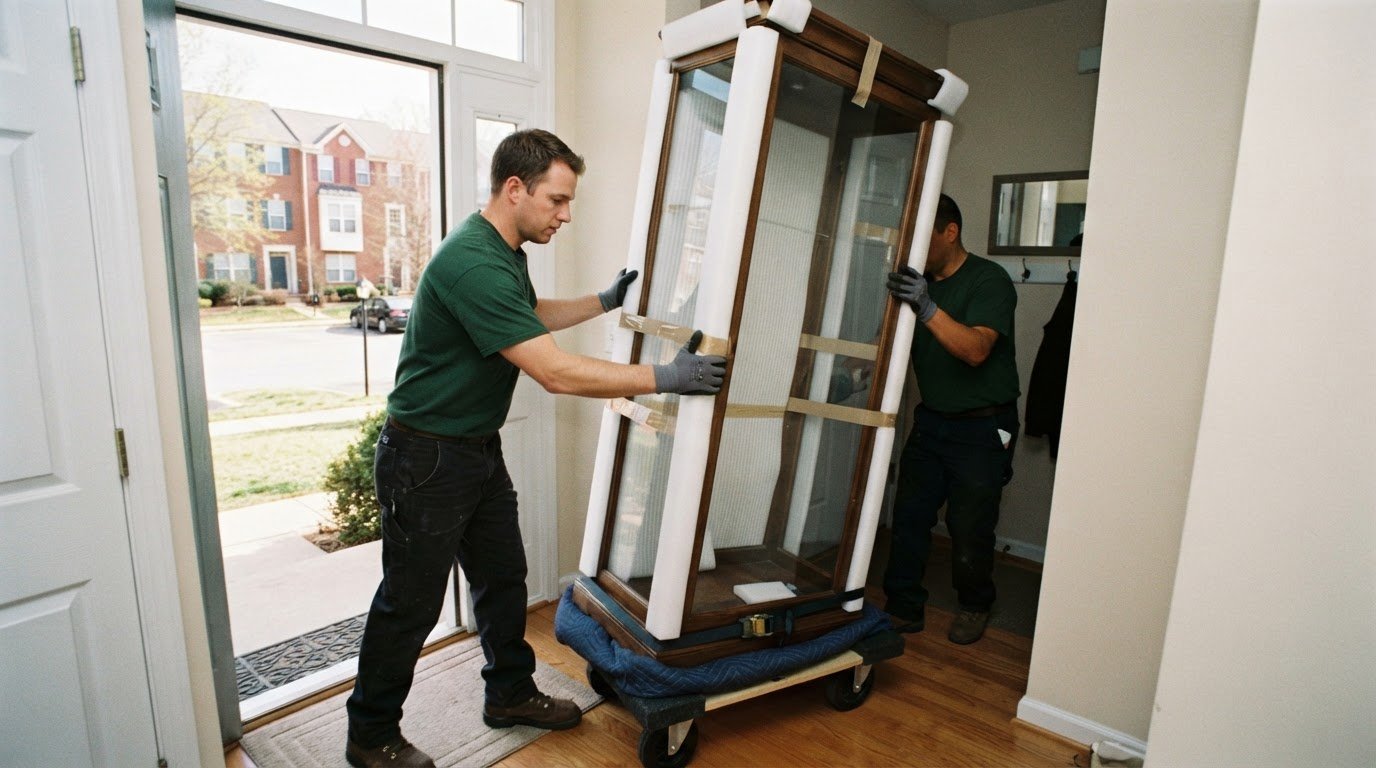
Movers can protect a headboard with moving blankets and shrink film, then secure the wrapped piece with ratchet straps suited to the load. Padding helps shield finished surfaces, while secure wrapping keeps loose coverings from shifting during handling. The crew accounts for the added thickness when planning the route. Point out delicate trim, attached hardware, or finish details before the headboard is prepared.
What alternatives are there if a headboard will not fit through the window, such as removing the window sash or disassembling it?
If the headboard will not clear the opening, movers can assess another orientation, an alternate interior route, or a different lifting method. Removing a sash may create more clearance, but it changes the opening and should be done only when the window and building allow it. If the headboard has detachable components, disassembly may also help. Keep removed hardware together so the piece can be reassembled correctly.
Frequently Asked Questions
Check your building’s rules before scheduling an exterior lift. A property manager or homeowners association may have requirements for using windows, shared areas, or exterior access. Ask what approvals, scheduling rules, or protections apply to your building. For example, a lift crossing a shared walkway may need a different plan from one using a private yard. Obtain any required approval before the crew arrives.
Movers measure the headboard at its widest, tallest, and deepest points, then compare those dimensions with the clear window opening. They also assess turns in the stairwell and hallway, since a piece may fit through a doorway but not around a landing. For example, a broad headboard may need a different orientation at a stair turn. Share its shape and any attached parts so the crew can assess the entire route.
Heavy Furniture Moving serves Gainesville, Virginia, and offers Sofa Hoisting for pieces that need a window route. Its relevant service is furniture hoisting, not a claim of crane service. For a move in Gainesville, provide the item’s dimensions, floor, and access details so the moving plan can account for the headboard and building. That information helps the crew understand the job’s specific handling needs.
Requirements depend on the property and lifting setup, so do not assume one rule applies to every Gainesville building. Review HOA or building policies and ask local building officials whether your specific arrangement needs approval. Share details about exterior equipment, shared-space use, and whether the lift affects a public area. This helps clarify property rules and local requirements before planning the move.
Movers can protect a headboard with moving blankets and shrink film, then secure the wrapped piece with ratchet straps suited to the load. Padding helps shield finished surfaces, while secure wrapping keeps loose coverings from shifting during handling. The crew accounts for the added thickness when planning the route. Point out delicate trim, attached hardware, or finish details before the headboard is prepared.
If the headboard will not clear the opening, movers can assess another orientation, an alternate interior route, or a different lifting method. Removing a sash may create more clearance, but it changes the opening and should be done only when the window and building allow it. If the headboard has detachable components, disassembly may also help. Keep removed hardware together so the piece can be reassembled correctly.