Tactical Unpacking: Stress-Free Guide to Your New Home
Unpacking stress is a logistics failure, not a character flaw. You've spent weeks sorting, taping, and hauling your life across town, only to find yourself staring at a mountain of cardboard in a house that doesn't feel like yours yet. It's physically exhausting to live out of a suitcase while tripping over rolls of bubble wrap. We know that decision fatigue is real after a long move. That's why implementing specific unpacking strategies to reduce stress is the only way to reclaim your space without burning out. You shouldn't have to spend your first month in a new home feeling like a guest in a warehouse.
You can transform this chaos into a functional home in less than 48 hours. This guide provides a systematic order of operations to get your kitchen, bedrooms, and bathrooms running immediately. We'll show you how to handle the heavy lifting safely, from placing oversized furniture to positioning specialized items like gym equipment or safes. You'll master a tactical plan that eliminates the guesswork and protects your physical health. Stop digging through random boxes and start living in your new home today.
Key Takeaways
- Beat "unpacking inertia" by setting up your master bed and bathroom first to ensure immediate rest and recovery.
- Follow a tactical room-by-room sequence that clears major pathways first to maintain a safe and organized workspace.
- Master proven unpacking strategies to reduce stress by preparing an "Open First" box with all essentials for your first 24 hours.
- Secure the foundation of every room by finalizing furniture placement before moving heavy items like safes or exercise equipment.
- Recognize when to call for professional packing and unpacking support to protect your time and physical health.
The Psychology of Unpacking: Why Post-Move Stress Hits Hard
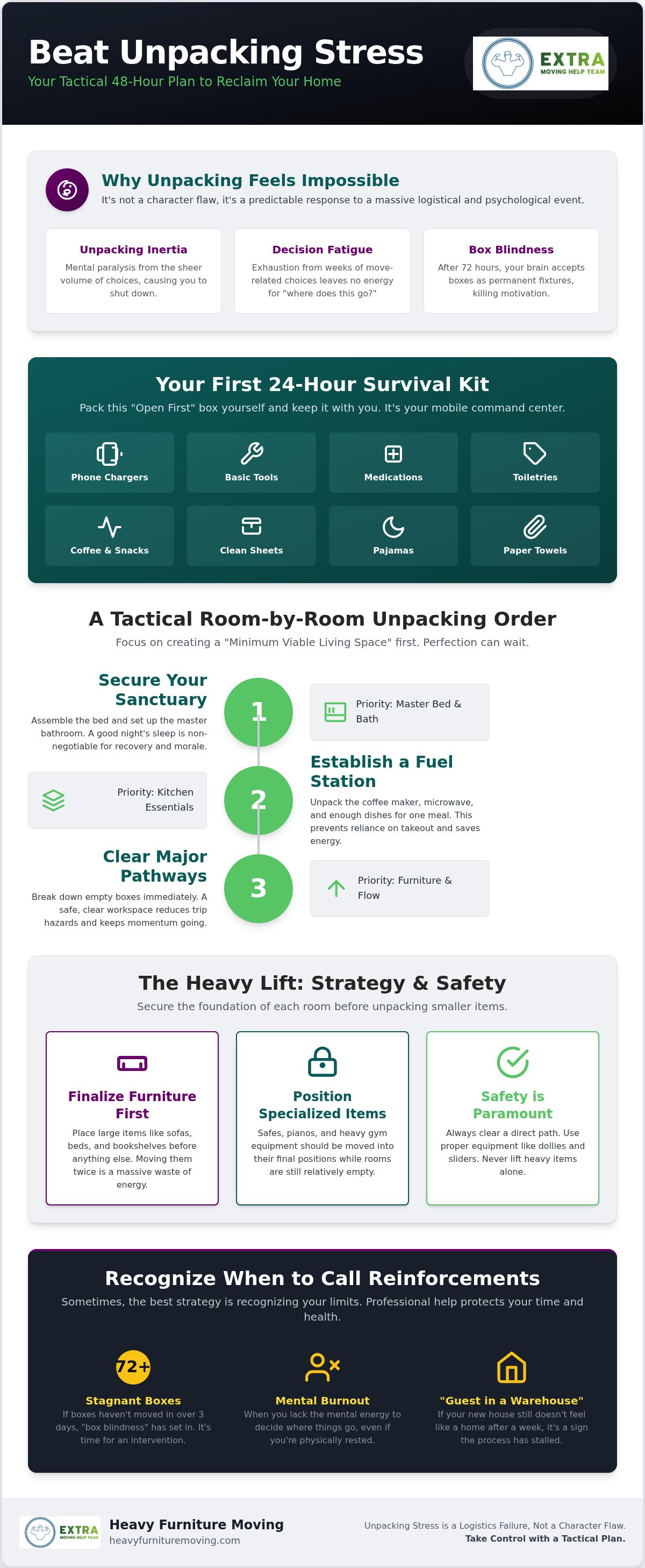
Moving isn't just about shifting boxes; it's about relocating your entire life. When you walk into a new home filled with towers of brown cardboard, your brain doesn't always see a fresh start. Often, it sees a threat. This mental paralysis is known as "Unpacking Inertia." It happens when the sheer volume of choices—where the towels go, which box holds the coffee maker, where to put the heavy safe—causes you to shut down entirely. You aren't being lazy. You're experiencing a predictable response to a massive logistical overhaul.
Surrounding yourself with physical clutter triggers a primal "fight-or-flight" response. This constant state of psychological stress makes it difficult to focus on simple tasks. You've likely spent weeks managing real estate agents, utilities, and truck rentals. By the time you reach the unpacking phase, decision fatigue has set in. It's completely normal to feel overwhelmed when you're surrounded by boxes. Acknowledging that this is a mental hurdle, not a personal failing, is the first step toward taking control.
Identifying Your Stress Triggers
You must learn to distinguish between physical exhaustion and mental burnout. Physical fatigue happens after a long day of lifting; mental burnout happens when you no longer have the energy to decide where things belong. To keep your momentum, you need to target the high-stress areas first. The kitchen and the master bedroom are your primary survival zones. If these stay packed, you can't eat or sleep properly, which only fuels your anxiety.
Watch out for "box blindness." This occurs when boxes remain in the same spot for more than 72 hours. Your brain starts to accept them as permanent fixtures rather than temporary obstacles. Once box blindness sets in, the motivation to clear the space vanishes. Using specific unpacking strategies to reduce stress, like setting a timer for small bursts of work, keeps your eyes fresh and your progress visible.
The Goal: Turning a House into a Home
Stop trying to finish the entire house in one weekend. Instead, focus on creating a "Minimum Viable Living Space" for your first 24 hours. This means having a functional bed, a clean shower, and the ability to make a simple meal. When you secure these essentials, the house starts to feel like a sanctuary rather than a construction zone. It shifts your mindset from "surviving the move" to "living in your home."
Focus on the foundation of your daily routine. You don't need a perfectly curated bookshelf on day one. You need your coffee mugs and your pajamas. By narrowing your focus to what you actually need to function, the mountain of boxes becomes a series of small, winnable battles. Unpacking stress is a manageable logistical hurdle that yields to a clear, tactical plan.
The "Essentials First" Strategy for an Orderly Transition
You've identified the mental hurdles. Now you need a tactical strike. The "Essentials First" strategy is designed to keep you functional while the rest of the house remains in boxes. This isn't just about being organized; it's about survival. By prioritizing specific zones, you combat Relocation Stress Syndrome and prevent the total burnout that often follows a move. You need to create an environment where you can actually recover from the physical toll of the day.
Your first goal is the "Open First" box. This is the single most important container in your entire inventory. It contains everything you need to survive the first 24 hours without opening another lid. Alongside this, you must prioritize bathroom and kitchen triage. Ensure you have soap, toilet paper, and towels ready. In the kitchen, focus on coffee, snacks, and basic utensils. Avoiding the need for expensive, greasy takeout on night one keeps your energy levels stable. If the kitchen is a disaster, your stress levels will spike every time you get hungry.
The First-Night Box Checklist
Pack this box yourself and keep it in your vehicle so it doesn't get buried under heavy furniture. It acts as your mobile command center. It should include chargers, basic tools like a box cutter, and all daily medications. You should also pack a set of clean sheets and towels separately for every family member. These essential toiletries prevent a late-night run to the store when you're already physically spent. If you feel overwhelmed by the volume of boxes, professional packing and unpacking services can handle this process for you.
Securing Your Sleep Sanctuary
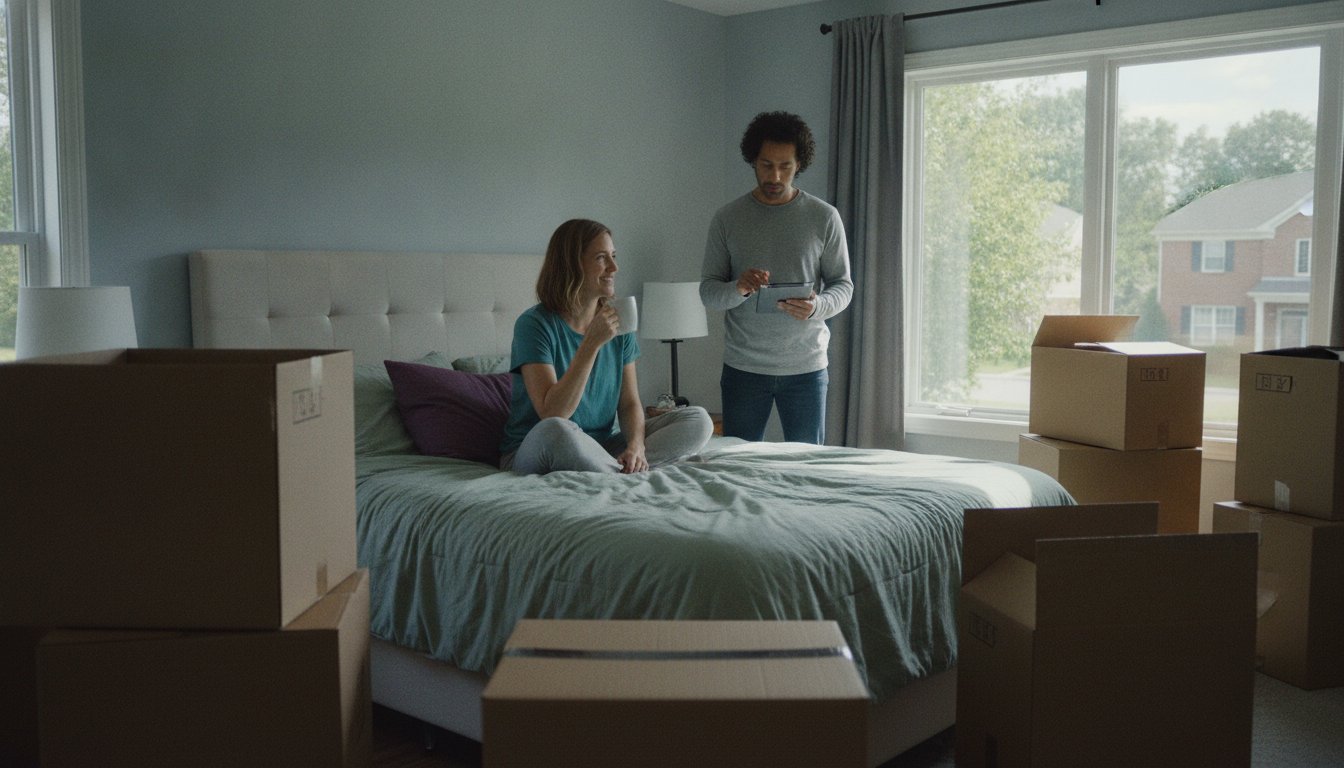
The master bed is your top priority. Do not leave it for the end of the day. Assembling the frame and making the bed with clean sheets should be one of the first things you do. There is a massive psychological impact to seeing a fully made bed when you're exhausted. It provides a visual "rest zone" that helps you ignore the stacks of boxes in the corner. You need a place where the move doesn't exist.
Unpacking the bedroom first reduces morning anxiety. You'll wake up in a space that feels like a home, not a storage unit. This is one of the most effective unpacking strategies to reduce stress because it guarantees a recovery period. You can't tackle the rest of the house if you haven't slept well. Establish this sanctuary early to give yourself the strength to handle the kitchen and living room tomorrow.
A Tactical Room-by-Room Unpacking Order
You can't attack every room at once. If you try, you'll end up with a house full of half-empty boxes and zero functional space. Success depends on a disciplined sequence. This is one of the most effective unpacking strategies to reduce stress because it prioritizes safety and basic human needs over aesthetics. Clear the major pathways and hallways first. Trip hazards are a serious risk when you're moving heavy containers through unfamiliar territory. Once the routes are clear, you can move through the house with confidence and speed.
Follow this five-step tactical order to regain control of your environment:
- Step 1: Clear Pathways. Ensure every hallway and exit is free of debris and boxes.
- Step 2: Bathrooms. Set up the shower and vanity to maintain your daily hygiene routine.
- Step 3: The Kitchen. Stop the cycle of expensive takeout by making your cooking space functional.
- Step 4: Bedrooms. Complete the setup for all family members to ensure everyone has a private retreat.
- Step 5: Living Areas. Save the "heavy-lifting" zones for last once the essential support rooms are running.
The High-Impact Kitchen Setup
A cluttered kitchen creates a cluttered mind. Start by unpacking items based on frequency of use. Your daily coffee mugs, plates, and silverware should be accessible immediately; save the holiday platters and specialized gadgets for later. Wipe down your cabinets before you start. It's much easier to organize shelves while they're empty than to move things around later. Keeping your counters clear of cardboard and packing paper provides an immediate visual win that lowers house-wide tension. A clean counter means you have space to breathe and plan your next move.
Managing the Kids and Pets Zones
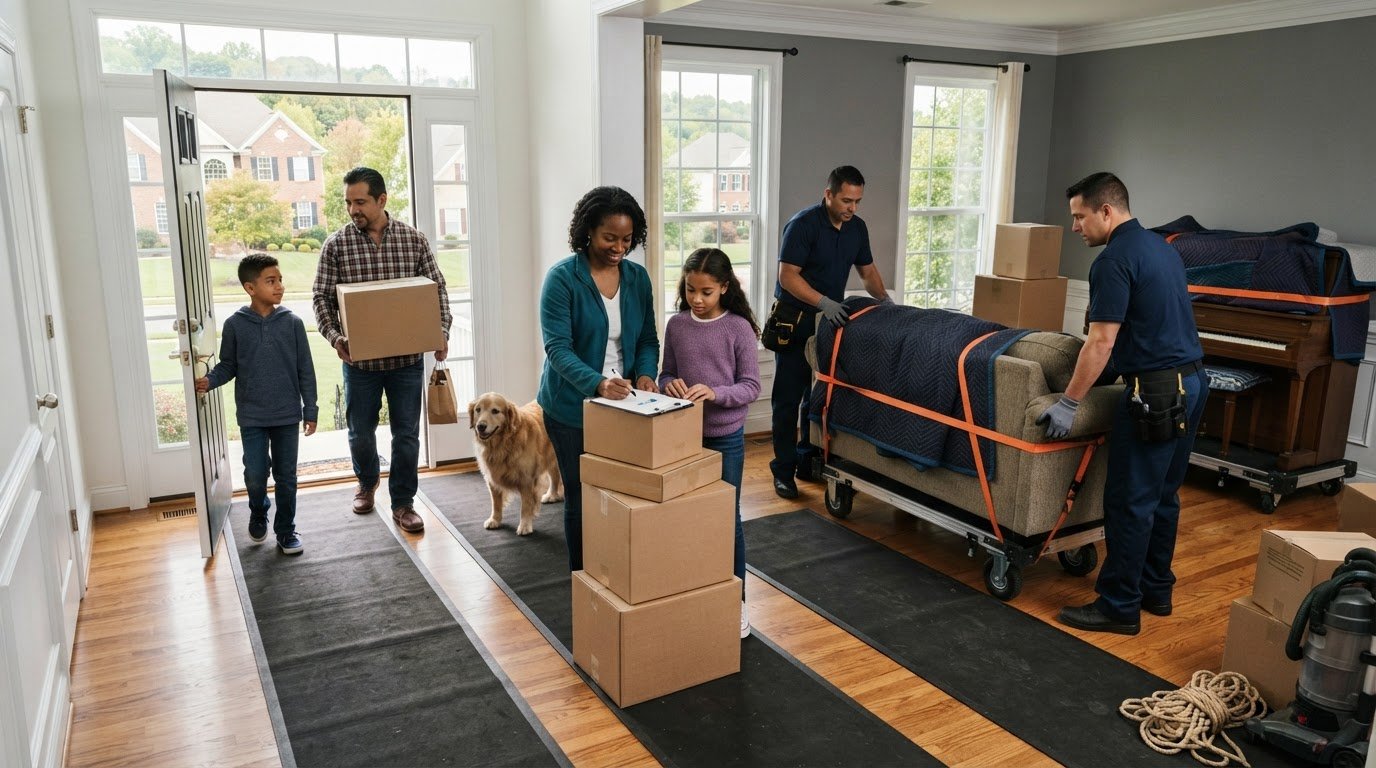
Moving is a major disruption for everyone, including the non-human members of your family. If you're settling into a new home in Fairfax or Ashburn, prioritize familiar items for your children and pets. Their rooms should be finished early in the process to provide a sense of security and continuity. Set up a "safe zone" for pets in a quiet corner away from the unpacking chaos. Include their bed, favorite toys, and water bowls. When the kids and pets are settled, the overall noise and anxiety levels in the house drop significantly. This allows you to focus on the remaining logistical tasks without constant interruptions.
Handling Heavy Furniture and Bulky Items Safely
Unpacking isn't just about opening small boxes. It's about securing the massive pieces that define your living space. Furniture placement is the foundation of a low-stress room. If your sofa or bed is in the wrong spot, the entire room feels congested and dysfunctional. Don't fall into the trap of "just winging it." Moving a heavy dresser or a piece of exercise equipment without a plan is a recipe for back strain or property damage. Efficient furniture placement is one of the top unpacking strategies to reduce stress because it creates immediate order in high-traffic areas.
Protect your new Northern Virginia floors from scratches by using professional-grade sliders and felt pads. Hardwood and tile are expensive to repair, and heavy items can leave permanent gouges if they aren't handled with care. Taking five minutes to apply floor protectors saves hours of frustration and costly repairs later. You should also identify items that require specialized tools or hoisting before you start moving them. Some pieces simply won't fit through a standard doorway without being disassembled or lifted through a window.
Strategic Placement of Bulky Goods
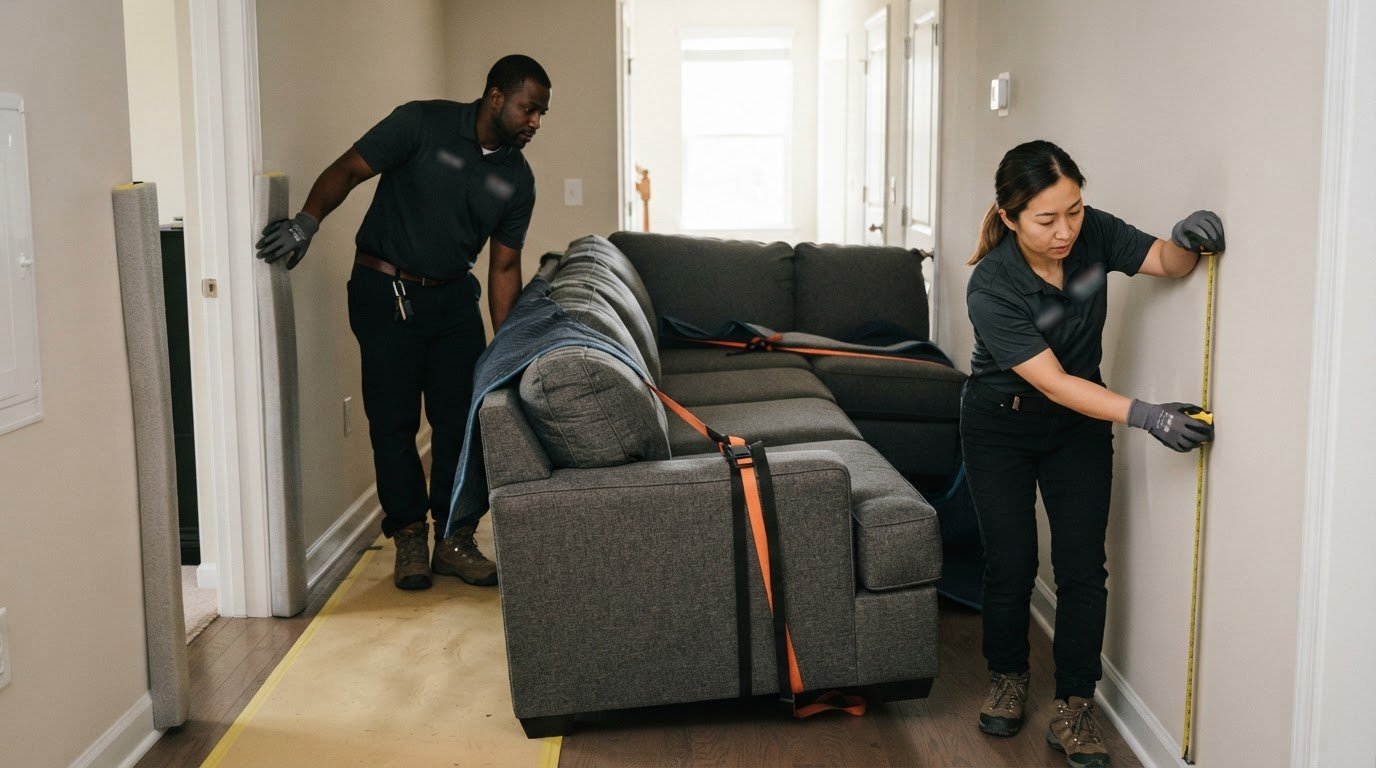
Measure your space before you lift. It's physically exhausting to move a treadmill or a massive sectional twice because it didn't fit against the wall. Use floor protectors and sliders for heavy items like safes or gym gear. If you're unsure about the mechanics of your workout equipment, learn how to move a treadmill safely from experts who handle these machines daily. Getting the big items right on the first try is a major win for your timeline and your physical health.
Specialized Logistics: Pianos, Safes, and Hoisting
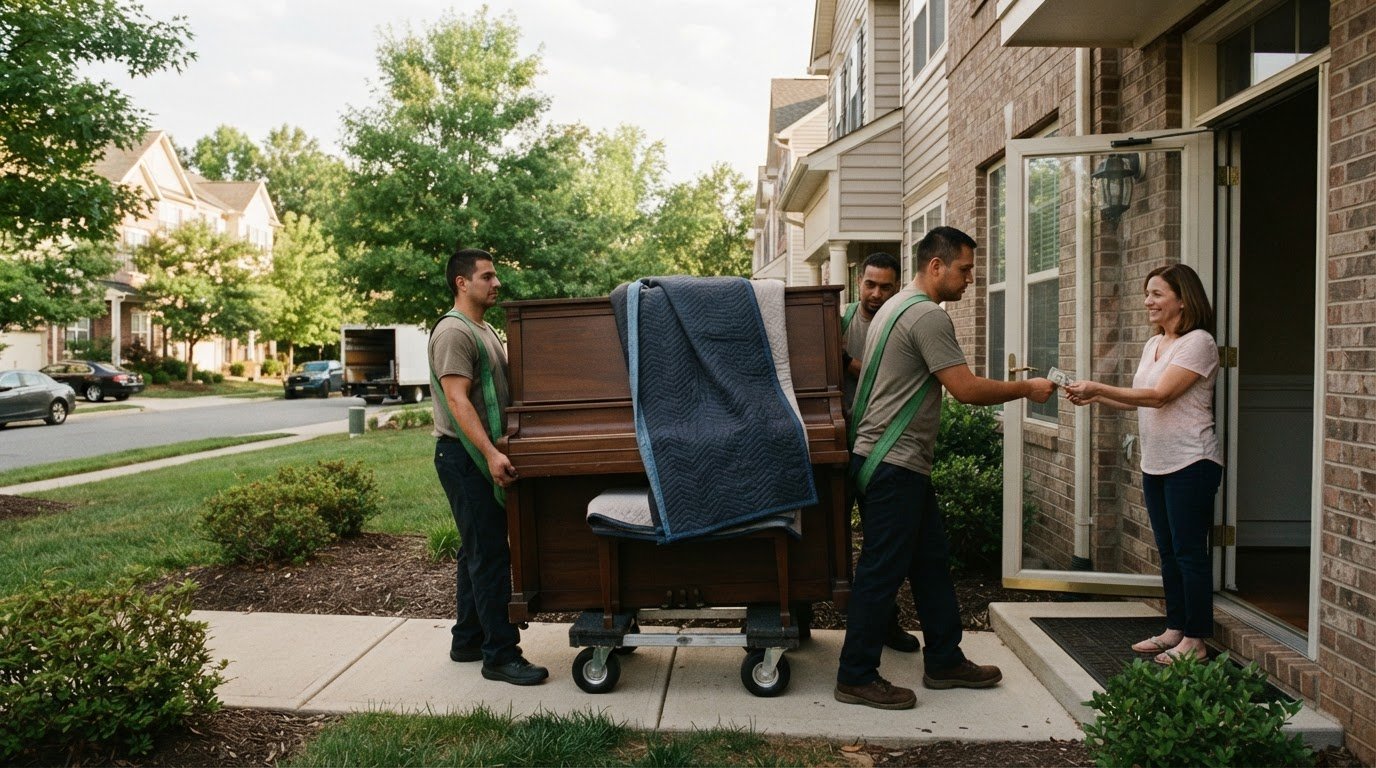
Some items aren't meant for a DIY approach. Upright pianos and gun safes are massive, delicate, and dangerous if they tip. These are "tactical hunts" that require professional gear, specialized ramps, and the right physical leverage. If you have a tight entryway in Manassas or Reston, you might need sofa hoisting to get your furniture through a balcony or a second-story window. Don't risk your health or your home's structure. If a piece of furniture feels beyond your capability, reach out for Furniture Moving support to finish the job safely. Using precise unpacking strategies to reduce stress includes knowing when to call in the heavy-duty reinforcements.
When to Call for Professional Unpacking Reinforcements
You've followed the tactical plan, but sometimes the "last mile" of a move feels like an uphill climb. Recognizing when "DIY" is costing you more in time and mental health is a vital part of your strategy. If you've spent three days staring at the same ten boxes in the garage, the DIY approach is no longer working. Bringing in professional support isn't an admission of defeat; it's a smart logistical choice to regain your life. Professional unpacking offers speed, organization, and a level of safety that's hard to achieve when you're already physically exhausted.
Transitioning from a house full of boxes to a functional home in one afternoon is possible with labor-only services. These teams focus on the heavy lifting and high-volume tasks that keep you stuck. By delegating these chores, you can focus on the personal touches that actually make a space feel like yours. It's one of the most effective unpacking strategies to reduce stress because it removes the physical burden from your shoulders immediately. You don't have to spend your first month in a new house feeling like you're still in the middle of a move.
The Value of Expert Labor
Expert labor does more than just open boxes. It frees you from the risk of back injury when repositioning heavy furniture or setting up specialized equipment. Professional packers and unpackers organize your belongings for maximum efficiency, ensuring that every item has a logical place from day one. Many Fairfax and Ashburn residents choose veteran-owned teams because they value discipline, local expertise, and a hardworking attitude. These teams treat your property with the respect it deserves, handling everything from delicate kitchenware to massive safes with professional precision.
Final Steps: Junk Removal and Decluttering
The final hurdle is the mountain of cardboard and packing paper left in the wake of your move. A house isn't truly functional if you're still navigating through a sea of debris in the garage or basement. A post-move junk haul is the final step in total stress reduction. Clearing out the waste allows you to finally see the floors you worked so hard to protect. Ready to relax? Let our professional unpacking team take the load off and turn your new house into a finished home today. Stop living out of suitcases and start enjoying your new Northern Virginia neighborhood.
Take Command of Your New Space
You've survived the move; now it's time to finish the job with discipline. By prioritizing your "Essentials First" zones and following a tactical room-by-room sequence, you prevent the mental paralysis that often follows a relocation. Remember that safety is your foundation. Measuring your space and using floor protectors ensures that your new home remains in top condition while you settle in. Implementing these specific unpacking strategies to reduce stress turns a chaotic house into a functional sanctuary in record time.
If the physical toll is too high, don't risk injury or burnout. Our veteran-family owned and operated team specializes in handling the most demanding heavy lifting, from upright pianos to large gun safes. We serve Fairfax, Ashburn, and the surrounding Northern VA areas with the same dedication we bring to every mission. Let us handle the "last mile" of your move so you can focus on your family. Get a Free Quote for Professional Unpacking and Heavy Item Moving today. You've done the hard work of moving. Now, take the final step and start enjoying the home you've worked so hard to build.
Frequently Asked Questions
What is the fastest way to unpack after a move?
The fastest way to unpack is by following a strict room-by-room priority list rather than opening boxes randomly across the house. Start with the "Open First" box and move immediately to the kitchen and master bedroom. Getting these high-traffic areas functional within the first few hours creates a base of operations. This systematic approach is one of the key unpacking strategies to reduce stress because it prevents the mess from spreading.
How do I stay motivated to unpack when I am exhausted?
Stay motivated by setting a timer for 30 or 60 minute intervals followed by a short break. It's easy to feel defeated when looking at the whole house; focus only on the box in front of you. Celebrate small wins, like a cleared kitchen counter or a made bed. Breaking the work into manageable tactical bursts prevents the mental burnout that often leads to box blindness and unfinished rooms.
Which room should I unpack first to reduce stress?
Unpack the master bedroom and the primary bathroom first to ensure you have a place to sleep and wash up. You can't maintain the physical energy required for a move without restful sleep and a clean space for hygiene. Once your rest zone is established, move to the kitchen. Securing these three areas immediately lowers your anxiety and provides the stamina needed to tackle the living room and garage later.
Is it worth hiring a professional unpacking service?
Hiring a professional unpacking service is worth the investment if you want to be functional in a single day. Professionals bring the speed and organization required to clear a house full of boxes in hours instead of weeks. This service is especially valuable for busy families in Fairfax or Ashburn who need to return to work quickly. It protects your mental health by removing the logistical burden and physical exhaustion of the move.
How do I handle heavy furniture without scratching my new floors?
Use heavy-duty floor sliders and felt pads on all furniture legs to protect your new Northern Virginia floors. Never drag a heavy item across hardwood or tile without a protective barrier. If you're moving oversized items like dressers or desks, ensure you have enough people to lift the piece entirely off the ground. For the most difficult items, professional furniture moving teams use specialized equipment to ensure zero damage to your property.
What should I do with all the empty boxes after unpacking?
Flatten your empty boxes immediately to save space and schedule a junk removal service to haul them away. Leaving a mountain of cardboard in your garage or driveway keeps the move feeling unfinished and creates a fire hazard. Many local recycling centers accept clean cardboard; a professional haul-away service is the fastest way to clear the debris. Removing the physical clutter is the final tactical step in reclaiming your home.
Can movers help with just the heavy items or do they have to do the whole house?
Yes, you can hire movers specifically for heavy items like safes, pianos, or exercise equipment without paying for a full-house move. This labor-only approach is perfect for DIY movers who can handle small boxes but need professional strength for the dangerous pieces. Our team frequently assists Northern Virginia residents with specialized furniture moving to ensure heavy goods are placed safely without risking personal injury or damage to the home's structure.
How do I move a heavy safe or piano to a second floor safely?
Moving a heavy safe or piano to a second floor requires specialized equipment like motorized stair climbers or heavy-duty ramps. This is a high-risk task that should never be attempted by amateurs. In some cases, sofa hoisting through a balcony or window is the only safe way to navigate tight stairwells. Professional safe moving and piano moving services use specific leverage techniques to protect both the item and your home's architecture.
Frequently Asked Questions
The fastest way to unpack is by following a strict room-by-room priority list rather than opening boxes randomly across the house. Start with the "Open First" box and move immediately to the kitchen and master bedroom. Getting these high-traffic areas functional within the first few hours creates a base of operations. This systematic approach is one of the key unpacking strategies to reduce stress because it prevents the mess from spreading.
Stay motivated by setting a timer for 30 or 60 minute intervals followed by a short break. It's easy to feel defeated when looking at the whole house; focus only on the box in front of you. Celebrate small wins, like a cleared kitchen counter or a made bed. Breaking the work into manageable tactical bursts prevents the mental burnout that often leads to box blindness and unfinished rooms.
Unpack the master bedroom and the primary bathroom first to ensure you have a place to sleep and wash up. You can't maintain the physical energy required for a move without restful sleep and a clean space for hygiene. Once your rest zone is established, move to the kitchen. Securing these three areas immediately lowers your anxiety and provides the stamina needed to tackle the living room and garage later.
Hiring a professional unpacking service is worth the investment if you want to be functional in a single day. Professionals bring the speed and organization required to clear a house full of boxes in hours instead of weeks. This service is especially valuable for busy families in Fairfax or Ashburn who need to return to work quickly. It protects your mental health by removing the logistical burden and physical exhaustion of the move.
Use heavy-duty floor sliders and felt pads on all furniture legs to protect your new Northern Virginia floors. Never drag a heavy item across hardwood or tile without a protective barrier. If you're moving oversized items like dressers or desks, ensure you have enough people to lift the piece entirely off the ground. For the most difficult items, professional furniture moving teams use specialized equipment to ensure zero damage to your property.
Flatten your empty boxes immediately to save space and schedule a junk removal service to haul them away. Leaving a mountain of cardboard in your garage or driveway keeps the move feeling unfinished and creates a fire hazard. Many local recycling centers accept clean cardboard; a professional haul-away service is the fastest way to clear the debris. Removing the physical clutter is the final tactical step in reclaiming your home.
Yes, you can hire movers specifically for heavy items like safes, pianos, or exercise equipment without paying for a full-house move. This labor-only approach is perfect for DIY movers who can handle small boxes but need professional strength for the dangerous pieces. Our team frequently assists Northern Virginia residents with specialized furniture moving to ensure heavy goods are placed safely without risking personal injury or damage to the home's structure.
Moving a heavy safe or piano to a second floor requires specialized equipment like motorized stair climbers or heavy-duty ramps. This is a high-risk task that should never be attempted by amateurs. In some cases, sofa hoisting through a balcony or window is the only safe way to navigate tight stairwells. Professional safe moving and piano moving services use specific leverage techniques to protect both the item and your home's architecture.