How Much Should You Tip Movers for Heavy Items in South Riding?
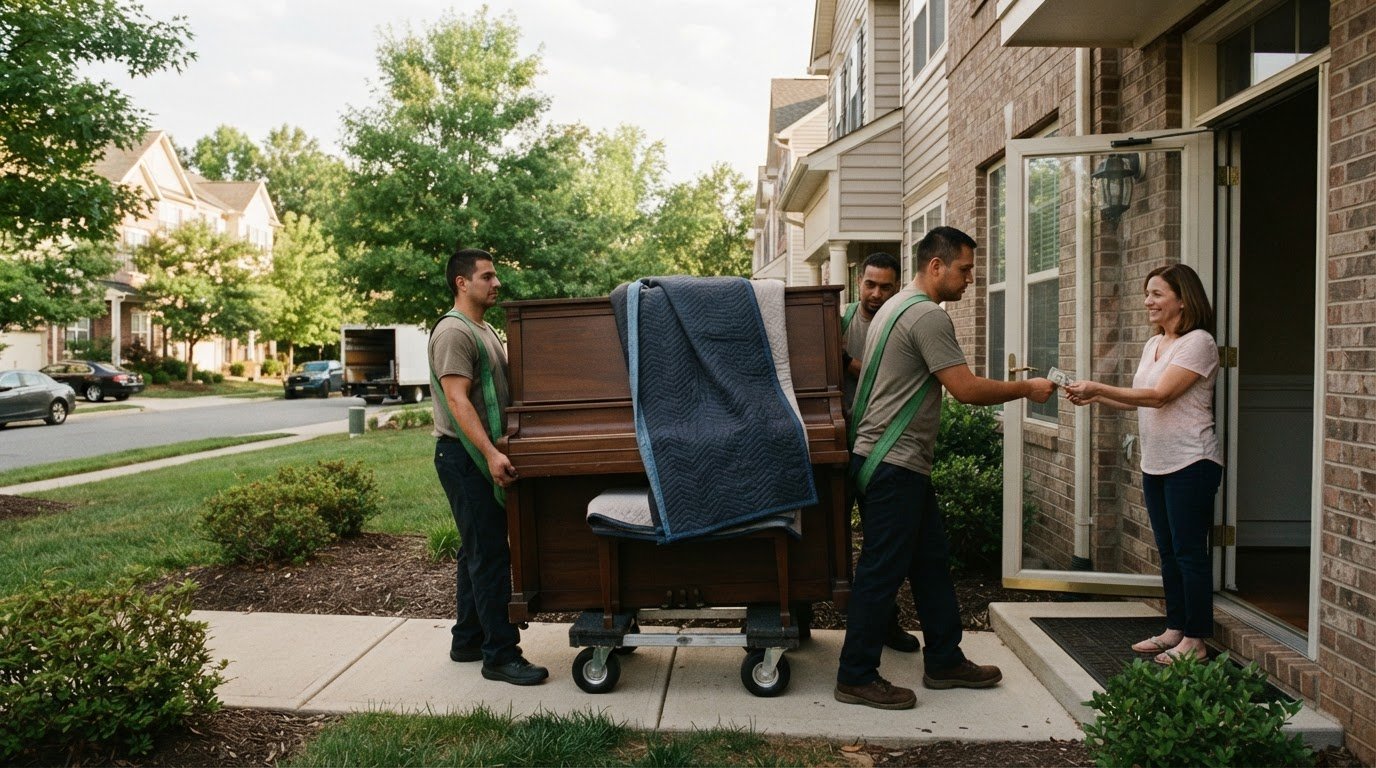
A piano, safe, or bulky piece of exercise equipment can make a move feel very different from carrying boxes. So, how much to tip movers for heavy items South Riding? A practical starting point is $20 to $50 per mover for a local move, with an extra $10 to $20 per mover when the work involves unusually heavy lifting or difficult access.
It makes sense to want to recognize the crew’s extra effort. But weight alone doesn’t have to determine the tip. Consider the whole job: stairs, tight turns, long carries, careful handling, and how professionally the team works. A percentage of the bill is another option, but a flat amount per mover can be easier to judge for a focused heavy-item move.
This guide explains practical per-mover ranges, when added effort may justify tipping more, and how to hand over a tip at the end of the job. You’ll have a clear way to choose an amount that feels fair without adding another moving-day headache.
Key Takeaways
- Use the crew’s time, effort, and service to decide how much to tip movers for heavy items South Riding, rather than focusing on the item’s weight alone.
- Account for stairs, tight passages, long carries, and other access challenges when judging whether extra effort deserves extra recognition.
- Compare a flat amount per mover with a percentage of the bill to find the approach that best fits a focused heavy-item job.
- Wait until the work is complete, then give tips directly to each mover or provide one shared amount for the crew.
- Specialist help with pianos, safes, and exercise equipment can make a difficult move more manageable.
How Much to Tip Movers for Heavy Items in South Riding
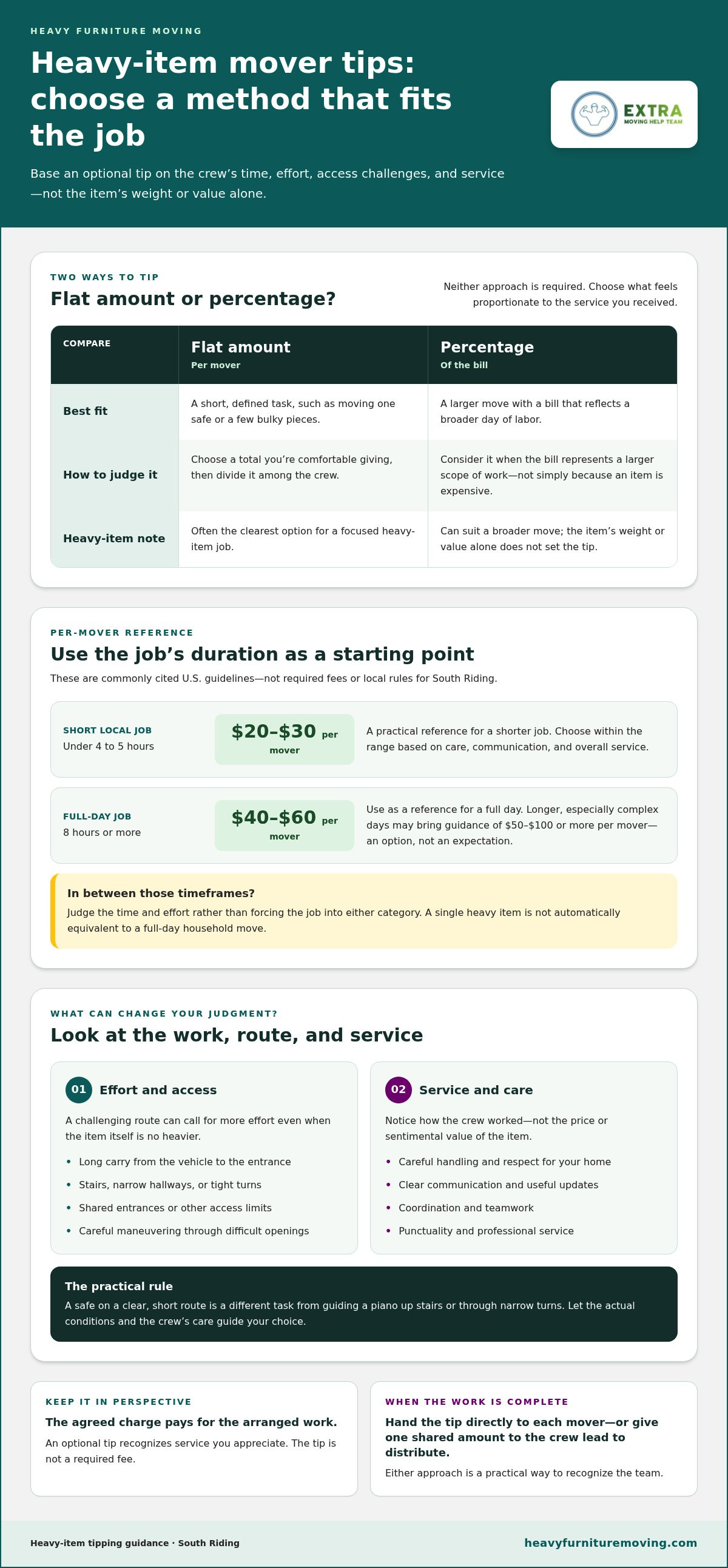
Tipping is optional. If you choose to tip, base the amount on the time, effort, and service, not on the item’s weight alone. For a short local job lasting under four to five hours, commonly cited U.S. guidance suggests about $20 to $30 per mover. For a full-day job of eight hours or more, $40 to $60 per mover is a practical reference. These are guidelines, not required fees or local rules for South Riding.
Choose an amount that reflects how the job went and what feels fair to you. A tip is separate from the agreed moving charge: the charge pays for the work arranged, while an optional tip recognizes service you appreciate.
A practical per-mover tipping range
For a shorter job, you might choose an amount within the $20 to $30 range for each mover. For a full day, use $40 to $60 per mover as a reference. If a job runs longer than a short appointment but doesn’t take a full day, judge the time and effort rather than forcing it into either category.
These amounts are commonly cited U.S. guidance, not a set charge. You can choose toward the lower or higher end based on the crew’s care, communication, and overall service. For a longer, especially complex day, some guidance puts tips at $50 to $100 or more per mover, but that’s an option, not an expectation.
Why heavy-item jobs may call for a different judgment
One bulky item can demand focused physical work, but it isn’t automatically equivalent to a full-day household relocation. A crew moving a safe across a clear, short route faces a different task from one carrying a piano up stairs or maneuvering furniture through narrow turns. Consider the actual conditions and care involved, not just the object’s size.
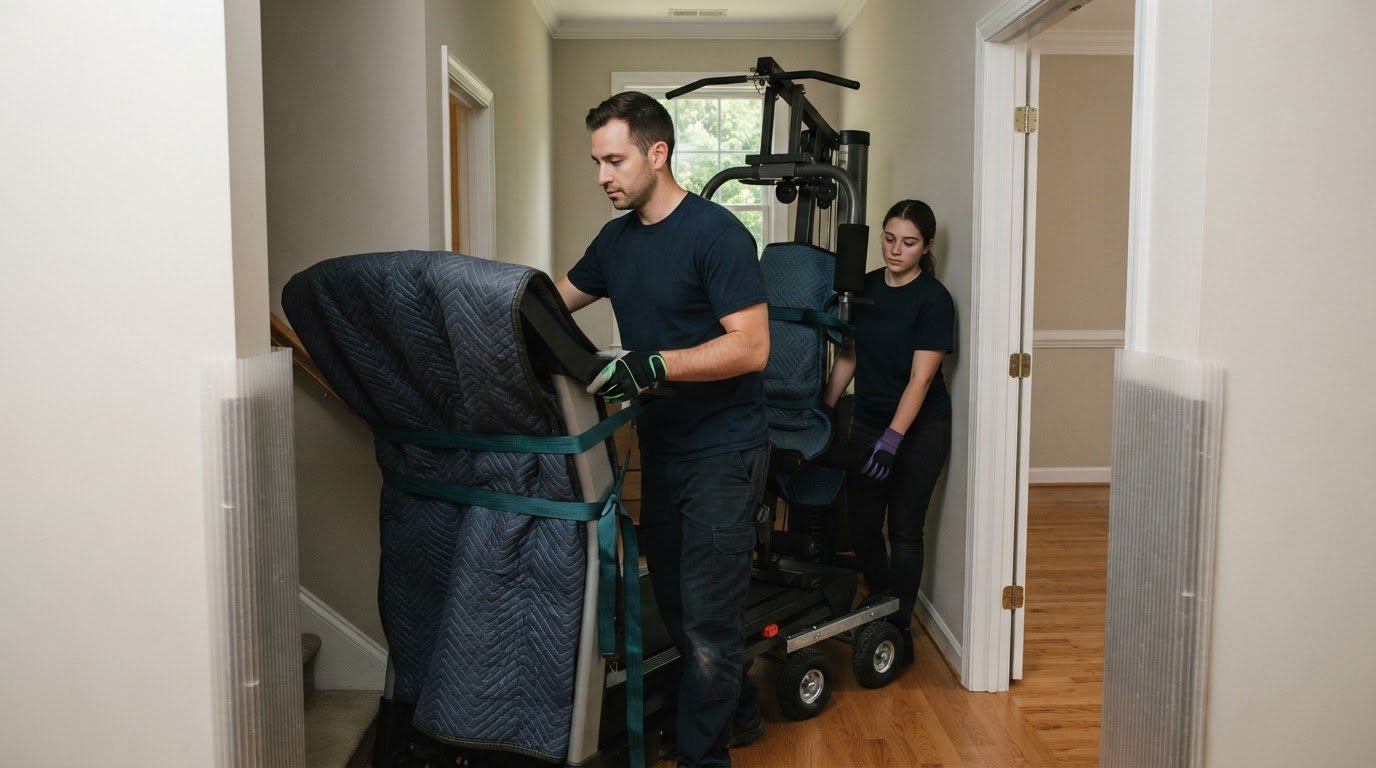
Stairs, tight turns, long carries, and difficult entryways can add effort. So can the attention needed to move an item carefully through a home. If the crew handles those challenges with patience and professionalism, you may choose a higher amount within your budget. The weight alone doesn’t set the tip; the work and service together guide your decision.
Once you’ve settled on a total, hand each mover their tip directly, or give one shared amount to the crew lead to distribute. Either approach is a practical way to recognize the team. If you’re unsure how to assess a single-item job, focus on the time spent, the route, and how smoothly the crew handled the task. That keeps your decision grounded in the work you saw.
What Should Change the Tip for Heavy-Item Movers?
A heavy move can call for extra effort, but the item itself doesn’t automatically call for a larger tip or a percentage of its value. Judge the work the crew actually performed. Did the move involve difficult access? Did the team communicate clearly and treat your home with care? These details give you a fairer basis for deciding whether to adjust a voluntary tip.
Effort and access at a South Riding home
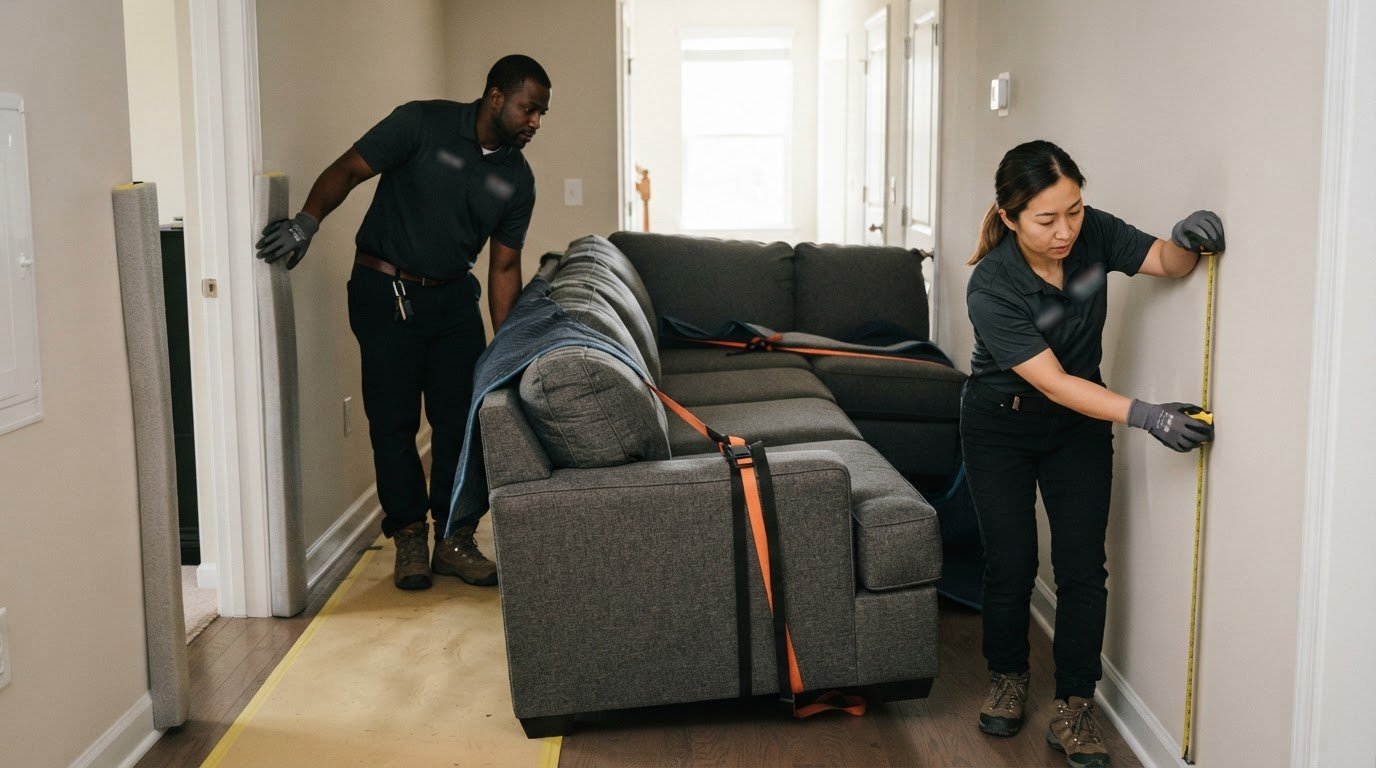
South Riding homes vary, so focus on the route at your own property rather than assuming every move presents the same challenge. A long walk from the driveway, stairs, narrow turns, a townhouse layout, or a shared entrance may add carrying time and make maneuvering a bulky item more demanding. An item that travels easily through a ground-floor doorway presents a different job from one that must be guided through several tight spaces.
Consider what the crew had to do:
- Carry the item farther than expected between the vehicle and entrance
- Navigate stairs, narrow hallways, or tight turns without bumping walls or doorframes
- Work around a shared entrance or other access limits at the home
- Take extra care to guide a bulky item through a difficult opening
These conditions can help explain added effort, but they don’t dictate a specific tip. A challenging route handled smoothly may deserve more recognition than an easy path, even if the item is just as heavy.
Service quality, care, and communication
Look beyond whether the crew completed the agreed task. Notice whether movers arrive as arranged, explain what they’re doing, coordinate with one another, and handle the item and home carefully. Clear updates matter too, especially if the team needs to adjust its approach to get a large piece through a tight spot.
Careful handling, clear communication, teamwork, punctuality, respect for your home, and difficult access can reasonably increase a voluntary tip. Use those factors to assess the crew’s work, not the price or sentimental value of the item. A costly piano doesn’t automatically call for a larger gratuity; the crew’s effort and service are more useful measures.
For moves between states, the Federal Motor Carrier Safety Administration (FMCSA) consumer protection resource explains consumer rights and responsibilities. It provides useful moving-service context, though it doesn’t set tipping amounts or determine what a particular crew deserves.
For a difficult item or access route, specialist help can make the physical work more manageable. Heavy-item moving help in South Riding is available for bulky pieces that need careful handling.
Flat Amount or Percentage: Which Tipping Method Fits a Heavy Move?
For a focused job moving one heavy item, a flat amount per mover is often the clearest way to recognize the crew’s work. A percentage can make sense for a larger move with a bill that reflects a broader day of labor. Neither method is required. Choose the approach that feels proportionate to the service you received.
When a flat tip per mover is easiest
A flat tip suits a short, defined task, such as moving one safe or a few bulky pieces. Decide on a total you’re comfortable giving, then divide it among the crew. For example, a hypothetical $60 shared tip for two movers would be $30 each. This is only an illustration of the math, not a moving-service price or a required tip.
A flat amount ties the calculation to the crew’s effort instead of the item’s value or the size of a bill. It can also feel more straightforward if the job is limited to a single item rather than a full household move.
When a percentage may make sense
A percentage is one optional approach for a larger move, where the total bill covers a longer or broader job. Commonly cited U.S. guidance varies: some sources suggest 10% to 20% of the moving cost, while 5% to 15% is also cited for standard local moves. Treat those figures as reference points, not a rule or required fee.
For a single specialty item, a percentage can feel out of proportion. The bill may reflect the agreed service, but the item’s value doesn’t measure the crew’s effort. That’s one reason a flat amount per mover can be simpler for a focused heavy-item task.
If you prefer to calculate by percentage, keep the math grounded in the agreed bill. For illustration only, 10% of a hypothetical $600 total is $60. If two movers share that tip evenly, each receives $30. The $600 figure is an example for explaining the calculation, not a local moving estimate or a company price.
Base your calculation on charges that were disclosed and agreed to. Don’t include surprise, unclear, or unapproved charges in the amount used to work out a tip. If a bill changes, first understand what the change represents, then decide whether a tip still feels appropriate. Tipping should recognize service, not make an unexpected charge easier to accept.
Use the method that best matches the job: a flat amount for a focused lift, or a percentage if you prefer that approach for a larger move. For a difficult item that needs specialized handling, heavy-item moving help is available in South Riding.
When and How to Tip Movers in South Riding
Wait until the heavy-item work is finished before deciding whether to tip and how much. You’ll have a clearer view of the crew’s care, communication, and teamwork once the item is in place and the agreed work is complete. If you’re still weighing how much to tip movers for heavy items South Riding, use the completed job, not pressure in the moment, to guide your choice.
A simple end-of-job tipping checklist
Take a moment to review the work before settling on an amount. Consider the full service, including any extra effort the move required:
- Was the agreed work completed?
- Did the crew handle the item and your home with care?
- Did the job involve a long carry, stairs, tight turns, or other access challenges?
- Did the movers communicate clearly and work well as a team?
Use your answers to decide what feels fair and voluntary. You don’t need to tip simply because a move is over. A sincere verbal thank-you is appropriate either way, and you can recognize good work without stretching your budget.
Cash, individual tips, and shared gratuities
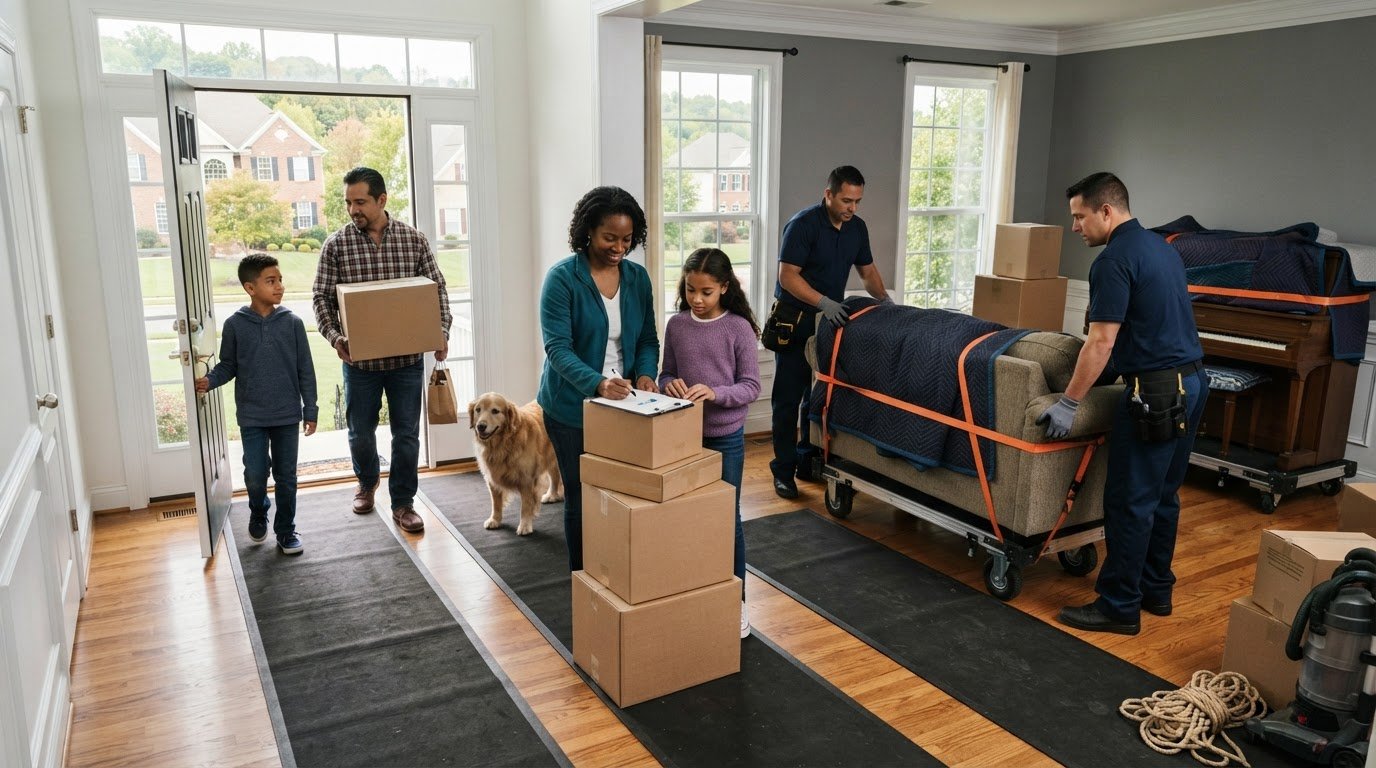
If you choose to tip, one simple option is to give each crew member their share directly. That makes your intention clear and lets you thank each mover personally. You can also give one total amount to the crew lead and say that it’s for the team to share. Either approach is reasonable; no single method is required.
Cash is a direct way to hand over a tip. If you prefer another method, use it when gratuities are accepted through that payment method. Keep the amount clear, especially when giving one shared total, so the crew understands it’s meant for the team.
A smoother job starts before moving day. Share useful details about the item and the route in advance, such as its size, stairs, narrow passages, a long path from the driveway, or a shared entrance. Clear information helps the crew prepare for the actual access conditions and makes it easier to discuss the work you’ve arranged. South Riding homes vary, so describe your specific layout rather than assuming the crew knows what the path looks like.
After the move, check the result, thank the team, and decide whether a tip reflects the service you received. If a bulky item or difficult access is making the move feel daunting, get help moving a heavy item in South Riding.
Need Help Moving a Heavy Item in South Riding?
A tip recognizes the crew’s effort, but the right kind of moving help starts with the item and the path it needs to take. A heavy object may call for different planning than ordinary furniture, especially if it’s difficult to maneuver through your home. Heavy Furniture Moving serves South Riding with specialized moving help for pianos, safes, and exercise equipment, plus sofa hoisting when a sofa can’t pass through a standard entryway or elevator.
Match the moving help to the item and access
Think about both the item and its route. A bulky piece may be heavy, awkward to handle, or difficult to move through doorways and hallways. Pianos, safes, and exercise equipment are examples of items that can benefit from specialist handling. Specialized exercise-equipment moving addresses the demands of transporting bulky machines.
Access matters just as much as the object. Tight turns, stairs, narrow openings, and elevators can make a standard carry impractical. Sofa hoisting offers another approach for sofas that won’t fit through standard entryways or elevators. Share the route details so the job can be considered as a whole, rather than judged by weight alone. That context also helps you assess the crew’s effort when deciding whether to leave a tip.
Plan the next step for a South Riding move
Before arranging help, gather a few useful details: what needs moving, where it’s going, and what the access looks like at both ends. Mention stairs, shared entrances, narrow hallways, or a long path from the driveway. Clear information gives the moving team a better picture of the task and helps you focus on the details that matter for your home.
- Item type, such as a piano, safe, sofa, or exercise equipment
- Pickup and destination locations
- Stairs, elevators, tight turns, or narrow doorways along the route
- Any access details that could affect how the item is moved
If your move involves more than one bulky item, movers in Fairfax and Northern Virginia can also help with broader local moving needs. The right service addresses the physical challenge first, while your tip remains a separate, voluntary way to recognize the work. That’s a practical answer to how much to tip movers for heavy items South Riding: decide based on the service you receive and the effort the job requires.
Ready to plan a challenging lift? Explore heavy-item moving help for your South Riding move.
Make Your Next Move Feel More Manageable
Moving a difficult item is easier to plan when you focus on the details you can control: describe the item, explain its route, and make room for a clear conversation about the work. Once the job is complete, let the crew’s effort and service guide any tip you choose to give. There’s no need to make the decision feel complicated or turn it into a measure of the item’s value.
If you’re still considering how much to tip movers for heavy items South Riding, keep your judgment grounded in the actual job and what feels fair to you. A straightforward plan for the move can also ease uncertainty before moving day. Heavy Furniture Moving is veteran-family owned and operated and helps with challenging lifts and bulky-item moves.
Take the next step with a team equipped for demanding moving tasks. Explore heavy-item moving help in South Riding and start planning with confidence.
Frequently Asked Questions
How much should I tip movers for one heavy item?
For a short, focused job, a common U.S. guideline is $20 to $30 per mover. If carrying one item takes longer or involves difficult access, weigh that extra effort rather than the item’s value. Some guidance suggests adding $10 to $20 per mover for particularly heavy or challenging work. Treat these figures as optional reference points, not a required fee or local custom.
Should I tip movers per person or as a percentage?
Either method is optional. A flat amount per mover can be easier to apply to a single-item job because it’s based on the crew size and the work you observed. A percentage is another approach, often used for a larger move with a broader bill. Whichever you choose, calculate from charges you understood and agreed to, not from unexpected amounts.
Is tipping movers required in Virginia?
No. A tip is a voluntary gratuity, not an automatic charge every customer must pay. The same practical approach applies across Heavy Furniture Moving’s service area: South Riding, Fairfax, Woodbridge, Manassas, Manassas Park, Aldie, Ashburn, McLean, Vienna, Reston, Centreville, Chantilly, Clifton, Dumfries, Fairfax Station, Haymarket, and Gainesville. Keep any tip separate from the agreed moving charge.
Do I tip movers more for stairs or a long carry?
You may choose to give more if stairs or a long carry added real work to the job. Consider how far the crew carried the item, how difficult the route was, and how carefully they managed it. A short, clear path may call for a different judgment than several flights of stairs or a long walk from the vehicle. The extra tip is your choice, not an obligation.
Can I tip movers with a credit card?
Credit-card tipping depends on whether the payment process accepts gratuities. Cash is a direct alternative if you want to hand a tip to each crew member. If paying by card, look for a clearly labeled gratuity option on the payment screen or receipt, and make sure the amount is entered as a tip rather than a service charge.
Should I tip movers before or after the job?
Tip after the work is complete. That gives you a chance to see whether the agreed task was finished and decide how the crew handled the item and your home. You can prepare cash beforehand if that’s convenient, then hand it over once you’ve assessed the service. If you’re giving one shared amount, clearly tell the crew lead it’s intended for the team.
What if I am unhappy with the movers’ service?
You’re not obligated to give a tip if the service fell short. First, identify what went wrong, such as poor communication, careless handling, or damage. Calmly explain the concern to the crew lead before the team leaves, and keep a record of any damage you notice. You can decide whether to leave no tip or a smaller one based on the service you received, without feeling pressured.
Frequently Asked Questions
For a short, focused job, a common U.S. guideline is $20 to $30 per mover. If carrying one item takes longer or involves difficult access, weigh that extra effort rather than the item’s value. Some guidance suggests adding $10 to $20 per mover for particularly heavy or challenging work. Treat these figures as optional reference points, not a required fee or local custom.
Either method is optional. A flat amount per mover can be easier to apply to a single-item job because it’s based on the crew size and the work you observed. A percentage is another approach, often used for a larger move with a broader bill. Whichever you choose, calculate from charges you understood and agreed to, not from unexpected amounts.
No. A tip is a voluntary gratuity, not an automatic charge every customer must pay. The same practical approach applies across Heavy Furniture Moving’s service area: South Riding, Fairfax, Woodbridge, Manassas, Manassas Park, Aldie, Ashburn, McLean, Vienna, Reston, Centreville, Chantilly, Clifton, Dumfries, Fairfax Station, Haymarket, and Gainesville. Keep any tip separate from the agreed moving charge.
You may choose to give more if stairs or a long carry added real work to the job. Consider how far the crew carried the item, how difficult the route was, and how carefully they managed it. A short, clear path may call for a different judgment than several flights of stairs or a long walk from the vehicle. The extra tip is your choice, not an obligation.
Credit-card tipping depends on whether the payment process accepts gratuities. Cash is a direct alternative if you want to hand a tip to each crew member. If paying by card, look for a clearly labeled gratuity option on the payment screen or receipt, and make sure the amount is entered as a tip rather than a service charge.
Tip after the work is complete. That gives you a chance to see whether the agreed task was finished and decide how the crew handled the item and your home. You can prepare cash beforehand if that’s convenient, then hand it over once you’ve assessed the service. If you’re giving one shared amount, clearly tell the crew lead it’s intended for the team.
You’re not obligated to give a tip if the service fell short. First, identify what went wrong, such as poor communication, careless handling, or damage. Calmly explain the concern to the crew lead before the team leaves, and keep a record of any damage you notice. You can decide whether to leave no tip or a smaller one based on the service you received, without feeling pressured.