Sofa Hoisting in Dumfries: Straps or Professional Rigging

A sofa can be hoisted through an upper-floor window when it will not fit through a doorway or interior passage. Choosing between sofa-hoisting straps and a professional exterior rigging crew in Dumfries depends on the access route, the sofa’s size and weight, and the available space outside.
It is understandable to wonder whether straps are enough. They can help handle a sofa, but they are only part of the setup. Tight clearances, greater heights, awkward angles, or limited outdoor space call for careful planning and an experienced crew.
This guide explains what affects an upper-floor lift and when professional help makes sense. Learn how windows, balconies, rooftop openings, and outdoor space shape the plan, and how to compare straps with professional rigging without guesswork.
Key Takeaways
- Access, sofa size and weight, lift height, and outdoor working space all shape the hoisting plan.
- Learn when an upper-floor window, balcony, or rooftop opening may provide a route for a sofa that won’t fit inside.
- Understand how straps, scaffolding, cranes, and pulley systems serve different lifting conditions.
- See which details help a professional assess the job and prepare a useful quote.
- Know when professional sofa hoisting can ease the move and help protect the furniture and property.
Assessing access, item weight, height, and logistics
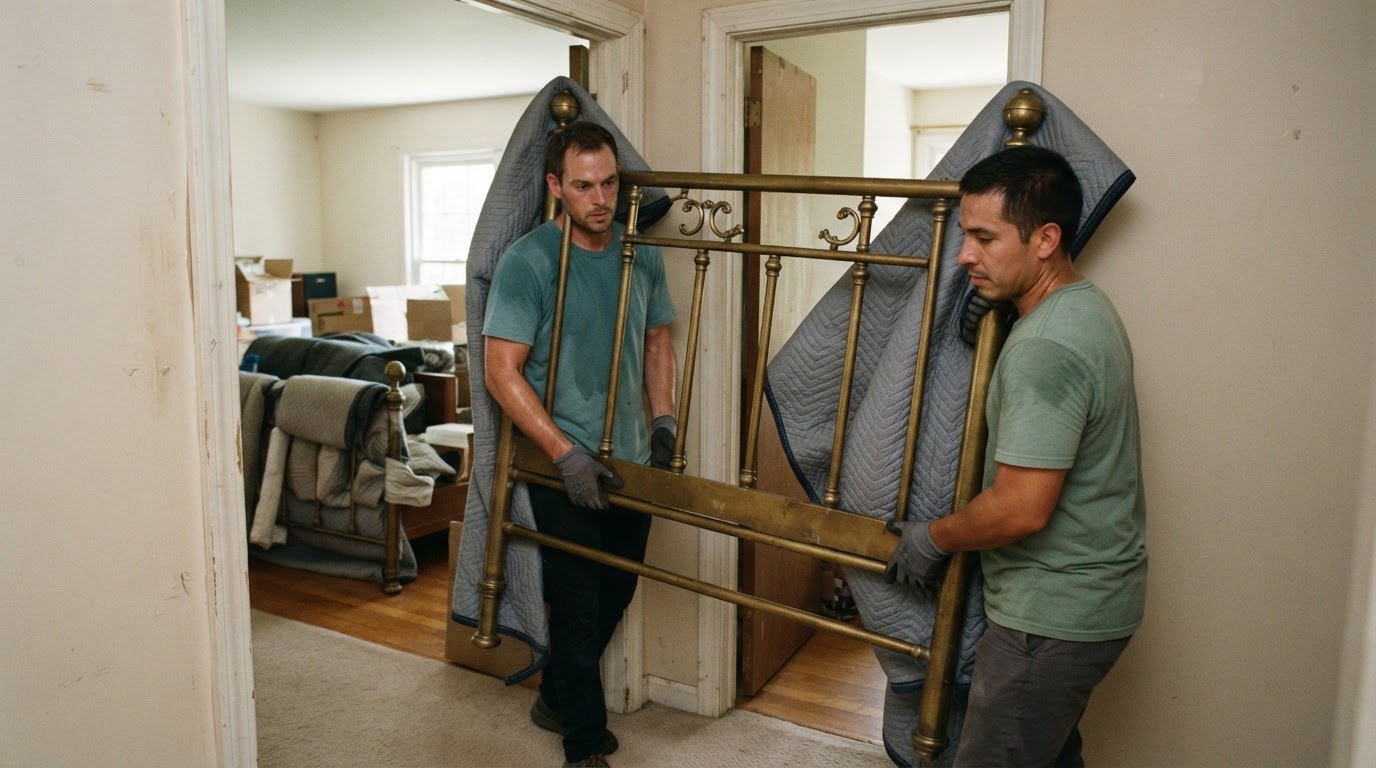
A successful lift starts with assessing the route, not choosing straps. The crew maps the sofa’s path from its room to the exterior opening, then checks the indoor landing area. A doorway that looks wide may still have a tight turn, low ceiling, or nearby stair rail. For example, a sofa may pass through a hall but get stuck at a sharp turn into the stairwell.
Measurements reveal potential pinch points. Compare the sofa’s width, height, and depth with the doorway, corridor, stair landing, and window opening. Also consider the angle needed to turn each corner. A narrow entrance can make carrying the sofa inside impractical, even when its dimensions seem close to the doorway’s. Photos of the route and furniture can help identify obstacles before the move.
Weight and shape matter as much as measurements. A compact sofa with a solid frame can be harder to control than a larger, lighter model. Consider where its weight sits, where it can be gripped, and whether upholstery or projecting feet could catch on a frame. Lift height also affects handling: a low exterior opening has different clearance needs from an upper-floor window with a long drop to the ground.
Disassembly may open up a better route. Check whether legs, feet, or removable sections can come off without damaging the frame or upholstery. A sofa with detachable legs may fit through a doorway that blocks it when fully assembled. Some frames or cushions are fixed, so base the plan on the sofa’s actual construction rather than assuming parts can be removed.
Outdoor space is part of the access plan. Check for overhead obstructions, uneven ground, nearby walls, landscaping, and room to position lifting equipment. If the plan may use a sidewalk, lane, or parking space in Dumfries, determine whether local permission or access arrangements are needed. Using public space can affect equipment placement and how the lift is coordinated.
Before choosing straps or a more involved rigging setup, consider the sofa’s dimensions and weight, opening size, floor height, indoor route, and outdoor clearance together. Each factor affects the lift plan. A clear route and manageable landing area may suit a simpler approach; tight turns, limited ground space, or a heavier sofa call for more planning.
Can you hoist furniture through a window on an upper floor?
Yes. A professional crew can hoist furniture through an upper-floor window when it cannot pass through a doorway or interior route, provided the opening and outdoor space suit the lift.
Using a Furniture Hoist for Sofas
A furniture hoist supports a controlled lift from outside the building to an accessible opening. For a sofa, the crew plans how to position and guide it so it reaches the opening without hitting the frame or nearby surfaces. The clear window opening, sofa shape, lift height, and available outdoor space all affect the method.
A hoist is not a solution for every window. A narrow opening, projecting sill, nearby wall, or limited ground clearance can change the plan. The crew considers the sofa’s orientation during the lift and the room needed to bring it inside. Share clear photos of the sofa and window to help describe the access conditions.
When Furniture Hoisting Is Useful
Hoisting may help when a sofa cannot turn through a stairwell, fit through a narrow entrance, or pass along an interior hallway. It can also suit bulky items such as a wardrobe or large desk when an exterior opening offers a clearer route. The key is whether the item and opening can be aligned for a controlled transfer.
Before choosing this route, assess the item, landing room, and outdoor approach. A balcony or rooftop opening may offer another access point. If the sofa can be carried safely through the interior, an exterior lift may not be necessary. Choose a route that fits the actual layout, not just the item’s appearance.
Protect the sofa and building at both ends of the lift. Plan how to shield upholstery, corners, and exposed frame areas during handling. The window frame, sill, nearby walls, and indoor floor also need attention. A clear landing area helps the crew guide the sofa inside without forcing it against trim or furniture.
Other access details can alter the setup. A window that opens only partway may limit the usable space, while a balcony railing can affect how an item approaches the opening. Trees, roof edges, and exterior fixtures can restrict equipment placement. The crew accounts for these obstacles before moving the sofa, then coordinates the lift and indoor handoff as one operation.
For an upper-floor sofa that cannot clear the interior route, professional sofa hoisting can provide a planned alternative. The decision rests on the opening, the furniture, and the exterior approach.
Hoisting furniture through windows, balconies, or rooftop openings
An exterior lift can use a window, balcony, or rooftop opening when furniture cannot pass through the building’s interior route. The crew plans the approach around the opening, the item’s position, and the clear space outside.
Lifting Furniture to Upper-Floor Openings
For an upper-floor window or balcony, plan how the furniture will travel from the ground to the opening. Account for nearby walls, roof edges, trees, and other obstacles. A clear approach makes it easier to guide the item toward the opening without hitting the building.
The opening also needs a usable landing area. For example, a sofa may reach a second-floor window but still be difficult to bring inside if the room has little space to receive it. Treat the outdoor lift and indoor handoff as one connected move.
Hoisting Sofas Through Windows
A sofa’s shape affects how it approaches a window. The crew considers whether the sofa needs to turn or tilt to align with the opening, and how its arms, back, and legs may affect clearance. A broad sofa may need a different orientation from a narrow loveseat, even when both use the same window.
Before lifting, plan how to protect upholstery and exposed frame areas during handling. The window frame, sill, and nearby indoor surfaces also matter. Once the sofa reaches the opening, a clear path into the room helps guide it away from trim and other furniture.
Hoisting Over Balconies and Rooftop Openings
A balcony can provide an entry point when a window is unsuitable, but its railing and layout affect the approach. The crew plans how the item will clear the balcony edge and reach the landing space. A narrow balcony with outdoor furniture presents different obstacles from an open balcony with a clear interior doorway.
Rooftop openings can offer another route into a building. Their location, surrounding roof features, and connection to the destination room shape the plan. The crew assesses how the furniture will arrive at the opening and move from there to its final room, rather than treating the exterior lift as a separate task.
For each route, coordinate the lift with the receiving space. A window may offer a direct line into a room, while a balcony may require an extra turn after arrival. These differences affect how the item is positioned and guided. Also consider whether people, parked vehicles, or landscaping occupy the ground area needed for the lift.
Clear photos of the sofa, opening, and approach can help explain the layout before the move. Include the relevant window or balcony, the room beyond it, and any visible obstruction. These views give the crew useful context for planning a route through a Dumfries home.

Hoisting equipment professionals use, such as lifting straps, scaffolding, cranes, and pulley systems
The right equipment depends on the sofa, building, and outdoor route. Lifting straps, scaffolding, cranes, and pulley systems each serve different roles. Consider how to control the item, position equipment, and guide the sofa through the opening. In Dumfries, comparing sofa-hoisting straps with a professional exterior rigging crew means assessing the whole lift, not just the straps.
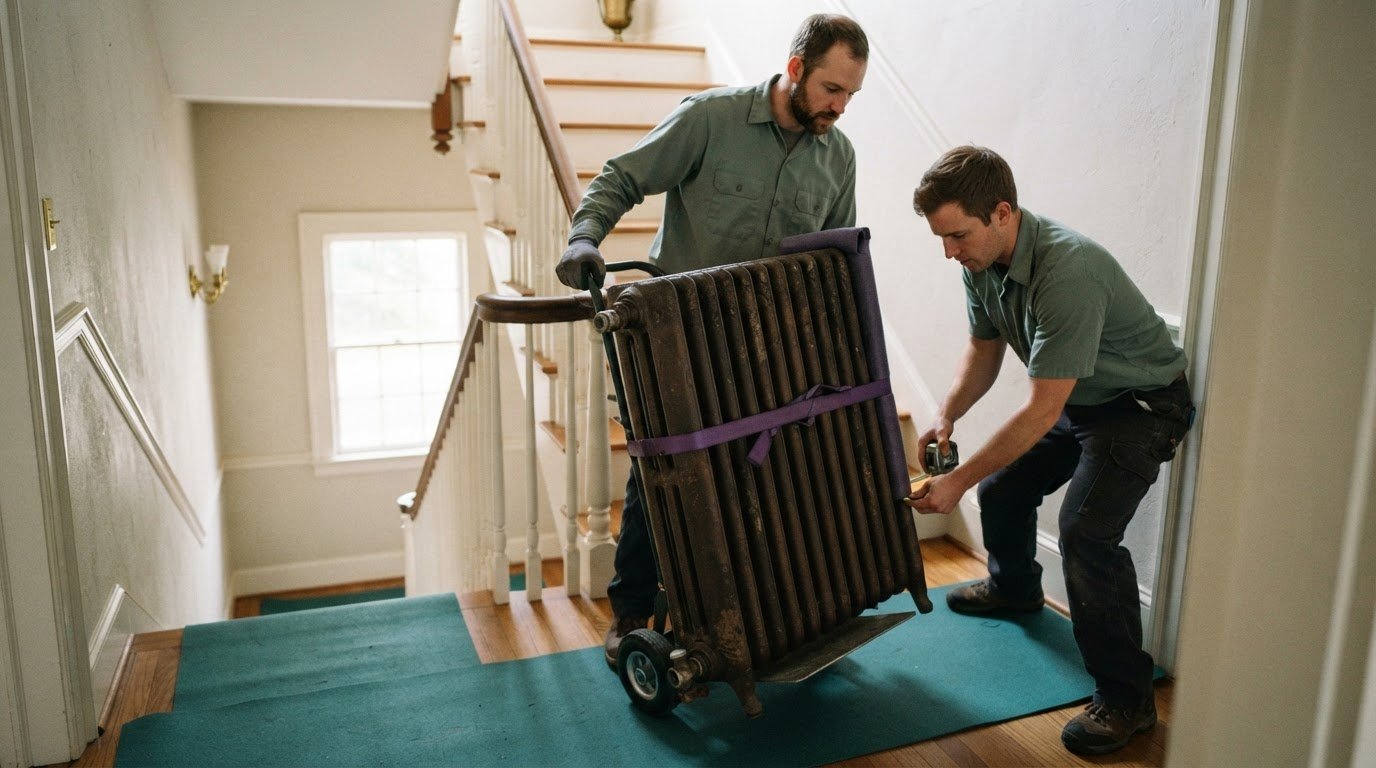
Lifting straps help secure and handle furniture, but they do not provide a complete exterior lifting plan on their own. Consider the sofa’s frame, shape, balance, and the room available for handling. For example, a bulky sofa near a narrow window may need a different setup from a smaller item approaching a clear balcony.
Scaffolding can provide a working platform near an opening when the building and outdoor space allow it. Consider where it can stand and whether it provides access to the window or balcony. A wall, sloping ground, or landscaping may limit placement. For a Dumfries home, the choice between sofa-hoisting straps and a professional exterior rigging crew depends partly on whether a stable working position is available.
A crane may suit a lift that requires equipment positioned outside the building. Available space, overhead obstructions, and the route to the opening all affect the plan. Tree branches or nearby structures can restrict the approach. Also consider how to guide the sofa from the lift into the receiving room without an awkward transfer.
Pulley systems can help move an item along a planned lifting path. Their role depends on where the system can be supported and how the sofa must travel. A direct path to an upper-floor window differs from one that must clear a balcony edge. Match the setup to the actual route instead of choosing equipment by name alone.
These tools aren’t interchangeable. A strap-based approach may suit a straightforward handling task, while scaffolding, a crane, or pulleys may better fit a more involved exterior route. The crew weighs the sofa’s construction and balance, the opening’s position, lift height, and usable ground space. Each factor affects how the item can be positioned and guided.
Professional rigging brings equipment choices and the indoor handoff into one plan. Consider where the sofa starts, how it approaches the opening, and where it can be set down. A clear balcony landing may allow one setup, while restricted ground space beneath a window may call for another. That is the practical difference between sofa-hoisting straps and professional exterior rigging in Dumfries: the full route shapes the method.
Information needed for a quote
A useful quote starts with the sofa and its full route. Share details about the item, pickup room, destination, and exterior access point. This information helps assess the work, identify obstacles, and plan an appropriate lifting method.
Describe the sofa clearly. Include its style and features that affect handling, such as a recliner mechanism, detachable legs, or chaise section. Measurements of its width, height, and depth help show whether it can pass through the intended opening. If you do not have measurements, photos from several angles can still show its shape and construction.
Explain the indoor route at both ends. Note the floors where the sofa starts and will be placed, along with any narrow doorway, sharp turn, stairwell, or hallway. For example, a clear destination room does not solve a tight turn between the entry and living area. Photos of those points provide useful context.
- The opening: Share whether the planned access point is a window, balcony, or rooftop opening, and show its surrounding frame or railing.
- The exterior approach: Include visible trees, walls, roof edges, landscaping, parked vehicles, or limited ground space.
- The sofa: Provide its approximate dimensions, overall shape, and any removable parts that may affect clearance.
- The destination: Identify the receiving room and any tight turns or furnishings near the landing area.
Photos are most useful when they show the whole route, not just the sofa or window. Capture the room where it sits, the path to the opening, the outdoor approach, and the landing space. A short video can also show a turn or obstruction that a still image misses. Label each image by location so the crew can follow the sequence.
Include any special handling details. A sofa with fragile upholstery, loose components, or a reclining section may need different positioning from a simple fixed frame. Mention whether it is assembled and whether it must pass near delicate trim, glass, or finished flooring. These details help shape the handling plan.
Price depends on the case and is given after a quote request; the main factors include the sofa, route, opening, lift height, and equipment needs. For a more useful assessment, send the available details together rather than describing only the floor level. Request a sofa-hoisting quote with your item and access information.
Heavy Furniture Moving: Sofa Hoisting
Heavy Furniture Moving provides sofa hoisting for furniture that cannot pass through a home’s usual access route. When a sofa needs an exterior lift, the crew assesses the item, opening, and approach to plan the move. This is a practical option when narrow halls, stair turns, or upper-floor access make carrying the sofa inside difficult.
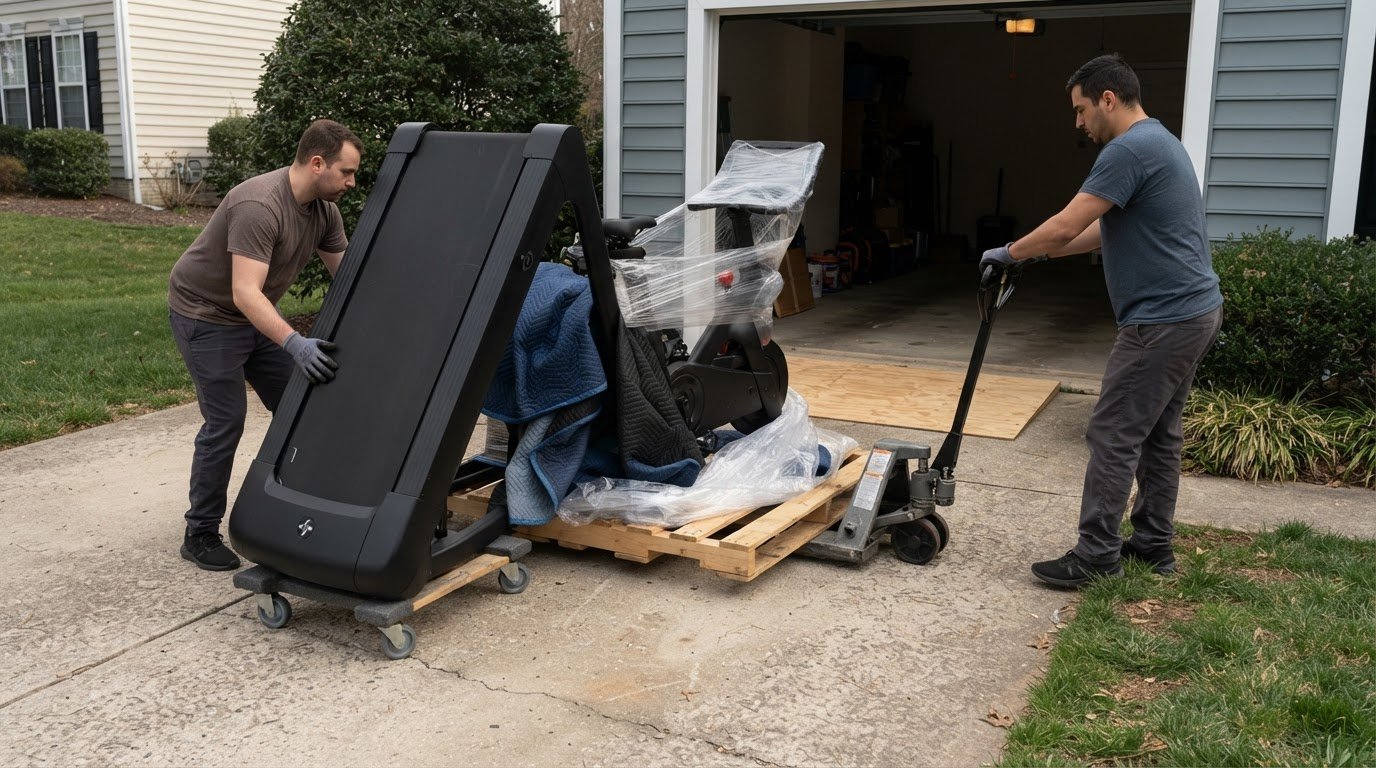
Share the sofa’s dimensions and photos of the route, including the window or balcony and surrounding space. These details help explain the access challenge and inform the lifting plan. For related household moves, Heavy Furniture Moving also offers in-home furniture moving and exercise equipment moving.
Contact Heavy Furniture Moving to discuss your sofa hoisting needs.
Make the Next Move With Confidence
The choice between sofa-hoisting straps and a professional exterior rigging crew in Dumfries is a planning decision, not simply a gear decision. The right approach should suit the home and the move, rather than rely on a tool that may not fit the job. This helps you move forward without having to solve the rigging plan yourself.
Use what you have learned to decide whether the lift calls for experienced hands. If an exterior move is the next step, Heavy Furniture Moving offers sofa hoisting and moving help for other heavy items. Start with the details you have to get the process moving.
Contact Heavy Furniture Moving to discuss your sofa hoisting needs. Take the next step with a clear plan and less uncertainty.
Frequently Asked Questions
Can you hoist to the second floor without closing the street?
Not necessarily. A second-floor lift does not automatically require a street closure. The key question is whether the crew can position equipment and work without using public space or blocking access. A clear private driveway may provide room, while narrow frontage or equipment near a sidewalk can change the setup. Include the curb and approach in the site information, not just the window.
How do you price a sofa hoist?
The quote reflects the job details and is provided upfront before work begins. Heavy Furniture Moving uses hourly labor with a two-hour minimum and flat-rate pricing for most single heavy items. For a sofa, the quote accounts for the handling plan and access conditions rather than relying on a generic estimate. Share sofa details, route photos, and destination information so the quote reflects the move.
Is hoisting safe for my balcony or railing?
Do not treat a balcony or railing as an automatic anchor or support point. Assess the planned route, where rigging can be supported, and whether the balcony provides enough clearance for the sofa and landing. For example, a railing that blocks the sofa’s path can prevent a clear transfer, even if the balcony door is wide. Account for the structure and approach before lifting.
How do professional crews use sofa hoisting straps to move a couch through a window or balcony?
Professional crews use straps to help secure and control a couch during a lift as part of a planned rigging setup. They position the straps to suit the sofa’s construction, coordinate its orientation, and guide it toward the opening. At a balcony, the crew also plans how the couch will clear the railing. The strap arrangement and handling plan should suit the item and its route.
What equipment and crew size may be needed to hoist a sofa with straps?
The setup may include straps, moving blankets, shrink film, and protection for floors or doorways. The exterior lifting system depends on the site. Crew size isn’t fixed: most jobs use two movers, while larger items may need three to four. A listed sectional sofa weighing 200-500 lb is handled by two to three movers. Those figures apply to sectional sofas, not every couch.
What are the risks of DIY sofa hoisting, including injury and property damage?
DIY exterior lifting can put helpers in awkward positions and make a shifting load harder to control. Possible consequences include injury or damage to upholstery, window frames, siding, or floors. For example, a couch that catches on a balcony railing may swing toward the building or shift suddenly. Straps alone cannot solve a poor route or unstable setup; professional planning addresses the lift and landing together.
How much does a professional exterior furniture rigging crew cost in Dumfries, Virginia?
There is no single Dumfries-wide rate for exterior furniture rigging. Heavy Furniture Moving provides an upfront total before work begins. Pricing uses hourly labor with a two-hour minimum, while most single heavy items use flat-rate pricing. The quote reflects the sofa and access conditions. Share the item and route details so the quoted amount matches the work involved.
What factors affect professional sofa hoisting prices, such as floor height and access?
Floor height affects the lift, while the approach can change equipment placement. The quote also reflects the sofa’s dimensions and construction, the opening, the indoor landing path, and whether parts can be removed. Trees, roof edges, tight frontage, and balcony railings may affect access. Together, these details shape the rigging plan and quote for the Dumfries property.
Frequently Asked Questions
Not necessarily. A second-floor lift does not automatically require a street closure. The key question is whether the crew can position equipment and work without using public space or blocking access. A clear private driveway may provide room, while narrow frontage or equipment near a sidewalk can change the setup. Include the curb and approach in the site information, not just the window.
The quote reflects the job details and is provided upfront before work begins. Heavy Furniture Moving uses hourly labor with a two-hour minimum and flat-rate pricing for most single heavy items. For a sofa, the quote accounts for the handling plan and access conditions rather than relying on a generic estimate. Share sofa details, route photos, and destination information so the quote reflects the move.
Do not treat a balcony or railing as an automatic anchor or support point. Assess the planned route, where rigging can be supported, and whether the balcony provides enough clearance for the sofa and landing. For example, a railing that blocks the sofa’s path can prevent a clear transfer, even if the balcony door is wide. Account for the structure and approach before lifting.
Professional crews use straps to help secure and control a couch during a lift as part of a planned rigging setup. They position the straps to suit the sofa’s construction, coordinate its orientation, and guide it toward the opening. At a balcony, the crew also plans how the couch will clear the railing. The strap arrangement and handling plan should suit the item and its route.
The setup may include straps, moving blankets, shrink film, and protection for floors or doorways. The exterior lifting system depends on the site. Crew size isn’t fixed: most jobs use two movers, while larger items may need three to four. A listed sectional sofa weighing 200–500 lb is handled by two to three movers. Those figures apply to sectional sofas, not every couch.
DIY exterior lifting can put helpers in awkward positions and make a shifting load harder to control. Possible consequences include injury or damage to upholstery, window frames, siding, or floors. For example, a couch that catches on a balcony railing may swing toward the building or shift suddenly. Straps alone cannot solve a poor route or unstable setup; professional planning addresses the lift and landing together.
There is no single Dumfries-wide rate for exterior furniture rigging. Heavy Furniture Moving provides an upfront total before work begins. Pricing uses hourly labor with a two-hour minimum, while most single heavy items use flat-rate pricing. The quote reflects the sofa and access conditions. Share the item and route details so the quoted amount matches the work involved.
Floor height affects the lift, while the approach can change equipment placement. The quote also reflects the sofa’s dimensions and construction, the opening, the indoor landing path, and whether parts can be removed. Trees, roof edges, tight frontage, and balcony railings may affect access. Together, these details shape the rigging plan and quote for the Dumfries property.