How to Move a Heavy Brass Bed in Woodbridge Without Bending Posts
Brass bed posts aren’t lifting handles. For moving a heavy solid brass bed frame and headboard without bending posts in Woodbridge, the safer approach is to assess the route, take the frame apart where possible, protect each piece, and carry it by its solid rails rather than its decorative posts. That keeps pressure off the parts most at risk.
If you’re concerned about tight doorways, stairs, or a valuable headboard tipping or striking a wall, that concern is valid. Heavy, awkward bed parts need controlled handling, not forceful turns or dragging.
This guide explains how movers assess the route, protect brass parts, and handle the frame for transport. It also covers factors that affect the move, including whether the bed can be disassembled and how much clearance the route allows, so you can prepare in advance.
Key Takeaways
- Protect brass posts by moving the bed in manageable parts and keeping pressure on solid rails, not decorative pieces.
- See how movers use padding and careful handling to reduce the risk of dents, scratches, and wall damage.
- Learn which doorway, stair, and hallway details shape the moving plan before lifting begins.
- Understand how frame parts and hardware are organized and secured for transport.
- Know why beds that are welded, difficult to disassemble, or especially valuable call for a tailored moving plan.
How professional movers protect frames and headboards during transport
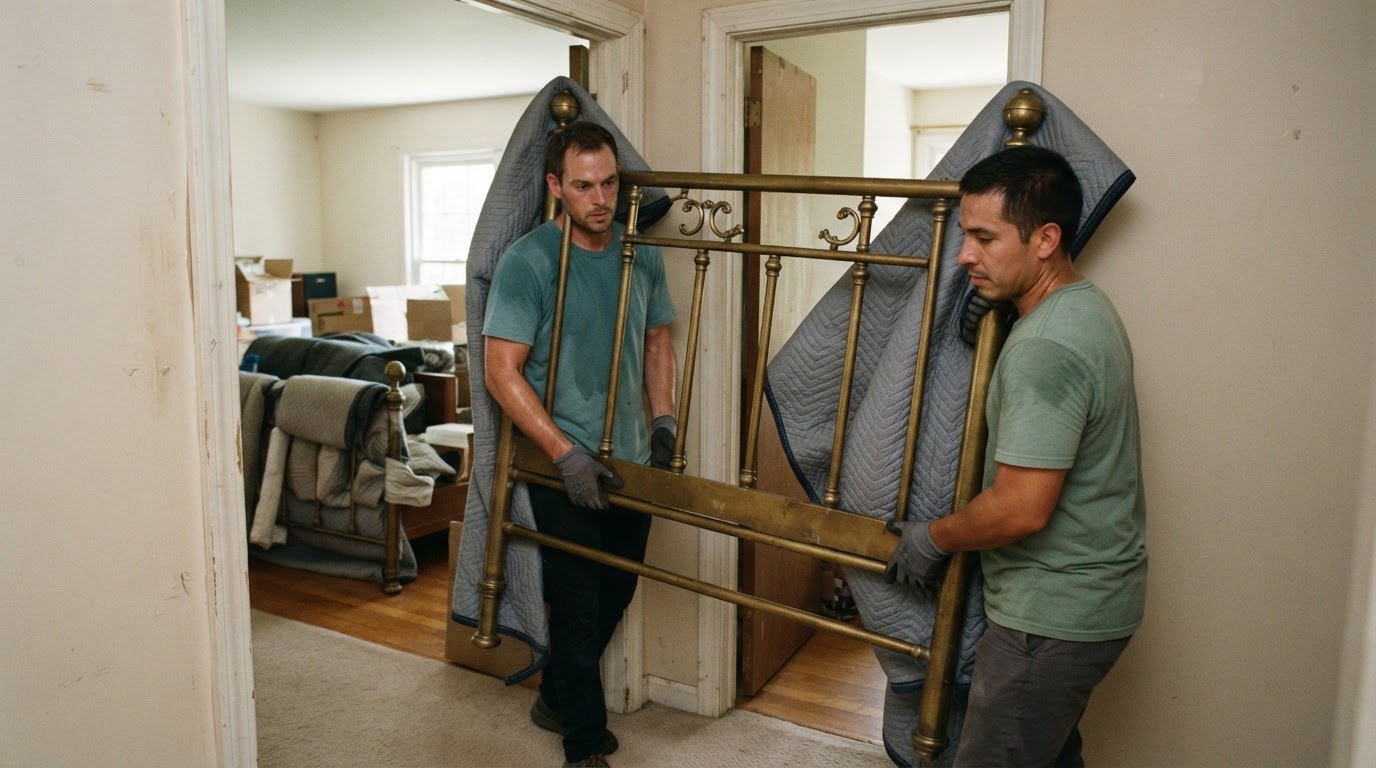
For narrow stairs and doorways in Woodbridge, movers plan the route and guide each bed part through turns without using brass posts as handles. A bulky headboard may be separated from the frame, padded, and carried with a second mover guiding the opposite end.
-
Prepare a Clear, Protected Work Area
Clear the path from the bedroom to the exit before lifting begins. Move rugs and small furniture, open doors fully, and prop them where needed. Protect nearby floors and identify tight turns, low ceilings, or door swings that could catch the headboard. A clear work area gives the carrying team room to pivot without clipping a doorway or skirting board.
-
Navigate Narrow Stairs and Doorways
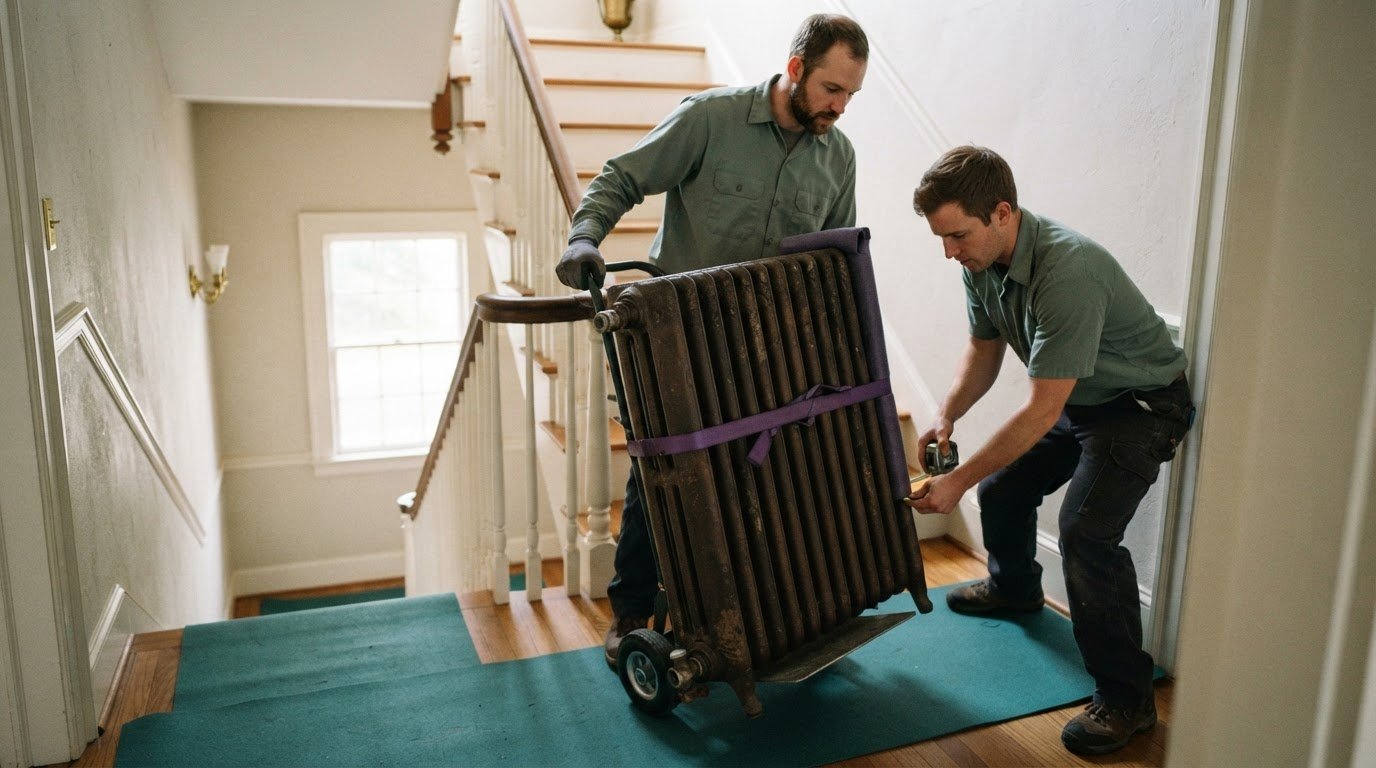
Guide each piece slowly through the tightest point, with one mover controlling the leading end and another watching the trailing end. On stairs, the person below supports the load while the person above steers. This coordinated movement helps keep posts and headboard corners from striking walls. Pause at landings and corners rather than twisting the frame to force a turn.
- Pad vulnerable surfaces before the bed leaves the room. Moving blankets, towels, or bubble wrap can cover sharp edges, legs, and corners, while padding on doorframes and exposed skirting boards helps limit scuffs during close passes. Movers secure blankets with plastic wrap, tape, or rope, keeping the padding in place without putting pressure on slender brass posts. They use painter’s tape where suitable to hold protection without sticky residue.
- Lift from a solid rail or the base, not from a decorative post. If the bed comes apart, protect the headboard and footboard as separate pieces. During transport, large panels can rest against an A-frame to reduce tipping. A second person can guide the far end around doorways and call out clearance before the piece passes a wall or stair rail.
- Protect floors as you move bed parts between rooms. Lift pieces when possible instead of pushing them, and avoid dragging metal legs across hardwood, tile, or carpet. Furniture sliders or towels under the legs can help prevent scratches when a piece must move across the floor. At each stop, lower the frame carefully rather than dropping its feet.
Professional use of furniture dollies and lifting straps
Choose lifting points and handling equipment to suit the bed’s construction, weight, and route.
-
Identify Safe Lifting Points
Inspect the frame joints, rails, and headboard attachments before lifting. Grip the base or lowest solid rail, not the brass posts, decorative finials, or thin crossbars, which may bend under concentrated force. Support a headboard by its sturdy lower structure and balance the opposite end, keeping pressure away from delicate trim and attachment points.
-
Use Dollies and Lifting Straps
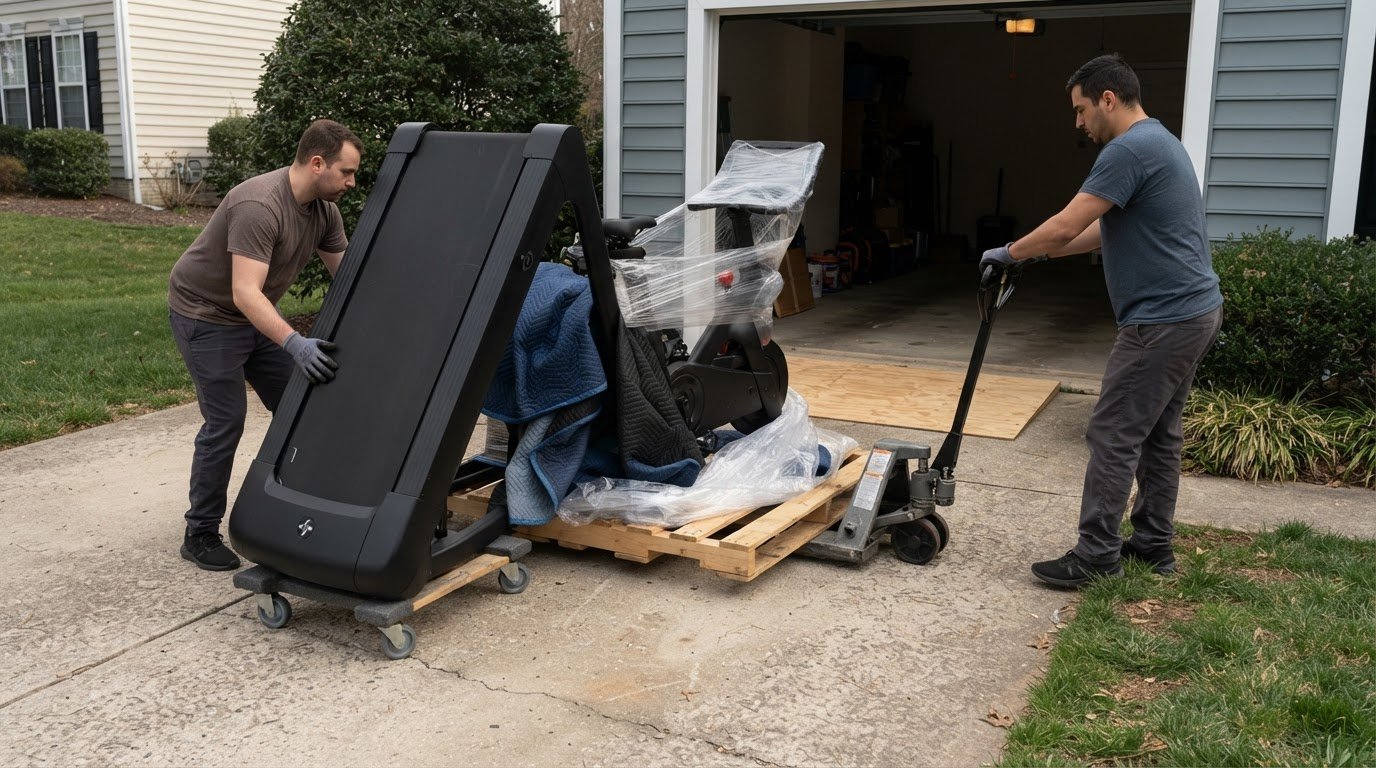
Use a furniture dolly or moving straps when they suit the piece and route. Position support beneath solid sections, then keep the load balanced while guiding it across a clear floor. Straps help coordinate and control the lift, but should not press against fragile posts. A dolly can reduce carrying strain, but it does not replace hands-on guidance around turns.
- Disassemble the bed in a controlled order if its construction allows. Remove the mattress and box spring, then detach the slats, headboard, and footboard as needed. Keep attachment pieces together and place screws or bolts in a bag so they stay with the frame. Labeling the parts and noting where fittings go can make reassembly easier at the destination.
- Assess whether the frame can travel intact before lifting. An assembled bed may be moved if its shape, construction, and route allow controlled handling. A welded frame or one with complex joinery is harder to take apart, so consider the path through both homes and ensure there is enough help to steer and support it.
- Coordinate each lift with clear calls before changing direction. Decide who leads, who supports the far end, and when to pause. Raise the frame together, move slowly, and communicate at corners, stairs, and doorways. If a rail shifts or a post catches, stop and reset your grip instead of twisting the brass to force the piece through.
- Review your insurance policy separately from the moving method. Coverage for antique furniture damage depends on the policy’s moving-damage terms and the circumstances of the loss. A policy and a mover’s handling arrangements are separate considerations, so don’t assume one provides the same protection as the other.
For help handling a heavy bed and other bulky furniture, explore heavy lifting moving service.
How professional movers clear and measure the route
Assess the full path before carrying bed parts, from the bedroom to the exit and into the destination room. To move a heavy solid brass bed frame and headboard without bending posts in Woodbridge, plan around the tightest opening and turn.
- Walk the route from the bed to the exit, then assess the path at the destination. Note doorways, staircases, landings, hallway turns, and vehicle access. A clear bedroom doorway doesn’t solve a tight stair landing or narrow hall. Mapping both homes helps identify pinch points before lifting and shows where bed parts need extra clearance.
- Measure each narrow opening and compare it with the widest piece being carried. Check the clear width and height, including the space available when the door is fully open. Consider the carrying angle too: a long rail may pass lengthwise, while a headboard needs room to pivot. These measurements help determine how to carry the bed and whether to separate its parts.
- Check turning space, not just doorway width. A hallway bend, stair landing, or nearby wall can block a bulky piece even when the opening looks wide enough. Assess where the team can rotate the headboard without hitting a banister or skirting board. For moving a heavy solid brass bed frame and headboard through Woodbridge without bending posts, a tight turn may call for a different carrying angle.
- Clear obstacles along the planned path before moving starts. Movers remove rugs, small furniture, and loose items that could interrupt a controlled carry. They open doors fully and prop them when needed, so nobody must hold a swinging door mid-lift. Clearing the route takes about five minutes, according to Cedora’s guidance, and gives the team room to move pieces without sudden stops.
- Inspect stairs for anything that affects carrying control. Note the direction of each flight, handrails, ceiling height, and landing size. At a turn, plan who leads and where the far end can move safely. These checks help keep long rails level and guide a headboard through the stairwell without twisting the frame or catching a post.
- Plan the order for moving separate pieces through tight spots. Identify whether rails, slats, the headboard, or the footboard should go first. Smaller sections may clear a narrow bedroom doorway, while a wide panel needs a planned pivot. Sequencing prevents pieces from blocking the passage or forcing awkward repositioning halfway through the move.
- Reassess the route if the actual layout changes the plan. Movers compare the measurements with the space as they work and pause before difficult turns. They don’t force a piece through a gap without enough clearance. A new angle or sequence can help protect the brass finish, walls, and frame connections when the route proves tighter than expected.

How professional movers load and secure frame parts in a vehicle
Load each protected bed part so metal edges stay cushioned and hardware remains together. The aim is to limit contact, shifting, and pressure during transport.
- Sort the frame parts before loading. Group the rails, slats, headboard, and footboard so each piece has a designated place. Keep screws and bolts in labeled bags with the bed parts. This prevents small fittings from getting separated and makes it easier to identify which hardware belongs with each piece during reassembly.
- Wrap metal parts before placing them in the vehicle. Moving blankets or bubble wrap can help prevent dents when brass rails or frame sections shift. Movers cover exposed edges and corners, then secure the padding so it stays in position. Painter’s tape can hold protective material without leaving sticky residue on the metal finish.
- Position long rails so they cannot slide during transport. Place each rail in a stable position and secure it before adding other cargo nearby. A loose rail can strike another frame part as the vehicle moves, damaging the finish or bending a connection. Securing long pieces also keeps them from shifting into other items.
- Keep padded parts from rubbing against one another. Arrange wrapped rails and panels so their protected surfaces face away from exposed metal edges. Avoid placing loose hardware between brass pieces, where movement could cause scratches. Support the headboard and footboard securely, with padding between the finish and nearby items.
- Load the bed in an order that protects its most delicate parts. Place heavier, sturdier sections where they can remain stable, then position lighter or more vulnerable pieces without pressing them beneath other cargo. For example, don’t place loose rails on a wrapped brass panel. No part should be free to roll or slide.
- Check every protective wrap and hardware bag before closing the vehicle. Look for exposed corners, loose padding, and bags that could fall between other items. If a blanket has slipped from a rail, reposition it before departure. This final check can catch contact points hidden during loading.
- Recheck the load once the frame parts are secured. Confirm that rails remain fixed and padded sections have not shifted against other metal. Make sure labeled hardware bags stay with the bed parts. A careful final inspection helps limit avoidable movement and keeps the frame organized for unloading and reassembly.
Hiring professional movers for valuable or difficult beds
A valuable brass bed needs a plan based on its construction and the route through both homes. For a welded frame or one with complex joinery, decide whether it can be disassembled safely or needs to move intact.
- Describe the bed’s construction when arranging the move. Explain whether the frame appears welded, has intricate joints, or includes delicate brass posts and fittings. Share clear photos if available. These details help the team understand what needs careful handling and whether disassembly may be difficult.
- Request an estimate for a bed that needs disassembly or may not come apart. The estimate should account for the bed’s construction and the planned handling, not just its size. A welded frame can require a different approach from a frame with removable rails. Explaining the concern about bending posts helps shape the handling plan.
- Include the full route through both homes in the moving discussion. Consider bedroom exits, hallways, stairs, landings, and the destination room. A frame that clears the first doorway may still be difficult to turn at a stair landing. Sharing known access constraints helps the team plan for the actual path.
- Make the bed’s fragile details part of the handling plan. Point out loose joints, ornate finials, existing bends, or visible wear. The team can avoid using decorative posts as lifting points and support the bed by solid rails or the base. Noting existing damage also establishes the frame’s condition before the move.
- Clarify whether the bed needs disassembly and reassembly. If it can be taken apart, keep attachment pieces together and organize the frame sections. If it cannot be disassembled, the team must plan how its full shape will pass through both homes. These require different handling plans.
- Use the planning conversation to resolve practical details before moving day. Share the bed’s approximate dimensions if known, its construction, and any tight access points. Discuss how the plan addresses the headboard, posts, and difficult turns. A useful plan connects those details to the work instead of treating the bed as an ordinary frame.
- Choose professional handling when the frame is valuable, welded, difficult to disassemble, or awkward on the route. These conditions increase the need for coordinated support and a plan covering both homes. Arrange professional heavy-bed moving help for careful handling of a difficult brass frame.
Heavy Furniture Moving
Heavy Furniture Moving helps handle heavy and bulky furniture. Turn to the team when a solid brass bed needs coordinated lifting, protective handling, or a planned route through tight doorways and stairs. The moving plan can account for the bed’s construction, whether its parts can be separated, and access at both homes. That matters when posts are decorative, the headboard is bulky, or the frame is difficult to maneuver. The goal is to move the bed without relying on delicate parts for support. For help with a challenging bed move in Woodbridge, contact Heavy Furniture Moving.
Set Up the Move With Confidence
Choose a moving plan that treats the bed as a valuable piece, not just another bulky item. To move a heavy solid brass bed frame and headboard without bending posts in Woodbridge, explain the bed’s condition and your priorities from the start. Tell the movers what matters most, whether that’s protecting the original finish, keeping parts organized, or avoiding stress on delicate posts.
A clear conversation helps set expectations before the move begins. Share any concerns about the bed’s age, construction, or sentimental value, and describe the outcome you want at the new home. This gives the moving team useful context for planning how to handle it and helps you prepare for the move.
Take the next step when you’re ready to plan the move. Contact Heavy Furniture Moving to discuss your brass bed move. With a clear plan in place, you can look ahead to settling in and enjoying your bed in its new space.
Frequently Asked Questions
Are there specialty furniture movers near Woodbridge who move antique brass beds?
Yes. Heavy Furniture Moving handles residential moves involving heavy and bulky household items, including challenging furniture moves in Woodbridge. For an antique brass bed, describe its construction, condition, and unusual features when arranging the move. A welded frame or loose joint, for example, may need a different handling plan from a bed with removable rails. This helps the team understand the bed’s needs before moving day.
How many professional movers are typically needed to carry a heavy brass bed frame?
The crew size depends on the frame’s weight, dimensions, and route through the home. Most jobs are covered by two movers, while larger items may require three or four. The headboard, stair access, and whether the bed can be separated into manageable parts also affect the plan. The team can assess these details and determine suitable support rather than applying one fixed crew size to every bed.
How do professional movers lift and carry brass bed posts without bending them?
Keep brass posts out of the load path and support the bed by its base or lowest solid rail. Avoid lifting from finials, narrow posts, or decorative crossbars. If a post shifts or a joint flexes during a lift, pause and reposition the support before moving again. This helps prevent force from concentrating on a delicate part.
How do professional movers wrap and protect brass bed rails and posts during a move?
Movers cover brass rails and vulnerable post details with moving blankets, towels, or bubble wrap. They secure the padding with suitable wrap, tape, or rope so it stays in place during handling. Each rail should be protected where it could touch another metal piece, since contact can scratch the finish. Padding also cushions corners during loading and reduces direct contact with nearby surfaces.
What tools and equipment do professional movers use to move a brass bed without damaging floors or walls?
Depending on the piece and route, movers may use furniture dollies or lifting straps to control bulky sections. Sliders or towels under bed legs can help protect floors when a piece must move across them. Moving blankets or padded coverings can cushion exposed edges near walls and doorways. The choice depends on whether the bed is assembled, the available turning space, and the flooring along the route.
What are the risks of bending, loosening, or scratching a brass bed during a move?
Pressure on a slender post can bend it, while rough handling may loosen joints or attachment points. Metal edges rubbing against another rail can scratch the finish, and a loose connection can let parts shift during carrying. Damage may affect the bed’s appearance and how securely it fits together. Inspecting the frame before and after the move helps identify existing wear and any change in its condition.
Frequently Asked Questions
Yes. Heavy Furniture Moving handles residential moves involving heavy and bulky household items, including challenging furniture moves in Woodbridge. For an antique brass bed, describe its construction, condition, and unusual features when arranging the move. A welded frame or loose joint, for example, may need a different handling plan from a bed with removable rails. This helps the team understand the bed’s needs before moving day.
The crew size depends on the frame’s weight, dimensions, and route through the home. Most jobs are covered by two movers, while larger items may require three or four. The headboard, stair access, and whether the bed can be separated into manageable parts also affect the plan. The team can assess these details and determine suitable support rather than applying one fixed crew size to every bed.
Keep brass posts out of the load path and support the bed by its base or lowest solid rail. Avoid lifting from finials, narrow posts, or decorative crossbars. If a post shifts or a joint flexes during a lift, pause and reposition the support before moving again. This helps prevent force from concentrating on a delicate part.
Movers cover brass rails and vulnerable post details with moving blankets, towels, or bubble wrap. They secure the padding with suitable wrap, tape, or rope so it stays in place during handling. Each rail should be protected where it could touch another metal piece, since contact can scratch the finish. Padding also cushions corners during loading and reduces direct contact with nearby surfaces.
Depending on the piece and route, movers may use furniture dollies or lifting straps to control bulky sections. Sliders or towels under bed legs can help protect floors when a piece must move across them. Moving blankets or padded coverings can cushion exposed edges near walls and doorways. The choice depends on whether the bed is assembled, the available turning space, and the flooring along the route.
Pressure on a slender post can bend it, while rough handling may loosen joints or attachment points. Metal edges rubbing against another rail can scratch the finish, and a loose connection can let parts shift during carrying. Damage may affect the bed’s appearance and how securely it fits together. Inspecting the frame before and after the move helps identify existing wear and any change in its condition.