How to Estimate the Cost of Relocating a Heavy Cast Iron Radiator
The radiator’s size is only one factor in the moving estimate. For residential movers relocating a heavy cast iron radiator in Aldie, the cost depends on its dimensions, the route through the home, and whether it can be moved whole or needs to be disassembled.
It’s reasonable to want a clear estimate before planning the move. The most useful assessment considers the radiator’s size and weight, along with the doorways, halls, stairs, and turns along its route. If it won’t fit through a tight space, moving it in sections may be an option, but disassembly adds work and should be part of the plan.
This guide explains what affects a radiator move, which access details matter, and how movers assess whether it can travel intact or in parts. You’ll also learn what to share so the move can be planned around the radiator, the home, and a practical route. With those details in hand, you can better understand the work involved and plan accordingly.
Key Takeaways
- Moving estimates depend on the radiator’s size and weight, the home’s access route, and the handling plan.
- Doorways, stairwells, hallways, and tight turns can determine whether the radiator moves whole or in sections.
- Keeping the radiator intact may simplify handling, while disassembly can help when the full unit cannot pass through the route.
- Share the radiator’s measurements and details about stairs, narrow passages, and turns to help movers plan the job.
- Moving teams handle the transport; disconnecting a radiator from its heating system is a separate consideration.
How professional movers check doorways, stairwells, and hallways
Before carrying a radiator through an Aldie home, movers plan its route. A shift or impact at a tight doorway can damage fittings, cause leaks, or mark floors.
-
Protect Floors and Doorways
Have movers protect the route before the radiator leaves its room. A homeowner recommended 1/8-inch MDF to protect floors during radiator moves. Movers can also use suitable coverings along the path and protect vulnerable doorway edges. They check that coverings stay flat, don’t slide, and won’t create a new obstacle beneath the load.
-
Identify Potential Damage Risks
Point out visible connections and the floor route before the move. A loose fitting or stressed connection can leak as the radiator shifts. Contact with a doorway can crack a fitting, while dragging or dropping the unit can mark flooring. Movers plan turns and hand positions to avoid putting pressure on the connections.
- Measure the radiator and each doorway opening along its route. Movers compare its height, width, and depth with the usable opening, accounting for handles, trim, and other projections that reduce clearance. A radiator that fits straight-on may not clear the frame when tilted.
- Check the stairwell from the bottom landing to the top. Movers assess stair width, ceiling height, railings, and landing space, then consider how the radiator must angle at each turn. A narrow landing can block a long unit even when the stairs seem wide enough, so the team identifies pinch points before carrying begins.
- Trace the full hallway route, including corners and floor transitions. Movers look for furniture, wall projections, narrow passages, and changes in floor level. A clear, straight hallway may still lead to a tight turn, so they plan where to pause, reposition their grip, and avoid striking walls or doorframes.
- Include the radiator’s connections in the clearance assessment. Pipes or fittings may extend beyond the iron sections and catch on trim. Movers note whether the unit can pass without pressure on these parts and consider how its shape affects turning space, especially where a hallway meets a doorway.
- Share access details when planning the move. Point out stairs, narrow doors, hallway turns, delicate flooring, and visible radiator connections. Movers use this information to map the route and choose a handling approach. If a spot seems too tight, they can assess whether another route or moving the unit in parts is more practical.
Moving radiators as whole units
Moving a radiator intact avoids taking its sections apart. Movers plan the route, handling method, and equipment around its size and the access available.
-
Plan the Move and Clear the Pathway
Have the moving team plan the route before handling begins. Clear clutter and obstacles from rooms, hallways, and doorways, and identify places to pause and reposition the load. A direct path reduces unnecessary turns and helps the crew keep the radiator steady from its original location to the vehicle.
- Agree on the moving sequence before lifting the radiator. The team considers where it will be carried, loaded, and secured in transit. Explain any stairs, narrow passages, or tight turns, as these details can affect the route, crew arrangement, and equipment needed.
-
Coordinate Movers, Plumbing, and Equipment
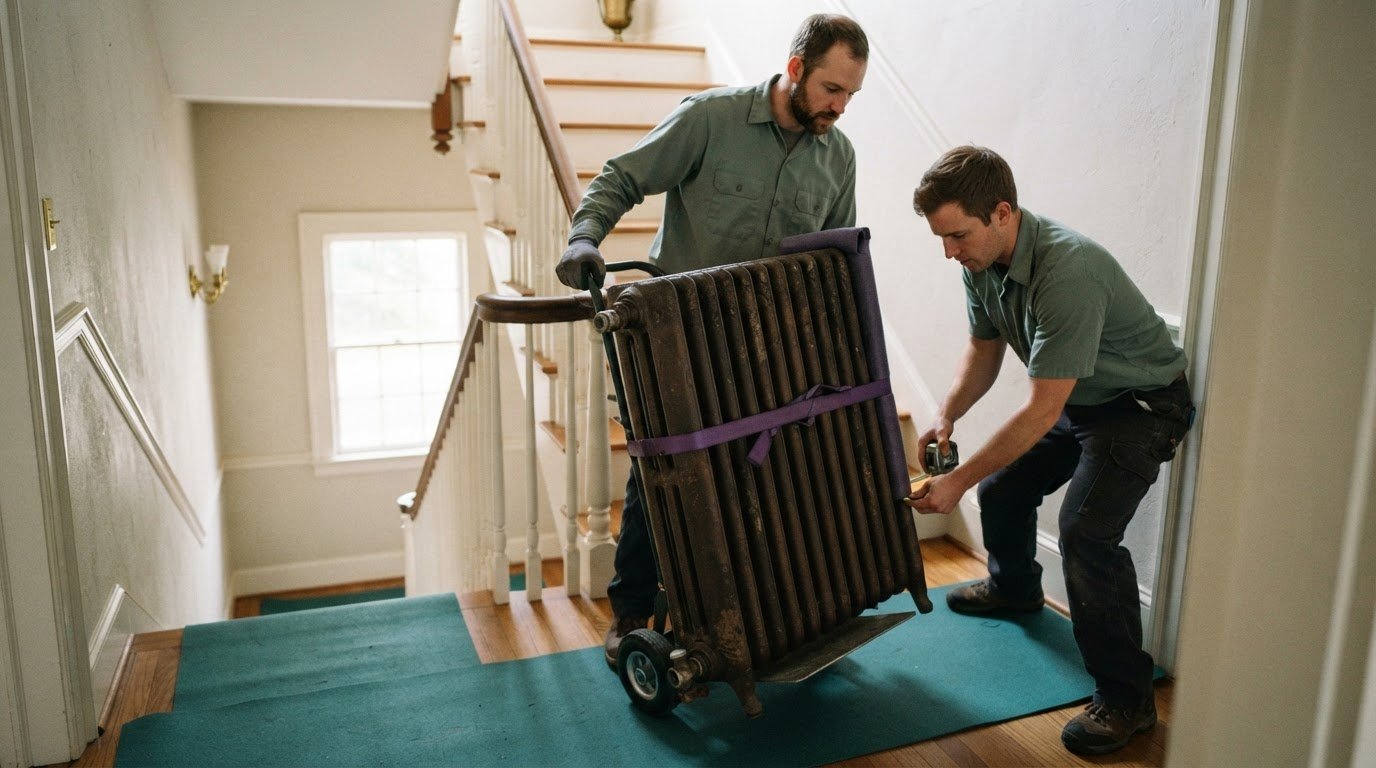
Arrange transport separately from disconnecting the radiator. A plumber handles disconnection from the heating system; movers handle carrying and transport. A two-person carry-strap system has been used to carry radiators from a home. For rolling one, a sturdy furniture dolly should have a load capacity of at least 300 pounds.
- Secure the intact radiator to its furniture dolly with moving straps. Movers can wrap it in blankets or bubble wrap to help prevent scratches. During lifting, the crew should bend its knees, lift with its legs, keep backs straight, and avoid sudden twisting. The equipment and crew must suit the radiator’s weight and the route.
- Ask how the estimate accounts for the work involved. Relevant factors include the radiator’s dimensions and weight, stair access, hallway turns, carrying distance, and whether it can move intact. The handling plan, crew, and equipment also affect the job. Homeowners’ or movers’ insurance doesn’t automatically establish coverage; applicable policy terms determine whether damage is covered.
-
Consider Specialist Help or Replacement
Consider a radiator specialist when the move requires radiator disconnection, technical assessment, or work beyond transport. Replacement is another option if the radiator won’t be kept at the destination. Compare that choice with moving the existing unit, including the access route and handling needs. For transport planning, heavy lifting moving service can help with bulky items.
Keeping the unit whole is also a practical precaution: one forum commenter advised against taking cast-iron radiators apart for a move. This approach treats the radiator as one load rather than making disassembly part of the carrying plan. Clear the route of clutter and obstacles before transport so the intact unit can follow the planned path.
Blankets or bubble wrap can be used to protect a whole cast iron radiator from scratches during a move. For rolling, a homeowner said a four-wheel dolly was used to roll large radiators into a truck. These details can be discussed with the moving team while agreeing on the route and handling method, so the equipment and protection suit the plan for carrying or rolling the whole radiator.
How movers assess radiator size and weight
Movers assess the radiator’s dimensions, section count, and whether water remains inside before planning the lift. These details help match the unit to its route and handling plan.
- Measure the radiator’s height, width, and length. Record each dimension separately, including projecting fittings. One homeowner described a radiator measuring 19 inches high, 13 inches wide, and 5 1/3 feet long. That example shows why length matters alongside height. A long unit may be difficult to turn, even when its height clears a doorway.
- Count the radiator’s sections and note its construction. A reported unit had 21 sections and measured 55 inches long; another had 27 sections and measured 67 inches. These examples help movers understand the scale of the load. Section count alone doesn’t establish weight, so the team also considers the radiator’s dimensions and overall build.
- Use measurements to assess handling space, not to guess a precise weight. A homeowner also asked about a used radiator 26 inches high. Height gives one useful dimension, but length, depth, and section count affect how the item can be gripped and carried. Movers use the full set of details to plan movement through the home.
- Consider the radiator’s construction and weight together. Treat any example as a guide, not a weight estimate for every radiator. A different design or section count changes the load, so movers assess the specific unit before choosing how to handle it.
- Account for any water remaining inside the radiator. A connected unit can retain water, adding to the load and potentially leaking during handling. Arrange to have it drained before transport. Tell the moving team whether it is drained, as this affects the load they must manage and the preparation needed.
- Share the measurements and section count when describing the job. Include the radiator’s approximate dimensions, its visible construction, and whether it still contains water. For example, “27 sections, 67 inches long” gives movers a clearer starting point than “large radiator.” They can then plan equipment, crew handling, and route details around the actual item.
- Use the size and weight assessment to decide whether the unit can travel whole. Compare its dimensions with the route and its estimated load with the handling plan. A radiator around 5 1/3 feet long presents different carrying and turning needs than one measuring 55 inches. The right plan follows the radiator’s actual measurements, not a general assumption about cast iron.

Professional disassembly of radiators for transport
Disassembly may help if a cast iron radiator cannot pass through the planned route. For disposal in Aldie or Loudoun County, follow applicable local waste guidance; moving preparation alone doesn’t determine how an unwanted radiator may be discarded.
- Have the moving team assess whether the radiator needs to be taken apart. A large unit that cannot pass through a doorway or stairway may be separated into manageable parts, but disassembly isn’t automatic. Some movers advise keeping cast iron radiators intact, so consider the unit’s condition, route, and handling requirements before deciding.
- Coordinate heating-system work before anyone handles the radiator. The system should be turned off, and the unit allowed to cool before disconnection. A plumber handles the plumbing work; movers plan transport. Carrying an attached radiator can strain its connections and complicate the move.
- Arrange to have the radiator drained before transport. A connected unit can retain water, adding weight and creating a leak risk as it moves. The person handling the heating system should drain it fully and release remaining water through the bleed valve. Movers can then plan for the prepared load rather than treating a water-filled unit as dry.
- Ask the professionals to label each radiator’s original location and orientation before separating its sections. Clear labels help identify where each unit belongs during reinstallation. For example, labels can distinguish radiators from different rooms and show which way each one faced. Keep the labels with the corresponding parts throughout loading and delivery.
- Plan how separated sections will be protected and tracked. Keep components together and prevent them from striking one another or nearby surfaces. Unlabeled parts can make reassembly harder, while loose sections may shift during handling. The transport plan should account for every component, not just the largest piece.
- Keep transport and disposal decisions separate. If the radiator is moving to another home, plan for safe handling and delivery. If it’s unwanted, follow applicable Aldie or Loudoun County waste guidance rather than assuming a moving plan covers disposal. The next step depends on whether the radiator will be reused, stored, or discarded.
- Confirm the destination and reinstallation plan before choosing disassembly. A radiator that must be reconnected needs its parts and labels preserved for that work. If the move only requires getting it out of a tight space, the team can compare whole-unit handling with section-by-section transport. That assessment helps avoid unnecessary disassembly and keeps the moving plan focused.
For an unwanted radiator, follow applicable Aldie or Loudoun County waste guidance; a moving crew’s handling plan does not determine how it may be discarded. If the radiator will be reused or stored, plan its transport and delivery separately from disposal.
Moving Cast Iron Radiators in Aldie: Movers or Plumbers?
Keep plumbing work separate from the physical move. Movers carry and transport the radiator; a plumber handles its disconnection from the heating system.
- Set the work sequence before moving day. Arrange for the radiator to be disconnected before movers handle it. This separates heating-system work from carrying and transport. A radiator still connected to pipes can’t be treated like a free-standing piece of furniture. Plan reconnection at the destination as separate plumbing work.
- Tell the moving team whether the radiator is disconnected and drained. This information affects how they approach lifting and transport. One homeowner reported that two movers carried radiators out using a two-person carry-strap system. That is one example, not a guarantee that the same crew or method suits every radiator.
- Share the radiator’s dimensions and route details with movers. A homeowner described a unit 5 1/3 feet long, and two movers were unable to move it. That example shows why crew size can’t be chosen by headcount alone. Length, weight, grip points, stairs, and turns all affect handling.
- Ask movers to plan the crew and equipment around the actual load. One homeowner reported using two movers plus a load master to move radiators; another described a two-person carry-strap system. These accounts show that carrying arrangements vary. The team needs to consider the radiator, route, and how to keep the load under control at each stage.
- Leave plumbing tasks to the plumber. Disconnecting or reconnecting pipes is different from carrying a radiator through a home. The plumber handles the heating connections; movers transport the radiator after disconnection. This division clarifies who prepares the unit and who moves it to the vehicle or destination.
- Describe access obstacles when planning the move. Tell movers about stairs, tight turns, narrow halls, and the radiator’s location. A long unit may be difficult to control where a hallway turns onto a landing. The team can use these details to plan the route, handling arrangement, and loading sequence.
- Use the estimate discussion to explain the full job. Include radiator size, access conditions, carry distance, and whether the unit will move intact. These factors shape the work and equipment required. For transport planning, arrange heavy-item moving help for the radiator’s route and handling needs.
Heavy Furniture Moving
Heavy Furniture Moving can help plan the transport of a heavy radiator. Once a plumber has disconnected it, the moving team can assist with physical handling and route planning. Share the radiator’s size and location, along with any stairs or tight turns, so the team can plan for the move.
Heavy Furniture Moving provides residential moving help for bulky items, including its Movers Near Me service. This can suit a radiator move where carrying and transport are the main tasks. Plumbing disconnection and reconnection are separate from the move.
Contact Heavy Furniture Moving to discuss your move.
Set Up the Next Move with Confidence
Your next step is to turn the radiator’s details into a clear moving plan. Choose residential movers to relocate a heavy cast iron radiator in Aldie who can plan around its size, location, and access challenges. Share those details early so the team can understand the physical move and coordinate around any plumbing work.
Heavy Furniture Moving provides residential moving help for bulky items. If you need residential movers to relocate a heavy cast iron radiator in Aldie, explain where it’s located and what the route involves. Moving the radiator is separate from disconnecting or reconnecting its heating system.
Bring your route details and moving needs together, then reach out to discuss your radiator move. A thoughtful plan helps you take the next step with less guesswork and more confidence.
Frequently Asked Questions
How much will my move cost?
The cost depends on the radiator, access, and handling plan. Heavy Furniture Moving provides an upfront quote before work begins. Its pricing uses hourly labor with a 2-hour minimum or flat-rate pricing for most single heavy items. Share the radiator’s dimensions, pickup and delivery details, and any difficult access so the quote can reflect the work involved. The final amount is provided after a quote request.
How do movers and plumbers prepare a cast iron radiator for a household move?
A plumber handles disconnection from the heating system, and movers handle the radiator’s physical transport. For example, if it’s being moved from an upstairs room, plumbing work needs to happen before movers carry it downstairs. Share the destination and sequence with both parties so the plumbing work and moving crew are coordinated. Keep radiator parts and labels together for reinstallation.
How much does it cost to move a heavy cast iron radiator in Northern Virginia?
There isn’t one fixed price for every radiator move in Northern Virginia. The estimate depends on the radiator’s size, access conditions, and handling requirements. Heavy Furniture Moving offers upfront quotes, with hourly labor subject to a 2-hour minimum and flat-rate pricing for most single heavy items. For an Aldie move, include the pickup and delivery details when requesting a quote, so the estimate reflects the actual job.
Can cast iron radiators be moved without draining or disconnecting them?
A connected, water-filled radiator isn’t ready for transport. The heating system needs to be shut off, and a plumber should disconnect the radiator; draining it helps reduce the load and risk of leaks. Movers can then handle the detached unit. This is especially useful if it’s going to another Aldie home, where separate plumbing work will be needed for reconnection.
Frequently Asked Questions
The cost depends on the radiator, access, and handling plan. Heavy Furniture Moving provides an upfront quote before work begins. Its pricing uses hourly labor with a 2-hour minimum or flat-rate pricing for most single heavy items. Share the radiator’s dimensions, pickup and delivery details, and any difficult access so the quote can reflect the work involved. The final amount is provided after a quote request.
A plumber handles disconnection from the heating system, and movers handle the radiator’s physical transport. For example, if it’s being moved from an upstairs room, plumbing work needs to happen before movers carry it downstairs. Share the destination and sequence with both parties so the plumbing work and moving crew are coordinated. Keep radiator parts and labels together for reinstallation.
There isn’t one fixed price for every radiator move in Northern Virginia. The estimate depends on the radiator’s size, access conditions, and handling requirements. Heavy Furniture Moving offers upfront quotes, with hourly labor subject to a 2-hour minimum and flat-rate pricing for most single heavy items. For an Aldie move, include the pickup and delivery details when requesting a quote, so the estimate reflects the actual job.
A connected, water-filled radiator isn’t ready for transport. The heating system needs to be shut off, and a plumber should disconnect the radiator; draining it helps reduce the load and risk of leaks. Movers can then handle the detached unit. This is especially useful if it’s going to another Aldie home, where separate plumbing work will be needed for reconnection.