Sofa Hoisting for Narrow Colonial Stairways in Fairfax
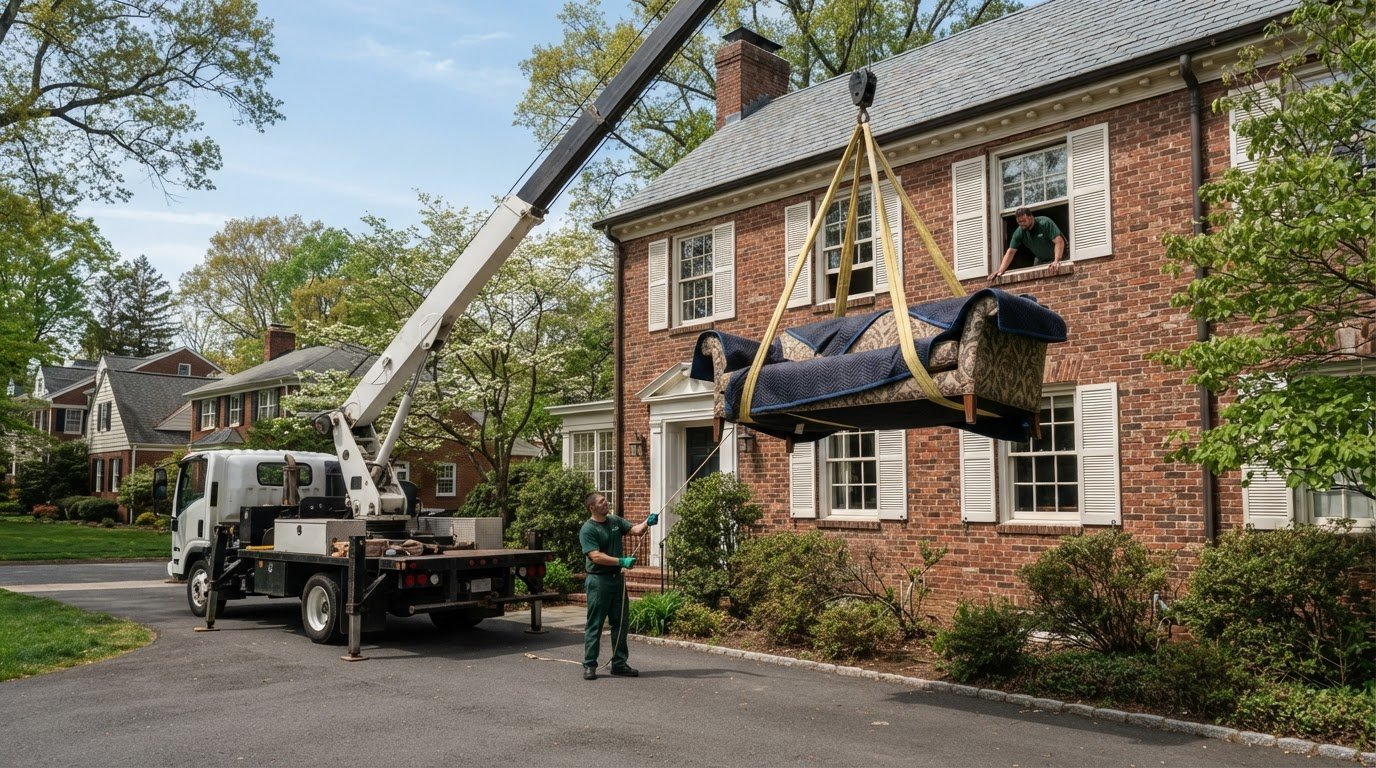
The staircase isn’t always the way in. A sofa hoisting service for narrow colonial-style stairways in Fairfax can move a couch when tight turns or low clearance block the indoor route. The crew raises the sofa from outside and guides it through a suitable opening, with careful handling to protect the furniture and home.
A tight hallway, steep stairs, and an old-house layout can turn a straightforward delivery into a major obstacle. It’s reasonable to worry about a sofa getting stuck or damaging walls and railings. Hoisting offers another route when the couch can’t make the turns inside, with a professional crew handling the move.
Learn how hoisting works, what equipment and coordination it involves, and what can affect whether a sofa can be moved this way. You’ll also see how narrow staircases and tight hallways shape the plan, which details help the crew prepare, and when sofa hoisting is a practical option for a Fairfax home.
Key Takeaways
- Learn when an exterior hoist can provide a better route than a tight staircase or hallway.
- See how professional crews plan the lift, handle the sofa, and protect the path into the home.
- Find out which sofa and window measurements help shape a practical hoisting plan.
- Understand how access, equipment placement, and local parking or permit considerations can affect the setup.
- Discover when Heavy Furniture Moving’s sofa hoisting service can help with a challenging move in Fairfax.
Couch moves through narrow staircases and tight hallways
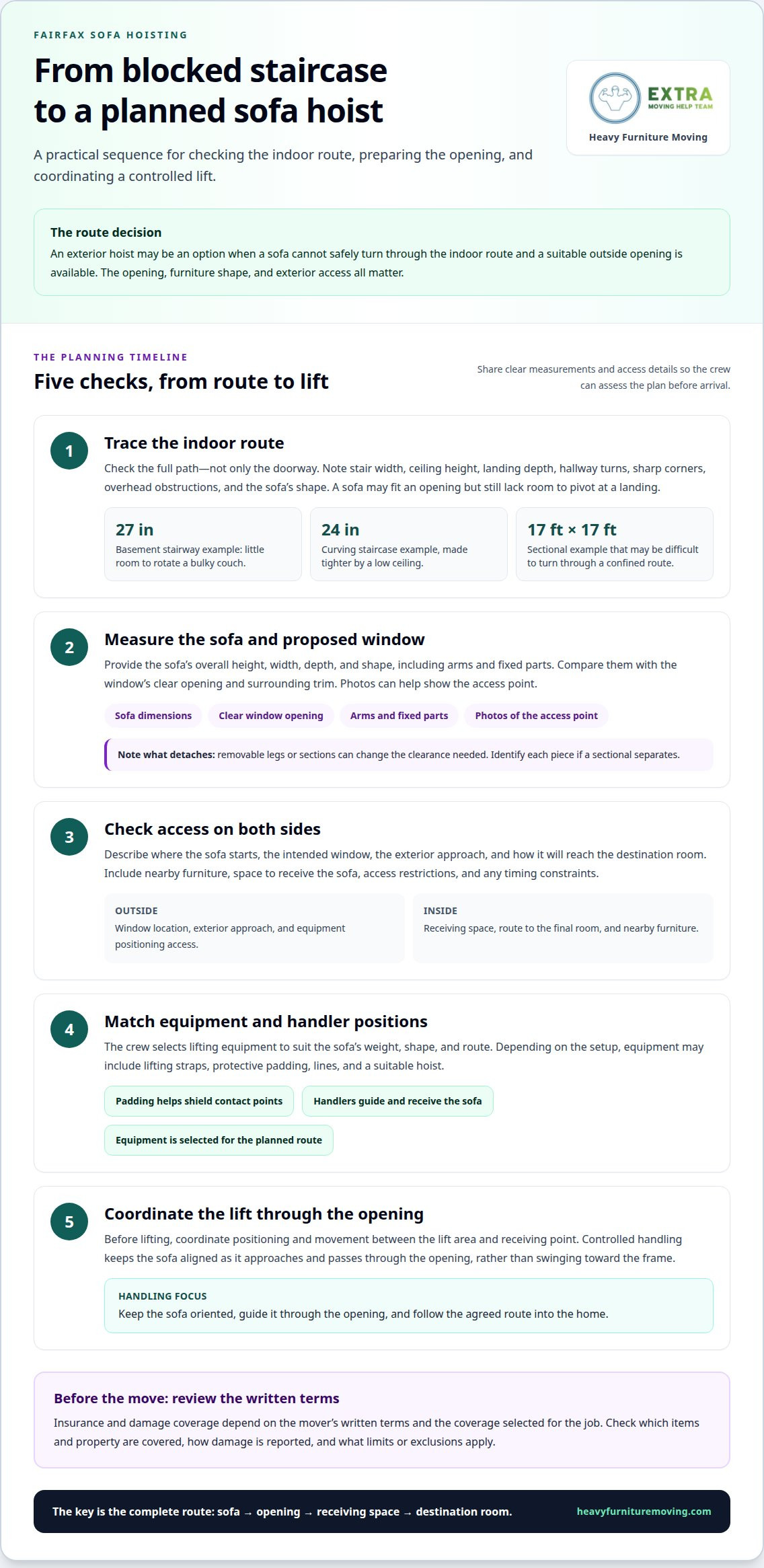
A colonial home’s staircase can turn a routine couch move into a geometry problem. The crew must account for stair width, ceiling height, landing depth, hallway turns, and the sofa’s shape. A 27-inch-wide basement stairway, for example, leaves little room to rotate a bulky couch. A 24-inch-wide curving staircase with a low ceiling creates an even tighter route. These dimensions help explain why the indoor path may not work.
Width alone doesn’t settle the question. A sofa might fit across a stair opening but still lack the clearance to pivot at a landing. Arms, cushions, and a fixed back can limit the angles available. A large sectional measuring 17 feet by 17 feet, for instance, may be difficult to turn through a confined interior route, even when its separate sections can be moved individually. The crew considers the whole route, not just the doorway.
The crew starts by tracing the sofa’s path from its current location to the intended room. They identify narrow points, overhead obstructions, sharp corners, and doorways that affect each turn, then compare them with the sofa’s dimensions and construction. Removable legs or sections may make an indoor route workable; a rigid frame or tight turn may point to an exterior opening instead. The goal is to choose a route without forcing the furniture against walls or railings.
A sofa hoisting service for narrow colonial-style stairways in Fairfax offers an alternative when the indoor route cannot accommodate the couch. The crew assesses whether an exterior opening provides a suitable path and plans how to guide the sofa through it. Window access depends on the opening, the furniture’s shape, and the space outside. Hoisting is more than lifting: the crew must keep the sofa aligned as it approaches and passes through the opening.
Insurance and damage coverage depend on the mover’s written terms and the coverage selected for the job. Before the lift, review which items and property the agreement covers, how damage is reported, and what limits or exclusions apply.
Reviews of furniture hoisting services near Fairfax, Virginia, can help reveal how customers describe communication, careful handling, and problem-solving. Look for comments about comparable challenges, such as narrow stairs, tight turns, or window access, rather than relying on a single general rating.
Useful details to share during planning include:
- The sofa’s overall dimensions and whether its legs or sections detach.
- The narrowest stair, hallway, or landing along the indoor route.
- The intended room and any exterior window being considered.
These details help the crew compare the indoor route with a possible exterior path. In a Fairfax colonial home, the key question is whether the couch can turn safely through each confined space, not just whether it fits through one doorway.
Moving equipment and handling
For sofa hoisting in Fairfax, preparation starts with the sofa, the home’s access points, and the planned lifting route. Share the sofa’s dimensions, the window location, and your preferred timing so the crew can plan the equipment and schedule for the job.
Equipment and Sofa Handling
The crew selects lifting equipment to suit the sofa’s weight, shape, and route. Depending on the setup, this may include lifting straps, protective padding, lines, and a suitable hoist. Padding helps shield contact points, while controlled lifting keeps the sofa oriented as it approaches the opening. The crew also plans where handlers will guide and receive the furniture.
Hoisting a Sofa Through a Window
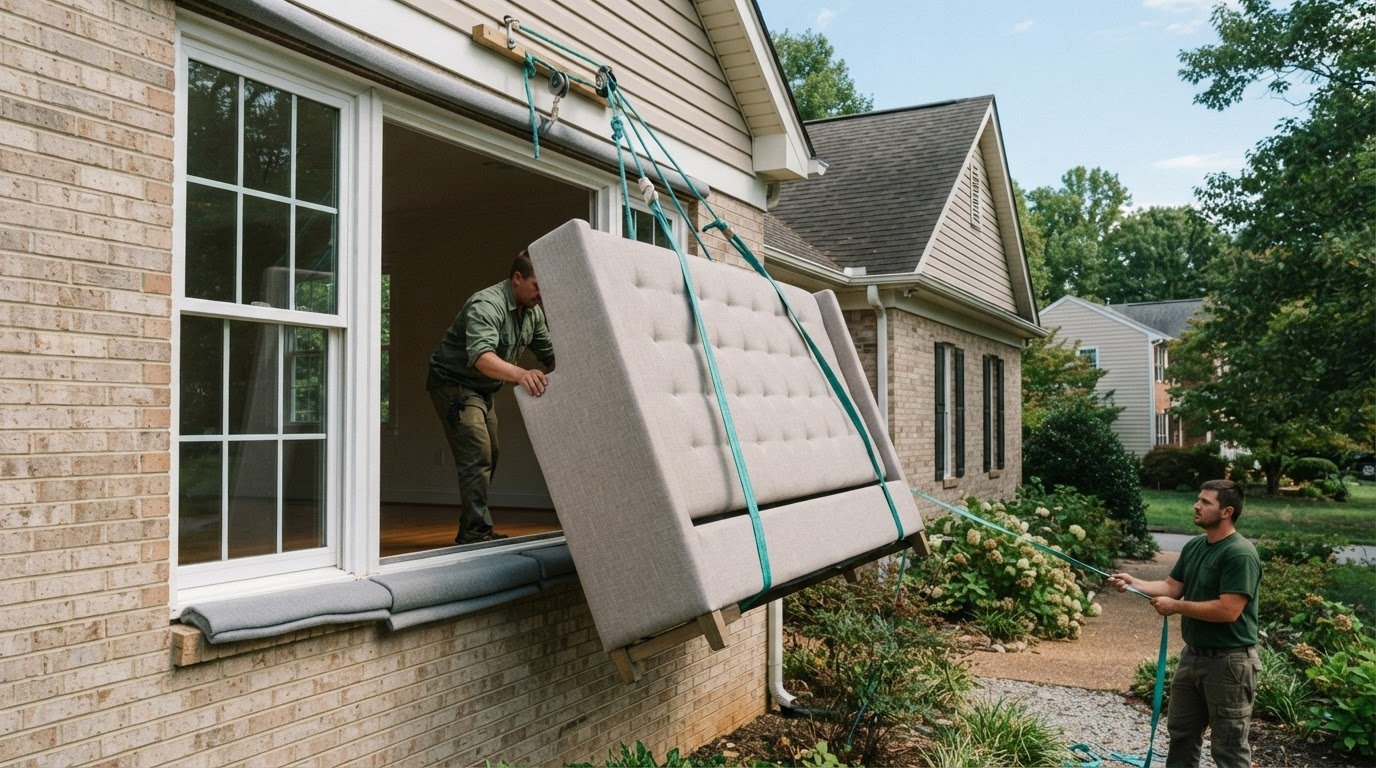
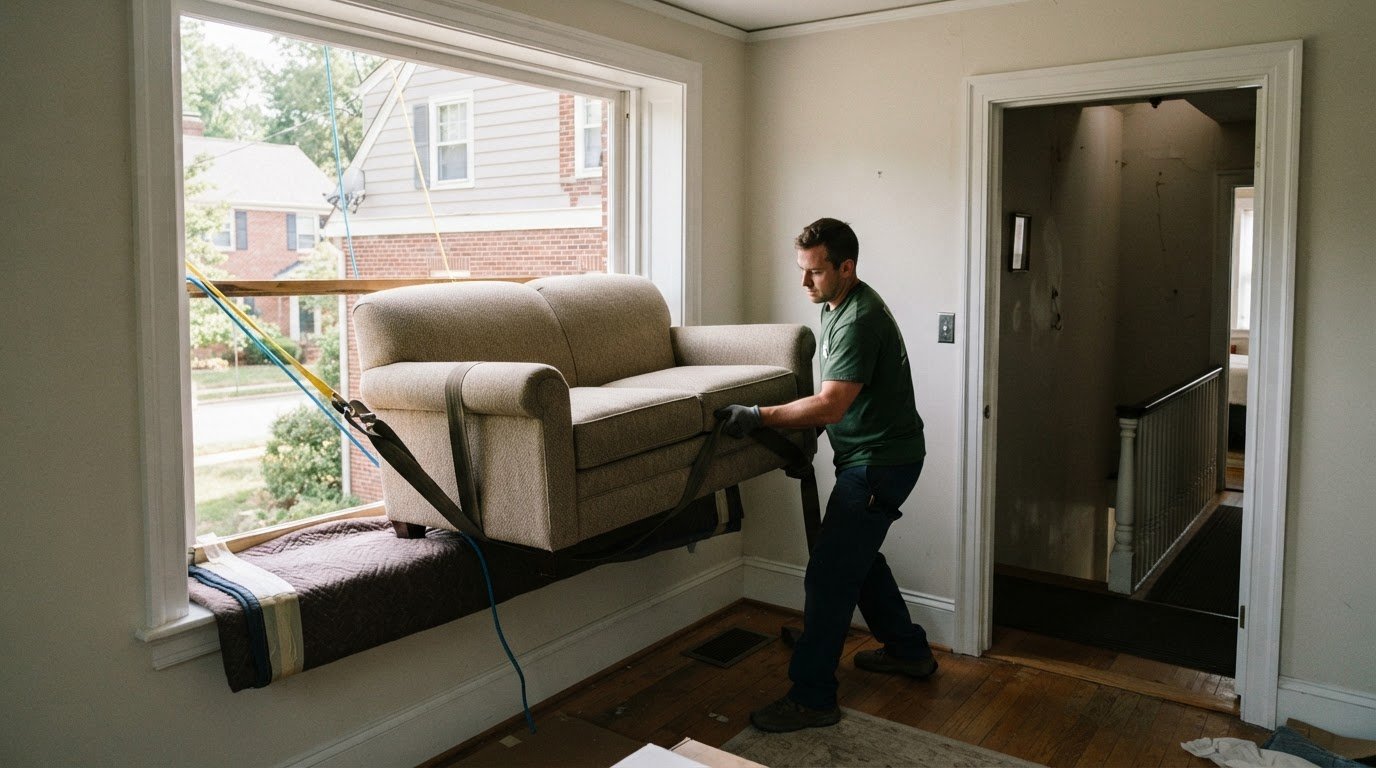
For a Fairfax home with a blocked indoor route, the crew assesses whether a window offers a workable access point. The plan accounts for the opening, the exterior approach, and the interior space needed to receive the sofa. Before lifting, the crew coordinates positioning and movement so the furniture stays aligned with the opening instead of swinging toward the frame.
Measuring Sofas and Windows
Measurements help determine whether the sofa can pass through the proposed opening in a controlled position. The crew considers its height, width, depth, and shape, along with the window’s clear opening and surrounding trim. Share the sofa’s full dimensions, including its arms and fixed parts, as well as window measurements and photos. Note removable legs or sections, since they can change the clearance needed.
Preparation also covers the route on both sides of the window. The crew considers where the sofa will begin, where it will enter, and how it will reach the final room. Clear details about the destination, nearby furniture, and access restrictions help shape the handling plan. If a sectional separates, identify each piece so the crew can plan its movement separately.
Scheduling depends on the practical needs of the lift. The crew needs enough information to assess the access route, choose suitable equipment, and coordinate the work at your home. Share any timing constraints and describe the window’s location, such as a second-floor room facing a driveway. These details help the crew plan access and positioning before arrival.
- Provide sofa dimensions and identify detachable parts.
- Describe the window opening and the space inside and outside it.
- Share the destination room and any access or timing constraints.
On the day, the crew uses the agreed route and coordinates each movement between the lift area and receiving point. A clear plan reduces last-minute repositioning. For a focused discussion of the lift, use sofa hoisting planning as the next step.
A pictured modular sectional is described as movable by one person, but the crew should still assess its dimensions, configuration, and route before deciding how to handle it.
Furniture hoisting companies Fairfax VA sofa through window
For a Fairfax home, lifting a sofa through a window requires a planned route from the lifting position to the destination room. The crew assesses the exterior approach, the opening, and the interior space, and considers how the sofa must be oriented at each stage. A window route works only when the furniture and access point can align safely.
The first step is reviewing access. The crew identifies the specific window, its usable opening, nearby obstructions, and the area where the sofa can be received. A narrow side yard, roof edge, or landscaping may affect equipment placement and the lifting path. Inside, a crowded room may leave too little space to guide the sofa clear of the frame. These details shape the plan before lifting begins.
Next, the crew assesses the sofa. A fixed back, wide arms, or attached chaise can affect how it approaches the opening. Detachable legs or sectional pieces may change its shape, but the handling plan must reflect the furniture as it will actually be lifted. Share the sofa’s full dimensions and construction details. Photos of the sofa, window, and exterior access can make the initial assessment more specific.
On moving day, crew members coordinate their lifting and receiving positions. They guide the sofa rather than letting it swing freely, keeping its edges clear of the window frame and nearby surfaces. The receiving area should be ready so the sofa can move away from the opening. For example, a sofa entering a second-floor room needs a clear path from the window to its final position.
- Identify the exact window and the room where the sofa will enter.
- Share sofa dimensions, including attached arms, backs, or chaise sections.
- Describe exterior obstructions and the indoor route from the window.
- Point out removable parts and explain whether the sofa separates into sections.
These details help the crew decide whether a window route is practical and what handling it requires. A clear description also helps avoid planning around the wrong opening or sofa configuration. In Fairfax, the assessment should connect the furniture, access point, equipment position, and receiving space into one coordinated plan.
Ask the crew to explain the proposed route before the lift. They should be able to identify where the sofa starts, how it approaches the window, and where it goes after entry. Changes, such as a blocked exterior approach or a different destination room, can affect the setup. Careful coordination keeps the plan focused on your home and sofa.
How to measure sofa and windows before furniture hoisting
Before planning a hoist, the crew measures the sofa and proposed window opening together. Sofa length alone cannot establish whether a piece will pass through. The crew records its height, width, depth, arms, back, and any attached chaise. Those details help determine the orientation the sofa needs during the lift.
Next, the crew assesses the window’s usable clearance. They account for the open space, not just the outer frame, and note trim or other features that reduce access. They also consider the room-side area, since the sofa needs space to clear the opening and turn toward its destination. A wide sofa may fit only when tilted, so the planned angle matters.
The crew compares the sofa’s measurements with the opening and checks whether removable parts change the fit. Legs, cushions, or sectional pieces may affect the sofa’s shape, but the plan must reflect its actual configuration. Measure each sectional piece if it separates. A fixed arm or attached chaise remains part of the dimensions if it cannot be removed.
Photos can support the measurement review. Clear views of the sofa, window, surrounding trim, and room interior help the crew understand the route and spot details dimensions alone may miss. Include photos of the outside approach, too. A railing, roofline, or limited space near the window can affect equipment placement.
To help the crew prepare, provide:
- The sofa’s length, height, and depth, including fixed arms or attachments.
- The window’s clear opening and relevant trim or nearby obstructions.
- Whether legs, cushions, or sectional parts detach.
- Photos showing the window from inside and outside, plus the sofa.
- The destination room and the route from the window to that room.
The crew uses these details to determine whether the opening and sofa can align for a controlled transfer. They may reassess the measurements at your home before lifting, especially if the furniture or window differs from the photos. This final review brings the sofa’s shape, opening clearance, and destination route together in a workable plan.
Accurate measurements also help the crew plan for the correct side of a sofa. For example, they need to know whether a chaise is fixed on the left or right when viewed from the front. That orientation can change how the furniture approaches a window and turns inside. Share the exact configuration so the plan reflects the sofa being moved.
A fifteen-seat Simplicity sectional measuring 17 feet by 17 feet was purchased for a basement accessed by a 24-inch-wide curving staircase with a low ceiling. This example underscores why a window measurement should be considered alongside the complete route to the destination. A sectional’s overall dimensions may not describe the space needed to maneuver it through a constrained approach. Confirm which pieces separate and assess the staircase, turns, and ceiling clearance as part of the same review. If the route cannot accommodate the configured piece, discuss options with the movers before scheduling a hoist.
Fairfax VA permits or street parking rules for furniture crane hoisting
A furniture lift in Fairfax needs a setup plan for the equipment, vehicle, and work area. The key distinction is whether the setup uses private property or public space. A driveway may provide room for a truck and lifting equipment, while a curbside setup can affect street parking, sidewalks, or traffic access. These differences shape the planning steps.
There is no single permit answer for every Fairfax address. The relevant jurisdiction and the space used for the lift determine which local rules apply. A home in the City of Fairfax and one in Fairfax County may be subject to different local processes. The crew needs the exact address and proposed equipment position to identify the relevant authority and whether public space is involved.
Street parking matters when a moving vehicle or lifting setup needs curb access. A narrow residential street, parked cars, or a shared driveway can limit positioning space. The plan should identify where the truck can stand, where equipment can be placed, and how people can enter or leave the property during the lift. A private driveway may avoid some curbside conflicts, but access and clearance still matter.
Before scheduling, share the property address, the side of the home where the sofa will enter, and the likely equipment staging area. Mention a shared driveway, restricted curb access, or a sidewalk beside the window. Photos of the street and driveway can reveal practical obstacles an address alone cannot. The crew can then plan around the actual access conditions.
- Identify whether the setup would occupy a driveway, curb, sidewalk, or street.
- Describe nearby parked vehicles, narrow access, and shared entrances.
- Share the address and the proposed lift location for local review.
- Plan a clear route for the sofa from the entry window to its room.
When a setup uses public space, local authorization and parking restrictions become part of the planning process. The responsible local authority depends on the address and the space involved. A street closure, blocked sidewalk, or reserved curb area can raise different issues from a lift contained within a private driveway. Don’t assume ordinary residential parking rules cover equipment placement.
These details help set realistic expectations before moving day. The planned position may change if a driveway is too tight or curb access is occupied. Share changes promptly, especially if the window, parking area, or staging location differs from the original plan. Discuss sofa hoisting access and setup to plan the lift around your Fairfax property.
Heavy Furniture Moving: Sofa Hoisting
Heavy Furniture Moving provides sofa hoisting for Fairfax homes where narrow stairs or tight turns block the indoor route. The service moves a couch through a suitable exterior opening, with handling planned around the sofa, window, and access conditions. Share the furniture’s dimensions and details about your home so the move can be planned around the actual route.
Choose sofa hoisting when the couch cannot pass through the staircase or hallway without forcing it around tight corners. For other furniture moves inside the home, in-home furniture moving can help with placement and handling.
Contact Heavy Furniture Moving to discuss your sofa hoisting needs.
Plan the Next Move With Confidence
The next step is to turn your home’s access details into a clear moving plan. Decide which room the sofa needs to reach, and note any changes to the furniture or property since the initial assessment. A different sofa configuration or blocked access can affect the route, so current details help the crew plan for the actual move.
If you’re considering a sofa hoisting service for narrow colonial-style stairways in Fairfax, share the details needed to plan the job. Heavy Furniture Moving offers sofa hoisting for challenging furniture moves, along with help for other moving needs. Tell us about your sofa, the property, and the outcome you want to plan the next step.
Contact Heavy Furniture Moving to talk through your sofa hoisting needs. Take the next step when you’re ready, and move forward with a plan built around your home.
Frequently Asked Questions
Can a sofa hoisting service in Fairfax, VA, handle narrow colonial stairways?
Yes. Heavy Furniture Moving offers sofa hoisting for couches that cannot pass through standard entryways or elevators. For a colonial home, the crew can assess whether an exterior opening provides a workable route. Share the sofa’s configuration and property details, including the intended entry point. This helps the team understand the move and plan suitable handling for the furniture.
How do furniture hoisting companies protect homes and furniture?
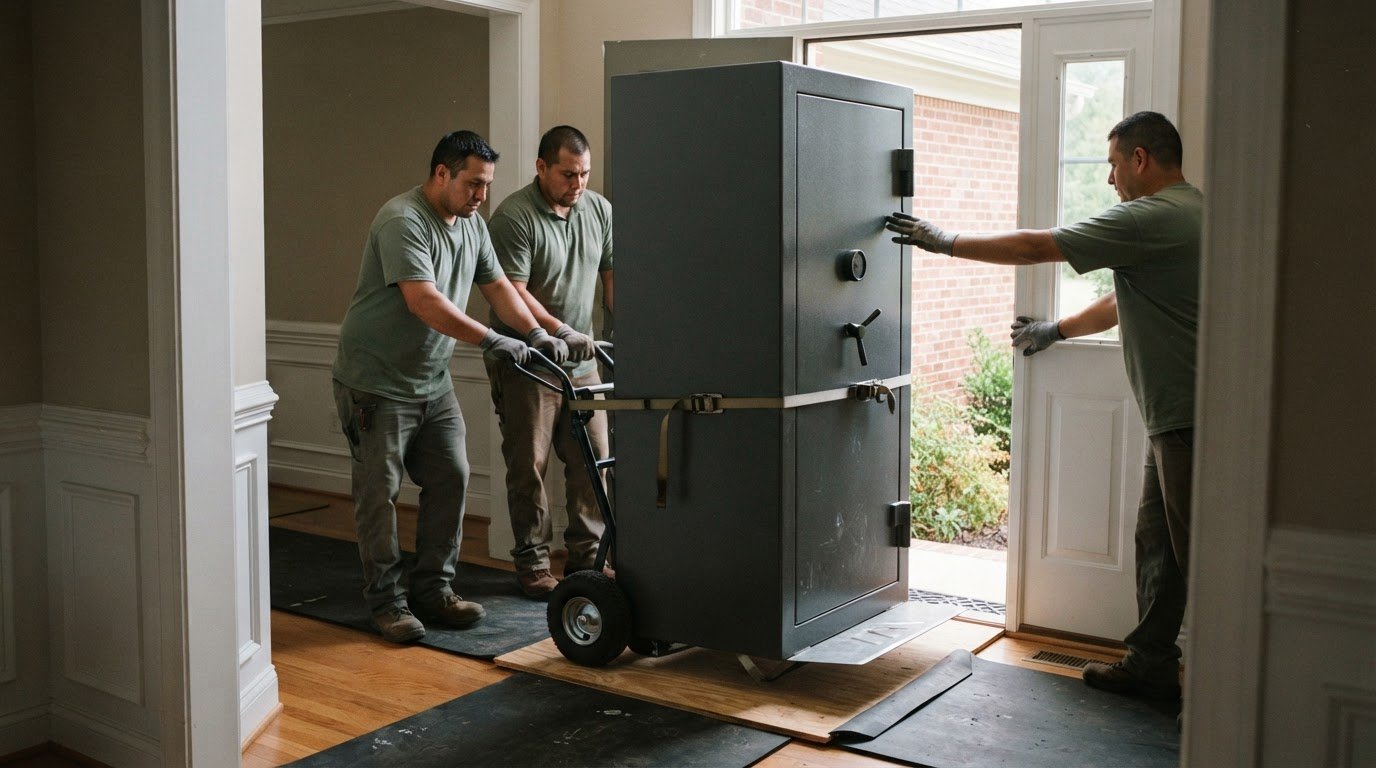
The crew uses furniture blankets and shrink film to protect sofa surfaces and ratchet straps to secure items during handling. Masonite floor protection and door-jamb covers help shield vulnerable areas along the moving path. For example, the crew can protect the floor near the receiving window and cover a doorway leading toward the destination room. These materials support careful handling but do not guarantee damage-free results.
reviews of furniture hoisting services near Fairfax VA
Reviews can show how customers describe communication, careful handling, and problem-solving. Look for comments about narrow stairs, tight turns, or window access rather than relying on a single general rating.
Frequently Asked Questions
Yes. Heavy Furniture Moving offers sofa hoisting for couches that cannot pass through standard entryways or elevators. For a colonial home, the crew can assess whether an exterior opening provides a workable route. Share the sofa’s configuration and property details, including the intended entry point. This helps the team understand the move and plan suitable handling for the furniture.
The crew uses furniture blankets and shrink film to protect sofa surfaces and ratchet straps to secure items during handling. Masonite floor protection and door-jamb covers help shield vulnerable areas along the moving path. For example, the crew can protect the floor near the receiving window and cover a doorway leading toward the destination room. These materials support careful handling but do not guarantee damage-free results.