Residential Safe Removal Costs and Service Area in Ashburn
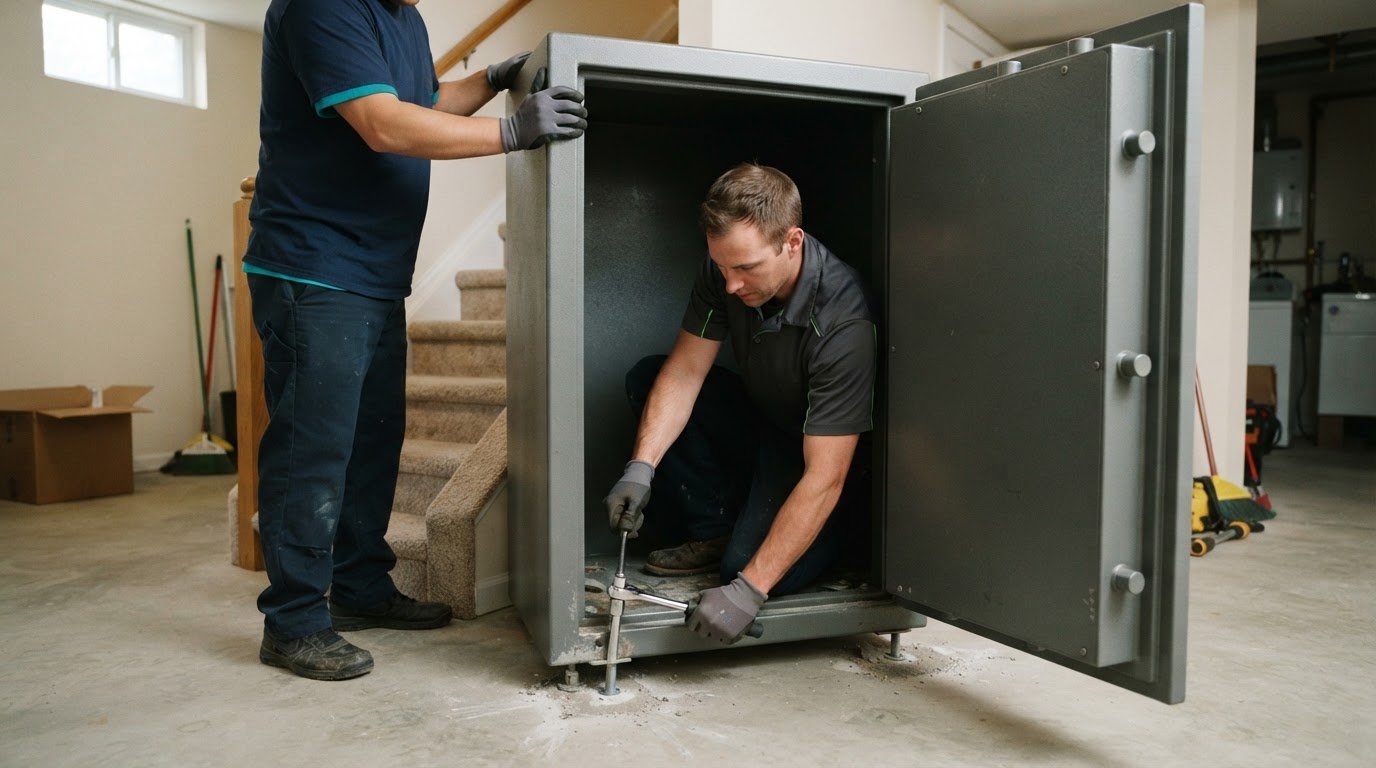
A safe’s weight isn’t the only thing that shapes its removal cost. A residential safe unbolting and removal service in Ashburn is priced according to the safe, how it’s secured, and the access conditions, with the price provided after a quote request. The route from the safe to the exit can matter too, especially when stairs or tight turns complicate the move.
It’s reasonable to want a clear idea of both the cost and whether help reaches your part of Loudoun County before planning a removal. This guide explains the main factors that affect pricing and what to consider about service coverage in Ashburn and the surrounding county. You’ll also get a straightforward picture of how the safe’s placement and removal path shape the job, so you can plan the next step with less guesswork.
Key Takeaways
- Removal pricing depends on the safe and the conditions around the job, including how it’s secured and the route out of the home.
- Stairs, basements, and upper floors can affect the removal plan because access and maneuvering space matter.
- Unbolting a safe requires attention to its floor or wall attachment and the surrounding surface.
- The safe’s weight, access, and removal path help determine the equipment and crew needed.
- Learn how Heavy Furniture Moving can help with heavy-item moving needs in Ashburn and Loudoun County.
Safe removal pricing in Ashburn
A residential safe unbolting and removal service in Ashburn depends on the work involved. The safe, its attachment, and the route through the home all shape the job.
Pricing Estimates
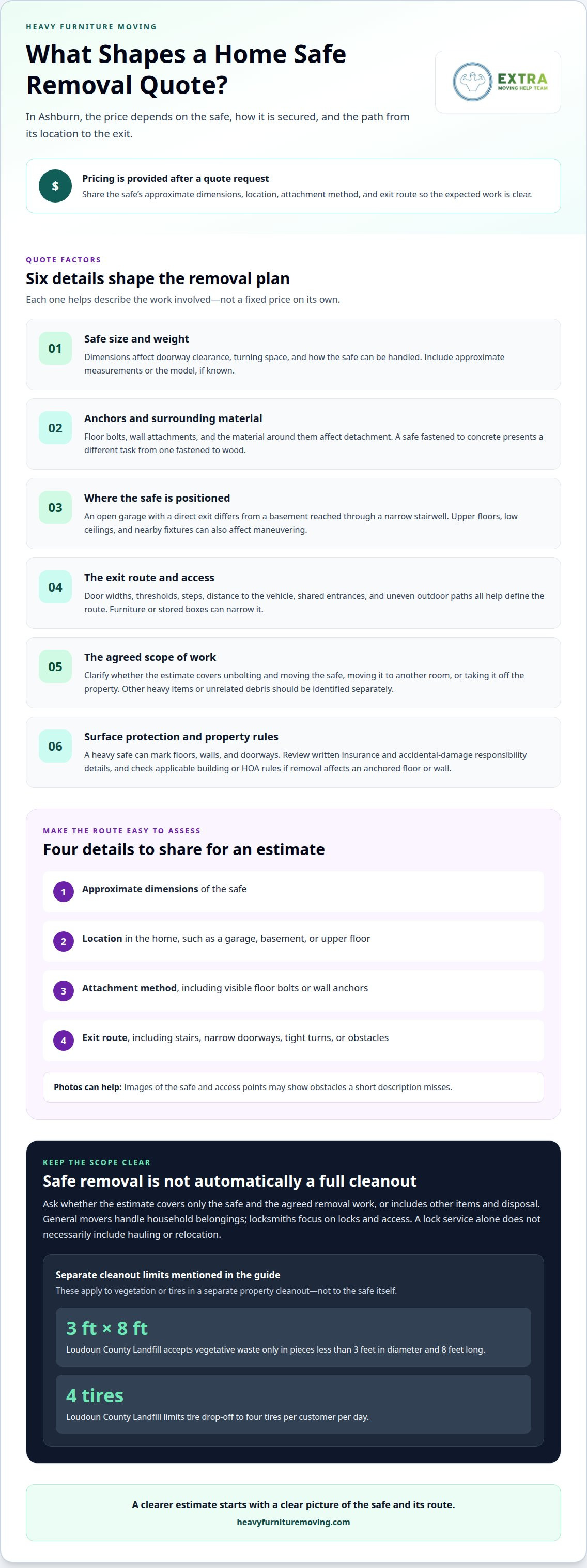
For an estimate, share the safe’s approximate dimensions, location, attachment method, and exit route. Mention stairs, a basement, or tight turns. Ask what the estimate covers, including unbolting and moving the safe, so it is clear how this work differs from general junk removal or a larger household cleanout.
Removal pricing may be based on the volume of items or priced by item. For a residential safe unbolting and removal service in Ashburn, clarify that the estimate covers the safe and the agreed work, not unrelated debris or hauling.
Factors Affecting Removal Costs
Weight, dimensions, anchors, and access all affect the work. A safe in an open garage presents a different task from one in a basement behind furniture. If the job also includes construction debris, yard waste, or donation items, identify them separately so the scope is clear.
General movers handle household belongings, while locksmiths focus on locks and access. Safe removal involves detaching and moving the safe. A lock service alone does not necessarily include hauling or relocation.
Permit and HOA requirements depend on the property and work involved. Review applicable community or building rules, especially if removal affects an anchored floor or wall.
Prepare by clearing the route, moving furniture and loose items, and opening the doors the crew will need to pass through. Point out basement stairs or tight turns. Clearing a landing, for example, helps keep the path open during removal.
A heavy safe can scrape or mark floors, walls, and doorways as it moves. Its route and attachment points shape the handling plan. Before booking, review the written details on insurance coverage and responsibility for accidental damage.
For a useful estimate, provide the safe’s location, approximate size, attachment method, and exit route together. Photos can reveal obstacles that a short description may miss. For residential safe unbolting and removal service in Ashburn, these details clarify the expected work and distinguish it from a broader cleanout or furniture move.
If a property owner is also clearing vegetation or tires while preparing the route or arranging a broader cleanout, identify those materials separately from the safe in the scope discussion. Ask whether the estimate covers only the safe and its removal, or includes handling other items as well. Keeping those tasks distinct can make clear which work is being priced and prevent assumptions that safe removal automatically includes disposal of unrelated materials. If additional items are included, confirm where they will go and whether the receiving site accepts them before treating that work as part of the same job.
Loudoun County Landfill accepts vegetative waste only in pieces less than three feet in diameter and eight feet long, according to Loudoun County Landfill. Loudoun County Landfill limits tire drop-off to four tires per customer per day, according to Loudoun County Landfill. These limits are relevant when vegetation or tires are part of a separate property cleanout, rather than part of the safe itself. Clarify with the service provider whether such materials are included in the agreed work, and make sure the estimate distinguishes their handling from unbolting and moving the safe. This helps keep the removal scope specific and avoids confusing disposal of other materials with the safe removal price.
What factors affect the price of removing a home safe?
The safe is only one part of the job. Its size, attachment, location, and route through the home all shape the work. A clear description helps distinguish a straightforward move from one that requires careful planning around obstacles or restricted access.
Size and weight: A compact safe in an open room differs from a large safe that fills much of a hallway. Dimensions affect turning space, doorway clearance, and how the item can be handled. If you know the model or approximate measurements, include them when describing the removal.
Anchoring and construction: Floor bolts, wall attachments, and the material around each anchor affect how the safe can be detached. A safe secured to concrete presents a different task from one fastened to wood. The attachment method also affects how carefully the crew must work around nearby floors and walls.
Position inside the home: A garage with a direct exit may offer a simpler route than a basement reached through a narrow stairwell. An upper-floor location, sharp turns, low ceilings, and nearby fixtures can all affect the move. A landing without enough room to turn, for example, may call for a different handling plan.
Exit route and access: Door width, thresholds, steps, and the distance to the vehicle all matter. A clear route gives the crew room to maneuver, while stored boxes or furniture can narrow it. Note whether the safe must pass through several rooms, a shared building entrance, or an uneven outdoor path.
Scope of work: Safe removal may involve detaching the safe and moving it out. Separate hauling or disposal arrangements can change the scope. State whether other heavy items, such as exercise equipment, are involved and whether the safe is moving to another room or leaving the property. Clear details prevent confusion between a safe removal and a larger household move.
Useful details to share: Provide the safe’s location, approximate dimensions, visible anchors, and route to the exit. Mention stairs, narrow doorways, and obstacles. Photos of the safe and access points can show details a short description misses, such as a tight turn at the bottom of basement stairs.
For other heavy items, heavy lifting moving service can help with demanding household moves. A precise picture of the safe and its route helps frame the removal work clearly.
Do Ashburn safe movers remove safes from stairs, basements, or upper floors?
Yes, safe removal can involve stairs, basements, and upper floors. The location changes the route and handling plan, but does not automatically rule out the job. A basement safe, for example, needs a clear path up the stairs and through the home’s exit.
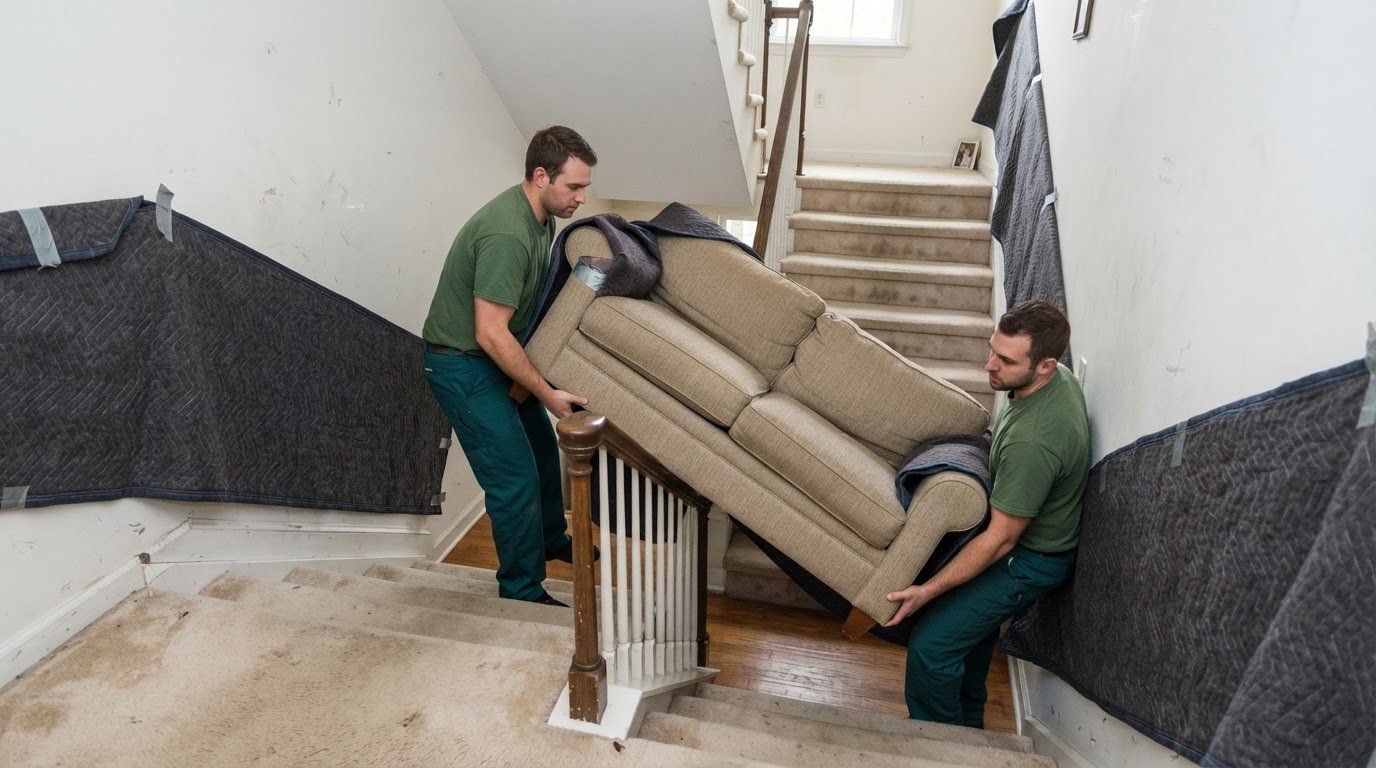
Stairs require close attention to the safe’s dimensions, stair width, and each landing. A straight staircase differs from one with a tight turn or low ceiling. The crew needs to understand these details before moving the safe, because each turn affects how it can pass without striking walls, railings, or doorframes.
A basement removal starts with the route from the safe to the stairs. Low ceilings, narrow doorways, and stored household items can restrict movement. A safe beside a utility area, for example, may require clearing nearby objects and planning around fixed equipment. The route to the exit matters as much as the distance to the door.
Upper-floor removals require attention to hallway width, stair access, and the building layout. An elevator may change the route, but its entrance and interior still need enough room for the safe. In a multi-level home, a narrow landing between the safe and the stairs can be the tightest point, even when the rest of the hallway is open.
Before removal, the crew can assess the route in sequence:
- Locate the safe and identify how it is secured.
- Trace the path through each doorway, landing, and stairwell.
- Note tight turns, low clearances, and fixed obstacles.
- Identify the nearest practical exit from the home.
Reviewing the route helps determine how to maneuver the safe and where extra care is needed. A basement safe near a straight stairway presents different challenges from one behind a narrow doorway and around a sharp turn. Photos of the safe, stairs, and landings can make those details clear.
Prepare the route by moving loose boxes, rugs, and furniture out of the way. Keep stairs and landings clear, and point out fragile wall features or tight corners. Do not try to shift the safe yourself to improve access. Its attachment and position belong in the removal plan.
For an Ashburn home with a safe on an upper floor, in a basement, or near a staircase, share the safe’s location and route details when arranging removal. Include the number of stair flights and any sharp turns, if known. These specifics help the team plan around the home’s layout.
How do professionals unbolt a safe from a floor or wall?
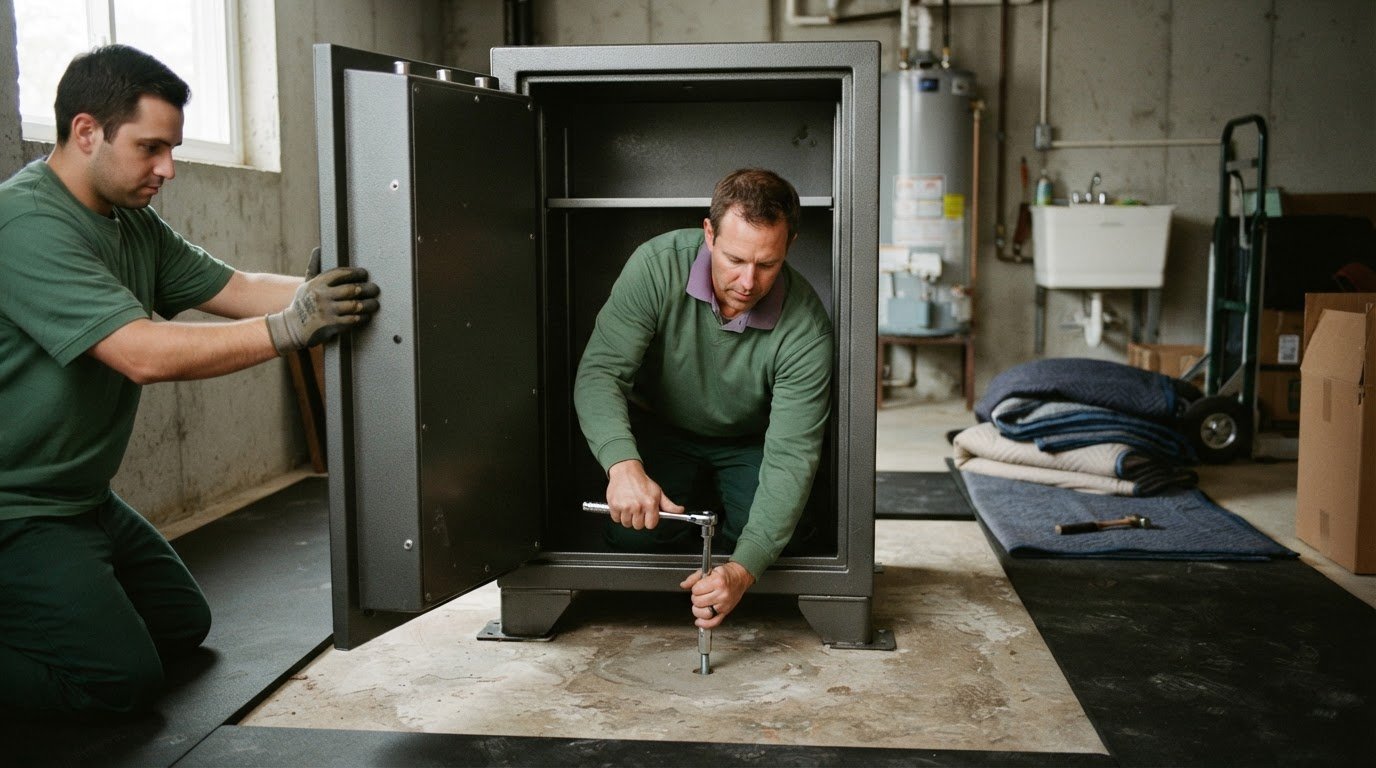
The crew first identifies how the safe is attached and what surrounds it. A floor-mounted safe may have anchors through its base, while a wall-mounted unit may connect through its back. The fasteners and the surface beneath them guide the removal plan.
Next, the crew considers the safe’s position and nearby surfaces. A safe anchored beside a finished cabinet, for example, needs a different approach from one on an exposed concrete floor. The crew also considers whether the detached safe must pass through a doorway or along a hallway.
The removal work follows a controlled sequence:
- Locate visible fasteners and determine how the safe meets the floor or wall.
- Clear nearby objects to make room around the base or mounting side.
- Choose an approach suited to the fasteners and surrounding material.
- Release the attachments while keeping the safe stable.
- Move the detached safe along the planned exit route.
Stable positioning matters throughout the work. A safe can shift when its anchors release, particularly if its weight is unevenly distributed. The crew accounts for this before loosening fasteners. For a floor-mounted safe, attention stays on the base; for a wall-mounted unit, the crew considers support as its connection changes.
The surface affects the work too. Concrete, wood, tile, and finished flooring respond differently to drilling or force around anchors. A fastener passing through tile, for instance, calls for care around the surrounding surface. The aim is to detach the safe without unnecessary damage to the floor, wall, or nearby trim.
After detachment, the safe still needs a clear route out. A unit removed from a basement corner may need to turn through a narrow doorway before reaching the stairs. The crew accounts for that route before beginning, so unbolting is part of the handling plan, not the whole job.
Share clear details about the safe’s location and visible attachment points. Photos of its base, back, and surrounding floor or wall can show access constraints. Mention nearby cabinets, tight corners, or stairs. These details help shape a plan before the safe is moved.
Do not try to pry or pull an anchored safe loose yourself. Doing so can damage the mounting surface or cause the safe to shift unexpectedly. A professional removal plan considers the fasteners, surface, safe position, and exit route together, from the initial assessment through the move.
The company says it donates usable furniture and household items from Loudoun County cleanup jobs to local donation centers. That consideration applies to usable items from cleanup work; it does not change the need to assess a safe’s fasteners, stability, surrounding surface, and exit route before detachment.
What equipment and crew size are needed to remove a heavy residential safe
The safe’s weight, shape, attachment, and exit route determine the handling plan. A safe beside a ground-floor exit presents different demands from one in a basement with stairs. Equipment and crew planning should match the actual route, not assumptions based on the word “safe.”
Equipment may include a heavy-duty moving dolly, secure straps, and protective materials for floors or doorways. The safe’s base and dimensions help determine whether a dolly can fit beneath it. Straps help control movement during handling, while floor coverings can limit scuffs along a hallway. Each has a specific role in the plan.
Stairs or a tight landing can change the equipment approach. A safe that clears a basement doorway, for example, may still be difficult to turn at the stair landing. The crew considers the turn, stair surface, and safe’s balance before moving it. An open route may allow a simpler setup than a narrow passage.
No single crew size suits every residential safe. Weight and shape matter, as do the number of turns, stair access, and available space for positioning. A compact safe on a clear, level route differs from a large unit secured in a basement. Crew planning follows the demands of the specific home.
A practical assessment considers these details together:
- The safe’s approximate dimensions and weight, if available.
- Whether it is anchored to a floor or wall.
- Stairs, landings, thresholds, and narrow doorways along the route.
- Room to position equipment beside the safe and at each turn.
- The destination, such as another room or an exit from the home.
Share these details before scheduling. A photo of the safe beside its doorway can reveal tight clearance; another of the staircase can show turns or landings. Include any known floor or wall attachment. This gives the crew practical information for planning equipment and handling needs without relying on assumptions about the safe’s size.
Clear loose items from the route before work begins. Keep rugs, boxes, and furniture away from the doorway and stair landing. Do not try to lift or tip the safe to make space. If other heavy items, such as exercise equipment, also need moving, include them in your description so the handling plan reflects the full job.
For help planning a demanding household move, explore heavy lifting moving service. The safe’s measurements, anchoring, and route remain the key details for matching the removal setup to your home.
Heavy Furniture Moving
Heavy Furniture Moving helps Ashburn households manage demanding moves involving heavy or bulky belongings. After reviewing safe removal factors, consider the team when you also need help moving household items or planning a larger move. Services include Movers Near Me, Exercise Equipment Moving, Sofa Hoisting, and in-home furniture moving.
Share the safe’s location, its route out, and any other heavy items involved. Details such as basement access or nearby furniture help clarify the work you need. This is useful when safe removal is part of a broader change at home rather than a standalone task.
Contact Heavy Furniture Moving to discuss the moving help you need.
Plan Your Next Move With Confidence
Once you know the access details and the work your home requires, you can plan the next step. A residential safe unbolting and removal service in Ashburn is one part of managing a heavy household move. If other bulky items need attention, consider how they fit into the same moving plan.
Heavy Furniture Moving offers Movers Near Me, Exercise Equipment Moving, and Sofa Hoisting for households handling demanding items. Share the move’s scope and the kind of help you need to start a practical conversation. Whether you’re planning around a safe or coordinating other heavy belongings, a clear starting point can make the work easier to organize.
Contact Heavy Furniture Moving to discuss your moving needs. Take the next step when you’re ready, and get your plan moving.
Frequently Asked Questions
Which safe removal companies serve residential customers in Ashburn, Virginia?
Heavy Furniture Moving serves residential customers in Ashburn with specialized safe moving. The company also serves nearby Northern Virginia communities, including Reston, Fairfax, and Centreville. For an Ashburn home, share the safe’s details and destination when arranging the move, especially if you need it relocated within the property rather than taken away.
What does residential safe unbolting and removal service include?
Safe removal generally involves assessing the safe, detaching it when needed, and moving it from the home. Heavy Furniture Moving provides safe moving, with wrap, blankets, and straps included on every job. Empty the safe before the crew arrives, since safes must be cleared for moving. The work depends on whether the safe is being relocated within the home or removed from the property.
How much does safe removal cost in Ashburn, VA?
Heavy Furniture Moving gives an upfront flat rate for most single heavy items, with the quote based on the job details. Stairs and landings are priced before the crew arrives. Labor-only work uses hourly pricing with a 2-hour minimum. A photo of the safe and its access points can help the team provide a specific quote. No general dollar figure applies to every Ashburn safe removal.
What insurance and damage protections should I confirm before booking safe removal?
Before booking, review the written details on insurance coverage and who is responsible for accidental damage to floors, walls, or doorways.
Frequently Asked Questions
Heavy Furniture Moving serves residential customers in Ashburn with specialized safe moving. The company also serves nearby Northern Virginia communities, including Reston, Fairfax, and Centreville. For an Ashburn home, share the safe’s details and destination when arranging the move, especially if you need it relocated within the property rather than taken away.
Safe removal generally involves assessing the safe, detaching it when needed, and moving it from the home. Heavy Furniture Moving provides safe moving, with wrap, blankets, and straps included on every job. Empty the safe before the crew arrives, since safes must be cleared for moving. The work depends on whether the safe is being relocated within the home or removed from the property.
Heavy Furniture Moving gives an upfront flat rate for most single heavy items, with the quote based on the job details. Stairs and landings are priced before the crew arrives. Labor-only work uses hourly pricing with a 2-hour minimum. A photo of the safe and its access points can help the team provide a specific quote. No general dollar figure applies to every Ashburn safe removal.
Before booking, review the written details on insurance coverage and who is responsible for accidental damage to floors, walls, or doorways.