How to Arrange Emergency Couch Extrication in Chantilly
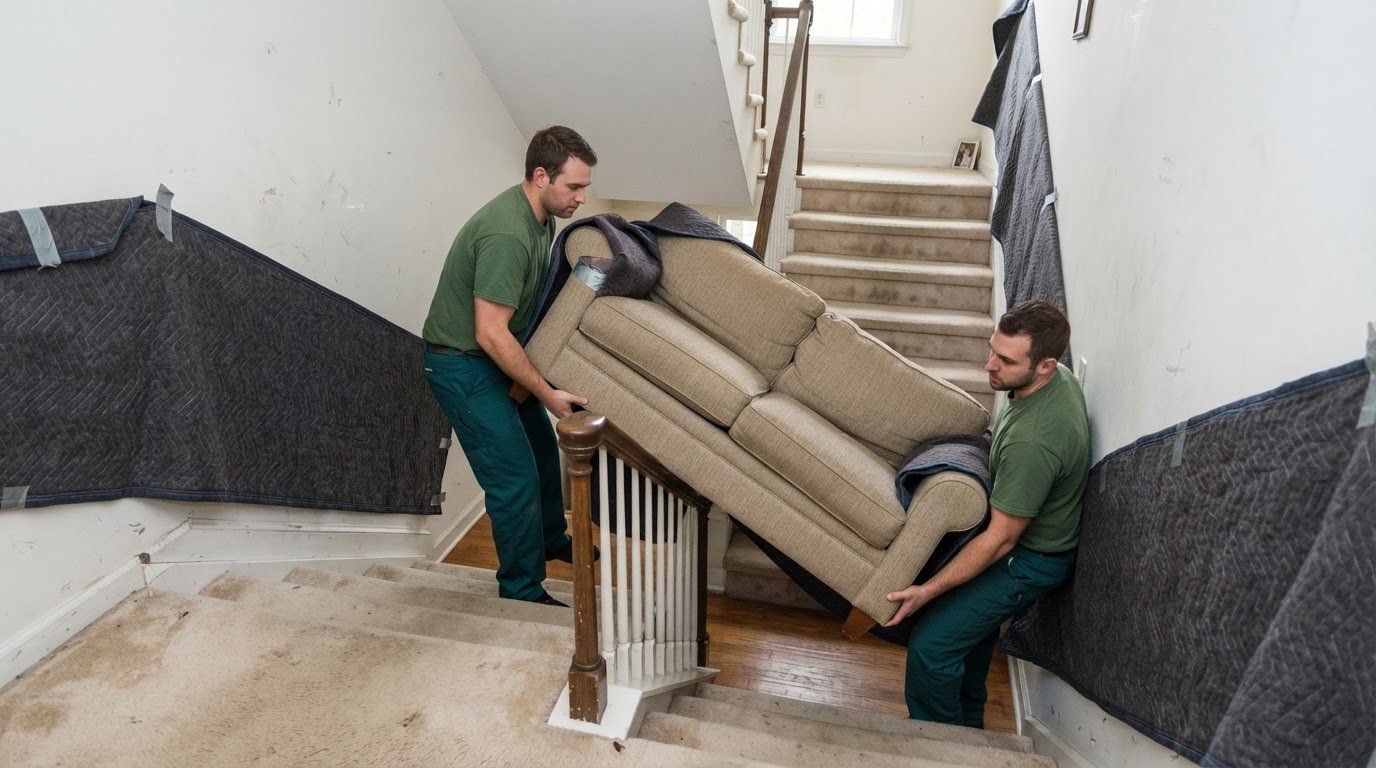
A couch trapped on a tight stairwell needs a careful plan, not a risky shove. For emergency couch extrication from a narrow stairwell in Chantilly, start with an in-person estimate so the team can assess the couch, stairwell, access, and removal route before giving a quote.
When a couch is blocking your space, you need to know the cost and how soon help can arrive. The price depends on the couch and the job, including its size, the stairwell layout, and the handling required. Heavy Furniture Moving gives flat-rate pricing for most single-item moves, with stairs and landings priced before the crew arrives. Same-day appointments may be available when slots are open.
This guide explains what to expect during an in-person assessment, which details affect pricing, how to arrange scheduling, and how arrival windows fit into the process. You’ll have a clearer picture of what happens next and how to prepare for a difficult couch removal.
Key Takeaways
- An in-person estimate helps assess the couch, access route, and handling needs before pricing is set.
- Protecting walls and railings starts with planning the couch’s path through each tight turn and landing.
- Disassembly may help with a difficult fit, while cutting a couch requires careful consideration of the item and removal plan.
- Measure the couch, doorways, stair width, landings, and turning space to understand the main fit challenges.
- Plan apartment-stairwell removal around safe access, shared spaces, and the risk of damage to the building or couch.
In-person estimates and pricing
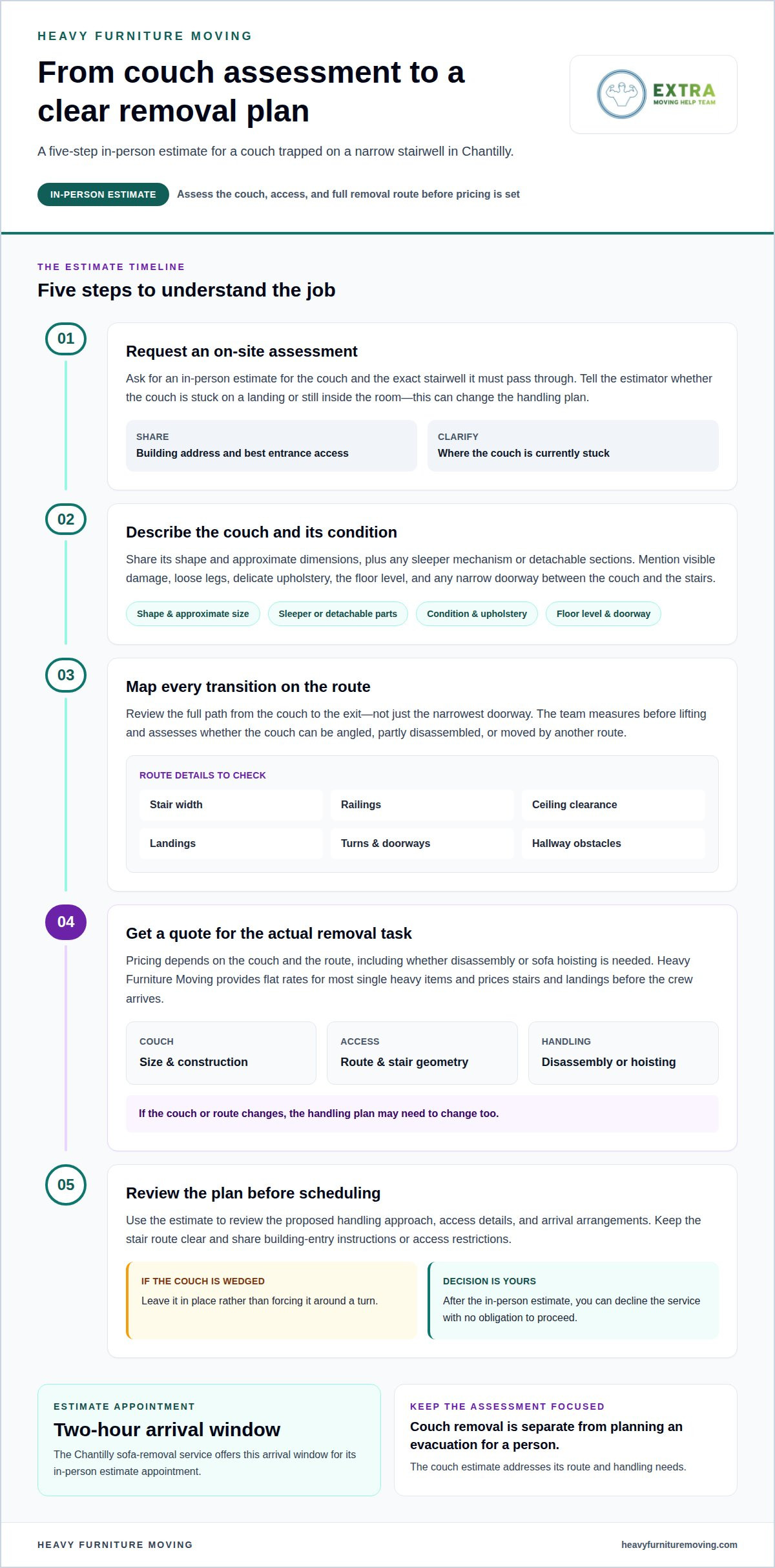
- Request an in-person estimate for the couch and the exact stairwell it must pass through. For emergency couch extrication from a narrow stairwell in Chantilly, an on-site visit lets the estimator see the route, access points, and obstacles directly. Mention whether the couch is stuck on a landing or still inside the room. That difference can change the handling plan. Share the building address and the best way to reach the entrance.
- Describe the couch’s shape and approximate dimensions, and mention whether it has a sleeper mechanism or detachable sections. Point out visible damage, loose legs, or delicate upholstery. Include the floor level and any narrow doorway between the couch and the stairs. A long sectional turning sharply at a landing, for example, poses a different challenge from a compact loveseat. These details help identify the hardest parts of the route.
- Map the full route from the couch to the exit, including stair width, railing, ceiling clearance, landings, turns, and doorways. Identify obstacles such as a wall fixture or tight hallway. Heavy Furniture Moving measures before lifting and can assess whether the couch can be angled, partly disassembled, or moved by another route. Each transition matters, not just the narrowest doorway.
- Ask for a quote based on the actual removal task. Price depends on factors such as couch size and construction, access, stair geometry, and whether disassembly or sofa hoisting is needed. Heavy Furniture Moving provides flat rates for most single heavy items and prices stairs and landings before the crew arrives. If the couch or route changes, the handling plan may need to change too.
- Use the estimate to understand the next step before scheduling. For an emergency couch extrication from a narrow stairwell in Chantilly, review the proposed handling approach, access details, and arrival arrangements. Keep the stair route clear of loose items and share building entry instructions or access restrictions. If the couch is wedged at a landing, leave it in place rather than forcing it around a turn. A planned visit helps assess the real constraints before removal begins.
After the in-person estimate, customers can decline the service, with no obligation to proceed. Take time to consider whether the proposed task and handling approach fit the situation before deciding. If you do proceed, keep the couch-removal decision distinct from any separate evacuation planning for a person. The equipment guidance for a person’s evacuation addresses different needs from the couch assessment.
The page advises using an evacuation sledge when a person’s legs need to be strapped in during evacuation. It also advises considering an evacuation chair when a person needs to remain sitting at a particular angle during evacuation. These recommendations concern a person’s evacuation needs, not the couch’s size, access route, or removal price. Keep those considerations separate when reviewing the estimate, so the couch-removal plan remains focused on the route and handling discussed during the visit. If both situations are relevant, consider each on its own terms before deciding how to proceed.
How can a couch be safely removed from a narrow stairwell without damaging walls or railings?
- Clear and inspect the route before moving. Check the full path from the couch to the exit, including door frames, stair turns, landings, and railing posts. Remove loose rugs, shoes, and small furniture that could shift underfoot. Point out fragile wall fixtures or sharp corners where the couch could scrape. A clear route gives the crew room to pause and adjust instead of forcing the couch forward.
- Protect surfaces at likely contact points. Heavy Furniture Moving includes wrap, blankets, and straps on every job, along with floor and corner protection. Identify exposed wall corners, door frames, and railing sections that may need protection as the couch passes. Keep stair treads clear, since loose padding underfoot can create a separate hazard.
- Choose the couch’s position before lifting. The crew should identify which end leads, where hands can grip securely, and how the couch will rotate at each landing. A sofa that clears a straight stair run may still catch at a tight turn. Test the planned angle carefully, with the couch controlled and supported. If the frame presses against a railing, stop and reset rather than levering it past the obstruction.
- Move in controlled stages. Keep the couch supported as it travels, and pause at landings to check the next turn, overhead clearance, and each handler’s position. One person should guide the route and call changes in direction. Before tilting the couch around a corner, check that its back or arm will not strike the wall. Short, coordinated movements make it easier to stop if clearance changes.
- Stop if the couch binds or the route becomes unsafe. Don’t twist harder, drag upholstery against a wall, or use a railing as a lever. Reassess the angle, remove detachable parts if appropriate, or consider another planned removal method. A stuck couch may need carefully planned couch removal rather than more force. Restart only after the crew has a clear route and a stable grip.
If the stairwell is especially tight, an in-person estimate can help you plan the removal before the couch is moved. The Chantilly sofa-removal service offers a Two-hour arrival window for its in-person estimate appointment, so customers can account for that visit while arranging access to the home. Use the appointment to make the narrow stairwell, any difficult turn, and the condition of nearby walls or railings clear. That gives the estimate visit a practical focus: the route and the points where careful handling will matter. The service also offers same-day appointments, which may be useful when removal needs to be arranged promptly. An appointment does not change the need to stop if the couch binds or a handler cannot maintain a stable grip.
Customers do not need to prepare items before the removal team arrives, according to the service. That can reduce the work required before the crew gets there, while keeping the route and stair treads clear remains important for safe movement. The service says its team sweeps up after removing items. Together, these details can help customers understand what to expect around the removal, while the crew still needs to assess the couch, stairwell, and turns carefully. Keep communication focused on access and any tight points, and let the team proceed in controlled stages rather than trying to force the couch through a narrow space.
Can movers disassemble or cut up a couch for removal from a tight stairwell?
- Check whether the couch has removable parts. A couch may have detachable legs, feet, arms, cushions, or sectional pieces. Removing a part can reduce the space needed to turn it through a doorway or around a landing. Check how each piece attaches before attempting removal. A sectional connector, for example, may let you separate sections without permanently altering the couch.
- Try reversible disassembly before considering damage. Removing legs or separating a sectional can help preserve the couch for continued use. Account for fasteners, fabric, and the frame, not just the couch’s outside dimensions. Keep detached pieces together and protect exposed connection points during handling. If the couch remains too wide, reassess the stair turn and doorway before choosing another method.
- Ask for a clear explanation before any cutting. Cutting can permanently damage upholstery, padding, and the frame, leaving the couch unusable. It may also create loose material that needs careful handling. Before authorizing that approach, clarify which sections would be cut, what damage to expect, and whether the remaining pieces can pass through the stairwell. A couch with sentimental or resale value may call for another route.
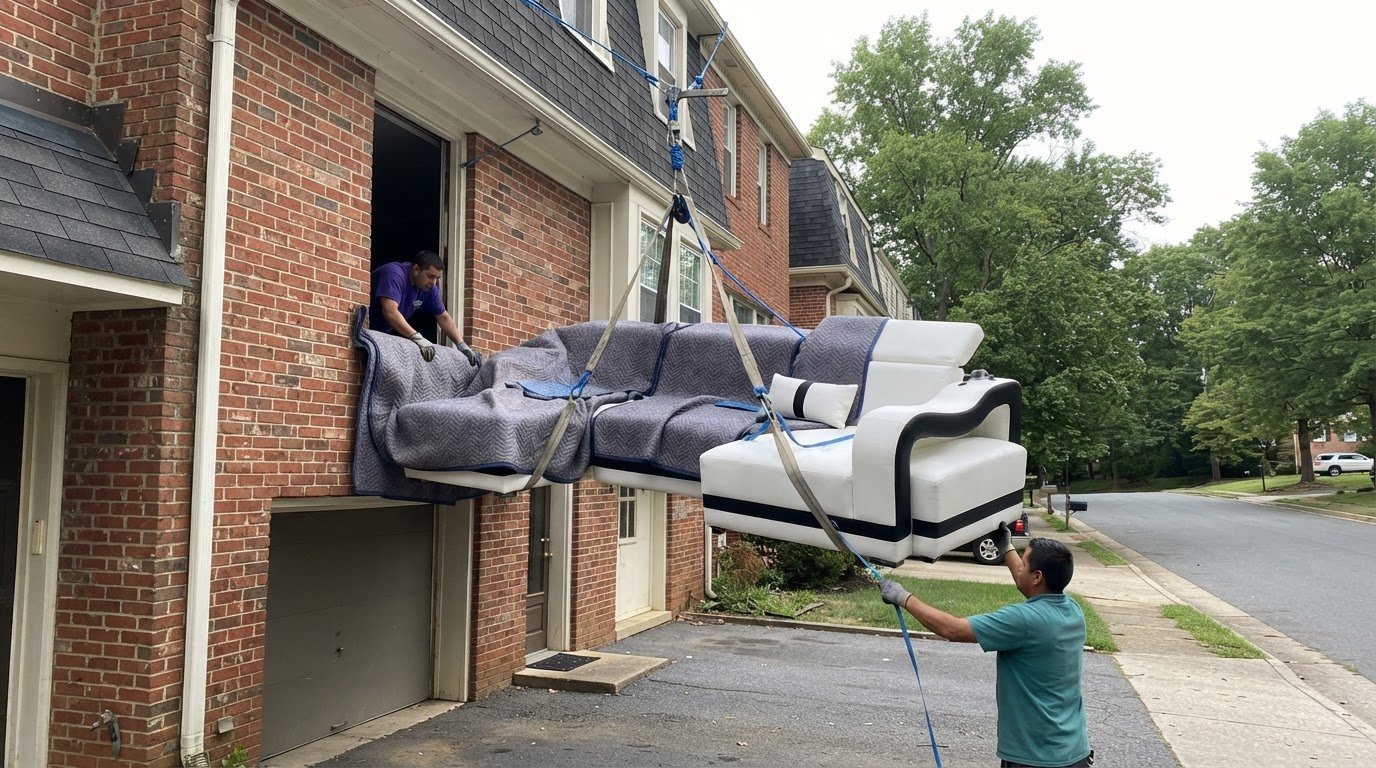
- Compare alternatives using the actual route. A couch that catches at a landing might pass when repositioned or separated into sections. Focus on the actual obstruction, whether it is a doorway, stair rail, or narrow turn, rather than assuming the couch must be cut. Heavy Furniture Moving can assess whether repositioning, removable-part disassembly, or sofa hoisting is practical. The right approach depends on the couch and building access.
- Agree on the method and handling before work begins. Decide whether preserving the couch matters, who can authorize permanent alteration, and what will happen to detached or cut pieces. Keep the stairwell clear. If a couch arm meets a tight turn, for example, first establish whether it detaches and whether the resulting piece can move safely. Clear decisions help prevent unexpected damage and keep the plan focused on the obstacle.
What should I measure to determine whether a couch can fit through a stairwell or doorway?
- Record the couch’s full outside dimensions. Measure its widest point from arm to arm, its height from floor to highest point, and its depth from front to back. Include feet, attached cushions, and protruding frame parts. For a sectional, measure each piece separately and note how the sections connect. Record the couch as it stands, not just the seating area.
- Measure every doorway along the route. Record the clear opening between the door frame’s inside edges and the height from floor to top. Check the tightest doorway between the couch and exit, including the room entrance and hall doors. Note nearby trim or doors that limit usable space. A couch may clear a doorway upright but not horizontally, so include the approach space before the frame.
- Measure the stair width at its narrowest points. Record the distance between the wall and railing, and check whether posts, handrails, or trim reduce that opening. Measure at the top, middle, and bottom if the space changes. Note ceiling height above the steps and any low fixture. These details help show whether the couch can travel lengthwise, upright, or at an angle.
- Capture each landing and turn. Measure the landing’s width and depth, and note how the next flight changes direction. Include the distance from the inside corner to the railing and the open space above the landing. A couch may fit along a straight stair section but lack room to rotate at a turn. Describe whether the stairs are straight, switch back, or meet a narrow hallway.
- Map the complete path in order. List the couch’s starting room, each doorway, hallway, landing, stair run, and final exit. Record measurements at each point and mark the tightest clearance. Note obstacles such as a radiator, wall fixture, or railing post. Sharing the complete route helps connect couch dimensions to the actual path, rather than treating each opening separately.
- Send the measurements with a brief description. Include the couch style, detachable sections, and whether its legs or other parts can be removed. If a measurement is difficult to take, identify the location instead of guessing. The team can focus on the uncertain turn or opening. Measurements help, but the couch’s shape and the angle needed at each transition also matter.
What risks and liability issues apply when removing a couch from an apartment stairwell
- Identify who controls the shared stairwell. In an apartment building, stairs, landings, and entrances may serve several residents. Tell the property manager when the couch must pass through shared areas, and ask about building procedures or access restrictions. A move during a busy entry period, for example, can block neighbors’ normal route. Agree on a clear path and timing before handling starts.
- Look for existing damage before moving the couch. Note scratches, dents, loose railing parts, and marks on the couch before removal. Photos can help distinguish pre-existing wear from damage noticed afterward. Focus on likely contact points, such as a painted corner at a landing or a railing beside a tight turn. Share visible concerns before the couch moves, so everyone understands the starting condition.
- Keep residents and belongings out of the route. A couch can block a stairwell or strike nearby items as it turns. Move shoes, hallway furniture, and loose objects away from the path, and keep residents clear while the couch is handled. If a neighbor needs to pass, pause in a safe position rather than carrying the couch around them. A clear route reduces trip hazards and avoidable contact.
- Agree on the work and responsibility in advance. Before removal, clarify who is doing the lifting, which route they plan to use, and whether any couch parts may be detached or altered. Review the service terms for how property damage or an injury concern is handled. Don’t assume that building rules, a verbal conversation, or a quote alone explains every responsibility. Make sure the person authorizing the work understands the planned method.
- Stop if conditions change. A loose handrail, wet stair tread, blocked landing, or couch that shifts unexpectedly changes the risk. Pause instead of forcing the item past the obstacle. Tell the property manager about access issues that affect the route, then reassess the plan before continuing. For example, if another resident places items on the landing, clear the area before the couch approaches that turn.
- Keep a record of the agreed plan. Save the estimate, appointment details, and any written notes about building access or handling decisions. If a scratch or other concern appears, record where it is and when it was noticed, then report it through the agreed contact process. For a heavy couch or a tight shared stairwell, arrange careful furniture-moving help before attempting a difficult lift.
Heavy Furniture Moving
Heavy Furniture Moving helps plan difficult couch removals when a tight stairwell makes the route challenging. Contact the team when the couch needs careful handling, the landing leaves little room to maneuver, or another approach may be needed. Furniture moving and sofa hoisting can help shape a plan around the couch and building access, rather than relying on force or guesswork.
When arranging help, share the couch’s location, stairwell layout, and any access restrictions. Those details focus the discussion on the removal route and handling needs. To discuss your couch and stairwell, contact Heavy Furniture Moving.
Choose the Next Step for Your Couch
A difficult removal is easier to organize once you decide what matters most: keeping the couch intact, clearing the stairwell, or reducing disruption to neighbors. That priority can guide your plan for emergency couch extrication from a narrow stairwell in Chantilly. Explain the outcome you want, especially if the couch has sentimental value or needs to leave the building promptly.
Turn uncertainty into a practical plan by sharing the couch’s location and the challenge you’re facing. Heavy Furniture Moving handles bulky furniture and can discuss a suitable way forward. You do not need to force the couch around a tight turn or make a rushed decision about cutting it.
Contact Heavy Furniture Moving to discuss your couch removal. Take the next step with a clear goal and a steady plan.
Frequently Asked Questions
Who provides emergency couch removal or furniture extrication in Chantilly, Virginia?
Heavy Furniture Moving provides furniture-moving support in Chantilly, including sofa hoisting for couches that cannot pass through standard entryways or elevators. If a couch is stuck in an apartment stairwell, share its location and the building’s access details when arranging help. This gives the team a clearer picture of the challenge and helps guide a practical removal plan. Contact Heavy Furniture Moving to discuss your couch and its route.
Frequently Asked Questions
Heavy Furniture Moving provides furniture-moving support in Chantilly, including sofa hoisting for couches that cannot pass through standard entryways or elevators. If a couch is stuck in an apartment stairwell, share its location and the building’s access details when arranging help. This gives the team a clearer picture of the challenge and helps guide a practical removal plan. Contact Heavy Furniture Moving to discuss your couch and its route.