Residential Crane Hoisting Alternatives for Clifton Sofas
A crane isn’t automatically the answer, and a permit isn’t automatic either. Residential crane hoisting alternatives for bulky sofas in Clifton may include a rope-and-pulley lift through a suitable window or balcony, or moving the sofa indoors if the route allows. Crane moves may require permits, so plan coordination early to help avoid delays.
It’s understandable to worry about a sofa getting stuck in a stairwell or damaged during a difficult lift. The best method depends on the sofa’s dimensions and weight, the access route, the building, and the equipment needed. A careful assessment helps determine whether the sofa can be moved indoors or needs an exterior lift.
This article explains how to compare lifting options, what affects the plan, when permits may be needed, and how professionals prepare for a safe lift. You’ll also learn which details about your sofa and property help clarify the next steps.
Key Takeaways
- Compare an indoor carry with an outside lift by looking at the sofa’s dimensions, the route through the home, and access to a window or balcony.
- Share the sofa’s exact size and weight so the lift plan and equipment needs can be assessed accurately.
- Permit needs depend on the planned setup; early coordination with property management can help limit delays.
- Safe rigging involves protecting the sofa and building, assessing the setup area, and planning a clear landing zone.
- Crane access, equipment requirements, and site conditions all shape the approach, so a crane isn’t the only possible hoisting option.
Is hoisting safe for my furniture?
Crane alternatives include an exterior rope-and-pulley lift or careful indoor moving through a suitable staircase. In Clifton, a stair-climbing dolly may also help when the sofa and stair route allow controlled movement.
Handling Bulky and Awkward Sofas
A wide sectional can catch on a landing even when it clears the doorway. Compare the sofa’s length, depth, height, and shape with each turn, stair width, ceiling, and landing. Removable legs or cushions may improve clearance, but the frame still needs a stable route. If carrying it upright makes a turn too tight, another method may be safer.
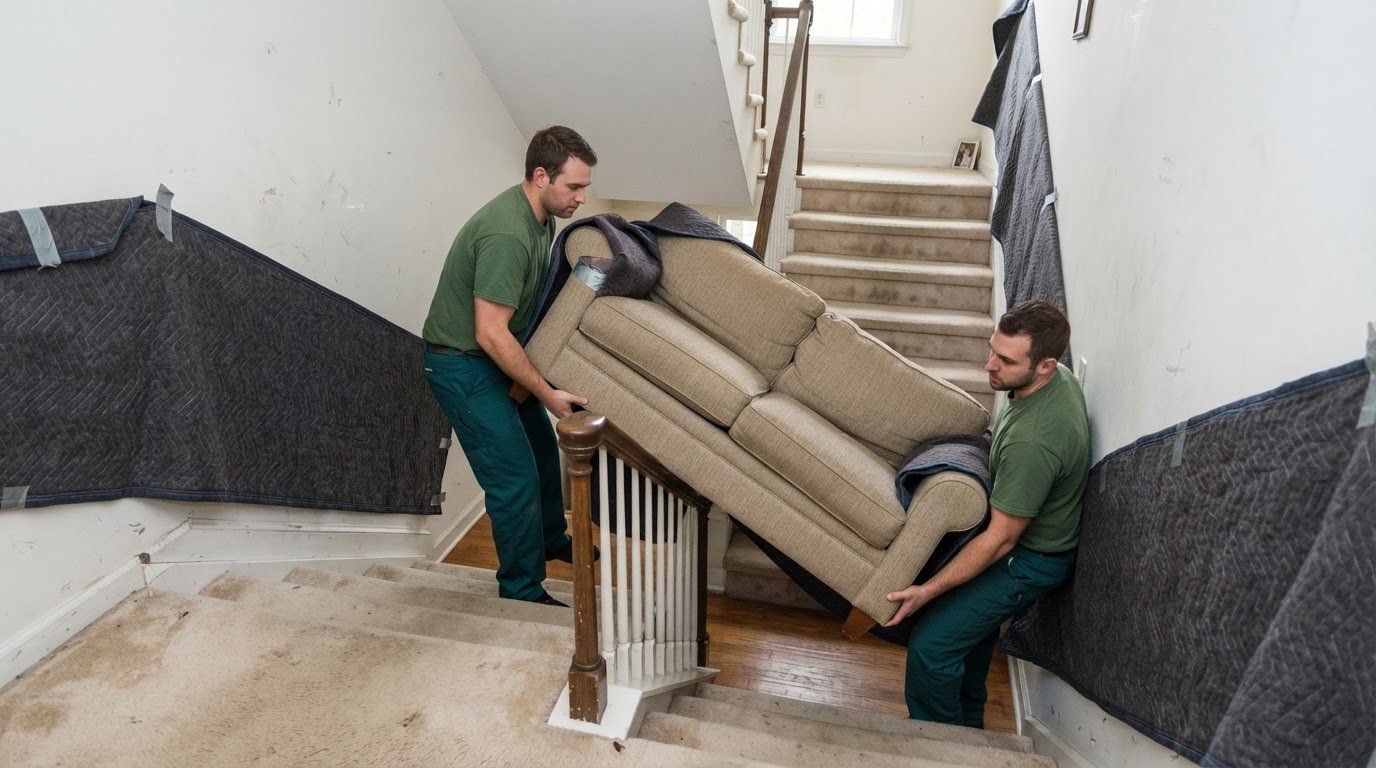
Narrow stairs call for a planned sequence, not improvised lifting. Movers can protect walls and banisters, then guide the sofa slowly through each turn with coordinated control. A stair-climbing dolly may help on a suitable route, but it won’t make every staircase workable. Tight corners, steep steps, low ceilings, and delicate surfaces all affect the method.
Hoisting Through Windows and Balconies
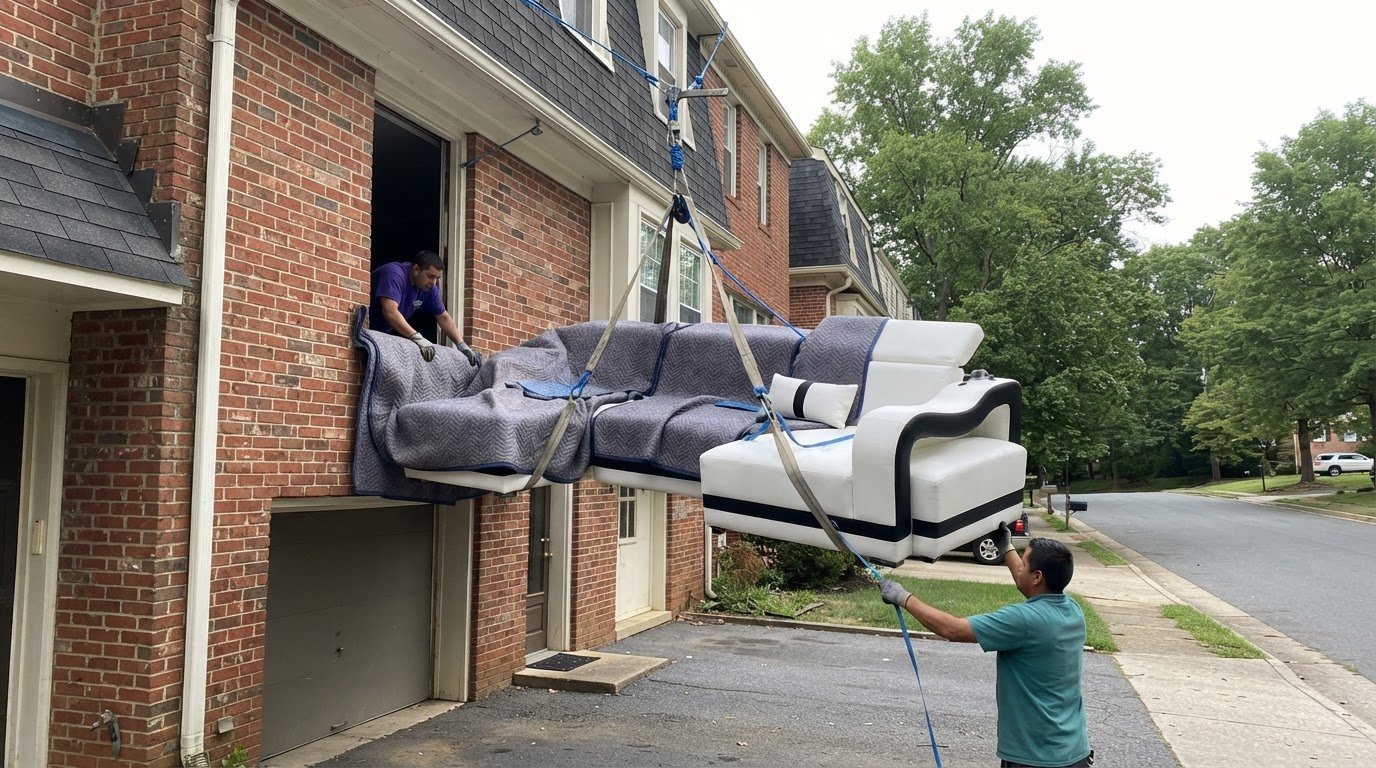
When an interior route won’t work, furniture can be lifted from outside through a suitable window or onto a balcony. The opening and landing area must accommodate the sofa, and the route must let it move without striking the building. Even a window that looks wide enough needs a clear approach and room to guide the sofa inside.
A controlled lift uses ropes, pulleys, and furniture straps suited to the load. Before lifting, the crew wraps the sofa and protects nearby building surfaces. Load-rated ropes and hardware matter because the equipment must support the planned lift. The crew also needs a clear landing area, with people kept out of the load’s path.
For either method, the crew should match the plan to the sofa and property. That means identifying pinch points, checking for obstacles, and agreeing on clear signals before lifting. During an exterior lift, wind or an obstructed landing area can affect control. If conditions make the planned movement unsafe, pause and reassess rather than force the sofa through.
The crew takes precautions to protect furniture and buildings from scratches, dents, and other damage during hoisting. Crane lifts are one option for oversized sofas that cannot be disassembled or maneuvered through standard doorways and hallways.
How much does hoisting cost during a move?
There isn’t one standard hoisting charge for every sofa. The amount depends on the item, the building, and the lift plan. Hoisting is quoted as a separate add-on during a moving estimate, so the moving work and the lift can be assessed separately. The price depends on the case and is given after a quote request.
Start with the sofa’s exact size and weight. An oversized sectional may need different handling and equipment than a compact couch. Floor height matters too: reaching an upper-floor window can take more planning than a ground-level move. Access affects the work as well. A clear exterior setup area differs from a crowded space with little room to position lifting equipment.
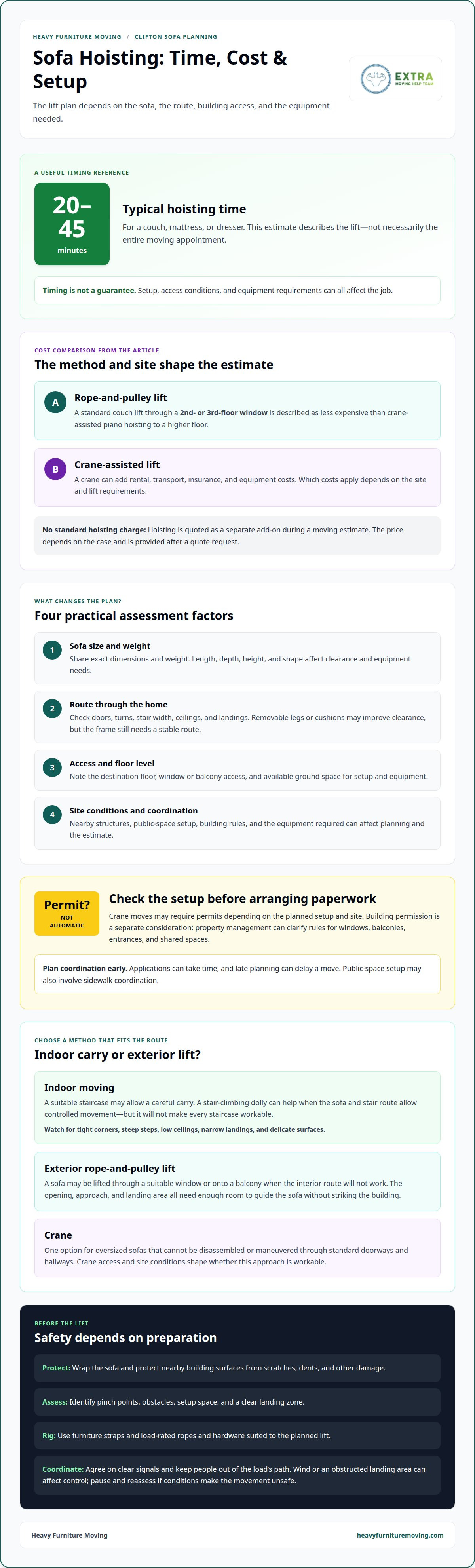
Timing offers a useful planning reference, but it doesn’t determine the quote by itself. Typical hoisting time for a couch, mattress, or dresser is 20-45 minutes. That estimate describes the lift, not necessarily the entire moving appointment. Setup, access conditions, and the equipment required all affect the job. A standard rope-and-pulley lift for a couch through a 2nd- or 3rd-floor window is described as less expensive than crane-assisted piano hoisting to a higher floor.
A crane can add costs for rental, transport, insurance, and equipment. The site and lift requirements determine which of those apply. Permits and sidewalk coordination can also affect the estimate, particularly when the planned setup uses public space. Crane work may be delayed by high winds or rain, so scheduling needs to account for conditions that can stop operations. Combining multiple moves may help reduce expenses where crane rental and related fees are involved.
To make the estimate useful, provide the sofa’s exact dimensions and weight, the destination floor, and details about access. Include whether the lift would use a window or balcony, and describe the available ground space for setup. Note stairs, narrow corridors, or other constraints that could change the route. These details help the moving team assess the lift, equipment, permits, and coordination needs together.
For a clear plan, keep the sofa measurements and access details ready when arranging sofa hoisting. That gives the estimate a practical starting point, without treating a typical lift time as a guaranteed schedule or cost.
Do I need a permit for hoisting?
A permit isn’t automatic for every sofa lift in Clifton. Crane moves may require permits, depending on the planned setup and site. Start coordination early, because applications can take time and late planning can delay a move. The method matters: a rope-and-pulley setup and a crane operation have different space and coordination needs.
Building permission is a separate part of the plan. Property management can explain building rules for using a window, balcony, entrance, or shared space. The hoisting crew coordinates with property management and handles permits and building regulations. For example, a building may need advance notice before a lift affects a common area. Clear coordination helps align building access with the planned moving schedule.
Before arranging paperwork or equipment, assess the location. Identify where the sofa will leave the building, where it will enter, and where workers can guide it safely. A window, balcony, and interior landing each create different access needs. The assessment should also consider the ground space for equipment, nearby structures, and room for setup. These details shape the method and any coordination required.
Crane use calls for specific site checks. The ground must support the combined weight of the crane and its load. Power lines, trees, and nearby structures can interfere with crane movement, while limited setup room can rule out a planned position. If equipment would occupy or affect a sidewalk, coordination may also be needed. Address these conditions before a crane arrives.
Building access needs the same practical attention. The crew can map the route from the street or setup area to the target window, noting doors, gates, balconies, and shared corridors. Coordination with property management helps establish access arrangements and building requirements. This can prevent the crew from arriving with specialized lifting equipment only to find a locked entrance or unavailable landing area.
Keep planning on track by sharing the sofa’s dimensions, destination floor, and proposed lift point. The crew can use these details to assess whether an exterior lift is workable and what permissions may apply. For a crane move, begin permit coordination as early as possible. For a pulley lift, clarify building access and management requirements before scheduling. Early coordination supports a safer lift and helps reduce avoidable delays or damage.
Professional rigging and safety precautions
Safe sofa rigging starts with a risk assessment before lifting begins. The crew considers the sofa’s weight, shape, lifting route, and landing area. A sectional with a long chaise, for example, may shift differently from a compact couch. That assessment helps determine how to secure the furniture and guide it without scraping walls or window frames.
Next, the crew prepares the load and the building. The sofa is fully wrapped before the lift, while nearby surfaces are padded and protected. Straps should hold the piece firmly without placing pressure on weak points, such as loose legs or delicate trim. The crew also clears the landing area and sets a controlled route for moving the furniture into the home.
Ropes and hardware need to be rated for the planned load. A rigging plan should account for the sofa’s weight and how it will move during lifting. The crew uses suitable furniture straps, ropes, and pulleys rather than improvised household equipment. Before the sofa leaves the ground, workers should know their positions and signals. Clear communication helps prevent sudden movement while the load is suspended.
On a crane lift, the setup requires additional checks. The ground must support the combined weight of the crane and its load. The crew checks for power lines, trees, and nearby structures that could interfere with crane movement. They also need adequate room for setup and operation. Before lowering the sofa, they plan a clear, secure landing zone and keep people away from the load’s path.
Insurance matters because a lift involves both the furniture and the surrounding property. Before hiring a residential hoisting company, ask about general liability and cargo coverage. General liability relates to damage involving property or people, while cargo coverage relates to the items being moved. These protections address different risks, so one should not be treated as a substitute for the other.
During the move, a good safety sequence stays deliberate: assess the route, protect surfaces, secure the sofa, communicate before lifting, and lower it into a cleared area. If the route changes, such as a balcony becoming inaccessible, the crew should reassess before proceeding. Rushed adjustments can put the load, workers, and building at risk. Sound rigging means matching each piece of equipment to the load and maintaining control throughout the lift.
Crane equipment
A crane can lift a sofa from outside when narrow stairs or interior routes won’t work. The right setup depends on the building’s height, the sofa’s size and weight, and the available space. Crane equipment can reduce manual lifting and speed up moving operations, but it still needs room for setup and controlled operation. A high-rise lift must match the building’s features and height requirements.
Equipment planning starts with the lift path. The crew identifies where the crane can be positioned, where the sofa will travel, and where it will enter the home. A window or balcony may provide access, while nearby power lines, trees, and structures can affect crane movement. Account for these obstacles before lifting begins, not after the load is suspended.
Crane operators and movers need appropriate qualifications for the work. Movers handling crane operations should have valid state licenses and, when needed, DOT credentials. For covered equipment on a U.S. construction site, OSHA’s Cranes and Derricks in Construction standard requires employers to ensure crane operators are trained, certified or licensed, and evaluated before operating. That standard applies to covered construction-site equipment, not every residential sofa lift.
Equipment choices also depend on the item. A large sectional may need secure furniture straps and lifting ropes to keep it controlled as it moves. A pulley system can support a non-crane exterior lift when the site and route allow it. Each method has different setup needs, so the team assesses the access point, load, and landing area before deciding. The equipment should suit the planned movement.
A furniture lift requiring a crane may involve coordination between the operator and moving crew. They need to understand the lift path, setup area, and timing. Weather can also affect crane operations: high winds or rain may halt a lift. Scheduling should allow the crew to respond safely if conditions change, rather than operate equipment in unsuitable weather.
For a residential lift, a practical equipment assessment connects four details: the sofa’s dimensions and weight, the building’s height, the access opening, and the ground setup area. These details help determine whether a crane is suitable or another hoisting method can handle the move. Share accurate item and site information early so the crew can plan equipment and access together.
Plan your sofa lift with the access details and sofa measurements ready.
Heavy Furniture Moving: Sofa Hoisting
Heavy Furniture Moving provides Sofa Hoisting for bulky pieces that won’t fit through a home’s stairs, hallways, or standard entryways. Turn to this service when an indoor route looks too tight or an exterior lift may offer a workable way in. Share the sofa’s dimensions and weight, the destination floor, and whether access is through a window or balcony. Those details help establish the moving challenge and the right next step. If a crane appears unnecessary, the alternatives discussed above can help frame the decision. For a sofa that needs a careful lift into your home, contact Heavy Furniture Moving to discuss the move.
Make Your Sofa Move Plan
Choose the next step based on the home’s access, not just the sofa. Share its measurements and weight alongside the route details, so the moving plan accounts for the item and property together. Include any other heavy items in the planning conversation too.
For residential crane-hoisting alternatives for bulky sofas in Clifton, the key decision is whether an indoor route or exterior lift best fits your home. Heavy Furniture Moving offers Sofa Hoisting, Movers Near Me, and Exercise Equipment Moving for different moving needs. Start with a clear picture of what needs moving and where it needs to go.
Ready to plan your sofa move? Contact Heavy Furniture Moving to discuss the lift and take the next step with confidence.
Frequently Asked Questions
What Is Hoisting and When Is It Necessary in Moving?
Hoisting lifts furniture through an exterior opening or onto a balcony when the indoor route won’t work. It can help when a sofa cannot clear a tight stair turn, narrow landing, or doorway without forceful maneuvering. For example, a large sectional may fit the living room but fail to turn between floors. The crew assesses the item and route before choosing an indoor carry or exterior lift.
When Do You Need Hoisting Services?
Consider hoisting when the sofa’s dimensions make the available route impractical or moving it indoors could risk damage. A bulky piece may be too wide for a stairwell landing even if it clears the entrance. Hoisting may also suit a home without a service elevator; for homeowners exploring permanent ways to make multi-level living and moving heavy items easier, resources such as perthliftco.com.au highlight modern residential elevator options. Start by measuring the sofa and its tightest passage points, including turns and door openings.
Which furniture hoisting companies serve Clifton, Virginia?
Heavy Furniture Moving provides Sofa Hoisting in Clifton, Virginia. The service is for oversized sofas that cannot pass through standard entryways or elevators. Share the item and access details to discuss the move. Measurements, floor level, and the proposed entry point help shape the plan. Make sure the destination is Clifton, Virginia, so the location and home details are clear.
How much does sofa hoisting or furniture rigging cost in Clifton, VA?
The price depends on the case and is given after a quote request. Factors include the sofa’s size and weight, floor height, access conditions, equipment needs, permits, and sidewalk coordination. Heavy Furniture Moving uses hourly labor with a 2-hour minimum, while most single heavy items receive a flat-rate quote by phone. Stairs and landings are priced before the crew arrives.
What does it cost to rent a crane or lift for residential furniture delivery in Clifton?
Crane rental costs vary with the equipment, lift height, sofa size and weight, site access, and any permit or sidewalk coordination. There isn’t a useful single figure without those job details. A rope-and-pulley lift may be an alternative when the site and sofa allow it. Include the intended access point and available setup space when planning the lift.
Can a sofa fit through Clifton home stairways, hallways, windows, or balconies?
It depends on the sofa’s measurements and the route’s narrowest point. Measure the sofa’s width, height, and depth, then compare them with hallway widths, door openings, stair turns, and window access. Remember that the piece may need to tilt or rotate, which requires extra clearance. For residential crane hoisting alternatives for bulky sofas in Clifton, these measurements help determine whether an indoor carry or exterior lift is workable.
What permits or street-use rules apply to crane or lift operations in Clifton, Virginia?
Crane moves may require permits, and street or sidewalk use may need coordination. Requirements depend on the planned setup and location, so don’t assume a permit is always needed or never needed. Building management may also set access rules for windows, balconies, or shared areas. Start coordination early so permits, property access, and the moving schedule can be planned together.
What risks can damage a sofa, home, windows, or landscaping during a furniture hoist?
Risks include a shifting load, contact with window frames or exterior walls, an obstructed landing area, and crane movement near trees or other structures. High winds or rain can halt crane operations. Before lifting, crews wrap furniture and protect building surfaces. Wrap, blankets, and straps are included on every job. Clear communication and a planned landing area help keep the lift controlled.
Frequently Asked Questions
Hoisting lifts furniture through an exterior opening or onto a balcony when the indoor route won’t work. It can help when a sofa cannot clear a tight stair turn, narrow landing, or doorway without forceful maneuvering. For example, a large sectional may fit the living room but fail to turn between floors. The crew assesses the item and route before choosing an indoor carry or exterior lift.
Consider hoisting when the sofa’s dimensions make the available route impractical or moving it indoors could risk damage. A bulky piece may be too wide for a stairwell landing even if it clears the entrance. Hoisting may also suit a home without a service elevator. Start by measuring the sofa and its tightest passage points, including turns and door openings.
Heavy Furniture Moving provides Sofa Hoisting in Clifton, Virginia. The service is for oversized sofas that cannot pass through standard entryways or elevators. Share the item and access details to discuss the move. Measurements, floor level, and the proposed entry point help shape the plan. Make sure the destination is Clifton, Virginia, so the location and home details are clear.
The price depends on the case and is given after a quote request. Factors include the sofa’s size and weight, floor height, access conditions, equipment needs, permits, and sidewalk coordination. Heavy Furniture Moving uses hourly labor with a 2-hour minimum, while most single heavy items receive a flat-rate quote by phone. Stairs and landings are priced before the crew arrives.
Crane rental costs vary with the equipment, lift height, sofa size and weight, site access, and any permit or sidewalk coordination. There isn’t a useful single figure without those job details. A rope-and-pulley lift may be an alternative when the site and sofa allow it. Include the intended access point and available setup space when planning the lift.
It depends on the sofa’s measurements and the route’s narrowest point. Measure the sofa’s width, height, and depth, then compare them with hallway widths, door openings, stair turns, and window access. Remember that the piece may need to tilt or rotate, which requires extra clearance. For residential crane hoisting alternatives for bulky sofas in Clifton, these measurements help determine whether an indoor carry or exterior lift is workable.
Crane moves may require permits, and street or sidewalk use may need coordination. Requirements depend on the planned setup and location, so don’t assume a permit is always needed or never needed. Building management may also set access rules for windows, balconies, or shared areas. Start coordination early so permits, property access, and the moving schedule can be planned together.
Risks include a shifting load, contact with window frames or exterior walls, an obstructed landing area, and crane movement near trees or other structures. High winds or rain can halt crane operations. Before lifting, crews wrap furniture and protect building surfaces. Wrap, blankets, and straps are included on every job. Clear communication and a planned landing area help keep the lift controlled.