Residential Safe Moving in Woodbridge for Stair Access and Cost Planning
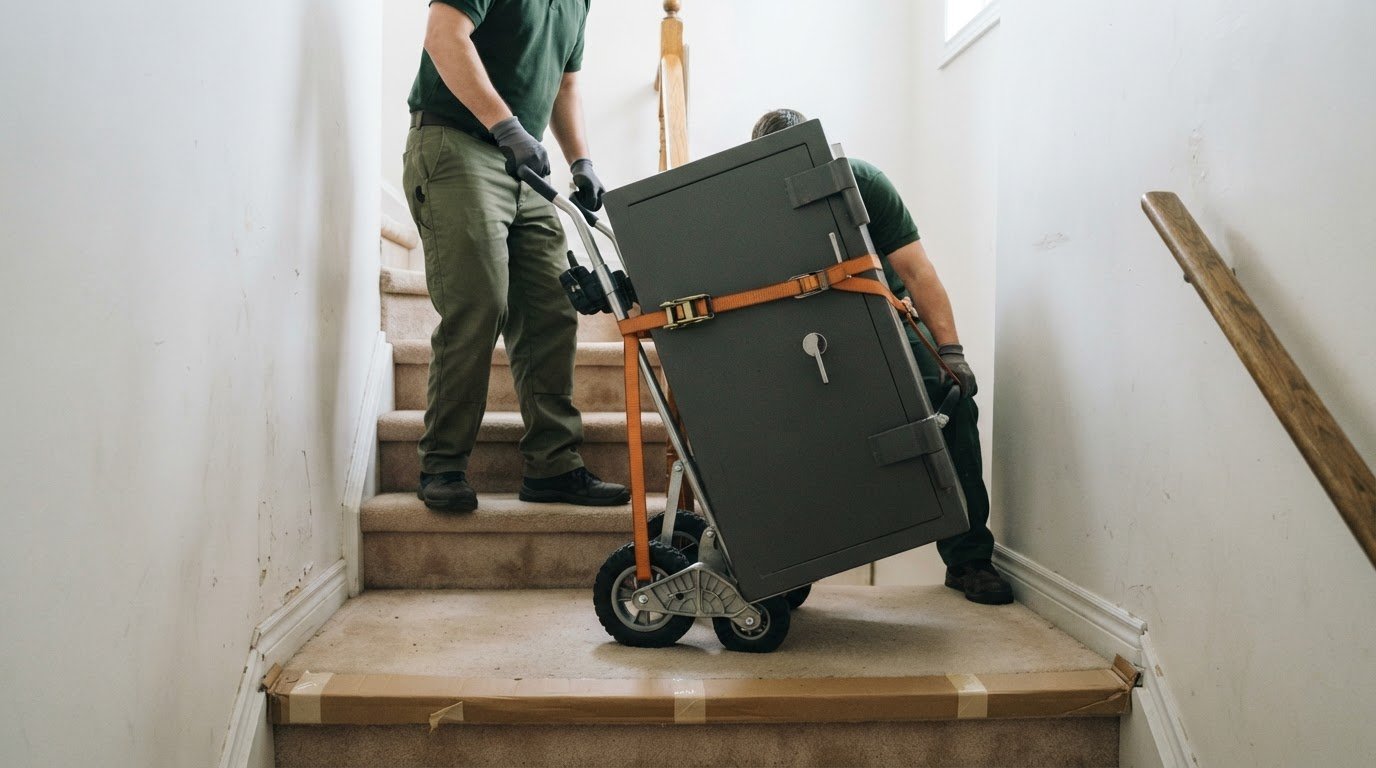
Yes, a heavy safe can be moved up or down stairs, but the route, safe dimensions, weight, and stair layout all shape the plan. Residential safe movers for heavy document vaults in Woodbridge need to assess tight turns, doorway clearance, landings, and the destination before moving day.
It’s reasonable to worry about property damage, privacy, and an estimate changing once the safe reaches the stairs. Careful planning helps address these concerns: measure the route, identify obstacles, protect nearby surfaces, and account for access at both ends. The cost depends on the safe’s size and weight, the number and layout of stairs, and how much maneuvering the route requires. This guide explains how Heavy Furniture Moving plans access, which measurements matter, how to protect privacy, and what affects the estimate for a residential safe move in Woodbridge. You’ll get a clearer picture of the process and the details needed to plan the job.
Key Takeaways
- Expect a moving estimate to reflect the safe’s size and weight, stair access, and the complexity of the route.
- Stair moves need a plan for landings, turns, and changes in level, along with equipment suited to the load.
- Thoughtful handling and a planned path can help limit unnecessary exposure of the safe and its contents.
- Measure doorways and tight turns along the full route, not just the entry and destination openings.
- Learn how Heavy Furniture Moving can help with heavy residential items and difficult access.
How much does safe moving cost?
Safe-moving cost depends on the case and is given after a quote request. Weight, route, stairs, and placement shape the estimate for a Woodbridge home. A useful starting point is to map the move from the safe’s current position to its destination, including any narrow passages or changes in level.
Reviews help most when they describe safe moves, stair access, or confined routes, rather than only general household moves. Compare those details and look for clear information about relevant experience and credentials. Specific examples of handling heavy safes can help you judge whether a mover understands the practical challenges involved.
For a Woodbridge residential move, share the safe’s dimensions, weight, current location, and intended placement. Heavy Furniture Moving measures the item and route before lifting, including doorways and stairs, to plan access and provide a price up front. Photos of the safe and stair route can help describe the job clearly.
Specialized Moving Equipment
Equipment selection starts with the safe’s weight and the route. Four-strap rigging systems can help secure a load during handling.
A practical plan identifies how the safe will be secured and moved between surfaces. Equipment for a level hallway differs from what’s needed for stairs or a tight turn, so the route and safe dimensions should be considered together.
Staircase and Confined-Space Access
Stairs, basement entries, and tight turns affect the moving plan and estimate. Landings and restricted maneuvering space also matter, since the crew needs room to control the load through each transition.
Note whether the route includes multiple stair sections or a narrow doorway just beyond a landing. Sharing these details early helps the crew plan how to handle each transition.
In-Home and Property-to-Property Moves
A move within the same home still needs a clear path between the safe’s current position and its new location. For a move to another property, planning includes access at both addresses and the route from each entrance to the safe’s final placement. Stairs, narrow doors, and tight turns at either property can affect the work involved.
Share the destination and any known access restrictions early. The estimate can then account for the full move rather than only the distance between properties.
Residential Safe and Vault Moves
For a residential move in Woodbridge, planning centers on the safe’s weight, route, access, and final placement. Residential safes and larger vaults vary considerably in weight, so provide the best available description of the item and its dimensions.
Share the safe’s dimensions, starting point, destination, and route details. That information helps Heavy Furniture Moving plan access and protection for your home.
Can you move a safe up or down stairs?
Yes, a safe can be moved upstairs or downstairs when its weight, dimensions, and route are planned together. Equipment choice and careful control matter most at stair edges, landings, and tight turns.
Safe-Handling Techniques and Equipment
A safe move starts with securing the load before it travels. Four-strap rigging systems can help keep a safe stable during controlled handling, while a heavy-duty safe dolly should be rated for at least 1,000 pounds.
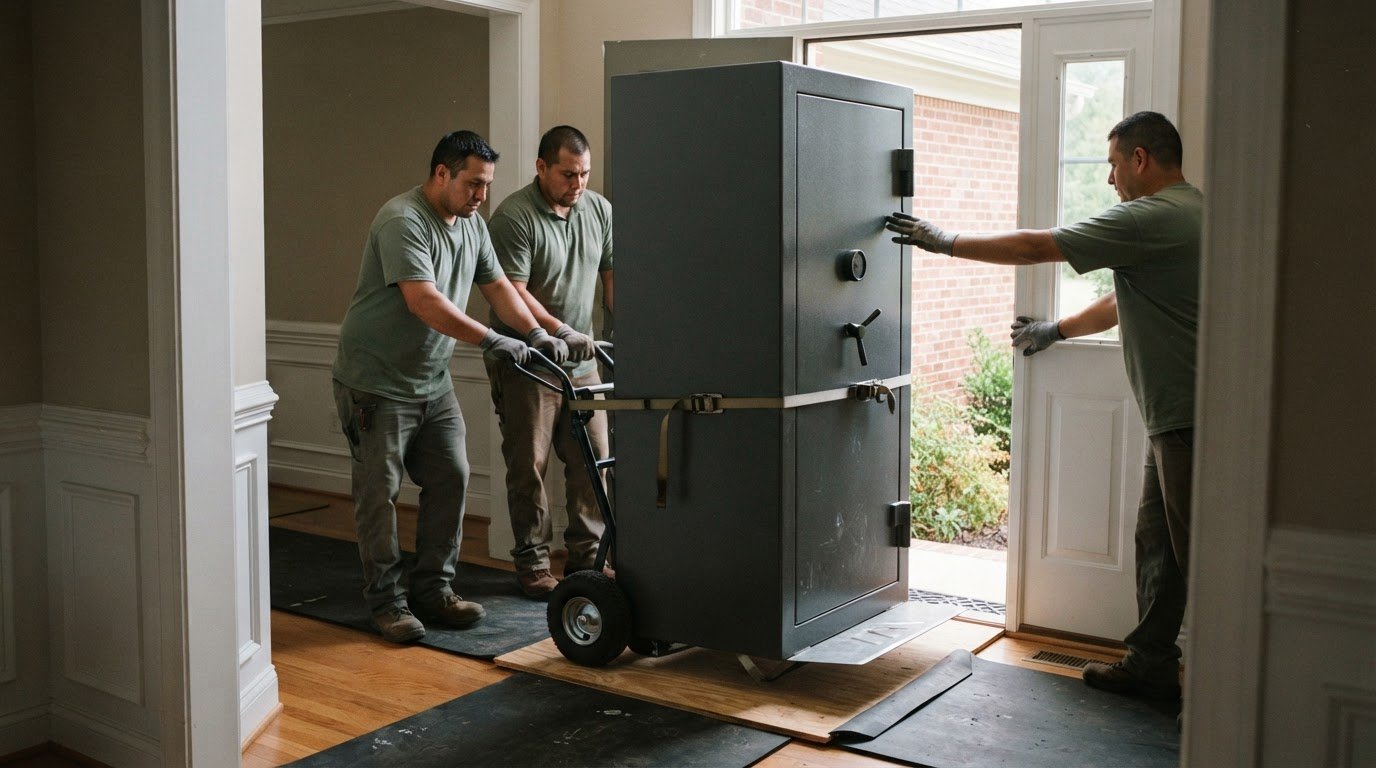
Skates can help reposition a safe across a suitable level surface. The moving plan should account for transitions between equipment and surfaces, such as moving from a hallway onto a stair landing. Heavy Furniture Moving includes floor and corner protection, such as runners, masonite, and door-jamb covers, to help protect the property during close maneuvers.
Specialist Crews for Safe Moves
A specialist crew matches its equipment and handling plan to the safe and the route. A 500-pound safe, for example, calls for a different equipment assessment than a compact household item. The distance matters too: a short move across one room differs from a trip through several turns and stair sections.
For residential work, the plan should identify who guides the load, who controls movement, and where the crew can pause safely. Clear roles help prevent sudden shifts at a landing. Commercial safe moves may require four or more crew members, but that figure shouldn’t be applied automatically to a residential move.
Risks of DIY and Regular Movers
Household dollies and improvised straps may not be suited to a safe’s weight. A load that shifts on stairs can damage walls, flooring, or the safe, so equipment capacity and route conditions need to be considered together.
DIY planning can miss a tight turn or narrow landing. Before movement begins, map the full path, protect exposed surfaces, and keep the load controlled through each transition. Heavy Furniture Moving measures before lifting and includes wrap, blankets, and straps on every job, helping prevent surprises during the move.
Move Requirements and Coverage
The safe’s weight alone doesn’t determine whether building approval or permits apply. In a shared building, coordinate access to elevators, hallways, and loading areas with the property manager. The route and building arrangements shape the moving plan.
There isn’t one weight or size limit that fits every Woodbridge safe move. Equipment capacity, safe dimensions, stairs, and turning space all affect how the move can be planned safely.
Choose a mover whose experience includes heavy safes and document vaults, and review written coverage terms for limits, exclusions, and responsibility for property damage. A written plan should also identify protective measures for floors and walls. For heavy-lifting help with a challenging residential route, explore heavy lifting moving service.
Discreet handling and privacy
A safe relocation involves more than its weight and dimensions. In a Woodbridge home, an open entryway, visible contents, or a clearly labeled moving plan may draw attention. Set a practical privacy plan before transport: identify who needs access, choose the route, and decide how the safe will be covered while the crew works.
Keep the safe’s contents separate from the moving plan. If documents or valuables are inside, handle them yourself rather than asking movers to inspect or organize them. Heavy Furniture Moving requires dressers and safes to be emptied before moving. That lets the crew focus on securing and moving the safe rather than handling private papers.
- Share access details directly with the moving coordinator, not in a visible hallway note.
- Choose a staging area that keeps the safe out of the main entry path.
- Move personal papers separately, in a container you control.
- Remove labels that identify sensitive contents or business records.
Agree on a clear communication plan before moving day. Choose one household contact to guide the crew, answer placement questions, and keep other residents informed. For example, that person can direct movers through a side entrance while another resident keeps the front door clear. This limits unnecessary foot traffic and avoids confusion.
Careful preparation also means protecting sightlines during loading. Close doors to rooms that don’t form part of the route, and clear family photographs or private paperwork from open shelves along the passage. If the safe must pass through a shared building corridor, coordinate the access window with the property manager and avoid leaving the unit unattended in a public area.
Discuss the safe’s final placement before the crew starts. A marked floor plan or simple verbal description can identify the intended room and orientation without displaying sensitive documents. Include the safe’s dimensions, stair access, and any narrow doorway in the moving plan. Clear instructions reduce repeated handling and help the crew move directly to the agreed location.
Commercial vaults and residential document safes need different relocation plans, but practical privacy steps apply to both. Limit the transport route to people involved in the move, secure papers separately, and communicate placement instructions privately. These steps help protect personal information while keeping the physical move organized.
Preparing the route and measuring doorways
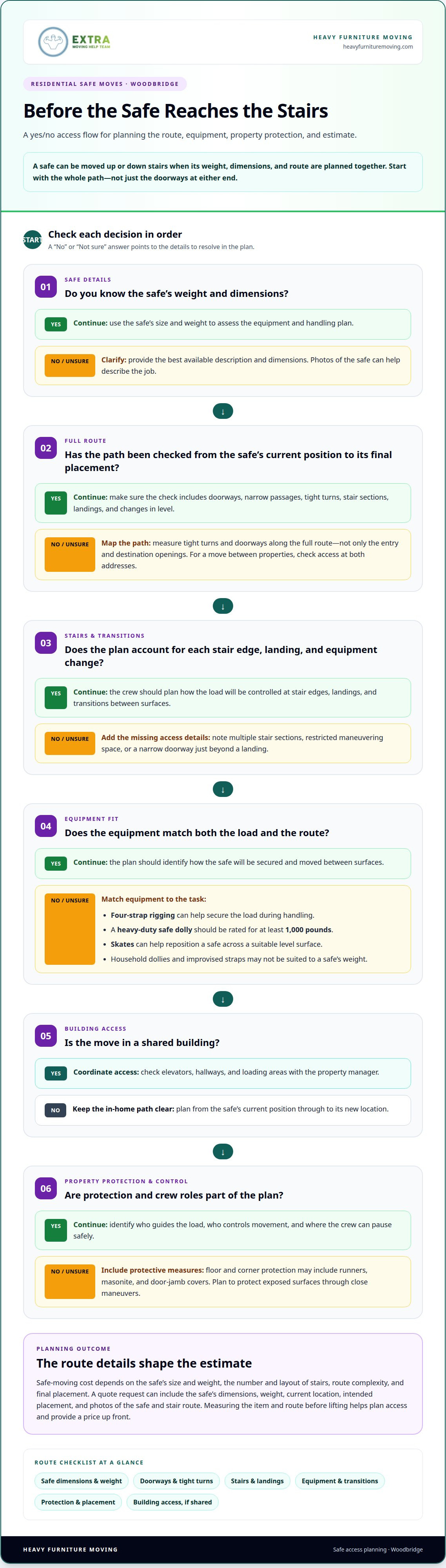
A safe route includes every doorway, turn, landing, and final placement point. Before loading, trained movers map the path from the safe’s current position to its destination, then identify places where its dimensions could restrict movement.
Doorway measurements require more than the opening’s height and width. Consider the safe’s depth and orientation, along with nearby trim, handles, and wall edges. A safe that clears a straight doorway may still be difficult to turn into a hallway. Measuring the turn and space beyond it helps identify that challenge early.
Trace the complete route rather than checking only the front entrance. Assess interior doors, narrow corridors, stair landings, and the approach to the destination room. For example, a basement entrance may be wide enough, but a low ceiling or sharp turn can limit how the safe can be angled. Each transition affects the plan.
Help the moving team plan by sharing the safe’s model or dimensions, its current location, and its intended placement. Those details help identify access questions before moving day. If the safe is already installed in a tight alcove, that location matters as much as the doorway at the exit.
- Map the path from the safe to the exit and destination.
- Measure openings, turns, landings, and overhead clearance.
- Note obstacles such as furniture, door hardware, and narrow hallways.
- Choose the final placement before loading begins.
Protecting the route is part of the same preparation. Movers can plan where to use floor and wall padding, which doors need to stay open, and where the crew can pause without blocking access. A clear path also reduces last-minute furniture movement and unnecessary handling near fragile surfaces.
Placement deserves early attention. Planning ahead matters because moving a 1,000-pound safe twice is more difficult than deciding its position before moving day. The crew can include the final room and orientation in its route plan, instead of discovering after delivery that the safe must cross the home again.
For a safe move in Woodbridge, route details help Heavy Furniture Moving plan access and loading as one connected job. Measuring the path helps identify tight spots and prepare protective materials before moving toward the agreed placement. Share any changes to the route or destination before the crew begins.
Stair and tight-access planning
Stairs change how a heavy safe can be controlled, turned, and positioned. For vault moving in Woodbridge, the plan should follow the actual route, from the room where the safe stands to its final placement. A straight staircase and a switchback staircase create different movement challenges, even when both connect the same floors.
Assess the stair angle, landing space, handrails, overhead clearance, and nearby walls. A landing may allow a pause on one route but leave little room to turn on another. The crew also needs to consider whether the safe can pass through each turn in its planned orientation. These details shape the equipment and movement sequence.
Each transition needs a clear role and direction. Plan where the safe begins, how it approaches the first step, and where it changes direction. For a basement move, consider the exit from the lower level and the final turn into the destination room. A narrow landing can be the route’s tightest point.
- Identify every stair section, landing, and change in direction.
- Note handrails, low ceilings, door swings, and nearby finish surfaces.
- Plan where protective padding belongs along the route.
- Set the safe’s final orientation before movement begins.
Protecting the home’s finish takes planning at contact points. Identify exposed corners, trim, and flooring beside the route, then use padding where equipment or the safe may pass close. Heavy Furniture Moving includes floor and corner protection on every job. A tight turn beside a finished wall needs a different protection plan than an open stair landing.
Safes and vaults need a planned stopping point. The crew should know where it can pause without blocking the next transition or forcing an awkward reposition. This matters when moving from a staircase into a narrow hallway or approaching a basement doorway that opens toward the stairs.
Before the move, share changes such as a newly placed cabinet or a blocked doorway. Obstacles can alter the approach and safe positioning. The moving team can adjust the route plan before loading and keep the move organized from floor to floor.
Give the crew the safe’s location, destination, and known access restrictions. That information helps Heavy Furniture Moving plan stairs, turns, and protection as one job. A clear route and agreed placement reduce avoidable repositioning and keep attention on controlled handling through each tight section.
Heavy Furniture Moving
Heavy Furniture Moving can help when a residential move involves a safe, difficult access, or other bulky items. Share the safe’s location, destination, and route details so the team can plan the heavy lifting alongside your broader household moving needs.
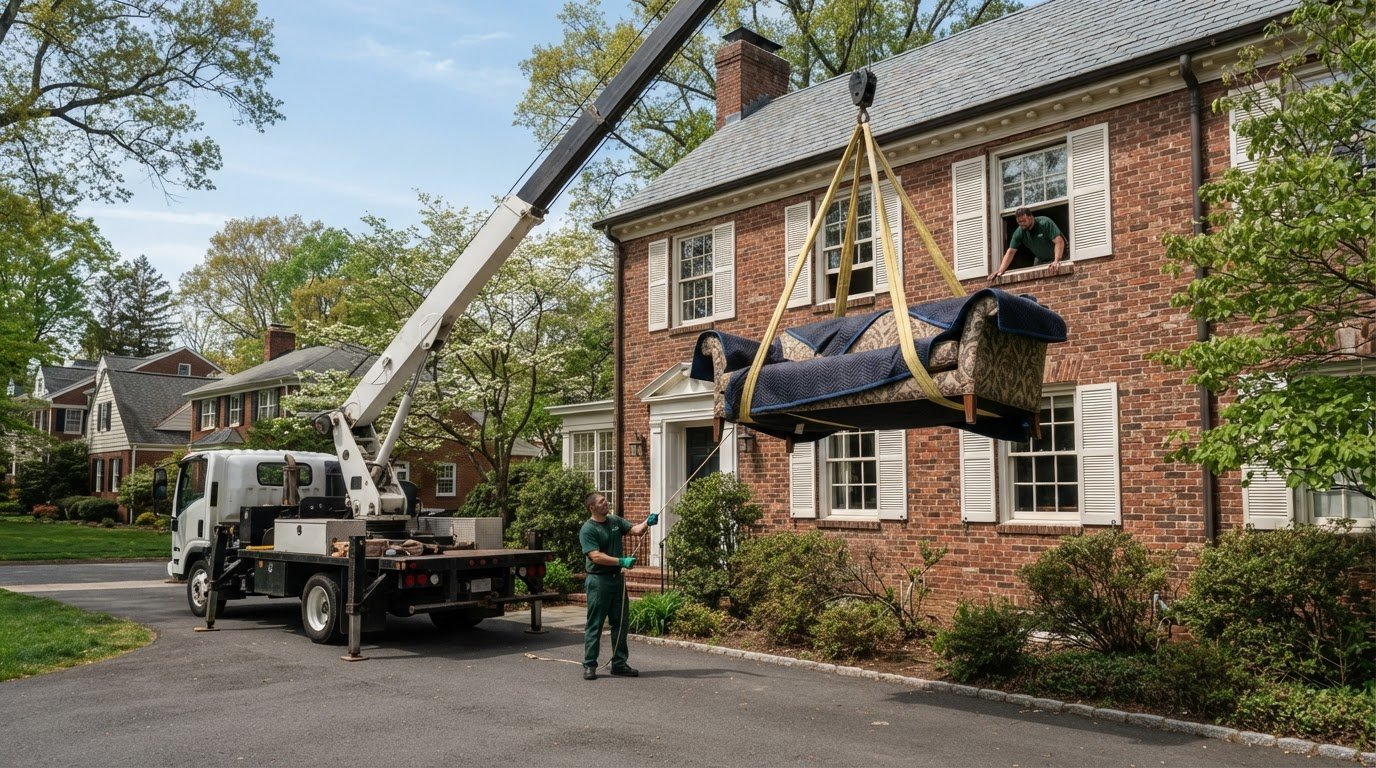
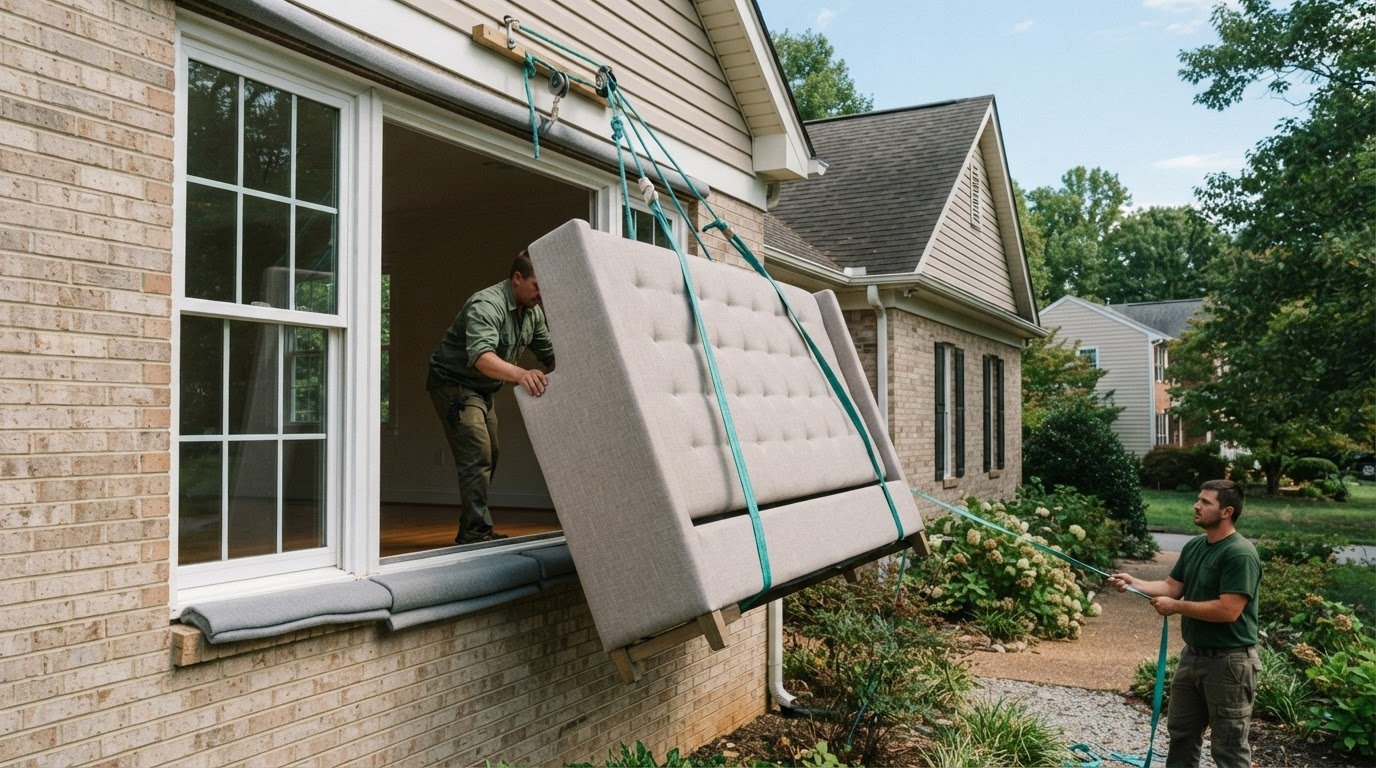
Heavy Furniture Moving also handles exercise equipment moving, sofa hoisting, and in-home furniture moving. These services can help when a safe move is part of a room rearrangement or a larger home transition. Keep the route and final placement details handy when describing the job.
Contact Heavy Furniture Moving to discuss your residential move and the heavy items involved.
Plan Your Next Move With Confidence
Your next step is to turn the route details into a clear moving plan. If you’re looking for residential safe movers for heavy document vaults in Woodbridge, share the safe’s location, destination, access conditions, and any other heavy items involved. Call Heavy Furniture Moving or text a photo of the safe and stairs to get a price up front, without sharing private documents or contents.
Heavy Furniture Moving also handles Movers Near Me requests, Exercise Equipment Moving, and Sofa Hoisting. These services can help with other bulky items connected to a household move, so you can discuss the broader job alongside your access needs.
Reach out with the details you’re comfortable sharing and the questions you want answered. Contact Heavy Furniture Moving today to discuss your move and take the next step with a clear plan.
Frequently Asked Questions
Do safes need to be bolted down after moving?
Not always, but many safe manufacturers recommend bolting safes to the floor or wall to improve security and prevent tipping. Whether to anchor a relocated safe depends on its intended placement and the installation guidance for that model. Before drilling, decide where the safe should sit and consider the floor or wall surface. Moving it again after anchoring can mean repeating installation work.
How much does residential safe moving cost in Woodbridge, VA?
The cost depends on the safe, its weight, the distance, and access conditions, and is given after a quote request. Stairs, tight turns, and the starting and destination locations can change the work involved. In Woodbridge, provide the safe’s dimensions and route details so the estimate can reflect the actual move. A written quote gives you a clear basis for planning.
What equipment and crew size are needed to move a heavy document vault?
Equipment and crew needs depend on the safe’s weight and route. For gun safes in the listed 300-1,500-pound range, Heavy Furniture Moving uses a safe dolly and a three-person crew. That range applies to gun safes, not every document vault. The route, turns, and access conditions also matter when planning equipment and handling.
How do movers protect floors, stairs, doorways, and walls during a safe move?
Protection includes floor runners, masonite, and door-jamb covers, along with shrink-film, moving blankets, and ratchet straps to protect and secure items. Heavy Furniture Moving includes these materials on every job. A doorway cover helps shield the jamb as the safe passes through, while a floor runner protects the surface along the travel path.
How to prepare a document vault for residential relocation?
Empty the safe before transport and keep documents or valuables with you. Then share its dimensions, current location, destination, and access details, such as a basement entrance or narrow doorway. Decide where the safe should sit at the new location before moving day. These details help the crew plan the job without handling private papers or changing placement mid-move.
What risks come with moving a heavy safe without professional movers?
A heavy safe can shift unexpectedly when crossing a threshold, turning on a landing, or moving down stairs. Losing control may damage the safe, floors, walls, or nearby furnishings, and put people in the route at risk of injury. Household equipment may not suit the load or access conditions. A planned move accounts for the safe’s route and the equipment needed to control it.
What insurance and liability coverage should safe movers provide?
Review Heavy Furniture Moving’s coverage terms for limits, exclusions, and responsibility for property damage.
Frequently Asked Questions
Not always, but many safe manufacturers recommend bolting safes to the floor or wall to improve security and prevent tipping. Whether to anchor a relocated safe depends on its intended placement and the installation guidance for that model. Before drilling, decide where the safe should sit and consider the floor or wall surface. Moving it again after anchoring can mean repeating installation work.
The cost depends on the safe, its weight, the distance, and access conditions, and is given after a quote request. Stairs, tight turns, and the starting and destination locations can change the work involved. In Woodbridge, provide the safe’s dimensions and route details so the estimate can reflect the actual move. A written quote gives you a clear basis for planning.
Equipment and crew needs depend on the safe’s weight and route. For gun safes in the listed 300–1,500-pound range, Heavy Furniture Moving uses a safe dolly and a three-person crew. That range applies to gun safes, not every document vault. The route, turns, and access conditions also matter when planning equipment and handling.
Protection includes floor runners, masonite, and door-jamb covers, along with shrink-film, moving blankets, and ratchet straps to protect and secure items. Heavy Furniture Moving includes these materials on every job. A doorway cover helps shield the jamb as the safe passes through, while a floor runner protects the surface along the travel path.
Empty the safe before transport and keep documents or valuables with you. Then share its dimensions, current location, destination, and access details, such as a basement entrance or narrow doorway. Decide where the safe should sit at the new location before moving day. These details help the crew plan the job without handling private papers or changing placement mid-move.
A heavy safe can shift unexpectedly when crossing a threshold, turning on a landing, or moving down stairs. Losing control may damage the safe, floors, walls, or nearby furnishings, and put people in the route at risk of injury. Household equipment may not suit the load or access conditions. A planned move accounts for the safe’s route and the equipment needed to control it.
Review Heavy Furniture Moving’s coverage terms for limits, exclusions, and responsibility for property damage.