Residential Safe Moving in Fairfax Station for Heavy Safes
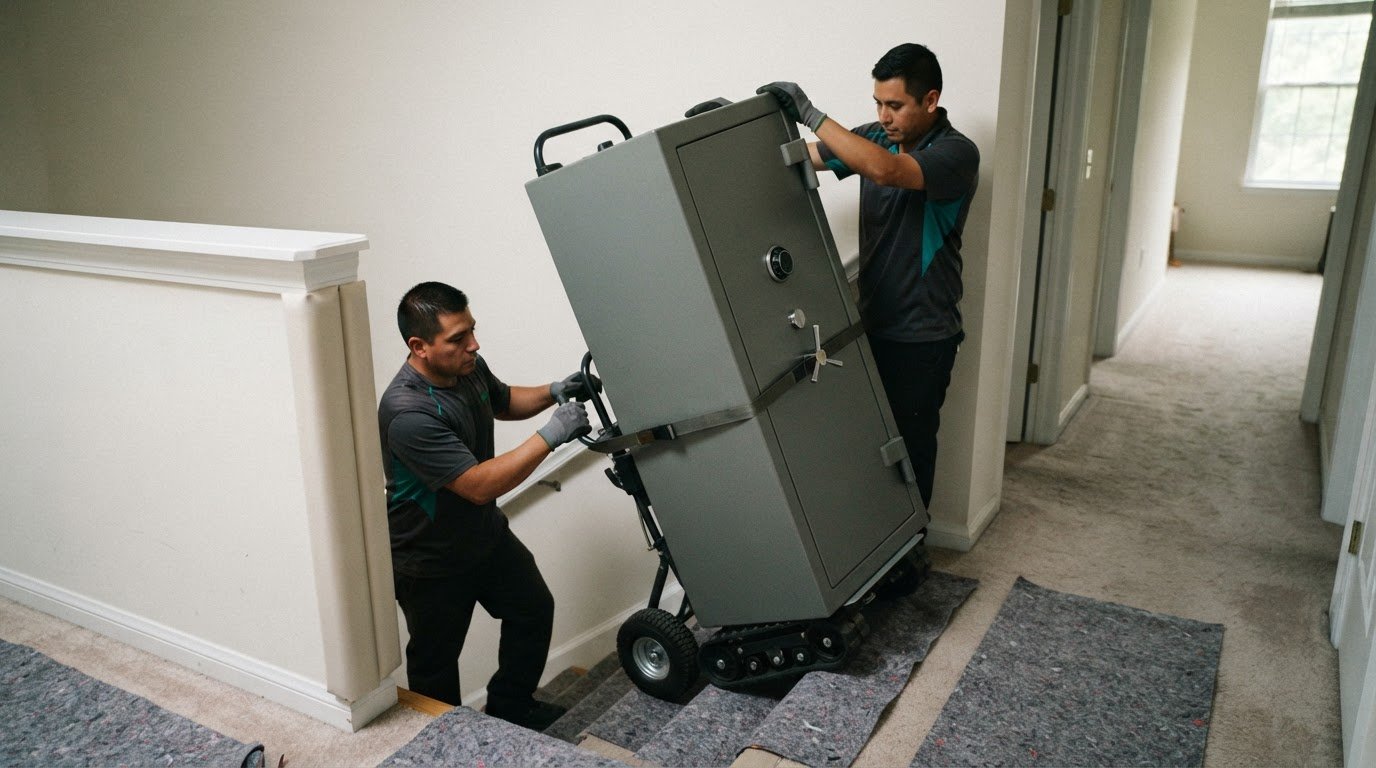
A safe’s weight is only part of the challenge. For a heavy burglary or fire safe in Fairfax Station, a residential safe-moving crew must plan around its dimensions, the route through the home, and obstacles such as stairs and narrow doorways.
It’s reasonable to worry about scuffed floors, marked walls, or a difficult turn on the stairs. Movers need to assess the safe and the home before choosing how to handle it, whether it’s a fireproof document safe, gun safe, or jewelry safe. The right approach depends on the safe and the access route, not just the distance between rooms.
This guide explains how movers prepare for a residential safe move, protect floors and doorways, and plan for stairs. You’ll also learn what details to share so the crew can understand the job and how Heavy Furniture Moving’s heavy-lifting and residential moving services can help.
Key Takeaways
- Safe type, access route, and destination all shape how movers plan a residential relocation.
- Gun, fireproof, and jewelry safes call for careful handling, while business vaults may involve a different level of complexity.
- Thoughtful protection of floors, stairs, walls, and doorways helps reduce the risk of damage along the moving path.
- Share details about the safe and the home’s access points so the moving crew can plan the right approach.
- Learn what professional safe moving involves and when heavy-lifting help can make a challenging move easier.
Need to Move a Safe or Other Heavy Objects?
A residential safe-moving crew for a heavy burglary or fire safe in Fairfax Station plans around the safe’s weight, dimensions, and route.
Heavy Safe Moving Equipment
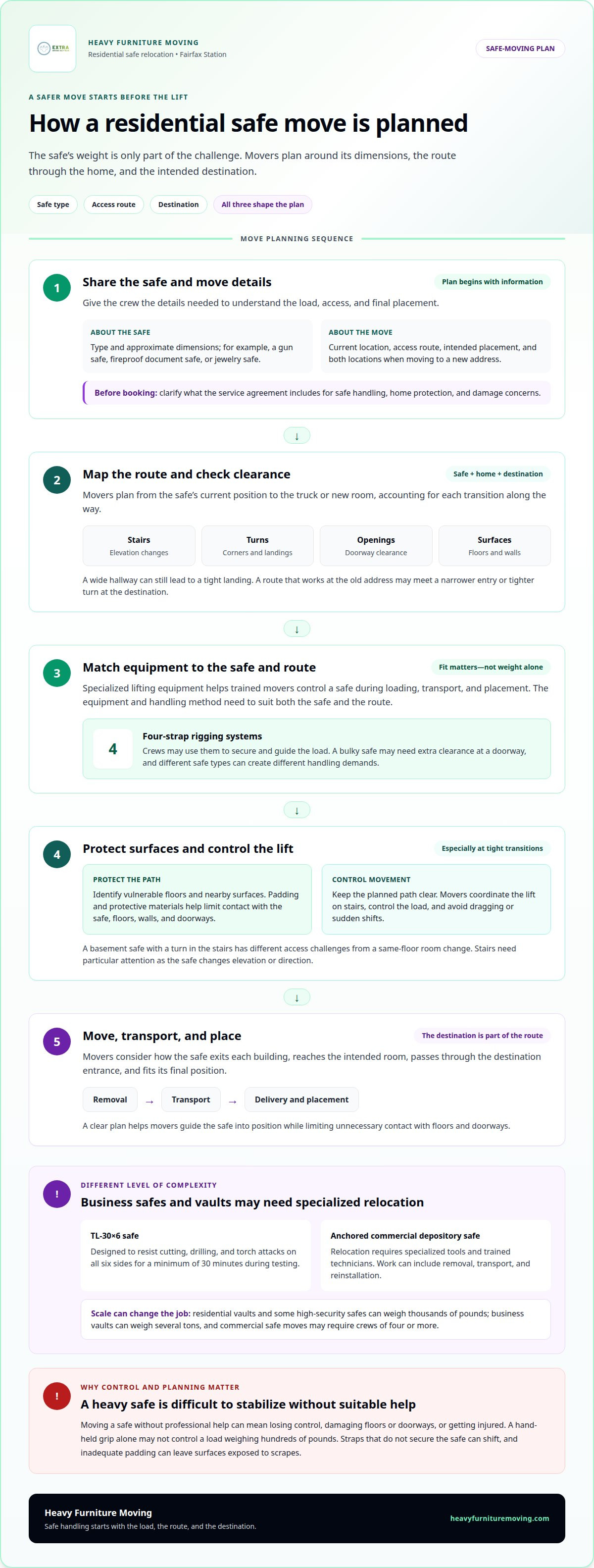
Specialized lifting equipment helps trained movers control a safe during loading, transport, and placement. Crews may use four-strap rigging systems to secure and guide the load. The equipment must fit the safe and the route, not just its estimated weight. A fireproof document safe and a large gun safe can create different handling demands.
A sound safe-moving plan accounts for the safe’s dimensions, access, and destination. A bulky safe, for example, may need extra clearance at a doorway. Padding and careful positioning help limit contact with the safe and nearby surfaces as movers guide it through the home.
Lifting Equipment and Route Planning
Before lifting, movers plan the route from the safe’s current position to the truck or new room. They account for stairs, corners, doorways, and changes in floor level. Even a wide hallway can lead to a tight landing. Planning helps the crew choose equipment and handling methods suited to each transition.
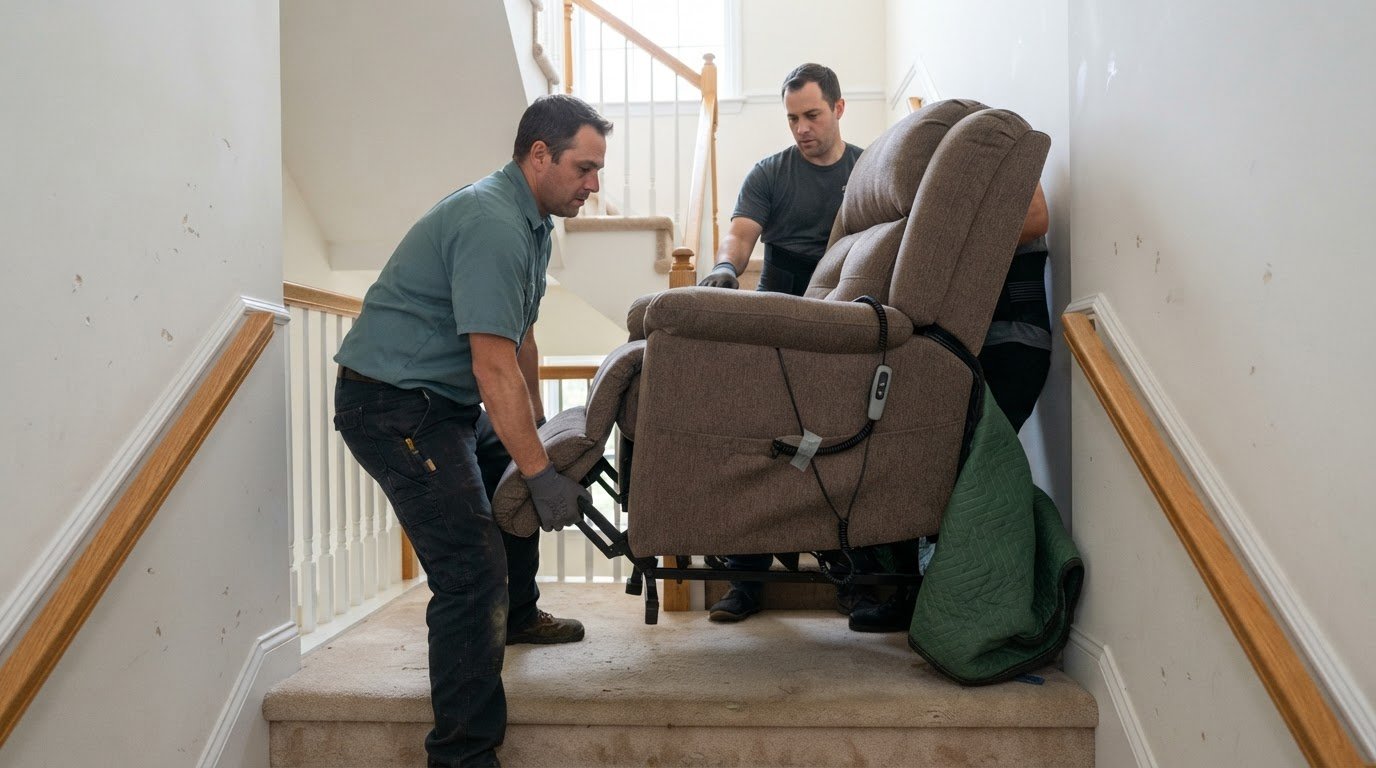
Stairs need particular attention because the safe shifts position as it changes elevation or direction. Movers coordinate the lift, control the load, and keep the planned path clear. At the destination, they also consider whether the safe can pass through the entrance and reach its intended spot.
Risks of Moving a Safe Yourself
Moving a heavy safe without professional help can mean losing control, damaging floors or doorways, or getting injured. A safe that tips on stairs or catches at a corner can be difficult to stabilize. A hand-held grip alone may not control a load weighing hundreds of pounds.
Improvised equipment can create problems during a move. Straps that fail to secure the safe may shift, while inadequate padding can leave surfaces exposed to scrapes. In a narrow hallway or at a stair turn, each obstacle creates another point where poor control can damage the home or safe.
For a residential safe-moving crew handling a heavy burglary or fire safe in Fairfax Station, useful planning details include the safe type, approximate dimensions, and access route. These details help the crew plan the lift, equipment, and placement. A gun safe, fireproof document safe, or jewelry safe each needs handling suited to its size and construction.
Moving gun, fireproof, jewelry, and business safes
The safe type and destination shape the move. A gun safe, fireproof document safe, and business depository safe each have different weight, access, and handling considerations.
Gun safes may contain dense contents, while fireproof document safes can be heavy because of their construction. Jewelry safes may be smaller, but placement still matters: a tight doorway or upstairs room can complicate the route. Movers plan around the safe’s dimensions, the path through the home, and the destination to help protect floors, walls, and doorways.
Business safes add another layer. A TL-30×6 safe is designed to resist cutting, drilling, and torch attacks on all six sides for a minimum of 30 minutes during testing. Anchored commercial depository safes require specialized tools and trained technicians for proper relocation. That work can include removal, transport, and reinstallation, rather than simply moving the safe from one room to another.
Moves within a home still need a clear plan. A safe going from a ground-floor office to an upstairs room faces different obstacles than one crossing an open hallway. Movers account for landings, turns, and doorway clearance before moving it. Residential vaults and some high-security safes can weigh thousands of pounds, so their size and components can make handling especially complex.
Transport to a New Location
Transport planning connects removal at the old address with delivery and placement at the new one. Movers consider the safe’s dimensions, the route out of each building, and access at the destination. A safe that clears the first home’s doorways may meet a narrower entry or tighter turn at the new address. Share both locations and the intended placement so the entire route can be considered.
Residential Safes and Vaults
Residential moves may involve a gun safe, jewelry safe, fireproof document safe, or vault component. Construction and size affect the route and handling plan. A basement-to-bedroom move, for example, has different access points from a same-floor room change. Movers also plan for the safe’s final position to avoid unnecessary contact with floors or doorways.
Business vaults can weigh several tons, and commercial safe moves may require crews of four or more. For other bulky household items being relocated, local moving help can support the wider move.
Protecting safes, floors, stairs, and doorways
Protection starts with the route, the safe, and every vulnerable surface. Movers plan handling and equipment around the home’s floors, walls, stairs, and doorways.
Before booking, clarify what the mover’s service agreement says about handling the safe and protecting the home. Ask what the planned service includes and how concerns about damage are addressed.
Before the crew arrives, share the safe’s type, approximate dimensions, and current location. Describe the route, including staircases, narrow doorways, tight turns, and the intended placement. A basement safe with a turn in the stairs, for example, presents different access challenges from a ground-floor move.
Floor protection matters wherever a heavy safe travels or pauses. Movers can identify vulnerable surfaces along the planned route, such as a finished hallway leading to a tiled room. Protective materials help limit direct contact, while controlled lifting avoids dragging and sudden shifts.
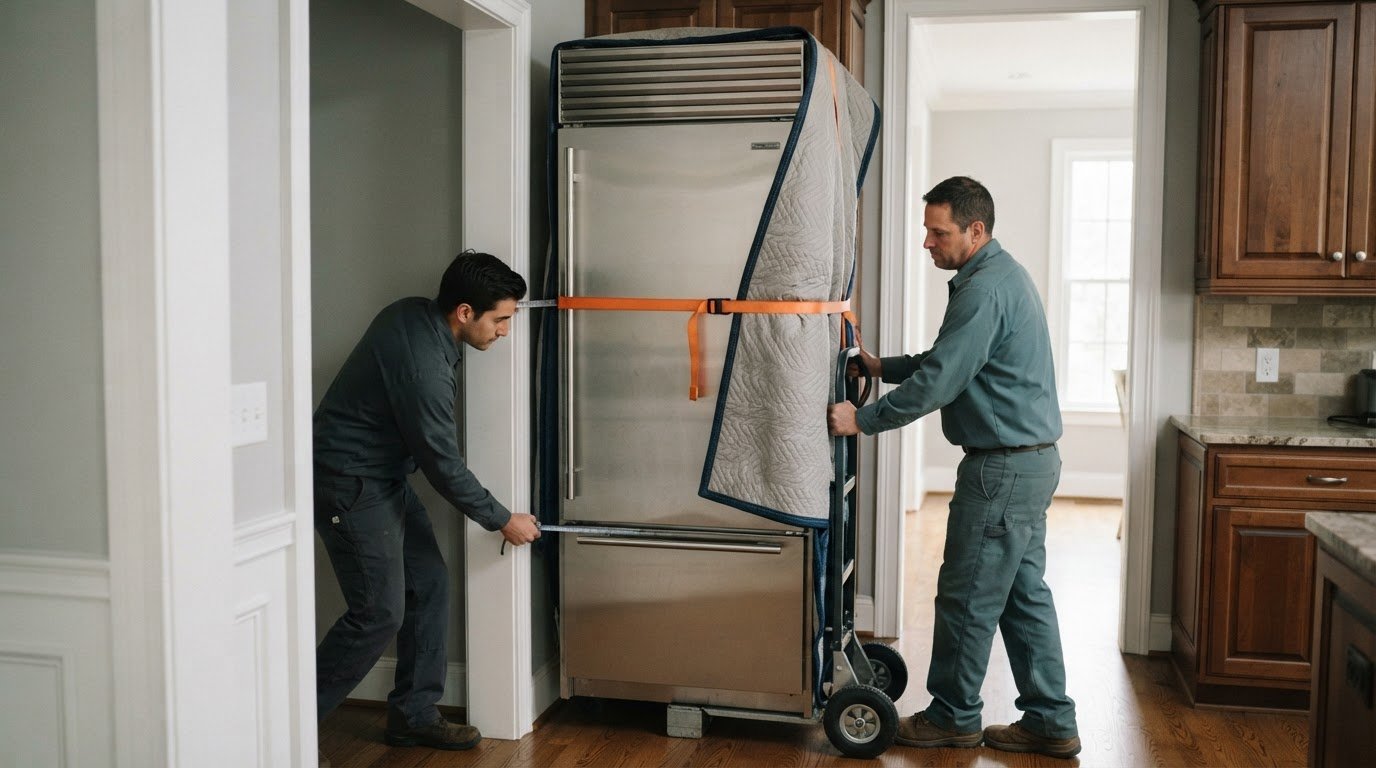
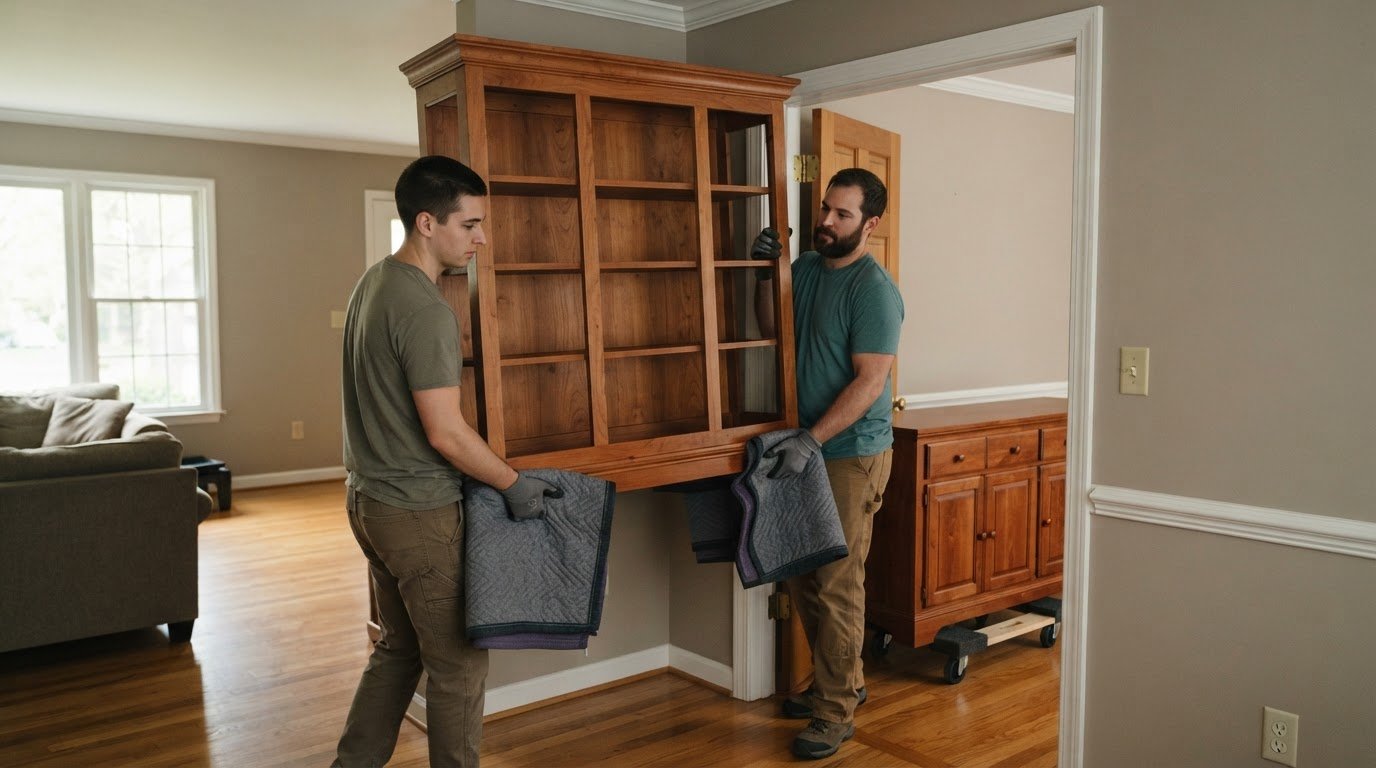
Doorways and walls need attention at tight transitions. Movers assess clearance before guiding the safe through an entrance or around a corner. A safe that fits through a hallway may still need careful positioning at the doorway. Padding can help protect exposed surfaces during close passes.
Stairs require deliberate coordination because the safe changes position as it moves between levels. Movers plan how to control and support the load at landings and turns. Suitable lifting equipment and a clear route help limit contact with stair edges, rails, and nearby walls.
Safe protection also includes its locking mechanism. Internal relockers can activate if a safe is moved improperly. Movers account for the safe’s construction and handling needs, controlling movement rather than allowing jolts or uncontrolled tilting. That care helps protect the contents and the safe’s operation.
During transport, secure handling and padding help limit shifting and surface contact. Movers plan how to load, move, and set down the safe at its destination. A sharp turn, uneven threshold, or tight entry can affect how the crew manages each transition.
Placement is part of the protection plan, not an afterthought. Movers guide the safe into its intended position instead of dragging it across finished flooring. A clear destination area and known access route help avoid last-minute adjustments beside walls, cabinets, or doorframes.
Share details about stairs, narrow doorways, and the safe’s location before moving day. These specifics help the crew plan handling, protection, and placement for the home’s actual layout.
Professional safe moving services
For a heavy burglary or fire safe in Fairfax Station, professional movers plan around its weight, access, and destination. Safe moving can include assessment, handling, loading, transport, and placement. Each stage matters: a route with stairs calls for a different plan from a clear, same-floor path through a home.
Safe movers serving Fairfax Station and Fairfax County need to account for both the safe and the home’s access points. A gun safe, fireproof document safe, or jewelry safe may need specialized handling because its size, weight, and route differ. Stair moves call for coordinated lifting and a plan to guide the safe through turns and onto each landing with control.
Before the crew arrives, share the safe’s type and approximate dimensions, its current location, and where it needs to go. Describe stairs, narrow doorways, and tight corners. A photo of a difficult turn can help show the access challenge. These details let the crew plan for the actual route rather than assume every hallway and entrance is clear.
Moving a safe within Fairfax Station or to another address requires planning at both ends. The crew considers the departure route and destination access, including steps between the entrance and final placement. A safe that clears one home’s wide doorway may meet a narrower entry at its new address. Include both locations when describing the move.
Safe relocation and bolt-down work are separate tasks. Anchored commercial depository safes require specialized tools and trained technicians for proper relocation. That work can include removal, transport, and reinstallation. It differs from moving and placing a residential safe, so clarify whether the job involves relocation only or anchoring as well.
For a Fairfax Station move, explain where the safe is and how the crew will reach it. Mention stairs, thresholds, tight turns, and the intended destination. If the move crosses Fairfax County, provide the pickup and delivery locations so access at both addresses can be considered. These details help define the work and route.
Professional handling is especially useful when stairs, tight turns, or a heavy safe complicate the route. Local moving helpers can assist with other household tasks, while the safe move needs a plan focused on controlling the load at every stage.
During stair moves, at least three trained movers handle a safe. Sharing the route details in advance helps the crew understand where coordinated handling is needed, including whether the safe must pass through a turn or reach a landing. Keep the pickup and placement information consistent when discussing the job, so the plan reflects the path at both ends. If access changes, let the moving team know before the move rather than relying on an earlier description.
The safe and access details help define the work involved. Clarify whether the service covers handling, transport, and placement, and whether anchoring is also part of the project, since relocation and bolt-down work are separate tasks. Clear details about the safe, route, and destination make it easier to plan for the specific move.
Residential gun, jewelry, and fireproof safe relocation
Safe movers plan residential relocation around the safe’s construction, route, and intended placement. A gun safe, jewelry safe, fireproof document safe, or high-security safe each needs careful handling.
Residential Gun Safe Relocation
For a gun safe, movers consider its dimensions, weight, and access from its current room. A basement location, stair landing, or narrow doorway can change the route. They plan how to control the safe through each turn, then guide it to the new placement. Share the destination and any tight access points before the move.
A jewelry safe may be smaller than a gun safe, but its finish and precise placement still matter. Movers plan the route to limit contact with walls, floors, and doorframes. A safe going into a closet, for example, may need careful alignment at the room entrance. Distance is only one part of the plan: access and final positioning also shape the work.
Fireproof Document Safe Relocation
Fireproof document safes can be very heavy because of their dense, fire-resistant construction. Movers account for the weight when planning handling and placement. They also consider floors, stairs, and doorway clearance along the route. A document safe moving from a home office to another floor needs a different plan from one crossing an open ground-floor room.
High-security safes call for careful attention to their size, construction, and route. Some high-security safes and vault components weigh thousands of pounds, making access and transport especially complex. Movers plan the full path, including removal from the home, loading, and delivery at the destination. The safe’s dimensions and the entry points at both locations guide the relocation plan.
For transport to a new address, movers need to consider both the departure and arrival routes. A safe may clear the original doorway but face a tighter entrance at its destination. Sharing both addresses, the safe type, and intended placement helps the crew plan around the actual distance and access conditions, connecting loading, transport, and final placement in one plan.
Careful handling also helps preserve the safe’s exterior finish during turns and close passages. Movers account for nearby walls, flooring, and doorframes rather than treating the safe as cargo alone. To plan a heavy safe relocation, arrange help with your safe move.
During a fireproof document safe move, safe movers may protect floors, walls, and doorways when relocating fireproof document safes. This attention to surrounding surfaces complements route planning and careful placement, especially where the safe must pass through close access points. Commercial depository safe relocation can include safe removal, transport, and reinstallation. This sequence connects the removal, transport, and setup stages, giving the relocation plan a defined scope from departure through reinstallation.
Heavy Furniture Moving
Heavy Furniture Moving is a natural next step when relocating a safe requires substantial lifting or is part of a larger household move. Its heavy-lifting service helps with bulky items, while local moving helpers can support other parts of the move. Share the safe’s type and current location, along with stairs, narrow doorways, and intended placement, so the crew can plan around the home’s layout.
Turn to Heavy Furniture Moving when the safe’s weight or access route makes moving it challenging, or when other heavy household items need attention too. Share where the safe is now, where it needs to go, and what obstacles lie between.
Contact Heavy Furniture Moving to discuss your move.
Set Up Your Safe Move With Confidence
The next step is to turn the safe’s destination and access details into a clear moving plan. If you need a residential safe-moving crew for a heavy burglary or fire safe in Fairfax Station, share where the safe is now, where it needs to go, and any access challenges. Those details help shape the move around your home instead of relying on a generic plan.
Heavy Furniture Moving helps with demanding household moves. Its Movers Near Me, Exercise Equipment Moving, and Sofa Hoisting services can also support other bulky-item needs. Keep the safe’s route and final placement at the center of the conversation, especially if the move is part of a wider home rearrangement.
Take the next step when you’re ready. Contact Heavy Furniture Moving to discuss your move and make a practical plan for the heavy lifting.
Frequently Asked Questions
How do I pick the right mover?
Choose movers who understand heavy safes as well as standard household furniture and boxes. Share the safe’s type, approximate weight, dimensions, pickup location, and destination. For a Fairfax Station home with a basement staircase, for example, stair access should shape the plan. Clear communication about loading, transport, placement, and protection helps you understand the work before it begins.
How much does a burglary fire safe weigh and what equipment is needed to move it?
Heavy Furniture Moving’s listed handling approach for gun safes uses a safe dolly and three movers, with a stated job duration of 60 to 150 minutes. Fireproof document safes can also be extremely heavy because of their dense fire-resistant construction. The safe’s dimensions and route affect equipment planning.
Can professional movers move a safe upstairs or through narrow doorways?
Yes, professional movers can plan safe moves involving stairs and tight doorways. Stairs require coordinated handling, while a narrow entry calls for careful clearance planning. Share the safe’s dimensions and photos of the stairs or tightest doorway so the crew can assess the route. For gun safes, Heavy Furniture Moving uses a safe dolly and a three-mover crew.
Does a safe moving company also bolt down or install a residential safe?
Moving and bolting down a safe are different tasks. Relocation covers handling the safe to its new position; anchoring secures it to the floor or another structure. Heavy Furniture Moving handles safe moves, but transport and placement are not bolt-down installation. If your plan includes anchoring, treat it as a separate part of the project.
Frequently Asked Questions
Choose movers who understand heavy safes as well as standard household furniture and boxes. Share the safe’s type, approximate weight, dimensions, pickup location, and destination. For a Fairfax Station home with a basement staircase, for example, stair access should shape the plan. Clear communication about loading, transport, placement, and protection helps you understand the work before it begins.
Heavy Furniture Moving’s listed handling approach for gun safes uses a safe dolly and three movers, with a stated job duration of 60 to 150 minutes. Fireproof document safes can also be extremely heavy because of their dense fire-resistant construction. The safe’s dimensions and route affect equipment planning.
Yes, professional movers can plan safe moves involving stairs and tight doorways. Stairs require coordinated handling, while a narrow entry calls for careful clearance planning. Share the safe’s dimensions and photos of the stairs or tightest doorway so the crew can assess the route. For gun safes, Heavy Furniture Moving uses a safe dolly and a three-mover crew.
Moving and bolting down a safe are different tasks. Relocation covers handling the safe to its new position; anchoring secures it to the floor or another structure. Heavy Furniture Moving handles safe moves, but transport and placement are not bolt-down installation. If your plan includes anchoring, treat it as a separate part of the project.