Move a Heavy Cherry Hutch in Reston Without Cracking Its Joints
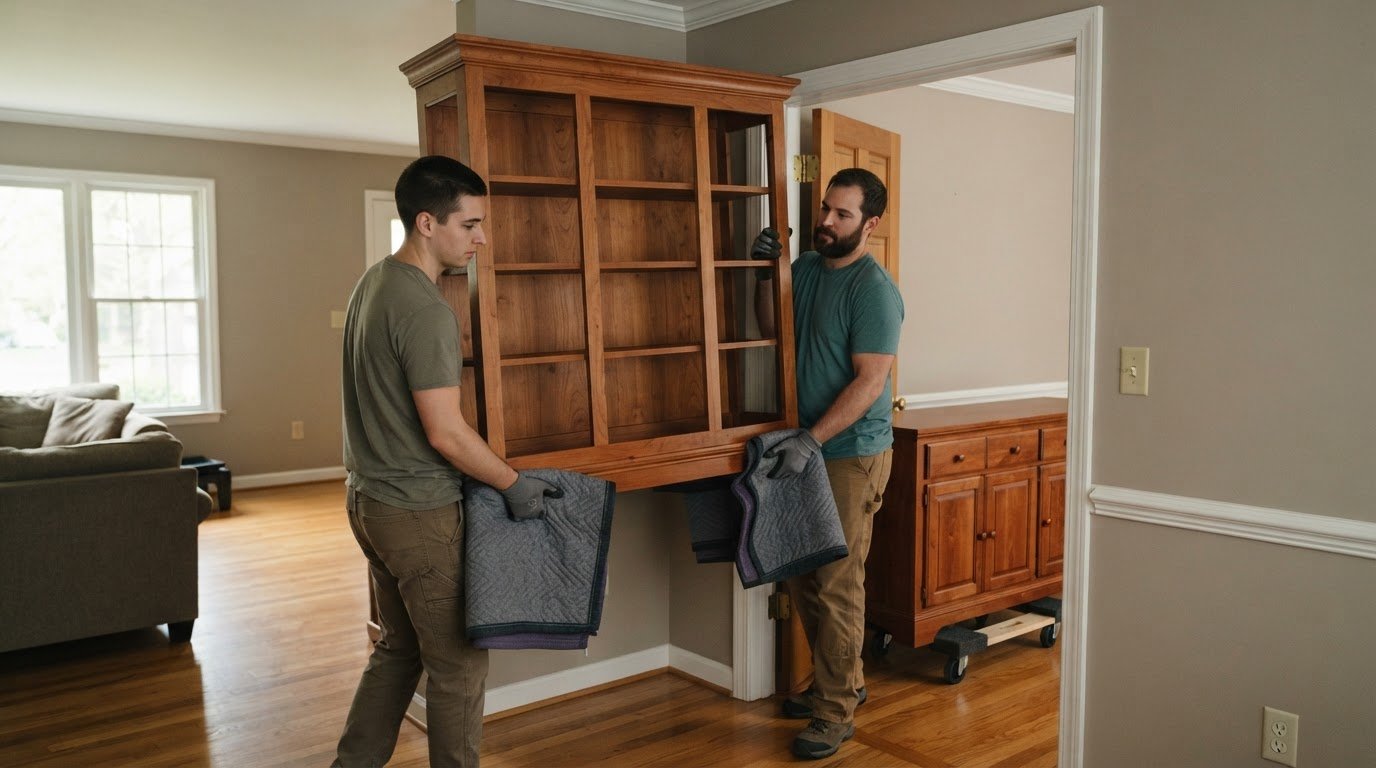
To move a heavy solid cherry hutch without cracking its wood joints in Reston, start by checking the hutch’s condition before lifting. Look for loose or gapped joints and inspect the panels and edges, since hidden weakness can make carrying risky. Safe handling depends on how the hutch is joined, not just on its weight.
It’s natural to worry that a shift or twist could damage a treasured piece. Knowing what to inspect and how the route affects handling helps you plan more carefully. Before the move, share details about the hutch and its path out of the home so the team can account for vulnerable areas.
Key Takeaways
- Movers inspect for loose or gapped joints and assess panel and edge joints before deciding how to handle the hutch.
- Professional disassembly depends on the hutch’s construction and condition, with parts handled to avoid stressing vulnerable joints.
- Protective wrapping and careful handling help shield cherry wood, its finish, doors, and shelves during the move.
- The right equipment and crew size depend on the hutch’s weight, shape, and moving route.
- Doorways, stairs, and hallways affect the carry plan, so movers account for tight turns and clearance before transporting the hutch.
How professional movers disassemble a heavy hutch safely without damaging wood joints
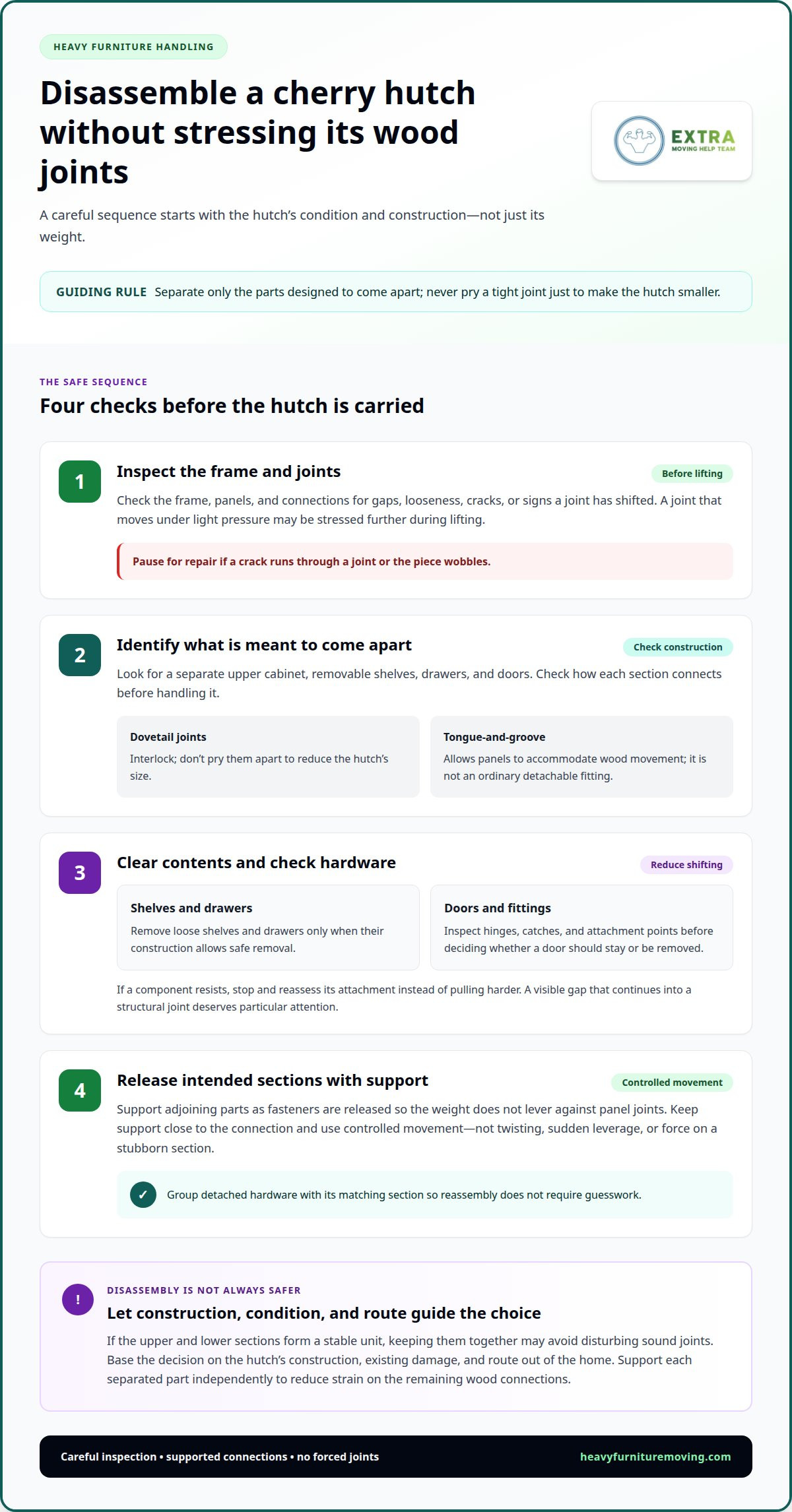
Before taking anything apart, inspect the hutch’s frame, panels, and connections. Look for gaps, looseness, cracks, or signs that a joint has shifted. A joint that moves under light pressure may be stressed further during lifting. If a crack runs through a joint or the piece wobbles, arrange professional repair before moving it. For anyone asking how to move a heavy solid cherry hutch without cracking wood joints in Reston, this inspection is an essential first step.
Identify which parts are designed to come apart. A hutch may have a separate upper cabinet, removable shelves, drawers, or doors. Check how each section connects before handling it. Don’t treat glued or interlocking joints like ordinary detachable fittings: forcing a tight connection can pull wood fibers apart or widen an existing gap.
- Clear removable contents. Movers take out loose shelves and drawers when their construction allows safe removal. This reduces shifting weight inside the cabinet.
- Inspect doors and hardware. They check hinges, catches, and attachment points before deciding whether a door should stay in place or be removed.
- Separate intended sections. Movers support adjoining parts as they release fasteners, keeping the weight from levering against panel joints.
- Keep pieces organized. They group detached hardware and match it to its section, so reassembly doesn’t require guesswork.
The joint type affects the handling plan. Dovetail joints interlock, while tongue-and-groove construction allows panels to accommodate wood movement. Neither type should be pried apart just to make the hutch smaller. Distinguish built-in joints from connections designed for disassembly to preserve the original fit between a panel and its frame.
Solid cherry can respond to moisture changes in the surrounding air. A finish may slow expansion and contraction, but it cannot prevent them. Avoid twisting the cabinet to release a stubborn section. Keep support close to the connection and use controlled movement rather than sudden leverage. This matters when planning how to move a heavy solid cherry hutch without cracking its wood joints in Reston.
Drawer construction can offer useful clues about the hutch’s condition. A dovetailed drawer corner may remain secure without glue, while a loose or separated corner can signal weakness. Examine the corners before lifting or removing a drawer. If a component resists, pause and reassess its attachment instead of pulling harder. Pay particular attention to a visible gap that continues into a structural joint.
Disassembly isn’t always the safest choice. If the upper and lower sections form a stable unit, keeping them together may avoid disturbing sound joints. Base the decision on the construction, existing damage, and route out of the home. Support each separated part independently to reduce strain on the remaining wood connections.
How professional movers protect cherry wood, finish, doors, and shelves during a move
Protect a cherry hutch from hard contact, shifting, and pressure. Before wrapping it, inspect for loose hardware, exposed edges, and existing finish damage. A clean moving blanket creates a soft buffer against scuffs, while firm padding helps shield corners during carrying. Keep the covering smooth, because a bunched fold can press against a polished surface.
Before adding a blanket, remove dust or grit that could rub against the finish. Keep adhesive tape away from cherry surfaces: tape placed directly on varnish or lacquer can leave residue or disturb the finish when removed. Secure protective layers around the covering instead, keeping fasteners away from the visible wood.
- Cover broad panels. Movers lay clean padding across doors, sides, and the hutch’s top. They smooth folds so pressure doesn’t gather at one spot.
- Shield corners and edges. Corner padding protects exposed edges, where a bump can chip the finish or dent the wood.
- Protect contact points. Movers add padding where straps or carrying grips could touch the cabinet, then check that nothing presses against a joint.
- Keep coverings in place. The team checks the wrap as the hutch moves, correcting any shift before it exposes a finished surface.
Protect doors from swinging and pressure on their hinges. Close each door gently and secure it so it can’t swing open during a turn. Avoid tightening a strap across the door face, where it could press on the panel or hardware. If a door must be removed to clear the route, pad it separately and keep it with the hutch.
Give shelves their own attention. A loose shelf can slide, strike a side panel, or fall during a tilt. Remove shelves designed to lift out, wrap them separately, and prevent them from rubbing together. For a fixed shelf, protect the front edge and don’t use it as a handhold. If the hutch has glass shelves, protect and identify them separately.
For example, a tall cherry hutch with a projecting crown needs protection around the crown’s corners and upper edge. Account for its profile before turning through a hallway. Check the blanket after a pause, since a shifted covering can expose a corner. This layered approach protects the finish without putting force on doors, shelves, or wood joints.
What equipment professional movers use to move a heavy hutch, including dollies, straps, and moving blankets
Moving equipment has different uses. A furniture dolly supports weight across a level floor, straps help control the cabinet, and moving blankets separate the cherry finish from nearby surfaces. Choose equipment according to the hutch’s shape, weight distribution, and route. It should support the cabinet without squeezing its doors, shelves, or joints.
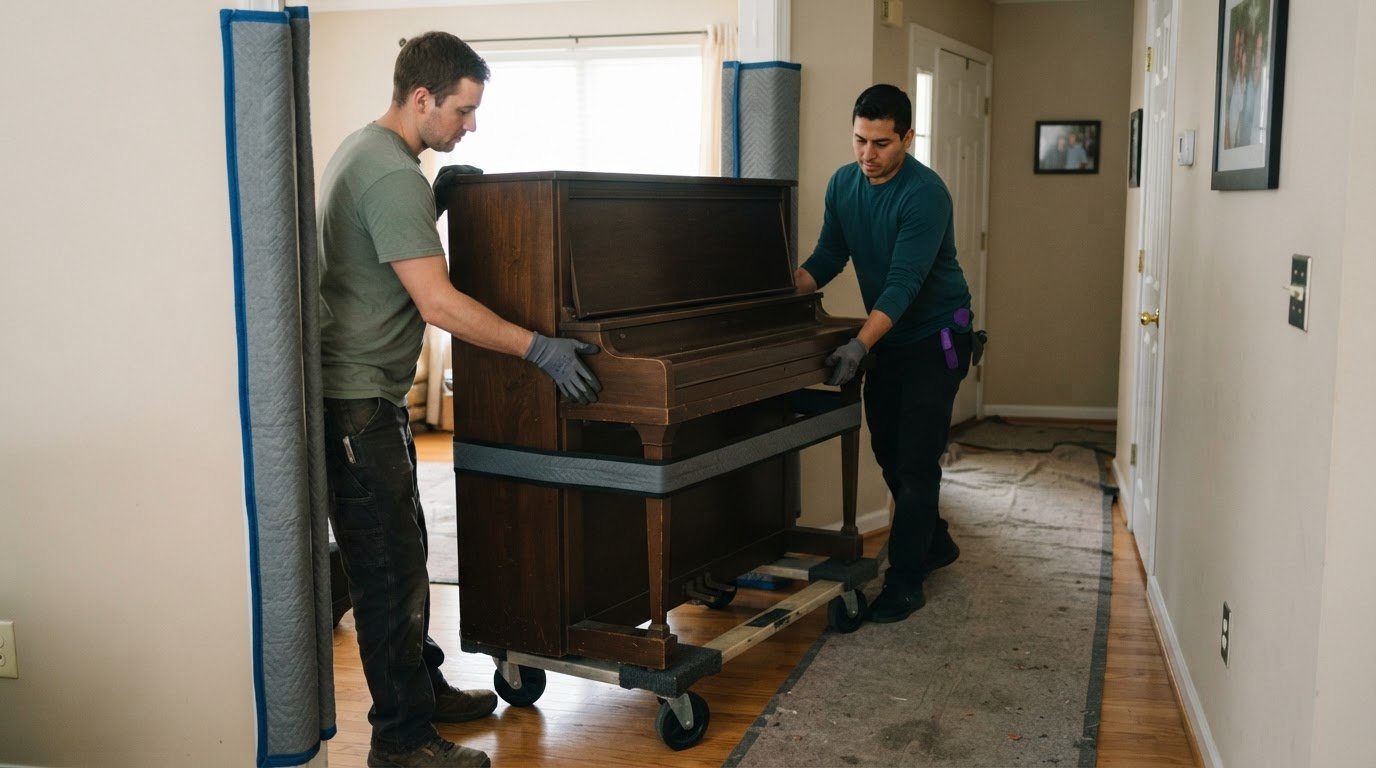
Choose a dolly that supports the hutch’s base and can roll along the planned route. Before loading, check the platform and wheels for debris or damage. A narrow dolly may not support a wide cabinet evenly. If the hutch has a projecting base or uneven underside, account for those contact points so the cabinet won’t rock.
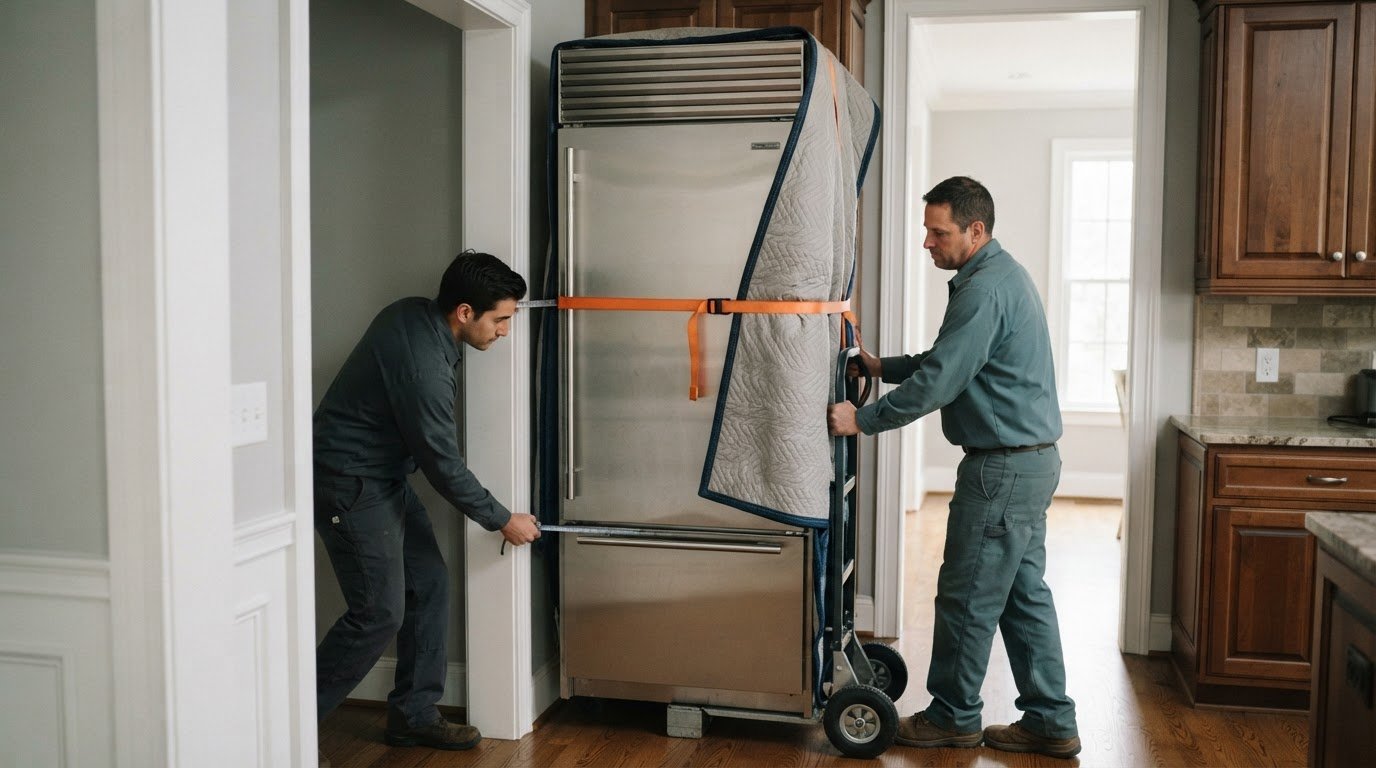
Straps help control the load, but placement matters. Position them around sturdy sections of the frame, not across a loose door or delicate panel, and keep pressure off finished edges. During a turn, use the straps to guide the cabinet rather than pulling hard enough to twist its frame. A strap can steady a load, but it can’t strengthen a weak joint.
- Moving blankets cushion finished panels and help prevent rubbing against walls or other surfaces.
- Corner protection shields exposed edges that could chip during a doorway turn.
- Straps help control the hutch while keeping pressure away from vulnerable parts.
- A furniture dolly supports rolling movement when the floor and route suit its use.
Blankets should cover contact areas without bunching. A thick fold under one corner can create uneven support, so smooth the padding before securing it. Keep fasteners away from the cherry wood. If a blanket shifts during the move, stop and reset it before exposed surfaces rub against a doorway or wall.
For example, pad the upper corners of a tall hutch with a projecting crown before moving it toward a hallway. Assess the crown separately from the broad cabinet sides, since it can catch on a door frame. A dolly may help across open flooring, but stairs or uneven thresholds call for another controlled handling plan. Don’t force rolling equipment onto a route it can’t safely travel.
Use equipment as a system: blankets protect the finish, straps assist control, and a dolly supports movement where appropriate. Match each tool to the hutch’s construction and the next part of the route. The right setup helps limit bumps and twisting forces that could stress solid-wood joints during transport.
How many people professional movers need to move a heavy solid wood hutch safely
The right crew size depends on the hutch. Assess its weight distribution and the route before deciding how many people are needed. A wide hutch with a separate upper section has different handling needs from a compact, one-piece cabinet. The goal is to have enough people to support and control the piece without twisting its frame.
Assess the hutch’s shape and available grip points first. A tall cabinet may need people at both ends to keep it balanced. A broad base can make it hard for one person to see the far edge during a turn. Removable drawers and shelves also affect the load and where the cabinet can be held.
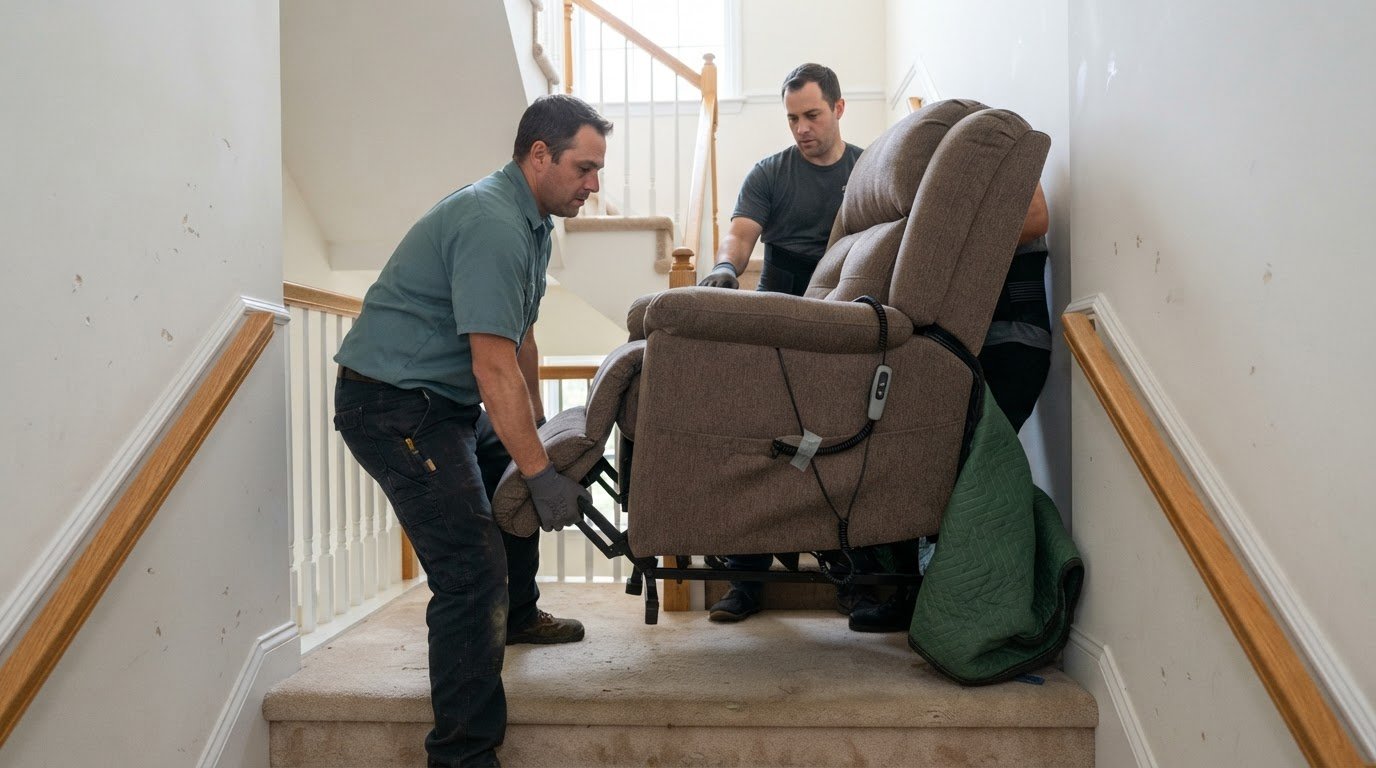
The route also affects the crew plan. An open, level hallway allows a different carry pattern from a staircase or narrow doorway. Account for landings, sharp turns, and limited space to reposition hands. At a tight stair landing, for example, the team may need to pause in a stable position and coordinate its next move. Make each person’s role clear before lifting.
- Cabinet size and shape: A wide top or tall upper section changes balance and grip access.
- Construction: A one-piece hutch differs from one with sections designed to separate.
- Condition: A loose joint or unstable leg can affect where movers support the frame.
- Route: Stairs, narrow turns, and doorway clearance influence how the team positions itself.
Before lifting, agree on who leads the movement and who watches each side. A clear signal helps everyone move together instead of pulling in different directions. If a doorway calls for a change in angle, pause and reset the grip before continuing. Coordination matters because uneven force can strain a solid-wood joint.
Consider a cherry hutch with an upper cabinet that separates from its base. Assess each section independently rather than treating both as one load. A narrower section may be easier to guide, but its joints and edges still need support. If the sections stay connected, plan around the full height and balance of the assembled hutch.
Crew size should follow the actual handling demands, not a generic rule. Consider weight, dimensions, grip access, joint condition, and route complexity before assigning positions. For a Reston home with stairs or a tight hallway, those details shape the plan from the first lift to the final placement.
How professional movers transport a heavy hutch through narrow doorways, stairs, and hallways
Plan the route before lifting the hutch. Inspect door openings, hallway turns, stair landings, and the destination room. The cabinet’s widest point and height, including projecting trim, affect how it can pass through each opening. A doorway that looks clear from the front may leave little room to turn once the hutch reaches the frame.
At a narrow doorway, approach with the hutch steady and aligned to the opening. Pause before turning, check clearance around the crown and sides, then adjust the angle together. Don’t drag an edge along the jamb or use the door frame to support the cabinet. If the angle won’t work, reposition rather than forcing the hutch through.
Hallways require controlled movement, especially when a corner follows a long straight section. Account for wall projections, nearby furniture, and the space needed to pivot. A hutch may need to turn gradually at an L-shaped hallway instead of rotating in one sharp movement. Communicate before each change in direction and keep the cabinet supported as its orientation shifts.
- At each doorway: Movers check the cabinet’s profile against the opening and protect exposed edges.
- At a hallway turn: The team pauses, coordinates the pivot, and watches both ends.
- On stairs: Movers plan positions around the stair angle and landing before starting the carry.
- At the destination: They check the final approach and set the hutch down with its base supported.
Stairs require careful coordination because the cabinet changes angle between steps. Agree on signals and keep the load steady through each transition. At a landing, pause where there’s room to reset the grip. Don’t rush a turn or let one end swing freely: sudden twisting can stress the hutch’s frame and joints.
Route conditions can change the handling plan. A tight stairwell can make a one-piece hutch harder to maneuver, so assess whether its upper section is designed to separate before carrying it. Use the hutch’s construction and actual clearance to decide how to proceed. Keep the path controlled from the first doorway to the final placement in the Reston home.
For a hutch facing narrow entries or stairs, arrange professional heavy furniture moving with a route plan built around its size and condition.
Heavy Furniture Moving
Heavy Furniture Moving can help with the planning and physical work involved in moving a solid cherry hutch. Turn to the team when the piece is heavy, its joints show gaps or looseness, or the route includes narrow doorways, stairs, or tight hallway turns. Share the hutch’s approximate dimensions, visible damage, removable sections, and the route details. These specifics help shape a handling plan around the cabinet’s condition and the home’s layout. The goal is to move the hutch with controlled support, protecting its wood and joints throughout the trip. If you’re planning a hutch move in Reston, contact Heavy Furniture Moving to discuss the job.
Set Up Your Hutch Move With Confidence
Planning how to move a heavy solid cherry hutch in Reston without cracking its wood joints starts with treating the move as a coordinated job, not a last-minute lift. Discuss the hutch’s condition and the home’s access from the start. That gives the moving team a clearer picture of the task and helps you make a confident plan.
Professional help can make sense when the hutch is too heavy to handle comfortably, has visible joint concerns, or must pass through a challenging route. Heavy Furniture Moving offers Movers Near Me for furniture moves. Share the details that matter about your piece, then plan a move that fits your home and priorities.
Contact Heavy Furniture Moving to discuss your hutch move. A careful plan is a solid first step toward moving a valued piece with confidence.
Frequently Asked Questions
How do professional movers assess whether a solid cherry hutch can be safely moved in one piece?
Movers assess the hutch’s frame, connections, and support points, then compare its assembled dimensions with the entire route. They consider whether the cabinet can be carried without bending, twisting, or placing pressure on unsupported sections. A hutch that fits through the doorway may still be difficult to turn in a stairwell or room entrance. The decision depends on both its structural condition and the space available for controlled handling.
Should a professional furniture mover handle a heavy antique or solid cherry hutch?
Yes, professional movers can be a sensible choice when a heavy or antique hutch is difficult to grip, has delicate construction, or must pass through tight spaces. They can plan handling around the piece’s weight, shape, and condition rather than relying on an improvised lift. For a Reston move, describe the hutch and its route when arranging help so the team has useful context for planning the job.
What are the risks of lifting a hutch by its top or carrying it on its side
Lifting by the top or carrying the hutch on its side can put leverage or twisting force on its frame and vulnerable joints, potentially widening gaps or causing cracks. Support the cabinet near its connections and move it in a controlled way.
Frequently Asked Questions
Movers assess the hutch’s frame, connections, and support points, then compare its assembled dimensions with the entire route. They consider whether the cabinet can be carried without bending, twisting, or placing pressure on unsupported sections. A hutch that fits through the doorway may still be difficult to turn in a stairwell or room entrance. The decision depends on both its structural condition and the space available for controlled handling.
Yes, professional movers can be a sensible choice when a heavy or antique hutch is difficult to grip, has delicate construction, or must pass through tight spaces. They can plan handling around the piece’s weight, shape, and condition rather than relying on an improvised lift. For a Reston move, describe the hutch and its route when arranging help so the team has useful context for planning the job.