Residential Safe Movers in Haymarket for Stair Delivery

A 1,000-pound fire safe can go up or down stairs, but the move needs careful planning and enough people. A stair move requires at least three people, and the handling equipment must be rated to support at least the safe’s weight. Residential safe movers for a 1000 lb fire safe delivery in Haymarket assess the route before choosing how to handle the load.
It’s reasonable to worry about tight turns, steep stairs, and damage to floors or doorframes. The right plan accounts for the safe’s dimensions and weight, stair width, landings, clearance, and the path through the home. This guide explains how movers assess stair access, select suitable equipment, and protect floors, doorframes, and corners during delivery.
You’ll also learn why a safe’s contents and door position matter, and why moving one downstairs is especially demanding. When the route and handling plan are clear from the start, delivery is easier to prepare for.
Key Takeaways
- A 1,000-pound safe needs handling equipment rated for its weight and a carefully planned route.
- Stair delivery calls for a coordinated crew, controlled movement, and attention to tight turns and landings.
- Floor runners, protective sheets, and corner guards help shield surfaces along the delivery path.
- Safe weight, door position, and contents all affect how movers plan a secure delivery.
- Learn what details help movers assess access and prepare for a heavy safe delivery in your home.
Safe-moving equipment
Haymarket heavy-safe delivery companies plan equipment around the safe’s weight, dimensions, and route. For a 1,000-pound fire safe, every dolly or other load-bearing tool must be rated to support at least that weight.
Start with the load itself. A fire-rated safe can be heavy, and stored items may add to its weight. The safe should be emptied before moving to reduce its weight and strain on equipment. Movers also secure the door so it can’t swing and shift the load during transport.
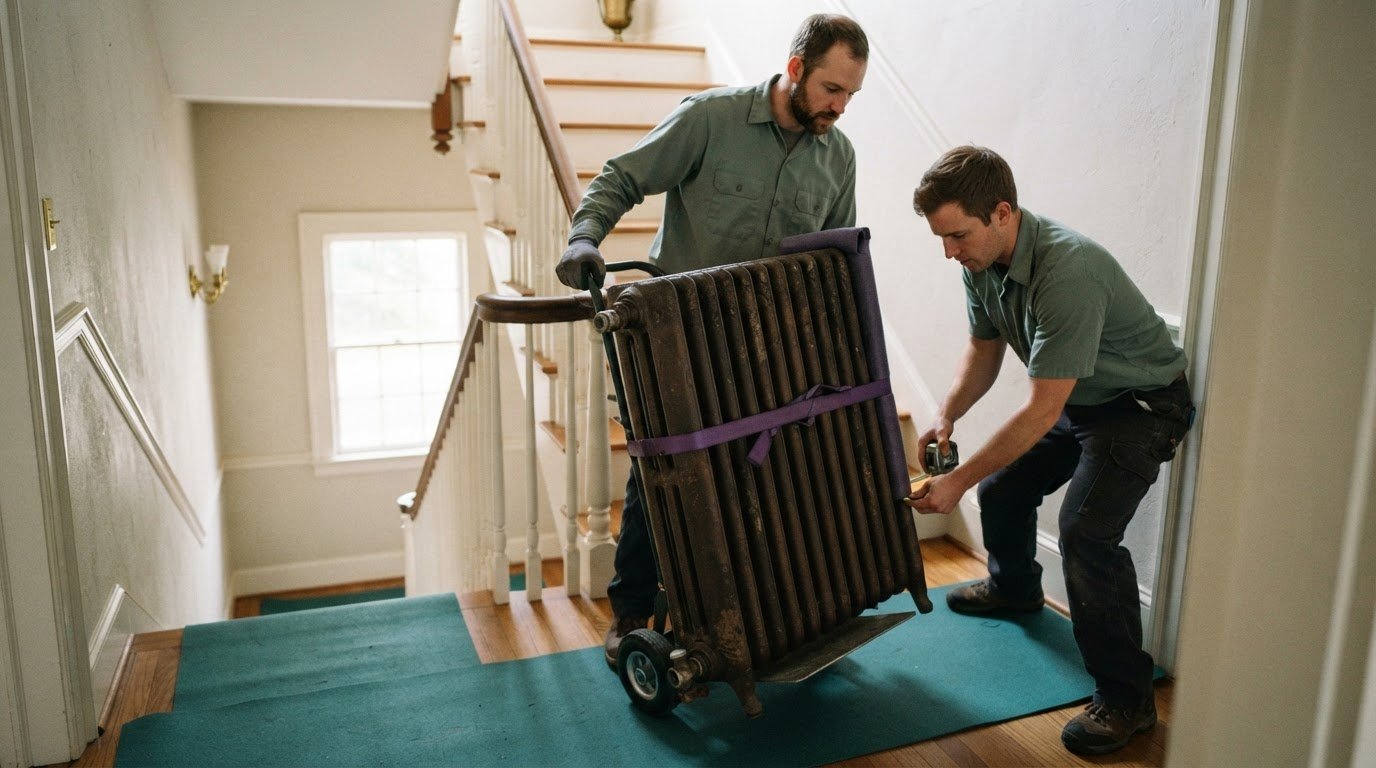
For a heavy safe, use a heavy-duty safe dolly suited to the load rather than assuming an ordinary appliance dolly will be sufficient. The equipment must match the safe’s actual weight, and straps help secure it during controlled movement. The crew can also use protective materials along the route:
- Heavy-duty safe dollies: Support and roll the safe when their load rating suits its weight.
- Straps: Help keep the safe stable on the dolly during transport.
- Plywood: Protects vulnerable flooring along the planned path.
- Moving blankets: Cushion surfaces and help prevent scrapes during close clearance moves.
The route determines the equipment and handling plan. Moving a safe between rooms may involve narrow doorways or tight hallway turns. A basement delivery adds stairs and landings, where the crew must keep the load controlled. Moving the safe to a new home also requires planning the route out, transport, and access at the destination. Every part of the plan must account for the safe’s dimensions and the equipment being used.
Residential and commercial moves can involve safes of different sizes and destinations. Movers should assess the specific safe rather than choose equipment by category alone. For stair moves, the crew needs to account for the staircase and plan controlled handling, particularly on the descent, when gravity adds difficulty.
Are safe movers insured for damage to a home or safe in Virginia? Coverage depends on the mover’s policy and the written moving agreement. The word “insured” alone does not explain what damage is covered. Review the coverage terms and claims process in writing before the move.
When choosing a mover, look for a clear equipment and route plan. Share the safe’s weight, dimensions, current location, destination, and stair access. Ask how the crew will secure the load, protect floors and walls, and navigate tight turns. A specific plan helps show whether the people and equipment suit the delivery.
Choose residential safe movers in Haymarket who assess the safe’s weight, dimensions, route, and destination access before selecting equipment. Look for a clear plan covering load security, floor and wall protection, stairs, and tight turns.
Protecting floors, doorframes, and corners
Before moving a safe, the crew maps its path from the pickup point to its final position. That route may cross hardwood, tile, laminate, carpet, stairs, and narrow doorways. Each surface needs suitable protection. A floor runner can shield a straight hallway, while plywood can protect hardwood, tile, and laminate along the safe’s path.
Evaluating the route and floor load starts with the safe and the home. Movers consider the safe’s weight, floor type, turns, thresholds, and changes in level. They identify where the load will travel and where floor protection needs extra coverage. These details also help shape the quote, since access and protection needs differ from home to home.
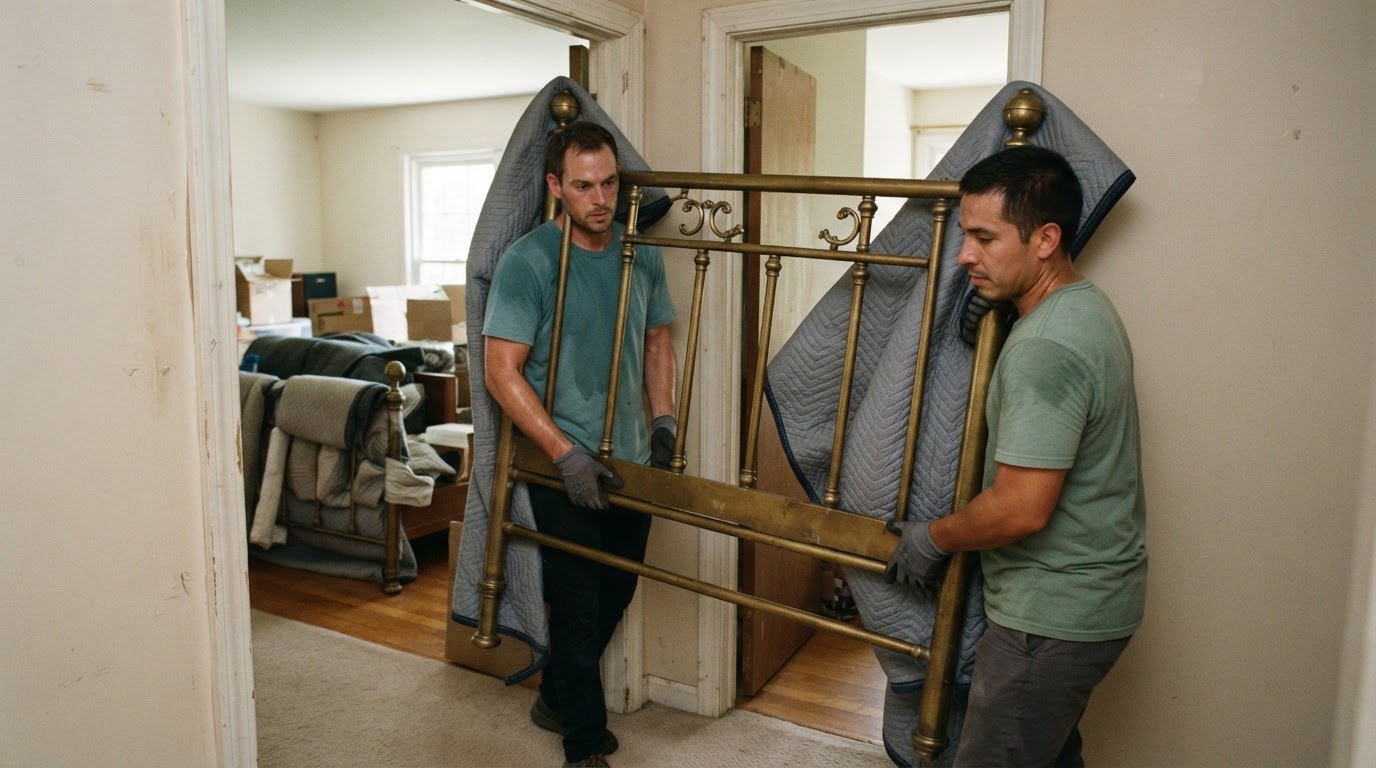
Doorframes and corners need their own protection plan. Movers can place corner protectors on exposed edges and moving blankets over vulnerable surfaces. Before passing through a doorway, the crew considers the safe’s width, the opening, and available turning space. A tight turn may call for a slower approach and careful repositioning, not forcing the safe against the frame.
- Floors: Use runners along common paths and plywood over vulnerable hard flooring.
- Doorframes: Cover exposed edges before moving the safe through an opening.
- Corners: Add corner protectors where a turn brings the load close to a wall.
- Stairs: Protect the route and landings, not only the room floors.
Protection should cover the entire route, not just the room where the safe starts. A move from a bedroom to a basement, for example, may cross a hallway, doorway, and staircase. The crew plans protection for each transition. On stairs, careful attention to the landing and adjoining walls helps reduce contact during repositioning.
Protective materials work together. A moving blanket cushions a wall or doorframe, while a corner protector shields an exposed edge. Plywood creates a firm protective layer over hardwood, tile, or laminate. Movers place coverings before the safe enters each area and keep the route clear so materials stay flat and stable.
For a clear estimate, provide the safe’s destination and describe the route, including flooring changes, stairs, and tight corners. A planned heavy-item move accounts for both the load and the surfaces around it. Careful preparation gives the crew a defined path and helps protect floors, walls, and doorframes during delivery.
Movers can protect floors and walls with floor runners, moving blankets, plywood sheets, and corner protectors. Together, these are options for protecting the surfaces around the safe’s moving path. Plywood is recommended for protecting hardwood, tile, and laminate floors along that path. The recommendation specifically covers those floor types, while the other listed materials can also be used for floor and wall protection.
Can you move a safe up or down stairs?
Yes, a safe can be moved on stairs when its weight, dimensions, route, crew, and handling plan are assessed together. A 1,000-pound safe makes clearance and control especially important. Moving it downstairs is harder than moving it upstairs because the crew works against gravity.
Before delivery, movers measure access points from the entrance to the final room. This includes stair width, ceiling clearance, door openings, hallway width, landings, and turning space. They compare those measurements with the safe’s height, width, and depth. A landing may allow the safe through a straight passage but leave too little room to turn.
Each measurement can affect the route. A narrow doorway before a stairwell, for example, may limit how the safe approaches the first step. A low ceiling above a landing can restrict its position during a turn. Movers need to consider these factors together rather than judge the stairs from the entrance alone.
Carrying a safe on stairs requires coordinated handling. A staircase move needs a minimum of three people. The crew keeps the safe under control and moves it slowly, particularly on a descent. The handling setup must suit the safe’s weight and route, with each person’s role planned before the move starts.
A controlled descent requires careful attention at every step and landing. The safe must move deliberately, without sudden shifts that could affect balance or clearance. If a turn changes its orientation, the crew accounts for that movement before advancing. The safe’s weight makes an improvised approach unsuitable.
To prepare for a 1,000-pound delivery, share the safe’s weight and dimensions, its current location, and the intended room. Describe the route, including stairs, hallway turns, door openings, and landings. Mention stored contents and any tight access points, so movers can plan around the actual load and path.
- Entry: Door width, threshold, and nearby hallway space.
- Stairs: Width, ceiling clearance, landings, and turns.
- Destination: Door opening and the safe’s final position.
- Load: Safe weight, dimensions, and whether it contains items.
Clear details help movers assess whether the safe can pass through each access point and how to control it. Hiring professional movers for a safe over 500 pounds is recommended. A planned route gives the crew a practical basis for choosing the handling approach before the stair carry begins.
A steady pace and controlled handling help keep the descent consistent from the first step to the last.

Safety and damage prevention during a safe move
Moving a 1,000-pound safe without professional movers risks losing control of the load, damaging floors or doorframes, and causing serious injury. The weight and route make a safe move a poor fit for improvised equipment or an unplanned crew.
Professionals assess whether a move is feasible by considering the safe’s weight and dimensions, the access route, the stair layout, and the equipment available. A safe over 500 pounds is a strong reason to hire professionals. A tight hallway, sharp turn, or staircase can add handling challenges even when the safe fits through the entry.
Preparation helps reduce avoidable risks. Movers plan the route, choose equipment rated for the load, and coordinate control at each transition. Empty the safe to reduce the load on the equipment, and lock its door to prevent it swinging during the move. Firearms and ammunition should travel separately in a secure, locked container.
When requesting a quote, share the details the crew needs to plan the move: the safe’s weight and dimensions, pickup and delivery locations, and whether the route includes stairs, narrow doorways, or tight turns. Include the safe’s contents and intended destination room so the crew can assess the load and access conditions.
- Safe details: Weight, dimensions, and whether it can be emptied.
- Access: Stairs, landings, hallways, door openings, and turns.
- Locations: Current room, destination room, and any transport between homes.
- Timing needs: Preferred scheduling window and any access limits at either location.
Booking ahead gives the crew time to plan around the home’s access and equipment needs. The schedule should account for both pickup and delivery, including entry access and the room where the safe will go. A basement delivery, for example, requires a different route plan from moving a safe between rooms on one floor.
Before moving day, confirm the agreed details, including the route, safe weight, destination, and arrival arrangements. If the safe’s location or access changes, share the update before the crew arrives. A blocked hallway or a different destination room can affect the original handling plan.
A clear quote request and coordinated schedule help the crew prepare for the actual job, not an assumed one. For a heavy safe, matching the people, equipment, and route is essential to controlling the load and reducing the risk of damage.
Trained movers and equipment for handling heavy safes
A safe’s weight changes the move from routine furniture handling to a coordinated heavy-load job. A full-size gun safe typically weighs 600 to 1,000 pounds, while a fire-rated safe typically weighs 800 to 1,500 pounds. A 1,000-pound safe sits firmly in the range where the crew, equipment, and route must be planned together.
Professional handling starts with the actual load, not the safe’s label or appearance. Movers account for its weight, dimensions, door position, and contents. Empty the safe before moving, since firearms, ammunition, documents, and accessories can add weight. Locking the door prevents it swinging and shifting the load during movement.
The equipment must be rated to support at least the safe’s weight. Heavy-duty safe dollies are commonly used for gun-safe moves, while many appliance dollies aren’t designed for safes weighing 800 to 1,500 pounds. For a 1,000-pound load, choosing a tool based on its name rather than its rating creates an avoidable risk.
People and equipment work as one system. A large gun safe over 500 pounds shouldn’t be moved without the right equipment and enough people. Stair access raises the challenge: a staircase move requires at least three people, and a descent is harder because the crew works against gravity. Coordination matters at landings and turns, where the safe’s direction and balance can change.
Safe handling also differs from moving ordinary furniture. A sofa or table can often be tilted or repositioned more easily. A heavy safe has concentrated weight, so the route, floor surface, doorway clearance, and stair layout all affect how the crew can control it. A 300-pound object and a 1,000-pound safe don’t call for the same handling plan.
For a safe between 200 and 400 pounds, a heavy-duty dolly and at least two people are required. As weight rises, so does the importance of matching crew size and equipment to the load. Professionals are recommended for safes over 500 pounds. These thresholds help show why a 1,000-pound fire safe is not a suitable casual lifting task.
Before the move, the crew can use the safe’s measurements and access details to plan how to handle it. Share whether it is moving upstairs, downstairs, or between homes. This lets movers consider equipment ratings, crew coordination, and route conditions together.
If you’re planning a heavy safe delivery, arrange heavy-item moving help for a route and handling plan built around the load.
Heavy Furniture Moving
Heavy Furniture Moving is a practical choice when a safe’s weight, stairs, or tight access make delivery difficult to manage. The team handles heavy and bulky residential moves, planning the safe’s route and coordinating its movement into the intended room.
Share the safe’s weight and dimensions, current location, destination, and any stairs or narrow turns. These details help the team plan how to handle it in your home. For a safe delivery that needs careful coordination, contact Heavy Furniture Moving to arrange the move.
Contact Heavy Furniture Moving to discuss your safe delivery.
Plan the Next Step for Your Safe Delivery
A heavy safe move is easier to plan when the delivery details are clear from the start. Note the safe’s destination room, access restrictions, and any changes to the route or schedule. For residential safe movers for 1,000 lb fire safe delivery in Haymarket, sharing those details helps set up a move that fits the home and the load.
Heavy Furniture Moving handles demanding residential moves, with services including Movers Near Me, Exercise Equipment Moving, and Sofa Hoisting. If the safe is part of a larger move, describe the other heavy items and where they need to go. This gives the team a clearer picture of the work.
Take the next step when you’re ready. Contact Heavy Furniture Moving to discuss your safe delivery and move forward with a clear plan.
Frequently Asked Questions
How do I pick the right mover?
Choose movers equipped to handle heavy residential items and plan around your home’s access. Heavy Furniture Moving handles safes and other bulky household items. Share the safe’s make or model, if known, its dimensions, and the delivery address. Photos of the safe and route can help show narrow entryways or unusual stair layouts while the move is being planned.
What factors affect the price of moving a 1,000 lb fire safe?
Price depends on the specific job, including travel between locations, access conditions, and the safe’s placement at pickup and delivery. A ground-floor move with clear access differs from one involving a basement, stairs, or tight turns. The requested date and any additional heavy items can also shape the plan. Provide these details with your quote request so the upfront total reflects the work involved.
Do safe movers in Haymarket provide stairs, tight-turn, and basement delivery?
Heavy Furniture Moving handles safes, with delivery planning for stairs, tight turns, and basement access. Send photos of the safe and route, including staircases and narrow areas. Mention any unusual opening the safe must pass through. Clear visuals help the team understand the space and plan for access challenges.
How do movers protect floors when delivering a heavy safe?
Floor protection can include coverings along the route and added protection at vulnerable transitions. Heavy Furniture Moving includes wrap and straps, and crews use masonite floor protection. Describe the flooring at both locations, especially if the safe must cross hardwood, tile, or a finished basement floor. This helps the team plan to protect the surfaces along the route.
Haymarket VA heavy safe delivery and installation companies
Choose residential safe movers in Haymarket who assess the safe’s weight, dimensions, route, and destination access before selecting equipment. Look for a plan covering load security, floor and wall protection, stairs, and tight turns.
Compare local safe moving companies, services, and reviews near Haymarket VA
Compare movers by whether they assess the safe and route, use equipment rated for the load, and explain how they will secure the safe and protect floors and walls. Ask how they plan to handle stairs, landings, and tight turns.
Frequently Asked Questions
Choose movers equipped to handle heavy residential items and plan around your home’s access. Heavy Furniture Moving handles safes and other bulky household items. Share the safe’s make or model, if known, its dimensions, and the delivery address. Photos of the safe and route can help show narrow entryways or unusual stair layouts while the move is being planned.
Price depends on the specific job, including travel between locations, access conditions, and the safe’s placement at pickup and delivery. A ground-floor move with clear access differs from one involving a basement, stairs, or tight turns. The requested date and any additional heavy items can also shape the plan. Provide these details with your quote request so the upfront total reflects the work involved.
Heavy Furniture Moving handles safes, with delivery planning for stairs, tight turns, and basement access. Send photos of the safe and route, including staircases and narrow areas. Mention any unusual opening the safe must pass through. Clear visuals help the team understand the space and plan for access challenges.
Floor protection can include coverings along the route and added protection at vulnerable transitions. Heavy Furniture Moving includes wrap and straps, and crews use masonite floor protection. Describe the flooring at both locations, especially if the safe must cross hardwood, tile, or a finished basement floor. This helps the team plan to protect the surfaces along the route.