Residential Safe Movers for Tight Closet Installations in Haymarket
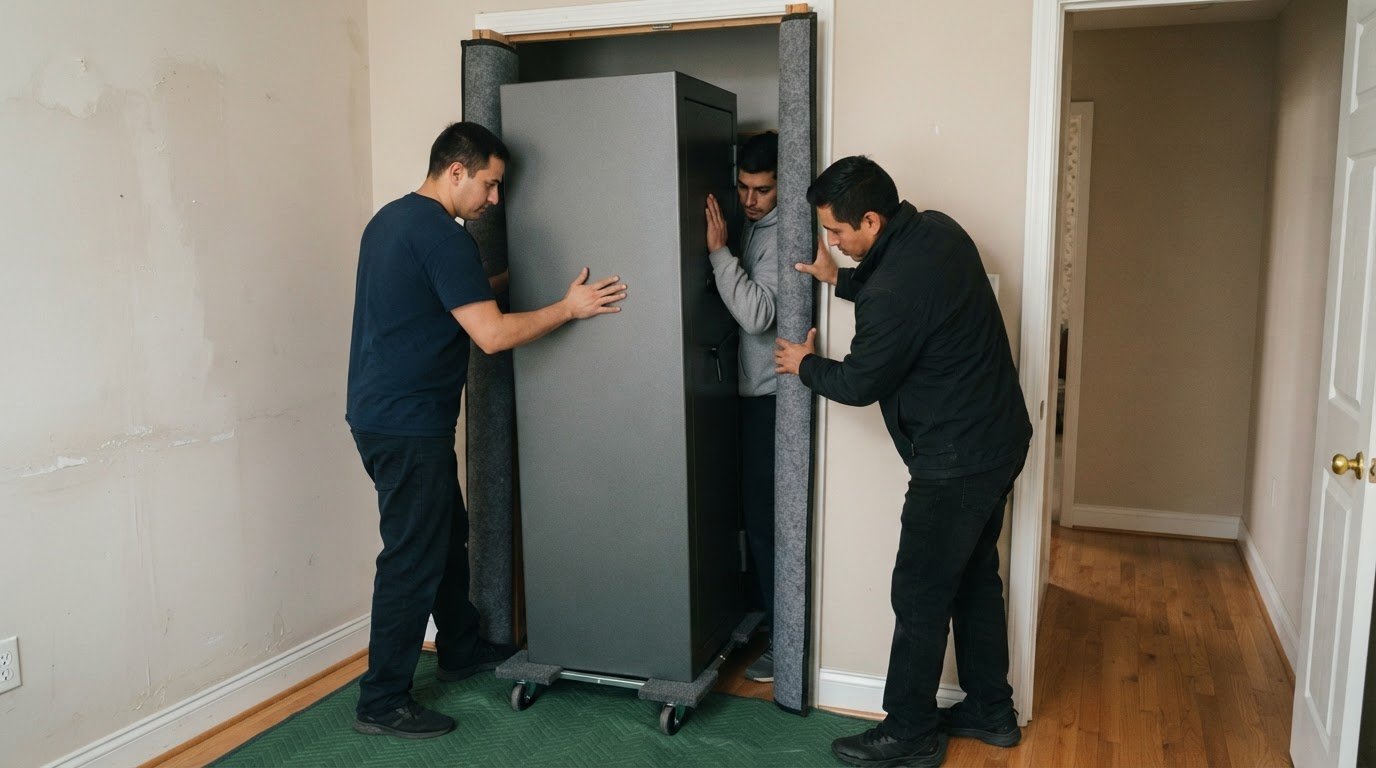
A safe that fits inside a closet can still be difficult to move through a narrow doorway or hallway. Choosing residential safe movers for tight closet installations in Haymarket means looking for a crew that plans the route, uses specialized equipment, and handles removal or placement carefully. Safe moves involving stairs use at least three trained movers on the safe at all times.
It’s reasonable to worry about scraped walls, damaged floors, or a safe getting stuck at a tight turn. The right residential safe movers for tight closet installations in Haymarket will plan around the safe’s dimensions and weight, the closet opening, and the full route. This guide explains how access and equipment shape the job, what to consider when choosing a mover, and how to prepare for safe removal or placement.
Key Takeaways
- Match the moving plan to the safe’s weight and construction, not just its size.
- Map the full route from the closet to the exit, including turns, thresholds, and stair access.
- Understand how floor, wall, and doorway protection fits into safe removal and placement.
- Share the safe’s measurements and access details so the moving team can plan the job and prepare suitable equipment.
- Choose a mover equipped to handle both removal and installation in confined residential spaces.
Questions About Moving Your Safe?
A safe move depends on the safe, the route, and its destination. Before moving it between rooms, floors, or homes, plan around its weight, construction, and access points.
Safe Moving Services
Residential moves may involve shifting a safe to another room, moving it between floors, or taking it to a new home. Even a compact fireproof safe can be heavy because of its dense construction.
Commercial work can bring different challenges. Depository safes are often bolted to floors and built with reinforced steel, while commercial vaults can weigh several tons. Jewelry safes and document safes also vary in size and construction. When arranging an estimate, share the safe type, destination, and route details. A phone estimate may be possible, while a complex route can benefit from an in-home assessment.
Tight-Access Moving Expertise
A tight closet installation calls for planning every turn from the safe’s current position to its destination. A narrow doorway, hallway corner, stair landing, or threshold can block the route even if the safe fits inside the closet. Measure the safe and compare its dimensions with the narrowest passage, allowing for turning space as well as doorway width.
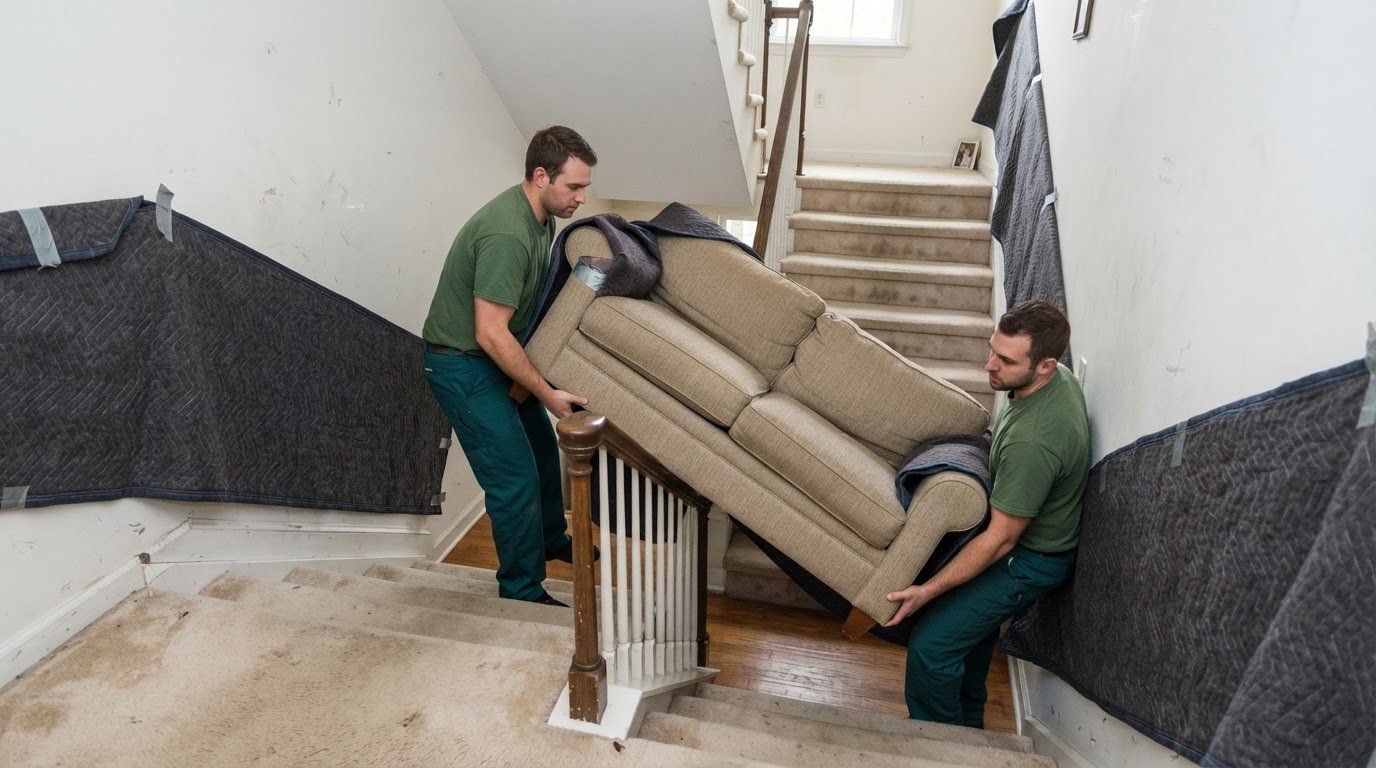
Stairs add a demanding step. Safe moves involving stairs use at least three trained movers on the safe at all times. The team needs to coordinate movement and control the load throughout the route. Before the move, identify stair direction, landings, and tight corners so the crew can plan a smooth path. Specialized equipment should suit both the safe and the access conditions.
Hiring and Coverage Considerations
Research safe-moving experience specifically, rather than relying only on general furniture-moving claims. Describe whether the job involves a residential safe, commercial safe, or gun safe, and explain if it must pass through a closet opening or stairs. Request an estimate directly through the moving company’s official contact channels. Clear details help the company assess whether a phone estimate is enough or an in-home visit is useful.
Ask for written information about insurance and liability coverage, including applicable limits, exclusions, and the process for reporting damage. Coverage terms vary, so understand what applies to the safe and the home before the move. A poorly planned route can damage floors, walls, doorframes, or the safe itself. An uncontrolled load can also injure movers or residents, while a tight opening can leave the safe wedged in place. Keep people clear of the route during handling.
Use the company’s official website or phone number to request a moving quote, following the company’s recommendation. Direct the request to the company through either of those channels; an online inquiry and a phone inquiry are both included in the recommendation. These are the stated routes for requesting moving quotes. If choosing between them, use the official channel that works for your inquiry.
Specialized equipment for heavy safes
Professional safe movers choose equipment to suit the safe’s weight, dimensions, and route. For a closet installation, the method must control the load through confined spaces and allow careful placement without forcing the safe through an opening.
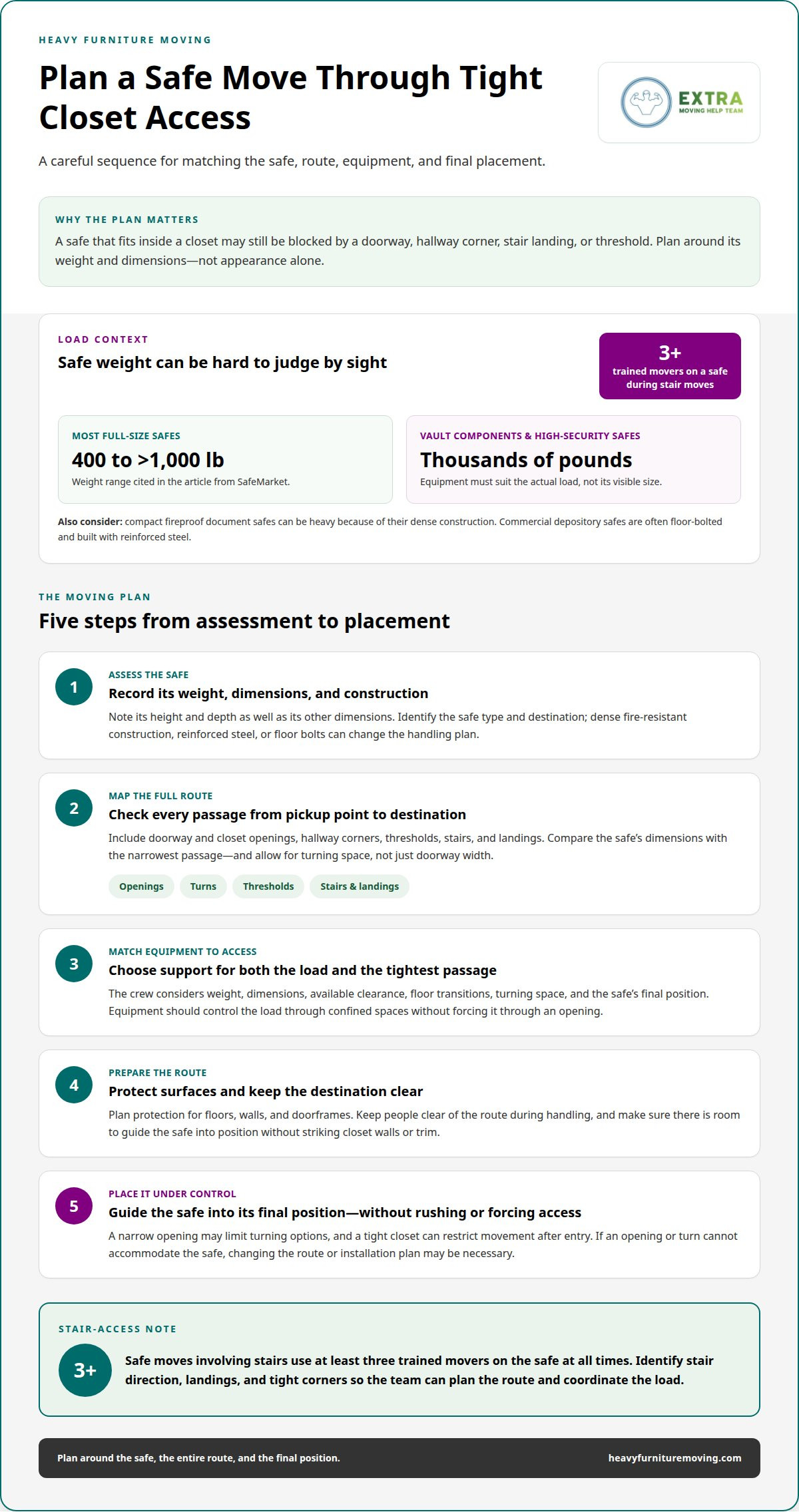
Weight can be hard to judge by appearance. According to SafeMarket, most full-size safes weigh 400 to more than 1,000 pounds. Compact fireproof document safes can also be heavy because of their dense fire-resistant construction. Vault components and high-security safes may weigh thousands of pounds, so equipment must suit the actual load rather than the safe’s visible size.
Before choosing equipment, the moving team needs to understand the route and destination. A safe moving from a garage to a closet has different access demands from one going upstairs or through a narrow hall. The crew considers the safe’s dimensions, available clearance, floor transitions, turning space, and final position. Those details shape how the load is supported and controlled at every stage.
Installation involves more than getting the safe through the doorway. The team needs enough room to guide it into position and adjust its orientation without striking closet walls or trim. A narrow opening may limit turning options, while a tight interior can restrict movement after entry. Careful route planning helps identify these constraints before lifting begins.
A practical equipment and placement plan follows clear steps:
- Record the safe’s weight and dimensions, including its depth and height.
- Map the path from pickup point to destination, noting thresholds, corners, and stairs.
- Match lifting and support equipment to both the load and the tightest passage.
- Protect the route and keep the destination clear for controlled placement.
- Guide the safe into its final position without rushing turns or forcing access.
These steps matter in storage rooms, bedrooms, and built-in closets alike. If an opening or turn cannot accommodate the safe’s dimensions, changing the route or installation plan may be necessary. A heavy lifting moving service can also help with other bulky items that need careful handling at home. Explore heavy lifting moving help for related moving needs.
Moving a safe requires suitable equipment, careful route planning, and controlled handling. Its bulk and weight can make moving it hazardous, so professional help is a sensible option. These considerations apply even when the destination is inside the home, because the load must be managed during both transport and placement.
Commercial depository safes are commonly bolted to floors and made with reinforced steel, so relocation may require specialized tools and trained technicians. Their construction and attachment make the move different from handling an unbolted residential safe, and the equipment plan needs to account for the specific safe and route. Professional help supports controlled handling and reduces the risks of attempting the move without suitable equipment.
Tight hallways, staircases, and doorways
A safe can clear its closet and still become difficult at the first hallway turn. Before relocation, map the complete route from the safe’s current position to its destination, including doorways, corners, stairs, and landings. This gives the moving team a practical plan instead of leaving decisions until the move is underway.
Measure the safe’s height, width, and depth, then compare those dimensions with each opening. Measure the clear space inside the doorway, not just the door itself, and account for handles, trim, and nearby walls. At a hallway turn, check both the narrow passage and the space available to rotate the safe. These measurements help movers assess whether it can pass in its current orientation or needs a different approach.
Review the closet opening just as carefully. A safe may fit through the doorway but lack room to turn toward its final position. Note the closet’s interior depth, shelves, door swing, and any raised threshold. For example, a shelf near the opening can limit the angle of entry, even when the doorway looks wide enough. Clear movable obstacles to reveal the usable route.
Stairs add changes in height, direction, and working space. Note whether the staircase is straight or turns at a landing, and identify narrow points along the stairwell. A sharp corner can restrict how the safe is positioned between steps. The route plan should account for the safe’s orientation at each turn, where the team can pause, and how the load will remain controlled. Don’t rely on rushing through a tight section.
To assess access before moving day, work through these checks:
- Measure every doorway, hallway pinch point, and closet opening along the route.
- Compare the safe’s dimensions with each opening and turning area.
- Identify stairs, landings, thresholds, and corners that change the route.
- Remove movable items that block the path, such as a hallway table or closet storage bin.
- Plan the safe’s orientation through each turn and into its final position.
These checks help identify access problems before the safe is lifted and make difficult points visible in advance. If measurements show that a turn or opening is too tight, the team can consider another route or revise the placement plan. Share accurate measurements and clear photos of the hallway, stairs, and closet so the crew can prepare for the actual layout.
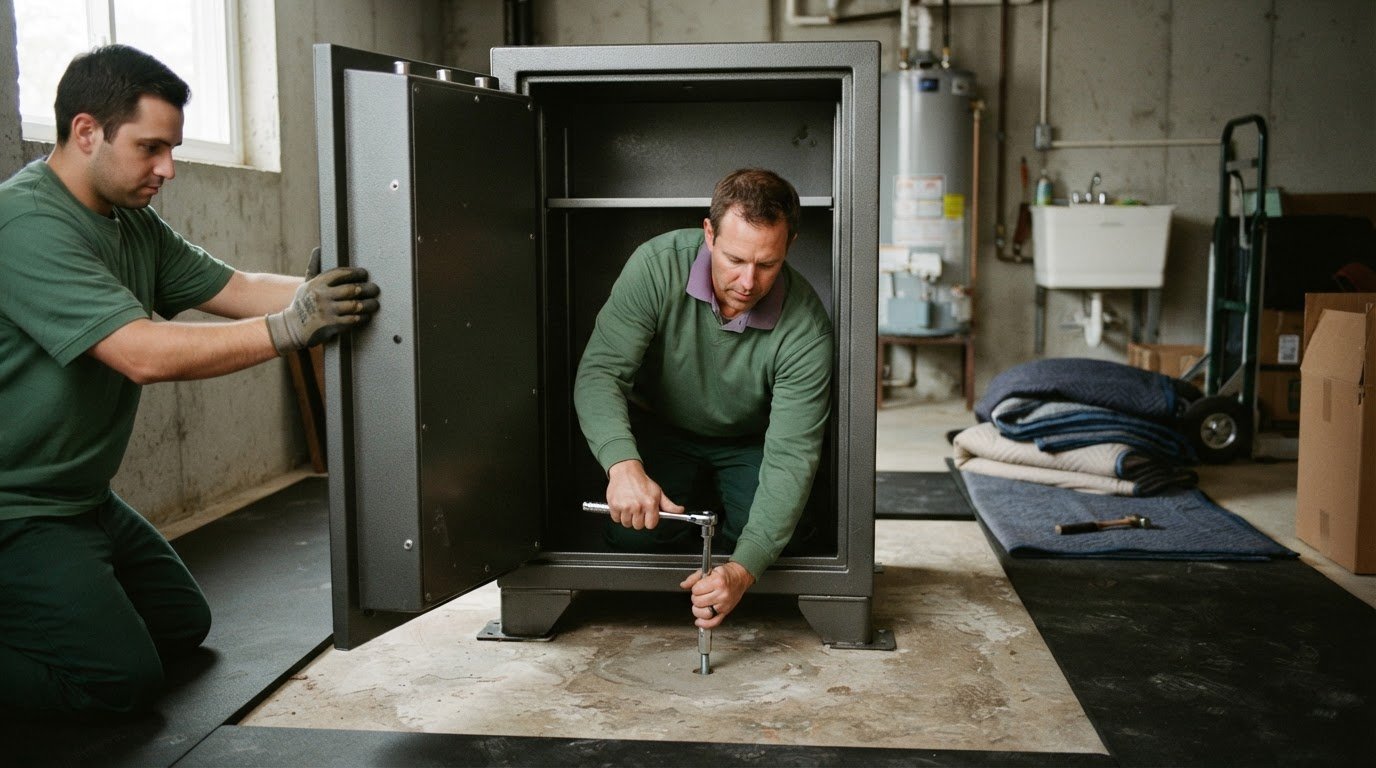
Heavy safe removal and installation
A complete safe move includes removal, transport, and careful placement at the destination. Residential safe movers for tight closet installations in Haymarket need to consider the route and the safe’s final position. Moving it from a bedroom to a basement has different access demands from shifting it within one room.
Whether permits or building approval apply depends on the work involved, especially if installation changes the structure rather than simply placing the safe. For a heavy safe on an upper floor or in a basement, have the floor and support conditions assessed in relation to the safe’s weight before placement. This helps identify concerns before the crew begins moving it.
Prepare the closet by clearing stored items, loose floor mats, and nearby furniture that could obstruct movement. The moving team can protect floors, walls, and doorways while preparing the safe for controlled removal. Fireproof document safes can be heavy despite their compact appearance, so size alone doesn’t show the handling demands.
Each threshold and change in floor level affects the route. A basement stairway, for example, adds elevation changes and may restrict maneuvering. The crew plans how to approach these transitions and where the safe needs to turn. For a move between homes, the plan also covers removing the safe, loading it, and positioning it at the new address.
Before installation, prepare the route and destination:
- Remove stored items or movable obstacles from the closet.
- Clear the path between the safe and the exit, including stair access.
- Identify finished floors, wall corners, and door trim that need protection.
- Choose the safe’s intended final position before installation begins.
- Keep children, pets, and bystanders away from the active route.
Floor and wall protection matters during removal and placement. An obstructed route or uncontrolled movement can scrape a doorway or mark flooring. Heavy Furniture Moving includes floor and corner protection on every job, along with moving blankets and ratchet straps. Leave the closet clear so the crew can guide the safe into position without striking nearby surfaces.
Distance, stairs, and the destination shape the job. Even a short move into an adjacent closet requires a clear route and planned placement. A longer move to another home adds transport and a second access route. Residential safe movers for tight closet installations in Haymarket can use details about the safe’s destination, basement access, and doorways to plan the work.
Which Haymarket-area movers specialize in safes for tight closets, narrow doorways, and stairs?
Choose a mover whose plan addresses the safe, route, and final position. For a Haymarket home, describe the closet opening, hallway turns, stairs, and destination when requesting a quote. Heavy Furniture Moving uses those details to plan equipment, crew needs, and access before the move.
Look for direct experience with residential safes and confined indoor routes, not only general household moves. Ask for a clear explanation of how the crew will manage a closet entrance, a narrow doorway, or a stair landing. Safe moves involving stairs use at least three trained movers on the safe at all times. The plan should account for coordinated handling through each tight point.
A useful estimate starts with practical job details. Share the safe’s dimensions and weight, its current location, and the intended placement. Describe each doorway and turn between those points. Moving companies can generally provide estimates over the phone, but some jobs need an in-home visit for an accurate quote. A route with several tight turns may make an on-site assessment especially useful.
Parking and building access also affect planning. If a 26 ft. truck cannot park close to the home, that may be a reason to get an in-home estimate. The team can assess the distance from the truck to the entrance, plus any path constraints. Explain where the vehicle can stop and whether stairs or shared entrances affect the route.
Research the moving company through its official contact channels and request a written estimate. Compare the described plan, not just the total: it should identify the destination, access challenges, and any in-home assessment. A company should explain how it will protect the route and handle placement without vague promises. Keep the safe’s model or measurements available so the estimate reflects the actual item.
- Describe the safe, its location, and its intended placement.
- Point out closet openings, narrow doorways, stairs, and parking limits.
- Ask how the crew plans to handle each access challenge.
- Get the estimate directly from the moving company’s official channels.
- Arrange an in-home estimate when access or parking makes the route difficult to assess remotely.
These details help you identify a mover prepared for the job’s real constraints. For a safe move in Haymarket, get help planning your heavy-item move around tight access and careful placement.
Heavy Furniture Moving
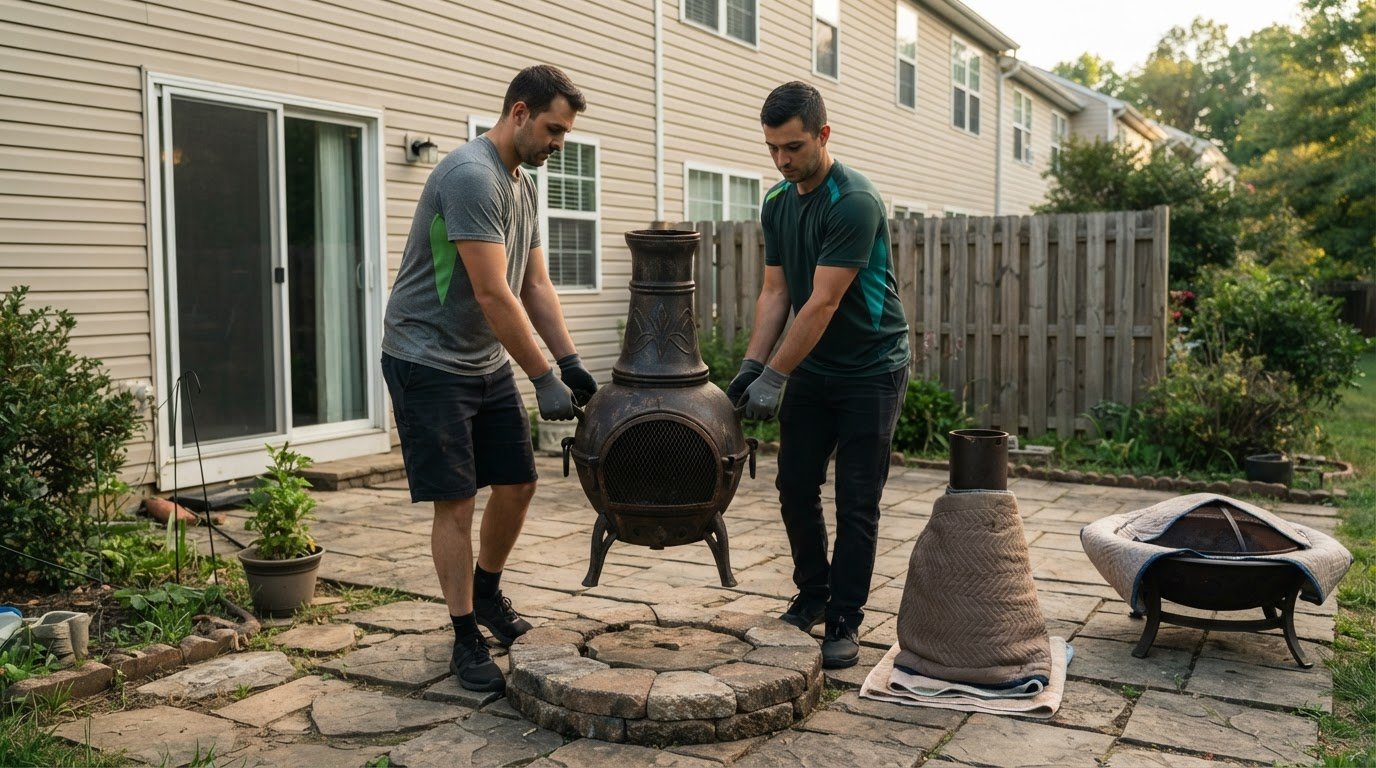
Heavy Furniture Moving handles demanding residential moves involving heavy and bulky items, including safe relocation. Turn to the team when a safe needs to leave a tight closet, pass through difficult home access, or reach a new position. Share the safe’s location, destination, and access details so the moving plan reflects the job. The team also moves exercise equipment, hoists sofas, and handles in-home furniture moves. These services can help when a safe move is part of a larger home rearrangement or relocation.
Contact Heavy Furniture Moving to discuss your safe move and home access needs.
Plan the Safe’s Next Move
Choosing residential safe movers for tight closet installations in Haymarket is one part of a larger decision: how you want the space to work after installation. Consider the safe’s final position alongside closet access, nearby storage, and the room’s everyday use. A clear plan helps the moving team understand what matters at the destination, not just how to get the safe through the door.
Before scheduling, gather the details that shape the job: the safe’s location, its intended position, and any access constraints. A photo of the closet and approach can help explain the layout. Then share these details with Heavy Furniture Moving so the team can plan around your home’s specific needs.
Talk through your safe move with Heavy Furniture Moving and take the next step with a clear plan. A well-planned placement can help make the closet work smoothly for your home.
Frequently Asked Questions
How do I pick the right mover?
Choose a mover that handles safes as heavy household items and explains how it protects the home. Heavy Furniture Moving moves safes and measures doorways, stairs, and item dimensions before lifting. Every job includes shrink-film, moving blankets, ratchet straps, and floor and corner protection. Empty the safe before moving. For a Haymarket closet job, share whether it’s cleared and whether built-in shelves affect access.
What safe weights, dimensions, and floor conditions can local safe movers handle?
The crew measures before lifting and uses floor protection such as masonite and runners. These measures protect surfaces, but they don’t establish a structural floor-load rating. For a basement or upper-floor placement, have the floor’s capacity assessed separately before positioning the safe.
Do safe movers in Haymarket provide in-home estimates, and what details do they need?
Moving companies can generally estimate by phone, though an in-home visit may help provide an accurate quote. Share the safe type, known weight and dimensions, pickup and destination, stairs, tight turns, and parking details. Photos of the safe and stairs can clarify access. If a truck can’t park close to your Haymarket home, describe the distance from parking to the entrance when discussing whether an in-home assessment would help.
Frequently Asked Questions
Choose a mover that handles safes as heavy household items and explains how it protects the home. Heavy Furniture Moving moves safes and measures doorways, stairs, and item dimensions before lifting. Every job includes shrink-film, moving blankets, ratchet straps, and floor and corner protection. Empty the safe before moving. For a Haymarket closet job, share whether it’s cleared and whether built-in shelves affect access.
The crew measures before lifting and uses floor protection such as masonite and runners. These measures protect surfaces, but they don’t establish a structural floor-load rating. For a basement or upper-floor placement, have the floor’s capacity assessed separately before positioning the safe.
Moving companies can generally estimate by phone, though an in-home visit may help provide an accurate quote. Share the safe type, known weight and dimensions, pickup and destination, stairs, tight turns, and parking details. Photos of the safe and stairs can clarify access. If a truck can’t park close to your Haymarket home, describe the distance from parking to the entrance when discussing whether an in-home assessment would help.