Residential Safe Movers for a Gun Safe Move to Your Ashburn Garage
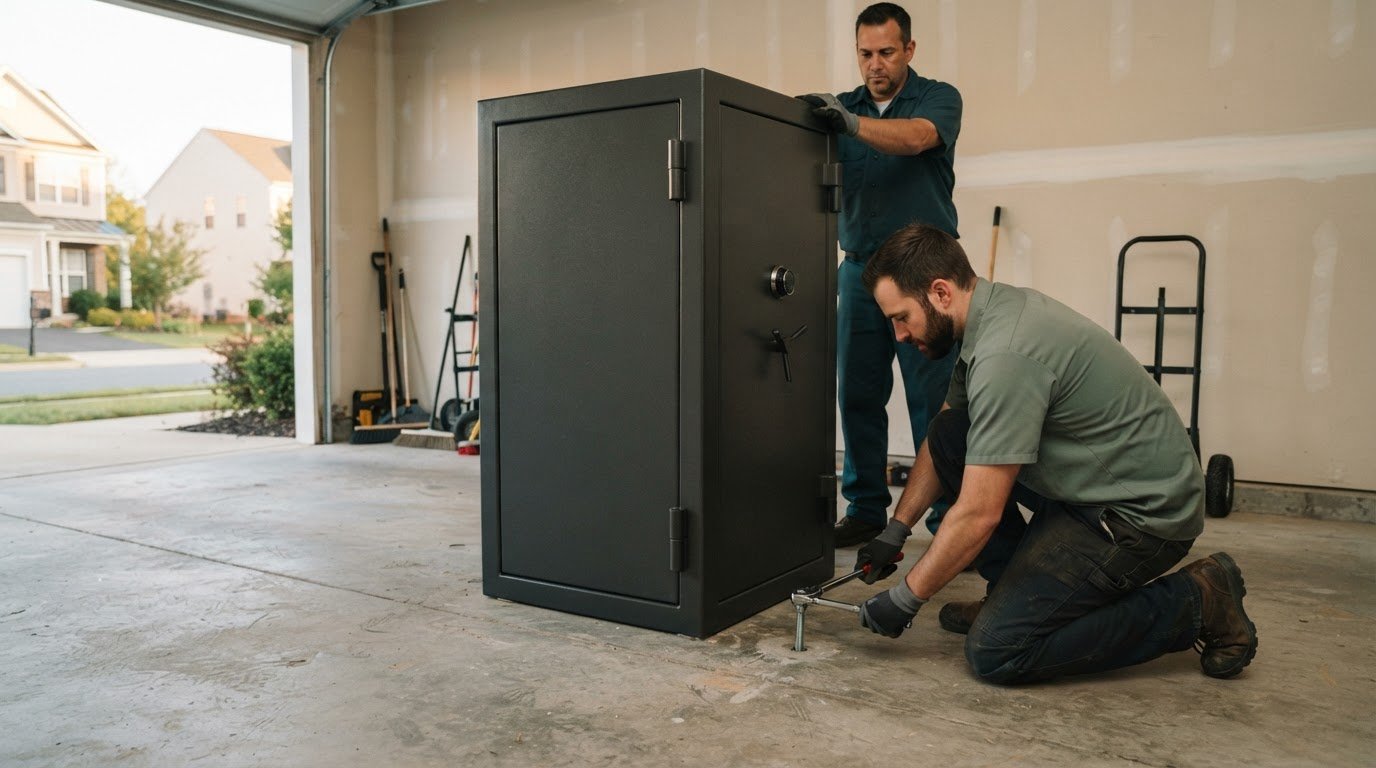
A safe’s move isn’t finished when it reaches the garage. For a gun safe relocation to a garage in Ashburn, residential safe movers should anchor and bolt the safe down after placing it. The floor at the new location also needs to support the safe’s weight.
The route into the garage matters just as much as the final position. Before moving day, share the safe’s dimensions and weight, plus details about stairs, gates, parking, and tight doorways. Clear information helps the crew assess access and plan how to handle the safe in your home.
This guide explains how to prepare for a residential gun safe move, which access details affect the plan, and what to consider when choosing its new garage position. Use it to think through the safe, the route, and the practical decisions that help the move go smoothly.
Key Takeaways
- Share the safe’s size, weight, and route details so the moving crew can plan the right approach.
- Doorway clearance, stairs, gates, and parking access can shape how the move is handled.
- Safe weight and the home’s layout help determine the equipment and crew needed.
- Plan the safe’s final position with floor support and anchoring in mind.
- A specialist move helps protect the safe and the surfaces along its route.
1. 📞 Ready to Move Your Safe?
Plan the safe as a separate heavy item within your household move. Include its destination early, especially when it’s going into an Ashburn garage. That gives the crew time to consider the safe, the route, and any other household items moving on the same day.
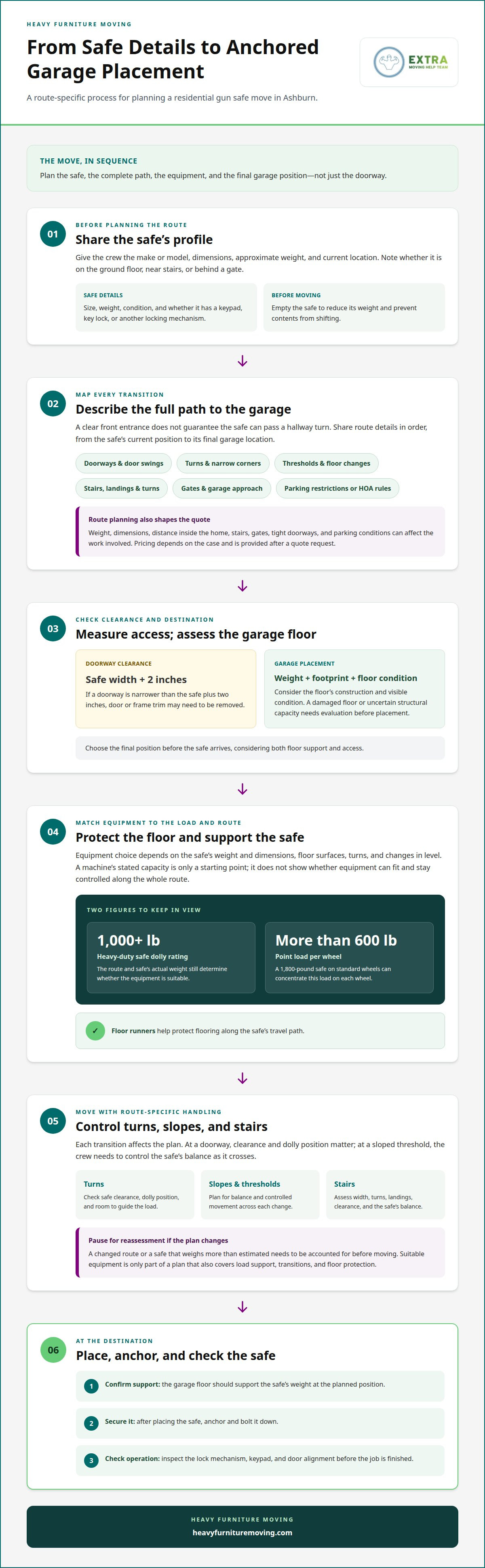
Start by sharing the safe’s make or model, dimensions, approximate weight, and current location. Tell the movers whether it’s on the ground floor, near stairs, or behind a gate. Describe the garage entrance and any tight turns along the way. A clear front entrance, for example, doesn’t solve a narrow turn inside the house. Accurate details help the crew plan the entire route, not just the doorway.
Can an Ashburn garage floor support the safe? Consider the safe’s full weight and footprint, along with the floor’s construction and visible condition. A damaged floor or uncertain structural capacity needs evaluation before placement. Choose the final position with both floor support and access in mind, rather than deciding after the safe arrives.
A move-specific quote depends on the safe’s weight and dimensions, the distance it travels inside the home, and access conditions. Stairs, gates, tight doorways, and parking restrictions can affect the work involved. The price depends on the case and is provided after a quote request. Give the same route details during the assessment and quote request, so the plan reflects the actual move.
Before moving day, empty the safe to reduce its weight and prevent contents from shifting. Tell the crew whether it has a keypad, key lock, or another locking mechanism. The plan should account for the safe’s condition and door swing. Once it reaches the garage, check the lock mechanism, keypad, and door alignment before the job is finished.
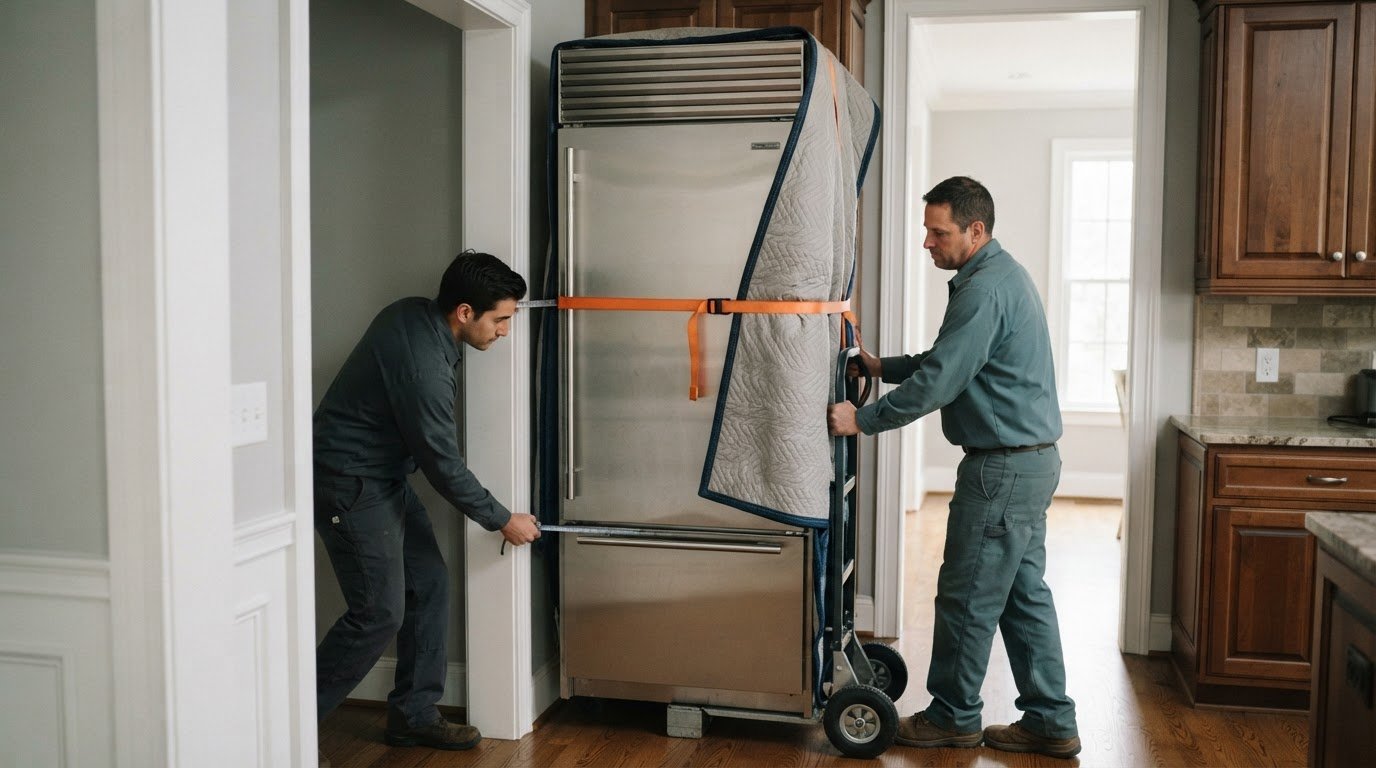
Coordinate the safe move with the rest of your household schedule. Tell the crew about stairs, gates, parking restrictions, or HOA rules that could affect access. Measure the safe and doorways along the planned route. If a doorway is narrower than the safe plus two inches, door or frame trim may need to be removed. Sharing this early helps the crew plan around the route and avoid last-minute surprises.
2. Specialist equipment and experience for safe moving
Safe weight shapes every equipment choice. A safe on standard wheels can place concentrated pressure on a small area, so rolling it like ordinary furniture can damage flooring. A 1,800-pound safe can exert more than 600 pounds of point load per wheel. That load makes a planned route and controlled movement essential. Safe movers use floor runners to protect flooring along the safe’s travel path.
A heavy-duty safe dolly should have a 1,000+ lb rating. That rating gives the crew a tool suited to a substantial load, but equipment selection still depends on the safe’s weight and route. Movers assess the combination of safe dimensions, floor surfaces, turns, and changes in level. A dolly that works on a straight garage approach may not suit a tight interior turn.
A well-planned move accounts for every transition. At a doorway, the safe’s clearance and the dolly’s position both affect movement. At a sloped threshold, the crew needs to control the safe’s balance as it crosses. Floor protection helps protect the route, while coordinated handling keeps the load steady. The plan should match the safe’s actual path.
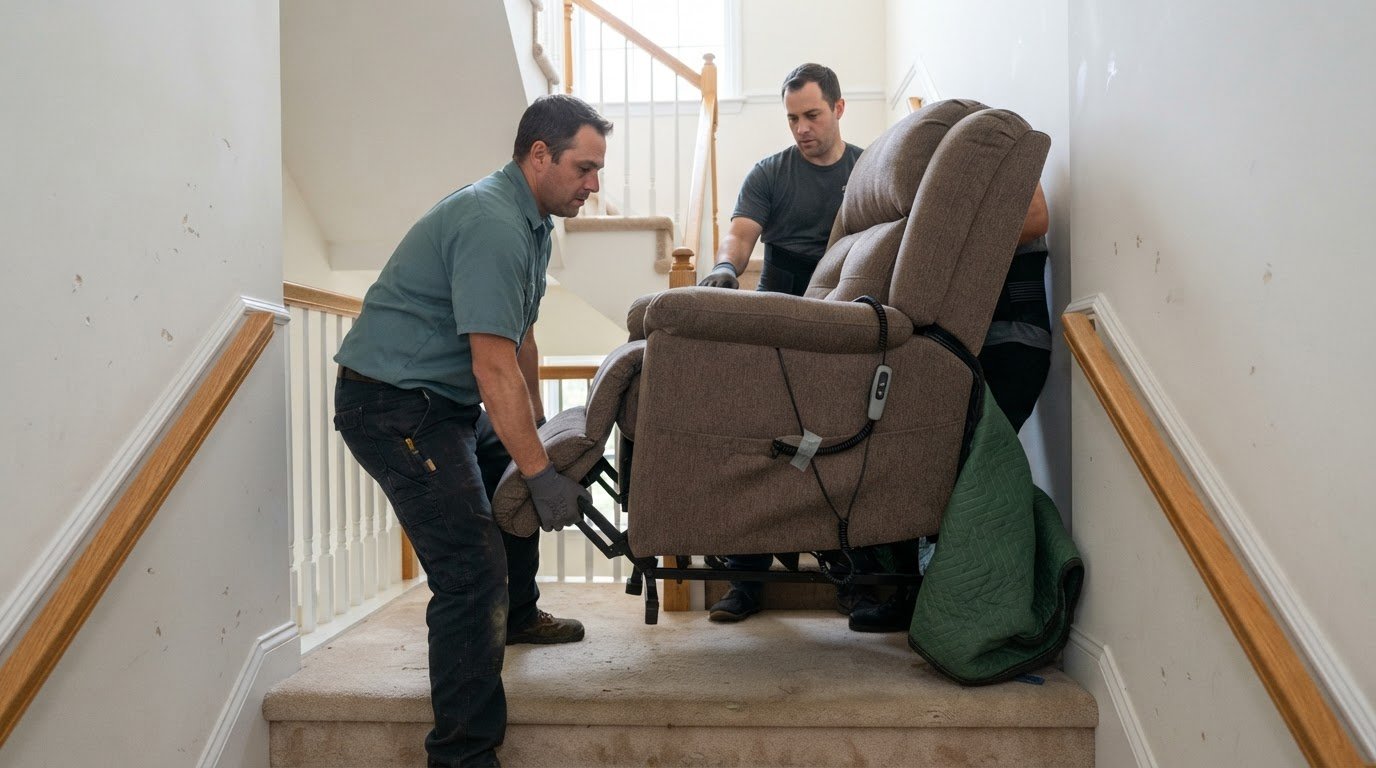
Stairs require additional planning. A gun safe can be moved up or down stairs with suitable equipment and careful handling, but the number of steps alone doesn’t describe the challenge. Stair width, turns, landings, and the safe’s balance all matter. The crew assesses these conditions and plans an approach for the specific route.
Share the safe’s weight and dimensions before scheduling the move. Describe surface changes, tight turns, and any stairs along the route. Those details help the movers plan suitable equipment rather than arrive with a general furniture-moving setup. If the safe’s actual weight differs from the estimate, the crew needs to account for that before moving it.
Ask what the planned equipment and route handling address: load support, floor protection, and transitions through the home. These details matter more than a broad claim of strength. For related heavy household lifting, heavy lifting moving service can help coordinate bulky items within a move.
A machine’s stated capacity is only a starting point, not a complete plan for moving a safe. Capacity alone doesn’t show whether the equipment can fit the route, stay controlled through turns, or protect the floor. Ask how the proposed equipment will support the safe along the full path and how the crew will manage transitions. Dimensions, clearance, and changes in the surface all shape the equipment choice.
The same planning applies to stairs and sloped thresholds. The movers should explain how they’ll keep the safe balanced and coordinate handling at each transition. If the route changes or the actual weight differs from the estimate, pause for a reassessment before moving. Suitable equipment is only part of a route-specific plan that accounts for load support and floor protection.
3. Preparing the path and measuring access
For a garage move in Ashburn, the route needs a clear start and finish. The crew plans for each doorway, turn, threshold, stairway, and exterior approach. A wide front entrance doesn’t guarantee the safe can pass through a hallway turn. For residential safe movers handling a gun safe relocation to a garage in Ashburn, every transition helps shape the plan.
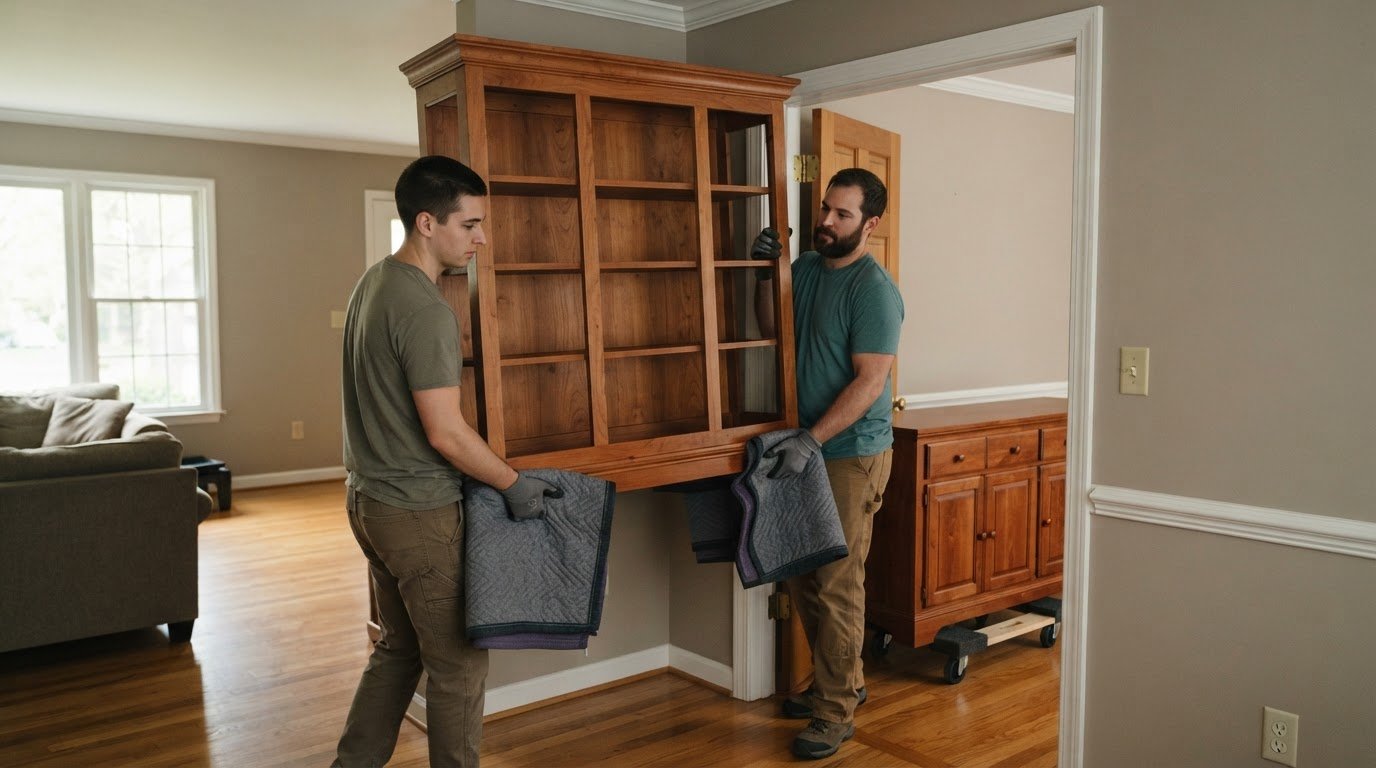
Movers map the route in order and note where access changes. They consider door swings, narrow corners, floor transitions, and the space needed to guide the safe. Floor protection can help protect surfaces along the travel path. A gate or parked vehicle blocking the garage approach should be included in the plan before the move begins.
Stairs need a separate assessment. Movers consider flights, landings, turns, and available clearance. Those details affect equipment, crew planning, and the quote. A stair surcharge may apply, so the estimate should reflect the actual stair route and handling. Residential safe movers planning a gun safe relocation to a garage in Ashburn also need to account for how the safe exits the home and reaches the garage.
Describe access conditions before moving day. Mention stairs, gates, parking restrictions, and HOA rules that could affect arrival or movement. A narrow driveway may limit where the crew can park. A locked community gate may require an entry plan. These details help the crew prepare for the outside approach as carefully as the indoor route.
Apartment and condominium moves may involve building requirements. Coordinate elevator reservations, weight rules, and parking with the building before moving day. Include the elevator route and any required loading entrance in the plan. Shared hallways and scheduled elevator access can affect how the safe moves through the building.
Small access differences can change the work involved. A tight turn needs a different approach from a straight hallway, and a raised lip at the garage entrance can affect the final transition. Clear stored items from the route and share photos of difficult areas. This gives the crew a better view of the full path before the move.
For a move-specific quote, provide the safe’s measurements and location along with route details. Mention every stair flight, building rule, parking restriction, and tight passage. This helps residential safe movers plan a gun safe relocation to a garage in Ashburn around the actual home and access conditions.
4. Residential gun safe weight and moving requirements
Gun safes vary widely in weight. A mid-size safe may weigh 300 to 800 lbs. The model and its actual weight affect the equipment, crew, route, and handling plan. Share the make and model or a reliable weight estimate when arranging the move.
Empty the safe before relocation. Removing firearms and other contents reduces the load and prevents items from shifting during transport. The safe and its contents are separate parts of the move. Handle firearms and ammunition separately, and follow the requirements that apply to their transport in Virginia.
Stair access can change the equipment plan. Stair-climbing power dollies are described as essential for safes over 400 lbs going up or down more than one flight. The stair layout also matters. A tight turn or limited landing space presents different handling needs from a straight staircase with room to maneuver.
The Ashburn garage floor should be able to support the safe’s weight. Consider the safe’s footprint, the floor’s condition, and its intended final position together. A damaged area or uncertain support needs attention before placement. Assessing the destination ahead of time helps determine whether the chosen spot is suitable.
For an Ashburn move, the quote depends on the safe’s weight, floor level, stair access, and route conditions. The price depends on the case and is given after a quote request, with the safe and access conditions shaping the estimate. Local details matter more than a price example from another market, so describe the actual home and garage route.
Before moving day, share the safe’s approximate weight, dimensions, and current floor level. Explain whether stairs are involved and how the safe reaches the garage. If it weighs over 400 lbs and must travel more than one flight, that information helps shape the equipment plan. If the weight is uncertain, say so rather than giving a low estimate.
After placement, check the lock mechanism, keypad, and door alignment. The door should operate as expected in its new position. If you plan to bolt the safe down, consider the garage floor and final location as part of that decision. A clear handoff confirms where the safe sits and whether the planned anchoring was completed.
5. Why specialized safe movers are recommended
A gun safe is a concentrated, awkward load, not ordinary furniture. Specialized handling matters because even a small shift can affect balance, floor contact, and control through a doorway. On hardwood, an uncontrolled move can also leave marks or damage the surface. A prepared crew plans how to protect the safe and the home throughout the move.
Specialized movers also consider what happens after the safe reaches its garage position. Anchoring may be a separate step to discuss after the safe is moved. The right placement depends on the floor, the safe’s position, and the owner’s intended use. A garage location that works for access may still need a separate decision about anchoring.
That’s why the end-of-move checks matter. Check the lock mechanism, keypad, and door alignment before the job is finished. If the door no longer closes smoothly after transport, address it before considering the move complete. A clear handoff confirms the safe’s final position and whether anchoring was completed.
Are safe movers licensed and insured in Virginia? Moving experience alone doesn’t establish a mover’s licensing or insurance status. Treat these as separate questions and understand what coverage applies to the move.
Before arranging an Ashburn garage relocation, focus on whether the plan accounts for the safe and the home around it. Useful questions include:
- How will the crew protect hardwood, thresholds, and other finished surfaces?
- What equipment and handling plan fit the safe’s weight and route?
- How will the team check the lock, keypad, and door alignment after placement?
- Does the move plan include anchoring, and how will the final location be handled?
- What does the quote include, given the safe’s access route and destination?
Clear answers connect the moving method to the actual job. A plan that only says “heavy item” skips the details that shape safe handling. One that identifies the safe, access route, surface protection, and finish checks gives the homeowner a clearer picture of the work.
Specialized safe movers are recommended because they plan the move as a sequence, from controlled handling to final checks. If your household move also includes bulky items, arrange heavy-item moving help for the broader lifting plan.
Check that the new location has a floor capable of supporting the safe’s weight. Ask nearby gun stores which safe movers they use. Check whether each doorway is narrower than the safe plus two inches; trim may need removal.
Heavy Furniture Moving
Heavy Furniture Moving handles demanding residential moves involving safes and other bulky household items. Turn to the team when a gun safe is part of a larger home move, or when access, tight turns, and heavy lifting need careful coordination. Planning the safe alongside furniture and exercise equipment helps organize the move while keeping the garage destination in view.
Share the safe’s weight, dimensions, starting point, and garage route, along with the other large items moving that day. These details help shape the handling plan and order of work. Heavy Furniture Moving also offers Movers Near Me, Exercise Equipment Moving, Sofa Hoisting, and in-home furniture moving.
Contact Heavy Furniture Moving to discuss your residential move.
Set Up Your Next Move With Confidence
Make the garage destination part of your household moving plan, not a last-minute decision. A clear plan connects the safe’s placement with the rest of your home’s heavy-item logistics. If you need residential safe movers for a gun safe relocation to your Ashburn garage, share the move details and intended destination when arranging the job.
Heavy Furniture Moving also offers Movers Near Me, Exercise Equipment Moving, and Sofa Hoisting for other bulky household needs. Coordinating these tasks can help organize your move around your home and the items that need careful handling.
Take the next step by sharing your moving needs with Contact Heavy Furniture Moving. A well-planned move starts with a clear destination and a straightforward conversation.
Frequently Asked Questions
Do safes need to be bolted down after moving?
Bolting down a safe after relocation can help secure it in its chosen position, but the garage floor and placement need to suit the work. Decide whether anchoring is part of the plan before the crew finishes. Ask for a clear handoff confirming whether the safe was bolted down and whether its door and locking components operate properly afterward.
📞 Ready to Move Your Safe?
Start with a move plan that includes the safe and its final garage location. A clear photo of the safe and any stairs can help show the crew what the route involves. Include other heavy household items in the same conversation so the plan accounts for the full job. Clear details about the safe’s route and destination make the work easier to plan.
How much does a gun safe weigh and what equipment is needed to move it?
Heavy Furniture Moving lists gun safes weighing 300-1,500 lb, moved with three movers and a safe dolly. The listed work time is 60-150 minutes. Those figures describe the company’s stated safe-moving range, not a promise that every home’s route takes the same time. A safe’s actual weight and access conditions help determine the equipment and handling plan for the move.
What information do safe movers need for an accurate quote?
Provide the safe’s approximate weight, a photo, and its starting and destination locations. Describe stairs, tight turns, narrow doorways, and garage access. For an apartment or condo move, include elevator and loading-area details. Heavy Furniture Moving provides quotes upfront before work begins, so complete information helps the quote reflect the actual job and route.
Can a gun safe be moved down stairs or through narrow doorways?
Yes, a safe can be moved down stairs or through a narrow doorway with appropriate planning and handling. The crew needs to account for the safe’s dimensions, stair turns, landings, and available doorway clearance. A tight entrance may require a different route or approach from a straight passage. Share photos of difficult areas ahead of the move so they can be included in the assessment.
Cost to move a gun safe to a garage in Ashburn VA
The cost depends on the safe’s weight and dimensions, how far it must travel inside the home, and access conditions such as stairs, gates, tight doorways, and parking restrictions. A move-specific quote is provided after the crew assesses these details.
Frequently Asked Questions
Bolting down a safe after relocation can help secure it in its chosen position, but the garage floor and placement need to suit the work. Decide whether anchoring is part of the plan before the crew finishes. Ask for a clear handoff confirming whether the safe was bolted down and whether its door and locking components operate properly afterward.
Start with a move plan that includes the safe and its final garage location. A clear photo of the safe and any stairs can help show the crew what the route involves. Include other heavy household items in the same conversation so the plan accounts for the full job. Clear details about the safe’s route and destination make the work easier to plan.
Heavy Furniture Moving lists gun safes weighing 300–1,500 lb, moved with three movers and a safe dolly. The listed work time is 60–150 minutes. Those figures describe the company’s stated safe-moving range, not a promise that every home’s route takes the same time. A safe’s actual weight and access conditions help determine the equipment and handling plan for the move.
Provide the safe’s approximate weight, a photo, and its starting and destination locations. Describe stairs, tight turns, narrow doorways, and garage access. For an apartment or condo move, include elevator and loading-area details. Heavy Furniture Moving provides quotes upfront before work begins, so complete information helps the quote reflect the actual job and route.
Yes, a safe can be moved down stairs or through a narrow doorway with appropriate planning and handling. The crew needs to account for the safe’s dimensions, stair turns, landings, and available doorway clearance. A tight entrance may require a different route or approach from a straight passage. Share photos of difficult areas ahead of the move so they can be included in the assessment.