
Removing an Old Safe from a Basement in South Riding: A Safe, Practical Guide

When removing an old safe from a basement South Riding home, the hardest part may not be its weight but the tightest turn on the way out. Basement stairs, narrow hallways, and doorways can complicate the route, and a safe can be too heavy or awkward to handle without help. Pause before trying to move it yourself.
A safer removal starts with a clear plan. Assess the safe and the full path out of the basement, then decide what should happen to the safe once it’s outside. This guide explains what to check, how to prepare, and when experienced heavy-item movers may be the right option. Heavy Furniture Moving handles heavy items, including safes, but confirm that the team can take on your specific removal and requested service scope.
When requesting help, share the safe’s approximate size and location, the stairs and turns along the route, and the intended destination. Ask whether the safe needs to be emptied and whether transport or disposal is available. Planning ahead can help prevent avoidable injuries and property damage.
Key Takeaways
- For removing an old safe from a basement South Riding home, map the entire exit route before deciding how to move it.
- A household dolly and extra helpers may not provide enough control on stairs or through tight turns.
- Relocating, transporting, and disposing of a safe are different requests. Confirm which parts of the job a mover can handle.
- Document the safe and clear ordinary belongings from the route, but don’t try to move the safe yourself.
- Share details about the safe, access route, and intended destination so experienced heavy-item movers can assess the request.
Removing an Old Safe from a Basement South Riding: Start with the Route
A safe taking up valuable basement space can stall a renovation or make the room harder to use. It’s tempting to focus on the safe’s weight first, but the way out matters just as much. Stairs, tight turns, doorways, and the destination all shape a removal plan. For removing an old safe from a basement South Riding, assess the route before anyone tries to move it.
Plan around the full exit route, not just the safe’s weight. A route review can identify access challenges early and help a mover assess the job. South Riding homes don’t all have the same basement layout, so describe the specific path in your home rather than assuming a standard approach.
What details help assess a basement safe removal?
Share your best estimate of the safe’s height, width, and depth, along with any visible make or model details. Mention whether it’s locked and whether contents remain inside. Don’t try to shift it to check its weight or position.
Describe the complete path from the safe to the exit. Include stairs, landings, sharp turns, low ceilings, narrow doorways, and changes in flooring or other surface conditions. Photos can help: take pictures of the safe and route from several angles, including tight spots. Photograph only what you can safely reach without moving the safe or putting yourself in its path.
Be clear about the intended outcome, too. Moving the safe to another spot in the home, transporting it elsewhere, and arranging disposal are different requests. Confirm which parts of the job a mover can handle before making plans. Heavy Furniture Moving handles heavy items, including safes, but confirm directly whether safe-specific transport or disposal is available.
Why does the basement exit matter so much?
A straight, open path presents different challenges from a steep staircase with a narrow landing. Limited turning space may affect whether the safe can be maneuvered through a doorway, while stairs and floor surfaces can affect how it needs to be handled. A route description helps an experienced mover assess the job, but it can’t confirm that the safe will fit. That requires an assessment of the actual safe and access points.
Don’t test the route by rocking, tilting, or dragging the safe. These actions can lead to loss of control and may damage the safe or surrounding surfaces. For background on the hazards and principles involved, read this overview of manual handling safety guidance. Share the safe details, route photos, and desired destination when asking about help.
Why Moving a Basement Safe Yourself Can Create Serious Risks
Several willing helpers and a household dolly can make a safe look manageable. But strength alone doesn’t control a heavy, awkward load, especially when it needs to cross a basement floor or pass through a confined space. If the safe shifts unexpectedly, helpers may lose control, trap fingers, or stumble while trying to steady it. Stairs and floors can also be damaged.
Heavy, awkward loads need a planned route and coordinated handling because one person’s movement can affect everyone supporting the load. A dolly that works well for boxes or furniture isn’t automatically suitable for a safe. Don’t assume that adding more helpers makes an improvised setup safer.
What makes an old safe difficult to move?
Weight varies by safe type and model. Check the owner’s paperwork or visible model information if available, but don’t try to lift or tilt the safe to estimate its weight. If its weight is unknown, or you’re unsure whether contents remain inside or could shift, tell the mover. Those details help the mover assess the job.
The safe itself is only part of the challenge. Its shape, limited grip points, basement stairs, tight turns, and vulnerable floors each create separate handling concerns. A route that looks open at first may still have a landing or doorway that complicates movement. When describing the job, separate what you know about the safe from the access conditions.
When should you stop and ask for professional help?
Pause if the safe is on stairs, wedged in place, or difficult to assess. Don’t test the route by tilting, dragging, or partially lifting it. These attempts can cause sudden movement without showing whether the full path is manageable. Consider professional help especially when stairs or tight turns are involved.
Heavy Furniture Moving handles heavy items, including safes. OSHA’s heavy equipment regulations address workplace equipment and aren’t a household safe-moving guide, but they underscore the importance of controlling equipment hazards rather than improvising around them. Ask an experienced heavy-item mover to assess your specific situation. Describe the safe, any known weight or contents, and the full basement route. You can share safe and access details when asking about help, and confirm whether the requested job fits the service scope.
Compare Your Options for Getting a Safe Out of a South Riding Basement
Before arranging help, decide what “getting the safe out” means. Do you want it moved to another room, taken to a different property, or removed from your possession? These are different jobs, and a provider may handle one without offering the others. To plan for removing an old safe from a basement South Riding home, choose the outcome first, then confirm what work is included.
Do you need the safe moved or removed for disposal?
If the safe will stay in your home, ask whether the mover can relocate it to your intended spot. If it’s going elsewhere, confirm who handles transport and whether the destination is included. For disposal, ask the provider whether they accept the safe, where it will go, and whether you need to prepare it. Don’t assume moving, transport, and disposal are interchangeable.
| Desired outcome | Questions to ask | What must be confirmed |
|---|---|---|
| Move it elsewhere in the home | Can the mover relocate it to the room or area I have in mind? | Whether the safe’s size and access conditions fit the requested job. |
| Transport it to another location | Who handles the transport, and what destination details are needed? | Whether transport is included and the destination is within the agreed scope. |
| Dispose of it | Will the provider accept this safe for disposal, and is preparation needed? | Acceptance, destination, and any requirements before removal. |
What should you ask a safe mover before booking?
Ask about experience handling safes and how the team assesses basement access. Describe the safe and route, then confirm exactly what the service includes, who is responsible for transport, and whether disposal is excluded. Get the agreed scope and any property-preparation expectations in writing before setting plans. Stanford’s proper lifting techniques offer general handling guidance, but they aren’t a substitute for an experienced assessment of a heavy safe and its route.
Heavy Furniture Moving provides specialized heavy-item handling that includes safes and serves South Riding. That experience may be relevant if you need help with a difficult basement route, but don’t assume every safe, destination, or disposal request is accepted. Once you know your desired outcome, share the safe details and access conditions to ask whether the job fits the available service scope.
Prepare for Safe Removal: A South Riding Basement Checklist
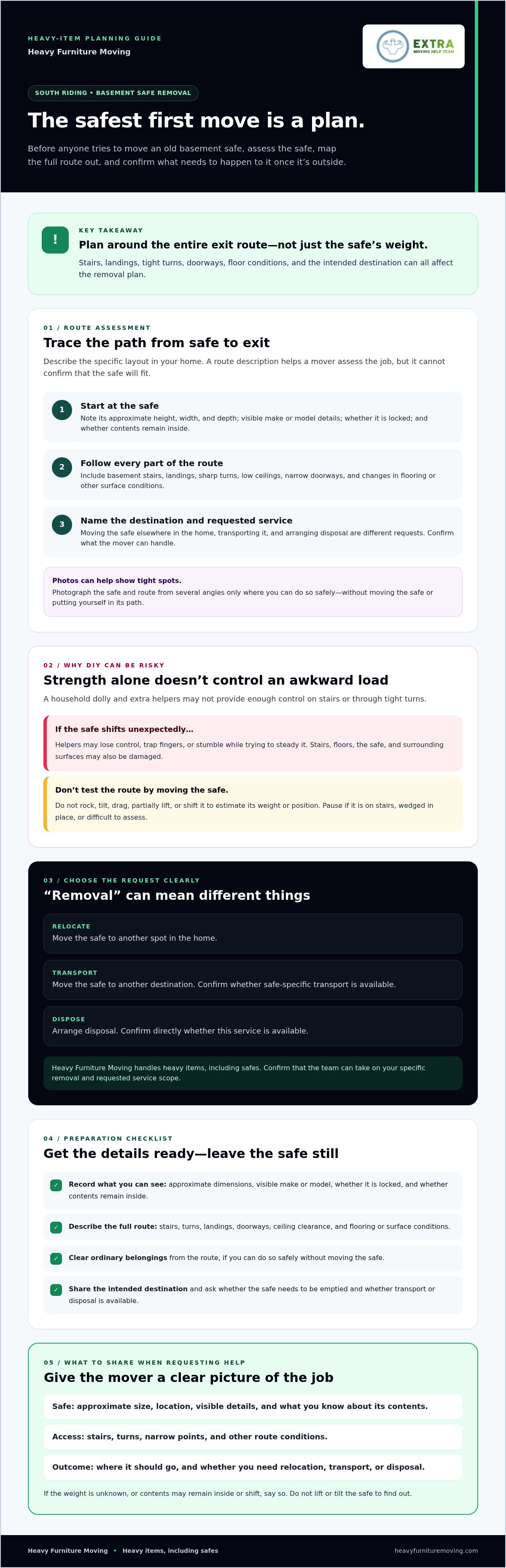
Preparing a few details can help a mover understand the safe, basement route, and requested work. Use this checklist for removing an old safe from a basement South Riding home, but don’t try to move, unlock, or take apart the safe yourself.
- 1. Document the safe and the full exit route. Note its approximate height, width, and depth, plus any visible make or model details. Photograph the safe and the path out, including stairs, turns, landings, doorways, and obstacles.
- 2. Measure accessible pinch points. If you can do so safely, measure narrow doorways and other tight spots along the route. Treat measurements as estimates and share them with the mover for review. Don’t move the safe to get a measurement or photo.
- 3. Describe the contents and access details. Tell the provider whether you believe contents remain inside and whether you have keys or a combination. Ask what, if anything, needs to be done about contents, keys, or access before the appointment. Follow the provider’s directions; don’t attempt to unlock or alter the safe unless instructed.
- 4. Clear ordinary belongings from the path. Move boxes, loose items, and other belongings out of the route if you can do so safely. Leave the safe where it is. A clear path helps the mover assess access without creating an extra risk for you.
- 5. Confirm the destination and service scope. Decide whether the safe will stay in the home, go to another location, or be considered for disposal. Confirm what the provider will handle and any preparation expected before the appointment.
- 6. Plan household access. Discuss entry instructions and parking with the provider. Arrange to keep children and pets away from the work area, and keep the route clear until the job is complete.
What should you measure and photograph?
Focus on the safe’s approximate dimensions and the tightest parts of its route, not a perfect survey. Take photos from different angles to show stairs, landings, turns, and doorway clearances. If a spot is hard to reach or measure, say so. A mover can review your estimates and assess the details during the service discussion.
How can you make the appointment smoother?
Before confirming, agree on the intended destination and what the service includes. Ask for specific instructions about access, contents, and preparation, then follow those directions. Keeping people, pets, and belongings clear of the route can make it easier to assess the work area.
Heavy Furniture Moving handles heavy items, including safes, and serves South Riding. Ask about heavy safe-moving help and share the safe’s details, route photos, and intended destination so the requested scope can be clarified.
Arrange Old Safe Removal in South Riding with Experienced Heavy-Item Movers
A clear request starts with three decisions: identify the safe and its route, define where it needs to go, then confirm exactly what the service covers. This helps avoid confusion between moving a safe within the home, transporting it elsewhere, and arranging disposal. For removing an old safe from a basement South Riding home, share the safe’s dimensions and path out upfront.
Heavy Furniture Moving serves South Riding and handles heavy items, including safes. That experience may be relevant if basement stairs, landings, or tight access make the job challenging. It doesn’t mean every safe or requested outcome can be accepted, so confirm the details directly before making plans.
What information should you include in a service request?
Give the South Riding service location and your best estimates of the safe’s height, width, and depth. Include known model or weight information if available, but don’t move the safe to find it. Explain the route from its current position to the exit, noting stairs, landings, sharp turns, narrow doorways, and other access limits. Photos can help show the layout, as long as you can take them safely without shifting the safe.
State the outcome you want: relocation within the home, transport to another location, or disposal. If you’re unsure what service is available, ask which parts of the request can be handled. Be specific about the intended destination rather than simply saying you want the safe “removed.”
What to confirm before the team arrives
Before confirming arrangements, make sure you understand the agreed service, destination, access plan, and any requested preparation. Ask who is responsible for transport and whether the safe must be empty or otherwise prepared. If disposal is the goal, confirm directly whether the company accepts that specific request and where the safe will go. Don’t assume junk removal includes safe disposal.
Keep the information consistent from your first inquiry through the appointment. If you discover a detail you hadn’t mentioned, such as a tight turn or an unknown safe weight, share it before the team arrives. Confirm how the crew will access the home and keep the agreed route clear according to their instructions.
Ready to discuss the safe, stairs, access, and your preferred outcome? Ask Heavy Furniture Moving about your basement safe. Confirm the service scope directly, especially if you’re requesting disposal, so there’s a clear plan before work begins.
Make a Clear Plan for Your Basement Safe
Removing an old safe from a basement South Riding home is easier to plan when you look beyond the safe itself. Start with the full exit route, including stairs, turns, and narrow doorways. Then decide whether the safe will be relocated, transported elsewhere, or considered for disposal. These are different service outcomes, so confirm what a mover can handle before making arrangements.
Share the safe’s approximate dimensions and any known model or weight details, along with photos or a description of the basement access. Avoid trying to shift the safe yourself. Clear ordinary belongings from the route, and ask what to do about the contents and access before work begins.
Heavy Furniture Moving serves South Riding and handles heavy items, including safes. Describe your safe, route, and intended destination to clarify whether the requested job fits the available service scope. Ask Heavy Furniture Moving about safe-moving help, and confirm disposal directly if that’s your goal.
A little planning can help protect your home and make the next step feel manageable. You don’t have to figure out the route alone.
Frequently Asked Questions
Can movers remove an old safe from a basement in South Riding?
Movers experienced with heavy items may be able to handle a basement safe, but confirm that the specific job fits their service scope. Heavy Furniture Moving handles heavy items, including safes, and serves South Riding. Its listed local communities include Fairfax, Woodbridge, Manassas, Manassas Park, Aldie, Ashburn, Mclean, Vienna, Reston, Centreville, Chantilly, Clifton, Dumfries, South Riding, Fairfax Station, Haymarket, and Gainesville. Share the safe and access details when asking.
How do I get a heavy safe out of a basement safely?
Start by describing the safe and its full route to an experienced heavy-item mover. Share its approximate dimensions, known model or weight, and whether you believe it contains items. Point out stairs, landings, tight turns, and narrow doorways. Don’t test the path by tilting, dragging, or lifting the safe. Clear ordinary belongings from the route only if you can do so safely, and follow the mover’s instructions.
Should I empty an old safe before movers arrive?
Ask the mover before emptying it. Whether contents need to be removed can depend on the safe and the agreed handling plan, so don’t assume either way. Tell the provider if you know or suspect items remain inside. Ask how they want you to handle the contents, keys, and combination. Don’t try to unlock, alter, or shift the safe unless the provider specifically directs you.
Can a regular dolly move a safe down basement stairs?
Don’t assume a household dolly is suitable for a safe on basement stairs. The safe’s weight, shape, and balance, along with stair conditions and turns, affect how it can be handled. An ordinary dolly may not provide appropriate control for this specific route. Avoid trying it yourself or recruiting helpers to test the setup. Describe the stairs and safe to a mover experienced with heavy items.
Do safe movers also dispose of old safes?
Not necessarily. Moving a safe out of a basement, transporting it elsewhere, and disposing of it are separate requests, and a mover may not offer all three. Ask directly whether the provider will accept your safe for disposal, where it would go, and whether preparation is required. Heavy Furniture Moving offers junk removal, but confirm safe-specific disposal availability before relying on that outcome.
What information should I provide for a safe-removal estimate?
Provide the South Riding service location, the safe’s approximate height, width, and depth, plus any known model or weight information. Describe the route from its current position to the exit, including stairs, landings, turns, and narrow doorways. Photos can help show access limits. State whether you want relocation, transport, or disposal, since the requested destination affects the work being assessed. Label uncertain measurements as estimates.
Is it safe to leave items inside the safe during removal?
Don’t assume it’s safe to leave items inside. The contents may affect the safe’s weight or handling, and the mover should know about them before assessing the job. Tell the provider what you know, including if the contents are uncertain, and ask whether anything must be removed beforehand. Keep valuables and important documents in mind, but don’t attempt to open or move the safe without guidance. For help assessing the route, contact Heavy Furniture Moving with the safe and access details.
Frequently Asked Questions
Share your best estimate of the safe’s height, width, and depth, along with any visible make or model details. Mention whether it’s locked and whether contents remain inside. Don’t try to shift it to check its weight or position. Describe the complete path from the safe to the exit. Include stairs, landings, sharp turns, low ceilings, narrow doorways, and changes in flooring or other surface conditions. Photos can help: take pictures of the safe and route from several angles, including tight spots. Photograph only what you can safely reach without moving the safe or putting yourself in its path. Be clear about the intended outcome, too. Moving the safe to another spot in the home, transporting it elsewhere, and arranging disposal are different requests. Confirm which parts of the job a mover can handle before making plans. Heavy Furniture Moving handles heavy items, including safes, but confirm directly whether safe-specific transport or disposal is available.
A straight, open path presents different challenges from a steep staircase with a narrow landing. Limited turning space may affect whether the safe can be maneuvered through a doorway, while stairs and floor surfaces can affect how it needs to be handled. A route description helps an experienced mover assess the job, but it can’t confirm that the safe will fit. That requires an assessment of the actual safe and access points. Don’t test the route by rocking, tilting, or dragging the safe. These actions can lead to loss of control and may damage the safe or surrounding surfaces. For background on the hazards and principles involved, read this overview of manual handling safety guidance. Share the safe details, route photos, and desired destination when asking about help. Several willing helpers and a household dolly can make a safe look manageable. But strength alone doesn’t control a heavy, awkward load, especially when it needs to cross a basement floor or pass through a confined space. If the safe shifts unexpectedly, helpers may lose control, trap fingers, or stumble while trying to steady it. Stairs and floors can also be damaged. Heavy, awkward loads need a planned route and coordinated handling because one person’s movement can affect everyone supporting the load. A dolly that works well for boxes or furniture isn’t automatically suitable for a safe. Don’t assume that adding more helpers makes an improvised setup safer.
Weight varies by safe type and model. Check the owner’s paperwork or visible model information if available, but don’t try to lift or tilt the safe to estimate its weight. If its weight is unknown, or you’re unsure whether contents remain inside or could shift, tell the mover. Those details help the mover assess the job. The safe itself is only part of the challenge. Its shape, limited grip points, basement stairs, tight turns, and vulnerable floors each create separate handling concerns. A route that looks open at first may still have a landing or doorway that complicates movement. When describing the job, separate what you know about the safe from the access conditions.
Pause if the safe is on stairs, wedged in place, or difficult to assess. Don’t test the route by tilting, dragging, or partially lifting it. These attempts can cause sudden movement without showing whether the full path is manageable. Consider professional help especially when stairs or tight turns are involved. Heavy Furniture Moving handles heavy items, including safes. OSHA’s heavy equipment regulations address workplace equipment and aren’t a household safe-moving guide, but they underscore the importance of controlling equipment hazards rather than improvising around them. Ask an experienced heavy-item mover to assess your specific situation. Describe the safe, any known weight or contents, and the full basement route. You can share safe and access details when asking about help, and confirm whether the requested job fits the service scope. Before arranging help, decide what “getting the safe out” means. Do you want it moved to another room, taken to a different property, or removed from your possession? These are different jobs, and a provider may handle one without offering the others. To plan for removing an old safe from a basement South Riding home, choose the outcome first, then confirm what work is included.
If the safe will stay in your home, ask whether the mover can relocate it to your intended spot. If it’s going elsewhere, confirm who handles transport and whether the destination is included. For disposal, ask the provider whether they accept the safe, where it will go, and whether you need to prepare it. Don’t assume moving, transport, and disposal are interchangeable.
Ask about experience handling safes and how the team assesses basement access. Describe the safe and route, then confirm exactly what the service includes, who is responsible for transport, and whether disposal is excluded. Get the agreed scope and any property-preparation expectations in writing before setting plans. Stanford’s proper lifting techniques offer general handling guidance, but they aren’t a substitute for an experienced assessment of a heavy safe and its route. Heavy Furniture Moving provides specialized heavy-item handling that includes safes and serves South Riding. That experience may be relevant if you need help with a difficult basement route, but don’t assume every safe, destination, or disposal request is accepted. Once you know your desired outcome, share the safe details and access conditions to ask whether the job fits the available service scope. Preparing a few details can help a mover understand the safe, basement route, and requested work. Use this checklist for removing an old safe from a basement South Riding home, but don’t try to move, unlock, or take apart the safe yourself.
Focus on the safe’s approximate dimensions and the tightest parts of its route, not a perfect survey. Take photos from different angles to show stairs, landings, turns, and doorway clearances. If a spot is hard to reach or measure, say so. A mover can review your estimates and assess the details during the service discussion.
Before confirming, agree on the intended destination and what the service includes. Ask for specific instructions about access, contents, and preparation, then follow those directions. Keeping people, pets, and belongings clear of the route can make it easier to assess the work area. Heavy Furniture Moving handles heavy items, including safes, and serves South Riding. Ask about heavy safe-moving help and share the safe’s details, route photos, and intended destination so the requested scope can be clarified. A clear request starts with three decisions: identify the safe and its route, define where it needs to go, then confirm exactly what the service covers. This helps avoid confusion between moving a safe within the home, transporting it elsewhere, and arranging disposal. For removing an old safe from a basement South Riding home, share the safe’s dimensions and path out upfront. Heavy Furniture Moving serves South Riding and handles heavy items, including safes. That experience may be relevant if basement stairs, landings, or tight access make the job challenging. It doesn’t mean every safe or requested outcome can be accepted, so confirm the details directly before making plans.
Give the South Riding service location and your best estimates of the safe’s height, width, and depth. Include known model or weight information if available, but don’t move the safe to find it. Explain the route from its current position to the exit, noting stairs, landings, sharp turns, narrow doorways, and other access limits. Photos can help show the layout, as long as you can take them safely without shifting the safe. State the outcome you want: relocation within the home, transport to another location, or disposal. If you’re unsure what service is available, ask which parts of the request can be handled. Be specific about the intended destination rather than simply saying you want the safe “removed.”
Movers experienced with heavy items may be able to handle a basement safe, but confirm that the specific job fits their service scope. Heavy Furniture Moving handles heavy items, including safes, and serves South Riding. Its listed local communities include Fairfax, Woodbridge, Manassas, Manassas Park, Aldie, Ashburn, Mclean, Vienna, Reston, Centreville, Chantilly, Clifton, Dumfries, South Riding, Fairfax Station, Haymarket, and Gainesville. Share the safe and access details when asking.
Start by describing the safe and its full route to an experienced heavy-item mover. Share its approximate dimensions, known model or weight, and whether you believe it contains items. Point out stairs, landings, tight turns, and narrow doorways. Don’t test the path by tilting, dragging, or lifting the safe. Clear ordinary belongings from the route only if you can do so safely, and follow the mover’s instructions.
Ask the mover before emptying it. Whether contents need to be removed can depend on the safe and the agreed handling plan, so don’t assume either way. Tell the provider if you know or suspect items remain inside. Ask how they want you to handle the contents, keys, and combination. Don’t try to unlock, alter, or shift the safe unless the provider specifically directs you.
Don’t assume a household dolly is suitable for a safe on basement stairs. The safe’s weight, shape, and balance, along with stair conditions and turns, affect how it can be handled. An ordinary dolly may not provide appropriate control for this specific route. Avoid trying it yourself or recruiting helpers to test the setup. Describe the stairs and safe to a mover experienced with heavy items.
Not necessarily. Moving a safe out of a basement, transporting it elsewhere, and disposing of it are separate requests, and a mover may not offer all three. Ask directly whether the provider will accept your safe for disposal, where it would go, and whether preparation is required. Heavy Furniture Moving offers junk removal, but confirm safe-specific disposal availability before relying on that outcome.
Provide the South Riding service location, the safe’s approximate height, width, and depth, plus any known model or weight information. Describe the route from its current position to the exit, including stairs, landings, turns, and narrow doorways. Photos can help show access limits. State whether you want relocation, transport, or disposal, since the requested destination affects the work being assessed. Label uncertain measurements as estimates.
Don’t assume it’s safe to leave items inside. The contents may affect the safe’s weight or handling, and the mover should know about them before assessing the job. Tell the provider what you know, including if the contents are uncertain, and ask whether anything must be removed beforehand. Keep valuables and important documents in mind, but don’t attempt to open or move the safe without guidance. For help assessing the route, contact Heavy Furniture Moving with the safe and access details.


