Protecting Floors When Moving Furniture: 2026 Guide
A single grain of sand trapped under a furniture slider can transform a simple move into a permanent, multi-thousand-dollar repair job. You've worked hard to keep your home's hardwood, tile, and carpet in peak condition. It's only natural to feel a knot of anxiety when it's time to shift heavy dressers or appliances across those pristine surfaces.
We understand that stress. This 2026 guide simplifies the process and shows you exactly how to protect floors when moving furniture using professional-grade tactics. You'll learn how to create a multi-layered defense system that prevents gouges and stains before they happen. Whether you're moving a light bookshelf or a massive safe, these techniques ensure your floors remain untouched.
We'll break down the essential materials you need to buy, explain why certain barriers work better for specific floor types, and help you decide when a piece is too heavy for DIY protection. Let's get your furniture moving without leaving a single trace behind.
Key Takeaways
- Stop scratches before they start by mastering the "debris trap" rule and cleaning your move path to remove abrasive dust.
- Discover exactly how to protect floors when moving furniture using a hierarchy of materials, including breathable barriers for hardwood and heavy-duty Masonite for high-traffic zones.
- Select the right gear for the job, such as felt-bottomed sliders for hard surfaces and dollies with non-marking rubber wheels to prevent permanent streaks.
- Identify the weight threshold where DIY protection fails and professional techniques like sofa hoisting become the safest way to bypass floor damage entirely.
The Hidden Risks: Why Standard Floor Protection Often Fails
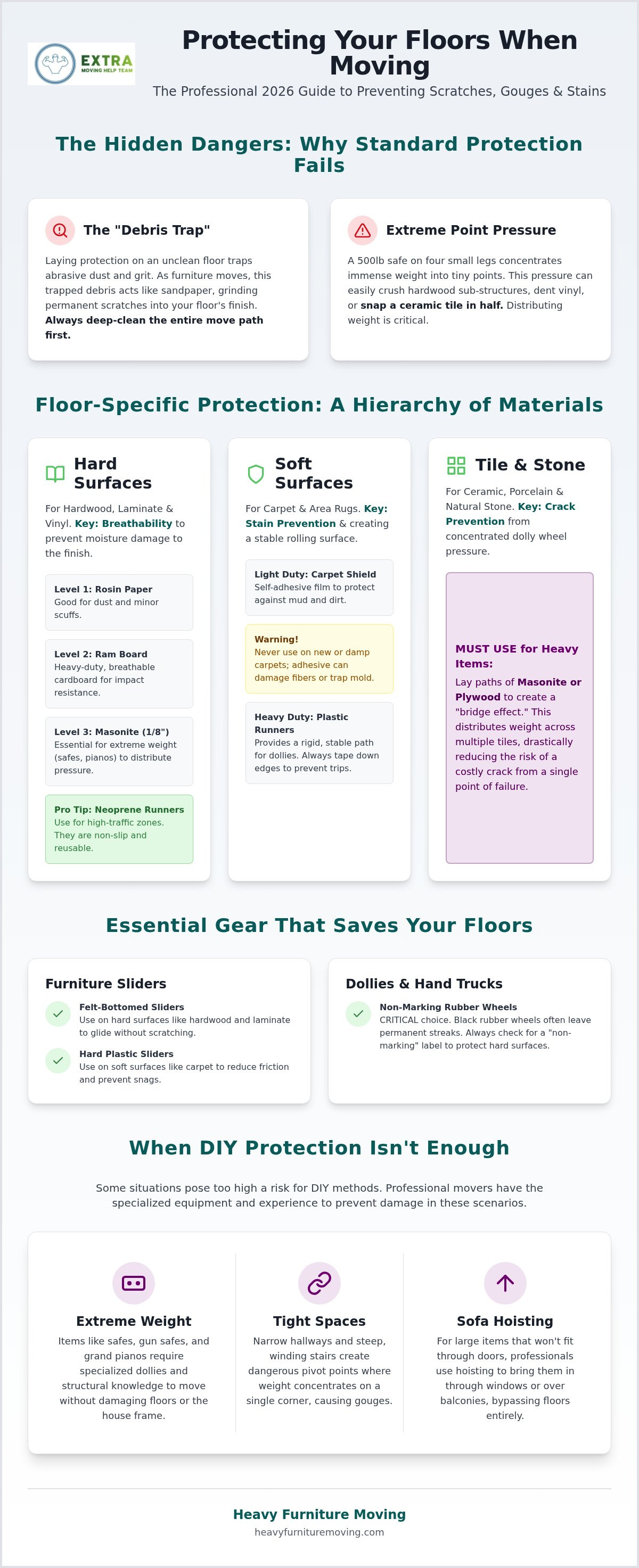
Most homeowners assume a few old blankets and a roll of tape are all they need. They're usually wrong. Learning how to protect floors when moving furniture means understanding that a single mistake can lead to a permanent scar on your home. You have to account for physics, not just surface scratches. A 500lb safe doesn't just sit on the floor. It exerts massive point pressure on four tiny legs. That concentrated weight can easily crush the sub-structure of your hardwood or snap a ceramic tile in half.
Then there's the "Debris Trap." This is the silent killer of floor finishes. If you lay down a protector over a floor that hasn't been deep-cleaned, you're just trapping abrasive dust. As you move the furniture, that protector shifts slightly. The dust underneath acts like high-grit sandpaper, grinding into the wood grain. Throwing down a loose rug is even worse. Rugs bunch up, create trip hazards, and offer zero structural support for heavy loads. The financial cost of refinishing a single room of hardwood can reach thousands of dollars. Investing in professional-grade barriers is a small price to pay for peace of mind.
Common DIY Mistakes That Ruin Hardwood
Don't reach for the duct tape. High-tack adhesives are designed to stay put. They often take your floor's polyurethane finish with them when you peel them up. Another common error is dragging furniture instead of lifting it. Even with felt pads, the friction from a heavy dresser can cause friction burns on the wood finish. Many people also rely on thin plastic films. These are great for keeping mud off carpets, but they offer zero protection against impacts or heavy weight on soft woods like pine or fir.
The Northern Virginia Factor: Stairs and Narrow Hallways
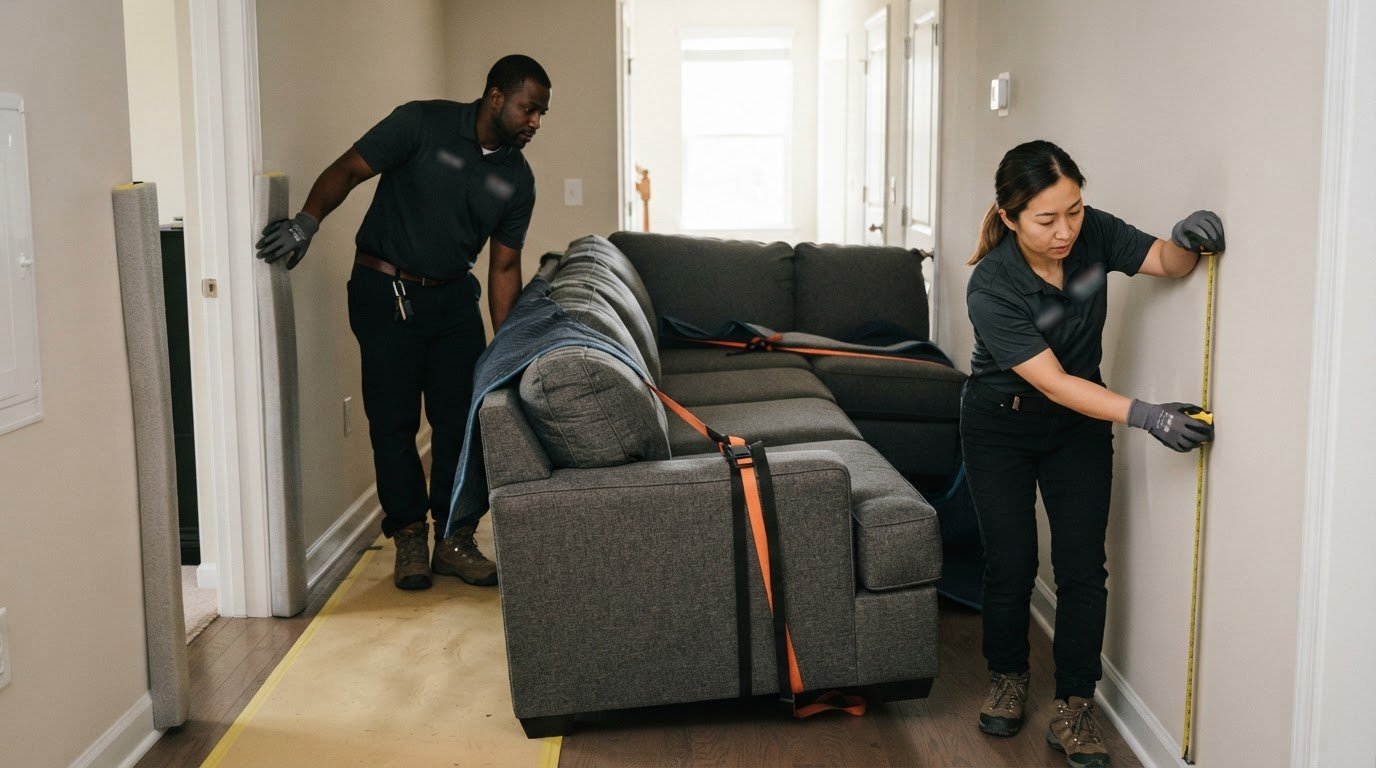
In areas like Alexandria, townhomes often feature narrow hallways and steep, winding stairs. These tight spaces create dangerous pivot points. When you tilt a heavy piece to make a turn, all that weight concentrates on a single corner. This can gouge the floor or even punch through the drywall. On stairs, weight distribution is uneven. The person on the bottom carries the bulk of the load. This pressure can dent wood treads if you aren't using rigid protection. Managing these angles requires a plan that accounts for every inch of the clearance path.
Material-Specific Guarding: Hardwood, Carpet, and Tile Strategies
One size does not fit all when you are figuring out how to protect floors when moving furniture. A barrier that works for thick pile carpet could ruin a high-end hardwood finish in hours. You need a hierarchy of protection based on the weight of the item and the vulnerability of the surface. This strategy moves from light-duty dust covers to heavy-duty structural shields that can support thousands of pounds.
Hard Surfaces: Hardwood, Laminate, and Vinyl
For hard surfaces, breathability is your best friend. Trapped moisture or off-gassing from certain plastics can cloud a wood finish. Rosin paper is the entry-level choice. It's affordable and keeps dust at bay, but it won't stop a dropped tool or a heavy dolly wheel. Step up to Ram Board for better impact resistance. It's a heavy-duty, breathable cardboard that handles most standard residential moves. If you're moving something extreme like a safe, reach for Masonite. These 1/8-inch hardboard sheets distribute weight across a wide area, preventing the sub-floor crushing mentioned earlier.
Neoprene floor runners are the secret weapon for high-traffic walk zones. They're non-slip, reusable, and lay flat instantly without tape. If you're overwhelmed by the logistics of a complex move, hiring professional furniture moving experts ensures these materials are deployed correctly from the start.
Soft Surfaces: Carpet and Area Rugs
On soft surfaces, the goal changes. You're fighting stains, snags, and uneven surfaces that make dollies hard to roll. Carpet Shield is a self-adhesive film that sticks directly to the fibers. It's fantastic for keeping mud out, but never use it on damp or brand-new carpets. The adhesive can react with the carpet's chemicals or trap moisture, leading to mold. For high-traffic paths, rigid plastic runners provide a stable surface for dollies. However, they often create trip hazards at the edges. Always tape the edges down securely to keep your team safe and avoid stumbles.
Tile and stone floors are deceptively fragile. While they seem tough, they are prone to cracking under point pressure. A single dolly wheel carrying a heavy load can snap a ceramic tile if it hits a hollow spot in the mortar. Always use Masonite or thick plywood paths when rolling heavy equipment across tile. This bridge effect ensures the weight is shared across multiple tiles, reducing the risk of a costly crack. By matching the material to the floor type, you create a fail-safe environment for your move.
Essential Gear: Moving Equipment That Saves Your Floors
Gear is the bridge between your heavy items and the protective barriers you've already laid down. Without the right tools, even the best Masonite or Ram Board can't stop a mishap. When you're planning how to protect floors when moving furniture, your equipment choices are just as vital as your floor coverings. Professional-grade tools distribute weight and eliminate the friction that ruins expensive finishes.
Furniture Sliders: Proper Use and Limitations
Sliders are the most common DIY tool, but they require precision. Use felt-bottomed sliders for hardwood, tile, and vinyl. Use smooth plastic-bottomed versions for carpet. Always clean the floor and the slider itself before placement. As we noted with the "Debris Trap," even a tiny pebble under a slider acts like a glass cutter. Most retail sliders have a weight limit of about 400 lbs. If you exceed this, the pad can compress or slip, leading to a sudden gouge. Never use sliders on stairs. The loss of control is instant and dangerous.
Professional Dollies and Hand Trucks
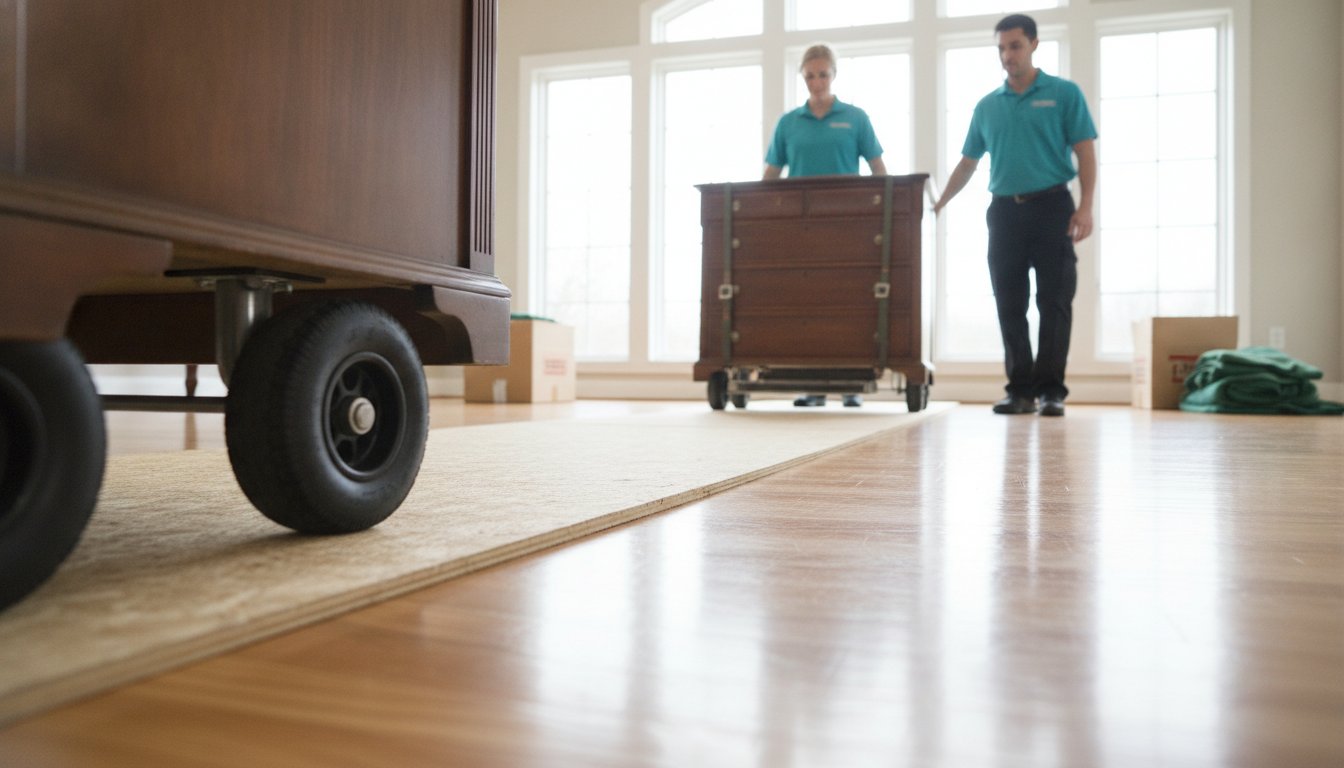
For extreme loads like pianos or gun safes, a standard utility dolly isn't enough. You need equipment with non-marking rubber wheels. Avoid cheap hard plastic wheels. They are prone to flat-spotting and leaving permanent black streaks on laminate or tile. Pneumatic tires work well for absorbing shocks, but solid rubber wheels provide better stability on flat, protected paths. Always use the three-point contact rule. Ensure the load is secured, the dolly is level, and your path is clear. Wheel locks are essential when you stop to adjust your grip on a Masonite bridge.
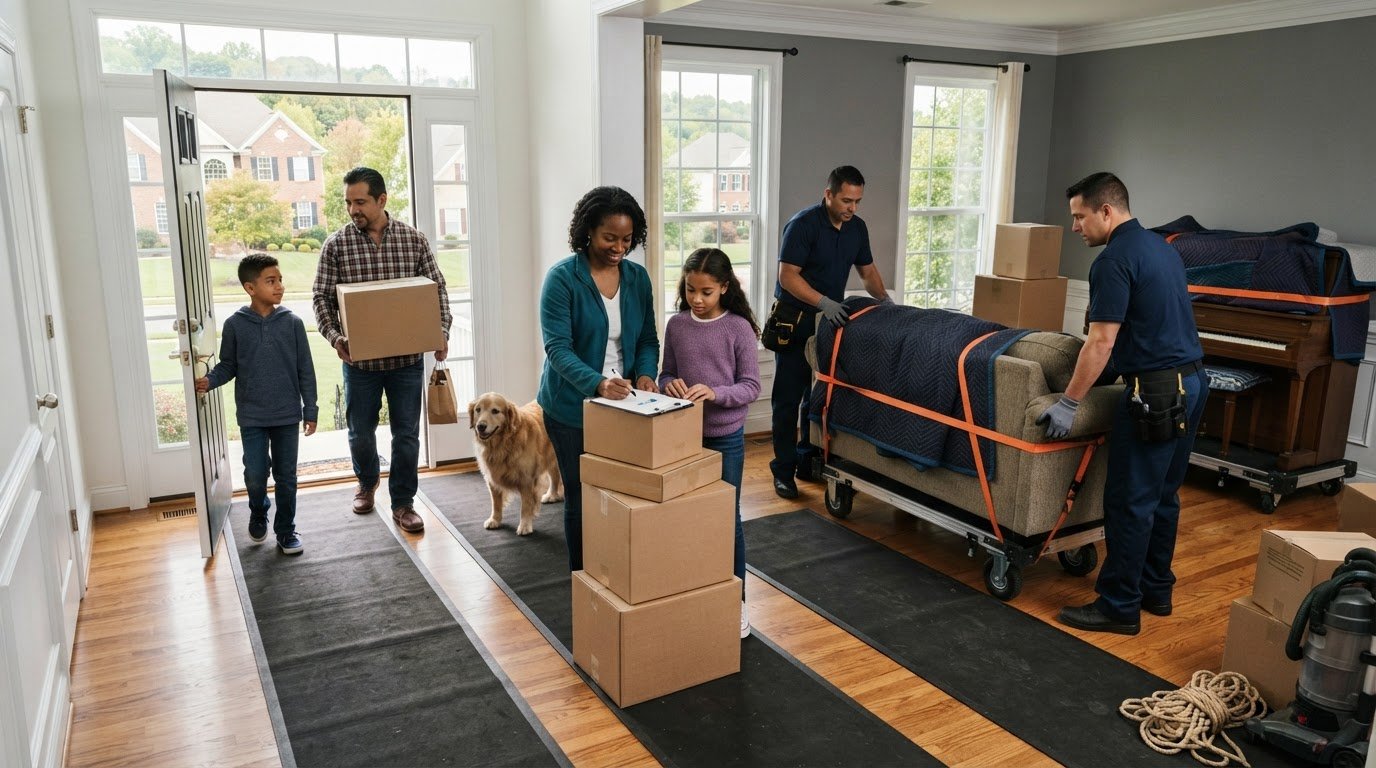
Moving blankets are your versatile secondary defense. Fold them to create extra padding under furniture legs or wrap corners that might clip a floor transition. For items that are awkward but don't require a dolly, shoulder dollies or lifting straps are game-changers. These tools use your body's leverage to lift the item completely off the ground. By keeping the weight in the air, you bypass the floor entirely. This is one of the most effective ways to prevent scratches during a move.
Step-by-Step: Pre-Move Floor Preparation Checklist for 2026
Preparation isn't just a suggestion; it's your primary defense. If you skip the setup, you're gambling with your security deposit or your home's equity. Mastering how to protect floors when moving furniture starts hours before the first box moves. Follow this systematic order of operations to lock down your home and ensure a damage-free exit.
- Phase 1: Deep Cleaning. Sweep and mop every inch of the move path. Removing abrasive particulates prevents the "Debris Trap" we discussed earlier, where dust acts like sandpaper under your protectors.
- Phase 2: Measuring the Clearance Path. Measure your furniture at its widest points. Don't forget to account for the extra width of dolly wheels and your own stance as you maneuver through hallways.
- Phase 3: Installing the Primary Barrier. Lay down your Ram Board or Rosin paper. Overlap the seams by at least two inches to prevent the edges from curling and creating trip hazards.
- Phase 4: Securing the Perimeter. Use low-tack builder’s tape to fix the barriers. Avoid high-tack adhesives that bond too strongly to wood finishes or leave sticky residue behind.
- Phase 5: The Dry Run. Navigate the path with an empty dolly. This reveals tight pivot points or loose edges that need extra tape before you're carrying a heavy load.
Weatherproofing Your Entryways
Northern Virginia moves often involve mud, slush, or road salt. These elements are structural enemies of hardwood and carpet. Create a "Decontamination Zone" at your primary entrance. Use heavy-duty walk-off mats to catch grit and moisture before it hits your protected path. If it's raining, watch for moisture seeping under your plastic runners. Wet floor protectors can trap humidity and cloud your floor's finish within hours. If the weather looks too risky for a DIY attempt, professional furniture moving teams bring specialized gear to keep your interior dry and grit-free regardless of the forecast.
Taping Techniques for Zero Residue
Tape choice can make or break your floor's finish. Never use standard masking tape or duct tape on hardwood. These adhesives cure quickly and can strip the polyurethane layer when removed. Stick to the 24-hour rule: remove all tape within a day of application to prevent the adhesive from bonding permanently. For maximum safety, use the "Tape-to-Tape" method. Secure your floor protectors by taping the edges of one sheet to the top of the next. This keeps the adhesive off the floor entirely while maintaining a solid, continuous barrier. Look for "Finish-Safe" blue tapes specifically rated for delicate surfaces to ensure a clean peel when the job is done.
Moving Heavy Items Safely: When DIY Protection Isn’t Enough
You can follow every preparation step in the book, but some items defy standard DIY logic. Once an object exceeds the "Safe and Piano Threshold," typically around 500 pounds, the physics of the move change completely. At this weight, you aren't just worried about surface scratches. You're worried about structural failure. Knowing how to protect floors when moving furniture at this level means recognizing when your home's sub-floor is at risk of crushing or buckling under concentrated pressure.
The Complexity of Pianos and Gun Safes
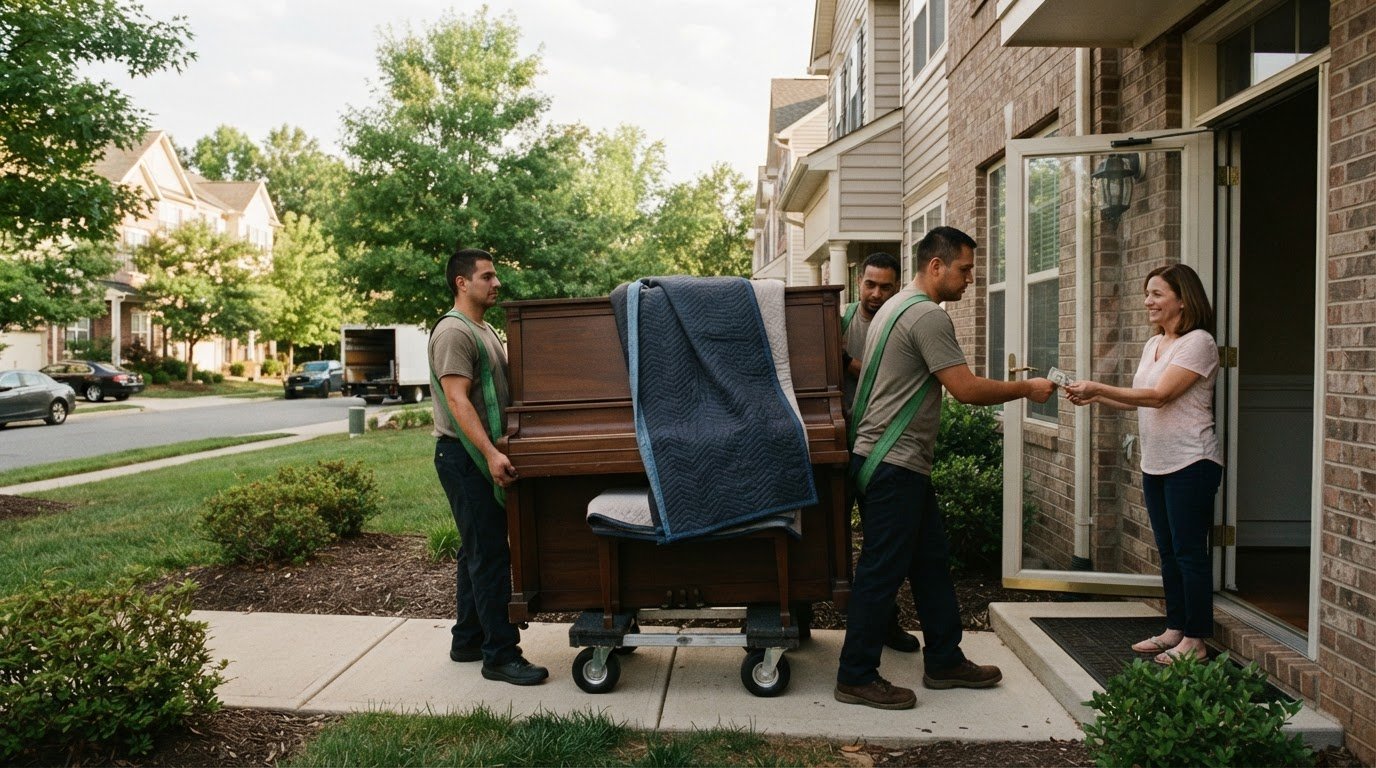
Pianos and gun safes are the biggest threats to your flooring. A grand piano carries its massive weight on three tiny casters. These can snap ceramic tiles or leave deep ruts in hardwood instantly. Professional piano moving crews use specialized skids to distribute that weight across multiple floor joists. Similarly, safe moving requires more than just a heavy-duty dolly. If the sub-floor isn't reinforced during the move, the weight can cause the floor to sag. Specialized movers bring high-capacity steel plates that bridge the gaps between joists, ensuring the weight never rests on a single vulnerable spot.
Sofa Hoisting: The Ultimate Floor Saver
Sometimes the safest way to protect your floors is to stay off them entirely. In tight Fairfax condos or Alexandria townhomes, narrow staircases make maneuvering large sectionals nearly impossible. This is where sofa hoisting offers a superior alternative. By lifting your furniture through a window or over a balcony, we bypass the interior floors and hallways. This eliminates the risk of pivot-point gouges or friction burns on your stairs. It's a specialized technique that turns a high-risk logistical nightmare into a controlled, exterior operation. It is the most reliable way to ensure your interior finishes remain untouched during the transition of oversized pieces.
Ready for a Stress-Free Move?
Hiring specialized heavy item movers is almost always cheaper than a floor replacement or a structural repair. Our veteran-family owned team understands the unique challenges of Northern Virginia homes. We bring professional-grade barriers and the physical power to ensure your move is flawless. Whether you're in Manassas, Arlington, or beyond, we treat your home with the same care we'd give our own. Don't risk a permanent scar on your hardwood or a cracked tile in your foyer. Get a quote for your heavy item move today and let the experts handle the heavy lifting.
Secure Your Home and Your Peace of Mind
Moving day doesn't have to end with a trip to the hardware store for floor repair kits. You now have the professional blueprint for how to protect floors when moving furniture by using the right barriers, cleaning your path, and respecting the weight limits of your equipment. From Masonite bridges to non-marking rubber wheels, these tactics keep your hardwood, tile, and carpet in pristine condition.
Sometimes the safest plan involves calling in the experts who handle these logistical challenges every day. We are a veteran-family owned and operated team serving Fairfax, Alexandria, and all of Northern Virginia. We specialize in the toughest tasks, including piano moving and sofa hoisting, to bypass floor risks entirely. Our crew brings the heavy-duty protection and experience needed to safeguard your investment from start to finish.
Save your floors and your back—hire the heavy item experts at Heavy Furniture Moving. You've done the research and prepped your space. Now, take that final step with confidence and enjoy your new home without a single scratch to show for it.
Frequently Asked Questions
Is it better to use moving blankets or plastic film on hardwood floors?
Moving blankets are the superior choice for hardwood because they allow the wood to breathe. Plastic films can trap moisture or react with the floor's finish, leading to permanent clouding. When learning how to protect floors when moving furniture, always prioritize breathable barriers like clean blankets or Ram Board to keep your wood surfaces safe from scratches and chemical damage.
How do I protect my carpet from dirty moving dolly wheels?
Apply a self-adhesive carpet shield or lay down rigid plastic runners along your move path. These barriers prevent dolly wheels from grinding mud, grease, or outdoor grit into the carpet fibers. For the best results, ensure the film is rated for your specific carpet pile and remove it immediately after the move to avoid leaving adhesive residue behind.
Will furniture sliders scratch my laminate or vinyl plank flooring?
Sliders can cause deep scratches if even a tiny piece of grit gets trapped underneath the pad. Always sweep and damp-mop your laminate or vinyl floors before you begin. Use felt-bottomed sliders instead of plastic ones for these surfaces. The felt provides a soft cushion that glides easily without catching on the edges of your floor planks.
What is the best tape to use on hardwood floors that won’t peel the finish?
Stick with low-tack blue painter’s tape or specialized builder’s tape for any hardwood surface. These adhesives are designed to hold protectors in place without bonding to the polyurethane finish. To stay safe, follow the 24-hour rule and remove all tape as soon as the furniture is in its final position. This prevents the adhesive from curing and damaging your floors.
How do I move a heavy gun safe without cracking my floor tiles?
Create a structural bridge using Masonite or thick plywood sheets over your tile move path. This is a critical step in how to protect floors when moving furniture that weighs hundreds of pounds. The rigid boards distribute the safe’s weight across the sub-floor, preventing a single dolly wheel from putting enough point pressure on a tile to snap it in half.
What is Ram Board and is it worth it for a residential move?
Ram Board is a heavy-duty, breathable floor protector made from compressed cardboard. It offers far more impact protection than standard paper and is tough enough to withstand heavy dollies and constant foot traffic. For most Northern Virginia moves, it is absolutely worth the cost to prevent gouges in high-traffic hallways and entryways where accidents are most likely to happen.
Can I move a piano myself if I use enough floor protection?
Moving a piano is a high-risk task that usually exceeds DIY capabilities. Even with thick floor padding, the sheer weight of a piano can crush floor joists if not handled with professional skids. It's much safer to hire experts for piano moving. Professionals have the specialized equipment to distribute weight correctly and navigate tight corners without risking your home's structural integrity.
How do I protect my stairs during a heavy furniture move?
Cover every stair tread with non-slip Neoprene runners or custom-cut pieces of Ram Board. Secure the edges tightly with low-tack tape to eliminate trip hazards. Stairs are high-impact zones where weight distribution is uneven, so using a rigid protector is essential. This prevents the person carrying the bottom of the load from accidentally denting the wood treads under the increased pressure.
Frequently Asked Questions
You don't have to face the stress of a heavy move alone. Our veteran-family owned team specializes in protecting your home in Manassas and throughout Northern Virginia. We bring the right gear, the physical strength, and the local expertise to handle your most challenging items with ease. Let us take the weight off your shoulders and your floors. Get a quote for your heavy item move today and see how easy a professional move can be. Your floors are one of your home's most valuable assets. Don't let a single day of moving lead to years of looking at deep gouges or cracked tiles. Remember that successful protection starts with a deep clean to avoid the "debris trap" and ends with choosing the right heavy-duty barriers like Masonite for your heaviest items. By mastering how to protect floors when moving furniture, you can transition into your new space without the stress of permanent property damage. If the weight of a 600 pound safe or a grand piano feels like too much for a DIY project, we are here to help. Our veteran-family owned and operated team specializes in heavy equipment and unique solutions like sofa hoisting to bypass delicate floors entirely. We proudly serve Fairfax, Alexandria, and all of Northern Virginia with the rugged reliability you deserve. Save your floors and your back—hire the heavy item experts at Heavy Furniture Moving today. You've worked hard for your home; let us help you keep it pristine.
Use moving blankets or specialized neoprene runners. Never apply adhesive plastic film to hardwood because it traps moisture and can leave a gummy residue that ruins the finish. Blankets provide essential cushioning against impact. Just make sure the floors are spotless first and secure the blankets so they don't slide under your feet while you carry heavy items.
Lay down self-adhesive carpet protection film or plastic runners with spiked backings. These create a tough physical barrier against mud, grease, and black rubber marks from tires. If you don't have film, use clean plywood or Masonite sheets to create a temporary hard path. This keeps the weight of the dolly from grinding dirt deep into the carpet fibers.
Sliders won't scratch if you use felt-bottomed versions and clean the floor first. Avoid plastic-bottomed sliders on hard surfaces. Any grit trapped under the pad will act like sandpaper, so sweep and microfiber mop the entire area before you start. Check the slider pads for debris between every single move to ensure they stay clean and safe.
Use low-tack blue or green painter's tape designed for delicate surfaces. Even with the right tape, avoid sticking it directly to the wood whenever possible. Use the tape-to-tape method to secure your floor protectors to each other instead of the floor finish. Always remove all tape within 24 hours to prevent the adhesive from bonding or reacting with the polyurethane.
Distribute the weight using 1/8-inch Masonite or 1/4-inch plywood sheets. This prevents the dolly wheels from concentrating all the safe's weight on the center of a single tile, which is the most common cause of cracking. If you're wondering how to protect floors when moving furniture of this weight, the secret is always increasing the surface area of the load.
Ram Board is a heavy-duty, breathable temporary floor protector made from recycled paper. It's absolutely worth it for high-traffic areas during a residential move. It resists spills and handles heavy foot traffic better than standard Rosin paper. It provides a professional-grade shield for your hardwood and tile that won't tear easily under the weight of heavy dollies or equipment.
Moving a piano yourself is extremely risky even with great floor protection. Pianos weigh between 300 and 1,200 pounds and can easily crush sub-floors or collapse stairs if mishandled. While you can learn how to protect floors when moving furniture, the specialized equipment and balance required for pianos usually demand professional expertise to avoid catastrophic damage to your home and body.
Cover the treads and risers with self-adhesive carpet film or non-slip neoprene runners. For wooden stairs, use individual pieces of Ram Board secured tightly with painter's tape. Always ensure the material is perfectly flat and tight against the surface. Loose protection on stairs is a major trip hazard that can lead to dropped furniture and broken wood treads.