Protect Parquet Floors When Moving a Heavy Antique Armoire
Even a careful lift can leave a mark if grit, a dirty slider, or an unprotected wheel travels beneath the armoire. Moving a heavy antique armoire without scratching parquet floors in Fairfax Station starts with clearing the route, securing the doors, and protecting the floor before the piece moves.
It makes sense to protect both the armoire and the parquet: antique finishes and finished wood floors can be vulnerable to bumps, scrapes, and concentrated weight. A moving blanket can cushion the furniture, but it cannot replace sturdy floor protection beneath a heavy load. Keep ordinary adhesive tape off the finished floor, and use clean, suitable sliders or rigid protection instead.
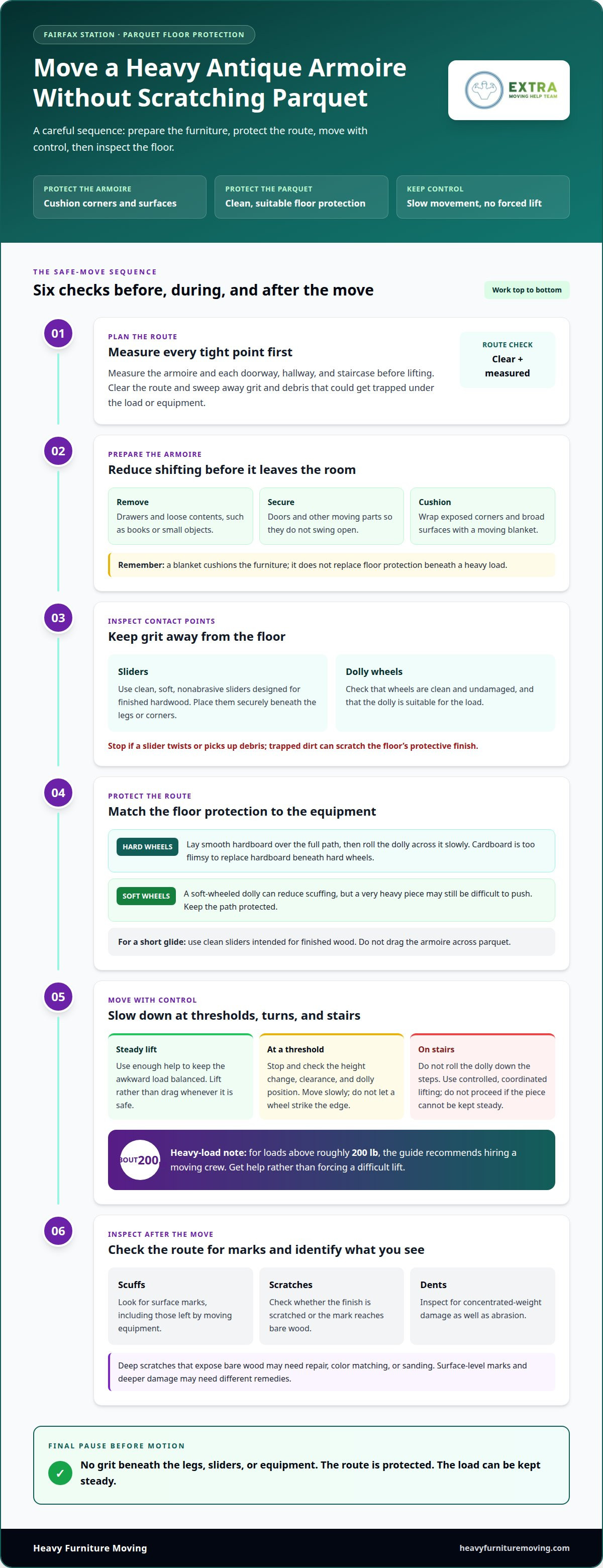
Prepare the armoire, clear and protect the route, move steadily, then inspect the floor for scratches, scuffs, or dents. If the load or route makes the move difficult to control, arrange experienced lifting help before moving day.
Key Takeaways
- Clear the route, secure the armoire’s moving parts, and check that it can pass through doorways before lifting.
- Keep grit away from the floor and use clean, suitable sliders instead of dragging the armoire across parquet.
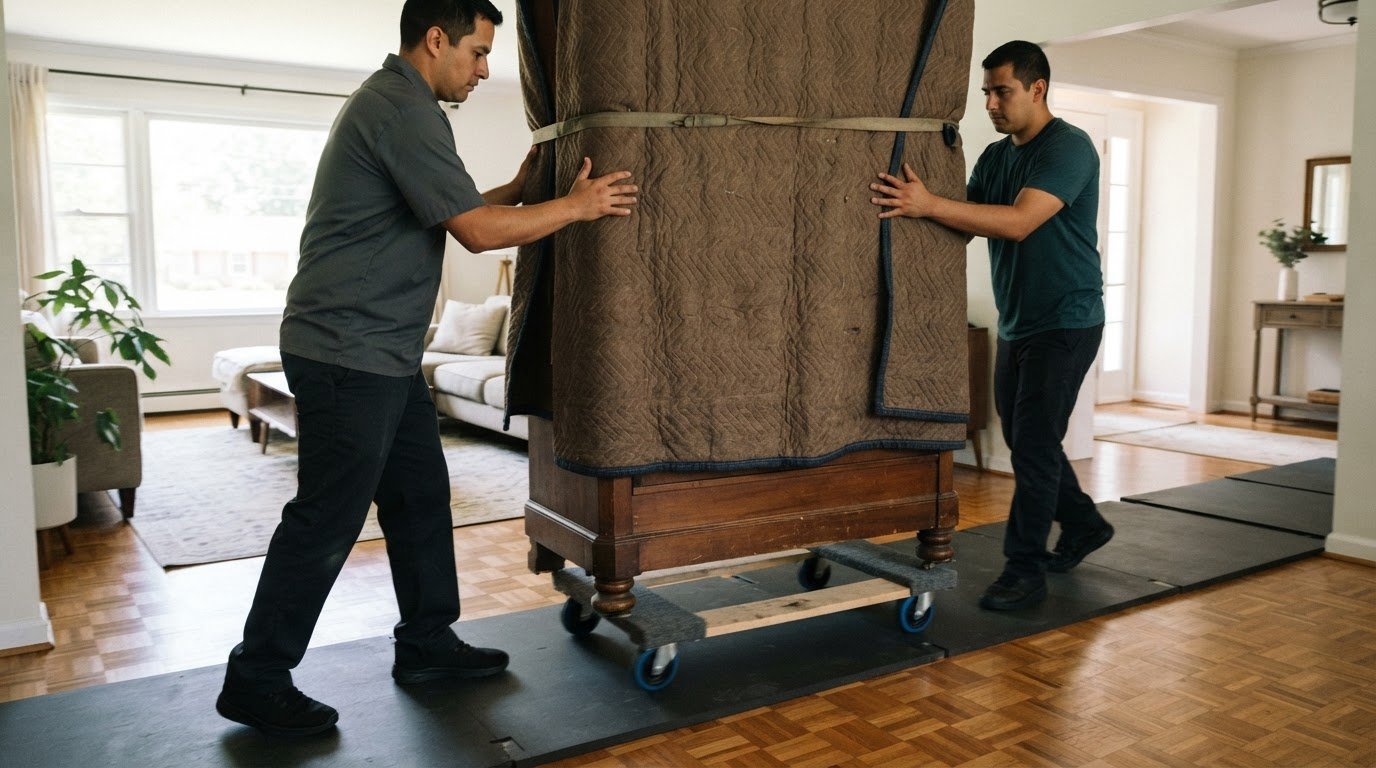
- Protect the path beneath a hard-wheeled dolly with rigid floor protection, such as smooth hardboard.
- Use moving blankets to cushion the armoire and help prevent bumps against walls and doorframes.
- After the move, inspect the floor for scratches, scuffs, and dents so you can spot damage promptly.
1. What is the safest way to move heavy furniture on hardwood floors?
For a heavy armoire, plan the route, protect the parquet, and move slowly with enough help. Measure the furniture and each doorway, hallway, and staircase before lifting. Remove drawers and loose contents, then secure doors and other moving parts. These steps make the load easier to control and help prevent sudden shifts across the floor.
Moving an antique armoire without help can lead to strained lifting, loss of control, or damage to the furniture and floor. Its weight and awkward shape can make it difficult to balance, especially at a turn or doorway. Get help rather than forcing the lift.
Check the floor and equipment before anything moves. Sweep grit and debris from the route, and inspect slider surfaces and dolly wheels for dirt or damage. Choose clean, soft, nonabrasive sliders designed for finished hardwood, and place them securely beneath the armoire’s legs or corners. Dirty or unsuitable sliders can scratch the finish as they move across the floor.
A hard-wheeled dolly needs a protected path. Lay smooth hardboard over the route, then roll the dolly across it slowly. Cardboard is too flimsy to replace hardboard beneath hard wheels. A soft-wheeled dolly can reduce scuffing, but a very heavy piece may still be difficult to push. Choose a dolly suited to the load, with clean, undamaged wheels, and avoid sudden turns or pressure on one corner.
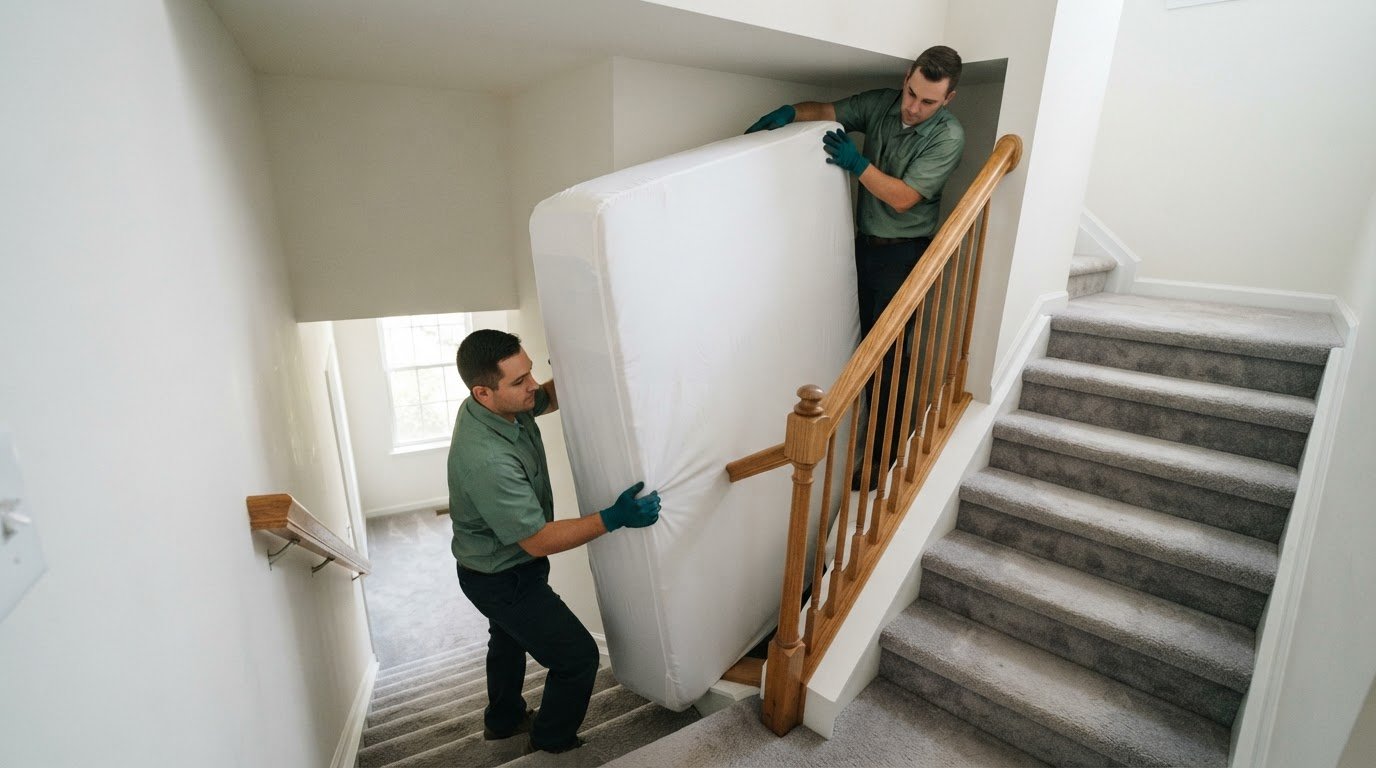
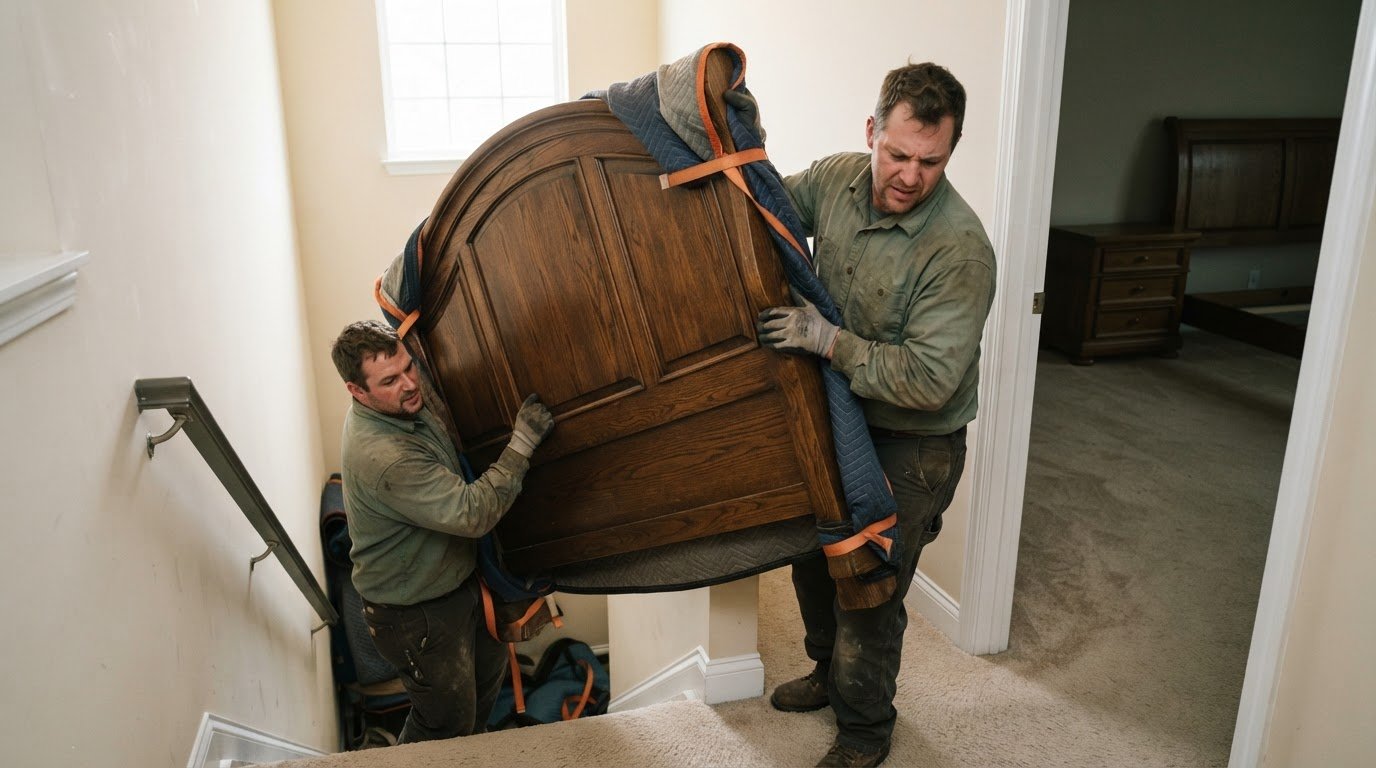
At a threshold, stop and check the height change, clearance, and dolly position before proceeding. Keep the armoire supported and move it slowly, without letting a wheel strike the edge. For stairs, measure the route first and do not try to roll the dolly down the steps. A heavy, upright piece needs controlled lifting and coordinated movement. Do not proceed if the people handling it cannot keep it steady.
Deep scratches that expose bare wood may need repair, color matching, or sanding. After the move, inspect the route for scratches, dents, and scuffs, including marks from equipment. Surface-level marks and deeper damage may need different remedies, so identify whether the finish is scratched or bare wood shows through. Protecting hardwood means preventing both abrasion and concentrated weight, since an unsupported heavy piece can dent the floor. For loads above roughly 200 lb, the guide recommends hiring a moving crew.
Before setting the piece in motion, check once more that no grit is caught beneath the legs, sliders, or equipment: dirt or debris trapped beneath furniture legs or moving equipment can scratch a hardwood floor’s protective finish as the item moves. Put clean, soft, nonabrasive sliders intended for finished wood flooring under the legs or corners, or place wool materials between heavy furniture and a hard floor because they slide well. A soft-wheeled dolly can reduce the risk of scuffing; make sure it is suitable for the load, has clean and undamaged wheels, and moves slowly over a protected path.
2. Using moving blankets to protect furniture and floors
Moving blankets cushion an antique armoire against bumps, scrapes, and accidental contact with walls or doorframes. These padded, heavy-duty blankets are typically made from cotton or polyester. Wrap exposed corners and broad surfaces, keeping the covering secure while the furniture is lifted. A blanket protects the finish, but it doesn’t replace floor protection beneath a heavy load or prevent every dent from concentrated weight.
Prepare the armoire before wrapping it. Remove drawers and loose contents, such as books or small objects, to make the piece lighter and easier to control. Secure doors and other moving parts so they don’t swing open during handling. If a removable part complicates the route, take it off only when it can be detached safely and kept together with its hardware. Don’t force antique fittings that feel stuck or fragile.
Lift the armoire rather than dragging it whenever it is safe to do so. Dragging can pull grit beneath the base and abrade parquet, while a sudden snag can shift the load. Keep the blanket from bunching beneath the piece, where folds can catch on the floor. For a short glide, place clean furniture sliders beneath the legs or corners. Check their contact surfaces first, move slowly, and stop if a slider twists or picks up debris.
Felt pads serve a different purpose. Attach them securely to clean furniture legs for everyday movement around a room, then inspect them regularly. Replace worn pads before hard legs are exposed or trapped dirt can scratch the finish. Felt pads can help with routine repositioning, but may not adequately support or protect parquet during an armoire move. Use sliders designed for finished wood instead.
Towels or cardboard can cushion the armoire, but they are less effective than moving blankets. Do not treat either as rigid protection beneath heavy furniture. Keep ordinary adhesive tape off finished hardwood, since it may leave residue or damage the finish. The blanket should travel with the armoire, not become a loose layer sliding across the floor.
In Fairfax Station, Virginia, moving-company insurance and licensing concern financial protection and authorization, not how to protect parquet. Keep those issues separate from the physical plan: wrapping, removing contents, and lifting safely help protect the armoire, while clean sliders reduce contact with the floor.
3. Using rigid floor protection for heavy loads
A moving blanket cushions an armoire, but it cannot spread the weight across parquet. For a heavy load, protect the route with rigid floor protection suitable for finished hardwood. Choose material rated for the load and cover the full path used by the armoire and moving equipment. Heavy-duty products such as Ram Board are used to protect hard floors during moves.
Prepare the floor before laying protection. Sweep the parquet so grit will not get trapped underneath, then position clean, dry panels flat against the floor. Keep the travel surface stable and smooth, since overlapping edges can catch a dolly wheel. Do not apply ordinary adhesive tape directly to finished hardwood. It may leave residue or damage the finish when removed.
For a hard-wheeled dolly, place smooth hardboard along its route. Roll the dolly across the panels slowly, keeping its wheels on the protected surface. Cardboard is not a reliable substitute because it can be too flimsy beneath hard wheels. A soft-wheeled dolly may reduce scuffing, but rigid protection still helps shield parquet from concentrated weight and equipment contact.
Before moving, check the panels for dust, rough edges, gaps, or movement. A shifting panel can expose the floor or interrupt the dolly’s path. Pause before turning, and reposition the protection rather than steering a wheel over an uncovered edge. If the route crosses carpet, keep the transition clear and stable. Do not let carpet bunch beneath a dolly or create a raised edge where it meets the parquet.
Household floor protectors serve different purposes. Felt pads attached securely to clean furniture legs can help prevent everyday scratches, but worn pads may expose hard legs or collect abrasive dirt. Inspect and replace them as needed. They are not a substitute for rigid protection beneath a heavy armoire. Cushions and moving blankets can soften contact with furniture and walls, but do not provide a firm rolling surface.
Avoid rubber-based materials on hardwood because they can leave marks. Wool can slide smoothly beneath furniture, but it does not replace rigid, load-rated protection for a hard-wheeled dolly. Match each material to its purpose: cushioning for delicate surfaces, clean sliders for controlled movement, and rigid panels for heavy loads.
After the move, lift the panels and inspect the parquet along the entire route. Check panel edges and turns closely for scuffs or dents. If protection shifted, inspect beneath that spot before moving other furniture back. A clean, continuous path and suitable floor protection help reduce the risk of scratches as the armoire crosses the room.
4. Clearing the floor to prevent trips and damage
Walk the route from the armoire’s current location to its destination. Remove shoes, cords, baskets, toys, and small furniture. Even a thin object can catch a shoe or dolly wheel and interrupt a controlled move. Sweep the parquet, too. Grit beneath a foot or piece of equipment can scratch the finish as the load moves across the floor.
Measure the armoire and route before moving day. Check doorways, hallways, and staircases for width, height, turns, and narrow landings. Include door handles and other protrusions in your clearance check. A route that fits the armoire in a straight line may still be too tight at a corner. Plan each turn before lifting, and leave enough room to pause without blocking the path.
Open doors fully and secure them so they cannot swing into the armoire or a helper. Hold doors open with a stable stop, not a loose object that could slide underfoot. Clear the destination, too. Move rugs and nearby furniture out of the landing area, then make enough space to set the armoire down without pivoting across exposed parquet.
Inspect changes in flooring along the route. At a threshold, remove clutter and check for a lip that could catch a wheel or slider. If the path crosses tile, move carefully near grout lines, which can chip or become damaged. Keep rigid floor protection flat and secure where it meets another surface. A raised or shifting edge can create a trip hazard and obstruct moving equipment.
For carpeted stretches, protective carpet film can stay in place for up to 30 days during a move. Keep that plastic film on carpet, not finished parquet. Before using it, smooth it down and remove wrinkles from the walking path. Don’t leave loose plastic, folded corners, or scraps where helpers need to step or turn with the armoire.
Have one person watch the route while the others handle the load. They can call out an obstacle, tight turn, or blocked doorway before movement continues. Agree on a clear stop signal before lifting. If someone needs to adjust a rug, panel, or door, set the armoire down safely first. A clear path from the starting room to the final position helps prevent rushed steps and avoidable floor damage.
5. Inspecting floors and addressing scratches or dents
Once the armoire is in place, inspect the route before returning rugs, tables, or other furniture. Remove floor protection carefully so its edges do not scrape the parquet. Check the starting area, turns, thresholds, and destination. Look where dolly wheels or sliders traveled, since equipment can leave marks separate from the armoire’s contact points.
Use steady light and look from more than one angle. A scratch may appear as a thin line in the finish, while a dent may look like a small depression in the wood. Scuffs can sit on the surface. Check whether the finish is interrupted or bare wood shows through. Do not assume every mark needs the same repair.
Inspect the full route, not just the spot where the armoire now stands. Check corners where the load turned, floor edges near thresholds, and areas where protection shifted. Look for scratches, dents, scuffs, and marks from moving equipment. If you find damage, photograph it in place and note its location. This record will help you compare the mark later and describe what you observed.
Distinguish surface marks from deeper scratches before choosing a response. A deep hardwood scratch that exposes bare wood may require repair, color matching, or sanding. These options address different kinds of damage, so do not apply a finish or rub a product into the mark without knowing how it affects the floor. A smooth-looking surface can still have a scratch in the finish that becomes clearer under angled light.
Check for dents as well as scratches. Heavy furniture can press into hardwood if its weight is not properly supported. Look closely where the armoire rested and beneath sliders or dolly wheels. If the floor feels uneven or the mark changes appearance with the light, document it rather than trying to conceal it. Keep the area clear until you decide on the appropriate repair.
Make a final check before replacing everyday furniture. Clean, secure felt pads on table and chair legs can help prevent routine scratches, but inspect them first for wear or trapped grit. A damaged pad can expose a hard leg or carry debris across parquet. Record any new mark separately from existing wear, and keep photographs with your moving notes.
If the armoire’s weight or route makes a controlled move difficult, get help with the heavy lift before risking floor damage.
Heavy Furniture Moving
Heavy Furniture Moving helps with bulky household furniture when an armoire is too difficult to maneuver safely on your own. Its in-home furniture moving and heavy-lifting help can fit a move that requires careful handling through rooms and doorways. Share the armoire’s location, destination, and any tight turns or stairs so the move can be planned around the home’s layout. This is a practical next step if lifting feels unstable, the route is challenging, or you’re concerned about damaging antique furniture or parquet. For a heavy armoire that needs experienced hands, contact Heavy Furniture Moving.
Make the Next Move With Confidence
Planning to move a heavy antique armoire without scratching parquet floors in Fairfax Station starts before the lift: choose its final position so it will not need another difficult shift. If the route, stairs, or armoire’s weight makes handling it feel uncertain, get help rather than risk damage to the furniture or floor. A steady plan makes the move easier to manage.
Heavy Furniture Moving can help with bulky furniture moves when careful handling matters. Share the armoire’s starting point, destination, and any tight turns so the move can be approached with the home’s layout in mind. Contact Heavy Furniture Moving to discuss your move and take the next step with confidence.
Frequently Asked Questions
What is the safest way to move heavy furniture on hardwood floors?
Plan the route, use clean floor protection, and lift with control. Before moving, identify narrow turns and places where the load may need to pause, such as a doorway. Keep hands and feet clear of the base when lowering the furniture. If the piece shifts or helpers cannot keep it steady, stop and reset rather than trying to catch it mid-move.
How do you move a heavy antique armoire without scratching parquet floors?
To move a heavy antique armoire without scratching parquet floors in Fairfax Station, protect the route and keep the armoire stable through each turn. Secure its doors, cushion vulnerable corners, and use clean sliders or suitable floor protection beneath contact points. Do not drag the base. If the armoire rocks, catches, or becomes difficult to control, pause and adjust the plan before continuing.
How do you protect parquet floors when moving heavy furniture?
Protect parquet by keeping the route free of grit and placing clean, suitable materials between the floor and moving equipment. Choose rigid protection for heavy loads, and check that it stays flat and stable as the item moves. Keep ordinary adhesive tape off finished flooring. After the move, inspect the route and landing area before putting rugs or other furniture back.
When should you hire professional antique furniture movers in Fairfax Station, VA?
Arrange moving help if the armoire is difficult to lift steadily, the route includes stairs or tight turns, or you are concerned about damaging an antique. Heavy Furniture Moving handles residential moves in Fairfax Station and nearby communities, including Fairfax, Woodbridge, Manassas, Manassas Park, Aldie, Ashburn, McLean, Vienna, Reston, Centreville, Chantilly, Clifton, Dumfries, South Riding, Haymarket, and Gainesville. The crew measures before lifting, and wrap, blankets, and straps are included on every job.
How can I assess antique furniture moving companies near Fairfax Station, Virginia?
Look for clear details about the work, the item being moved, and the route through your home. Heavy Furniture Moving reports more than 500 verified five-star reviews and a 4.9 Google rating. Treat review counts and ratings as one part of your decision, alongside whether the service fits a single bulky furniture move and whether stairs or difficult access are part of the plan.
What does it cost to hire movers for a heavy antique armoire in Fairfax County, VA?
The cost depends on the armoire, access, route, stairs, and the help required. Heavy Furniture Moving provides pricing after a quote request, based on the details of the move. Share the item’s dimensions and describe any narrow doorways, landings, or stairs so the estimate reflects the actual job. A labor-only move and a move that includes transportation may have different pricing.
Frequently Asked Questions
Plan the route, use clean floor protection, and lift with control. Before moving, identify narrow turns and places where the load may need to pause, such as a doorway. Keep hands and feet clear of the base when lowering the furniture. If the piece shifts or helpers cannot keep it steady, stop and reset rather than trying to catch it mid-move.
To move a heavy antique armoire without scratching parquet floors in Fairfax Station, protect the route and keep the armoire stable through each turn. Secure its doors, cushion vulnerable corners, and use clean sliders or suitable floor protection beneath contact points. Do not drag the base. If the armoire rocks, catches, or becomes difficult to control, pause and adjust the plan before continuing.
Protect parquet by keeping the route free of grit and placing clean, suitable materials between the floor and moving equipment. Choose rigid protection for heavy loads, and check that it stays flat and stable as the item moves. Keep ordinary adhesive tape off finished flooring. After the move, inspect the route and landing area before putting rugs or other furniture back.
Arrange moving help if the armoire is difficult to lift steadily, the route includes stairs or tight turns, or you are concerned about damaging an antique. Heavy Furniture Moving handles residential moves in Fairfax Station and nearby communities, including Fairfax, Woodbridge, Manassas, Manassas Park, Aldie, Ashburn, McLean, Vienna, Reston, Centreville, Chantilly, Clifton, Dumfries, South Riding, Haymarket, and Gainesville. The crew measures before lifting, and wrap, blankets, and straps are included on every job.
Look for clear details about the work, the item being moved, and the route through your home. Heavy Furniture Moving reports more than 500 verified five-star reviews and a 4.9 Google rating. Treat review counts and ratings as one part of your decision, alongside whether the service fits a single bulky furniture move and whether stairs or difficult access are part of the plan.
The cost depends on the armoire, access, route, stairs, and the help required. Heavy Furniture Moving provides pricing after a quote request, based on the details of the move. Share the item’s dimensions and describe any narrow doorways, landings, or stairs so the estimate reflects the actual job. A labor-only move and a move that includes transportation may have different pricing.