Post-Move Debris Removal in Centreville: Recycle Moving Boxes
That towering pile of moving boxes isn’t all recycling, and putting the wrong materials in the bin can create more work. After a Centreville move, it’s easy to feel stuck between a cramped home, collection rules, and property requirements. A clear plan for post move debris removal Centreville starts with sorting, not hauling everything to the curb.
Keep usable boxes in circulation, separate clean cardboard for recycling, and set aside packing materials or damaged items that need a different route. Then check your collection provider’s instructions and any property rules before setting materials out. This guide explains how to sort the pile, flatten and prepare cardboard for collection or drop-off, and identify what shouldn’t go in the recycling bin.
You’ll also learn what to check when choosing a disposal option for leftover debris, and when a professional junk-removal service may help with lifting and transport. Take it one stack at a time to clear the space without guessing or creating a new cleanup problem.
Key Takeaways
- Sort boxes, packing scraps, and unwanted household items into separate groups before choosing how to clear them.
- Empty and flatten clean, dry cardboard, then check your collection provider’s preparation rules.
- Consider reusing sturdy boxes and confirm local recycling or drop-off options before setting materials out.
- For post move debris removal Centreville, separate recyclable cardboard from bulky items or mixed debris that may need a different plan.
- When unwanted items are heavy or awkward, professional removal may reduce the lifting and trips involved.
Post-Move Debris Removal in Centreville: Start by Sorting Moving Boxes
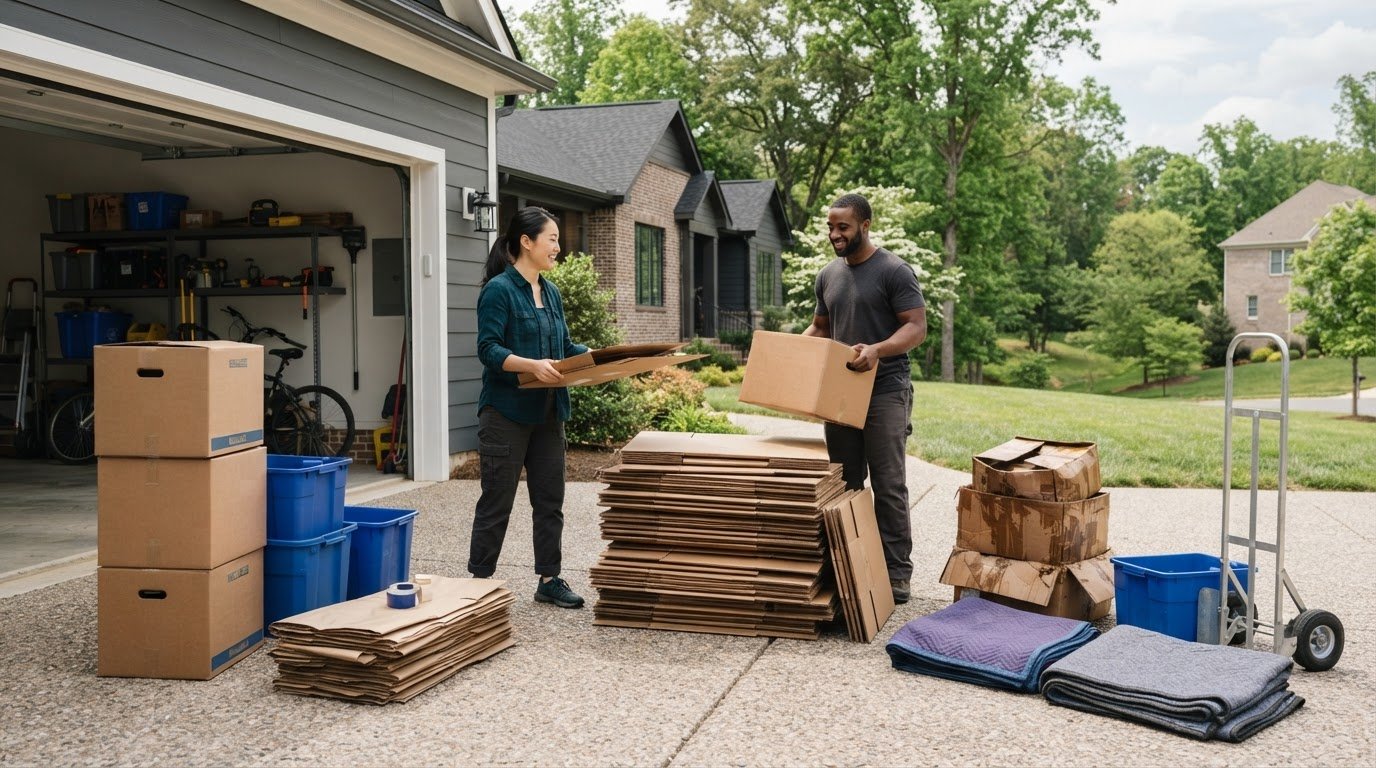
The move is over, but boxes still block the hallway. Plastic wrap, foam, tape, and unwanted household items add to the pile, and they may not belong in the same collection stream. For post move debris removal Centreville residents can start by separating materials before deciding what to reuse, recycle, or remove.
Think of post-move debris as a mix, not one kind of waste. A sturdy carton may be reusable, clean cardboard may be recyclable, and a broken or contaminated box may need another route. Materials packed together can also have different local rules, so sort them before filling a recycling cart or loading a vehicle.
Which moving leftovers are cardboard, and which are not?
Moving cartons are often corrugated fiberboard boxes, made with a fluted layer between flat sheets. Separate these from paper inserts, plastic film, foam, packing peanuts, tape, and household rubbish. Don’t assume every paper product or packing material follows the same collection rules as cardboard.
Check each box before flattening it. Look for food residue, grease, moisture, or other contamination. Keep clean, dry cardboard separate from wet or soiled pieces, and ask your provider how to handle questionable material. Fairfax County guidance says to remove packing materials such as Styrofoam, packing peanuts, and plastic wrap and put them in the trash. For county collection customers, cardboard must be flattened, and trash and recycling must fit inside the provided carts.
Why Centreville residents should check address-specific rules
Your next step depends on how waste is collected at your home. Fairfax County reports that most residents use private haulers, while others receive county service, so a neighbor’s instructions may not apply to your address. A property manager or HOA may also set rules for where and when containers can be placed.
Check current Fairfax County recycling guidance and confirm your service arrangement with your hauler or property manager. Verify accepted materials, collection access, and drop-off requirements before moving a pile outside. Rules can differ, so follow the provider responsible for your property rather than guessing.
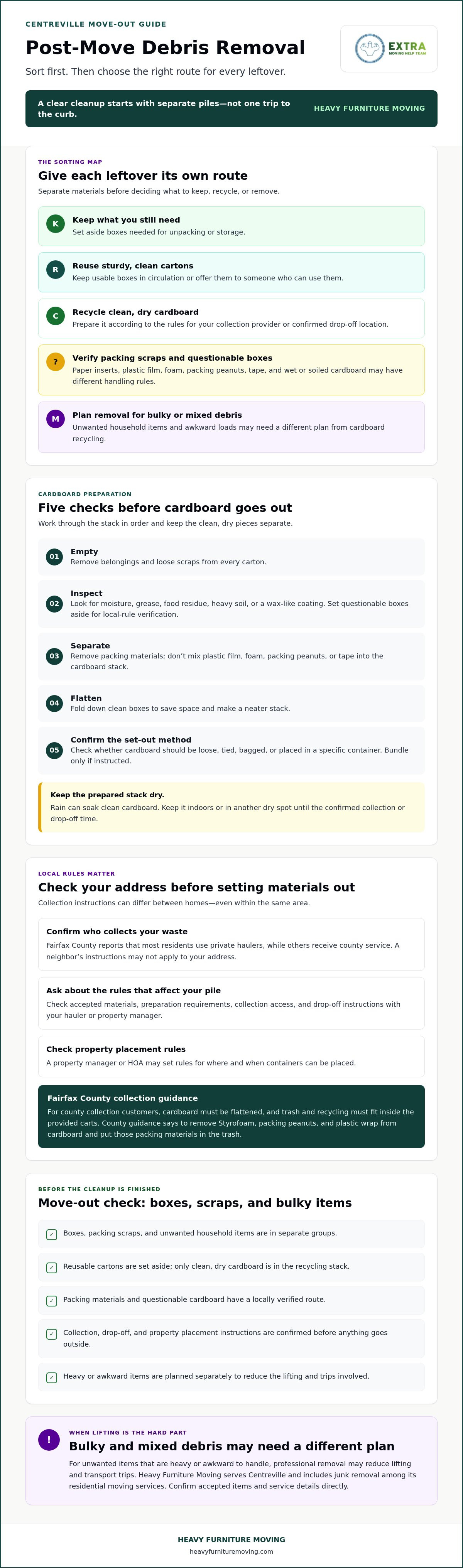
Use this quick sorting flow:
- Keep: Save boxes you still need for storage or unpacking.
- Reuse: Offer sturdy, clean cartons to someone who can use them.
- Recycle: Separate clean, dry cardboard and prepare it according to verified local instructions.
- Verify locally: Check the route for inserts and packing materials before setting them out.
- Arrange removal: For unwanted household items or mixed debris that’s awkward to handle, ask a local removal provider what it accepts. Heavy Furniture Moving serves Centreville and includes junk removal among its residential moving services. Confirm accepted items and service details directly.
How to Prepare Cardboard Boxes for Recycling After a Centreville Move
A short preparation routine makes cardboard easier to stack and helps keep other packing waste out of the recycling. Corrugated cardboard is a paper-based material built with a wavy inner layer between flat outer sheets. Keep boxes clean and dry as you work. Wet or soiled cardboard may need a different route, so separate it from the clean stack.
A simple box-flattening and sorting routine
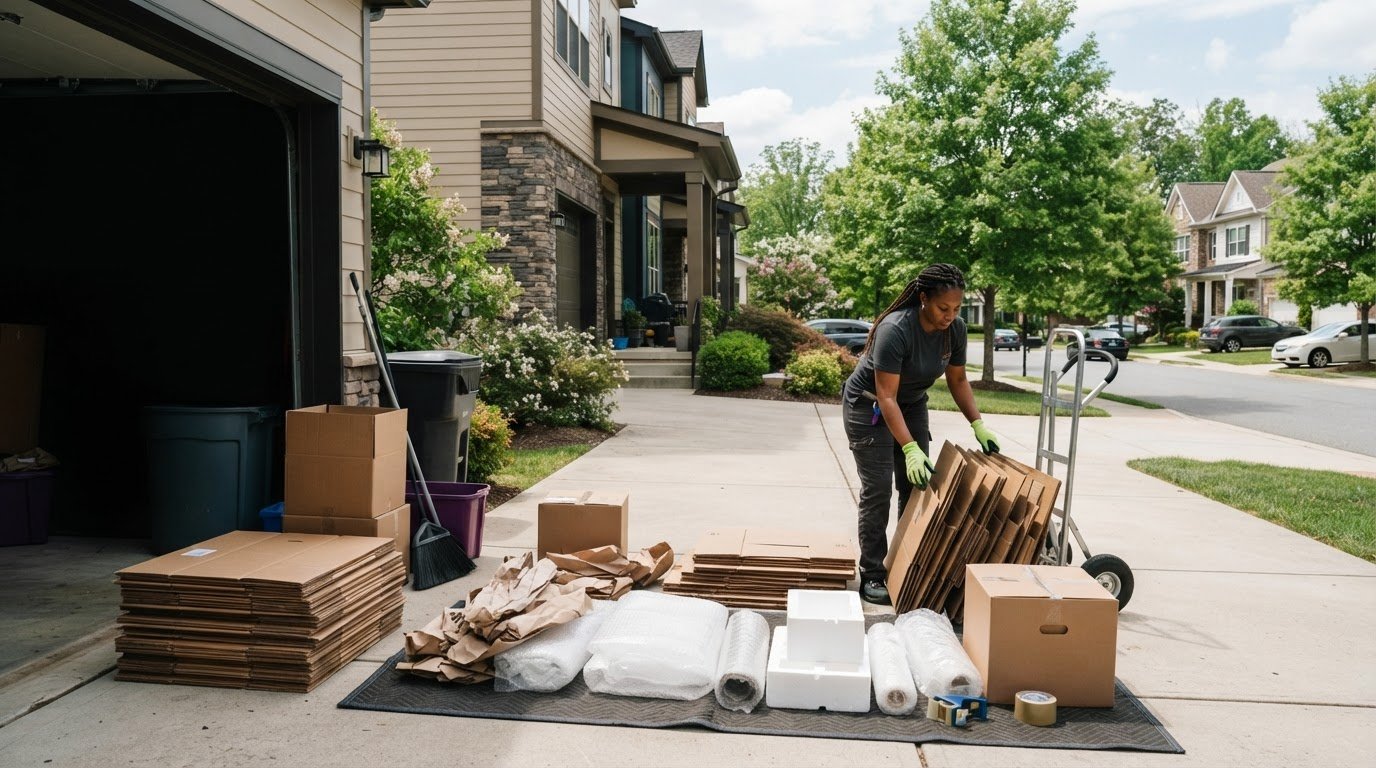
Work through the pile in a consistent order. Empty each box, remove packing materials, check its condition, then flatten it. Separate paper inserts from plastic film, foam, packing peanuts, and tape rather than leaving them mixed into the cardboard stack.
- Empty: Remove belongings and loose scraps from every carton.
- Inspect: Set aside boxes with moisture, grease, food residue, heavy soil, or a wax-like coating for local-rule verification.
- Flatten: Fold down clean boxes to save space and make a neater stack.
- Bundle only if instructed: Check whether your provider wants cardboard loose, tied, bagged, or placed in a specific container.
- Confirm the destination: Check collection or drop-off instructions before carrying the stack out.
Keep prepared cardboard indoors or in another dry spot until it’s time to set it out or take it to a confirmed drop-off location. Rain can soak an otherwise clean stack, so avoid staging it outdoors until you know when and where it can be collected.
When a box may not belong in the recycling stream
Don’t put every carton in the same pile. Wet, greasy, heavily soiled, and wax-coated boxes may have different handling instructions, so verify before recycling or discarding them. The same goes for oversized cartons. Don’t cut them down unless your hauler or drop-off site says that’s acceptable.
Fairfax County’s instructions say to flatten cardboard and remove packing materials such as Styrofoam, packing peanuts, and plastic wrap, which go in the trash. For county collection customers, all trash and recycling must fit inside the provided carts. Check the current Fairfax County recycling guidelines, and confirm your own collection arrangement before relying on those cart instructions. If your property uses a private hauler, ask that provider about containers, bundling, and excess cardboard.
Once the cardboard is sorted, the remaining job may be less about recycling and more about handling bulky unwanted items. If that pile needs extra lifting, explore residential moving and junk removal support from Heavy Furniture Moving. The company serves Fairfax, Woodbridge, Manassas, Manassas Park, Aldie, Ashburn, Mclean, Vienna, Reston, Centreville, Chantilly, Clifton, Dumfries, South Riding, Fairfax Station, Haymarket, and Gainesville. Confirm which items and service terms apply before arranging help.
Recycling, Reuse, or Removal: Choose the Right Centreville Cleanup Route
Once your moving leftovers are sorted, match each pile to a route. Reuse can extend the life of sturdy cartons. Recycling or drop-off may work for eligible cardboard, depending on your collection setup. Professional removal is a separate option for unwanted household goods or a mixed pile that’s difficult to handle yourself. Cardboard recycling won’t take care of a sofa or other bulky item.
When to reuse, give away, or recycle moving boxes
Keep sturdy, dry cartons for storage or a future move. You can also offer usable boxes locally, but check that someone wants them before they take up space. Send damaged or unsuitable cartons to the route specified by your hauler or current local guidance. Fairfax County’s recycling instructions require cardboard to be flattened; county collection customers must also fit recycling inside the provided carts. Confirm whether those instructions apply to your address.
| Material | Possible route | What to verify |
|---|---|---|
| Sturdy, clean moving boxes | Reuse, offer locally, or recycle | Whether boxes are wanted; local preparation and collection rules |
| Clean, dry cardboard that won’t be reused | Collection or approved drop-off | Hauler instructions, cart limits, and drop-off requirements |
| Plastic film, foam, or packing peanuts | Separate from cardboard; follow local disposal guidance | Whether your provider accepts any of these materials in a separate stream |
| Unwanted furniture or mixed household items | Arrange a suitable removal option | Accepted items, service area, handling, and property rules |
| Wet, greasy, or heavily soiled cartons | Set aside for local-rule verification | Whether they can be collected or need another disposal route |
Collection options can vary by address. Check current Fairfax County guidance, ask your hauler about its rules, and confirm any container-placement or bulk-item requirements with your property manager or HOA before setting anything out. Don’t assume a drop-off site accepts every material just because it takes cardboard.
When professional post-move debris removal may help
Self-transport can be practical when you have a small, sorted stack and a confirmed destination. A removal provider may be worth considering if unwanted furniture, bulky items, or mixed debris exceed your lifting capacity or would require repeated trips. Heavy Furniture Moving serves Centreville and includes junk removal among its residential moving services. Before arranging help, ask the provider directly about accepted items, service area, and handling details. Don’t assume a removal service accepts every packing material or guarantees recycling.
For post move debris removal Centreville, choose a route based on material and effort: reuse what’s useful, verify the recycling path for cardboard, and get clear answers before arranging removal for the rest.
A Centreville Move-Out Cleanup Checklist for Boxes and Packing Debris
A room-by-room pass keeps packing scraps from migrating back into cleared spaces. Set up separate staging spots for clean cardboard, reusable boxes, packing materials, and unwanted household goods. Keep walkways and shared areas open while you sort, especially if materials need to be carried through an apartment building or community space.
Work through the home in clear stages
Start where the most boxes remain, then move room by room. Empty cartons, separate cardboard from foam, plastic wrap, and tape, and keep unwanted belongings apart from recycling. This makes the final collection or drop-off easier to plan.
- Living areas: Gather flattened cartons and list unwanted furniture separately.
- Kitchen: Check boxes for food residue or grease before adding them to the clean-cardboard stack.
- Bedrooms and closets: Set aside reusable cartons, then collect loose packing paper and plastic separately.
- Entry and shared areas: Keep staged materials contained and clear of doors, halls, and access routes.
Before setting boxes out or arranging a drop-off
Confirm the current collection instructions for your Centreville address. Ask your hauler what materials it accepts, how cardboard should be prepared, and whether oversized or excess loads need another arrangement. County guidance may not apply to a home served by a private provider, so check your specific service setup.
If you live in a managed community, contact the property manager before placing anything outside. Ask whether approval is needed, where materials may be staged, and what timing or access rules apply. Don’t block shared spaces or leave items beside a recycling container unless your property and collection instructions allow it.
Separate bulky items from recyclable cardboard
Make a separate list for furniture, appliances, and other unwanted household goods. These items aren’t handled like flattened cardboard. Ask the relevant provider whether it accepts each item and whether it needs preparation before removal. Avoid leaving bulky goods beside recycling containers unless local instructions specifically permit it.
Save this checklist:
- Sort by room and keep pathways clear.
- Separate cardboard from foam, plastic wrap, tape, and household goods.
- Check the address-specific collection route and property rules.
- Verify access, timing, material limits, and drop-off requirements.
- Confirm accepted items before arranging removal for bulky belongings.
If unwanted household items are too awkward to move yourself, ask Heavy Furniture Moving about junk removal support in Centreville, including which items and service details apply.
Finish Post-Move Debris Removal in Centreville with a Clear Next Step
Finish the cleanup in order: sort what you have, prepare clean cardboard, confirm the rules for your address, then decide how to handle what’s left. Reusable boxes and a small cardboard stack may be manageable on your own. Unwanted furniture, appliances, or other bulky household items can take more lifting and planning. Keeping those tasks separate makes post move debris removal Centreville easier to organize.
What to share when asking about removal help
Make a brief inventory before contacting a provider. List cardboard separately from furniture and other household items, and note anything unusually bulky. Include your Centreville location and relevant access details, such as stairs, narrow hallways, or building entry instructions. This helps the provider understand the job, but don’t assume every item can be accepted.
Ask the company to confirm whether it serves your address, which items it can handle, availability, and any service details you need before making arrangements. Heavy Furniture Moving serves Centreville and includes junk removal among its residential moving services. Confirm the scope directly, especially if the remaining pile contains mixed packing materials.
A simple way to close out the cleanup
Before anything goes outside, walk through the home one room at a time. Look for flattened boxes, loose packing scraps, and belongings you’ve decided not to keep. Then check that each group has a confirmed destination. Follow your hauler’s instructions for collection, or verify drop-off requirements before loading the car. If you live in a managed community, confirm approved placement and access rules with the property manager.
- Cardboard: Keep the prepared stack dry and follow the confirmed collection or drop-off instructions.
- Packing scraps: Keep foam, plastic wrap, tape, and other materials separate, and check their local handling rules.
- Bulky items: Keep furniture and other unwanted household goods apart from recycling, and confirm acceptance before arranging removal.
- Final check: Make sure pathways and shared spaces stay clear while you finish the cleanup.
If removal help fits what’s left, ask Heavy Furniture Moving about post-move removal. Share your inventory and access details, then confirm accepted items and availability directly. That gives you a clear plan without treating every leftover as the same kind of debris.
Clear the Last Moving Remnants with a Simple Plan
A smoother cleanup starts with sorting each leftover by its next step. Reuse sturdy boxes, prepare clean cardboard for the recycling route confirmed for your address, and keep packing scraps and unwanted household goods separate. Check collection and property rules before moving anything outside.
For post move debris removal Centreville residents can handle small, sorted piles themselves, while bulky furniture or awkward items may call for extra lifting help. Heavy Furniture Moving serves Centreville and lists junk removal among its residential moving services. Confirm accepted items, availability, and service details directly before making arrangements.
If unwanted items are still taking up space, ask Heavy Furniture Moving about post-move removal. Share what needs to be moved and confirm the details directly to plan the next step and clear the remaining clutter.
Frequently Asked Questions
Can I recycle moving boxes after a move in Centreville?
Yes, clean, dry cardboard boxes may be recyclable, but check the rules for your address first. Fairfax County requires cardboard to be flattened, while collection details can vary depending on whether your home uses county service or a private hauler. Reuse sturdy cartons or offer them locally before recycling. For post move debris removal Centreville residents should keep cardboard separate from foam, plastic wrap, tape, and unwanted household items.
Do cardboard boxes need to be flattened before recycling?
Yes, Fairfax County says cardboard must be flattened before it goes into a recycling container. Empty each box and remove packing materials first, then fold it down. If your home receives county collection, flattened cardboard must fit inside the provided cart along with other recycling. If a private hauler serves your address, confirm its container and preparation instructions before setting boxes out, since its collection arrangements may differ.
Can wet or greasy moving boxes go in recycling?
Don’t assume wet, greasy, or heavily soiled boxes belong in the recycling stream. Separate them from clean, dry cardboard and check the current instructions from your hauler or Fairfax County before deciding how to dispose of them. Food residue, grease, and moisture can make a carton unsuitable for the route used for clean cardboard. If you can’t confirm the right option, keep the questionable boxes apart while you check.
Where can I recycle cardboard after moving in Centreville?
Start with the waste provider serving your Centreville address. Fairfax County provides recycling guidance for county collection customers, but many residents use private haulers, so a neighbor’s instructions may not match yours. Check whether your provider collects cardboard at your property or identifies an approved drop-off option. Confirm preparation, container limits, and access rules before transporting boxes or leaving them outside.
Can I put packing foam and plastic wrap in with cardboard?
No. Keep packing foam and plastic wrap separate from cardboard. Fairfax County guidance says Styrofoam, packing peanuts, and plastic wrap should be removed from cardboard and placed in the trash. Don’t mix these materials into your recycling container in the hope they’ll be sorted later. Follow your property’s and collection provider’s current instructions, especially if your home uses a private hauler or a managed community collection area.
What should I do with moving debris that cannot be recycled?
Separate it by material and check your hauler’s instructions or property rules before putting anything out. Reuse or offer usable boxes and household goods where practical. For unwanted furniture, appliances, or other bulky items, ask a removal provider whether it accepts them and what arrangements apply. Don’t leave bulky belongings beside recycling containers unless your local instructions allow it.
Does Heavy Furniture Moving remove post-move debris in Centreville?
Heavy Furniture Moving serves Centreville and lists junk removal among its residential moving services. The company’s information doesn’t confirm that every type of post-move debris is accepted, so contact them directly to ask about your specific items, service availability, and details. Separate cardboard from bulky household goods before asking, and describe any large or awkward items so the company can confirm whether it can help.
Frequently Asked Questions
Moving cartons are often corrugated fiberboard boxes, made with a fluted layer between flat sheets. Separate these from paper inserts, plastic film, foam, packing peanuts, tape, and household rubbish. Don’t assume every paper product or packing material follows the same collection rules as cardboard. Check each box before flattening it. Look for food residue, grease, moisture, or other contamination. Keep clean, dry cardboard separate from wet or soiled pieces, and ask your provider how to handle questionable material. Fairfax County guidance says to remove packing materials such as Styrofoam, packing peanuts, and plastic wrap and put them in the trash. For county collection customers, cardboard must be flattened, and trash and recycling must fit inside the provided carts.
Yes, clean, dry cardboard boxes may be recyclable, but check the rules for your address first. Fairfax County requires cardboard to be flattened, while collection details can vary depending on whether your home uses county service or a private hauler. Reuse sturdy cartons or offer them locally before recycling. For post move debris removal Centreville residents should keep cardboard separate from foam, plastic wrap, tape, and unwanted household items.
Yes, Fairfax County says cardboard must be flattened before it goes into a recycling container. Empty each box and remove packing materials first, then fold it down. If your home receives county collection, flattened cardboard must fit inside the provided cart along with other recycling. If a private hauler serves your address, confirm its container and preparation instructions before setting boxes out, since its collection arrangements may differ.
Don’t assume wet, greasy, or heavily soiled boxes belong in the recycling stream. Separate them from clean, dry cardboard and check the current instructions from your hauler or Fairfax County before deciding how to dispose of them. Food residue, grease, and moisture can make a carton unsuitable for the route used for clean cardboard. If you can’t confirm the right option, keep the questionable boxes apart while you check.
Start with the waste provider serving your Centreville address. Fairfax County provides recycling guidance for county collection customers, but many residents use private haulers, so a neighbor’s instructions may not match yours. Check whether your provider collects cardboard at your property or identifies an approved drop-off option. Confirm preparation, container limits, and access rules before transporting boxes or leaving them outside.
No. Keep packing foam and plastic wrap separate from cardboard. Fairfax County guidance says Styrofoam, packing peanuts, and plastic wrap should be removed from cardboard and placed in the trash. Don’t mix these materials into your recycling container in the hope they’ll be sorted later. Follow your property’s and collection provider’s current instructions, especially if your home uses a private hauler or a managed community collection area.
Separate it by material and check your hauler’s instructions or property rules before putting anything out. Reuse or offer usable boxes and household goods where practical. For unwanted furniture, appliances, or other bulky items, ask a removal provider whether it accepts them and what arrangements apply. Don’t leave bulky belongings beside recycling containers unless your local instructions allow it.
Heavy Furniture Moving serves Centreville and lists junk removal among its residential moving services. The company’s information doesn’t confirm that every type of post-move debris is accepted, so contact them directly to ask about your specific items, service availability, and details. Separate cardboard from bulky household goods before asking, and describe any large or awkward items so the company can confirm whether it can help.