PODS Loading Help in Reston for Workshop Gear
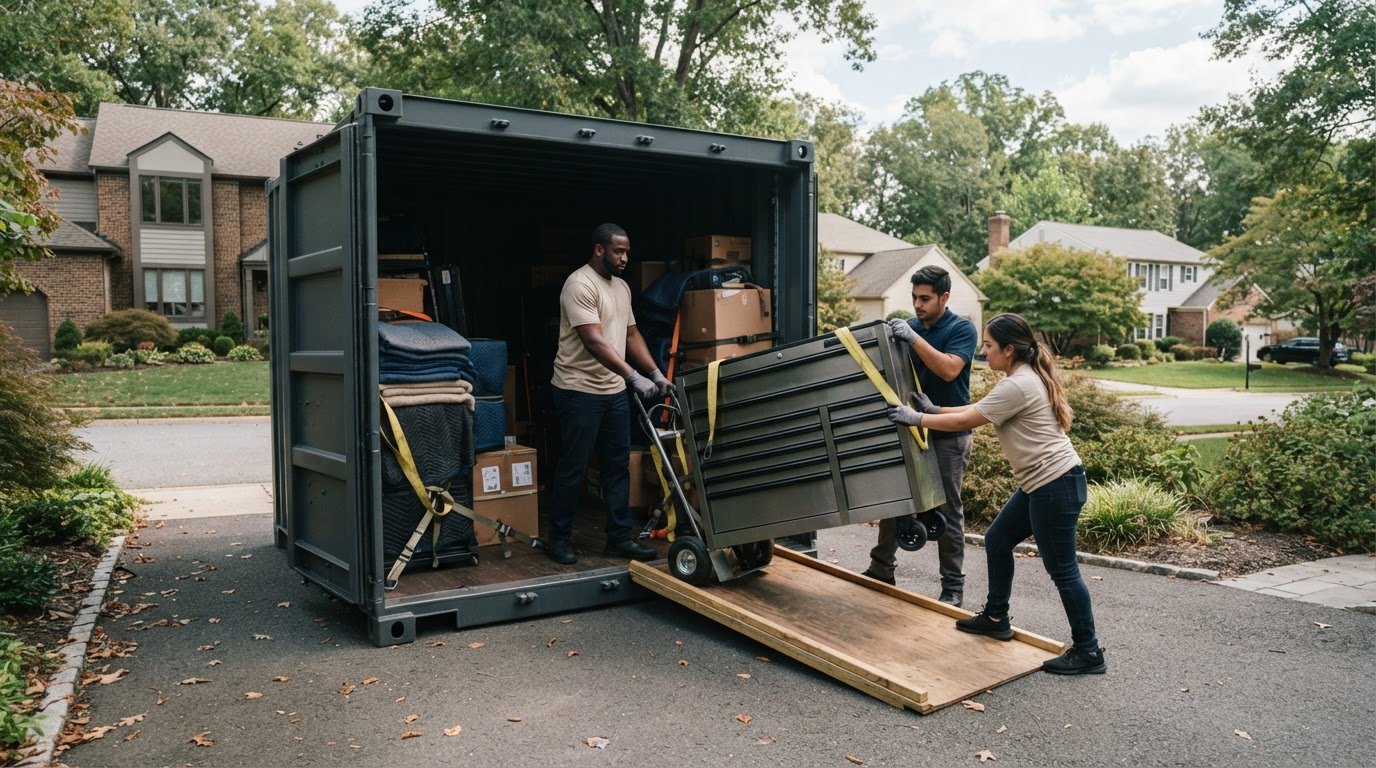
Full-service movers aren’t automatically the better value. If you’ve arranged transportation, professional assistance to load a PODS container with heavy workshop gear in Reston lets you separate loading labor from transport. You arrange the container; the crew handles the heavy lifting and loading.
It makes sense to want help with bulky equipment, furniture, and boxes without paying for services you don’t need. First decide whether you need loading labor only or a full move that also includes packing and transportation.
This guide compares PODS loading help with full-service moving, explains how to prepare and secure workshop gear and household items, and shows what to consider when choosing help. You’ll find practical steps for getting the space ready and planning a safer, more manageable loading day.
Key Takeaways
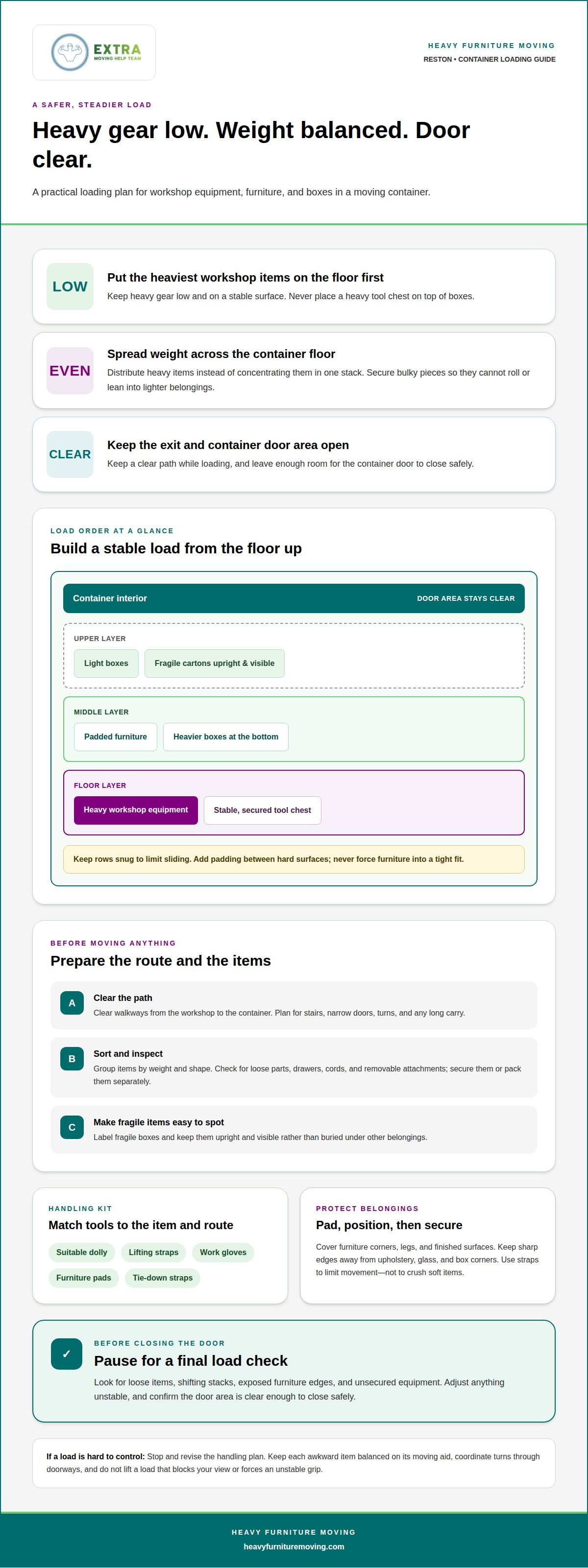
- Load heavy workshop equipment low and arrange furniture and boxes snugly to reduce shifting, while keeping the container door clear enough to close safely.
- Clear the walkways and label fragile boxes before loading begins to make moving items through the space easier.
- Labor-only help can suit a move when you’ve already arranged the container and transportation; full-service movers can be a better fit when packing and transport are also needed.
- The crew size for heavy equipment depends on the items and the work involved, so consider the gear’s bulk and handling needs when planning.
- Learn how to prepare for loading help and choose support that fits your move, from heavy lifting to furniture handling.
Securing furniture and boxes in a container
Heavy workshop gear can tip, crush nearby belongings, or strain the people handling it. Use a suitable dolly, lifting straps, work gloves, furniture pads, and tie-down straps. Match your equipment to the item and route, and clear the path before moving anything.
Sort equipment, furniture, and boxes by weight and shape. Clear the walkways from the workshop to the container, and label fragile boxes so they’re easy to spot. Check items for loose parts, drawers, cords, and removable attachments. Secure them or pack them separately to prevent shifting and snags.
Load the heaviest workshop items first and keep them low. Place a heavy tool chest on a stable surface, never on top of boxes. Distribute weight across the floor instead of concentrating it in one stack. Position bulky items so they can’t roll or lean into lighter belongings, and use straps at secure attachment points. Don’t stack anything that could topple in transit.
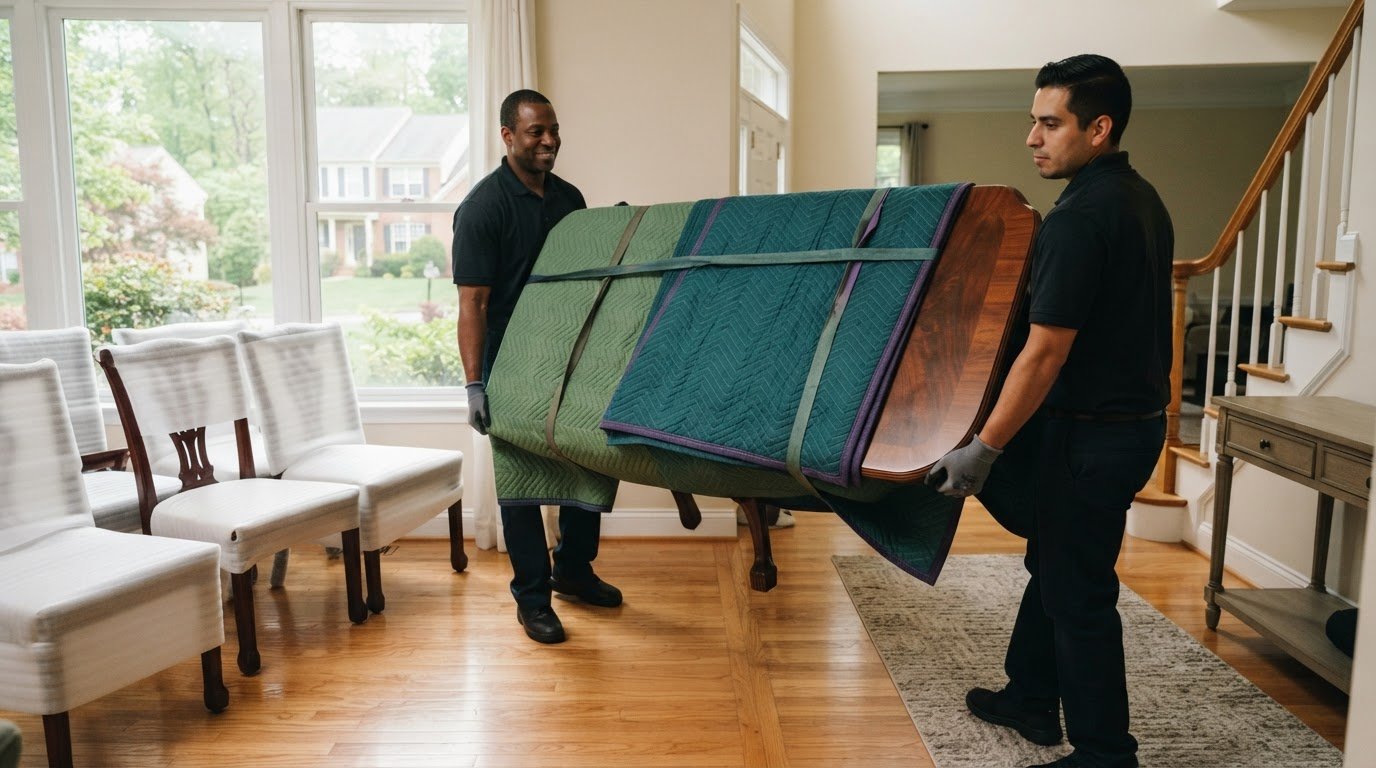
Wrap furniture in moving blankets or furniture pads before loading. Cover corners, legs, and finished surfaces, then secure the padding. For example, pad a wooden table before placing it beside a metal workbench. Keep sharp edges away from upholstery, glass, and box corners. Fill open spaces with soft, packed items to limit shifting, but don’t force furniture into a tight fit that could damage it.
- Place heavier boxes at the bottom, with lighter boxes above.
- Keep fragile cartons upright and visible, rather than buried.
- Stand mattresses and padded furniture where they remain stable.
- Use straps to limit movement, not to crush soft items.
- Leave enough room for the container door to close safely.
Pack each row snugly to prevent items sliding into gaps. Add padding between hard surfaces, such as a metal tool cabinet and a wooden dresser. Keep a clear path while loading, and don’t block the exit with cartons. Before closing the door, look for loose items, shifting stacks, exposed furniture edges, and unsecured equipment, then adjust the load.
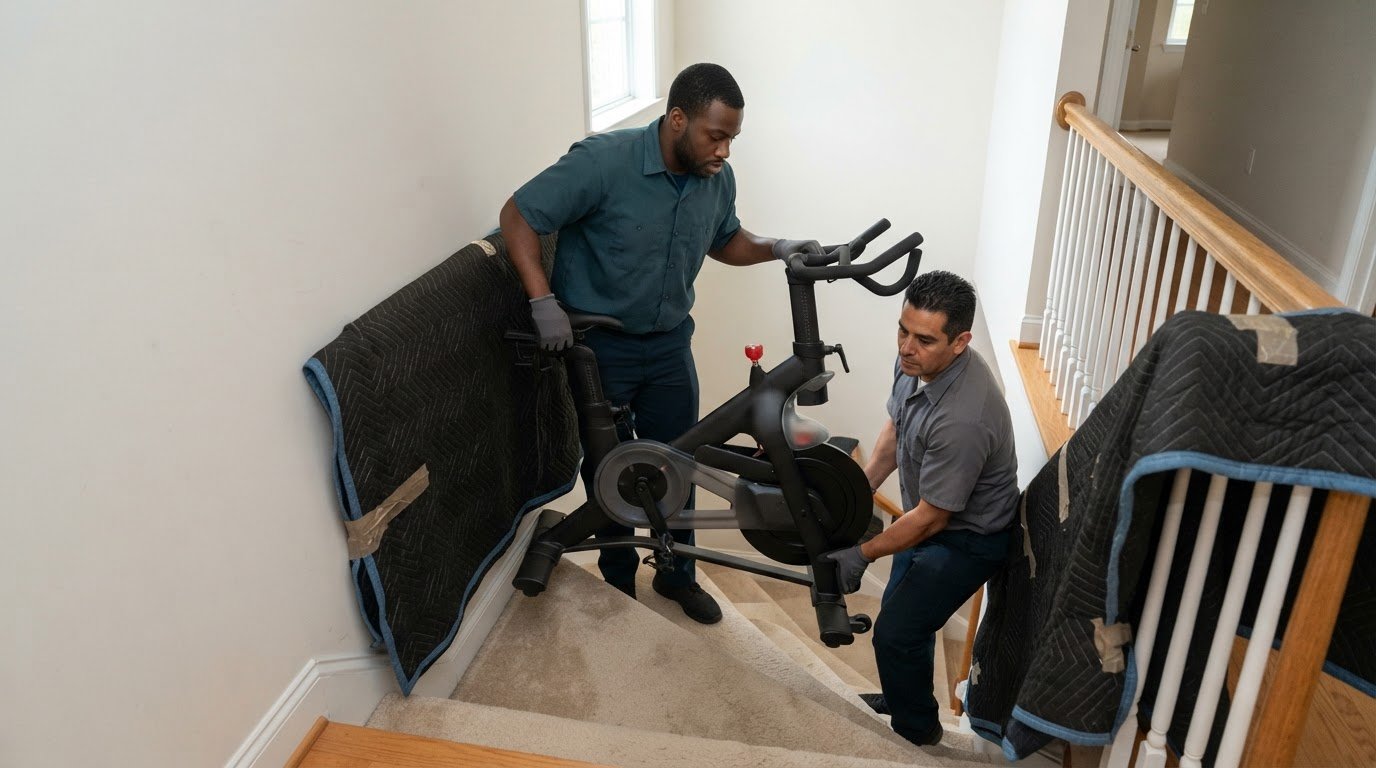
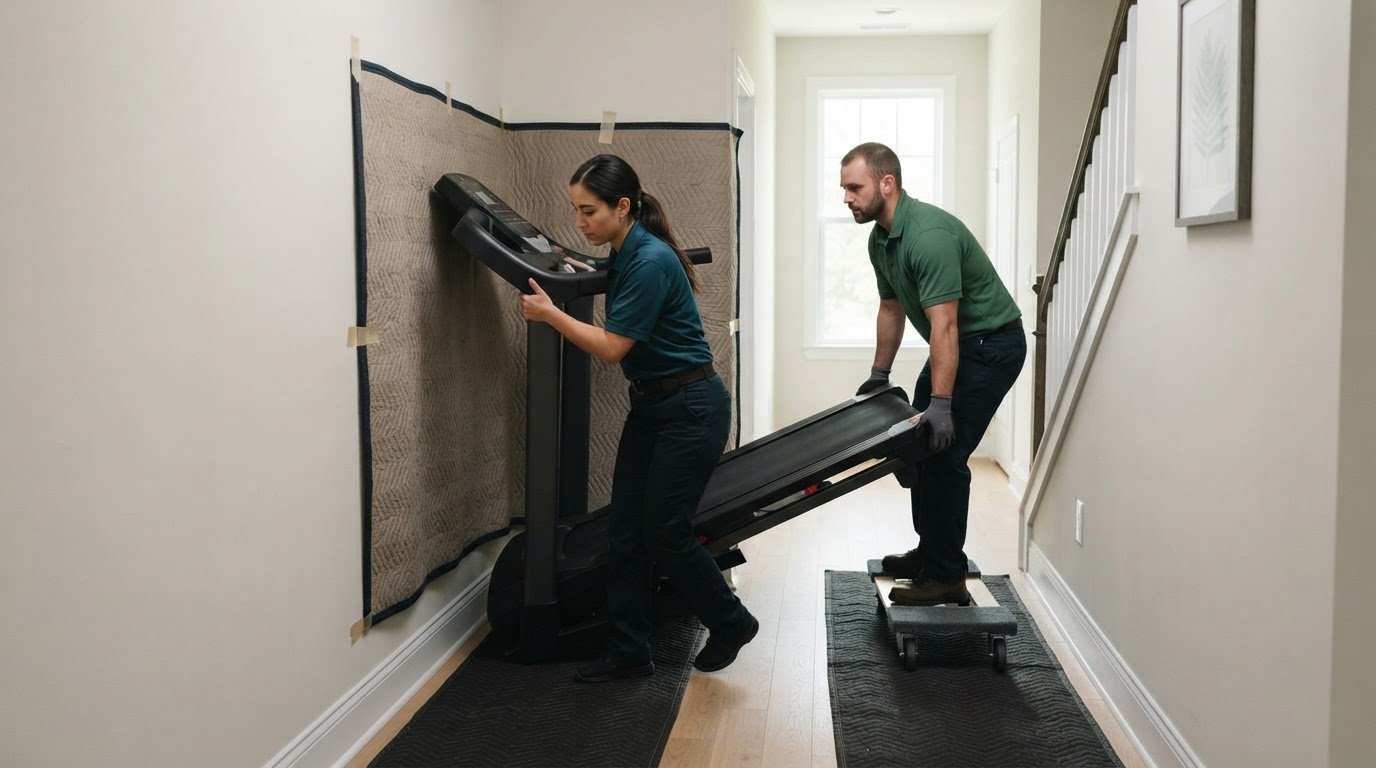
Take extra care with awkward workshop gear, such as a drill press or exercise machine. Keep each item balanced on its moving aid and coordinate turns through doorways. Don’t lift a load that blocks your view or forces an unstable grip. If it feels difficult to control, pause and revise the handling plan. Proper wrapping, clear paths, and a stable, low load help protect furniture, boxes, and equipment in transit.
PODS Loading Help vs Movers: Which Saves More?
Labor-only help separates loading from transportation. Before choosing, compare which parts of the move you’ve already arranged and which tasks still need support.
Labor-Only Help and Potential Savings
With labor-only moving help, you arrange the PODS container and transportation while a crew handles the lifting and loading. This can make sense when transport is already covered, since you don’t need a moving company’s truck. List the tasks you need help with, such as carrying a drill press, loading boxes, or arranging furniture. Then compare that scope with a full move that includes packing and transportation.
For a Reston move with a container already scheduled, loading labor keeps the crew’s work focused on lifting and loading. Full-service movers may suit a move that also requires packing and transportation, such as relocating a large home and workshop. Compare the services each option covers, not just the headline offer.
Container Weight Limits and Loading Rules
Check the weight limit for your specific container and plan the heavy equipment around it. Place heavy items low, distribute weight across the floor, and secure each piece to reduce shifting. Don’t put a metal workbench on stacked cartons. Keep the door area clear enough to close safely.
Container limits and loading instructions depend on the container assigned to your move. Review its paperwork for the applicable limit and directions before loading workshop machinery. The written agreement for the loading work governs insurance and liability, so read its damage responsibilities, exclusions, and claims process before loading begins.
Crew Size for Heavy Workshop Equipment
The appropriate crew size depends on each item’s weight, dimensions, shape, and route to the container. A compact tool chest requires different handling from a tall drill press or bulky exercise machine. Include stairs, narrow doors, and turns in your plan, since they affect how the crew can position and guide each item.
Make an item list before scheduling. Flag anything unusually heavy, awkward, or difficult to grip. Photos of the equipment and route can help explain the job. Don’t choose a crew size by counting items alone: a few bulky machines may require more coordination than many small boxes.
Availability and Scheduling
Schedule loading around the container’s arrival and your move-out plans. When arranging labor, share the Reston address, container location, access details, and equipment list. Mention stairs, tight turns, or a long carry from the workshop. These details help shape the work plan and avoid preventable delays on loading day.
Prepare before the crew arrives: clear walkways, label fragile cartons, and group equipment for loading. Keep the route open from the workshop to the container. Have the container instructions and equipment list ready, so the crew can start with the heaviest pieces. For moves centered on machinery, heavy-equipment loading support can help with the physical loading work.
Professional PODS loading labor services in Reston, VA
Loading labor focuses on moving belongings into your container. For a Reston job, plan around the equipment, access route, and container placement. Professional assistance to load a PODS container with heavy workshop gear in Reston starts with clearly describing those details.
Before loading day, list the workshop and household items that need to move. Name equipment such as a tool chest, workbench, or exercise machine, and flag pieces that are awkward to grip, have loose parts, or need careful positioning. Map the route from each room to the container. A narrow doorway or stair turn can change how a bulky item needs to be moved.
With labor-only help, you arrange the container and transportation while the crew handles lifting and loading. Pack smaller belongings yourself and reserve the crew’s help for demanding items. For example, pack hand tools and label cartons ahead of time, then leave the heavy cabinet and large machine for the crew. This keeps the work focused on physical handling.
Share the job details before the crew arrives. Identify the container’s location, its distance from the workshop, and any steps or tight corners. Mention detachable shelves or parts, and set them aside with their related hardware. Clear the route and group belongings by room so the crew can work without searching.
- List heavy or awkward items, such as a lathe or tool cabinet.
- Point out stairs, narrow doors, and turns along the route.
- Set aside loose machine parts and keep hardware together.
- Separate items needing careful handling from packed cartons.
On loading day, review the plan before moving the first item. Identify what goes into the container and what stays behind. Point out fragile cartons and equipment that needs careful positioning. Keep children, pets, and loose belongings away from the active route. A clear path helps everyone coordinate, especially when a bulky item needs a careful turn.
As loading progresses, review the arrangement before the final items go in. Keep heavy equipment stable and leave enough room to close the door safely. If an item blocks access to another, pause and adjust the load. A workshop move may include machines, furniture, and household boxes, so a clear loading order matters. Check for loose items before closing the container.
For a Reston move, professional assistance to load a PODS container with heavy workshop gear works best when the item list, route, and container area are ready. Describe the equipment and access conditions in advance. That gives the crew a clear picture of the work, whether you’re moving one machine or loading a workshop along with furniture and boxes.
PODS-approved loading companies serving Reston and Fairfax County
For a Reston move, distinguish the loading crew’s role from PODS transportation. The label “PODS-approved” alone doesn’t explain who supplies the container, who transports belongings, or what the crew handles. Focus on the work plan: you arrange the container and transportation, while labor-only movers load it. This makes the service easier to compare with a full move.
Define the job before loading day. List workshop equipment, furniture, and boxes, then mark which items need lifting help. Add the route from the home or workshop to the container. A tool cabinet moving through a narrow doorway needs a different plan from cartons staged by the entrance. Include stairs, tight turns, and the container’s placement at the Reston property.
Use a written task list to keep the loading scope clear:
- Identify the container and its location at the Reston address.
- List heavy or awkward equipment, such as a workbench or machine.
- Separate loading tasks from packing and transportation.
- Note furniture, fragile boxes, and items requiring careful handling.
- Specify whether belongings also need unloading after arrival.
That distinction matters when comparing service descriptions. PODS loading help can include loading the container and unloading it after arrival. With labor-only moving help, you arrange the container or truck while the crew handles heavy lifting. Specify the tasks you need: “load a workshop” is less useful than listing a tool chest, workbench, and packed cartons.
For Fairfax County moves, include location and access details in the plan. Describe where the container will sit and how far items must travel. Mention a sloped walkway, tight entrance, or ground-floor workshop. These details define the physical work more clearly than a service label alone. Keep the container’s loading instructions with your move documents, especially when loading heavy equipment.
Choose the arrangement that matches the work you need. If transportation is handled, loading labor keeps the crew’s role focused on carrying and arranging belongings. If you also need packing and transportation, full-service movers may suit a large household move better. Either way, a clear item list and route plan make the Reston loading job easier to organize.
Load heavy items first and keep them low. Arrange furniture and boxes snugly to reduce shifting inside the container.
How many movers are needed to load a PODS container with heavy workshop equipment?
There’s no single crew size for every workshop move. The right number depends on each item’s weight, shape, handling needs, and route to the container. A compact tool chest presents a different job from a tall drill press. Count the heavy pieces, then describe their size and the access conditions. For Reston moves, professional assistance to load a PODS container with heavy workshop gear starts with those details.
Start by mapping the route. Note stairs, narrow doorways, sharp turns, and the distance to the container. A bulky workbench may need careful coordination through a tight hallway, even if it moves easily across an open floor. An exercise machine may also need a different plan from packed boxes. Share these details when arranging loading help.
Use an item list to show the crew what the job involves:
- List each heavy machine, cabinet, workbench, or exercise machine.
- Describe awkward shapes, loose parts, or difficult grip points.
- Note stairs, doorway widths, turns, and the carrying route.
- Separate items needing special handling from ordinary cartons.
These details help determine how many people can work safely and efficiently. A large machine may need coordinated handling, while another item may be easier to guide with a suitable moving aid. Don’t estimate based on the total number of belongings alone. A workshop with a few bulky machines can require more planning than a room full of lighter boxes.
Consider how the crew will coordinate. One person may guide an item through a doorway while others support and steady it. The space around the equipment matters: a crowded garage can limit safe positioning, while a cleared route gives the crew more room to maneuver. Keep pets, children, and unrelated belongings out of the path.
Before loading starts, identify which items should move first and where they should go. Keep the equipment list handy and point out fragile surfaces or detachable parts. Secure loose drawers on a tool cabinet before moving it. Clear a staging area near the exit so the crew can organize the next lift without blocking the route.
For a Reston move, professional assistance to load a PODS container with heavy workshop gear can be planned around the items and access route. Arrange help with heavy lifting when bulky gear makes loading difficult to manage alone.
Heavy Furniture Moving: Movers Near Me
Heavy Furniture Moving helps with demanding residential moves and bulky items. Turn to the team when furniture or exercise equipment needs careful handling, or when a sofa must be hoisted. For workshop gear, get professional help with the heavy lifting instead of risking an awkward solo move.
Choose support that fits the task: Movers Near Me for moving needs, Exercise Equipment Moving for bulky fitness machines, or in-home furniture movers for items that need to be moved within your home. Share what needs moving and describe the access route so the work can be planned clearly.
Contact Heavy Furniture Moving or visit heavyfurnituremoving.com to discuss your move.
Get Your Reston Move Ready for the Next Step
Plan for what happens after the container arrives. Decide where workshop equipment and furniture should go at the destination, then keep those priorities in mind while preparing the job. A clear goal makes professional help loading a PODS container with heavy workshop gear in Reston easier to coordinate with the rest of your move.
Heavy Furniture Moving can help with demanding residential moving tasks. Its Movers Near Me, Exercise Equipment Moving, and Sofa Hoisting services address different heavy-item needs. Choose support based on what you need handled, whether it’s a bulky machine, workout equipment, or a sofa that needs a different route into your home.
Share the main challenge and the type of items involved to start a practical conversation about your move. Contact Heavy Furniture Moving to discuss the help you need. Take the next step with a clear plan and get your move underway.
Frequently Asked Questions
What does it cost to hire movers to load a PODS container in Reston, VA?
The cost depends on the work involved. Describe the items, access route, stairs, and loading tasks when requesting a quote so the scope is clear. Loading a workshop with a heavy machine differs from loading packed household boxes alone. Share the Reston location and whether you need loading only or other moving help.
What are the hourly rates and minimum hours for heavy-item moving labor near Reston?
Heavy-item labor has a 2-hour minimum, and the hourly rate is provided with a quote. The work plan depends on the items and access, such as a tool chest moving through a stairwell or equipment carried from a detached workshop. Include those details when requesting a quote for Reston, Vienna, or Fairfax, so the estimate reflects the task.
Can movers handle machinery, workbenches, tool chests, and shop equipment?
Yes, moving help can cover heavy and bulky items, including workshop gear. Share clear photos of each item and the route, including stairs or tight turns. Measurements help plan the move before lifting begins. Wrap, blankets, and straps are included on every job to help protect equipment and nearby surfaces during handling.
How should I prepare and secure heavy workshop gear inside a PODS container?
Photograph each machine before disconnecting or preparing it, then keep detachable parts and hardware together in labeled bags. Empty tool chests and secure drawers so the contents can’t shift. Follow the container’s loading instructions and keep equipment within its stated weight limit. Note where each item is placed so workshop essentials are easier to find after arrival.
How does PODS loading labor compare with full-service movers in Reston, Virginia?
Loading labor suits moves where you’ve arranged the container and transportation. Full-service movers may better fit a large home, a long-distance move, or a job requiring packing and transport. For example, if a Reston household has its container ready but needs help with a heavy machine, labor-only support keeps the work focused on loading. Compare the tasks each option covers.
Frequently Asked Questions
The cost depends on the work involved. Describe the items, access route, stairs, and loading tasks when requesting a quote so the scope is clear. Loading a workshop with a heavy machine differs from loading packed household boxes alone. Share the Reston location and whether you need loading only or other moving help.
Heavy-item labor has a 2-hour minimum, and the hourly rate is provided with a quote. The work plan depends on the items and access, such as a tool chest moving through a stairwell or equipment carried from a detached workshop. Include those details when requesting a quote for Reston, Vienna, or Fairfax, so the estimate reflects the task.
Yes, moving help can cover heavy and bulky items, including workshop gear. Share clear photos of each item and the route, including stairs or tight turns. Measurements help plan the move before lifting begins. Wrap, blankets, and straps are included on every job to help protect equipment and nearby surfaces during handling.
Photograph each machine before disconnecting or preparing it, then keep detachable parts and hardware together in labeled bags. Empty tool chests and secure drawers so the contents can’t shift. Follow the container’s loading instructions and keep equipment within its stated weight limit. Note where each item is placed so workshop essentials are easier to find after arrival.
Loading labor suits moves where you’ve arranged the container and transportation. Full-service movers may better fit a large home, a long-distance move, or a job requiring packing and transport. For example, if a Reston household has its container ready but needs help with a heavy machine, labor-only support keeps the work focused on loading. Compare the tasks each option covers.